
 (800) 949-0401
Equipment Financing for Reducing Human Error: The Complete Guide for Business Owners
Human error is one of the most expensive problems a business can face. Whether it's a miscalibrated machine on a production line, a manual data entry mistake in a warehouse, or an improperly operated piece of industrial equipment, errors made by workers cost U.S. businesses billions of dollars every year in lost productivity, rework, regulatory fines, and liability claims. The good news is that modern equipment is purpose-built to reduce these risks — and equipment financing gives businesses a practical, cash-flow-friendly way to access it without draining reserves.
This guide explains how equipment financing for reducing human error works, which industries benefit most, how to qualify, and why Crestmont Capital is the lender businesses trust to fund these critical upgrades. Whether you're looking to automate a repetitive manual process, replace outdated machinery that's prone to operator error, or invest in precision technology that delivers consistent results, this complete resource will help you make the right decision.
In This Article
- What Is Equipment Financing for Reducing Human Error?
- The Real Cost of Human Error in Business
- Types of Equipment That Reduce Human Error
- How Equipment Financing Works
- Industries That Benefit Most
- By the Numbers: Equipment Financing Impact
- Who Qualifies for Equipment Financing?
- How Crestmont Capital Helps
- Real-World Scenarios
- FAQ
- How to Get Started
What Is Equipment Financing for Reducing Human Error?
Equipment financing is a form of business lending that allows companies to purchase or lease machinery, technology, and equipment using borrowed capital — with the equipment itself typically serving as collateral. When this financing is applied specifically to upgrading or acquiring equipment designed to minimize the impact of human decisions on outcomes, it becomes a powerful error-reduction strategy.
Human error occurs in two main forms: slips and lapses (unintended actions where execution fails), and mistakes (decisions where the plan itself is flawed). The most effective equipment investments address both. Automated machinery removes the "execution" variable entirely for repetitive tasks, while smart systems with built-in guidance, alerts, and fail-safes help workers make better real-time decisions.
Equipment financing for reducing human error is not a niche product — it draws on the full range of standard equipment financing options. What makes it distinct is the purpose: investing in precision, automation, and consistency as a strategy to lower costs, protect quality, and improve operational outcomes.
Key Insight: According to research published by IBM, human error is a contributing factor in approximately 95% of cybersecurity incidents. In manufacturing, OSHA data suggests that preventable human error accounts for more than 80% of workplace accidents. Upgrading to safer, more automated equipment is one of the highest-ROI investments a business can make.
Ready to Upgrade Your Equipment?
Finance error-reducing machinery, automation systems, and precision tools with fast, flexible funding from Crestmont Capital.
Apply Now →The Real Cost of Human Error in Business
Business owners often underestimate the true cost of human error because many of those costs are hidden or distributed across departments. A single misread measurement on a production line can result in thousands of dollars of scrapped material. An incorrect data entry in accounts payable can take hours to trace and fix. A manual calibration error in a medical device can trigger a regulatory audit that costs far more than the equipment upgrade would have.
The direct costs of human error include rework and scrap, product recalls, regulatory fines, customer refunds, and legal liability. The indirect costs include reputational damage, employee morale decline, lost customer relationships, and management time diverted to fixing problems that preventable systems would have avoided.
Industries with the highest error costs typically share three characteristics: they involve repetitive manual tasks, they operate at high volume, and the consequences of a single error can cascade across multiple orders, batches, or patients. Manufacturing, healthcare, food service, construction, and logistics all fit this profile.
The economic case for investing in error-reducing equipment is compelling. Even a modest reduction in rework rates — say, from 4% to 1% of total output — can add significant profit margin to a business operating at volume. When that upgrade is financed over 24 to 60 months at competitive interest rates, the return on investment often exceeds the cost of financing within the first year.
Types of Equipment That Reduce Human Error
The category of "error-reducing equipment" is broad and industry-specific. Below are some of the most common equipment types that businesses finance specifically to minimize mistakes and improve consistency:
Automated and CNC Machinery
Computer Numerical Control (CNC) machines execute preprogrammed instructions with micron-level precision, eliminating the variability of manual operation. A human machinist might produce tolerances of ±0.010 inches; a CNC machine routinely holds ±0.001 inches. For manufacturers producing components where dimensional accuracy is critical, this difference is the gap between a quality product and a defective one. CNC mills, lathes, routers, and plasma cutters are all common candidates for equipment financing.
Barcode Scanning and RFID Systems
In warehouse and distribution environments, manual picking and inventory tracking is a primary source of fulfillment errors. Barcode scanners and RFID tracking systems automate the verification process, ensuring that workers pick the right item, in the right quantity, from the right location. Businesses that integrate these systems with their WMS (warehouse management system) typically report order accuracy rates above 99.9%.
Digital Measuring and Inspection Equipment
Coordinate Measuring Machines (CMMs), digital calipers, laser measurement systems, and machine vision cameras automate quality inspection. Rather than relying on a technician to manually check a part against a drawing — a process subject to fatigue, distraction, and misreading — these systems scan, measure, and compare automatically, flagging deviations without human involvement in the measurement step.
Automated Dispensing and Filling Equipment
In pharmaceutical, food and beverage, and chemical manufacturing, precise measurement is critical. Automated dispensing systems ensure that every batch contains exactly the right amount of each ingredient. This eliminates the variability of hand-measuring while dramatically reducing waste and quality control failures.
Electronic Health Record (EHR) and Medical Technology Equipment
In healthcare settings, medication dispensing robots and automated infusion pumps reduce the risk of dosing errors. These systems cross-reference patient records, flag drug interactions, and dispense precise doses — reducing the error rate that manual preparation introduces. Financing medical equipment is a growing need across independent practices, clinics, and long-term care facilities.
Robotic Process Automation Hardware
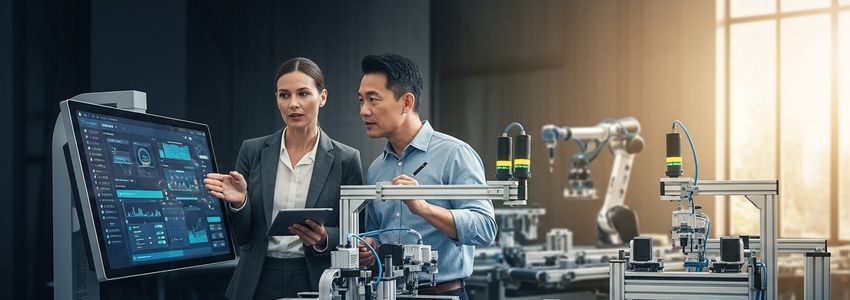
Pick-and-place robots, welding robots, and packaging robots replace repetitive manual operations that are prone to inconsistency. Robotic arms in automotive, electronics, and consumer goods manufacturing perform the same task the same way every cycle, eliminating the fatigue, distraction, and variability that lead to human error on assembly lines.
How Equipment Financing Works
Equipment financing follows a straightforward structure. A lender provides funds to purchase a piece of equipment, and the business repays the loan over a set term — typically 24 to 84 months — at a fixed or variable interest rate. The equipment itself serves as collateral, which makes this a more accessible form of financing than many other business loans.
There are two primary formats: equipment loans, where the business owns the equipment outright from the start, and equipment leasing, where the lender retains ownership and the business makes lease payments. Both options are available through Crestmont Capital's equipment financing and equipment leasing programs.
Equipment loans are typically best when you plan to use the equipment for many years, want to build equity in the asset, and want to take advantage of depreciation tax treatment. Equipment leasing is better when you need the latest technology (and expect to upgrade), want lower monthly payments, or prefer to return the equipment at end-of-term rather than deal with its disposal.
By the Numbers
Equipment Upgrades and Human Error Reduction
80%
Of workplace accidents involve preventable human error (OSHA)
$19B
Annual cost of manufacturing errors in the U.S. economy
99.9%
Order accuracy rate with automated warehouse scanning systems
3-5x
Typical ROI on precision automation within first 2 years
Application and Approval Process
The equipment financing application process is faster and simpler than most business loans. Because the equipment serves as collateral, lenders take on less risk — and that translates to faster approvals, less paperwork, and more flexibility on credit requirements.
A typical equipment financing application requires your business name, EIN, time in business, approximate annual revenue, the type and cost of equipment you're seeking to finance, and some basic financial documentation (recent bank statements, sometimes tax returns). Many lenders, including Crestmont Capital, can issue approvals in 24 to 48 hours for well-qualified applicants.
Loan terms typically range from 24 to 84 months, with rates that vary based on the borrower's credit profile, the equipment type, and the lender. Newer, standard equipment generally qualifies for better rates than older or specialized machinery.
Industries That Benefit Most from Equipment Financing for Error Reduction
While virtually every business can benefit from reducing human error, certain industries face disproportionately high stakes when mistakes occur. These sectors are also among the most active users of equipment financing for precision and automation upgrades:
Manufacturing and Production
In manufacturing, human error at any stage of the production process can invalidate an entire batch, trigger a costly product recall, or result in components that fail quality inspection. CNC machining centers, automated assembly equipment, and machine vision inspection systems are all commonly financed to reduce error rates and improve yields. The ROI calculation is straightforward: if a $150,000 automated press reduces scrap by 3% on a $5 million annual production run, it pays for itself in less than a year.
Food and Beverage Processing
Food safety regulations hold food manufacturers to tight standards — and human error in measurement, temperature control, or contamination prevention can trigger FDA recalls that cost millions. Automated filling equipment, HACCP-compliant temperature monitoring systems, and precision weighing scales reduce the human touchpoints where errors can enter the production chain. The financing need here is acute because compliant equipment is expensive but the regulatory and liability cost of failure is even higher.
Healthcare and Medical
In clinical settings, medication errors, miscalibrated diagnostic equipment, and manual process failures can harm patients and expose providers to significant liability. Automated medication dispensing systems, digital imaging equipment, robotic surgery assistants, and electronic health record integrations all reduce the reliance on manual processes. Small business financing for medical equipment helps independent practices and specialty clinics access these tools without large capital outlays.
Warehousing and Logistics
Order accuracy in fulfillment operations depends on workers correctly identifying, picking, and packing items — a process that, when done manually, is prone to errors that cost money in returns, reshipping, and customer dissatisfaction. Barcode scanning systems, voice-directed picking technology, and automated conveyor sortation systems reduce error rates to near-zero, and they're all eligible for equipment financing through standard programs.
Construction and Trades
In construction, measurement errors, specification misreads, and unsafe equipment operation lead to costly rework and safety incidents. Laser levels, digital measurement tools, GPS-guided heavy equipment, and fall-protection systems are all examples of equipment that reduces the human error component of construction work. Financing these tools — especially when scaling a crew — makes practical sense for growing contractors.
Finance Your Precision Equipment Today
From CNC machines to automated inspection systems - get the equipment you need with flexible financing from Crestmont Capital.
Apply Now →Who Qualifies for Equipment Financing?
Equipment financing is one of the most accessible business loans available. Because the equipment serves as collateral, lenders can approve businesses that might not qualify for unsecured funding. Here's what most lenders look for:
Time in Business
Most equipment lenders require at least 2 years of business history, though some lenders — including startup-focused programs — can work with businesses as young as 6 months to 1 year. Startups typically pay higher rates or need to provide stronger financial documentation to compensate for the shorter track record.
Credit Score
A personal credit score of 620 or higher is generally sufficient for standard equipment financing. Stronger credit scores (680+) unlock better rates and more favorable terms. Business credit history, if established, will also be reviewed. Crestmont Capital's bad credit equipment financing program offers options for businesses with lower credit scores.
Revenue and Cash Flow
Lenders want to see sufficient revenue to service the loan payment. Monthly revenues of at least 3-5x the loan payment are typically required. Most equipment financing applications ask for 3-6 months of business bank statements to verify cash flow patterns.
Equipment Type and Age
New equipment from established manufacturers is easiest to finance. Used equipment is also financeable, but may require an appraisal and may qualify for shorter terms. Specialized or single-use equipment may be harder to finance because it has lower resale value as collateral.
Quick Tip: Equipment that directly reduces human error — such as automation systems, precision measuring tools, and safety equipment — often qualifies for Section 179 deduction treatment, allowing businesses to deduct the full cost in the year of purchase. Consult your tax advisor for specifics applicable to your situation.
How Crestmont Capital Helps Businesses Reduce Human Error Through Equipment Financing
Crestmont Capital is the #1 rated business lender in the United States, with a proven track record of helping businesses across manufacturing, healthcare, logistics, and construction finance the equipment upgrades they need to become more competitive. Here's what makes Crestmont the right partner for this type of investment:
Fast Approvals
Our streamlined application process delivers equipment financing decisions in as little as 24 hours. We understand that when a business identifies a piece of equipment that can solve a costly problem — whether it's an automated inspection system that will eliminate a 3% scrap rate or a barcode scanning system that will cut fulfillment errors in half — waiting weeks for financing approval is not an option.
Flexible Loan Structures
We offer both equipment loans and equipment leasing structures to match your operational and financial preferences. Terms from 24 to 84 months with competitive rates ensure you can structure a payment that fits your cash flow.
Wide Equipment Eligibility
From CNC machining centers and medical diagnostic equipment to warehouse automation systems and construction measurement tools, Crestmont finances a wide range of equipment categories. If it reduces human error and helps your business run more efficiently, we can likely finance it.
Industry Expertise
Our lending specialists understand the specific equipment needs of different industries. Whether you're a food manufacturer needing to comply with FSMA regulations, a medical practice needing to upgrade to automated dispensing systems, or a warehouse operator looking to implement voice-directed picking, we bring industry knowledge to help you structure the right financing solution.
To explore your options, visit our capital equipment financing page or apply now to get a decision in 24 hours.
Real-World Scenarios: Equipment Financing for Error Reduction in Action
Scenario 1: Precision Machining Shop Eliminates Scrap
A precision parts manufacturer in the midwest was losing approximately $180,000 per year in scrapped components due to manual measurement errors during inspection. Workers were using handheld gauges under production pressure, leading to acceptance of parts that were marginally out of tolerance. The company financed a $220,000 coordinate measuring machine (CMM) through Crestmont Capital at a 60-month term. Within six months of installation, scrap rates fell from 3.8% to 0.4%. The machine paid for itself in savings within 14 months of installation — far ahead of the loan payoff schedule.
Scenario 2: Food Distributor Cuts Fulfillment Errors
A regional food distribution company was processing approximately 1,200 order lines per day with a manual pick-and-pack operation. Their error rate of 2.1% translated into about 25 incorrect orders per day, each requiring a reshipping cost, a customer service interaction, and often a credit. The total annual cost of these errors exceeded $340,000 when staff time, reshipping, and lost customer goodwill were factored in. The company financed a $180,000 barcode scanning and voice-directed picking system. Error rates dropped to under 0.1%, and the annual savings exceeded $300,000. The system was financed over 48 months with a monthly payment of approximately $4,200 — a strong ROI from day one.
Scenario 3: Medical Practice Eliminates Medication Errors
An independent pharmacy serving a long-term care facility was experiencing intermittent medication dispensing errors due to manual preparation of multi-dose blister packs. A single error in this setting carries significant patient safety risk and potential liability. The pharmacy financed a $95,000 automated blister packing machine through an equipment loan. Dispensing accuracy went from 99.2% to 99.998%, and the liability exposure was effectively eliminated. The practice also reported a significant reduction in the staff hours dedicated to medication preparation — freeing pharmacists for clinical activities.
Scenario 4: Construction Firm Reduces Rework
A commercial HVAC contractor was losing an average of $65,000 per year in rework costs, primarily due to measurement errors during installation that required tearing out ductwork and re-routing. The company invested in a $28,000 laser measurement and BIM integration system, financed over 36 months. By creating precise digital models before installation, the team eliminated measurement errors at the planning stage. Rework costs dropped by over 80% in the first year, and the company was able to take on an additional project per quarter because crews were spending less time on corrections.
Scenario 5: Packaging Manufacturer Improves Quality Control
A packaging manufacturer producing custom cartons for a major consumer goods brand was facing pressure from their client after three consecutive quarters of quality defect rates above 1.5%. Manual visual inspection was proving unreliable, particularly toward the end of long production shifts. The company financed a $310,000 machine vision quality control system. Defect detection rates improved to above 99.7%, and the client relationship was preserved. The machine also enabled faster line speeds because it could inspect 100% of output, versus the statistical sampling that manual inspection required.
Frequently Asked Questions
How to Get Started
Audit your current operations for the highest-cost error points. Identify the specific equipment upgrade that would address each error source and get vendor quotes.
Complete our quick application at offers.crestmontcapital.com/apply-now — takes just 10-15 minutes.
A Crestmont Capital specialist will review your application and present financing options, often within 24 hours.
Once approved, funds are disbursed quickly so you can place your equipment order and start benefiting from reduced error rates and improved operations.
Conclusion: Invest in Precision, Finance the Future
Human error is a business problem that technology has increasingly made solvable — but only if you can access the right equipment. Equipment financing for reducing human error gives businesses of all sizes a practical path to automation, precision, and consistency without requiring large capital outlays upfront.
The ROI case is compelling across industries: reduced scrap, fewer returns, lower liability exposure, better customer satisfaction, and more efficient operations. When financed intelligently — with terms aligned to the equipment's useful life and payments that fit within existing cash flow — these upgrades pay for themselves many times over.
Crestmont Capital makes it easy to get started. With fast approvals, flexible terms, and lending expertise across manufacturing, healthcare, logistics, and construction, we're the lender businesses trust when precision matters. Apply now or contact us to speak with a financing specialist today.
Start Your Equipment Financing Application
Fast approvals, flexible terms, and expert guidance from the #1 rated business lender in the U.S.
Apply Now →Disclaimer: The information provided in this article is for general educational purposes only and is not financial, legal, or tax advice. Funding terms, qualifications, and product availability may vary and are subject to change without notice. Crestmont Capital does not guarantee approval, rates, or specific outcomes. For personalized information about your business funding options, contact our team directly.








