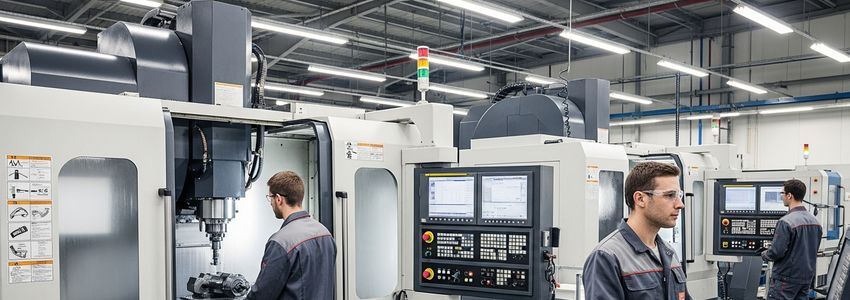
Manufacturing equipment financing is one of the most powerful tools available to precision manufacturers, CNC shops, and advanced fabrication businesses that need to acquire high-performance machinery without draining working capital. In a sector where a single 5-axis machining center can cost $400,000 or more, accessing flexible funding structures is not just convenient - it is often essential to staying competitive.
Whether you operate a machine shop serving aerospace clients, a medical device contract manufacturer requiring ultra-tight tolerances, or an automotive parts supplier investing in robotic automation, understanding your equipment financing options can determine how fast you grow, how efficiently you operate, and how well you protect your cash flow.
This guide covers everything precision manufacturers need to know: how manufacturing equipment financing works, the types of funding available, qualification criteria, real-world use cases, and how Crestmont Capital can help you secure the capital you need to move forward.
In This Article
- What Is Manufacturing Equipment Financing?
- Why Precision Manufacturers Rely on Equipment Financing
- How Manufacturing Equipment Financing Works
- Types of Equipment Financing Available
- Who Qualifies for Manufacturing Equipment Financing?
- Equipment Financing vs. Other Funding Options
- How Crestmont Capital Helps Precision Manufacturers
- Real-World Scenarios
- Frequently Asked Questions
- How to Get Started
What Is Manufacturing Equipment Financing?
Manufacturing equipment financing is a funding solution that allows businesses to acquire machinery, tools, and production technology through structured payments over time rather than a single large upfront payment. The equipment itself typically serves as collateral, which makes the approval process more accessible than many unsecured business loan programs.
In the precision manufacturing sector, this model is particularly valuable because the capital requirements are high and the equipment has a long productive life. Financing allows companies to match payment schedules to revenue generation from the new machinery, creating a more predictable cash flow structure.
Common types of precision manufacturing equipment financed through these programs include:
- Multi-axis CNC machining centers and milling machines
- Turning centers and lathes
- Electrical discharge machining (EDM) equipment
- Laser cutting and waterjet systems
- Coordinate measuring machines (CMM) and metrology tools
- Injection molding machines
- Robotic arms and automated production cells
- Additive manufacturing and 3D printing systems
- Surface grinders, honing machines, and finishing equipment
- Material handling and conveyor systems
According to data from the Equipment Leasing and Finance Foundation, approximately 57.7% of all equipment and software investment in the U.S. was financed in 2023, with goods-sector manufacturers - including precision shops - among the most active users of equipment finance products. This widespread adoption reflects the practical reality: financing machinery is smarter than liquidating reserves.
Industry Insight: According to the Equipment Leasing & Finance Association (ELFA), more than 8 in 10 U.S. businesses use some form of financing for equipment acquisitions - including leases, secured loans, or lines of credit. For manufacturers specifically, this figure is even higher, with goods-sector firms financing equipment at a rate of 70% or more.
Why Precision Manufacturers Rely on Equipment Financing
The economics of precision manufacturing create a natural case for equipment financing. Machinery is expensive, depreciation timelines are long, and the performance advantage from newer equipment is significant. Buying outright depletes cash reserves that are better deployed toward payroll, materials, tooling, and growth initiatives.
As Reuters and Bloomberg have reported extensively, U.S. manufacturers are increasing capital investment in domestic production capacity, driven by reshoring trends, defense and aerospace demand, and a broader push to reduce supply chain vulnerabilities. Access to fast, flexible equipment financing is central to capitalizing on these opportunities.
Key Reasons Precision Manufacturers Finance Equipment
- Capital preservation: Keep working capital available for daily operations rather than locking it in fixed assets
- Speed to production: Acquire equipment and begin generating revenue faster than saving for a cash purchase
- Technology access: Upgrade to the latest CNC and automation technology without waiting for full depreciation of existing equipment
- Predictable budgeting: Fixed monthly payments simplify financial planning
- Scalability: Finance additional equipment as demand grows without requiring large capital outlays each time
- Collateral-backed underwriting: Equipment value reduces lender risk, improving approval chances versus unsecured loans
- Reduced obsolescence risk: Shorter-term lease structures allow companies to upgrade to newer technology at end of term
For manufacturers serving highly regulated markets - aerospace, defense, medical devices - the ability to acquire precision metrology and calibration equipment quickly can be the difference between winning and losing a major contract.
Need Equipment Financing for Your Manufacturing Business?
Crestmont Capital specializes in fast, flexible equipment financing for precision manufacturers. No obligation - apply in minutes.
Apply Now →How Manufacturing Equipment Financing Works
The manufacturing equipment financing process is more streamlined than many business owners expect. Most specialized lenders understand the capital intensity of manufacturing and have built their programs accordingly. Here is a step-by-step overview of how the process typically unfolds:
Step 1: Identify the Equipment and Get Quotes
Begin by identifying the exact machinery you need and obtaining vendor quotes. Whether you are purchasing a new 5-axis machining center, a used CMM, or a robotic welding system, a formal vendor quote is a standard part of the application package. This quote also helps the lender assess the collateral value of the equipment.
For new equipment, get quotes directly from OEMs or authorized distributors. For used equipment, work with a reputable dealer and ensure the machinery can be independently appraised. The clearer the equipment documentation, the faster the approval process.
Step 2: Prepare Your Application Package
Most equipment financing lenders require a straightforward application package. For financing amounts under $150,000, many lenders offer simplified "one-page" applications with minimal documentation. For larger amounts - say $250,000 to $2 million - more complete financial documentation is typically required:
- Completed financing application
- Business and personal tax returns (last 2 years)
- Business bank statements (last 3-6 months)
- Year-to-date profit and loss statement
- Balance sheet
- Equipment invoice or quote from vendor
- Business formation documents (articles of incorporation, operating agreement)
Some lenders, including Crestmont Capital, can process applications with less documentation depending on the business profile and financing amount.
Step 3: Underwriting and Approval
The lender reviews your business credit profile, revenue history, time in business, and the equipment's collateral value. Because the machinery backs the loan, underwriting for equipment financing is generally more flexible than for unsecured business loans.
Key underwriting factors include:
- Personal credit score (typically 600+ for most programs, though some lenders work with lower scores)
- Business credit profile
- Time in business (most programs require 2+ years, though newer businesses can qualify with stronger credit)
- Annual revenue and revenue stability
- Equipment value and remaining useful life (particularly for used equipment)
- Industry and use case
Approval timelines for smaller financing amounts can be as fast as same-day or next-day. For larger, more complex financing packages, the process typically takes 3-7 business days.
Step 4: Funding and Equipment Delivery
Once approved, the lender disburses funds directly to the equipment vendor. The manufacturer does not handle the cash - the transaction flows from lender to vendor, and the equipment is delivered and installed. This protects both parties and simplifies the transaction.
Installation costs, freight, rigging, and training are sometimes included in the financed amount as "soft costs," depending on the program. Ask your lender upfront whether these can be rolled into the financing package.
Step 5: Structured Repayment
The manufacturer begins making fixed monthly payments according to the agreed-upon term. Most manufacturing equipment financing programs offer terms ranging from 24 to 84 months. The ideal term length should align with the expected useful life of the equipment and the projected revenue it generates.
During the repayment period, the new equipment should be actively generating increased production capacity, improved margins, or both - making the payments a self-funding investment rather than a pure expense.
Quick Guide
How Manufacturing Equipment Financing Works - At a Glance
Determine what machinery you need and obtain formal vendor quotes or invoices.
Complete a financing application with supporting financial documents and equipment details.
Lender reviews your profile and the equipment's collateral value, then structures a financing offer.
Lender pays the equipment vendor directly. Machinery is delivered and production begins.
Make predictable payments over your loan term (24-84 months) while generating revenue from the new equipment.
Types of Manufacturing Equipment Financing Available
Not all manufacturing equipment financing is the same. Understanding the different structures helps you choose the option that best matches your business goals and cash flow situation.
Equipment Loans
An equipment loan is the most straightforward structure. The lender provides funds to purchase the machinery, the business takes ownership immediately, and the equipment serves as collateral. The business makes fixed monthly payments over the loan term until the balance is paid in full.
Equipment loans are best suited for:
- Machinery with a long productive life (10+ years)
- Companies that want to own equipment outright for equity purposes
- Businesses that expect to use the equipment well beyond the loan term
- Applications where the residual value of the equipment is high
Explore equipment financing options at Crestmont Capital to see what loan structures are available for your industry and machinery type.
Equipment Leasing
With an equipment lease, the lender (or leasing company) retains ownership of the machinery and the business pays to use it for a defined term. At the end of the lease, the business can typically choose to purchase the equipment at fair market value, extend the lease, or return the equipment and upgrade to newer technology.
Equipment leasing is best suited for:
- Technology-intensive machinery with shorter innovation cycles (e.g., CMM equipment, additive manufacturing)
- Companies that want the flexibility to upgrade equipment regularly
- Businesses that want lower monthly payments compared to a purchase loan
- Situations where off-balance-sheet treatment is preferred for financial reporting
You can learn more about the differences between these two funding paths in our detailed comparison: Equipment Leasing vs. Equipment Financing: Which Is Better for Your Business?
Crestmont Capital also offers dedicated equipment leasing programs for manufacturers who want flexibility in their capital structure.
Sale-Leaseback Arrangements
A sale-leaseback allows a manufacturer who already owns equipment to sell that asset to a lender and then lease it back. This structure unlocks capital tied up in existing equipment without disrupting operations - the machine never leaves the floor.
Sale-leasebacks are useful for manufacturers that need immediate working capital, have substantial unencumbered equipment on their books, and do not want to take on a new loan. The proceeds from the sale can be deployed into operations, inventory, or growth initiatives.
Working Capital with Equipment Focus
In some cases, manufacturers pair equipment financing with a working capital loan to cover installation, soft costs, training, and initial materials needed to ramp production. This two-layered approach ensures the full cost of a machinery investment - not just the equipment price - is covered.
Crestmont Capital offers working capital loans that can complement an equipment financing package, giving manufacturers comprehensive coverage for their growth plans.
SBA Loans for Equipment
The SBA 7(a) and SBA 504 programs can be used for equipment purchases. SBA 504 loans, in particular, are well-suited for large fixed-asset acquisitions including manufacturing equipment, with long terms and competitive rates. However, SBA programs involve more paperwork, longer processing times, and stricter eligibility criteria than conventional equipment financing.
For manufacturers who qualify and are not in a hurry, the SBA route can offer favorable terms. Learn more about SBA loan options through Crestmont Capital.
Pro Tip: For precision manufacturers dealing with rapid technology cycles - particularly in medical devices, aerospace, and semiconductor tooling - a lease structure often makes more financial sense than a purchase loan. It allows you to upgrade to newer equipment at the end of each term without being locked into aging machinery.
Who Qualifies for Manufacturing Equipment Financing?
One of the advantages of manufacturing equipment financing is that qualification criteria are generally more accessible than for unsecured business loans. The equipment itself reduces lender risk, which means more businesses can qualify - including those with imperfect credit or shorter operating histories.
Typical Qualification Criteria
| Criteria | Standard Program | Flexible/Alt Program |
|---|---|---|
| Personal Credit Score | 650+ | 580+ (case by case) |
| Time in Business | 2+ years | 6+ months |
| Annual Revenue | $100K+ | $50K+ (varies) |
| Financing Amount | $25K - $5M+ | $10K - $500K |
| Down Payment | 10-20% (some 0%) | May be higher |
| Documentation | Full financials | Simplified/bank statements |
| Equipment Condition | New or used | New or used (age limits may apply) |
Who This Works Best For
Manufacturing equipment financing is ideal for:
- Established CNC machine shops expanding capacity to handle new contracts
- Precision fabrication shops upgrading to newer milling, turning, or grinding technology
- Aerospace and defense component manufacturers requiring NADCAP-compliant inspection equipment
- Medical device contract manufacturers investing in clean-room machinery and metrology tools
- Automotive tier-1 and tier-2 suppliers scaling production for platform changeovers
- Metal stamping and forming operations adding progressive die presses
- Job shops adding grinding, honing, or EDM capability to serve new markets
- Manufacturers integrating robotic welding, assembly, or material handling automation
If your business generates consistent revenue but lacks the reserves to fund a large equipment purchase outright, you are likely a strong candidate for manufacturing equipment financing. Even businesses with imperfect credit can often qualify when the equipment has strong collateral value - for more on this, see our guide on equipment financing with bad credit.
Find Out If You Qualify Today
Crestmont Capital works with precision manufacturers across all credit profiles. Check your options with no impact to your credit score.
Apply Now →
Equipment Financing vs. Other Funding Options
Precision manufacturers have several ways to fund equipment acquisitions. Here is how manufacturing equipment financing compares to the alternatives:
Equipment Financing vs. Cash Purchase
Buying equipment outright with cash eliminates interest costs and provides immediate full ownership. However, it drains working capital that could otherwise fund payroll, materials, tooling, and growth. For capital-intensive manufacturing businesses, a large cash purchase often creates liquidity constraints that limit operational flexibility.
Equipment financing preserves cash while still allowing ownership and full use of the machinery from day one. In most cases, the ROI from increased production capacity far exceeds the interest cost of the financing.
Equipment Financing vs. Business Line of Credit
A business line of credit is revolving capital best suited for short-term operational needs - bridging cash flow gaps, covering payroll during slow periods, or purchasing materials for a large order. It is generally not the right tool for funding a $300,000 CNC machine.
Equipment financing offers dedicated terms and structures built specifically for large machinery acquisitions, with repayment timelines aligned to the asset's useful life rather than 12-month revolving terms.
Equipment Financing vs. SBA Loans
SBA loans can offer competitive rates and long repayment terms, but the application process is significantly more involved and approval timelines can stretch to 60-90 days or longer. For manufacturers who need equipment urgently to fulfill contracts, conventional equipment financing is often faster and more practical.
Equipment Financing vs. Bank Term Loans
Traditional bank term loans from commercial banks often require substantial collateral beyond the equipment itself, along with a lengthy underwriting process. For manufacturers with strong credit and full financial documentation, bank loans can offer competitive rates. But for mid-sized shops without pristine financials, alternative equipment financing lenders like Crestmont Capital provide faster approvals with comparable flexibility.
By the Numbers
Manufacturing Equipment Financing - Key Statistics
57.7%
Of all U.S. equipment investment is financed (ELFA, 2023)
$1.1T
Annual U.S. equipment and software investment volume
84 Mo.
Maximum repayment term available for equipment loans
24 Hrs
Approval turnaround for qualifying manufacturing businesses
How Crestmont Capital Helps Precision Manufacturers
Crestmont Capital is a #1-rated U.S. business lender that understands the specific capital demands of precision manufacturing and equipment-intensive industries. Rather than offering generic small business loans, Crestmont structures financing solutions around the realities of manufacturing - high equipment costs, long asset lives, and the need to move quickly when contracts or expansion opportunities arise.
Through Crestmont Capital's dedicated equipment financing program, precision manufacturers can access:
- Equipment loans and leases tailored for CNC, robotics, metrology, and production machinery
- Financing for both new and used equipment
- Fast approvals - often within 24 hours for qualifying applications
- Flexible repayment terms from 24 to 84 months
- Competitive rates based on business profile and equipment type
- Programs for businesses across a range of credit profiles
- Dedicated advisors with manufacturing industry knowledge
For manufacturers looking to expand beyond a single equipment acquisition, Crestmont also offers broader capital solutions including small business loans, working capital products, and specialty financing programs designed for growth-stage companies.
Our team works directly with machine shops, fabrication centers, contract manufacturers, and advanced manufacturing businesses across all major industries - aerospace, defense, medical devices, automotive, energy, and industrial goods. We understand the urgency of capital decisions in manufacturing and work to deliver fast, clear answers without bureaucratic delays.
For a comprehensive overview of how other manufacturers in the sector approach equipment financing and growth funding, our guide on manufacturing business loans covers the full landscape of funding options available to production businesses.
Note on CNC Machine Financing: CNC machinery represents one of the most common equipment financing requests Crestmont Capital receives. If your business operates or plans to acquire CNC machining centers, turning centers, or grinding equipment, our dedicated guide on CNC machine financing provides detailed information on rates, terms, and qualification criteria specific to this equipment category.
Real-World Scenarios: Manufacturing Equipment Financing in Practice
Understanding how equipment financing works in real manufacturing situations clarifies both its value and its practical application. Here are six scenarios that reflect common situations precision manufacturers face.
Scenario 1: CNC Shop Lands a Major Aerospace Contract
A 12-year-old CNC machine shop in Ohio is awarded a three-year aerospace contract requiring AS9100-compliant 5-axis machining capability they do not currently have. The required Mazak Variaxis costs $420,000. Buying outright would drain reserves needed for materials and payroll during the contract ramp-up period.
The shop applies for equipment financing through Crestmont Capital. With strong revenue history and good credit, they receive approval within 48 hours for a 60-month equipment loan. Monthly payments are covered by the new contract revenue starting in month two. The shop retains full liquidity throughout the ramp-up and builds equity in a machine that will serve them for 15+ years.
Scenario 2: Medical Device Manufacturer Adds CMM Capability
A contract manufacturer serving medical device OEMs needs to add coordinate measuring machine (CMM) capability to qualify for ISO 13485 medical quality system requirements. The Zeiss CMM they need costs $185,000. Without this equipment, they cannot expand into the medical device market.
Using a 48-month equipment loan, the manufacturer acquires the CMM, passes the quality audit, and begins onboarding medical device customers. The new revenue stream pays the monthly note within the first quarter of operation. A single financing decision unlocked an entirely new market segment.
Scenario 3: Job Shop Automates to Offset Labor Shortages
A general job shop in the Midwest is struggling to find skilled machinists. Their solution is to invest in collaborative robotic loading systems that allow their existing operators to run three machines simultaneously instead of one. The robotic system costs $160,000 installed.
Rather than waiting 18 months to accumulate cash, the shop finances the system over 36 months. Labor efficiency improves immediately, the system pays for itself in reduced overtime costs within the first year, and the monthly loan payment is more than offset by labor savings. The automation investment transforms the shop's cost structure.
Scenario 4: Fabrication Shop Enters Precision Sheet Metal Market
A structural steel fabrication shop wants to enter the precision sheet metal market but lacks the laser cutting capability required. A fiber laser system with a flatbed cutting table costs $280,000. Their existing equipment is paid off and their books are clean.
Using a sale-leaseback on their older press brakes plus a new equipment loan for the laser system, the shop enters the new market with no cash outlay. The precision sheet metal work commands higher margins than structural work, and the new revenue stream covers both the lease payments and the loan payments within the first six months of operation.
Scenario 5: Automotive Tier-2 Supplier Scales for Platform Launch
An automotive tier-2 supplier lands a production contract for a new vehicle platform launching in 14 months. They need to add two additional transfer press lines to meet production volumes. Total equipment cost: $1.1 million.
Working with Crestmont Capital on a structured equipment financing package, the supplier secures funding for both press lines. The contract with the tier-1 customer is used to demonstrate future revenue during underwriting, strengthening the application. Equipment is installed within 60 days, leaving ample time for tooling development and production trials before the platform launch.
Scenario 6: Precision Grinding Shop Replaces Aging Fleet
A precision surface grinding shop has seven aging cylindrical grinders that are increasingly unreliable and expensive to maintain. Downtime is hurting delivery performance and customer relationships. Replacing all seven at once would cost $630,000 - far beyond available cash.
The shop uses a rolling equipment financing strategy: they finance three new Studer cylindrical grinders now and phase in the remaining machines over 24 months as cash flow allows. The new machines dramatically reduce downtime, maintenance costs drop sharply, and on-time delivery improves. Each financing tranche is structured to align with that year's revenue projections.
Ready to Fund Your Next Equipment Acquisition?
Crestmont Capital has helped hundreds of manufacturers acquire the machinery they need to grow. Get a decision fast - no obligation required.
Apply Now →Frequently Asked Questions
What types of precision manufacturing equipment can be financed?
Nearly all types of precision manufacturing equipment qualify for financing, including CNC machining centers, turning centers, grinding machines, EDM equipment, laser and waterjet cutters, CMMs and metrology tools, robotic systems, injection molding machines, additive manufacturing equipment, and more. Both new and used equipment from reputable vendors can typically be financed.
How much can I borrow for manufacturing equipment?
Financing amounts vary widely depending on the lender, your business profile, and the equipment type. Most programs range from $10,000 to $5 million or more. For precision manufacturing, where individual machines can cost $200,000 to $1 million+, lenders typically have no upper limit as long as the business can demonstrate the cash flow to support repayment.
What credit score is needed to qualify for manufacturing equipment financing?
Most standard equipment financing programs require a personal credit score of 650 or above. However, some specialized programs work with scores as low as 580, particularly when the equipment has strong collateral value or the business has solid revenue. The equipment serving as collateral means credit requirements are generally more flexible than for unsecured loans.
Can a startup manufacturing business qualify for equipment financing?
Startups face more limited options, but some programs work with businesses as young as six months in operation. Strong personal credit (700+), a business plan, contracts in hand, or additional collateral can improve approval chances. Established businesses with two or more years of operating history have access to the broadest range of programs and most competitive rates.
What is the difference between an equipment loan and an equipment lease for manufacturers?
With an equipment loan, your business takes ownership of the machinery at the time of purchase and builds equity as you repay the loan. With an equipment lease, the lender retains ownership and you pay to use the equipment for a defined term. Leasing typically offers lower monthly payments and the flexibility to upgrade at term end, while loans are better for equipment you plan to use long-term and want to own outright.
How long are equipment financing repayment terms for precision manufacturing equipment?
Terms for manufacturing equipment financing typically range from 24 to 84 months (2 to 7 years). The ideal term length usually corresponds to the expected productive life of the equipment. For a high-quality CNC machining center with a 15-20 year productive life, a 60-84 month term is common. Shorter terms mean higher monthly payments but lower total interest cost.
Can I finance used precision manufacturing equipment?
Yes, many equipment financing programs cover both new and used machinery. For used equipment, lenders will typically look at the age and remaining useful life of the machine, with most programs accepting equipment up to 10-15 years old depending on the asset category. Used CNC and precision machining equipment from reputable brands often retains strong collateral value, making it eligible for financing on favorable terms.
How quickly can I get approved for manufacturing equipment financing?
For equipment financing amounts under $150,000, approvals can often be obtained same-day or within 24 hours with a simplified application. For larger amounts requiring full financial documentation, the typical approval timeline is 3-7 business days. Once approved, funds are typically disbursed directly to the equipment vendor within 1-2 business days.
Can soft costs like installation, freight, and tooling be included in equipment financing?
Many equipment financing programs allow soft costs - including installation, freight, rigging, training, and initial tooling - to be rolled into the financed amount. This is particularly valuable for precision manufacturing equipment, where installation and commissioning can add 5-15% to the base equipment cost. Ask your financing provider specifically about soft cost coverage before finalizing your application.
What documents do I need to apply for manufacturing equipment financing?
For loans under $150,000, many lenders offer simplified programs requiring only a completed application, driver's license, and voided business check. For larger amounts, you will typically need 2 years of business and personal tax returns, 3-6 months of business bank statements, a year-to-date P&L and balance sheet, and an equipment invoice or vendor quote. Some lenders, particularly alternative finance providers, have reduced documentation requirements.
What interest rates should I expect for manufacturing equipment financing?
Rates for manufacturing equipment financing vary based on your credit profile, time in business, revenue, the equipment type, and the loan term. For well-qualified borrowers with strong credit and established businesses, rates can start as low as 4-6%. For businesses with shorter histories or lower credit scores, rates typically range from 8-18%. The equipment's collateral value helps moderate rates compared to unsecured financing.
Is a down payment required for manufacturing equipment financing?
Down payment requirements vary by program and lender. Many conventional equipment loan programs require 10-20% down, though 100% financing (no down payment) is available for well-qualified borrowers. The down payment, when required, reduces the financed amount and typically improves your interest rate. For businesses that want to preserve cash, 100% financing options are worth asking about specifically.
Can I refinance existing manufacturing equipment?
Yes, refinancing existing equipment loans is possible if you want to lower your monthly payment, reduce your interest rate, or free up cash through a sale-leaseback arrangement. Sale-leasebacks are particularly useful for manufacturers that own equipment outright and need working capital - you sell the asset to a lender and lease it back, freeing up cash without disrupting operations.
How does manufacturing equipment financing affect my business credit?
Making consistent, on-time payments on an equipment loan builds your business credit profile, which can improve access to larger financing amounts and better rates over time. Responsible use of equipment financing is one of the most effective ways to build a strong business credit history, particularly for manufacturers that want to access capital for future equipment acquisitions or expansion.
What happens at the end of an equipment lease?
At lease end, you typically have three options: purchase the equipment at its fair market value or at a predetermined purchase price ($1 buyout on some programs), extend the lease for continued use, or return the equipment to the lender. For precision manufacturing companies using rapidly evolving technology, returning and upgrading to newer equipment is a common strategy that keeps the shop at the cutting edge without the burden of aging assets on the books.
How to Get Started with Manufacturing Equipment Financing
Determine the exact machinery you need and obtain formal quotes from vendors. The more specific your equipment documentation, the faster and smoother the financing process.
Complete our straightforward application at offers.crestmontcapital.com/apply-now. We have simplified the application to minimize the information required to get you a fast decision.
A dedicated advisor will review your application and equipment needs, answer questions about structures and terms, and help you select the financing option that best fits your business.
For qualifying applications, approvals can come through in as little as 24 hours. Review your term sheet, sign the financing agreement, and get ready for your equipment to arrive.
Funds go directly to your vendor. Equipment is delivered and commissioned. You start generating ROI from your new machinery while making predictable monthly payments.
Conclusion
Manufacturing equipment financing is the backbone of growth for precision manufacturers across the United States. Whether you are expanding CNC capacity to land a major contract, automating to offset labor costs, entering a new market, or replacing aging machinery, structured equipment financing gives you the capital access you need without sacrificing the working capital your business runs on.
The U.S. manufacturing sector is investing heavily in advanced machinery - driven by reshoring, automation, and the demand for higher-precision components across aerospace, medical, defense, and automotive markets. Manufacturers that can access capital quickly and efficiently have a structural advantage over those waiting to save enough cash for a purchase.
With fast approvals, flexible structures, and programs tailored for equipment-intensive industries, Crestmont Capital is built to help precision manufacturers move forward without delay. Apply today and let our team help you structure the right financing solution for your next machinery investment.
Disclaimer: The information provided in this article is for general educational purposes only and is not financial, legal, or tax advice. Funding terms, qualifications, and product availability may vary and are subject to change without notice. Crestmont Capital does not guarantee approval, rates, or specific outcomes. For personalized information about your business funding options, contact our team directly.