In This Article
- What Is Equipment Financing for Live Event Production?
- The Live Event Production Industry: Key Equipment and Costs
- Benefits of Equipment Financing for Event Companies
- How Equipment Financing Works for Production Companies
- Types of Equipment You Can Finance
- Who Qualifies for Equipment Financing
- Equipment Financing vs. Buying Outright vs. Renting
- How Crestmont Capital Helps Live Event Production Companies
- Real-World Scenarios: How Event Companies Use Equipment Financing
- Common Mistakes Event Companies Make When Financing Equipment
- Frequently Asked Questions
- How to Get Started with Equipment Financing
- Conclusion
What Is Equipment Financing for Live Event Production?
Equipment financing for live event production businesses is a specialized type of business loan designed specifically for the acquisition of physical assets. Unlike a traditional term loan or line of credit that provides a lump sum of cash for general use, an equipment loan is structured around the purchase of specific pieces of gear. The equipment itself serves as the collateral for the loan, which is a key feature that makes this type of funding accessible and secure for both the borrower and the lender. In simple terms, you identify the audio, visual, lighting, or staging equipment you need, and a lender like Crestmont Capital provides the funds-often up to 100% of the cost-directly to the vendor. You then repay the lender in fixed monthly installments over a predetermined term, which typically ranges from two to seven years. At the end of the term, once the loan is fully paid off, you own the equipment free and clear. This structure allows you to put the new gear to work immediately, generating revenue that can help cover the cost of the financing itself. The core principle behind this financial product is asset-based lending. Because the loan is secured by a tangible, valuable asset (the equipment), the risk for the lender is lower compared to an unsecured loan. This often translates into more favorable terms for the business owner, including competitive interest rates, higher approval chances, and less stringent credit requirements. For a live event company, where the value and revenue-generating potential of your gear are clear, this model is a perfect fit. It aligns your capital expenditures directly with your operational capacity, enabling you to grow your inventory and capabilities without disrupting your day-to-day cash flow. Furthermore, this type of financing can cover not only the list price of the equipment but also "soft costs" associated with the purchase. These can include taxes, shipping, installation, and initial training fees. Bundling these expenses into the loan simplifies the acquisition process and prevents unexpected out-of-pocket costs that can strain your budget. It’s a comprehensive solution that gets your new equipment from the manufacturer's warehouse to your next event site seamlessly.The Live Event Production Industry: Key Equipment and Costs
The live event production industry is a dynamic and technology-driven field. The quality of an event-be it a major music festival, a corporate conference, a trade show, or a wedding-is directly proportional to the quality of the production equipment used. As technology advances, audience expectations rise, pushing production companies to continuously invest in the latest and greatest gear to stay competitive. This constant need for upgrades and expansion creates a significant capital demand. Understanding the landscape of essential equipment and its associated costs is the first step in planning a smart acquisition strategy. The costs can range from a few thousand dollars for a basic PA system to millions for a full-scale concert touring package. Here's a breakdown of the primary categories of equipment and their typical cost ranges:- Audio Equipment: This is the foundation of any live event. It includes line array speaker systems, digital mixing consoles, subwoofers, stage monitors, wireless microphone systems, and signal processors. A professional-grade digital console can cost anywhere from $10,000 to over $100,000, while a complete line array system for a mid-sized venue can easily exceed $250,000.
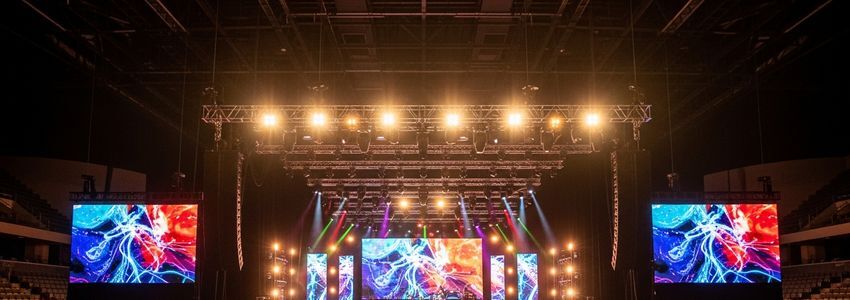
- Lighting Equipment: Modern lighting goes far beyond simple spotlights. It involves intelligent moving head fixtures (spots, washes, beams), LED PAR cans, atmospheric effects like haze and fog machines, and sophisticated lighting control consoles. A single high-end moving head fixture can cost $5,000-$15,000, and a comprehensive lighting rig for a concert or large corporate event often requires dozens of such units, pushing the total investment well into the six-figure range.
- Video Equipment: With the rise of immersive experiences, video has become a centerpiece of many events. This category includes high-resolution LED video walls, projectors, video switchers, media servers, and broadcast-quality cameras. A modular LED video wall is priced per panel, and a large-scale display for a stage backdrop can cost from $50,000 to over $500,000, depending on size and pixel pitch.
- Staging and Rigging: The physical structure of an event is just as important as the technology. This includes modular stage decks, truss systems for hanging lights and speakers, chain hoists, and support structures. A complete mobile stage system can cost upwards of $100,000, while a comprehensive truss and rigging package for an arena tour can run into the hundreds of thousands.
- Power and Distribution: None of the technology works without reliable power. This category includes power distribution units (distros), heavy-gauge feeder cables, and generators. A robust power distribution system to support a large production can be a significant investment, often costing $20,000 to $70,000 or more.
Ready to Upgrade Your Event Production Gear?
Don't let capital hold you back. Get the equipment you need now with flexible financing solutions. See what you qualify for in minutes.
Apply Now →Benefits of Equipment Financing for Event Companies
Choosing to finance your live event production equipment offers a multitude of strategic advantages that go far beyond simply acquiring new gear. It's a financial lever that can propel your business forward, enhance your capabilities, and improve your bottom line. Let's delve into the key benefits for event production companies.1. Preservation of Working Capital
This is arguably the most significant benefit. High-end production gear requires a massive capital outlay. Paying cash for a new lighting rig or video wall can deplete your liquid assets, leaving you vulnerable to unexpected expenses or unable to seize other opportunities. Equipment financing allows you to keep your cash in the bank for operational costs like payroll, marketing, rent, insurance, and down payments for large events. This healthy cash flow is the lifeblood of your business, providing the flexibility and stability needed to navigate the cyclical nature of the events industry.2. Immediate Access to Revenue-Generating Assets
With financing, you don't have to wait until you've saved up enough cash to buy the equipment you need. You can acquire it now and put it to work immediately. That new LED wall or line array system isn't just a cost; it's a revenue-generating asset from day one. It allows you to bid on larger, more profitable contracts, service more clients simultaneously, and offer in-demand technology that commands higher rental rates. The income generated by the new equipment can often cover, or even exceed, the monthly financing payment, resulting in a positive return on investment from the outset.3. Competitive Advantage
The live event industry is fiercely competitive. Clients are constantly seeking the "wow" factor, and that often comes from the latest technology. Having an inventory of modern, reliable, and high-performance equipment sets you apart from competitors who are using older, less capable gear. Financing enables you to stay on the cutting edge, offering clients the immersive video, dynamic lighting, and pristine audio they expect. This technological superiority can be a key differentiator that helps you win more business and build a reputation for excellence.4. Predictable, Fixed Monthly Payments
Equipment financing agreements typically come with fixed interest rates and a set repayment term. This means you have a predictable, fixed monthly expense that you can easily budget for. Unlike a variable-rate line of credit, you won't have to worry about fluctuating payments. This predictability simplifies financial planning and forecasting, allowing you to manage your expenses with confidence and allocate resources more effectively.5. Potential Tax Advantages
Equipment financing can offer significant tax benefits. Under Section 179 of the IRS tax code, businesses may be able to deduct the full purchase price of qualifying new or used equipment in the year it is placed into service. This can substantially lower your taxable income. Additionally, the interest paid on the loan is typically tax-deductible as a business expense. These tax advantages can effectively reduce the total cost of acquiring the equipment. (Note: It's crucial to consult with a tax professional to understand how these benefits apply to your specific financial situation).6. Building Business Credit
Successfully managing and paying off an equipment loan is a positive activity that gets reported to business credit bureaus. By making your payments on time, you build a strong credit history for your company. This can make it easier and more affordable to secure other types of financing in the future, such as a larger loan for expansion or a line of credit for operational flexibility.7. 100% Financing and Bundled Costs
Many equipment financing programs, including those offered by Crestmont Capital, can cover up to 100% of the equipment's cost. This means you may not need a significant down payment to get started. Furthermore, as mentioned earlier, "soft costs" like taxes, shipping, and installation can often be rolled into the loan amount. This all-in-one financing package simplifies the entire procurement process and eliminates the need for multiple out-of-pocket payments.Strategic Insight: Think of equipment financing not as debt, but as a growth tool. Each piece of financed equipment should have a clear path to generating more revenue than its monthly payment, effectively paying for itself while building equity in your business.
How Equipment Financing Works for Production Companies
The process of securing equipment financing is designed to be straightforward and efficient, allowing you to get the gear you need with minimal disruption to your business. While specifics can vary slightly between lenders, the general workflow follows a clear, logical path. Here’s a step-by-step breakdown of how it works for a live event production company.Step 1: Identify Your Equipment Needs and Get a Quote
The process begins with you. First, you determine exactly what equipment you need to purchase. This could be a complete audio system from a single manufacturer, a set of lighting fixtures from another, and a video switcher from a third. Once you've identified the gear, you'll work with your chosen vendors or suppliers to get a formal quote or invoice. This document should detail the specific models, quantities, and the total cost, including any applicable taxes and shipping fees. This quote is a critical piece of documentation for the financing application.Step 2: Complete a Simple Application
The next step is to apply for financing. Lenders like Crestmont Capital have streamlined this process with a simple online application that can often be completed in a few minutes. You'll provide basic information about your business, such as its legal name, address, time in business, and annual revenue. You will also need to provide details about the equipment you intend to purchase using the quote you obtained in Step 1. For a deeper dive into the application process, our comprehensive equipment financing guide offers additional insights.Step 3: Underwriting and Approval
Once you submit your application, it goes to the lender's underwriting team. They will review your business's financial health, credit history, and the value of the equipment being purchased. Because the equipment itself acts as collateral, the approval criteria for equipment financing are often more flexible than for other types of business loans. The underwriting process is typically very fast, with many lenders providing a decision within a few hours to one business day.Step 4: Review and Sign Financing Documents
Upon approval, the lender will present you with a financing agreement. This document will outline all the terms of the loan, including the total amount financed, the interest rate, the monthly payment, and the length of the term. It's crucial to review this document carefully to ensure you understand all the conditions. Once you are satisfied with the terms, you will sign the agreement electronically.Step 5: Funding and Equipment Purchase
After the signed documents are received, the process moves to the funding stage. The lender will coordinate directly with the equipment vendor(s) you specified in your application. They will pay the vendor the full amount from the invoice. This is a key convenience-you don't have to handle the large payment yourself. The vendor, having been paid, will then release the equipment for shipping and delivery directly to you.Step 6: Receive Your Equipment and Begin Payments
Your new equipment arrives, and you can immediately integrate it into your inventory and start using it for your events. Your first loan payment will typically be due about 30 days after the funding is complete. You will then continue to make your fixed monthly payments for the duration of the agreed-upon term. Throughout the term, you have full use of the equipment as if you owned it outright.Step 7: Own the Equipment
Once you make the final payment at the end of the loan term, your obligation to the lender is complete. At this point, the lender releases their lien, and you gain full, unencumbered ownership of the equipment. It becomes a valuable asset on your company's balance sheet that you can continue to use, sell, or trade in for future upgrades.
By the Numbers
Live Event Production Industry - Key Statistics
$1.5 Trillion
Projected global live events market size by 2028, showcasing massive industry growth and demand for production services. (Source: Allied Market Research)
44%
Of event planners state that engaging attendees is their biggest challenge, driving investment in high-impact AV and lighting technology. (Source: Bizzabo)
7.6% CAGR
Projected compound annual growth rate for the Pro AV equipment market, indicating a continuous need for technology upgrades. (Source: Mordor Intelligence)
99.9%
Of all U.S. businesses are small businesses, with the events industry being heavily comprised of companies that benefit most from accessible financing. (Source: SBA.gov)
Types of Equipment You Can Finance
One of the greatest strengths of equipment financing is its versatility. Essentially, if a piece of equipment is essential to your live event production business operations and has a reasonable lifespan, it can likely be financed. Lenders who specialize in this industry understand the unique and diverse range of assets required to produce a high-quality event. This flexibility allows you to build a comprehensive, state-of-the-art inventory without being limited by financing constraints. Here is a more detailed list of the types of equipment that production companies commonly finance:Audio Equipment
- Loudspeaker Systems: This includes line arrays, point source speakers, subwoofers, and stage monitors from leading brands like L-Acoustics, d&b audiotechnik, Meyer Sound, and QSC.
- Mixing Consoles: Both digital and analog consoles for front-of-house (FOH) and monitor applications from manufacturers like DiGiCo, Avid, Yamaha, and Allen & Heath.
- Wireless Systems: Professional-grade wireless microphone and in-ear monitor (IEM) systems from Shure and Sennheiser.
- Amplifiers and Processors: Power amplifiers, digital signal processors (DSPs), and system controllers needed to run the entire audio chain.
Lighting Equipment
- Intelligent Lighting Fixtures: Moving head lights (spots, washes, beams, hybrids) from brands like Robe, Clay Paky, Martin, and Chauvet Professional.
- Static LED Fixtures: LED PARs, battens, and cyclorama lights used for stage washing and architectural lighting.
- Lighting Control: Consoles, wings, and networking nodes from manufacturers like MA Lighting (grandMA series) and High End Systems (Hog series).
- Atmospheric Effects: Professional haze machines, foggers, and special effect machines.
Video Equipment
- LED Video Walls: Modular indoor/outdoor LED panels and the associated video processors and rigging hardware from brands like ROE Visual, Absen, and Unilumin.
- Projectors and Screens: High-lumen laser projectors for large-scale image magnification (IMAG) and projection mapping, along with fast-fold screens.
- Cameras and Broadcast Gear: PTZ (Pan-Tilt-Zoom) cameras, broadcast cameras, and production switchers for live streaming and recording events.
- Media Servers: Powerful servers for content playback and real-time visual effects from companies like disguise and Green Hippo.
Staging, Rigging, and Support
- Staging: Modular stage decks, mobile stages, and custom-built stage structures.
- Truss and Rigging: Aluminum trussing, chain hoists, motors, and control systems from CM-ET, Prolyte, and Tyler Truss.
- Power Distribution: Portable power distribution units (distros), feeder cables, and generators to power the entire production.
- Communication Systems: Wired and wireless intercom systems to keep the production crew connected.
New and Used Equipment
A key point of flexibility is that financing is available for both new and used equipment. This is particularly beneficial in the production world, where well-maintained, pre-owned gear from top-tier brands can offer incredible value. Financing used equipment allows you to acquire high-end technology at a lower price point, stretching your budget further. Lenders will typically assess the value and expected lifespan of the used gear as part of the underwriting process. This broad eligibility makes equipment financing a powerful tool for any acquisition scenario, whether you're a startup building your initial inventory, an established company upgrading a specific department, or a large firm executing a major technology refresh.Who Qualifies for Equipment Financing
Equipment financing is one of the most accessible forms of business funding, largely because the loan is secured by the asset itself. This inherent collateral reduces the lender's risk, allowing for more flexible qualification criteria compared to unsecured loans. While every lender has its own specific requirements, here are the general factors they consider when evaluating an application from a live event production company.1. Time in Business
Lenders generally prefer to work with established businesses, as a longer operational history indicates stability. The standard requirement is often a minimum of two years in business. However, this is not a hard-and-fast rule. Many lenders, including Crestmont Capital, have programs specifically designed for newer businesses and startups, especially if the business owner has strong personal credit and industry experience. For a startup, a solid business plan and financial projections can be crucial.2. Business and Personal Credit Score
Credit history is a key indicator of your financial responsibility. Lenders will look at both your business credit score (if established) and your personal credit score. A higher score demonstrates a history of managing debt well and making payments on time. While a top-tier score (700+) will open the door to the best rates and terms, financing is often available for businesses with fair or even challenged credit. A score in the mid-600s is often sufficient for approval, though the rates may be higher to compensate for the increased risk.3. Annual Revenue
Your company's revenue demonstrates its ability to generate the cash flow necessary to make monthly loan payments. Lenders will look at your annual or monthly gross revenue to ensure it's sufficient to support the new debt obligation. While there isn't a universal revenue threshold, a consistent and verifiable income stream is essential. Bank statements and tax returns are the most common documents used to verify revenue.4. The Equipment Itself
The type, age, and value of the equipment you are financing play a significant role in the approval process. Lenders are more comfortable financing equipment that is made by a reputable manufacturer, has a strong resale value, and a long useful lifespan. This is because the equipment is the collateral-if you were to default on the loan, the lender needs to be confident they can repossess and sell the asset to recoup their losses. Fortunately, professional-grade AV, lighting, and staging equipment typically holds its value well, making it excellent collateral.5. Industry Experience
For businesses in a specialized field like live event production, the owner's experience is a valuable, albeit less tangible, asset. If you have a proven track record of successfully running events and managing production assets, it gives the lender more confidence in your ability to operate the business profitably and manage the new equipment effectively. This can be particularly important for newer businesses seeking funding.Pro Tip: Don't self-disqualify. Even if you think you might not meet one of these criteria perfectly, it's often worth submitting an application. Lenders can often find flexible solutions, especially when there are other strengths in your profile, such as strong revenue or high-quality collateral.
Curious About Your Financing Options?
Our simple, no-obligation application takes just a few minutes. Discover the rates and terms available for your next equipment purchase.
See My Options →Equipment Financing vs. Buying Outright vs. Renting
When your production company needs to acquire new equipment, you have three primary options: finance it, buy it outright with cash, or rent it on a per-event basis. Each method has distinct advantages and disadvantages, and the best choice depends on your company's financial situation, the specific equipment needed, and your long-term business strategy.| Feature | Equipment Financing | Buying with Cash | Renting (Cross-Rental) |
|---|---|---|---|
| Upfront Cost | Low to none. Minimal down payment may be required. | Very High. 100% of the equipment cost plus taxes and fees. | Low. Only pay for the duration of the rental. |
| Cash Flow Impact | Minimal initial impact. Preserves working capital for operations. | Massive negative impact. Depletes cash reserves significantly. | Minimal. Predictable cost per event. |
| Ownership | You build equity with each payment and own the asset at the end of the term. | Immediate and full ownership. | No ownership. You never build equity. |
| Tax Benefits | Potential for full Section 179 deduction and interest is deductible. | Potential for Section 179 deduction and depreciation over time. | Rental payments are fully deductible as an operating expense. |
| Equipment Availability | Excellent. The equipment is always in your inventory, ready for use. | Excellent. The equipment is always available. | Variable. Dependent on the rental house's inventory and availability. |
| Total Cost | Higher than cash price due to interest, but spread over time. | Lowest total cost, as there are no interest payments. | Highest long-term cost if the equipment is used frequently. |
| Technology Obsolescence | A moderate risk. You own the gear at the end. Some lease options (like an operating lease) can mitigate this. | Highest risk. You are fully responsible for outdated technology. | Lowest risk. You can always rent the latest models. |
| Best For | Businesses seeking to grow their inventory, preserve cash, and build assets without a large capital outlay. Ideal for core, frequently used equipment. | Highly profitable companies with very large cash reserves that can afford the large expenditure without impacting operations. | One-off events, specialized equipment needed infrequently, or testing new gear before committing to a purchase. |
Analysis of the Options
Equipment Financing strikes a powerful balance. It provides the benefits of ownership-asset building, constant availability, and control over your inventory-without the crippling upfront cost of a cash purchase. For most growing live event production companies, this is the most strategic path. It allows you to scale your capabilities in lockstep with your revenue, using the equipment to pay for itself over time.
Buying with Cash is the simplest transaction, but it's often the least strategic. While you avoid interest payments, the opportunity cost of tying up so much capital can be immense. That cash could be used for hiring top talent, expanding your marketing efforts, or as a safety net for slow periods. Unless your company is sitting on a mountain of excess cash, this option can be financially restrictive.
Renting (often called cross-renting in the industry) is an essential tool, but not a long-term growth strategy for your core equipment. It's perfect for fulfilling a client's request for a niche piece of gear you don't own, or for supplementing your inventory during an unusually busy week. However, relying on rentals for your primary sound, lighting, and video systems is costly and inefficient. The rental fees add up quickly, you build no equity, and you're always at the mercy of another company's availability, which can be risky for mission-critical events.
For a sustainable growth model, a hybrid approach often works best: use **equipment financing** to build out your core inventory of frequently used, high-demand gear, and use **renting** to handle specialized, infrequent requests.How Crestmont Capital Helps Live Event Production Companies
At Crestmont Capital, we're not just a general lender; we are a strategic financial partner with deep expertise in the equipment-intensive industries, including live event production. We understand that your business isn't about spreadsheets and balance sheets-it's about creating unforgettable experiences. Our financing solutions are specifically designed to help you acquire the tools you need to do just that, with a process that is fast, flexible, and transparent.Industry-Specific Expertise
We know the difference between a line array and a lighting console, and we understand the value that high-quality production gear brings to your business. Our team is experienced in financing assets from all major manufacturers, from L-Acoustics and Robe to ROE Visual and DiGiCo. This industry knowledge allows us to make faster, more intelligent underwriting decisions. We recognize the strong collateral value of professional production equipment, which often enables us to offer more favorable terms than a traditional bank that may not understand your assets.Speed and Efficiency
The event industry moves fast, and opportunities don't wait. When you need to secure a new piece of gear to land a big contract, you can't afford to be stuck in a slow, bureaucratic loan process. Crestmont Capital has built its reputation on speed. Our streamlined online application takes only a few minutes to complete, and we can often provide approvals in as little as a few hours. We handle the funding directly with your vendor, ensuring a smooth and rapid transaction from application to delivery.Flexible Financing Structures
We recognize that no two production companies are the same. That's why we offer a range of flexible financing solutions to meet your specific needs.- Equipment Loans: A straightforward financing option where you make regular payments and own the equipment at the end of the term.
- Equipment Leasing: We offer various leasing options, including a $1 Buyout Lease (which functions like a loan) and a Fair Market Value (FMV) lease, which can offer lower monthly payments and an option to return the equipment at the end of the term-a great way to combat technology obsolescence.
- Custom Payment Plans: For businesses with seasonal cash flow, we can explore options like deferred payments or seasonal payment structures that align with your revenue cycles.
Financing for a Wide Range of Businesses
Whether you are an established, multi-million dollar production house or a newer company with a strong business plan, we have solutions for you. We work with businesses across the credit spectrum and have dedicated programs for startups and companies with less than two years of history. Our goal is to support the growth of your business, regardless of its current size. We also offer other forms of small business financing, such as working capital loans, to help with non-equipment related expenses.A True Partnership Approach
When you work with Crestmont Capital, you get a dedicated financing specialist who will guide you through the entire process. We take the time to understand your business goals and help you choose the financing structure that makes the most sense for your situation. We believe in building long-term relationships, and we aim to be your go-to financial partner for all your future equipment acquisition needs.Real-World Scenarios: How Event Companies Use Equipment Financing
To better understand the practical impact of equipment financing, let's look at a few hypothetical but highly realistic scenarios that live event production companies face every day.Scenario 1: The Corporate AV Specialist Scaling Up
The Company: "Pro AV Solutions," a five-year-old company specializing in corporate conferences and trade shows. They have a solid reputation but are consistently having to cross-rent large LED video walls and advanced audio systems for their biggest clients, cutting into their profit margins. The Opportunity: They have a chance to become the exclusive in-house provider for a large convention center, but the contract requires them to own a significant inventory of modern gear, including a 40-foot wide, 3.9mm pixel pitch LED wall. The total cost of the required gear is $350,000. The Solution: Paying $350,000 in cash would wipe out their operating reserves. Instead, Pro AV Solutions applies for an equipment loan with Crestmont Capital. With their strong business history and revenue, they are quickly approved for 100% financing on a 60-month term. The Outcome: Their monthly payment is approximately $7,400. The new convention center contract alone brings in an additional $40,000 in revenue per month. The financed equipment not only pays for itself more than five times over each month but also allows them to service their other clients without renting, drastically increasing their overall profitability. They build significant equity in a valuable asset and solidify a major long-term revenue stream.Scenario 2: The Lighting Design Startup
The Company: "Dynamic Lighting Designs," a startup founded by a talented lighting designer with 10 years of industry experience. She has been freelancing and renting all her gear, but wants to build her own inventory to take on more profitable design-and-supply projects. The Challenge: As a new business (less than one year old), traditional banks won't even consider her for a loan. She needs a package of 24 moving head fixtures and a professional console, totaling $90,000. The Solution: She applies to a lender like Crestmont Capital that has programs for startups. Based on her strong personal credit, detailed business plan, and significant industry experience, she is approved for a financing agreement. The terms might be slightly higher than for an established business, but it provides the crucial capital she needs to get started. The Outcome: With her own inventory, she can now market her company as a full-service lighting provider. She stops paying high rental fees and starts earning rental income on her own gear. The financing allows her to bridge the gap from freelancer to a legitimate business owner, establishing her company's credit and paving the way for future growth.Scenario 3: The Established Concert Touring Company
The Company: "Arena Sound & Light," a 15-year-old company that provides full production for national music tours. Their current line array system is aging and no longer meets the technical riders of many top-tier artists. The Need: They need to invest in a new, top-of-the-line L-Acoustics K2 sound system. The total package, including amplifiers and rigging, costs $1.2 million. The Solution: A cash purchase of this size is not strategic, as they need to maintain significant liquidity for tour logistics and payroll. They work with their financing partner to structure an equipment loan. Given their excellent credit and long history, they secure a very competitive interest rate over a 7-year term. They also use the Section 179 deduction to write off a significant portion of the purchase on their taxes for the year. The Outcome: The new sound system makes them competitive for the biggest tours in the country. They land a multi-year contract with a major recording artist, and the revenue from that single tour more than covers the entire cost of the new system over its lifetime. The financing enables them to maintain their position as an industry leader without compromising their financial health.Common Mistakes Event Companies Make When Financing Equipment
While equipment financing is a powerful tool, navigating the process without a clear strategy can lead to costly mistakes. Being aware of these common pitfalls can help you make smarter decisions and maximize the value of your investment.1. Focusing Only on the Monthly Payment
It's easy to get fixated on getting the lowest possible monthly payment. While affordability is important, it shouldn't be the only factor. A very low payment could be the result of an extremely long repayment term, which means you'll pay significantly more in total interest over the life of the loan. It could also be a feature of a lease with a large residual payment at the end. It's crucial to consider the total cost of financing (principal + total interest) and the loan's structure, not just the monthly figure.2. Not Reading the Fine Print
A financing agreement is a legally binding contract. Failing to read and understand all the terms can lead to unpleasant surprises. Pay close attention to the interest rate (is it fixed or variable?), any potential prepayment penalties, late fee structures, and the end-of-term conditions (especially for leases). If you don't understand something, ask your financing specialist to clarify it before you sign.3. Neglecting to Factor in "Soft Costs"
The price tag on the equipment is not the final cost. You also need to account for taxes, shipping, installation, and training. A common mistake is securing financing only for the hardware, forcing you to pay for these significant soft costs out of pocket. A good financing partner can bundle these expenses into the loan, simplifying your budget and preserving your cash. Always get a complete, all-in quote from your vendor to ensure you're financing the full amount needed.4. Financing the Wrong Equipment
Don't finance equipment based on a single, high-paying gig. Your financing strategy should be based on acquiring assets that will be in regular demand across a wide range of your typical events. Financing a very niche piece of gear that will sit in the warehouse 95% of the time is a poor use of capital; that's a situation where cross-renting makes more sense. Focus on financing core, workhorse equipment that will consistently generate revenue.5. Waiting Too Long to Secure Financing
The worst time to seek financing is when you're in a desperate situation, such as when a critical piece of gear fails right before a big event. Rushed decisions often lead to accepting unfavorable terms. The best approach is to be proactive. Plan your equipment upgrades and acquisitions in advance. This gives you time to shop for the best gear, compare financing offers, and make a strategic decision without being under pressure. For more on how to manage business funds, our blog post on working capital loans offers related insights on financial planning.6. Not Working with an Industry-Specialized Lender
A general-purpose bank or lender may not understand the value and longevity of professional production equipment. They might be hesitant to finance it or offer less favorable terms because they perceive it as a higher risk. Working with a specialist like Crestmont Capital, who understands your industry and assets, can result in a smoother process, higher approval rates, and better terms because they accurately assess the collateral's value. By avoiding these common errors, you can ensure that your equipment financing strategy truly supports your company's growth and profitability for years to come.Build Your Dream Inventory Today
Let's turn your equipment wish list into a reality. Our team is ready to help you craft the perfect financing plan for your live event production business.
Start Your Application →Frequently Asked Questions
What exactly is equipment financing for live event companies?
Equipment financing is a type of business loan created specifically for purchasing physical assets. For a live event company, this means you can get a loan to buy audio, lighting, video, staging, and other production gear. The equipment you purchase serves as the collateral for the loan. You make fixed monthly payments over a set term, and at the end of the term, you own the equipment outright.
What kinds of event production equipment can I finance?
You can finance virtually any piece of equipment essential to your business. This includes, but is not limited to: sound systems (speakers, consoles, microphones), lighting fixtures (moving heads, LEDs), lighting consoles, LED video walls, projectors, cameras, media servers, staging, truss, rigging, and power distribution systems. Both new and used equipment are typically eligible for financing.
What are the minimum requirements to qualify for a live event equipment loan?
Requirements vary by lender, but generally, they look for a combination of factors. A common baseline is at least 1-2 years in business, a personal credit score of 620 or higher, and consistent annual revenue. However, many lenders (including Crestmont Capital) have programs for startups and businesses with lower credit scores, often by weighing factors like industry experience and the quality of the collateral more heavily.
How fast can I get approved and receive my equipment?
The process is typically very fast. With a streamlined online application, you can often get a credit decision within a few hours to one business day. Once you sign the financing documents, the lender funds the vendor directly, usually within 24-48 hours. The vendor then ships the equipment to you based on their own logistics and stock levels.
What are the typical terms for an equipment financing agreement?
Repayment terms generally range from 24 to 84 months (2 to 7 years). The term you qualify for often depends on the cost and expected useful life of the equipment, as well as your business's financial profile. Longer terms result in lower monthly payments but higher total interest costs, while shorter terms have higher payments but save you money on interest.
Is a down payment required for equipment financing?
Not always. Many equipment financing programs offer up to 100% financing, meaning no down payment is required. In some cases, especially for newer businesses or those with challenged credit, a lender might ask for a small down payment (typically 10-20%) or the first and last monthly payments upfront to reduce their risk.
Can my startup event production company get equipment financing?
Yes, it is possible. While traditional banks are hesitant to lend to businesses with less than two years of history, many alternative lenders have specific programs for startups. They will place a stronger emphasis on the owner's personal credit score, industry experience, and a well-thought-out business plan. Having some capital to put down can also increase your chances of approval.
How does equipment financing help my company's cash flow?
It helps by converting a single, massive cash expenditure into a series of small, manageable monthly payments. This allows you to keep your cash reserves (working capital) free for other essential business expenses like payroll, marketing, rent, and unforeseen costs. You get the revenue-generating equipment you need immediately without draining your bank account.
Which is better for my business: financing or renting equipment?
It depends on usage. For core equipment that you use frequently (e.g., your main PA system, primary lighting rig), financing is almost always better as you build equity and have constant availability. For specialized equipment needed for a single event or very infrequently, renting (cross-renting) is more cost-effective. A smart strategy often involves financing your core inventory and renting for niche needs.
What is the difference between equipment financing and equipment leasing?
The main difference is ownership. With an equipment financing agreement (or a $1 buyout lease), you are the owner of the equipment from the start, and the lender has a lien on it until the loan is paid. At the end, you own it free and clear. With a true lease (like a Fair Market Value lease), the lender owns the equipment, and you pay to use it. At the end of the term, you can choose to return it, purchase it for its fair market value, or renew the lease. Leases can offer lower payments and are good for fighting technology obsolescence.
How much can my production company borrow?
The amount you can borrow depends on your business's financial health (revenue, credit), time in business, and the value of the equipment you're purchasing. Financing amounts can range from as little as $5,000 for a small purchase to well over $1 million for a full-scale production inventory upgrade. Most lenders will finance the full cost of the equipment.
How much does my credit score matter for approval?
Your credit score is an important factor, but it's not the only one. A strong credit score (680+) will help you secure the best rates and terms. However, because the equipment itself serves as collateral, financing is often available to business owners with fair or average credit (in the low-to-mid 600s). Lenders will also consider your revenue and time in business to get a complete picture of your application.
What documents do I need to apply?
For smaller financing amounts (typically under $250,000), the process is often application-only, meaning you just need to fill out the lender's application form and provide an invoice for the equipment. For larger amounts, the lender may also request 3-6 months of business bank statements and your most recent business tax return to verify revenue and financial health.
Can I finance used event production equipment?
Yes, absolutely. Most lenders will finance the purchase of used equipment, provided it is in good working condition and has a reasonable remaining useful life. Financing used gear can be a great way to acquire high-end, professional brands at a significant discount compared to buying new. The lender will simply verify the value of the used equipment with the seller.
What happens at the end of the financing term?
Once you have made your final payment on an equipment loan or a $1 buyout lease, the lender releases their lien on the equipment. You then own it 100%, free and clear. It becomes a fully-paid-for asset on your company's balance sheet that you can continue to use to generate revenue, sell, or trade in for a future upgrade.
How to Get Started with Equipment Financing
Taking the next step toward acquiring the equipment that will grow your live event production business is simple and straightforward with Crestmont Capital. Our process is designed to be fast, transparent, and focused on your needs.Conclusion
In the high-stakes, fast-paced world of live event production, the quality of your equipment is not just a detail-it is the very foundation of your service and reputation. Staying competitive and delivering the spectacular experiences clients demand requires a continuous investment in technology. However, the high cost of this technology presents a significant challenge for growth. As we've detailed, equipment financing for live events is not merely a loan; it is a strategic financial instrument that transforms this challenge into an opportunity. By leveraging financing, you can acquire mission-critical, revenue-generating assets immediately without depleting your vital working capital. This approach allows you to preserve financial flexibility, manage your budget with predictable payments, and gain a significant competitive edge in the marketplace. You can say "yes" to bigger contracts, offer more advanced services, and build equity in valuable assets that strengthen your company's balance sheet over time. From audio and lighting to video and staging, the right equipment empowers you to bring your creative vision to life. Don't let capital constraints dictate the limits of your ambition. Whether you are a startup looking to build your first inventory or an established leader undertaking a major technology refresh, a well-structured financing plan from a knowledgeable partner like Crestmont Capital can be the catalyst for your next phase of growth. By making a smart, informed decision about how you acquire your gear, you are investing directly in the future success and profitability of your live event production business.Disclaimer: The information provided in this article is for general educational purposes only and is not financial, legal, or tax advice. Funding terms, qualifications, and product availability may vary and are subject to change without notice. Crestmont Capital does not guarantee approval, rates, or specific outcomes. For personalized information about your business funding options, contact our team directly.