
 (800) 949-0401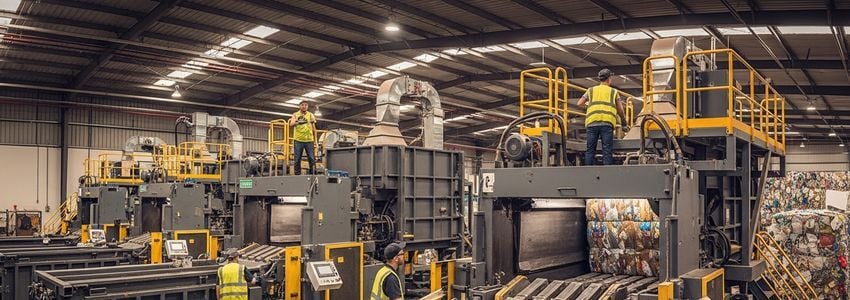
Equipment Financing for Baling Machines and Compactors: The Complete Guide for Business Owners
When your business processes high volumes of waste, recyclables, cardboard, or scrap material, baling machines and compactors are not optional equipment - they are core infrastructure. But these machines carry substantial price tags, often ranging from $5,000 for entry-level compactors to well over $150,000 for heavy-duty industrial balers. For most businesses, purchasing outright is not the smartest financial move. Equipment financing for baling machines and compactors gives you the ability to acquire the machinery you need immediately while preserving your working capital and keeping cash flow stable.
This guide covers everything you need to know: how the financing process works, what lenders look for, how leasing compares to buying, which businesses benefit most, and how Crestmont Capital can help you move forward quickly.
In This Article
What Are Baling Machines and Compactors?
Baling machines (also called balers) compress loose materials - cardboard, plastic, metal, paper, textiles, or agricultural products - into dense, uniform bales for storage, transport, or resale. Compactors perform a similar function, reducing the volume of waste or recyclable materials to make collection and handling more efficient.
These two categories of equipment are central to operations in industries ranging from recycling facilities and waste management companies to distribution centers, manufacturing plants, grocery chains, agricultural businesses, and large retail operations. Without them, material handling becomes a labor-intensive, expensive, and logistically messy process.
The equipment spans a wide range of sizes and configurations:
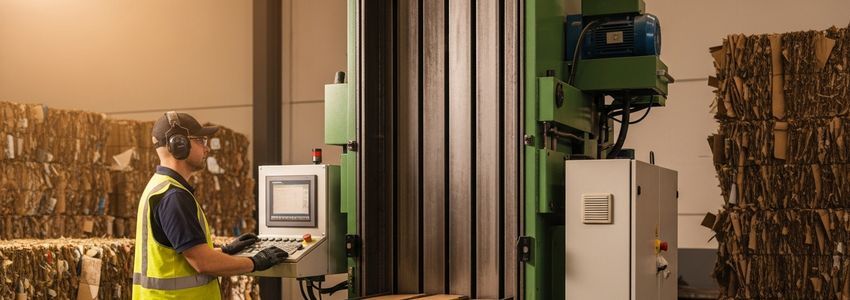
- Vertical balers - Compact units ideal for retail stores, offices, and smaller operations processing cardboard or plastic
- Horizontal balers - High-throughput machines used in recycling facilities and large manufacturing plants
- Two-ram balers - Heavy-duty systems for processing mixed or dense materials at high volumes
- Self-contained compactors - Enclosed units with integral containers for wet or commercial waste
- Stationary compactors - Fixed units that compact waste into a detachable container
- Agricultural balers - Round and square balers for hay, straw, silage, and crop residue
Depending on the type and scale of equipment, prices vary significantly. A basic vertical baler may cost $5,000 to $15,000. Horizontal industrial balers range from $30,000 to $150,000 or more. Heavy-duty two-ram systems can exceed $200,000. This cost range makes financing not just useful - but strategically essential for most businesses.
Industry Insight: According to the Equipment Leasing and Finance Association (ELFA), over 80% of U.S. businesses use some form of financing to acquire equipment rather than paying cash outright. For material handling and recycling equipment, this percentage is even higher due to the capital-intensive nature of the machinery.
Why Finance Instead of Buy Outright?
The case for financing baling and compactor equipment comes down to smart capital allocation. Paying $80,000 cash for a horizontal baler depletes reserves that could otherwise fund inventory purchases, staff hiring, facility upgrades, or marketing. With financing, you spread that cost over 24 to 84 months, turning a large capital outlay into a manageable monthly operating expense.
Here are the core reasons businesses choose financing over outright purchase:
- Preserve working capital - Keep cash available for payroll, operations, and unexpected expenses
- Immediate access to equipment - Start generating revenue or savings with the equipment right away
- Predictable budgeting - Fixed monthly payments make financial planning straightforward
- Avoid technology obsolescence - Leasing options allow equipment upgrades at end of term
- Potential financial advantages - Section 179 deductions on purchased/financed equipment and lease payment deductibility
- Improved cash flow ratios - Better liquidity ratios can improve creditworthiness for future borrowing
For businesses that rely on baling and compacting equipment as a cost-of-operations necessity rather than a revenue-generating asset, financing is often the most prudent approach. The equipment saves money through reduced waste hauling costs, increased recycling revenue, and improved operational efficiency - meaning it effectively pays for itself over time.
Need Baling or Compactor Equipment Now?
Get flexible equipment financing from the #1 business lender in the U.S. Fast approvals, competitive rates, terms tailored to your cash flow. No obligation to apply.
Apply Now ->How Equipment Financing Works
Equipment financing is a loan or lease specifically structured around the equipment being purchased. The equipment itself typically serves as collateral, which is why qualification requirements are often more accessible than unsecured business loans. Here is the standard process:
Step 1 - Application: You submit a financing application along with basic business financial information. For smaller equipment purchases (under $150,000), many lenders use a simplified "one-page app" process requiring minimal documentation.
Step 2 - Review and approval: The lender evaluates your credit profile, time in business, annual revenue, and the equipment being financed. Approvals for well-qualified applicants can happen in as little as 24 to 48 hours.
Step 3 - Terms and funding: Once approved, you receive a term sheet outlining the loan amount, interest rate or factor rate, monthly payment, and term length. Upon signing, the lender funds the purchase directly to the equipment vendor.
Step 4 - Repayment: You make monthly payments over the agreed term, typically 24 to 84 months. At the end of a loan term, you own the equipment outright. At the end of a lease term, you have options to purchase, return, or upgrade.
Quick Guide
How Baler and Compactor Financing Works - At a Glance
Identify the baler or compactor model and get a quote from your vendor or manufacturer.
Submit your application with basic business information. Most approvals happen within 24-48 hours.
Review your loan or lease agreement, sign the documents, and the lender funds directly to the vendor.
Your equipment arrives and you begin making fixed monthly payments while your business runs smoothly.
Types of Financing Available for Balers and Compactors
There is no single financing solution that works for every business. Depending on your goals, creditworthiness, and equipment needs, different structures may be more beneficial. Here are the primary options:
Equipment Loans (Installment Financing)
With an equipment loan, you borrow the full purchase price (or a portion after a down payment) and repay it with interest over a set term. At the end of the loan, you own the equipment free and clear. This is the most straightforward option and works well for businesses that intend to use the equipment long-term and want to build equity.
Equipment Leasing
Leasing is essentially a long-term rental arrangement. You make monthly payments for access to the equipment without owning it. At the end of the lease, you typically have the option to purchase the equipment at fair market value (FMV lease) or for a nominal amount ($1 buyout lease). Leasing offers lower monthly payments and flexibility, making it popular for equipment that may become outdated.
Operating Lease
An operating lease is similar to a rental - the lease term is shorter, payments are lower, and the equipment is returned at the end. This is best for businesses that want to avoid ownership responsibilities and prefer to upgrade equipment regularly.
Capital Lease (Finance Lease)
A capital lease is structured more like a purchase - the lessee assumes most risks and benefits of ownership, and the equipment typically appears on the balance sheet. This option is used when businesses plan to own the equipment eventually but prefer the flexibility of lease payments during the financing period.
SBA Loans
For larger equipment purchases or businesses seeking longer terms and lower rates, SBA loans can be an excellent option. The SBA 7(a) program and SBA 504 program offer partially government-backed financing that allows businesses to finance major equipment investments over 10 or 25 years with competitive rates. Learn more about SBA loans for small businesses through Crestmont Capital.
Lines of Credit
A business line of credit can be used to finance equipment purchases when flexibility is more important than a fixed loan structure. Lines of credit allow you to draw funds as needed and repay on a revolving basis, making them useful for businesses that need to acquire multiple pieces of equipment over time.
By the Numbers
Baling and Compactor Equipment Financing - Key Statistics
80%
of U.S. businesses use financing to acquire equipment rather than paying cash
$5K-$200K+
Typical price range for commercial balers and compactors
24-84
Months - typical financing term lengths available
24-48hrs
Typical approval timeframe for equipment financing with qualified applicants
Who Qualifies for Baler and Compactor Financing?
One of the major advantages of equipment financing is that qualification criteria are generally more accessible than traditional business loans. Because the equipment itself serves as collateral, lenders are willing to work with businesses that may not have perfect credit histories. Here are the typical qualification benchmarks:
- Time in business: Most lenders prefer at least 1-2 years in operation, though startup programs exist for newer businesses
- Credit score: A personal FICO score of 620 or higher is generally preferred, though some programs work with scores as low as 550
- Annual revenue: Lenders typically look for at least $100,000 to $250,000 in annual gross revenue
- Down payment: Many programs offer 0% down, though a 10-20% down payment may improve your rate and terms
- No recent bankruptcies: Most lenders require that any bankruptcies are at least 1-3 years old and discharged
The industries most commonly seeking baler and compactor financing include:
- Recycling and waste management companies
- Distribution centers and logistics operators
- Grocery stores, supermarkets, and food retailers
- Manufacturing and industrial facilities
- Agricultural operations (round balers, square balers)
- Scrap metal dealers and processing yards
- Large retail chains and department stores
- Paper mills and packaging facilities
- Hotels, hospitals, and institutional facilities with high waste volumes
Good to Know: Even if your business is newer or has less-than-perfect credit, specialized equipment lenders like Crestmont Capital have programs designed to work with a wider range of financial profiles. Equipment financing is one of the most accessible forms of business credit precisely because the collateral - the equipment itself - reduces the lender's risk significantly.
Financing vs. Leasing vs. Buying: Which Is Right for You?
| Factor | Equipment Loan | Equipment Lease | Cash Purchase |
|---|---|---|---|
| Upfront Cost | Low (0-20% down) | Minimal (first payment) | Full purchase price |
| Monthly Payment | Moderate | Lower | None |
| Ownership | Yours at end of term | Option to buy or return | Immediate ownership |
| Cash Flow Impact | Minimal | Minimal | Significant drain |
| Upgrade Flexibility | Moderate | High (end of term) | Low (requires resale) |
| Balance Sheet Impact | Asset + liability | Operating expense | Asset only |
| Best For | Long-term use, ownership goals | Technology refresh, lower payments | Businesses with strong cash reserves |
For most businesses that rely on balers and compactors as operational workhorses - running them daily for years - equipment loans tend to offer the best long-term value. The monthly cost is manageable, ownership builds over time, and you avoid the depreciation hit of a large cash purchase. Equipment financing through Crestmont Capital is structured to align with your revenue cycles so payments never strain your cash position.
How Crestmont Capital Helps with Baler and Compactor Financing
Crestmont Capital is a nationwide business lender rated #1 in the country for small business financing. We specialize in equipment financing and have funded thousands of businesses across every major industry. Here is what sets us apart when it comes to financing balers, compactors, and material handling equipment:
- Fast approvals: Most applications receive a decision within 24-48 hours. For well-qualified applicants, same-day approvals are common.
- Flexible terms: We offer financing terms from 24 to 84 months, with payment structures tailored to your seasonal revenue and cash flow patterns.
- Wide eligibility range: Our programs accommodate businesses from startups to established enterprises, including those with challenged credit histories.
- No down payment options: Qualified borrowers can finance 100% of the equipment cost with no money out of pocket.
- Multiple product lines: Beyond equipment loans, we offer working capital loans, SBA loans, lines of credit, and commercial financing to address your full range of funding needs.
- Dedicated advisors: You work with a real financing specialist - not a chatbot or automated system - who understands your industry.
Whether you are a recycling facility acquiring a new horizontal baler, a grocery distribution center upgrading its cardboard compactors, or an agricultural operation financing round balers for the upcoming season, Crestmont Capital has a program designed for you. Visit our equipment financing page to learn more about our capabilities.
Ready to Finance Your Baler or Compactor?
Crestmont Capital offers fast, flexible equipment financing with terms built around your business. Apply in minutes and get a decision within 24-48 hours.
Apply Now ->Real-World Scenarios: How Businesses Use Baler and Compactor Financing
Understanding how other businesses have approached this type of financing can help you evaluate your own situation more clearly. Here are six real-world scenarios that illustrate the range of applications.
Scenario 1: Recycling Facility Upgrading to Automated Horizontal Baler
A mid-size recycling company in the Southeast was processing cardboard and plastic manually with an aging vertical baler. Throughput limitations were costing them on resale value per bale and creating production bottlenecks. They financed a $95,000 horizontal baler over 60 months through Crestmont Capital. The improved bale density and output increased their monthly recycled material revenue by approximately $4,200 per month - far exceeding the financing cost. The machine paid for itself within 24 months.
Scenario 2: Grocery Distribution Center Adding Self-Contained Compactors
A regional grocery distribution center was paying $3,100 per month in waste hauling fees due to low-density, uncompacted refuse. They financed two self-contained compactors at a combined cost of $68,000 over 48 months. The compactors reduced hauling frequency by 60%, dropping monthly waste disposal costs by approximately $1,850. The net monthly savings exceeded the monthly financing payment within the first 90 days.
Scenario 3: Agricultural Operation Financing Round Balers for Hay Production
A Texas hay producer needed two new round balers ahead of the spring cutting season. The $54,000 equipment cost was too large to absorb from operating cash without disrupting other farm expenses. Using agricultural equipment financing through Crestmont Capital, they structured a 36-month loan with a seasonal payment plan that lowered payments during the winter off-season. The balers allowed them to process and sell an additional 800 bales per season at an average of $65 per bale - adding $52,000 in annual revenue.
Scenario 4: Manufacturing Plant Financing Two-Ram Baler for Metal Scrap
A metal fabrication plant in the Midwest was accumulating significant metal scrap without a cost-effective way to prepare it for resale. A two-ram baler priced at $145,000 would allow them to compress and sell scrap at much higher value per ton. They financed it over 72 months with a down payment of 10%. The additional scrap revenue exceeded the monthly payment by month four of operations.
Scenario 5: Hotel Chain Upgrading Compactors Across Multiple Locations
A regional hotel management company with 12 properties needed to replace aging waste compactors to comply with updated municipal waste management requirements. Rather than purchasing outright at a total cost exceeding $180,000 across all properties, they leased the compactors through a master lease agreement with staggered installations. The operating lease structure allowed them to treat the entire cost as an operating expense and maintain full flexibility for equipment upgrades.
Scenario 6: Startup Recycling Business Financing First Industrial Baler
A first-year recycling startup in the Pacific Northwest qualified for an equipment financing program specifically designed for newer businesses. Despite less than 18 months in operation, their strong revenue trajectory and the collateral value of the equipment secured a 48-month loan for a $42,000 vertical baler. The ability to produce salable bales immediately transformed their business model from loose-material sales to value-added bale production.
How to Get Started
Complete our quick application at offers.crestmontcapital.com/apply-now - takes just a few minutes. No obligation and no impact to your credit for checking your options.
A Crestmont Capital advisor will review your needs, explain your options, and match you with the financing structure that fits your cash flow and business goals.
Once approved and funded, your equipment vendor is paid directly. Your baler or compactor is delivered and you begin operations with a manageable monthly payment structure.
Frequently Asked Questions
Ready to Grow Your Business?
Get fast, flexible financing from the #1 business lender in the U.S. Our equipment financing specialists are ready to help you acquire the baling and compactor equipment your operation needs. No obligation - apply in minutes.
Apply Now ->Conclusion
Equipment financing for baling machines and compactors is one of the most straightforward and accessible forms of business lending available. Whether you are managing a recycling operation, running a distribution center, operating an agricultural business, or processing waste at a large facility, acquiring this equipment through financing rather than cash preserves your working capital while giving you immediate access to the machinery that drives efficiency and revenue.
The key is working with a lender who understands the equipment, moves quickly, and structures terms that match your actual cash flow - not a generic template. Crestmont Capital has the expertise, product range, and industry knowledge to get you funded fast and on terms that make sense for your business. Visit our equipment financing page or contact our team directly to discuss your specific equipment needs.
Disclaimer: The information provided in this article is for general educational purposes only and is not financial, legal, or tax advice. Funding terms, qualifications, and product availability may vary and are subject to change without notice. Crestmont Capital does not guarantee approval, rates, or specific outcomes. For personalized information about your business funding options, contact our team directly.








