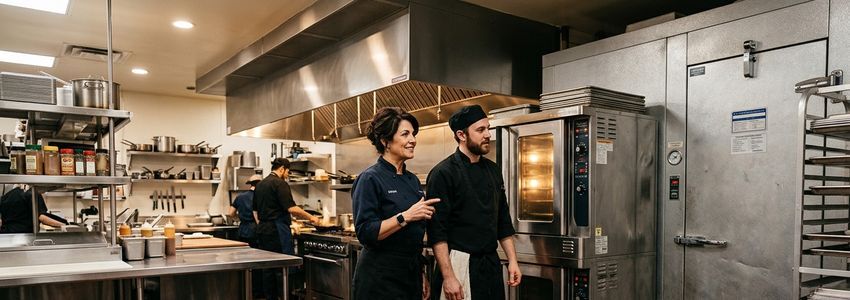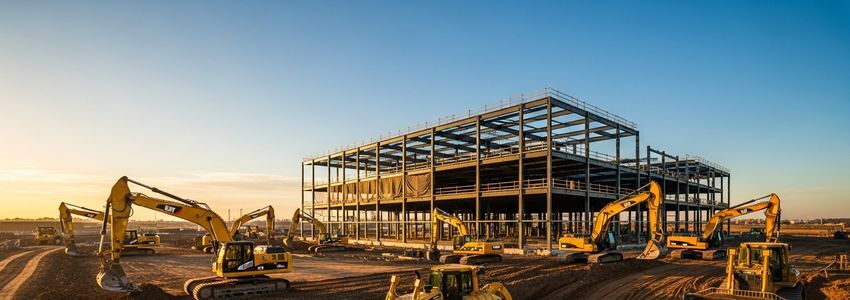
Bad credit should not stop your business from getting the equipment it needs to operate and grow. Whether you run a construction company that needs a new excavator, a restaurant that requires commercial kitchen upgrades, or a medical practice looking to add diagnostic tools, equipment financing with bad credit is more accessible than most business owners realize. Alternative lenders, asset-based underwriting, and specialized programs have expanded funding options well beyond what traditional banks offer - and approval rates are rising even for borrowers with credit scores below 600.
In this guide, you will learn exactly how equipment financing works when your credit is less than perfect, what lenders actually look at, which programs give you the best chance of approval, and how Crestmont Capital helps business owners across every industry get funded quickly and affordably.
In This Article
- What Is Equipment Financing and How Does It Work?
- What Credit Score Do You Need for Equipment Financing?
- How Bad Credit Affects Equipment Loan Terms
- Equipment Financing Options for Bad Credit Borrowers
- How to Maximize Your Chances of Approval
- Industries That Commonly Use Bad Credit Equipment Financing
- Equipment Financing by the Numbers
- How to Apply with Crestmont Capital
- Frequently Asked Questions
- Next Steps to Get Funded
What Is Equipment Financing and How Does It Work?
Equipment financing is a type of business loan used specifically to purchase or lease business equipment. Unlike a general-purpose small business loan, equipment financing is secured by the equipment itself. That collateral-based structure is one of the primary reasons lenders are willing to work with borrowers who have lower credit scores - if the borrower defaults, the lender can repossess the equipment to recover its investment.
Here is how the process typically works:
- You identify the equipment you need - whether new or used, from a dealer or private seller.
- You apply for financing through a lender like Crestmont Capital or through the equipment vendor directly.
- The lender evaluates your application, which includes your credit profile, business revenue, time in business, and the type and value of equipment you are purchasing.
- If approved, the lender pays the seller and you begin making fixed monthly payments over the loan term.
- You own the equipment outright once the loan is paid off (or you return it at end of term if you chose leasing).
Because the equipment itself serves as collateral, lenders take on less risk than with unsecured loans. This means equipment financing is one of the most accessible forms of business credit for companies with damaged credit histories, limited credit, or prior financial setbacks.
Equipment financing covers a broad range of business assets, including:
- Construction and heavy equipment (excavators, bulldozers, cranes)
- Commercial kitchen equipment
- Medical and dental equipment
- Manufacturing and fabrication machinery
- Trucks, vans, and commercial vehicles
- Technology hardware and IT infrastructure
- Agricultural equipment
- Printing, packaging, and distribution equipment
- Fitness and salon equipment
What Credit Score Do You Need for Equipment Financing?
One of the most common questions business owners ask is: "What credit score do I need to get approved for equipment financing?" The honest answer depends heavily on the type of lender you work with.
Traditional Banks and SBA Lenders: Most banks require a personal credit score of 680 or higher for equipment loans. SBA loans typically require a minimum of 650-680, though individual lender requirements may be higher. If you have derogatory marks, collections, or a recent bankruptcy, traditional banks are unlikely to approve your application.
Alternative Lenders and Online Lenders: Alternative lenders like Crestmont Capital use a much broader underwriting model. Credit scores in the 500-620 range are often workable, especially when your business demonstrates consistent monthly revenue, has been operating for at least 6-12 months, and the equipment being financed has strong collateral value.
Vendor Financing Programs: Equipment manufacturers and dealers sometimes offer in-house financing. These programs can be flexible, but they often lack transparency in pricing and may not be the most competitive option for borrowers with bad credit.
Here is a general credit score breakdown for equipment financing:
| Credit Score Range | Lender Options | Expected Terms |
|---|---|---|
| 720+ | Banks, SBA, alternative lenders | Lowest rates, longest terms |
| 650-719 | Most banks, alternative lenders | Competitive rates with some conditions |
| 580-649 | Alternative lenders, some credit unions | Moderate rates, shorter terms, possible down payment |
| 500-579 | Specialized alternative lenders | Higher rates, down payment often required |
| Below 500 | Hard money lenders, seller financing | Higher cost, short terms, significant down payment |
Remember: lenders look at your full financial picture, not just one number. A 580 credit score combined with strong monthly revenue - say, $20,000 to $30,000 per month or more - can be more fundable than a 640 credit score with inconsistent cash flow.
Ready to Get Approved for Equipment Financing?
Bad credit does not mean no options. Crestmont Capital specializes in equipment financing for all credit profiles. Apply in minutes and get a decision fast.
Apply for Equipment Financing NowHow Bad Credit Affects Equipment Loan Terms
Getting approved with bad credit is often possible - but it does affect the terms of your financing. Here is what you can expect when your credit score falls below 650:
Higher Interest Rates
Lenders compensate for higher perceived risk by charging higher interest rates. Where a borrower with a 720 credit score might secure an equipment loan at 6-10% APR, a borrower with a 580 score may see rates ranging from 12-30% or higher depending on the lender and loan structure. This makes it especially important to compare lenders and negotiate where possible. According to Federal Reserve data, small business loan interest rates vary widely by lender type, with alternative lenders typically charging more than banks but approving a broader range of applicants.
Shorter Loan Terms
Standard equipment loans run 3-7 years for most asset types. With bad credit, lenders often shorten terms to 1-3 years to reduce their exposure. Shorter terms mean higher monthly payments, so it is important to run the numbers carefully to ensure the loan fits your cash flow.
Down Payment Requirements
Many lenders require a down payment when your credit score is low - typically 10-20% of the equipment's purchase price. A down payment reduces the lender's loan-to-value ratio and demonstrates your commitment to the purchase. For example, if you are buying a $50,000 piece of machinery, you may be asked to put down $5,000-$10,000 upfront.
Personal Guarantee
Most small business equipment loans require a personal guarantee, particularly for borrowers with bad credit. This means that if your business defaults, you are personally liable for the remaining debt. It is a standard requirement, but important to understand before signing.
Equipment Restrictions
Some lenders with bad credit programs will only finance new equipment or equipment from approved dealers. Used equipment may be harder to finance because its value is more difficult to assess and may depreciate more quickly. Some lenders place a minimum equipment value threshold as well.
Equipment Financing Options for Bad Credit Borrowers
If your credit score is not where you would like it to be, you still have multiple financing paths to explore. Here are the primary options available to business owners with bad credit:
1. Alternative Online Lenders
Alternative lenders like Crestmont Capital specialize in serving businesses that do not fit the traditional bank mold. They use technology-driven underwriting that evaluates real-time business cash flow, revenue trends, and industry performance rather than relying solely on credit scores. Approval times are typically 24-72 hours, and funding can happen within days of approval. This is often the fastest and most accessible path for bad credit borrowers. You can also explore our bad credit business loans page for additional options.
2. Equipment-Specific Lenders
Some lending companies specialize exclusively in equipment financing. Because they have deep expertise in equipment values and resale markets, they can be more aggressive in approving borderline applicants. They understand that a well-maintained piece of equipment retains value and can be recovered in case of default - which makes the risk calculus different from an unsecured loan.
3. Equipment Leasing
Leasing is a strong alternative to purchasing if your credit is poor. With an operating lease, you make monthly payments to use the equipment over a set period, then return it, renew the lease, or purchase it at fair market value. Because you do not own the asset at the end of the lease, lenders take on less long-term risk - which often translates to easier qualification standards. Our equipment financing page outlines both purchase and lease options in detail.
4. Sale-Leaseback Financing
If your business already owns equipment, you can use a sale-leaseback arrangement to generate cash. You sell the equipment to a lender or leasing company, who then leases it back to you at a monthly rate. You receive an immediate cash infusion while continuing to use the equipment. This can be a smart option if you need liquidity but do not want to lose access to critical business assets.
5. Business Line of Credit
A revolving business line of credit is not technically equipment financing, but it can be used to purchase equipment when loan options are limited. Lines of credit with flexible underwriting are available through alternative lenders, and because you only pay interest on what you draw, they can be cost-effective for smaller purchases.
6. SBA Loans for Equipment
The SBA 7(a) and SBA 504 loan programs can be used for equipment purchases. The SBA 504 program, in particular, is designed for major fixed assets including equipment. However, SBA loans typically require credit scores above 650 and a strong business plan, so they may not be accessible to all bad credit borrowers. Learn more at SBA.gov. Crestmont Capital also offers SBA loans for qualifying businesses.
7. Vendor or Manufacturer Financing
Many equipment manufacturers and dealers offer financing directly. These programs can be flexible and are sometimes tied to promotional rates. However, they may not always disclose the full cost of financing, so be sure to understand the APR before committing.
Not Sure Which Option Is Right for You?
Crestmont Capital's team of business financing specialists will review your situation and match you with the right equipment financing product. No obligation, no hidden fees.
Explore Your Options TodayHow to Maximize Your Chances of Approval
Even with a low credit score, there are concrete steps you can take to improve your approval odds and secure better terms on equipment financing:
Prepare Strong Business Bank Statements
Lenders who work with bad credit borrowers rely heavily on your business bank statements to assess cash flow. Ideally, you should have 3-6 months of business bank statements showing consistent, positive monthly deposits. According to CNBC reporting, alternative lenders often prioritize cash flow over credit score as the primary approval factor. Make sure your revenue is being deposited into a dedicated business bank account rather than a personal account.
Offer a Down Payment
Putting 10-20% down on the equipment reduces the lender's risk and can tip the scales in your favor. If you can access working capital through a short-term loan or savings to cover a down payment, it significantly improves your application strength.
Choose Equipment with Strong Collateral Value
Newer equipment from reputable brands retains value better, making it more attractive as collateral. If you are purchasing used equipment, getting an independent appraisal can demonstrate its value to the lender. Avoid financing equipment that depreciates rapidly or is highly specialized with a small resale market.
Apply with a Strong Co-Signer
If a business partner or family member has good credit, having them co-sign the loan can improve approval odds and lower your rate. This distributes the risk for the lender and makes the application more bankable.
Demonstrate Industry Experience
Lenders want to know you have the expertise to use the equipment profitably. If you have been in your industry for several years, make sure that is reflected in your application. Experienced operators are statistically better at managing debt than inexperienced ones.
Work on Your Credit Before Applying
If your equipment purchase is not urgent, taking 3-6 months to improve your credit score can open significantly better financing options. Pay down existing debt, dispute any errors on your credit report, and ensure all business accounts are current. Even a 30-40 point improvement in your score can move you into a better lending tier.
Industries That Commonly Use Bad Credit Equipment Financing
Equipment financing with bad credit is used across virtually every industry segment. Here are some of the most common sectors where Crestmont Capital provides bad credit equipment financing:
Construction and Contracting
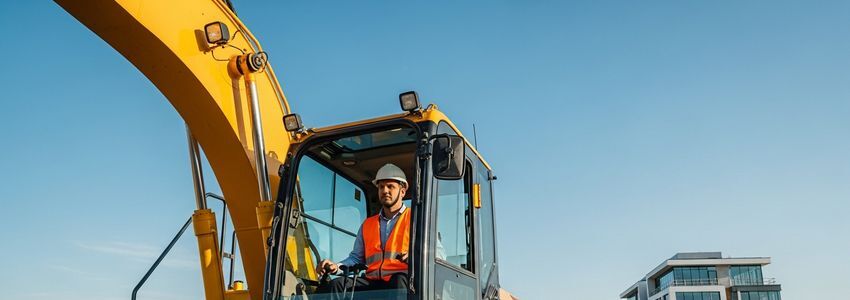
Heavy equipment such as excavators, bulldozers, and backhoes are among the most commonly financed items. Construction companies often carry high debt loads due to project cycles, which can affect credit scores - but lenders understand the cyclical nature of the industry and often evaluate equipment value as the primary factor.
Transportation and Trucking
Semi-trucks, box trucks, refrigerated vehicles, and trailers are financed regularly through bad credit programs. The asset value is significant, and lenders in the transportation space are very familiar with equipment valuations. Trucking is one of the more accessible sectors for bad credit equipment financing.
Healthcare and Medical Practices
Medical equipment - from diagnostic imaging to dental chairs to surgical tools - often costs $50,000 to $500,000 or more. Healthcare providers with newer practices or prior financial setbacks frequently use specialized lenders to acquire the tools they need. Equipment quality directly drives revenue in medical settings, which lenders factor into their risk analysis.
Restaurants and Food Service
Commercial ovens, refrigeration units, dishwashers, and prep equipment are essential for food service operations. Restaurant owners frequently use equipment financing to upgrade or replace aging equipment, and alternative lenders have well-developed programs for this sector.
Manufacturing
CNC machines, lathes, press brakes, injection molding equipment, and conveying systems can carry six-figure price tags. Manufacturers with bad credit can often still access equipment financing based on the high collateral value of industrial machinery and the revenue it generates.
Agriculture
Farmers and agricultural businesses regularly finance tractors, harvesters, irrigation systems, and livestock equipment. Agricultural lending has its own specialized programs and lenders who understand the unique revenue cycle of farming operations.
Salons, Spas, and Fitness Centers
Cosmetology chairs, spa equipment, tanning beds, cardio machines, and weight equipment can all be financed through bad credit programs. These businesses often have strong recurring revenue that offsets a weaker credit profile.
Equipment Financing by the Numbers
U.S. Equipment Financing: Key Statistics
Sources: Equipment Leasing and Finance Association, Federal Reserve Small Business Credit Survey
How to Apply with Crestmont Capital
Crestmont Capital was founded in 2015 with a mission to make business financing accessible to every qualified business owner - regardless of their credit profile. We understand that a credit score does not tell the whole story of a business, and we have built our underwriting process to reflect that reality.
Here is what the Crestmont Capital equipment financing process looks like:
Step 1: Submit a Simple Application
Our online application takes less than 10 minutes to complete. You will provide basic information about your business, the equipment you want to purchase or lease, and your estimated monthly revenue. No lengthy paperwork packets or multiple trips to a branch office.
Step 2: Provide Business Bank Statements
We typically ask for 3-6 months of business bank statements to evaluate your cash flow. This is the most important factor in our underwriting decision. Strong, consistent revenue can offset a lower credit score.
Step 3: Receive a Decision
Most applicants receive a financing decision within 24-72 hours. Our team reviews every application personally - we do not rely solely on automated scoring systems. If your application needs more context or documentation, we will reach out directly.
Step 4: Review Your Offer
We present you with a transparent offer that includes the loan amount, rate, term, monthly payment, and any fees. There are no hidden charges or surprise rate adjustments. We want you to understand exactly what you are agreeing to before you sign.
Step 5: Receive Funding
Once you accept your offer, we process the paperwork and fund your loan. In many cases, you can have the funds deposited or equipment purchased within a few business days. Need it faster? Ask about our fast business loans options.
For businesses that need working capital alongside equipment financing, Crestmont Capital also offers short-term business loans and long-term business loans to address a full range of financial needs. According to Forbes Advisor, equipment financing is one of the most popular financing options for small businesses because it combines accessibility with predictable repayment terms.
Apply for Equipment Financing Today
Join thousands of business owners who have used Crestmont Capital to fund equipment purchases. Approvals in as little as 24 hours, even with bad credit.
Start Your Application NowFrequently Asked Questions
Can I get equipment financing with a 500 credit score?
Yes, some alternative lenders work with borrowers with credit scores as low as 500, particularly when the equipment being financed has strong collateral value and the business shows consistent monthly revenue. Expect higher interest rates and a possible down payment requirement at this credit level. The best approach is to apply with a lender that specializes in bad credit equipment financing rather than a traditional bank.
What is the minimum revenue needed to qualify for equipment financing with bad credit?
Most alternative lenders want to see at least $10,000-$15,000 per month in gross revenue for smaller equipment loans. For larger loans over $100,000, lenders typically want to see $25,000 or more per month in consistent deposits. The key is demonstrating that your business generates enough cash flow to service the monthly loan payment comfortably.
Does equipment financing require a down payment with bad credit?
Not always, but it is common. Lenders often require a down payment of 10-20% when your credit score is below 620. The down payment reduces the loan-to-value ratio and gives the lender more security. If a down payment would be a hardship, ask about lenders who offer 100% equipment financing programs, though these may come with higher rates or stricter revenue requirements.
How long does it take to get approved for equipment financing with bad credit?
Through alternative lenders like Crestmont Capital, approval typically takes 24-72 hours. After approval, funding can happen within 2-5 business days depending on the transaction. This is dramatically faster than traditional banks, where equipment loan approval can take weeks or even months, particularly for borrowers with complex credit situations.
Will equipment financing with bad credit help improve my credit score?
Yes, making consistent on-time payments on a business equipment loan can positively impact your personal and business credit scores over time. Payment history is the most influential factor in credit scoring. Using an equipment loan responsibly and paying it down builds a positive track record that improves your access to lower-rate financing in the future.
Can I finance used equipment with bad credit?
Yes, but it can be more challenging. Many lenders prefer to finance new equipment because the value is easier to establish and it depreciates more predictably. For used equipment, an independent appraisal or dealer valuation helps demonstrate the asset's worth to potential lenders. Some lenders will only finance used equipment up to 5-7 years old, and loan terms may be shorter to account for the equipment's remaining useful life.
Is a personal guarantee required for equipment financing?
Almost always, yes. Most lenders require a personal guarantee from the primary business owner for equipment loans, especially when credit is below 680. A personal guarantee means you are personally liable for the loan balance if the business defaults. This is standard practice in small business lending and is not unique to bad credit borrowers.
What happens if I default on an equipment loan?
If you default, the lender has the right to repossess the equipment. Because the equipment secures the loan, this is the primary mechanism for lender recovery. In addition to repossession, default can result in a significant negative impact on your personal and business credit scores, legal action to recover any remaining balance after equipment sale, and difficulty accessing future financing. If you anticipate trouble making payments, contact your lender proactively - many lenders will work with you on modified payment arrangements rather than going straight to repossession.
Can I get equipment financing with a recent bankruptcy?
A recent bankruptcy makes equipment financing more challenging but not necessarily impossible. Some alternative lenders will consider borrowers who are at least 1-2 years out of bankruptcy and can demonstrate that the business has rebuilt its financial footing. If the bankruptcy was a personal bankruptcy and your business has a separate financial history, that may help. Having strong business revenue and a substantial down payment significantly improves your chances in post-bankruptcy situations.
How does equipment leasing compare to equipment loans for bad credit borrowers?
Equipment leasing can be easier to qualify for than a purchase loan when your credit is bad, because the lender retains ownership of the equipment throughout the lease term - which reduces their risk. Monthly lease payments are often lower than loan payments for the same equipment, preserving cash flow. The trade-off is that you do not build equity in the equipment with a lease, and the total cost over time may exceed a purchase loan. Evaluate both options based on your specific equipment type, intended use duration, and cash flow needs.
What documents do I need to apply for equipment financing with bad credit?
Most alternative lenders require: completed application form, 3-6 months of business bank statements, a valid government-issued ID, business formation documents (LLC, corporation, or sole proprietorship documentation), and a quote or invoice from the equipment vendor. Some lenders may also request recent business tax returns or profit and loss statements for larger loan amounts. The simpler the documentation process, the faster the approval timeline.
How much can I borrow for equipment financing with bad credit?
Loan amounts vary widely based on your credit profile, revenue, and the type of equipment. Through alternative lenders, bad credit borrowers can typically access $5,000 to $500,000 or more in equipment financing. Larger amounts - $250,000 to $5 million - are available for well-established businesses with strong revenue even if credit is imperfect. The equipment's appraised value also sets a ceiling on how much can be financed.
Can a startup with bad credit get equipment financing?
Startups face a double challenge: no business history and bad credit. That said, some lenders do work with startups, particularly if the owner has industry experience, a strong business plan, and is willing to provide a meaningful down payment (20-30% or more). Vendor financing programs and manufacturer leasing programs may be more flexible for startups than traditional or alternative lenders. It is also worth exploring whether an experienced co-signer could strengthen the application.
Does the type of equipment affect my chances of approval?
Yes, significantly. Equipment with broad market appeal and strong resale value - such as commercial trucks, tractors, construction equipment, and standard medical devices - is easier to finance because lenders can recover more value if they need to repossess it. Highly specialized or one-of-a-kind equipment with a narrow resale market is harder to finance with bad credit because the collateral value is uncertain. General-purpose equipment tends to get approved more easily and at better rates than specialty niche assets.
Is equipment financing reported to credit bureaus?
Business equipment loans may be reported to business credit bureaus (Dun and Bradstreet, Experian Business, Equifax Business) and may also appear on your personal credit report if a personal guarantee was required. Making consistent on-time payments helps build positive credit history. If the loan is in good standing, it benefits your credit profile. Missed payments or defaults are also reported, so maintaining a reliable payment schedule is essential.
Next Steps to Get Equipment Financing with Bad Credit
Getting approved for equipment financing with bad credit is a realistic goal when you take the right steps. Here is a clear action plan to move from where you are now to funded:
Review your personal and business credit reports for errors. Dispute inaccuracies, which can raise your score quickly. Check your reports for free at AnnualCreditReport.com.
Collect 3-6 months of business bank statements. These are the most important documents in your application. If your deposits are inconsistent, take a month or two to stabilize your cash flow before applying.
Get a formal quote or invoice from the equipment vendor. Lenders need to know exactly what they are financing. Having a specific purchase in mind demonstrates preparation and seriousness.
If possible, set aside 10-20% of the equipment's purchase price for a down payment. This is not always required, but it significantly improves approval odds and can reduce your rate and monthly payment.
Skip the traditional bank and apply with an alternative lender who specializes in bad credit equipment financing. Crestmont Capital reviews every application individually and works hard to find approval paths for every qualified business.
Once funded, make every payment on time. Equipment financing is a powerful credit builder. Consistent payments over the life of the loan will steadily improve your credit profile and position you for better terms on future financing.
Equipment financing with bad credit is not just about getting through a short-term hurdle - it is an opportunity to demonstrate financial responsibility, acquire productive assets for your business, and build the credit history that opens doors to more financing in the future. Thousands of business owners across the country have used equipment financing as a stepping stone to greater financial health. You can too.
Crestmont Capital has been helping business owners find funding solutions since 2015. Our team is ready to work with you regardless of your credit history. Take the first step today by clicking the link below.
Get Your Equipment Financing Quote Today
Apply now and receive a decision in as little as 24 hours. No obligation, no hidden fees. Crestmont Capital - financing that works for your business.
Apply for Equipment Financing NowDisclaimer: The information provided in this article is for general educational purposes only and is not financial, legal, or tax advice. Funding terms, qualifications, and product availability may vary and are subject to change without notice. Crestmont Capital does not guarantee approval, rates, or specific outcomes. For personalized information about your business funding options, contact our team directly.