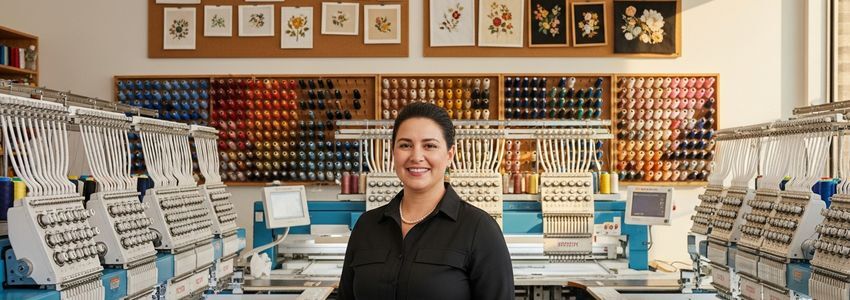
Whether you embroider custom apparel for corporate clients, personalize gifts for local boutiques, or run a full-scale commercial embroidery operation, one thing remains constant: growing your business requires capital. Embroidery business loans give shop owners the funding needed to purchase commercial machines, stock thread and supplies, hire skilled staff, and expand into larger facilities. If you have been putting growth plans on hold because of cash constraints, this guide breaks down every financing option available to embroidery business owners in 2026.
In This Article
- What Are Embroidery Business Loans?
- Key Benefits of Financing for Embroidery Businesses
- Types of Loans Available for Embroidery Shops
- How Equipment Financing Works for Embroidery Businesses
- Who Qualifies for Embroidery Business Loans?
- How Crestmont Capital Helps Embroidery Business Owners
- Comparing Financing Options
- Real-World Scenarios
- How to Get Started
- Frequently Asked Questions
- Conclusion
What Are Embroidery Business Loans?
Embroidery business loans are financing products designed to help embroidery shop owners, custom apparel businesses, and commercial embroidery operations fund their working capital needs, equipment purchases, and growth initiatives. These loans can come from traditional banks, online lenders, and alternative financing companies like Crestmont Capital, each offering different terms, speeds, and approval criteria.
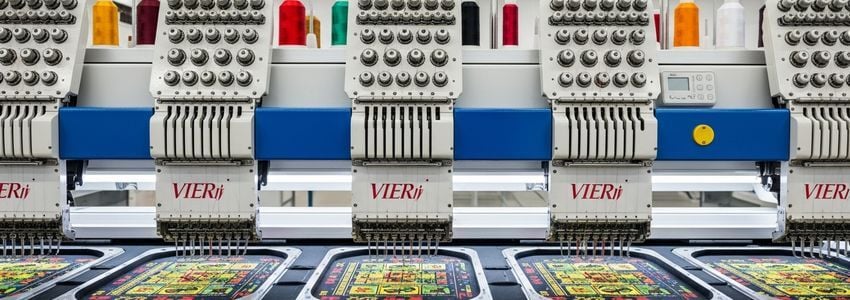
The embroidery industry spans everything from one-person home-based shops using single-head machines to large commercial operations running dozens of heads simultaneously for corporate clients. Regardless of where you fall on that spectrum, access to capital can mean the difference between stagnating and scaling. A new commercial multi-head embroidery machine can cost between $10,000 and $75,000 or more. Digitizing software, commercial thread inventory, hoop sets, and finishing equipment add additional costs that most small shop owners cannot absorb from cash flow alone.
Embroidery business loans provide a structured way to access that capital - spreading costs over time while your business continues generating revenue. Unlike personal loans, business financing builds your company's credit profile and preserves your personal financial resources for other priorities.
Key Benefits of Financing for Embroidery Businesses
The right financing solution can transform an embroidery business's trajectory. Rather than waiting years to save enough capital for a capacity upgrade, financing lets you act now and repay from the revenue the new equipment or working capital generates.
- Upgrade to commercial-grade machinery - Multi-head commercial embroidery machines dramatically increase your throughput. Financing lets you step up from a single-head machine without depleting your reserves.
- Stock seasonal inventory - Custom apparel orders spike around graduation season, holidays, and sports seasons. A working capital loan lets you pre-purchase blanks and supplies to capture high-demand periods without cash flow strain.
- Hire and train employees - Growing from solo operator to a full team is one of the biggest jumps in any small business. Payroll financing or a business line of credit bridges the gap between hiring and revenue growth.
- Expand your physical space - Many embroidery shops outgrow their original location quickly. Commercial real estate financing or renovation loans fund the move or build-out without draining operational funds.
- Add complementary services - Heat transfer vinyl, screen printing, or direct-to-garment printing can be added alongside embroidery for higher ticket orders. Equipment loans cover the startup investment.
- Build business credit - Repaying a business loan on time strengthens your PAYDEX and FICO scores, setting you up for better financing terms in the future.
- Respond to large contracts - A large corporate or team uniform order can require significant upfront inventory and capacity investment. Fast business financing lets you say yes to big contracts.
Industry Insight: According to the Advertising Specialty Institute, the decorated apparel and custom embroidery market generates over $26 billion in annual sales in North America. Demand for personalized workwear, promotional products, and custom team apparel continues to grow year over year, creating strong conditions for embroidery businesses to scale with financing support.
Ready to Grow Your Embroidery Business?
Get fast, flexible financing from the #1 business lender in the U.S. No obligation - apply in minutes.
Apply Now →Types of Loans Available for Embroidery Shops
Embroidery business owners have access to a wide range of financing products. The right option depends on your purpose, timeline, credit profile, and how quickly you need the funds. Understanding each type puts you in the best position to choose the product that fits your business.
Equipment Financing
Equipment financing is often the first choice for embroidery businesses looking to purchase commercial machines. The machine itself serves as collateral, which typically means lower interest rates and easier approval compared to unsecured loans. You own the machine outright once the loan is repaid, and payments are fixed and predictable. For purchasing multi-head commercial embroidery systems, industrial thread winders, or computerized digitizing workstations, equipment financing is the most cost-effective path. Learn more about equipment financing options through Crestmont Capital.
Equipment Leasing
Leasing is the alternative to equipment financing for embroidery shop owners who prefer lower monthly payments or want the flexibility to upgrade equipment frequently as technology advances. With a lease, you return the equipment at the end of the term or exercise a buyout option. Leasing preserves cash flow and can make sense when the machine model you need has a high depreciation rate due to rapid technology advancement in digitizing software and computerized head systems.
Small Business Loans (Term Loans)
Traditional small business loans provide a lump sum that you repay over a set term with fixed payments. These are versatile - you can use them for equipment, working capital, renovations, or marketing. Term loans through alternative lenders can often be funded within 24-48 hours of approval, compared to weeks or months for bank loans.
Business Line of Credit
A business line of credit is a revolving credit facility that works like a business credit card - you draw only what you need, repay it, and your credit renews. This is ideal for embroidery businesses managing cash flow gaps between large orders, purchasing seasonal blank apparel inventory, or handling unexpected equipment repairs. You only pay interest on the amount you draw.
Working Capital Loans
Working capital loans are short-term, unsecured loans designed to cover day-to-day operational costs. If you land a major contract requiring a large upfront inventory investment before the client pays, a working capital loan bridges that gap. They typically have shorter repayment terms of 6-24 months and can be approved quickly. Crestmont Capital's unsecured working capital loans are popular with embroidery businesses that need fast access to capital without pledging assets as collateral.
SBA Loans
SBA loans offer some of the lowest interest rates and longest repayment terms available to small business owners. The SBA 7(a) loan can be used for almost any business purpose, while the SBA 504 loan is specifically designed for long-term fixed asset purchases like commercial equipment. The tradeoff is time - SBA loans can take weeks to months to fund. If you have time and strong financials, SBA loans provide outstanding long-term value. If you need capital quickly to act on an opportunity, alternative lenders are a better fit.
Invoice Financing
For embroidery businesses working with corporate clients who pay on 30, 60, or 90-day terms, invoice financing converts outstanding invoices into immediate cash. Rather than waiting months for payment on a completed uniform order, you get most of the invoice value upfront. This keeps cash flowing even when clients are slow to pay.
How Equipment Financing Works for Embroidery Businesses
Equipment financing deserves a deeper look because it is the most commonly used financing product by embroidery shop owners. Commercial embroidery machines represent the core capital investment in this business, and understanding how to finance them strategically can save you thousands of dollars over time.
When you apply for equipment financing, the lender evaluates your credit profile, time in business, and the collateral value of the equipment. Most lenders finance 80-100% of the equipment cost, meaning your down payment requirement can be minimal or zero. Rates typically range from 5-25% APR depending on your credit score, time in business, and the lender. Terms commonly range from 24 to 84 months.
Common Embroidery Equipment Financed
- Multi-head commercial embroidery machines (Tajima, Brother, Barudan, Melco, SWF)
- Single-head commercial embroidery machines for small shops
- Commercial flat-bed embroidery machines
- Computerized digitizing workstations and software licenses
- Thread inventory systems and thread winders
- Industrial cutting and pressing equipment
- Heat press machines for multi-decoration capability
- Direct-to-film printers for hybrid decoration shops
- Commercial washer/dryer sets for finished goods
By the Numbers
Embroidery Business Financing - Key Statistics
$26B+
Annual decorated apparel market size in North America
$75K+
Cost of high-end multi-head commercial embroidery machines
24 Hrs
Typical approval-to-funding time with alternative lenders
33M+
Small businesses in the U.S. needing access to capital for growth
Who Qualifies for Embroidery Business Loans?
Qualification requirements vary by lender and loan type, but most alternative business lenders use a straightforward set of criteria to evaluate embroidery business loan applications. Unlike traditional banks that focus almost exclusively on credit scores and collateral, modern lenders look at the full picture of your business health.
Typical Minimum Requirements
- Time in business: Most alternative lenders require at least 6-12 months of business history. SBA loans and bank loans typically require 2+ years.
- Annual revenue: Minimum annual revenue requirements typically range from $50,000 to $150,000 for working capital products. Equipment financing can sometimes be available with lower revenue thresholds.
- Credit score: Minimum personal credit scores typically range from 550 to 650 depending on the lender. Higher credit scores unlock lower rates and larger loan amounts.
- Business bank account: Active business bank statements showing regular revenue deposits are required by most lenders.
- No active bankruptcies: Most lenders require no open or recent bankruptcies on the business or personal credit file.
Startup Embroidery Businesses
If your embroidery business is under 6 months old, your financing options are more limited but not nonexistent. Personal loans, credit cards, vendor financing from equipment manufacturers, and microloans may be available. Some lenders also offer first-time business loans that take into account your personal credit and business plan rather than just business history. Building strong credit early and maintaining organized financial records puts you in the best position to qualify for traditional business financing as soon as you hit the 6-12 month mark.
Bad Credit Options
Embroidery business owners with lower credit scores still have paths to financing. Revenue-based financing, merchant cash advances, and certain equipment lenders focus primarily on your business cash flow rather than your credit history. The tradeoff is typically higher rates. Improving your credit score before applying - even by 50-100 points - can significantly reduce your borrowing costs. Check out our guide on best practices for managing business credit to start building a stronger credit profile now.
Pro Tip: Organize your last 3-6 months of bank statements, your profit and loss statement, and any outstanding invoices before applying. Lenders who can see your revenue history and cash flow patterns are more likely to approve your application quickly and offer favorable terms.
How Crestmont Capital Helps Embroidery Business Owners
Crestmont Capital was founded in 2015 with a mission to give small business owners faster, fairer access to the capital they need to grow. Unlike traditional banks with weeks-long approval processes and rigid requirements, Crestmont Capital offers embroidery business owners a streamlined path to funding - often within 24-48 hours of application.
Our team of business financing specialists understands the capital needs specific to embroidery and decorated apparel businesses. Whether you need $10,000 to upgrade a single-head machine, $150,000 for a multi-head commercial system, or a revolving line of credit to manage seasonal working capital demands, Crestmont Capital has a financing solution designed for your situation.
Why Embroidery Business Owners Choose Crestmont Capital
- Fast approvals: Most applications are reviewed and approved within hours, not weeks. Many clients receive funding within 24-48 hours of completing their application.
- Flexible loan amounts: Loan amounts range from $10,000 to $10 million+, covering everything from a single piece of equipment to a full facility expansion.
- Multiple products: Equipment financing, working capital loans, business lines of credit, SBA loans, and more - all under one roof. You do not need to work with multiple lenders.
- Dedicated support: You work with a dedicated advisor who takes time to understand your business and find the right fit.
- No prepayment penalties: Pay off your loan early without penalty and save on interest.
- Credit-challenged options: Crestmont Capital works with business owners across a wide range of credit profiles, including those who have been turned down by traditional banks.
Upgrade Your Embroidery Equipment Today
Flexible equipment financing and working capital loans for embroidery businesses. Apply in minutes - get funded in as little as 24 hours.
Start Your Application →Comparing Financing Options for Embroidery Businesses
With multiple financing options available, how do you choose the right one? The table below compares the most common products across key factors to help you make an informed decision.
| Loan Type | Best For | Typical Rate | Speed | Term |
|---|---|---|---|---|
| Equipment Financing | Machines, hardware | 5-25% APR | 1-5 business days | 24-84 months |
| Working Capital Loan | Inventory, payroll, cash flow | 10-40% APR | 24-48 hours | 6-24 months |
| Business Line of Credit | Ongoing cash flow needs | 8-30% APR | 1-5 business days | Revolving |
| SBA 7(a) Loan | Long-term capital, low rates | 6-10% APR | 4-12 weeks | Up to 10 years |
| Term Loan (Alternative) | General business use | 8-35% APR | 24-48 hours | 1-5 years |
| Invoice Financing | B2B outstanding receivables | 1-5% fee per invoice | 24-48 hours | Per invoice cycle |
Real-World Scenarios: How Embroidery Businesses Use Financing
Abstract descriptions of loan products only go so far. Here are real examples of how embroidery business owners use financing to achieve their goals.
Scenario 1: Adding a Multi-Head Machine to Meet Corporate Demand
Maria runs a three-person embroidery shop that specializes in corporate workwear. She lands a contract with a regional hotel chain requiring 2,000 embroidered uniform pieces per month. Her existing two-head machine cannot handle the volume. Maria applies for equipment financing through Crestmont Capital for a new 12-head commercial embroidery machine priced at $58,000. Approved within 48 hours with a 5-year term, her monthly payment is approximately $1,100 - a fraction of the additional revenue the contract generates. The machine pays for itself within the first two months of the new contract.
Scenario 2: Seasonal Inventory Financing for Graduation Season
James operates a custom embroidery business that serves high schools and universities across his state. Every spring, orders for graduation stoles, alumni apparel, and class-specific items spike dramatically. He needs to purchase $40,000 in blank garments and supplies six weeks before his clients pay. A working capital loan provides him with the capital to fulfill orders on time. He repays the loan over six months from the revenue those orders generate.
Scenario 3: Startup Embroidery Business Financing
Lisa is launching an embroidery business focused on baby and children's personalized gifts. She needs $18,000 for a commercial single-head machine, computerized software, hoop sets, and initial inventory. With eight months of personal savings history and a 680 credit score, she qualifies for an equipment loan with a 3-year term. Her business is generating profitable revenue within four months of launch.
Scenario 4: Line of Credit for Cash Flow Management
Roberto's embroidery shop serves a mix of retail customers and commercial clients. Commercial clients typically pay on net-30 terms, creating a recurring cash flow gap. He secures a $25,000 business line of credit that he draws on during slow cash periods and repays when client payments arrive. Rather than stressing over cash flow each month, he focuses on growth knowing he has a safety net.
Scenario 5: Expansion into DTF Printing
Carla's established embroidery shop receives frequent requests from clients for full-color graphics that embroidery cannot achieve. She wants to add a direct-to-film printer to offer hybrid decoration packages. A $30,000 equipment loan funds the DTF printer and heat press, expanding her service menu and average order value. Within 90 days, her revenue from the new service line covers the monthly loan payment with margin to spare.
Key Takeaway: The best time to seek financing is before you desperately need it. Building a relationship with a lender like Crestmont Capital when your business is healthy gives you access to capital on favorable terms exactly when an opportunity or challenge arises.
Scenario 6: Refinancing High-Cost Debt
Derek started his embroidery business using business credit cards and a merchant cash advance to fund his initial equipment. Two years in, his business is generating $200,000 annually but his debt service is consuming a large portion of his margins. He works with Crestmont Capital to consolidate his high-interest obligations into a lower-rate term loan, reducing his monthly debt payments significantly and improving his cash position immediately.
Find the Right Financing for Your Embroidery Business
From equipment loans to working capital - Crestmont Capital has funding solutions for every stage of your embroidery business growth.
Apply Now →How to Get Started
Complete our quick application at offers.crestmontcapital.com/apply-now - it takes just a few minutes and requires no commitment.
A Crestmont Capital advisor will review your business needs and match you with the right loan product - whether that is equipment financing, a working capital loan, or a line of credit.
Receive your funds and put them to work immediately - most embroidery business owners receive their capital within 1-2 business days of approval.
Frequently Asked Questions
How much can I borrow for my embroidery business?
Loan amounts for embroidery businesses range from as little as $10,000 up to several million dollars depending on your revenue, credit profile, and financing type. Equipment loans are often sized to match the equipment cost. Working capital loans and lines of credit are typically sized at 10-20% of your annual revenue. Established businesses with strong financials can access significantly larger loan amounts than newer operations.
Can I get an embroidery business loan with bad credit?
Yes, financing options exist for embroidery business owners with lower credit scores. Revenue-based financing and merchant cash advances focus primarily on your cash flow rather than credit score. Equipment loans backed by the machine as collateral can also be approved with lower credit thresholds. While you may pay higher rates with a lower score, securing financing and repaying it responsibly helps build the credit needed for better terms in the future.
How fast can I get funding for my embroidery business?
With alternative lenders like Crestmont Capital, embroidery business owners can often receive funding within 24-48 hours of completing an application. SBA loans, by contrast, can take 4-12 weeks to fund. If you need capital quickly for equipment, inventory, or an unexpected need, alternative lenders provide the fastest path to funding.
Do I need collateral for an embroidery business loan?
It depends on the loan type. Equipment financing uses the embroidery machine itself as collateral - no additional assets required. Working capital loans and lines of credit through alternative lenders are often unsecured, meaning no collateral is needed. SBA loans may require a personal guarantee or business assets as collateral. Many embroidery business owners prefer unsecured products to avoid pledging personal or business assets.
Can a startup embroidery business get a loan?
Startup embroidery businesses (under 6 months old) have fewer financing options but can still access capital through first-time business loans, equipment financing from manufacturers, personal loans used for business, and microloans from nonprofit lenders. Building a solid business plan and maintaining strong personal credit dramatically improves your startup financing prospects. After reaching 6 months in business with documented revenue, a much wider range of lenders becomes accessible.
Should I lease or finance an embroidery machine?
The answer depends on your goals. Equipment financing results in ownership - once the loan is repaid, you own the machine outright with no further payments. Leasing offers lower monthly payments and flexibility to upgrade as technology evolves, but you do not build equity in the equipment. For commercial embroidery machines that hold their value well and generate consistent long-term revenue, financing typically provides better long-term economics. Leasing makes more sense for equipment that depreciates rapidly or requires frequent upgrades.
What documents do I need to apply for an embroidery business loan?
Most alternative lenders require: 3-6 months of business bank statements, basic business information (EIN, address, time in business), and the owner's personal identification. For larger loans or SBA products, you may also need profit and loss statements, business tax returns, and a description of how you plan to use the funds. Having these documents organized before you apply speeds up the process significantly.
What interest rates can I expect on embroidery business loans?
Interest rates vary widely based on loan type, lender, credit score, and time in business. SBA loans offer the lowest rates, typically 6-10% APR. Equipment financing through banks or established alternative lenders typically runs 8-25% APR. Working capital loans and merchant cash advances carry higher rates, often 15-40% APR or higher. Shopping multiple lenders and applying with your strongest financial documents helps you secure the best available rate.
Can I use a business loan to hire embroidery staff?
Yes. Working capital loans, term loans, and business lines of credit can all be used to fund payroll and hiring expenses. Many embroidery business owners use a line of credit as a payroll buffer while scaling their team, drawing funds to cover payroll during slow periods and repaying when client payments arrive. Payroll financing products are also specifically designed for this purpose.
How does embroidery business financing differ from a personal loan?
Business loans are underwritten based on your company's financial health - revenue, cash flow, time in business, and business credit score - while personal loans are based entirely on personal credit. Business loans build your company's credit profile, may offer higher loan limits, and are structured for business use. Interest and fees on business loans may be deductible as business expenses. Personal loans lack these advantages and mixing personal and business finances can complicate your accounting and tax situation.
What credit score do I need for an embroidery equipment loan?
Most equipment financing lenders require a minimum personal credit score of 580-620. Some specialized equipment lenders will go as low as 550, especially when the equipment being financed has strong resale value. Scores above 680 typically unlock the best rates. For SBA equipment loans, lenders generally prefer scores of 680 or higher. Even if your score is below these thresholds, you may qualify with strong revenue and a solid business history.
Can I finance embroidery digitizing software with a business loan?
Yes. Software and licensing costs can be financed through certain equipment financing products, business term loans, or working capital loans. Some lenders even offer specific technology and software financing products. If your software purchase is bundled with the hardware purchase, it can often be included in the same equipment loan. For standalone software, a working capital loan or business line of credit is typically the most straightforward route.
How does revenue affect my loan eligibility?
Revenue is one of the primary factors lenders use to evaluate your loan eligibility and determine the loan amount they will offer. Higher revenue demonstrates the ability to repay. Most alternative lenders have minimum revenue requirements ranging from $50,000 to $150,000 annually. Your loan amount is often calculated as a multiple of your monthly revenue. Consistent, growing revenue signals a healthy business and can help you qualify for larger loans at better rates.
Are there specific loans for home-based embroidery businesses?
Home-based embroidery businesses qualify for the same loan products as any other small business. Lenders care about your revenue, credit, and business history - not whether your business operates from home or a commercial location. If your business generates consistent revenue, maintains a business bank account, and has been operating for at least 6 months, you likely qualify for equipment financing, working capital loans, or a line of credit regardless of your operating location.
How can I improve my chances of loan approval?
The most impactful steps you can take include: maintaining a separate business bank account with consistent deposits, keeping your personal credit score above 650, building business credit by opening net-30 accounts with suppliers, organizing your financial records and bank statements, and applying for a loan amount proportionate to your revenue. Working with an experienced lender like Crestmont Capital also helps - our advisors can guide you toward the product you are most likely to qualify for and advise on strengthening your application before you submit.
Conclusion
Embroidery business loans open the door to equipment upgrades, team expansion, working capital flexibility, and the kind of growth that is difficult to achieve when you are constrained by cash flow. Whether you are a home-based embroiderer looking to go commercial, an established shop ready to add capacity, or a growing operation managing the demands of large corporate contracts, the right financing solution exists for your situation.
From equipment financing for your next commercial embroidery machine to working capital loans that smooth out seasonal cash flow, Crestmont Capital has funded thousands of small businesses across the country with fast, flexible access to capital. As the #1 business lender in the U.S., we understand that every embroidery business is unique - and that your growth plans cannot wait for a six-week bank approval process.
Ready to take your embroidery business to the next level? Apply online today and receive a decision within hours. Our team is standing by to help you find the right embroidery business loan for your needs.
External Resources:
- SBA.gov - Strengthen Your Business Finances
- U.S. Census Bureau - Small Business Data
- Forbes Small Business Resources
Disclaimer: The information provided in this article is for general educational purposes only and is not financial, legal, or tax advice. Funding terms, qualifications, and product availability may vary and are subject to change without notice. Crestmont Capital does not guarantee approval, rates, or specific outcomes. For personalized information about your business funding options, contact our team directly.