
 (800) 949-0401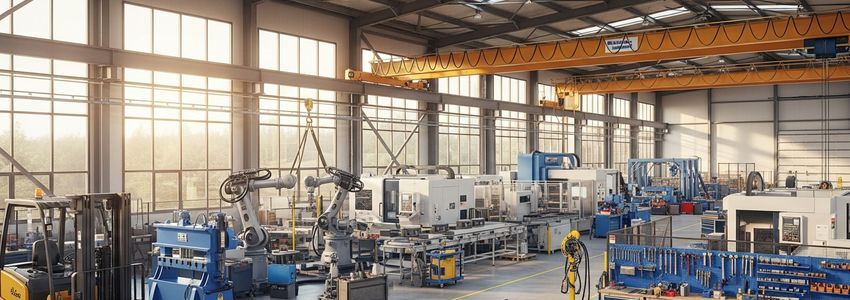
Different Ways to Use Equipment Financing for Your Small Business
For any small business, having the right tools and machinery is not just an advantage-it's a necessity for growth, efficiency, and staying competitive. However, the high upfront cost of essential assets can be a significant barrier, straining cash flow and limiting operational capacity. This is where equipment financing for small business provides a strategic solution, allowing companies to acquire necessary assets through manageable payments instead of a large, single capital outlay.
In This Article
What Is Equipment Financing?
Equipment financing is a specific type of business loan designed exclusively for the purchase of machinery, vehicles, technology, or other physical assets necessary for business operations. Unlike a traditional loan where you receive a lump sum of cash to use as you see fit, an equipment financing agreement provides funds that are used directly to acquire a specific piece of equipment. The key feature that distinguishes this financing method is that the equipment being purchased serves as its own collateral for the loan.
This self-collateralizing structure makes equipment financing an accessible option for many small businesses. Because the lender's risk is secured by a tangible asset that can be repossessed and sold in the event of a default, the qualification criteria are often more flexible compared to unsecured loans. Lenders are more concerned with the value and expected lifespan of the equipment itself, in addition to the borrower's credit history and business financials.
The loan term is typically aligned with the expected useful life of the equipment. For example, a piece of heavy machinery with a 10-year lifespan might be financed over a 5- to 7-year term, while a computer system with a shorter life cycle would likely have a 2- to 3-year term. This ensures that the business pays off the asset while it is still productive and valuable. Upon completion of the payment schedule, the business owns the equipment outright, free and clear. This direct path to ownership is a primary reason why many business owners choose this funding route over leasing.
Ready to Finance Your Next Equipment Purchase?
Get the tools you need to grow with fast, flexible financing from the nation's #1 business lender.
Apply Now →Key Benefits of Equipment Financing for Small Businesses
Choosing the right funding mechanism is a critical decision for any small business owner. Equipment financing offers a host of distinct advantages that make it a compelling choice for acquiring necessary assets without disrupting financial stability.
Preserve Working Capital
The most immediate benefit is the preservation of cash flow. Purchasing expensive equipment outright can deplete a company's cash reserves, leaving it vulnerable to unexpected expenses or unable to invest in other growth areas like marketing or hiring. By breaking down a large purchase into predictable monthly payments, equipment financing allows businesses to keep their working capital liquid and available for daily operations and strategic investments.
100% Financing and Soft Costs
Many equipment financing agreements cover the full cost of the asset, eliminating the need for a substantial down payment. In many cases, lenders will also finance "soft costs" associated with the purchase, such as taxes, shipping, installation, and training fees. This comprehensive funding approach means a business can get new equipment up and running with minimal to zero out-of-pocket expense.
Predictable, Fixed Payments
Small business equipment loans typically come with fixed interest rates and consistent monthly payments over a set term. This predictability is invaluable for budgeting and financial forecasting. Business owners know exactly how much they need to allocate each month, which simplifies cash flow management and prevents the kind of financial surprises that can come with variable-rate financing.
Potential Tax Advantages
The tax benefits associated with equipment financing can be significant. Under Section 179 of the IRS tax code, businesses may be able to deduct the full purchase price of qualifying new or used equipment in the year it is placed into service. This can substantially lower a company's tax liability. Additionally, the interest paid on the loan is also typically tax-deductible as a business expense. Always consult with a tax professional to understand how these benefits apply to your specific situation.
Tax Note: Section 179 allows for a full deduction up to a certain limit (over $1 million for recent tax years), while Bonus Depreciation allows businesses to deduct a percentage of the cost of assets with a life of 20 years or less. These incentives are designed to encourage businesses to invest in themselves.
Builds Business Credit
Successfully managing and paying off an equipment loan is a positive activity that gets reported to business credit bureaus. By making timely payments, a small business can build a strong credit profile. This makes it easier and more affordable to secure other types of financing in the future, such as a business line of credit or larger commercial loans.
Fast and Accessible Funding
Compared to the lengthy and document-intensive process of securing a traditional bank loan or an SBA loan, equipment financing is known for its speed. Because the equipment itself serves as collateral, the underwriting process is often streamlined. Many lenders, including Crestmont Capital, can provide approvals in as little as a few hours and funding within a day or two, allowing businesses to acquire critical assets without delay.
Ownership and Equity
Unlike leasing, where you are essentially renting the equipment, financing leads to full ownership at the end of the loan term. This means the asset becomes part of your company's balance sheet, building equity. Once paid off, the equipment is yours to keep, sell, or use as a trade-in for future upgrades, providing long-term value to your business.
How Equipment Financing Works
The process of securing equipment financing is designed to be straightforward and efficient, enabling businesses to get the tools they need as quickly as possible. While specific steps may vary slightly between lenders, the general workflow follows a clear and logical path from application to acquisition. Understanding this process helps business owners prepare and ensures a smooth funding experience.
First, the business identifies the specific piece of equipment it needs to purchase. This involves selecting a vendor, determining the exact model and specifications, and obtaining a formal quote or invoice. This document is crucial as it details the total cost that needs to be financed, including any associated soft costs like delivery and installation.
Next, the business submits a financing application to a lender like Crestmont Capital. Modern lenders have simplified this step with online applications that can often be completed in minutes. The application typically asks for basic information about the business (name, address, time in business, annual revenue) and the equipment being purchased. Depending on the loan amount, the lender may also request recent bank statements or financial documents.
The lender then performs an underwriting review. This involves assessing the business's credit profile, financial health, and the value of the equipment. Because the equipment is the collateral, this process is often much faster than for unsecured loans. The lender evaluates the risk and, if approved, presents the business with a financing offer. This offer will outline the loan amount, interest rate, term length, and monthly payment.
Once the business owner accepts the terms and signs the financing agreement, the final step is funding. The lender typically pays the equipment vendor directly. This direct payment system is efficient and provides peace of mind for both the vendor and the borrower. With the vendor paid, the equipment is released for shipment and delivery to the business. The business can then put its new asset to work immediately, and the loan repayment schedule begins with the first monthly payment.
Quick Guide
How Equipment Financing Works - At a Glance
Select Equipment
Choose the equipment you need and get a detailed quote from the vendor.
Apply for Financing
Complete a simple online application with your business details and equipment quote.
Review & Sign
Receive your loan terms, review the agreement, and sign electronically.
Get Your Equipment
The lender pays your vendor directly, and your new equipment is delivered.
Different Ways to Use Equipment Financing
The versatility of equipment financing is one of its greatest strengths. It is not limited to a few specific industries; rather, it is a flexible financial tool that can be adapted to the unique needs of nearly any business that relies on physical assets. From heavy machinery on a construction site to the high-tech servers powering a software company, financing provides a pathway to acquire the tools essential for success and growth.
1. Upgrading Manufacturing Equipment
The manufacturing sector is driven by precision, speed, and efficiency. Outdated machinery can lead to slower production times, higher error rates, and increased maintenance costs, all of which hurt the bottom line. Equipment financing allows manufacturers to stay on the cutting edge by acquiring modern assets such as CNC (Computer Numerical Control) machines, 3D printers, robotic arms for assembly lines, laser cutters, and advanced packaging systems. Upgrading this equipment can lead to a dramatic increase in output, improved product quality, and reduced labor costs, providing a clear and often rapid return on investment.
2. Financing Restaurant Equipment
Opening or renovating a restaurant requires a massive investment in kitchen and front-of-house equipment. A commercial kitchen alone needs industrial-grade ovens, ranges, walk-in coolers and freezers, deep fryers, dishwashers, and specialized food prep stations. Additionally, the dining area requires a Point of Sale (POS) system, tables, chairs, and other fixtures. Using restaurant equipment financing allows owners to outfit their entire establishment with top-of-the-line gear without draining their startup capital, which is better used for inventory, staffing, and marketing for a successful launch.
3. Purchasing Medical and Healthcare Equipment
In the healthcare industry, having state-of-the-art medical technology is critical for providing accurate diagnoses and effective treatments. This equipment-including MRI machines, CT scanners, digital X-ray systems, ultrasound devices, and specialized dental chairs-is exceptionally expensive. Equipment financing enables private practices, clinics, and hospitals to acquire these vital assets. This not only improves the quality of patient care but also allows practices to offer new services, attract more patients, and increase revenue streams, all while managing the cost over time.
4. Acquiring Construction Equipment
For construction companies, the equipment is the business. Projects cannot be completed without reliable excavators, bulldozers, backhoes, cranes, dump trucks, and concrete mixers. The high cost of this heavy machinery makes outright purchase difficult for many small to mid-sized firms. Construction equipment financing provides the capital needed to build or expand a fleet, enabling companies to bid on larger, more profitable projects. It also allows for the replacement of aging equipment, reducing costly downtime due to mechanical failures and improving job site safety.
5. Financing Technology and IT Infrastructure
In today's digital world, nearly every business relies on a robust IT infrastructure. This includes servers, computers, networking hardware (routers, switches), data storage systems, and specialized software. Technology evolves rapidly, and financing allows companies to keep their systems current without constant, large capital expenditures. For tech companies, creative agencies, and professional services firms, this means faster performance, enhanced data security, and the ability to run the latest software, which directly translates to improved productivity and client service.
6. Vehicle and Fleet Financing
Businesses in logistics, delivery, trades (plumbing, electrical), and transportation depend on a reliable fleet of vehicles. Equipment financing can be used to purchase everything from a single work van for a contractor to a fleet of semi-trucks for a logistics company. This ensures that vehicles are new, reliable, and fuel-efficient, minimizing repair costs and maximizing uptime. It also allows companies to scale their operations by adding vehicles as their business grows, without being constrained by the high cost of each unit.
7. Agricultural Equipment
Farming is a capital-intensive industry that requires a wide range of expensive machinery. Tractors, combines, harvesters, planters, balers, and advanced irrigation systems are essential for modern agricultural operations. Equipment financing helps farmers acquire the tools they need to improve crop yields, increase efficiency, and manage their land more effectively. Given the seasonal nature of farming income, the structured payment plans offered by financing can be tailored to better align with a farm's cash flow cycles.
8. Salon, Fitness, and Service Industry Equipment
Service-based businesses also rely on specialized equipment to serve their clients. A hair salon needs styling chairs, washing stations, and hood dryers. A fitness center requires treadmills, elliptical machines, weightlifting equipment, and stationary bikes. A dry cleaner needs industrial washers and presses. Financing allows these business owners to create a professional, fully-equipped environment that attracts and retains customers, ensuring they have the best tools to deliver high-quality service.
9. Office Furniture and Fixtures
While often overlooked, the cost of outfitting an office space can be substantial. This includes desks, ergonomic chairs, cubicle systems, conference room tables, and reception area furniture. Equipment financing can be used to cover these purchases, allowing a company to create a productive and professional workspace for its employees without a major upfront cost. This is particularly useful for businesses that are expanding into a larger office or for startups setting up their first physical location.
10. Startup Equipment Needs
For a new business, acquiring all the necessary startup equipment can be the biggest financial hurdle. Many traditional lenders are hesitant to lend to companies without a proven track record. However, because equipment financing is secured by the asset itself, it is often more accessible to startups. This can provide the crucial funding a new company needs to purchase its foundational equipment-whether it's for a coffee shop, a small manufacturing plant, or a tech startup-and get its operations off the ground.
| Feature | Equipment Financing | Traditional Bank Loan | Equipment Leasing |
|---|---|---|---|
| Ownership | Business owns the equipment at the end of the term. | Business owns the equipment immediately upon purchase. | Lessor retains ownership; business has option to buy, return, or renew. |
| Collateral | The equipment itself secures the loan. | May require additional collateral (e.g., real estate, inventory, blanket lien). | No additional collateral required. |
| Down Payment | Often 0-20%, with 100% financing available. | Typically requires a 10-25% down payment. | Usually requires first and last month's payment upfront. |
| Approval Speed | Fast (hours to a few days). | Slow (weeks to months). | Fast (similar to financing). |
| Tax Benefits | Can take Section 179 deduction and depreciate the asset. Interest is deductible. | Same as equipment financing; asset can be depreciated. | Lease payments are typically treated as a fully deductible operating expense. |
| Best For | Businesses that want to own assets with a long useful life. | Businesses with strong credit and time to wait for a lower interest rate. | Businesses needing equipment that rapidly becomes obsolete or want lower payments. |
Types of Equipment Financing Available
When seeking equipment financing, businesses will encounter several different product structures. The primary distinction is between loans and leases, but even within these categories, there are variations designed to meet different business needs and financial strategies. Understanding these options is key to selecting the most advantageous path forward.
Equipment Loans
This is the most straightforward form of equipment financing. A lender provides the funds to purchase an asset, and the business repays the loan, plus interest, over a predetermined term. At the end of the term, the business owns the equipment outright. This is ideal for assets with a long useful life that a business intends to keep for many years, such as heavy machinery, manufacturing tools, or commercial vehicles. The business builds equity in the asset over time and can claim depreciation and interest payment deductions on its taxes.
Equipment Leases
While often discussed alongside financing, equipment leasing is technically a rental agreement. The business makes regular payments to use the equipment for a set period, but the lender (the lessor) retains ownership. Leases often have lower monthly payments than loans and are a great option for technology or equipment that quickly becomes obsolete. There are two main types of leases:
- Fair Market Value (FMV) Lease: Also known as an operating lease, an FMV lease offers the lowest monthly payments. At the end of the term, the business has the option to purchase the equipment at its current fair market value, return it to the lessor, or renew the lease. This provides maximum flexibility and is perfect for businesses that want to regularly upgrade to the newest technology.
- $1 Buyout Lease: Also known as a capital lease, this structure functions more like a loan. The monthly payments are higher than an FMV lease, but at the end of the term, the business can purchase the equipment for a nominal amount, typically $1. This is essentially a way to finance a purchase while structuring the payments as a lease. For tax and accounting purposes, it is often treated as a purchase from the beginning.
Key Distinction: The primary difference between a loan and a capital lease is often how they appear on a balance sheet. A loan creates an asset (the equipment) and a liability (the loan). A capital lease is also recorded this way, whereas an operating lease's payments are simply recorded as an operating expense.
Sale-Leaseback Agreement
A sale-leaseback is a creative financing solution for businesses that already own valuable equipment but need to generate immediate working capital. In this arrangement, the business sells its equipment to a lender and then immediately leases it back. The business receives a lump sum of cash from the sale, which can be used for expansion, debt consolidation, or other operational needs. The business continues to use the equipment without interruption, making regular lease payments to the lender. This is an effective way to unlock the equity tied up in existing assets.
Who Qualifies for Equipment Financing?
One of the most appealing aspects of equipment financing is its accessibility. Because the loan is secured by the tangible value of the equipment being purchased, lenders can be more flexible with their qualification criteria compared to unsecured small business loans. While requirements vary by lender and loan size, several key factors are consistently evaluated.
Credit Score: Both personal and business credit scores are reviewed. While a high score (680+) will secure the best rates and terms, many lenders offer programs for businesses with fair or even poor credit. Lenders specializing in equipment financing understand that a business's potential is not solely defined by its credit history, especially when a valuable asset is securing the deal.
Time in Business: Lenders prefer to work with established businesses, typically those operating for at least one to two years. A longer history demonstrates stability and a track record of revenue. However, many programs are available for startups, particularly if the owner has strong personal credit and industry experience. According to the U.S. Census Bureau, millions of new businesses form each year, and lenders have developed products to serve this vital market segment.
Annual Revenue: Lenders will look at a company's annual revenue to ensure it can comfortably afford the monthly loan payments. There isn't always a strict minimum, as the required revenue will be relative to the size of the loan requested. Providing recent bank statements or tax returns is a standard way to verify income.
Industry and Equipment Type: The industry and the specific equipment being financed also play a role. Equipment that has a strong resale value and a long useful life (like construction or manufacturing machinery) is often easier to finance than highly specialized or custom-built equipment. Lenders are more confident when the collateral is a standard, in-demand asset.
Find Out if You Qualify
Our simple application takes just a few minutes. See your financing options with no impact on your credit score.
See Your Options → <Ready to Finance Your Business Equipment?
Get fast approval and flexible terms from the #1 business lender in the U.S. Apply in minutes - no obligation.
Apply Now →Real-World Scenarios
To better illustrate the practical application and impact of equipment financing, let's explore a few hypothetical scenarios across different industries. These examples show how businesses can leverage this financial tool to overcome challenges and achieve specific growth objectives.
Scenario 1: The Expanding Landscaping Company
The Business: "GreenScapes," a successful landscaping company, has been in business for five years. They have a strong client base but are limited by their aging equipment. They frequently have to turn down larger, more lucrative commercial contracts because they lack the necessary machinery, specifically a commercial-grade zero-turn mower and a compact skid steer for grading work.
The Challenge: The combined cost of the new equipment is $75,000. Paying this amount in cash would wipe out their operating reserves, which they need for payroll, fuel, and seasonal planting supplies. A traditional bank loan process would be too slow, causing them to miss out on the current bidding season.
The Solution: GreenScapes applies for equipment financing through Crestmont Capital. They submit the quotes for the mower and skid steer along with their application. Within 24 hours, they are approved for 100% financing on a 5-year term with a fixed monthly payment. The funds are sent directly to the equipment dealer, and GreenScapes takes delivery of the new machinery within the week.
The Outcome: With the new, efficient equipment, GreenScapes immediately lands two large commercial contracts that were previously out of reach. The additional revenue from these contracts more than covers the monthly loan payment. The company is now more profitable, more competitive, and has built equity in two valuable assets.
Scenario 2: The High-Tech Dental Practice
The Business: Dr. Miller's dental practice has a great reputation for patient care. However, she is still using traditional film X-rays, which are time-consuming and offer lower resolution than modern digital alternatives. She wants to invest in a Cone Beam Computed Tomography (CBCT) machine to offer advanced 3D imaging for implants and complex procedures.
The Challenge: A new CBCT machine costs over $120,000. This is a major capital expenditure that would be difficult to fund from the practice's cash flow without disrupting other financial commitments.
The Solution: Dr. Miller works with a financing specialist to secure an equipment loan. Given the high value and long lifespan of the medical equipment, she is offered a 7-year term with a competitive interest rate. The financing also covers the cost of installation and staff training on the new system.
The Outcome: The new CBCT machine transforms the practice. Diagnosis is faster and more accurate, improving patient outcomes. Dr. Miller can now perform procedures in-house that she previously had to refer out, capturing a significant new revenue stream. The enhanced technological capability also boosts the practice's reputation, attracting new patients.
Scenario 3: The Startup Brewery
The Business: Two entrepreneurs are launching "Craft Kettle Brewing," a new microbrewery. They have secured a location and have a solid business plan, but they need to purchase the core brewing equipment: fermentation tanks, a mash tun, a brite tank, and a canning line.
The Challenge: As a startup with no revenue history, they are struggling to get approved for a traditional loan. The equipment vendors require payment before they will manufacture and ship the custom tanks, creating a catch-22 situation.
The Solution: They apply for startup equipment financing. The lender focuses on the entrepreneurs' strong personal credit, detailed business plan, and the inherent value of the stainless steel brewing equipment, which has a good resale market. They are approved for a loan that covers 90% of the equipment cost, requiring only a 10% down payment. The lender works directly with the vendor to coordinate payments according to the manufacturing schedule.
The Outcome: Craft Kettle Brewing is able to purchase its essential production equipment and launch on schedule. The predictable monthly payments are built into their operating budget. The brewery opens successfully, and within a year, strong sales allow them to easily manage their loan payments while growing their brand.
How Crestmont Capital Helps
Navigating the world of business funding can be complex, but at Crestmont Capital, we simplify the process. As the #1-rated business lender in the country, we specialize in providing fast, flexible, and transparent financing solutions tailored to the unique needs of small businesses. Our approach to equipment financing is built on a foundation of speed, expertise, and customer-centric service.
We understand that when you need equipment, you need it now. That's why we've streamlined our application and approval process. Our online application takes only minutes to complete, and we often provide approvals in a matter of hours, not weeks. This speed allows you to seize opportunities, replace broken equipment without costly downtime, and stay ahead of your competition.
Our team of financing experts brings deep industry knowledge to the table. We work with businesses across hundreds of sectors, from construction and manufacturing to healthcare and hospitality. This expertise allows us to understand your specific challenges and recommend the best financing structure for your goals, whether that's a straightforward loan, a flexible lease, or a more complex solution like a sale-leaseback. We offer a wide range of funding products beyond just equipment, including versatile working capital loans and government-backed SBA loans.
At Crestmont Capital, we are committed to finding a way to say "yes." We look at the complete picture of your business, not just a single credit score. We work with a wide spectrum of credit profiles and business histories, including startups. Our goal is to build long-term partnerships with our clients, providing the capital they need at every stage of their growth. By choosing Crestmont, you're not just getting a loan; you're gaining a financial partner dedicated to your success.
By the Numbers
Equipment Financing for Small Businesses - Key Statistics
8 in 10
Number of U.S. companies that use some form of financing to acquire equipment, including loans or leases.
(Source: Equipment Leasing and Finance Association)
$1.8T
The projected annual investment in equipment and software by U.S. businesses, a significant portion of which is financed.
(Source: Forbes)
62%
Percentage of small businesses that sought financing to expand their business or pursue new opportunities.
(Source: Federal Reserve Small Business Credit Survey)
24 Hours
The typical timeframe for approval and funding from alternative lenders like Crestmont Capital, compared to weeks at traditional banks.
(Source: Industry Data)
Get the Equipment Your Business Needs Today
Crestmont Capital offers equipment financing with competitive rates and same-day decisions. Don't let equipment costs hold you back.
Start Your Application →How to Get Started
Securing the equipment you need to grow your business is a straightforward process. Follow these simple steps to begin your journey toward acquiring your next essential asset with Crestmont Capital.
Identify Your Needs & Get a Quote
Determine the exact make and model of the equipment your business requires. Contact a vendor or supplier and obtain a formal, itemized quote. This document will be essential for your financing application.
Complete Our Simple Application
Fill out our secure online application, which takes just a few minutes. You will need basic information about your business, your personal details, and the equipment quote you received. For larger amounts, you may be asked to upload recent bank statements.
Review Your Offer & Get Funded
Once submitted, our team will quickly review your application and provide you with a financing offer. After you review and electronically sign the agreement, we will coordinate payment directly with your equipment vendor, and your new asset will be on its way.
Get Your Free Equipment Quote Today
Let our team help you secure the best financing terms for the equipment your business needs to thrive.
Apply in Minutes →Frequently Asked Questions
1. What is equipment financing for small businesses?
Equipment financing for small businesses is a type of loan used specifically to purchase business-related equipment. The equipment itself acts as collateral for the loan. Instead of paying a large sum upfront, the business makes regular payments over a set term, and at the end of the term, it owns the equipment.
2. How does equipment financing differ from equipment leasing?
The main difference is ownership. With equipment financing, you are borrowing money to buy the equipment, and you own it once the loan is paid off. With equipment leasing, you are paying to use the equipment for a specific period. At the end of the lease term, you typically have the option to return it, renew the lease, or purchase it at its fair market value.
3. What types of equipment can I finance?
You can finance almost any type of tangible asset needed for business operations. This includes heavy machinery for construction, commercial vehicles, medical and dental equipment, restaurant kitchen appliances, IT hardware like servers and computers, agricultural tractors, office furniture, and specialized manufacturing tools. Both new and used equipment can typically be financed.
4. What are the typical interest rates for equipment financing?
Interest rates vary based on several factors, including your credit score, time in business, annual revenue, and the type and cost of the equipment. Rates can be very competitive, often ranging from 6% to 30%. Businesses with strong credit and a solid financial history will qualify for the lowest rates.
5. What are the qualification requirements?
Qualifications are generally more flexible than for traditional loans. Lenders typically look at your personal and business credit score (often a minimum of 600+ is preferred), at least 1-2 years in business, and sufficient annual revenue to support the loan payments. Startups with strong personal credit can also qualify for certain programs.
6. How long does approval take?
The approval process is very fast. With lenders like Crestmont Capital, you can often get a decision within a few hours of submitting a complete application. Funding can occur in as little as 24-48 hours, meaning you can acquire your equipment without significant delay.
7. Can I get equipment financing with bad credit?
Yes, it is possible. Because the equipment serves as collateral, lenders are often more willing to work with business owners who have less-than-perfect credit. While the interest rates may be higher, there are many financing programs designed for businesses with challenging credit profiles. The value of the asset being financed plays a significant role in the approval decision.
8. How much can I borrow for equipment financing?
Loan amounts can range from as little as $5,000 to over $5 million. The amount you can borrow depends on the cost of the equipment, your business's financial health, and your ability to make payments. Many lenders offer 100% financing, meaning you can borrow the full purchase price of the equipment.
9. Is a down payment required for equipment financing?
Not always. Many equipment financing agreements require no down payment, allowing you to acquire assets with zero cash out of pocket. In some cases, particularly for startups or businesses with lower credit scores, a down payment of 10-20% may be required to reduce the lender's risk.
10. What is the typical repayment term for equipment financing?
Repayment terms are usually aligned with the expected useful life of the equipment. Common terms range from 2 to 7 years (24 to 84 months). Shorter-lived assets like computers might have a 2-3 year term, while heavy machinery could be financed over 5-7 years.
11. Does the financed equipment serve as collateral?
Yes, this is the core feature of equipment financing. The equipment you are purchasing secures the loan. This is known as a self-collateralizing loan. If you default on the payments, the lender has the right to repossess the equipment to recover their losses. This structure means you typically do not have to pledge other business or personal assets.
12. Can startups qualify for equipment financing?
Yes, startups can and often do qualify. While lenders prefer an established business history, many have specific programs for new companies. Approval for a startup often relies more heavily on the owner's personal credit score, a strong business plan, and industry experience. A down payment might also be required.
13. How is equipment financing different from a working capital loan?
Equipment financing is for a specific purpose: purchasing a physical asset. The funds go directly to the equipment vendor. A working capital loan provides a lump sum of cash that can be used for various short-term business needs, such as inventory, payroll, marketing, or rent. Working capital loans are often unsecured, whereas equipment financing is secured by the equipment itself.
14. What industries benefit most from equipment financing?
Virtually any industry that relies on physical assets can benefit. Key industries include construction (excavators, bulldozers), transportation (trucks, vans), manufacturing (CNC machines, presses), healthcare (MRI, X-ray machines), restaurants (kitchen equipment, POS systems), and agriculture (tractors, combines). Even office-based businesses can use it for IT infrastructure and furniture.
15. How does Crestmont Capital's equipment financing process work?
Our process is designed for speed and simplicity. You start by completing a brief online application and submitting the quote for your desired equipment. Our team reviews your file promptly and typically provides a decision within hours. Once you accept the terms and sign the agreement, we pay the vendor directly, and your equipment is released for delivery. The entire process can be completed in as little as one business day.
Driving Your Business Forward
Acquiring the right equipment is fundamental to operational excellence and strategic growth. Equipment financing provides a powerful and accessible pathway for small businesses to obtain these critical assets without compromising their financial health. By converting a prohibitive upfront cost into manageable, predictable payments, you can preserve capital, leverage tax advantages, and equip your team with the tools needed to boost productivity and outpace the competition. Whether you are upgrading outdated technology, expanding your capacity, or launching a new venture, exploring your equipment financing options is a critical step toward building a more resilient and profitable business.
Disclaimer: The information provided in this article is for general educational purposes only and is not financial, legal, or tax advice. Funding terms, qualifications, and product availability may vary and are subject to change without notice. Crestmont Capital does not guarantee approval, rates, or specific outcomes. For personalized information about your business funding options, contact our team directly.








