
 (800) 949-0401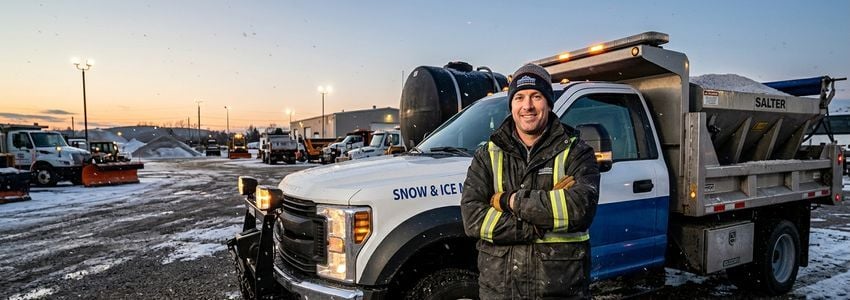
De-Icing Truck Financing: The Complete Guide for Snow and Ice Management Contractors
Winter storms do not wait for contractors to have cash on hand, and a single missed contract because your fleet could not handle the workload can cost far more than the equipment itself. De-icing truck financing gives snow and ice management contractors a way to acquire dedicated de-icing trucks, anti-icing spray systems, brine tanks, and salt spreaders without draining working capital right before the busiest season of the year. Whether you are outfitting your first truck or expanding a fleet to cover new municipal and commercial contracts, financing lets you get equipment on the road when winter demand hits, not months later.
In This Article
What Is De-Icing Truck Financing?
De-icing truck financing is a form of equipment financing that helps snow and ice management contractors purchase or lease dedicated de-icing vehicles and related equipment. This includes trucks outfitted with anti-icing spray systems, liquid brine tanks, pre-wet salt spreaders, and plow attachments built specifically for treating roads, parking lots, and walkways before and during winter storms. Instead of paying the full cost of a truck package upfront, contractors borrow the funds or lease the equipment and repay it over a fixed term, typically 24 to 72 months.
A fully outfitted de-icing truck, complete with a chassis, spreader, brine tank, and control system, can easily run $80,000 to $150,000 or more depending on capacity and technology. For a contractor trying to add capacity ahead of a season, or replace an aging unit that failed during last year's storms, that is a significant upfront cost. Financing spreads that expense into predictable monthly payments so the equipment can start generating contract revenue immediately rather than sitting on a wish list.
Because the truck and its de-icing equipment typically serve as collateral, de-icing truck financing is often easier to qualify for and comes with more competitive rates than unsecured business loans. Lenders view this equipment similarly to other essential commercial vehicles: it holds resale value, it directly generates revenue through service contracts, and its useful life supports a multi-year repayment structure.
Industry Insight: The Federal Highway Administration estimates that snow and ice removal and mitigation costs the nation roughly $4 billion every year, underscoring just how much municipal and commercial demand exists for reliable de-icing capacity.
Key Benefits of De-Icing Truck Financing
Financing dedicated de-icing equipment offers several advantages over paying cash or waiting to save up before expanding your fleet:
- Preserve working capital. Keep cash available for fuel, salt and brine inventory, payroll, and insurance premiums instead of tying it up in a single truck purchase.
- Fast seasonal readiness. Get equipment on the road in weeks, not months, so you can bid on and fulfill new contracts before the first storm hits.
- Predictable monthly payments. Fixed-rate loans and leases make it easier to budget against contract revenue and avoid cash flow surprises mid-season.
- Access to newer technology. Financing makes it realistic to upgrade to GPS-guided spreaders, automated brine systems, and more fuel-efficient trucks rather than running aging equipment past its reliable service life.
- Tax and accounting flexibility. Depending on the structure you choose, financed equipment may offer favorable treatment for your business's balance sheet and cash flow planning.
- Scalable growth. Add trucks incrementally as you win new municipal, commercial property, or HOA contracts, rather than being limited by whatever capital you have on hand.
Ready to Expand Your Winter Fleet?
Get fast, flexible financing from the #1 business lender in the U.S. No obligation, apply in minutes.
Apply Now →How De-Icing Truck Financing Works
The process for financing a de-icing truck follows the same core steps as other commercial equipment financing, with a few considerations specific to winter service contractors:
1. Define Your Equipment Needs
Determine exactly what you need: a new chassis with an integrated spreader and brine tank, an upfit on a truck you already own, or a full multi-truck package. Get a vendor quote that breaks out the chassis, the spreader or anti-icing system, installation, and any electronics or GPS tracking.
2. Gather Your Financial Documentation
Lenders typically request 3 to 6 months of business bank statements, recent tax returns, and proof of any existing service contracts. Contractors with municipal or commercial snow removal contracts in hand often strengthen their application by including copies of those agreements.
3. Submit Your Application
Crestmont Capital's online application takes just a few minutes to complete. For equipment financing under $500,000, decisions are typically available within 24 to 48 hours.
4. Review Loan or Lease Terms
You will receive terms outlining the amount financed, rate or factor rate, repayment term, and monthly payment. Compare structures carefully, especially if you are weighing a loan against a lease.
5. Sign and Receive Funding
Once you accept terms and sign your agreement, funds are typically disbursed within 1 to 5 business days. Many lenders can pay an equipment vendor directly, which speeds up delivery.
6. Take Delivery Before the Season Starts
With funding in hand, you can take delivery, complete any upfitting, and get drivers trained before the first forecasted storm. First payments are typically due 30 days after funding, giving you a head start before revenue needs to cover the note.
Equipment Commonly Financed
Lenders finance a broad range of equipment used by snow and ice management contractors. The following categories are routinely included in de-icing and winter service equipment financing packages:
- De-Icing and Anti-Icing Trucks - Chassis outfitted with liquid application systems for pre-treating roads and lots before storms
- Liquid Brine Tanks and Sprayers - Tank systems and boom or spray-bar attachments for applying salt brine and calcium chloride solutions
- Pre-Wet Salt Spreaders - Tailgate and hopper spreaders that combine dry salt with liquid brine for improved melting performance
- Snow Plows and Plow Attachments - Straight blade, V-plow, and wing plow attachments for trucks and skid steers
- Skid Steers and Loaders - Compact equipment used for lot clearing, snow relocation, and loading operations
- Sidewalk and Walkway Equipment - Compact tractors, sidewalk plows, and pedestrian-scale spreaders for ADA-compliant pathway clearing
- GPS and Telematics Systems - Route tracking, application-rate monitoring, and documentation tools that support liability protection
- Storage and Loading Infrastructure - Salt storage domes, brine-making systems, and loading equipment for larger operations
Both new and quality used equipment are typically eligible. If you are purchasing a used de-icing truck, be prepared to provide documentation on hours, mileage, maintenance history, and an equipment condition summary from the seller or a third-party inspector.
Get Winter-Ready Before the First Storm
Finance de-icing trucks, spreaders, and brine systems with fast approvals and flexible terms built for contractors.
Apply Now →By the Numbers
Winter Weather and Snow Removal - Key Statistics
$4B
Annual U.S. snow and ice removal spending
260K+
People employed in snow removal services
$17B+
Annual snow removal industry revenue
24-72
Typical equipment loan term in months
Who Qualifies for De-Icing Truck Financing?
De-icing and snow removal equipment financing is accessible to a wide range of contractors, from single-truck operators to established fleets. Qualification depends on your business history, revenue, and credit profile, but Crestmont Capital works across the funding spectrum.
Established Snow and Ice Contractors
Businesses with 2 or more years in operation and a track record of seasonal contracts are typically the strongest applicants. These operators can generally access:
- Loan amounts from $25,000 to $2 million or more
- Terms of 36 to 72 months
- Competitive rates based on business and personal credit
- Streamlined documentation requirements
Landscaping Companies Adding Winter Services
Many landscaping and lawn care businesses add snow and ice management as a winter revenue stream. If your core landscaping business is established, adding de-icing equipment is generally viewed favorably by lenders since it diversifies revenue rather than replacing it.
New or Growing Contractors (Under 2 Years)
Newer contractors are not excluded, but may face additional scrutiny. A personal credit score of 650 or higher, a signed municipal or commercial contract, and a reasonable down payment can significantly improve approval odds for startup equipment financing.
General Qualification Benchmarks
- Credit Score: 600+ for most programs; 680+ for the most competitive rates
- Time in Business: 6 months to 2+ years depending on the program
- Annual Revenue: $75,000+ preferred for standard programs
- Down Payment: 0% to 20% depending on credit profile and deal size
Pro Tip: If you have a signed seasonal contract with a municipality, property management company, or HOA, include it with your application. Lenders often view secured contract revenue as a strong indicator of repayment ability, which can improve your terms.
Financing Options Compared
Contractors have several financing structures to choose from when acquiring de-icing trucks and related equipment. The right choice depends on how you plan to use the equipment, your credit profile, and your growth strategy.
| Feature | Equipment Loan | Equipment Lease | Line of Credit |
|---|---|---|---|
| Ownership | You own at end of term | Option to buy, return, or renew | You own immediately |
| Monthly Payments | Moderate, fixed | Lower, fixed | Variable, interest on drawn balance |
| Best For | Long-term fleet trucks | Frequent equipment upgrades | Salt, brine, and parts inventory |
| Down Payment | 0-20% | Often 1-2 months upfront | None |
| Application Time | 1-3 days | 1-3 days | 1-5 days |
A business line of credit is often used alongside equipment financing, giving contractors revolving access to funds for salt, brine chemicals, fuel, and unplanned repairs during an active storm cycle, while the equipment loan or lease covers the truck itself.
How Crestmont Capital Helps Snow and Ice Management Contractors
Crestmont Capital is a nationally recognized business lender with experience funding seasonal and weather-dependent businesses. We understand that snow and ice contractors face a unique cash flow rhythm: revenue is concentrated in winter months, but equipment needs to be purchased and ready well before the first storm.
Fast, Storm-Ready Approvals
Waiting weeks for a financing decision is not an option when a storm system is forming. Crestmont Capital typically provides decisions on equipment financing within 24 to 48 hours, with funds available within days of approval.
Flexible Structures for Seasonal Businesses
We offer equipment loans, equipment leases, and lines of credit, so you can structure financing around your contract cycle rather than a one-size-fits-all repayment schedule.
Broad Equipment Eligibility
Crestmont Capital finances new and used de-icing and winter service equipment, including trucks with integrated spreaders and brine systems, standalone plow attachments, skid steers, and sidewalk equipment. For contractors who also run heavier fleet vehicles year-round, our commercial truck financing programs can cover both winter and summer equipment needs under one relationship.
Working Capital for the Off-Season
Beyond equipment, Crestmont Capital offers unsecured working capital loans that many contractors use to bridge cash flow between seasons, cover payroll during a light winter, or invest in marketing ahead of contract renewal season.
Contractors who already run landscaping crews may also want to review our guide on salt spreader financing or our snow plow financing guide for related equipment that often complements a de-icing truck purchase.
See What You Qualify For
Crestmont Capital works with established contractors, growing fleets, and businesses adding winter services. No obligation to apply.
Check Your Options →Real-World Scenarios: De-Icing Truck Financing in Practice
Understanding how other contractors have used financing can help you think through your own equipment strategy. Here are five realistic scenarios representing common situations for snow and ice management businesses:
Scenario 1: Winning a New Municipal Contract
A snow removal contractor in upstate New York wins a bid for a new municipal road de-icing contract that requires two additional dedicated de-icing trucks with brine tanks. The contractor uses a $220,000 equipment loan with a 60-month term to purchase both trucks, delivering them fully outfitted three weeks before the contract start date and meeting the municipality's equipment requirements without delay.
Scenario 2: Replacing an Aging Truck Mid-Season
A commercial property snow contractor in Ohio has a 12-year-old de-icing truck break down during an active storm cycle, putting several client contracts at risk. Using a fast-approval equipment loan, the contractor secures a replacement truck within days and avoids breach-of-contract penalties with commercial property clients.
Scenario 3: A Landscaping Company Adding Winter Services
A landscaping business in Pennsylvania wants to generate revenue during the winter off-season. The owner finances one de-icing truck with an integrated spreader and brine tank for $95,000 through a 48-month equipment loan, using the new equipment to secure snow removal contracts with three existing landscaping clients who wanted a single vendor year-round.
Scenario 4: Scaling a Fleet with a Lease Structure
A growing snow and ice management company in Minnesota wants to add three de-icing trucks without a large upfront down payment. The company chooses an equipment lease structure with lower monthly payments, preserving cash for salt and brine inventory purchases ahead of the season, with an option to purchase the trucks at the end of the lease term.
Scenario 5: Building Storage and Brine-Making Infrastructure
An established contractor in Wisconsin wants to start producing its own salt brine rather than purchasing pre-made brine, reducing per-application costs. The company finances a brine-making system and storage tank for $60,000 alongside its existing truck fleet, paying down the investment over two seasons through reduced material costs and expanded application capacity.
How to Get Started
Complete our quick application at offers.crestmontcapital.com/apply-now. Have your equipment quote, business bank statements, and any signed service contracts ready.
A Crestmont Capital advisor will review your application and match you with the loan or lease structure that fits your seasonal cash flow.
Once approved and documents are signed, funding typically arrives within 1 to 5 business days so you can take delivery ahead of the next storm.
Conclusion
Snow and ice management is a business where equipment readiness directly determines how many contracts you can service and how reliably you can service them. De-icing truck financing gives contractors a practical way to add trucks, spreaders, and brine systems ahead of the season without draining the cash reserves needed to run daily operations through the winter.
Whether you are replacing an aging truck, scaling up to meet new municipal or commercial demand, or adding winter services to an existing landscaping business, Crestmont Capital offers the fast approvals and flexible structures snow and ice contractors need to move quickly when the forecast changes.
Explore our equipment financing programs or equipment leasing options to find the right fit for your winter fleet.
Finance Your De-Icing Trucks Today
Join snow and ice management contractors nationwide who use Crestmont Capital to fund their equipment. Apply in minutes, no obligation required.
Apply Now →Frequently Asked Questions
Disclaimer: The information provided in this article is for general educational purposes only and is not financial, legal, or tax advice. Funding terms, qualifications, and product availability may vary and are subject to change without notice. Crestmont Capital does not guarantee approval, rates, or specific outcomes. For personalized information about your business funding options, contact our team directly.








