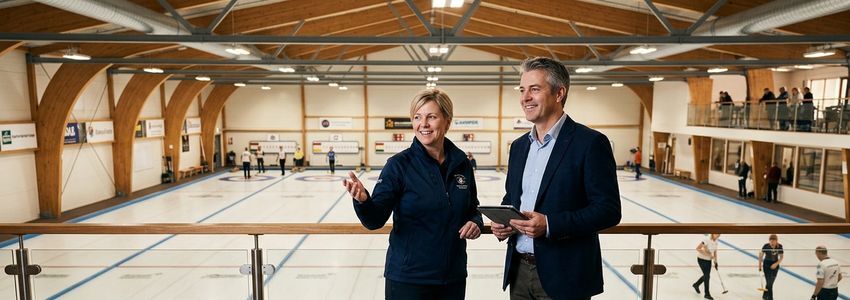
Curling rink financing gives club owners, operators, and developers the capital they need to build, equip, and maintain a facility that depends on precision ice-making technology most general-purpose lenders simply do not understand. From dedicated ice plants and pebbling equipment to slab-on-grade rink construction and dehumidification systems, curling facilities carry equipment and build-out costs that look nothing like a typical recreational property. Whether you are opening the first curling club in your region, replacing an aging refrigeration plant, or expanding sheet count to meet growing membership demand, the right financing partner understands both the sport and the seasonal, member-driven economics behind it.
In This Article
- What Is Curling Rink Financing?
- Types of Financing for Curling Rink Owners
- How Curling Rink Financing Works
- Who Qualifies for Curling Rink Financing?
- What Can You Finance?
- How Crestmont Capital Helps Curling Rink Owners
- Real-World Financing Scenarios
- Curling Rink Financing vs. Other Options
- Frequently Asked Questions
- How to Get Started
- Conclusion
What Is Curling Rink Financing?
Curling rink financing refers to the specialized business loans, equipment loans, and commercial real estate financing products used to fund the construction, acquisition, equipping, or renovation of a curling club or curling rink facility. Unlike a generic ice rink, a dedicated curling facility requires a level, insulated concrete slab, a specialized refrigeration and brine circulation system tuned for the slower, more consistent ice temperatures curling demands, a climate-controlled building envelope to prevent condensation ("frost") on the playing surface, and dehumidification equipment that runs continuously during the season.
These facilities also need curling-specific consumables and equipment: pebbling cans, ice scrapers and nippers, hack installations, scoreboards, and often a pro shop stocked with brooms, sliders, and grippers. Because curling clubs are frequently member-owned nonprofits or small operator-run businesses rather than large recreation conglomerates, they often have thinner cash reserves and less borrowing history than a typical commercial gym or entertainment venue, which makes finding a lender who understands the sport especially important.
According to the U.S. Small Business Administration, access to capital remains one of the most commonly cited barriers for small business owners in the recreation and leisure sector. Curling clubs face this challenge more acutely than most, since the sport's niche footprint in the United States means fewer lenders have direct experience underwriting an ice plant conversion or a new rink build-out. Curling rink financing closes that gap by pairing club owners with financing products structured around the realities of ice sport economics: membership dues, bonspiel revenue, league fees, and a winter-heavy operating calendar.
Ready to Build or Upgrade Your Curling Rink?
Get fast, flexible financing from the #1 business lender in the U.S. No obligation, apply in minutes.
Apply Now →Types of Financing for Curling Rink Owners
No single loan product covers every need a curling rink has, from ice plant replacement to real estate acquisition. Most successful projects combine two or more of the following financing tools depending on the scope of the work.
Equipment Financing
Equipment financing is the most direct fit for curling-specific machinery: refrigeration compressors, brine chillers, condensers, pebbling equipment, ice resurfacing tools, and dehumidification units. Because the equipment itself typically secures the loan, approval tends to be faster and rates more favorable than unsecured products. Terms usually run 24 to 84 months, aligning nicely with the 15-to-25-year service life of a well-maintained ice plant.
SBA Loans
SBA loans are frequently the best fit for ground-up curling rink construction or a full facility acquisition. The SBA 504 program is built for exactly this kind of fixed-asset investment, financing the building, the land, and major permanently affixed equipment like the refrigeration plant, often with a down payment as low as 10 percent and terms stretching out to 25 years. The SBA 7(a) program offers more flexibility for working capital, equipment, or a blended use of funds, with loan amounts up to $5 million.
Commercial Real Estate Financing
If your project involves purchasing land, constructing a standalone building, or buying out an existing rink property, commercial real estate financing provides long-term capital matched to the asset's useful life. This is typically the largest single expense in a new curling club project, and long amortization schedules help keep monthly payments manageable relative to membership-driven revenue.
Business Line of Credit
A business line of credit gives curling club operators a revolving buffer for the unpredictable costs that come with running a seasonal ice sport facility: an emergency compressor repair mid-season, a spike in propane or electricity costs during a cold snap, or bridging the gap between membership renewal cycles. You only pay interest on what you draw, which makes a line of credit a cost-efficient safety net rather than a standing expense.
Term Loans
Traditional term loans work well for mid-sized, one-time investments such as adding a fifth or sixth sheet of ice, replacing the building's roof or insulation envelope, or upgrading the clubhouse and lounge area that keeps members engaged between ends. Terms commonly range from 1 to 10 years with fixed monthly payments that are easy to budget against known membership revenue.
Working Capital Loans
Working capital loans cover the day-to-day costs of running a club: staffing for the season, pre-season marketing and league sign-up campaigns, ice-making labor, and pro shop inventory. These loans typically fund faster than equipment or real estate financing, which makes them a good fit for time-sensitive needs ahead of the curling season's opening weekend.
How Curling Rink Financing Works
Understanding the financing process helps club boards and operators plan ahead and avoid delays that push a project into the following season. Here is the typical path from application to funded project.
Quick Guide
How Curling Rink Financing Works, At a Glance
Identify whether you need a new ice plant, a full building, additional sheets, or working capital to open the season.
Bank statements, tax returns or nonprofit financials, membership and revenue data, and equipment quotes speed up underwriting.
Apply online with Crestmont Capital in minutes and receive a decision on many products the same or next business day.
Compare rate, term, and collateral requirements against your club's season-to-season cash flow before signing.
Most non-SBA products fund within 1 to 3 business days. SBA 504 and 7(a) loans typically take several weeks.
Funds are deployed against the project timeline so the ice is ready and members can register before the season opens.
Because curling has a defined competitive season, many clubs prefer to time major equipment or facility upgrades for the off-season months when the ice is out and contractors have full access to the building. Lenders who understand this cadence can structure funding timelines and even repayment schedules around that seasonal reality rather than a generic monthly amortization.
Who Qualifies for Curling Rink Financing?
Qualification standards vary by lender and loan product, but most curling rink financing programs weigh the following factors:
- Time in Operation: Most lenders want at least 6-12 months of operating history for an existing club, though brand-new clubs can often qualify for equipment financing backed by strong founder credit or a signed facility lease.
- Revenue and Membership Base: Annual revenue from membership dues, league fees, bonspiel entry fees, and pro shop sales all count toward underwriting. A growing or stable membership roster is a strong positive signal.
- Credit Profile: Personal credit scores of 600+ are commonly accepted by alternative lenders, while SBA lenders typically look for 680 or higher from the guaranteeing individual.
- Cash Flow: Lenders review bank statements to confirm the club can service new debt on top of existing operating expenses, particularly through the off-season months.
- Collateral: Equipment loans use the financed asset as collateral. Real estate loans use the property. Unsecured products may require a personal guarantee from a club officer or owner-operator.
- Business Structure: Curling clubs organized as nonprofits, member-owned associations, LLCs, or sole proprietorships can all typically qualify, though documentation requirements differ slightly by entity type.
Key Stat: The SBA reports that more than 33 million small businesses operate across the United States, and recreation and leisure operators consistently rank access to capital among their top growth barriers, according to Forbes analysis of national small business lending data.
If your club is newly formed or has limited financial history, an alternative lender like Crestmont Capital can often offer more flexible underwriting than a traditional community bank, especially where a bank has little frame of reference for curling-specific equipment and revenue patterns.
What Can You Finance?
Curling rink financing can be applied to a wide range of capital needs. Here are the most common uses club owners and operators bring to Crestmont Capital:
Refrigeration and Ice Plants
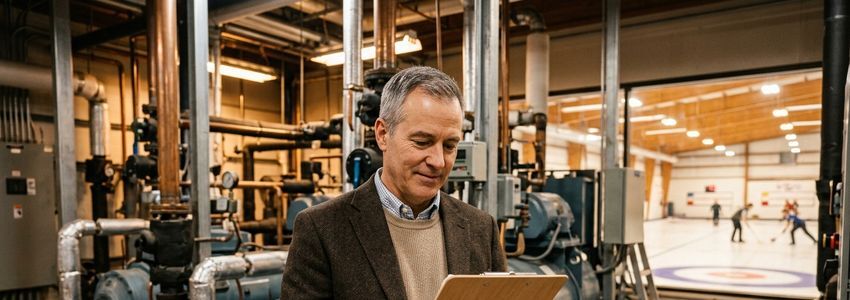
The ice plant, compressors, condensers, brine pumps, and chiller systems represent the single largest and most technical investment in any curling facility. These systems must maintain far more consistent, controlled surface temperatures than a standard hockey rink, and replacement or upgrade costs can run from the low hundreds of thousands into seven figures for a multi-sheet facility. Equipment financing spreads this cost over the useful life of the system.
Building Construction and Real Estate
Ground-up construction, purchasing an existing building for conversion, or acquiring land for a future clubhouse are all common uses of SBA and commercial real estate financing. A well-designed building envelope with proper insulation and vapor barriers is essential to prevent condensation issues that ruin ice quality, and financing this correctly from the start avoids costly retrofits later.
Dehumidification and Climate Control
Curling ice is extremely sensitive to humidity, and a properly sized dehumidification system is not optional. Financing these systems alongside the refrigeration plant ensures the whole ice-making package works together rather than treating climate control as an afterthought.
Ice Maintenance Equipment
Pebbling cans, ice scrapers, nippers, edgers, and resurfacing tools are recurring equipment needs as clubs grow or replace aging gear. These smaller-ticket items are often financed together as a single equipment package.
Clubhouse and Amenity Upgrades
The lounge, viewing area, locker rooms, and pro shop all contribute to member retention and new-member recruitment. Term loans or working capital financing can fund renovations that make the clubhouse a genuine social hub, not just a place to store brooms.
Pre-Season Working Capital
League sign-up marketing, seasonal staffing, ice-making labor before opening weekend, and pro shop inventory all require capital before membership revenue starts flowing. A working capital loan or business line of credit bridges that gap.
Sheet Expansion
Adding sheets of ice to accommodate more leagues, bonspiels, and open club nights is one of the highest-return investments a growing club can make, since additional sheets directly expand the number of members and events the facility can serve at once.
How Crestmont Capital Helps Curling Rink Owners
Crestmont Capital is the #1 business lender in the United States, with a track record of helping niche recreation and hospitality businesses secure the capital that traditional banks often overlook. We understand that a curling club's balance sheet looks different from a typical retail or restaurant business, and we underwrite accordingly.
- Fast Decisions: Many applicants receive a decision the same or next business day on equipment and working capital products.
- Flexible Structuring: We can align repayment schedules with your club's seasonal revenue rather than forcing a rigid year-round payment.
- Full Product Range: Equipment financing, SBA loans, commercial real estate financing, lines of credit, and working capital loans are all available under one roof.
- Streamlined Paperwork: Our application process is built for owner-operators and volunteer club boards who do not have a finance department on staff.
- Experience With Niche Recreation Assets: We work with facilities the traditional banking system frequently misunderstands, from ice sport venues to other specialty recreation businesses.
Whether you need an equipment loan for a new refrigeration plant or an SBA loan to finance a ground-up clubhouse, Crestmont Capital can help you map out the right combination of products for your project and timeline. For clubs weighing a full facility replacement, our team can also walk you through how ice plant financing compares to the refrigeration system upgrades covered in our related guide on ice rink refrigeration system replacement financing.
Get Your Curling Club Season-Ready
From ice plants to clubhouse upgrades, Crestmont Capital funds the projects other lenders pass on. Apply in minutes.
Apply Now →Real-World Financing Scenarios
These scenarios illustrate how curling clubs and rink owners typically put financing to work.
Scenario 1: Replacing an Aging Refrigeration Plant
A member-owned curling club in the upper Midwest was running a refrigeration system installed decades earlier that had become unreliable and increasingly expensive to service. The board secured equipment financing for a new compressor and brine system, structured over 60 months with payments timed to the membership renewal cycle. The upgrade eliminated mid-season ice quality complaints and reduced energy costs enough to offset a meaningful share of the monthly payment.
Scenario 2: Ground-Up Clubhouse Construction
A group of curling enthusiasts in a growing suburban market wanted to build the region's first dedicated four-sheet facility rather than continuing to rent ice time at a shared multi-purpose arena. They used an SBA 504 loan to finance the land, building shell, and permanently installed ice plant, with a 25-year term that kept monthly payments manageable against projected membership dues. The facility opened with a full roster of six leagues in its first season.
Scenario 3: Pre-Season Working Capital for League Sign-Ups
An established club needed $40,000 to cover ice-making labor, seasonal staffing, and a digital marketing push ahead of opening weekend, but its bank required documentation the volunteer board could not quickly assemble. Crestmont Capital approved a working capital loan within 48 hours based on prior seasons' membership revenue, letting the club open on schedule and repay the loan from early-season dues.
Scenario 4: Adding a Fifth Sheet of Ice
A four-sheet club with a waiting list for league play financed the addition of a fifth sheet, including the concrete slab extension and additional refrigeration capacity, using a term loan. The new sheet allowed the club to add two additional league nights and clear its waiting list within a single season, quickly generating enough incremental dues to comfortably cover the new payment.
Scenario 5: Dehumidification System Emergency Replacement
When a club's dehumidification system failed mid-season and threatened ice quality for an upcoming bonspiel, the operator drew on a pre-established business line of credit to fund an emergency replacement within days rather than waiting weeks for a traditional loan approval. The line was repaid over the following two months from tournament and league revenue.
Pro Tip: Many curling clubs pair a term loan or SBA loan for the ice plant and building with a standing line of credit for off-season maintenance surprises. This "stacked" approach provides both long-term investment capacity and short-term liquidity when equipment fails at the worst possible time.
Curling Rink Financing vs. Other Options
Choosing the right product depends on the size and timeline of your project. The table below compares the most common financing types available to curling rink owners and clubs.
| Feature | Equipment Financing | SBA Loan | Term Loan | Line of Credit |
|---|---|---|---|---|
| Best For | Ice plants, pebbling and maintenance gear | New builds, land, full facility purchase | Sheet expansion, clubhouse upgrades | Seasonal cash flow, emergencies |
| Typical Amount | $15K - $1.5M+ | Up to $5M (7a), $5.5M (504) | $25K - $2M | $10K - $500K |
| Repayment Terms | 2 - 7 years | 10 - 25 years | 1 - 10 years | Revolving (annual renewal) |
| Approval Speed | 1 - 5 business days | 2 - 8 weeks | 1 - 7 business days | 1 - 3 business days |
| Collateral Required | Equipment itself | Real estate / assets, often required | Business assets / personal guarantee | Often unsecured |
Frequently Asked Questions
What is curling rink financing?
Curling rink financing is a category of business loans, equipment loans, and commercial real estate financing used specifically to fund the construction, acquisition, equipping, or renovation of curling clubs and facilities, including ice plants, refrigeration systems, dehumidification equipment, and building construction.
How much does it cost to build a curling rink?
Costs vary widely based on sheet count, building size, and whether you are renovating an existing structure or building new. A single-sheet conversion inside an existing building may run into the low hundreds of thousands of dollars, while a purpose-built, multi-sheet facility with a dedicated ice plant can run into the millions. Getting quotes from an experienced ice plant contractor early in the process helps you size the right financing package.
Can a nonprofit curling club qualify for business financing?
Yes. Many curling clubs operate as member-owned nonprofits, and lenders like Crestmont Capital regularly work with these structures. Underwriting typically focuses on membership revenue, dues history, and cash flow rather than the for-profit corporate structure a traditional bank might expect.
What credit score do I need for curling rink financing?
Requirements vary by product. Alternative lenders often accept scores as low as 580-600 for equipment financing, since the equipment secures the loan. SBA loans typically require the guaranteeing individual to have a credit score of 680 or higher. Strong club revenue and cash flow can help offset a lower personal credit score in many cases.
How long does it take to get approved for curling rink financing?
Equipment financing, working capital loans, and lines of credit can often be approved within 1 to 5 business days with Crestmont Capital, and many applicants get a decision the same or next business day. SBA loans generally take 2 to 8 weeks due to the additional government-backed underwriting requirements.
Can I finance just the refrigeration and ice plant equipment?
Yes. Equipment financing can be used exclusively for the refrigeration plant, compressors, brine system, and related ice-making machinery without financing the building or real estate. This is a common approach for clubs that already own or lease a suitable building and only need to fund the mechanical systems.
Is an SBA loan a good option for a new curling club build?
SBA 504 loans are frequently an excellent fit for ground-up curling club construction because they are designed for large fixed-asset investments like land, buildings, and permanently installed equipment, with long terms that keep monthly payments manageable. The trade-off is a longer approval timeline, so SBA financing works best when your project has a planned, rather than urgent, timeline.
What documents do I need to apply?
Standard documentation includes 3-6 months of bank statements, tax returns or nonprofit financial statements, membership and revenue records, business registration or nonprofit incorporation paperwork, and an equipment quote or construction estimate if applicable. Larger loans may also require a business plan and detailed financial projections.
Can I finance dehumidification equipment separately from the refrigeration system?
Yes, though most clubs choose to finance dehumidification alongside the refrigeration plant as a single equipment package since the two systems work together to maintain ice quality. Financing them together can also streamline the approval process and reduce administrative overhead compared to separate applications.
How do seasonal revenue patterns affect my loan terms?
Lenders familiar with recreation and leisure businesses often structure repayment to reflect a club's revenue calendar, aligning larger payments with league renewal and bonspiel season and lighter payments during the off-season. Crestmont Capital works with curling clubs to build a repayment schedule that fits actual cash flow rather than forcing a flat monthly structure.
Can I refinance existing curling rink equipment debt?
Yes. Refinancing an existing equipment loan can make sense if your club's credit profile has improved, rates have dropped, or you want to extend the term to free up monthly cash flow for other priorities like clubhouse upgrades or league marketing.
What if my club had a weak membership season?
A single soft season does not automatically disqualify your club, especially if you can point to a clear cause such as a facility issue or scheduling conflict that has since been resolved. Lenders generally look at multi-year trends rather than one season in isolation, and being upfront about context can strengthen your application.
Is collateral always required for curling rink financing?
Not always. Equipment loans use the financed machinery as collateral automatically. Real estate financing uses the property. Working capital loans and lines of credit are frequently unsecured, though a personal guarantee from a club officer or owner is typically required regardless of collateral status.
How does Crestmont Capital compare to a traditional bank for curling clubs?
Traditional banks often have limited familiarity with curling-specific equipment and member-owned club structures, which can slow underwriting or lead to declines even for financially sound clubs. Crestmont Capital offers faster decisions, more flexible qualification standards, and experience structuring financing around niche recreation businesses that many banks are unfamiliar with.
What is the fastest way to get funding before the season starts?
Working capital loans and business lines of credit are typically the fastest options, often funding within 1 to 3 business days once approved. For equipment needs like a compressor replacement, having a vendor quote ready before you apply can also significantly speed up the underwriting and funding timeline.
How to Get Started
Complete our quick application at offers.crestmontcapital.com/apply-now in just a few minutes, with no obligation to accept.
A Crestmont Capital lending specialist will review your club's needs and walk you through the best combination of products for your ice plant, building, or working capital goals.
Accept your offer, sign documents online, and put capital to work on the ice plant, building, or equipment that keeps your members coming back season after season.
Ready to Fund Your Curling Rink Project?
Get flexible financing from the #1 business lender in the U.S. Apply in minutes.
Apply Now →Conclusion
Curling rinks are technically demanding, capital-intensive facilities that most general-purpose lenders are not equipped to fully understand, which makes the right curling rink financing partner essential rather than optional. Whether you are replacing an aging ice plant before it fails mid-season, financing the land and building for a new club, or bridging pre-season working capital needs, the right combination of equipment financing, SBA loans, real estate financing, and lines of credit can turn an ambitious project into a funded one.
Crestmont Capital has helped recreation and hospitality businesses across the country access financing that fits their real operating patterns, not a generic template. Our understanding of seasonal, membership-driven businesses means we structure curling rink financing that works with your club's calendar instead of against it. Do not let an aging compressor or a stalled expansion plan wait for next season. Apply today to find out how much you can access, how quickly, and on what terms.
Disclaimer: The information provided in this article is for general educational purposes only and is not financial, legal, or tax advice. Funding terms, qualifications, and product availability may vary and are subject to change without notice. Crestmont Capital does not guarantee approval, rates, or specific outcomes. For personalized information about your business funding options, contact our team directly.