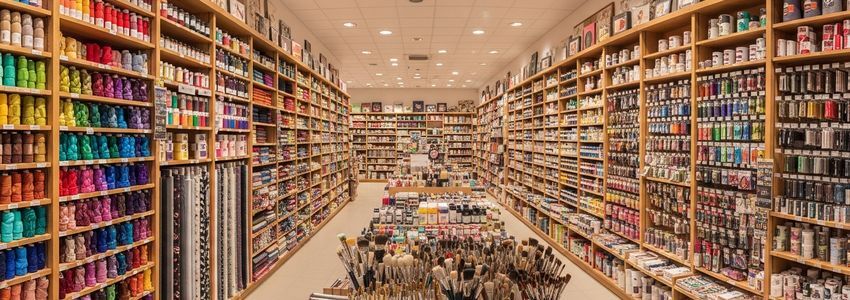
Running a craft store is a labor of love - but keeping shelves stocked with yarn, fabric, paints, tools, and seasonal supplies takes serious capital. Whether you operate a local hobby shop, a specialty scrapbooking boutique, or a full-service craft supply destination, access to reliable financing can mean the difference between thriving and just surviving. Craft store business loans give shop owners the funds to buy inventory in bulk, expand their floor space, hire seasonal staff, and compete with the big-box retailers that dominate the industry.
In this guide, we break down every financing option available to craft and hobby store owners, explain what lenders look for, and show you how Crestmont Capital can help you get funded fast - even if your credit is imperfect.
In This Article
- What Are Craft Store Business Loans?
- Types of Financing Available
- How to Use a Loan for Your Craft Store
- Qualification Requirements
- Craft Store Financing By the Numbers
- How Crestmont Capital Helps Craft Store Owners
- Real-World Scenarios
- Comparing Financing Options
- How to Apply
- Frequently Asked Questions
- How to Get Started
What Are Craft Store Business Loans?
Craft store business loans are financing products designed to help hobby shops, art supply stores, fabric boutiques, scrapbooking centers, and specialty craft retailers access working capital and long-term funding. These loans function like any other small business loan - you borrow a lump sum or access a revolving credit line, deploy the funds to grow your business, and repay the lender over time with interest.
The craft and hobby industry is more resilient than many people realize. According to the Association for Creative Industries, the U.S. craft and hobby market generates over $40 billion in annual retail sales, with demand driven by a growing DIY culture, homeschooling trends, and the explosion of crafting content on social media platforms. Yet many small craft store owners still struggle to access the capital they need to compete, grow, and manage seasonal inventory swings.
Craft store business loans address this gap. They can be used for everything from pre-loading inventory before the holiday rush to renovating your retail space to attract more foot traffic. Lenders like Crestmont Capital specialize in helping retail small businesses like yours get funded quickly - often within 24 to 48 hours of approval.
Industry Insight: The craft and hobby retail segment is projected to grow at a compound annual growth rate of approximately 4.5% through 2028, driven by increased consumer interest in DIY projects, homeschooling supply needs, and crafting content creation. Independent craft stores that invest in inventory and experience are well-positioned to capture this growth.
Ready to Fund Your Craft Store's Growth?
Get fast, flexible financing for inventory, renovations, and seasonal needs. No obligation - apply in minutes.
Apply Now →Types of Financing Available for Craft Store Owners
Not every financing product is the right fit for every craft store situation. Here is a breakdown of the most common loan types and when each makes the most sense for your business:
Working Capital Loans
Working capital loans are short-to-medium-term loans designed to cover day-to-day operational costs - things like payroll, utilities, rent, and supplier invoices during slow months. For craft stores that experience seasonal revenue dips (typically in the spring and summer compared to the fall and holiday season), a working capital loan can smooth out those cash flow gaps and keep your business running without sacrificing long-term stability.
Learn more about unsecured working capital loans from Crestmont Capital - no collateral required for many borrowers.
Business Lines of Credit
A business line of credit gives craft store owners revolving access to a pool of funds they can draw on as needed and repay repeatedly. This is ideal for managing inventory purchases throughout the year, handling unexpected supplier price increases, or covering short-term payroll needs. You only pay interest on what you actually use, making it one of the most flexible and cost-effective financing tools available.
Crestmont Capital offers business lines of credit with competitive rates and fast approvals, even for businesses with imperfect credit histories.
Inventory Financing
Inventory is the lifeblood of any craft store. Without well-stocked shelves, customers walk out the door empty-handed - and often do not come back. Inventory financing is a specialized loan product that uses your inventory itself as collateral, allowing you to borrow against the value of the products you plan to purchase. This is particularly powerful for craft stores gearing up for the holiday season when stock must be ordered weeks or months in advance.
SBA Loans
Small Business Administration loans offer some of the best interest rates and longest repayment terms available to small businesses. SBA 7(a) loans can be used for working capital, equipment, and even real estate purchases. The downside is that the application process can take weeks or months and requires significant documentation. If you need funds quickly, an SBA loan may not be the right immediate solution, but it is worth pursuing for long-term financing needs.
Crestmont Capital can help you navigate SBA loan applications and explore whether you qualify for this lower-cost financing option.
Equipment Financing
Craft stores often invest in specialized equipment - cutting machines, heat presses, embroidery tools, display fixtures, point-of-sale systems, and fabric cutting tables. Equipment financing allows you to purchase this equipment with the asset itself serving as collateral, often resulting in lower rates and longer repayment terms than unsecured loans. This is an efficient way to upgrade your store without depleting your working capital.
Explore equipment financing options that can help your craft store invest in the tools that drive revenue.
Merchant Cash Advances
For craft stores with strong daily credit card sales, a merchant cash advance (MCA) provides fast access to capital in exchange for a percentage of future sales. MCAs are approved quickly and have minimal documentation requirements, making them a popular emergency funding option. However, the factor rates can be higher than traditional loans, so it is important to understand the true cost before signing. Read our guide on merchant cash advances to understand if this product is right for your store.
Revenue-Based Financing
Revenue-based financing works similarly to an MCA but typically comes with more transparent terms. You receive a lump sum and repay a fixed percentage of your monthly revenue until the advance is repaid. During slow months, your payments are smaller; during busy holiday periods, you pay more. This payment flexibility is particularly attractive for craft stores with predictable seasonal revenue patterns.
How to Use a Craft Store Business Loan
A craft store business loan can fund virtually any growth initiative your business needs. Here are the most common and highest-impact ways craft shop owners deploy borrowed capital:
Bulk Inventory Purchasing
Buying inventory in bulk almost always comes with significant per-unit savings. A craft store that orders 500 units of a particular yarn color instead of 50 can often negotiate a 15 to 30 percent discount from suppliers. A business loan gives you the capital to place those larger orders and pass savings on to customers while improving your profit margins.
Seasonal Pre-Stocking
The holiday season - particularly October through December - is the most critical period for craft stores. Christmas ornament crafting kits, holiday fabric, gift wrapping supplies, and seasonal decorating materials fly off shelves during this period. Pre-stocking for the holiday rush requires capital months in advance, well before revenue from those sales materializes. A working capital loan or line of credit used in August or September can pay for itself many times over by December.
Store Renovation and Visual Merchandising
First impressions matter in retail. A well-organized, visually appealing craft store attracts more foot traffic and encourages customers to spend more per visit. Loan funds can be used to upgrade shelving and display fixtures, improve lighting, redesign floor layouts, create dedicated crafting demonstration areas, or upgrade your point-of-sale technology. These investments often produce a measurable increase in average transaction size and customer retention.
E-Commerce Expansion
Many craft store owners supplement their brick-and-mortar revenue with online sales through Etsy, Shopify, or their own website. Loan capital can fund website development, photography equipment, packaging materials, and online marketing campaigns. E-commerce expansion is especially powerful for specialty craft stores that carry niche products not available locally in many markets.
Hiring and Training
Knowledgeable staff are a craft store's greatest competitive advantage over online retailers. Employees who can answer detailed questions about fiber weights, paint types, adhesives, and project techniques build the kind of customer loyalty that drives repeat business. A business loan can fund additional payroll to hire expert staff during busy seasons or cover the cost of training programs that elevate your team's product knowledge.
Marketing and Customer Acquisition
Many independent craft stores underinvest in marketing, relying on word-of-mouth and walk-in traffic. Loan capital can fund digital advertising campaigns, social media content creation, in-store event hosting (such as crafting classes and demonstrations), and loyalty program development. Studies show that craft stores that actively host in-store events experience significantly higher foot traffic and basket sizes than those that do not.
By the Numbers
Craft Store Financing - Key Statistics
$40B+
U.S. craft and hobby retail market size annually
4.5%
Projected annual growth rate through 2028
24-48 hrs
Typical funding time with alternative lenders
$5K-$5M
Available financing range for qualifying businesses
Qualification Requirements for Craft Store Loans
Lenders evaluate craft store loan applications using a combination of financial and operational factors. Understanding what lenders look for helps you prepare a stronger application and increase your chances of approval.
Credit Score
Traditional bank lenders typically require personal credit scores of 680 or higher for small business loans. Alternative lenders like Crestmont Capital work with scores as low as 550 to 580, making financing accessible even if your credit history is imperfect. Your personal credit score matters more for newer businesses; established craft stores with strong revenue histories may qualify based on business performance metrics even with lower personal credit scores.
Time in Business
Most lenders prefer borrowers with at least six to twelve months of operating history. Startups are considered higher-risk and may need to explore options like SBA microloans, equipment financing with collateral, or revenue-based financing that requires a shorter track record. If your craft store has been operating for two or more years with consistent revenue, you will have access to the widest range of financing products.
Annual Revenue
Lenders want to see sufficient revenue to service the debt. Most alternative lenders have minimum annual revenue thresholds of $50,000 to $100,000. Traditional banks and SBA lenders may require $150,000 or more in annual revenues. If your craft store generates strong seasonal revenue, be prepared to show bank statements from your peak months to demonstrate your true earning potential.
Bank Statements
Most alternative lenders require three to six months of business bank statements. Lenders use these statements to verify your average monthly deposits, assess cash flow consistency, and identify any patterns of overdrafts or irregular transactions that might indicate financial stress. Clean, organized bank statements with consistent deposit patterns significantly improve your approval odds and can help you qualify for better rates.
Business Plan and Financials
For larger loan amounts or SBA applications, lenders may request a business plan, profit and loss statements, balance sheets, and tax returns. Having these documents organized and up-to-date demonstrates operational sophistication and reduces friction in the application process. Even for smaller alternative loans, being prepared with basic financials positions you as a serious, organized borrower.
Pro Tip: Before applying for any business loan, pull your business credit report from Dun & Bradstreet, Experian Business, and Equifax Business. Dispute any errors, pay down revolving credit balances where possible, and ensure your business is registered correctly with all three bureaus. Improving your business credit profile can dramatically expand your financing options and reduce your interest rates.
How Crestmont Capital Helps Craft Store Owners
Crestmont Capital is a leading U.S. business lender with a track record of helping small retail businesses - including craft and hobby stores - access the capital they need to compete, grow, and thrive. Here is what sets Crestmont Capital apart from traditional lenders:
Speed of Funding
Traditional bank loans can take weeks or even months to process. Crestmont Capital's streamlined application process allows many craft store owners to receive approval within 24 hours and funding within 48 hours. When a supplier offers a limited-time bulk discount or a short-notice lease opportunity opens up, speed matters. Crestmont delivers.
Flexible Credit Requirements
Crestmont Capital works with craft store owners across the credit spectrum. If your personal credit score is below bank standards but your business generates consistent revenue, we have financing solutions designed for your situation. Our team evaluates the complete financial picture of your business, not just your credit score.
Wide Range of Products
Unlike lenders who offer only one or two financing products, Crestmont Capital provides access to working capital loans, lines of credit, equipment financing, merchant cash advances, invoice financing, and SBA-backed programs. We match each borrower with the product that best fits their needs and financial profile - not just whatever is easiest to approve.
No-Obligation Application
Applying with Crestmont Capital does not affect your credit score and carries no obligation. Our team provides transparent quotes with clear terms so you can compare options and make an informed decision. We believe in educating borrowers, not pressuring them.
Explore our small business financing hub to learn about all available products, or apply now to get started with a no-obligation quote. You can also learn how craft stores compare to other retail businesses by reading our guide on retail business loans.
Get Your Craft Store Funded Today
Join thousands of small business owners who have trusted Crestmont Capital for fast, flexible financing. Apply in minutes.
Apply Now →Real-World Scenarios: Craft Store Loans in Action
Understanding how other craft store owners have used business financing can help you identify which opportunities are most relevant to your business. Here are six real-world scenarios that illustrate the power of strategic borrowing:
Scenario 1 - The Holiday Pre-Stock
A craft boutique in Portland, Oregon generates 45 percent of its annual revenue in the fourth quarter. Each August, the owner needs $80,000 to place bulk holiday inventory orders with suppliers - but summer sales are historically slow. By securing a working capital loan in July, the owner stocks shelves with Christmas crafting kits, holiday fabric, ribbon, and seasonal decorations in time for the October shopping surge. The loan is repaid in full by mid-December with interest, and the net gain far exceeds the borrowing cost.
Scenario 2 - The Equipment Upgrade
A craft store owner in Dallas, Texas wants to install a professional-grade cutting machine and heat press to offer custom crafting services in-store. These services would generate an estimated $2,000 to $3,000 per month in additional revenue through custom vinyl cutting, iron-on transfers, and personalized gifts. The owner secures a $25,000 equipment loan, purchases the machines, and launches the new service line within 60 days. The equipment pays for itself within eight months through the additional revenue it generates.
Scenario 3 - The Second Location
A well-established craft store in suburban Atlanta has been profitable for six years and is ready to open a second location. The owner needs $150,000 for leasehold improvements, initial inventory, signage, and operating expenses during the ramp-up period. A Crestmont Capital term loan provides the capital with a five-year repayment schedule that aligns with projected revenue growth from the new location.
Scenario 4 - The Digital Pivot
During a period of reduced foot traffic, a craft store owner in Phoenix, Arizona decides to invest in e-commerce. She uses a $15,000 working capital loan to hire a web developer, purchase photography equipment, create product listings, and run Google Shopping campaigns. Within six months, online sales account for 25 percent of total revenue, and the diversified revenue stream makes the business more resilient to future disruptions.
Scenario 5 - The Class and Workshop Revenue Stream
A fabric shop owner in Nashville, Tennessee notices that customer engagement events drive significantly higher sales than standard shopping visits. She uses a $10,000 business line of credit to convert a back storage area into a crafting classroom, purchase tables and chairs, install better lighting, and invest in marketing for the new workshop program. The class schedule quickly generates $4,000 to $6,000 per month in additional revenue while increasing retail sales on class days.
Scenario 6 - The Emergency Cash Flow Bridge
An independent craft store owner in Denver, Colorado faces an unexpected $30,000 plumbing repair that disrupts business for two weeks during a slow period. Without emergency financing, the owner would need to delay supplier payments, creating a ripple effect that could damage vendor relationships. A merchant cash advance provides same-day funding, the repair is completed within a week, and the advance is repaid over the next three months through a percentage of daily credit card sales.

Comparing Craft Store Financing Options
| Loan Type | Best For | Typical Terms | Speed |
|---|---|---|---|
| Working Capital Loan | Inventory, payroll, seasonal gaps | 6-24 months, 8-35% APR | 24-48 hours |
| Business Line of Credit | Ongoing expenses, flexibility | Revolving, 7-25% APR | 2-5 days |
| Equipment Financing | Machines, displays, POS systems | 24-72 months, 6-20% APR | 2-7 days |
| SBA 7(a) Loan | Expansion, real estate, large capex | Up to 25 years, prime + 2-4% | 4-12 weeks |
| Merchant Cash Advance | Emergency capital, fast needs | 3-18 months, 1.1-1.5 factor | Same day |
| Revenue-Based Financing | Seasonal businesses, variable revenue | Varies by revenue, 6-24 months | 1-3 days |
The best loan for your craft store depends on your specific situation, revenue history, credit profile, and intended use of funds. Many experienced craft store owners maintain both a term loan (for planned capital expenditures) and a business line of credit (for unexpected needs and inventory opportunities). Explore our inventory financing guide to learn how to fund stock purchases efficiently.
How to Apply for a Craft Store Business Loan
Applying for a craft store business loan with Crestmont Capital is designed to be simple, fast, and transparent. Here is what the process looks like from start to funded:
Step 1 - Gather Your Documents
Before you apply, gather three to six months of business bank statements, your most recent tax return, a valid government-issued ID, and basic information about your business (legal name, address, EIN, time in business, and annual revenue). Having these documents ready speeds up the review process significantly.
Step 2 - Complete the Online Application
Visit the Crestmont Capital application portal at offers.crestmontcapital.com/apply-now. The application takes approximately five to ten minutes to complete. You will be asked basic questions about your business and financing needs. There is no impact on your credit score at this stage.
Step 3 - Review Your Offers
Once your application is reviewed, a Crestmont Capital advisor will present you with financing offers that match your profile. These offers include clear terms, rates, repayment schedules, and total cost of capital. You can take time to review and compare offers without any pressure to commit.
Step 4 - Sign and Fund
Once you select the offer that best fits your needs, you will complete a brief signing process electronically. Most craft store owners receive their funds within 24 to 48 hours of signing, directly deposited into their business checking account.
According to the Small Business Administration, having a clear plan for how you will use loan proceeds significantly improves approval rates and helps ensure the borrowed capital generates a positive return. For additional context on the small business lending landscape, Forbes Advisor's small business loan guide and CNBC's small business coverage offer valuable independent perspectives.
Did You Know? Craft stores that hold in-store classes and crafting events report average transaction values 40 to 60 percent higher than standard shopping visits, according to craft retail industry surveys. Financing a classroom buildout can pay for itself within six to twelve months purely through event revenue and associated retail sales uplift.
Frequently Asked Questions
What credit score do I need to get a craft store business loan?
Credit score requirements vary significantly by lender and loan type. Traditional bank loans typically require a personal credit score of 680 or higher. SBA loans generally require 650 or above. Alternative lenders like Crestmont Capital work with scores as low as 550 to 580, particularly when the business demonstrates strong and consistent revenue. Your credit score is one factor among many - time in business, annual revenue, and bank statement health all play important roles in the approval decision.
How much can I borrow for my craft store?
Loan amounts for craft stores typically range from $5,000 to $5 million depending on the lender, loan type, and your business's financial profile. Working capital loans and MCAs for smaller stores often range from $10,000 to $150,000. SBA loans and larger term loans can reach $5 million. The amount you can borrow is generally tied to your monthly or annual revenue - most lenders will approve up to 100 to 150 percent of your monthly revenue for short-term products and higher multiples for long-term loans.
How fast can I get funding for my craft store?
Funding speed depends on the loan type. Merchant cash advances can be funded the same day in some cases. Working capital loans and lines of credit through alternative lenders like Crestmont Capital typically fund within 24 to 48 hours of approval. Equipment financing usually takes two to seven business days. SBA loans are the slowest, typically requiring four to twelve weeks from application to funding due to the government guarantee process and documentation requirements.
Can I get a craft store loan if my business is seasonal?
Yes, seasonal businesses absolutely can qualify for business loans. The key is to apply at the right time - ideally during or just before your peak season when your bank statements show strong deposits. Revenue-based financing is particularly well-suited for seasonal businesses because repayments flex with your revenue. Working capital loans can be timed to fund pre-season inventory purchases and repaid during peak revenue periods. Be prepared to show bank statements that capture your seasonal highs to demonstrate your business's full earning potential.
Do I need collateral to get a craft store business loan?
Not necessarily. Many alternative lenders, including Crestmont Capital, offer unsecured working capital loans and lines of credit that do not require specific collateral. However, you will typically need to sign a personal guarantee, meaning you take personal responsibility for repayment if the business cannot pay. Equipment loans use the equipment itself as collateral. SBA loans may require collateral for larger amounts. Inventory financing uses inventory as collateral. The requirement for collateral generally decreases as your credit profile and business track record improve.
What can I use craft store business loan funds for?
Business loan funds can be used for virtually any legitimate business purpose, including bulk inventory purchasing, seasonal pre-stocking, store renovation and remodeling, equipment purchases (cutting machines, heat presses, display fixtures, POS systems), hiring and payroll, marketing campaigns, e-commerce development, workshop space buildout, and debt refinancing. Some lenders have restrictions on specific uses - always confirm permitted uses with your lender before signing.
Is it hard to get a business loan for a craft store?
Getting a business loan for a craft store is not inherently difficult, especially with alternative lenders that specialize in retail small businesses. The primary factors that determine ease of approval are your credit score, time in business, and monthly revenue. Craft stores with at least one year of operating history, consistent monthly bank deposits, and a credit score above 580 have a good chance of qualifying for at least some financing products. Having organized financial records and a clear plan for loan proceeds also makes the process smoother.
What documents do I need to apply for a craft store loan?
Basic documentation requirements for most alternative lenders include three to six months of business bank statements, a valid government-issued photo ID, basic business information (business name, EIN, address, time in business), and your estimated annual revenue. For SBA loans and larger traditional bank loans, you may also need two years of business tax returns, profit and loss statements, balance sheets, a current business plan, accounts receivable and accounts payable aging reports, and a personal financial statement.
Can I get a craft store business loan with bad credit?
Yes, bad credit does not automatically disqualify you from business financing. Alternative lenders place more weight on business revenue, cash flow consistency, and time in business than traditional banks do. Merchant cash advances, revenue-based financing, and certain types of equipment financing are the most accessible options for craft store owners with credit scores below 600. These products typically carry higher rates to compensate for the additional risk, but they provide access to capital that would otherwise be unavailable.
How do interest rates work for craft store business loans?
Interest rates for craft store business loans vary significantly by loan type, lender, and borrower profile. SBA loans typically carry interest rates of prime plus two to four percent (currently in the 9 to 13 percent APR range). Traditional bank term loans range from 6 to 20 percent APR. Alternative lender working capital loans range from 15 to 40 percent APR depending on risk factors. Merchant cash advances use a factor rate model (typically 1.1 to 1.5) rather than an interest rate - be sure to ask for the APR equivalent when evaluating MCAs.
Can I get a craft store loan if I just opened my business?
Startup craft stores face more limited financing options, but several paths exist. SBA microloans (up to $50,000) are specifically designed for new and early-stage businesses and have more flexible requirements. Equipment financing is available for startups when the equipment itself serves as collateral. Some alternative lenders work with businesses as young as three to six months old, particularly if the owner has strong personal credit. A detailed business plan and demonstrated industry expertise can strengthen applications from newer businesses.
What is the difference between a term loan and a line of credit for a craft store?
A term loan provides a lump sum upfront that is repaid in fixed installments over a defined period (typically 6 months to 10 years). Term loans are best for one-time capital needs like store renovations, equipment purchases, or opening a second location. A business line of credit is revolving - you can draw funds up to your credit limit, repay them, and draw again. Lines of credit are ideal for ongoing operational needs, inventory purchasing throughout the year, and managing seasonal cash flow fluctuations. Many craft store owners benefit from having both.
How long does the application process take?
Crestmont Capital's online application takes approximately five to ten minutes to complete. Most applicants receive a decision within 24 hours and can have funds deposited within 48 hours of approval. Traditional bank loan applications can take two to four weeks to process. SBA loan applications typically take four to twelve weeks from initial application to funding. The tradeoff is generally speed versus cost - faster lenders often charge higher rates to compensate for the streamlined underwriting process.
Will applying for a craft store loan affect my credit score?
Initial applications with many alternative lenders, including Crestmont Capital, use a soft credit pull that does not impact your credit score. If you proceed to formal application and the lender performs a hard credit inquiry, this will typically reduce your personal credit score by two to five points temporarily. Multiple hard inquiries within a short period can compound this effect. Apply to your top choices within a short window - credit bureaus typically group multiple inquiries for the same loan type within 14 to 45 days as a single inquiry.
What are the alternatives if I am denied a craft store business loan?
A loan denial is not the end of your financing journey. Start by asking the lender for specific denial reasons - this gives you a roadmap for improvement. Common paths after denial include building your business credit score, reducing existing debt to improve your debt-to-income ratio, finding a creditworthy co-signer, applying with a different lender that has more flexible requirements, exploring SBA microloans or CDFI loans designed for underserved businesses, or pursuing grant opportunities through state and local economic development programs. Many craft store owners who were initially denied ultimately secured financing within six to twelve months by addressing the specific factors that led to denial.
How to Get Started
Complete our quick application at offers.crestmontcapital.com/apply-now - takes just a few minutes and does not affect your credit score.
A Crestmont Capital advisor will review your craft store's financials and match you with the right financing option for your goals and profile.
Receive your funds directly in your business checking account - often within 24 to 48 hours of approval - and put them to work growing your craft store immediately.
Conclusion
Craft store business loans are a powerful tool for hobby shop owners who want to grow their inventory, expand their space, upgrade their equipment, and build the kind of customer experience that drives loyalty in a competitive market. Whether you need a small working capital loan to bridge a seasonal gap or a larger term loan to open a second location, there are financing options designed specifically for retail businesses like yours.
Crestmont Capital specializes in helping small business owners - including craft and hobby store operators - access fast, flexible financing with transparent terms. Our application process is simple, our approval standards are realistic, and our funding timelines are measured in hours, not weeks.
Do not let a lack of capital hold your craft store back. Apply today and discover what financing is available for your business - with no obligation and no impact on your credit score. The right capital, deployed at the right time, can be the difference between a craft store that survives and one that truly thrives.
Start Your Craft Store Loan Application Today
Join the thousands of small business owners who trust Crestmont Capital for fast, flexible financing. Apply in minutes - get funded in as little as 24 hours.
Apply Now →Disclaimer: The information provided in this article is for general educational purposes only and is not financial, legal, or tax advice. Funding terms, qualifications, and product availability may vary and are subject to change without notice. Crestmont Capital does not guarantee approval, rates, or specific outcomes. For personalized information about your business funding options, contact our team directly.