
 (800) 949-0401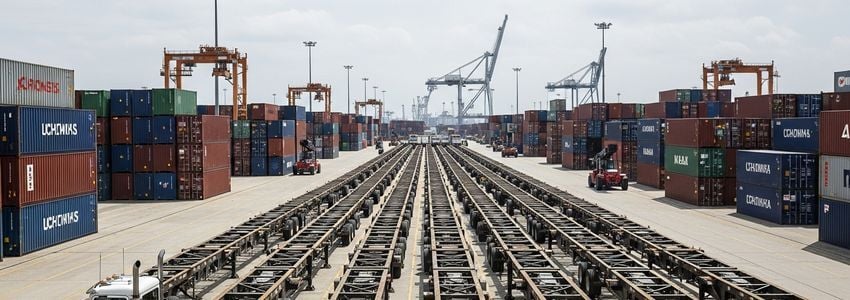
Container Chassis Financing: Complete Guide
Container chassis financing gives trucking companies, intermodal operators, and freight carriers a practical way to acquire the specialized wheeled frames that move shipping containers across the country without tying up large amounts of working capital. Whether you run a port-drayage operation, a regional intermodal fleet, or a long-haul freight company, the right financing structure makes it possible to expand your chassis inventory, replace aging equipment, and keep revenue moving without draining your cash reserves.
In This Article
- What Is Container Chassis Financing?
- Types of Container Chassis
- Financing Options for Container Chassis
- Typical Costs and Rates
- How Container Chassis Financing Works
- Who Qualifies
- Key Industry Statistics
- How Crestmont Capital Helps
- Real-World Financing Scenarios
- Lease vs. Loan Comparison
- Frequently Asked Questions
- How to Get Started
What Is Container Chassis Financing?
A container chassis is a specialized trailer frame designed to carry intermodal shipping containers, typically 20-foot, 40-foot, or 45-foot ISO containers, from ports, rail yards, and distribution hubs to their final destinations. Unlike standard flatbed trailers, a chassis has no deck of its own. It is essentially a wheeled steel framework with locking pins that hold a container securely in place during transport.
Container chassis financing is the process of obtaining a loan or lease to purchase or use these assets without paying the full acquisition cost upfront. Lenders provide capital secured by the chassis itself, allowing operators to spread the cost over a set repayment period, typically two to seven years. Because chassis are classified as commercial equipment, they qualify for many of the same financing programs available to standard semi-trailers and freight equipment.
The intermodal freight market in the United States is substantial. According to the Intermodal Association of North America, intermodal volumes regularly top 14 million units annually. Every one of those moves involves a chassis at some point in the supply chain, making container chassis among the most essential and frequently financed pieces of equipment in the transportation sector.
Industry Insight: The average price of a new 40-foot intermodal chassis ranges from $18,000 to $35,000 depending on configuration, axle type, and manufacturer. Used units typically cost $8,000 to $18,000. Financing allows operators to acquire chassis at any price point without depleting cash reserves.
Types of Container Chassis and What They Cost
Understanding the specific chassis type you need is essential before approaching lenders, because different configurations carry different price tags and may attract different financing terms. The market offers several primary categories of container chassis:
Standard 40-Foot Chassis: The most common configuration in North American intermodal freight. These units typically cost $18,000 to $28,000 new and are compatible with the standard ISO 40-foot containers used in ocean and rail shipping. Lenders are highly familiar with this asset class, which generally makes financing straightforward.
20-Foot Chassis: Shorter frames used for 20-foot TEU containers. These are somewhat less common in domestic intermodal but are widely used near major seaports. New units range from $12,000 to $20,000. Some lenders apply the same financing terms as to 40-foot units; others view them as slightly less liquid assets.
Extendable or Combo Chassis: Adjustable frames that can carry both 20-foot and 40-foot containers by telescoping the rear section. New pricing ranges from $22,000 to $38,000. The added versatility makes these units attractive for operators who handle mixed container sizes, though the mechanical complexity means somewhat higher maintenance costs.
45-Foot Chassis: Used primarily in domestic intermodal and rail-to-truck transfers. Pricing generally falls between $20,000 and $32,000 new. These are common among large carriers operating domestic intermodal lanes between major rail hubs.
Triaxle Chassis: Heavy-duty frames with three axle groups designed for overweight containers, often used in specialized cargo, bulk commodities, or markets where containers are loaded near gross vehicle weight limits. These cost $28,000 to $45,000 and may require specialized lenders with experience in heavy-haul equipment.
Used Chassis: The secondary market for container chassis is active, particularly around major ports. Operators can often acquire serviceable used chassis for $8,000 to $18,000, though age, inspection requirements, and remaining service life are important considerations when financing used units.
Need to Finance a Container Chassis Fleet?
Crestmont Capital offers fast, flexible equipment financing for intermodal and trucking companies. No obligation - apply in minutes.
Apply Now →Financing Options for Container Chassis
Businesses acquiring container chassis have access to several distinct financing structures, each with its own advantages depending on the company's size, credit profile, tax situation, and operational goals.
Equipment Loans (Traditional Financing)
An equipment loan is the most straightforward path to chassis ownership. The lender advances the purchase price, the business takes title to the chassis, and repayments are made over a fixed term of two to seven years. Interest rates for well-qualified borrowers typically range from 6% to 18% annually, depending on credit history, time in business, and the age of the equipment. At the end of the loan, the business owns the chassis outright with no residual payment required.
Equipment loans for container chassis are available through commercial banks, credit unions, and alternative lenders. The chassis itself serves as collateral, which generally allows for more favorable terms than unsecured business loans. Many lenders will finance up to 100% of the purchase price on qualified chassis, though some may require a 10% to 20% down payment depending on credit strength.
Equipment Leasing
Leasing a container chassis means paying for the use of the equipment over a set period without acquiring ownership. Operating leases typically run 12 to 60 months, and at the end of the term, the operator returns the chassis or negotiates a new lease. Finance leases (sometimes called capital leases) are structured similarly to loans, with a buyout option at the end of the term, often at fair market value or a nominal residual price.
Leasing is particularly valuable for operators who want to avoid long-term ownership risk, particularly the cost of maintaining an aging chassis fleet. Leasing also preserves working capital since lease payments are typically lower than loan payments for equivalent terms. Our equipment leasing programs are designed to provide this flexibility to intermodal and trucking operators.
SBA Loans
The U.S. Small Business Administration's 7(a) loan program can be used for commercial equipment purchases, including container chassis. SBA 7(a) loans offer longer repayment terms (up to 10 years for equipment), competitive rates, and lower down payment requirements than conventional bank loans. However, the application process is more documentation-intensive, and approval can take several weeks to several months. SBA loans are best suited for established businesses that need substantial chassis fleets and want the lowest possible monthly payment structure.
Business Lines of Credit
A business line of credit gives operators revolving access to capital that can be drawn as needed and repaid on a flexible schedule. While lines of credit are not specifically designed for equipment purchases, they can be useful for acquiring single chassis units opportunistically, covering maintenance costs, or bridging gaps between chassis deliveries and lease revenue. They work best as a supplement to dedicated equipment financing rather than a primary chassis acquisition tool.
Fleet Financing Programs
For larger intermodal operators purchasing multiple chassis simultaneously, fleet financing programs can provide economies of scale. These programs may offer volume pricing, consolidated billing, and simplified administration compared to financing each unit separately. Some lenders specialize in intermodal and transportation equipment and offer dedicated fleet programs with terms structured around revenue seasonality in the freight market.
Typical Costs and Rates for Container Chassis Financing
The actual cost of container chassis financing depends on several variables, including the applicant's credit profile, the age and condition of the chassis, loan term, down payment, and lender type. Understanding these variables helps operators compare offers and negotiate favorable terms.
Interest Rates: Equipment loan rates for container chassis typically range from 5.99% to 24.99% annually. Borrowers with strong credit (680+ FICO), at least two years in business, and strong revenue typically qualify for rates in the 6% to 14% range. Borrowers with lower credit scores or shorter operating histories may face rates of 15% to 25% or higher. Alternative lenders and direct equipment finance companies often move faster than banks but may charge slightly higher rates in exchange for speed and flexibility.
Loan Terms: Standard equipment loan terms for container chassis range from 24 to 84 months. Shorter terms (24 to 36 months) mean higher monthly payments but less total interest paid. Longer terms (60 to 84 months) lower the monthly payment but increase the total cost of financing. Most intermodal operators find that 36 to 60-month terms strike the right balance between manageable payments and reasonable total cost.
Down Payments: Many equipment lenders offer 100% financing for container chassis purchased from established dealers. Others require a down payment of 10% to 25%, particularly for used units, borrowers with credit challenges, or unusually large purchases. A down payment of 20% or more can meaningfully reduce the interest rate and monthly payment.
Fees: Equipment loans may carry origination fees (0.5% to 3% of the loan amount), documentation fees, and in some cases prepayment penalties. Leasing programs may include security deposits, end-of-term inspection fees, and excess mileage or wear charges. Always request a full fee disclosure before signing any financing agreement.
How Container Chassis Financing Works: Step by Step
The container chassis financing process follows a predictable sequence from application to funding. Understanding each stage helps operators set realistic expectations and prepare the right documentation in advance.
Quick Guide
Container Chassis Financing - At a Glance
Determine chassis type, quantity, new vs. used, and preferred financing structure (loan vs. lease).
Prepare 3-6 months of bank statements, two years of tax returns, business financial statements, and MC/DOT registration.
Apply online or with a specialist. Most equipment finance lenders render decisions within 24 to 72 hours for standard chassis purchases.
Review the loan amount, interest rate, term, monthly payment, and any fees before signing. Compare at least two offers when possible.
Lender pays the seller directly or funds your account. Chassis is delivered, inspected, and placed into service. Repayments begin per the agreed schedule.

Who Qualifies for Container Chassis Financing?
Most established trucking and intermodal companies can qualify for container chassis financing, though specific requirements vary by lender. Understanding standard qualification benchmarks helps operators prepare strong applications and target the right lenders.
Time in Business: Most conventional lenders require at least two years of operating history. Some alternative equipment finance companies work with operators who have been in business for as little as 12 months, though rates will typically be higher for newer businesses.
Credit Score: A personal credit score of 650 or higher is typically sufficient for standard equipment financing. Scores above 700 unlock the best available rates. Operators with scores below 620 may still qualify through specialized lenders that focus on the trucking and intermodal sector, though terms will reflect the elevated credit risk. Our bad credit equipment financing programs are designed for businesses in this situation.
Revenue: Most lenders want to see annual revenue of at least $150,000 to $250,000 for chassis financing requests up to $100,000. Larger fleet acquisitions will require proportionally stronger revenue documentation. Consistent revenue trends are more important to many underwriters than the absolute dollar amount.
Industry Licensing: Container chassis operators typically need valid DOT and MC numbers for commercial trucking operations. Lenders may also require proof of the necessary liability and cargo insurance coverages specified by federal and state regulations.
Down Payment: Having 10% to 20% of the purchase price available as a down payment strengthens any application and typically results in better rates, even when 100% financing is technically available.
Pro Tip: Operators who have recently completed their first year in business and need chassis to grow should consider a combination approach: use a short-term working capital loan to fund a small initial purchase, build a payment history with the lender, and then refinance or expand the credit line once the business history is stronger.
Container Chassis and Intermodal Freight: Key Statistics
By the Numbers
Container Chassis Financing - Key Statistics
14M+
Annual intermodal moves in the United States
$35K
Max cost of a new 40-foot container chassis
6-18%
Typical annual interest rate range for chassis loans
24-84
Standard loan term range in months for chassis financing
How Crestmont Capital Helps With Container Chassis Financing
Crestmont Capital specializes in equipment financing for transportation and logistics businesses, including intermodal operators who need fast, flexible access to capital for container chassis purchases. As the #1 rated business lender in the United States, we offer a streamlined application process, competitive rates, and financing solutions designed specifically for the trucking and intermodal sector.
Our equipment financing programs cover new and used container chassis across all configurations, from standard 40-foot units to extendable combo frames and triaxle heavy-haul chassis. We work with owner-operators, regional carriers, national freight companies, and port-drayage specialists at every stage of business development.
For intermodal operators who also need financing for tractors, dry van trailers, or other fleet assets, we provide bundled financing options that simplify the borrowing process. Our team understands the seasonal cash flow dynamics of the freight market and structures repayment schedules accordingly. We also work with borrowers who have imperfect credit histories, offering small business loans and equipment financing options designed for a wide range of credit profiles.
Operators who need to add commercial truck financing alongside their chassis purchases can combine both into a single financing application, saving time and simplifying fleet expansion. If you have recently published a post on dry van trailer financing or other trailer types, Crestmont can bundle those purchases as well.
Ready to Grow Your Intermodal Fleet?
Fast approvals, flexible terms, and financing designed for container chassis and intermodal equipment. Apply in minutes.
Get Chassis Financing →Real-World Container Chassis Financing Scenarios
These examples illustrate how different types of transportation businesses approach container chassis financing based on their specific operational needs and financial profiles.
Scenario 1 - Port Drayage Startup: A new port-drayage company in Los Angeles has operated for 14 months and has a single owner-operator tractor. Revenue is running at approximately $280,000 annually, and the owner's personal credit score is 695. The company needs two 40-foot chassis to serve a contract with a local freight forwarder. An alternative equipment lender approves a $52,000 loan at 14.5% over 48 months, with no down payment required. Monthly payments are approximately $1,430. The contract generates enough revenue to cover payments within the first week of operation each month.
Scenario 2 - Regional Intermodal Carrier Expanding Fleet: A regional carrier with seven years in business, annual revenue of $4.2 million, and a 740 FICO score needs to add 12 extendable chassis to support a new rail-to-truck contract. The carrier secures a fleet financing program at 8.9% over 60 months for a total of $348,000. The lender consolidates all 12 units into a single monthly payment of approximately $7,230, simplifying administration and reducing per-unit financing costs compared to separate loans.
Scenario 3 - Owner-Operator Adding Used Chassis: An owner-operator with four years in business and a 665 credit score wants to purchase a single used 40-foot chassis for $14,000 to reduce dependency on chassis rental programs near the port. After a small down payment of $2,000, a specialty trucking lender approves a $12,000 loan at 19.5% over 36 months. Monthly payments are $445. The owner-operator calculates that this is still significantly less than the $1,200 to $2,500 per month spent on chassis rental over the same period.
Scenario 4 - Freight Broker Entering Asset-Based Operations: A freight brokerage with six years in operation and strong financials decides to build an asset-based intermodal division. They need six new chassis, two tractors, and some dry van trailers. Crestmont Capital structures a bundled equipment financing package covering all assets at a blended rate of 9.8% over 60 months. The consolidated payment simplifies cash flow management and the brokerage begins generating direct intermodal revenue within 30 days of funding.
Scenario 5 - Seasonal Intermodal Operator Refinancing: An intermodal operator with existing chassis financed at 21% through an emergency lender during a cash flow crisis now qualifies for better rates after 18 months of perfect payment history. They refinance three chassis at 11.5% over 48 months, reducing their monthly payment by $620 and improving cash flow heading into their slower winter season.
Scenario 6 - Agricultural Cooperative Using Container Chassis: An agricultural cooperative ships grain and agricultural products in containers from a Midwest hub. They need triaxle chassis capable of handling heavier container loads. A specialized agricultural equipment lender approves two triaxle chassis at $42,000 total with financing at 10.2% over 60 months. The cooperative structures repayment to align with seasonal harvest revenue peaks.
Lease vs. Loan: Which Is Right for Container Chassis?
| Feature | Equipment Loan | Equipment Lease |
|---|---|---|
| Ownership | You own the chassis after payoff | Lender retains title (operating lease) |
| Monthly Payment | Higher (builds equity) | Lower (use only, no equity) |
| End-of-Term Options | Own the chassis outright | Return, renew, or buy at FMV |
| Maintenance Responsibility | Borrower is responsible | Varies; some leases include maintenance |
| Balance Sheet Impact | Asset and liability recorded | Off-balance-sheet (operating lease) |
| Best For | Long-term fleet building, asset accumulation | Operators who prefer flexibility and lower payments |
| Typical Term | 36-84 months | 12-60 months |
The right choice between a loan and a lease depends largely on your long-term fleet strategy. Operators who want to build equity in their assets and have predictable long-term demand for chassis tend to prefer loans. Those who prefer lower monthly payments, the ability to upgrade equipment regularly, or who operate in markets where chassis technology is evolving quickly often find leasing more attractive. Reviewing both options with a financing specialist before committing is always worthwhile.
Frequently Asked Questions
How to Get Started
Complete our quick application at offers.crestmontcapital.com/apply-now - takes just a few minutes and covers chassis financing up to any fleet size.
A Crestmont Capital advisor experienced in intermodal and trucking equipment will review your needs, evaluate your options, and structure the best possible financing solution for your chassis acquisition.
Receive approval, finalize your chassis purchase, and put your new equipment into revenue-generating service - often within days of application.
Conclusion
Container chassis financing is one of the most direct ways for intermodal operators and trucking companies to grow their capacity without sacrificing liquidity. Whether you are a single owner-operator breaking free of chassis rental fees or a growing regional carrier building a fleet of owned chassis for long-term intermodal contracts, financing makes it possible to act on opportunity without waiting years to accumulate the capital required to purchase chassis outright.
The key is choosing the right financing structure for your specific operational situation. Equipment loans are best for operators committed to long-term ownership and equity building. Leasing suits those who prioritize payment flexibility and equipment versatility. SBA programs offer the longest terms and lowest payments for established businesses that qualify. And alternative lenders provide speed and accessibility for operators with non-traditional credit profiles.
Container chassis financing is widely available, competitively priced for qualified borrowers, and structured to match the revenue dynamics of the freight market. If your business moves intermodal freight - or plans to - owning your chassis rather than renting them is a strategic advantage worth exploring. Crestmont Capital is ready to help you build the chassis fleet that keeps your operation moving.
Disclaimer: The information provided in this article is for general educational purposes only and is not financial, legal, or tax advice. Funding terms, qualifications, and product availability may vary and are subject to change without notice. Crestmont Capital does not guarantee approval, rates, or specific outcomes. For personalized information about your business funding options, contact our team directly.








