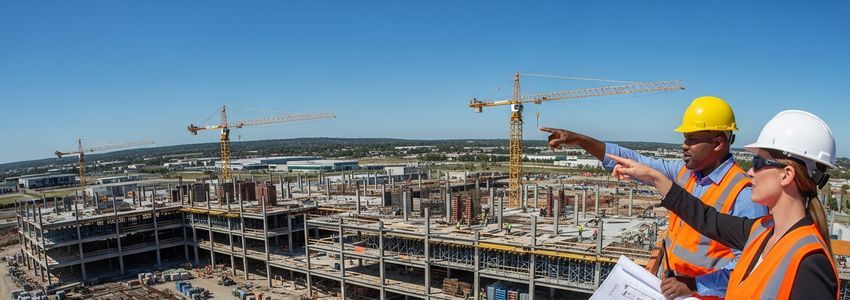
Building a commercial property from the ground up is one of the most capital-intensive moves a business can make. Whether you're a developer breaking ground on a mixed-use project, a contractor constructing a new office building, or an entrepreneur building a custom facility for your operations, you need financing that keeps pace with every phase of the build. That's exactly where a construction-to-permanent loan comes in.
Unlike traditional construction loans that require you to refinance once the build is done, a construction-to-permanent loan combines the construction phase and the long-term mortgage into a single, streamlined product. You close once, you deal with one lender, and you transition seamlessly from builder to owner when the keys are handed over.
In this guide, you'll find everything you need to know: how these loans work, who qualifies, what rates look like, and how Crestmont Capital can help you secure the financing to turn your blueprint into reality.
In This Article
- What Is a Construction-to-Permanent Loan?
- How Construction-to-Permanent Loans Work
- Key Benefits of This Loan Type
- Types of Construction-to-Permanent Loans
- Requirements and Qualifications
- Rates, Terms, and Costs
- Construction-to-Perm vs. Other Financing Options
- Who Should Use This Loan?
- Real-World Scenarios
- How Crestmont Capital Can Help
- Frequently Asked Questions
- Next Steps
What Is a Construction-to-Permanent Loan?
A construction-to-permanent loan, also known as a one-time close construction loan or single close construction loan, is a financing product that funds both the construction of a new building and the long-term mortgage that pays it off after completion. Rather than obtaining two separate loans, a borrower applies once, closes once, and receives a single loan that transitions from a construction draw facility into a conventional mortgage when the building is complete and a certificate of occupancy is issued.
This type of financing is especially popular for commercial construction projects, including new office buildings, mixed-use developments, warehouses, retail centers, and specialty-use properties. It is also widely used for ground-up residential construction and spec home projects.
A standalone construction loan is short-term and interest-only, meant to be paid off or refinanced at completion. A construction-to-permanent loan eliminates that refinance step entirely, locking in permanent financing before a single shovel hits the dirt.
The Two Phases of the Loan
Every construction-to-permanent loan operates in two distinct phases:
- Phase 1 (Construction Period): Funds are released in "draws" as construction milestones are reached. During this phase, you typically pay interest only on the amounts disbursed, keeping monthly payments manageable while the project is underway. This phase usually lasts 6 to 24 months, depending on the scope of the build.
- Phase 2 (Permanent Mortgage): Once construction is complete and inspections are passed, the loan automatically converts to a standard amortizing mortgage. Principal and interest payments begin, and the loan is fully in place for the long-term repayment period, typically 10 to 30 years.
This dual-phase structure is what makes the construction-to-permanent loan so powerful. There is no gap in financing, no scramble to refinance, and no risk of interest rate changes between construction and permanent phases (if you locked in the rate at origination).
Ready to Build? Start With the Right Financing.
Crestmont Capital specializes in construction and commercial real estate financing. Talk to a funding expert today about your project.
Apply Now →How Construction-to-Permanent Loans Work
Understanding the mechanics of a construction-to-permanent loan helps you plan your project and budget from day one. Here is a step-by-step breakdown of the typical process:
Step 1: Pre-Application and Project Planning
Before you apply, you need a detailed construction plan including architectural drawings, a licensed contractor, a full cost estimate, and a timeline. Lenders will scrutinize these documents carefully, so working with experienced professionals is essential. You will also need to show proof of land ownership or have the land purchase factored into the loan.
Step 2: Loan Application and Underwriting
The application process for a construction-to-permanent loan is more involved than a standard commercial mortgage. Lenders evaluate both the borrower's creditworthiness and the viability of the project itself. Expect requests for personal and business financial statements, tax returns, a detailed construction budget, and contractor credentials.
Step 3: Appraisal of Future Value
Instead of appraising an existing property, lenders order an "as-completed" appraisal. This estimates what the finished property will be worth once construction is done. The loan amount is based on this future value, which is why detailed plans and professional cost estimates matter so much.
Step 4: Single Loan Closing
One of the defining advantages is that you close only once. At closing, all loan terms are established for both the construction and permanent phases. Closing costs are paid once, and the loan is fully in place before a single nail is driven.
Step 5: Draw Disbursements During Construction
Funds are not released in a lump sum. Instead, they are disbursed in stages as pre-defined milestones are completed. Each draw request typically requires an inspection by the lender's inspector to confirm that work has progressed as expected. Common draw stages include foundation, framing, rough-in utilities, drywall, and final completion.
Step 6: Conversion to Permanent Mortgage
Once the certificate of occupancy is issued and the final inspection passes, the loan converts automatically (or with minimal paperwork) to a permanent mortgage. Payments shift from interest-only to fully amortizing principal-and-interest payments at this point.
Construction-to-Permanent Loan: Process Flow
Key Benefits of Construction-to-Permanent Loans
Why choose a construction-to-permanent loan over other financing structures? Here are the most compelling reasons:
1. One Closing, One Set of Costs
Closing costs for commercial loans typically run 1.5% to 3% of the loan amount. With a two-loan structure (separate construction loan plus permanent mortgage), you pay those fees twice. A construction-to-permanent loan eliminates the second closing entirely, potentially saving tens of thousands of dollars on larger projects.
2. Rate Lock Protection
Many lenders allow borrowers to lock in their permanent mortgage rate at the initial closing. This protects you from interest rate volatility during the construction period. If rates rise by the time your building is complete, you are already locked in at the original rate.
3. Simplified Lender Relationships
Managing one lender relationship instead of two means less paperwork, fewer points of contact, and a more streamlined project management experience. This is especially valuable on larger or longer projects where communication and documentation are already complex.
4. Faster Access to Permanent Financing
With a traditional two-loan approach, you must apply for and qualify for a permanent mortgage after construction is complete. That process can take weeks or months, creating a financial gap. With a construction-to-permanent structure, the permanent financing is already in place.
5. Interest-Only Payments During Construction
During the construction phase, you typically pay interest only on the drawn amounts. This keeps cash flow manageable while your property is not yet generating revenue.
According to the Federal Reserve's Survey of Consumer Finances, construction lending accounted for over $470 billion in outstanding balances in 2023, reflecting strong demand for new construction financing among businesses and developers. Sources like the SBA's loan programs also support certain construction activities, though most commercial builds rely on conventional and alternative lenders.
Types of Construction-to-Permanent Loans
Not all construction-to-permanent loans are structured identically. Here are the most common variations:
Conventional Construction-to-Perm
Offered by banks, credit unions, and commercial lenders. These typically require strong credit (650+), significant equity or down payment (20-30%), and full project documentation. Terms can be aggressive on rate, but qualification requirements are strict.
Commercial Real Estate Construction-to-Perm
Designed specifically for income-producing commercial properties: office buildings, retail centers, industrial warehouses, and mixed-use developments. These loans are underwritten based heavily on the projected net operating income (NOI) of the finished property.
Owner-Builder Construction-to-Perm
Some lenders allow licensed general contractors to act as their own builder. These loans typically require even more detailed documentation to verify that the borrower has the experience and licensing to manage the build safely and on schedule.
Spec Construction Loans
Used for properties built speculatively (for sale on the open market rather than for a specific buyer). These carry higher risk for lenders and often come with stricter terms and lower advance rates. Related to the broader topic of construction loans and financing.
Ground-Up Construction Loans
Covers the entire development process from raw land to finished structure. Requires land equity or cash for the purchase, detailed site plans, and often an environmental assessment. These are the most complex and comprehensive construction-to-perm products.
Requirements and Qualifications
Qualifying for a construction-to-permanent loan requires meeting standards in multiple areas. Here is a breakdown of what lenders typically look for:
Credit Score
Most conventional lenders require a personal credit score of 650 or higher. Alternative and private lenders may work with scores as low as 580 to 620 with compensating factors. Business credit history also plays a role for commercial projects. If your credit is not quite there, bad credit business loan options may be worth exploring as you build toward a construction project.
Down Payment / Equity
Most lenders require 20% to 30% down, based on the as-completed value of the property. This can come from cash, land equity (if you already own the lot), or a combination of both. Some programs allow lower equity with additional guarantees or collateral.
Licensed General Contractor
Virtually all lenders require the use of a licensed, bonded, and insured general contractor. You will need to submit contractor credentials, licensing documentation, and proof of insurance as part of the loan application.
Detailed Construction Plans and Budget
Lenders need to see architectural drawings, engineering plans, a comprehensive scope of work, and an itemized construction budget. Any vagueness or gaps in documentation will slow down or derail the approval process.
Business and Personal Financials
Lenders will review 2 to 3 years of personal and business tax returns, bank statements, profit and loss statements, and balance sheets. For commercial projects, they also want to see a business plan or feasibility study.
Debt Service Coverage Ratio (DSCR)
For income-producing properties, lenders evaluate the DSCR to ensure the finished property will generate enough revenue to cover debt service. A DSCR of 1.25 or above is typically required, meaning the property earns 25% more than its debt obligations.
If you are working on building your qualifications, check out our guides on small business loans and SBA loan programs for alternative routes to project funding.
Not Sure If You Qualify? Let's Talk.
Crestmont Capital works with builders and developers across all credit profiles. Get a free consultation to review your options.
Get Pre-Qualified Today →Rates, Terms, and Costs
Construction-to-permanent loan pricing depends on multiple factors including project size, location, borrower creditworthiness, property type, and market conditions. Here is what you can generally expect:
Interest Rates
Commercial construction-to-permanent loans typically carry interest rates ranging from 6.5% to 11% as of 2025 to 2026. Variable-rate products tied to the prime rate or SOFR are common, though fixed-rate products are also available. Rate locks for the permanent phase can sometimes add a small premium to the construction phase rate.
Loan Terms
- Construction Phase: 6 to 24 months, interest-only
- Permanent Phase: 10, 15, 20, or 25 years amortization, sometimes with a balloon payment at 5 to 10 years
- Loan-to-Value (LTV): Typically 70% to 80% of as-completed appraised value
- Loan-to-Cost (LTC): Typically 80% to 90% of total project costs
Fees and Costs
- Origination Fee: 0.5% to 2% of the loan amount
- Appraisal Fee: $2,000 to $10,000+ for commercial as-completed appraisals
- Construction Inspection Fees: $150 to $500 per draw inspection
- Title and Closing Costs: Variable, typically 1% to 3% of loan amount
- Contingency Reserve: Most lenders require 5% to 10% of the construction budget held in reserve for cost overruns
For a helpful overview of how interest costs work across different loan types, the Federal Reserve publishes regular data on commercial and construction lending rates.
Construction-to-Perm vs. Other Financing Options
Understanding how a construction-to-permanent loan compares to alternatives helps you choose the right tool for your project.
vs. Traditional Construction Loan (Two-Close)
A traditional construction loan is short-term (6 to 24 months), interest-only, and must be refinanced or paid off at completion. The two-close approach requires two separate applications, two closings, two sets of closing costs, and the risk that you cannot qualify for or afford the permanent mortgage when construction is done. A construction-to-permanent loan eliminates all of those risks by combining both phases into one product.
vs. Hard Money Construction Loans
Hard money lenders offer fast approvals and flexible underwriting for construction projects, but at significantly higher rates (10% to 15%+) and shorter terms. They are useful for projects that cannot qualify for conventional financing, but the cost is substantially higher. Learn more in our related post on long-term business loans.
vs. SBA 504 Loans
The SBA 504 program can fund commercial real estate purchases and some construction projects with long terms (25 years) and competitive fixed rates. However, SBA loans involve lengthy approval timelines, strict eligibility requirements, and significant documentation. They are best for businesses buying or building owner-occupied commercial property. Read our full guide on SBA loans for more details.
vs. Business Line of Credit for Construction
A business line of credit offers flexible, revolving access to funds and works well for smaller projects or ongoing capital needs, but typically is not sufficient for large ground-up construction because the credit limits are too low and repayment terms too short. It can, however, supplement construction financing for smaller expenditures and contingencies.
For larger commercial projects (over $2M), a construction-to-permanent loan is almost always the most cost-effective structure. For smaller projects under $500K, exploring options like equipment financing for specific build components, or a short-term bridge loan combined with a conventional mortgage, may offer more flexibility.
Who Should Use a Construction-to-Permanent Loan?
This type of financing is best suited for:
- Commercial Developers: Building office parks, retail centers, medical facilities, or industrial properties
- Contractors and Builder-Developers: Constructing properties for their own use or for sale
- Business Owners Needing Custom Facilities: Manufacturers, healthcare providers, or warehousing operations that cannot find existing space that meets their needs
- Real Estate Investors: Developing value-add commercial properties from scratch
- Mixed-Use Developers: Building properties that combine retail, office, and residential components
- Franchise Operators: Constructing new brand-compliant locations when leasing is not an option
If you are a small business owner looking to build a facility rather than buy an existing one, a construction-to-permanent loan could be a game-changer. According to CNBC Small Business reporting, owning commercial real estate is one of the most powerful wealth-building tools available to entrepreneurs, and custom builds often yield better long-term value than purchasing existing properties.
Real-World Scenarios
Let's look at how construction-to-permanent loans play out in practical situations:
Scenario 1: The Manufacturing Expansion
A precision machining company in Ohio has outgrown its leased facility. They cannot find suitable existing industrial space in their metro area. They secure a $2.1 million construction-to-permanent loan to build a 15,000 square foot custom manufacturing plant on land they already own. The interest-only construction phase lasts 14 months while the facility is built. On conversion, they lock in a 20-year amortizing mortgage at a fixed rate, replacing their lease payments with an asset they will eventually own outright.
Scenario 2: The Medical Office Build-Out
A group of orthopedic surgeons forms an LLC to build a new outpatient surgical center. Their $4.5 million construction-to-permanent loan funds the complete build, including specialized surgical suites and recovery rooms. The as-completed appraisal, based on projected revenue from the practice, supports the loan amount. The rate was locked at origination, insulating the physicians from rate increases over the 18-month construction timeline.
Scenario 3: The Retail Pad Development
A regional franchise operator secures a construction-to-permanent loan to build a standalone quick-service restaurant on a pad site in a growing suburb. The loan covers site prep, construction, and equipment installation. After 9 months of construction, the restaurant opens and the loan converts to a 15-year mortgage. The owner now has a commercial real estate asset that will appreciate over time while the business operates from it.
Scenario 4: The Mixed-Use Development
A real estate developer in the Southeast secures an $8.7 million construction-to-permanent loan to build a mixed-use project with ground-floor retail and three floors of boutique office space. The project took 20 months to complete. Upon conversion, the stabilized rents more than cover the debt service, creating positive cash flow from day one.
Scenario 5: The Spec Industrial Build
A developer in the logistics corridor outside Nashville constructs a 30,000 square foot "spec" warehouse without a pre-leased tenant. The construction-to-permanent loan includes a 24-month construction phase, with the permanent phase kicking in once a tenant signs a lease and the certificate of occupancy is issued. The lender's underwriting was based on comparable leases in the market.
Scenario 6: The Owner-Operator Facility
A regional distribution company needs to build a new sorting facility. Using a construction-to-permanent loan through Crestmont Capital's lending network, they finance the ground-up construction of a 40,000 square foot facility. The loan is structured as a long-term business loan upon conversion, with a 25-year amortization and competitive rates secured at project inception.
Build Your Commercial Vision with Crestmont Capital
From ground-up construction to permanent financing, Crestmont Capital connects builders with the right lenders. One application. Multiple options. Fast decisions.
Start Your Application →How Crestmont Capital Can Help
Crestmont Capital is a direct business lender rated among the top in the country, with deep expertise in commercial financing, construction lending, and long-term real estate finance. Here's how we support builders and developers through the construction-to-permanent process:
Access to a Broad Lender Network
We work with a wide network of conventional lenders, portfolio lenders, and private capital sources, giving you access to construction-to-permanent loan programs that match your project scope, timeline, and credit profile. Rather than being limited to one bank's products, we shop multiple options to find the best fit.
Expert Guidance on Structuring
Every construction project is different. Our team helps you structure the loan appropriately from day one, whether that means adjusting the loan-to-cost ratio, negotiating draw schedules, or arranging a rate lock strategy that protects your permanent phase rate.
Speed and Efficiency
We understand that construction timelines do not wait for slow lenders. Our streamlined process is designed to get you to closing faster, so you can break ground on schedule without missing your contractor's window.
Full-Spectrum Business Financing
Beyond construction-to-permanent loans, Crestmont Capital supports your full business financing lifecycle. Whether you need equipment financing for your new facility, a business line of credit for operating capital during construction, or fast business loans for unexpected needs, we are your full-service lending partner.
According to Forbes Advisor's construction lending overview, working with a knowledgeable financing partner rather than a single bank significantly improves approval odds and rate competitiveness on complex construction projects.
Frequently Asked Questions
What is a construction-to-permanent loan?
A construction-to-permanent loan is a single financing product that covers both the construction phase of a building project and the long-term mortgage that pays for it after completion. You close only once, with the loan converting from a draw-based construction facility to a standard amortizing mortgage when the building is complete.
How is a construction-to-permanent loan different from a construction loan?
A traditional construction loan is a short-term, interest-only product that must be paid off or refinanced into a separate permanent mortgage at completion. A construction-to-permanent loan eliminates that second loan and second closing entirely, combining both phases into a single product with one application and one set of closing costs.
What credit score do I need for a construction-to-permanent loan?
Most conventional lenders require a minimum personal credit score of 650. Some portfolio and alternative lenders may work with scores as low as 580 to 620 with compensating factors such as strong project plans, significant equity, or experienced contractors. Your business credit profile also matters for commercial projects.
How much down payment is required?
Typically 20% to 30% of the as-completed project value is required. This can come from cash, land equity (if you own the lot), or a combination. Some lenders may accept lower down payments with additional collateral, guarantees, or on projects with strong projected cash flow.
What is the construction phase interest rate?
During the construction phase, you typically pay interest only on the drawn funds. Rates during construction range from about 6.5% to 11% depending on the lender, project type, and borrower profile. Many loans offer variable rates tied to a benchmark like the prime rate during construction, with an option to lock a fixed rate for the permanent phase.
How long does the construction phase last?
The construction phase typically runs 6 to 24 months, depending on the size and complexity of the project. Most lenders build a contingency buffer into the timeline to account for common delays like weather, permitting, or supply chain issues. Extensions are often available if needed.
Can I use a construction-to-permanent loan for a commercial building?
Yes. Construction-to-permanent loans are widely used for commercial properties including office buildings, retail centers, medical facilities, warehouses, mixed-use developments, and industrial properties. The underwriting for commercial properties often focuses heavily on the projected net operating income (NOI) of the completed building.
What happens if the construction goes over budget?
Most lenders require a contingency reserve of 5% to 10% of the construction budget at closing. This reserve is held in the loan and released if needed to cover cost overruns. If overruns exceed the contingency, you may need to inject additional equity or obtain a modification to the loan terms.
Do I need a licensed contractor to get this loan?
Yes. Virtually all lenders require that construction be performed by a licensed, bonded, and insured general contractor. Some programs allow licensed builder-developers to act as their own general contractor, but this requires extensive documentation of their licensing and experience.
Is an appraisal required for a construction-to-permanent loan?
Yes. An "as-completed" appraisal is required, which estimates the value of the finished property based on the plans and comparable sales or lease data. This appraisal determines the loan amount (typically a percentage of the as-completed value) and is a mandatory step in the underwriting process.
Can I lock in the permanent mortgage rate before construction starts?
Many construction-to-permanent loan programs allow you to lock in the permanent phase rate at closing, before construction begins. This protects you from interest rate increases during the construction period. Rate lock fees may apply, and the lock period typically matches the expected construction timeline.
What is a draw schedule in construction lending?
A draw schedule is a predetermined series of fund disbursements tied to construction milestones. For example, a draw might be released upon completion of the foundation, another at framing completion, and so on. Each draw is typically triggered by a lender inspection confirming the milestone has been reached.
Are construction-to-permanent loans available for investment properties?
Yes, many lenders offer construction-to-permanent loans for investment and income-producing properties. Underwriting for investment properties focuses more on projected rental income and the ability to service debt from the property's cash flow rather than the borrower's personal income alone.
How is the loan amount determined?
The loan amount is based on the lesser of the loan-to-cost (LTC) ratio or the loan-to-value (LTV) ratio applied to the as-completed appraised value. Typical maximums are 80% to 90% LTC and 70% to 80% LTV. The final loan amount also depends on your creditworthiness, project type, and the specific lender's guidelines.
How do I apply for a construction-to-permanent loan through Crestmont Capital?
You can begin by submitting a short application through Crestmont Capital's online portal. A financing specialist will review your project details, discuss your goals, and identify the best construction-to-permanent loan programs for your situation. The process is straightforward and designed to move quickly so your project timeline is not delayed.
Next Steps: Start Your Construction Financing Journey
- Gather your project documents: Architectural plans, construction budget, contractor credentials, and site information.
- Review your financials: Pull together 2 to 3 years of personal and business tax returns, bank statements, and financial statements.
- Get an as-completed estimate: Work with your contractor to refine project costs and timeline before applying.
- Apply with Crestmont Capital: Submit your application online and speak with a specialist who understands construction lending.
- Compare your options: Crestmont will present multiple programs from our lender network so you can choose the structure that best fits your project and goals.
Conclusion
A construction-to-permanent loan is one of the most efficient and cost-effective tools available for building commercial real estate from the ground up. By combining the construction phase and permanent mortgage into a single product, borrowers save time, reduce closing costs, protect against rate volatility, and eliminate the refinancing risk that comes with a two-loan structure.
Whether you are a developer breaking ground on a new office park, a manufacturer building a custom facility, or a business owner finally ready to stop paying rent and start building equity, the right construction-to-permanent financing makes the difference between a project that stalls and one that gets built on time and on budget.
Crestmont Capital has the expertise, lender relationships, and speed to help you navigate this complex financing landscape. With access to a wide network of construction and commercial real estate lenders, we find the right program for your project, your timeline, and your goals.
Ready to build? Apply now and let Crestmont Capital put the financing in place so you can break ground with confidence.
Disclaimer: The information provided in this article is for general educational purposes only and is not financial, legal, or tax advice. Funding terms, qualifications, and product availability may vary and are subject to change without notice. Crestmont Capital does not guarantee approval, rates, or specific outcomes. For personalized information about your business funding options, contact our team directly.