
 (800) 949-0401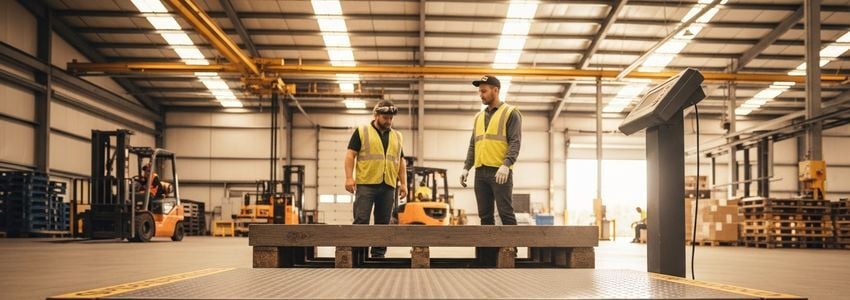
Commercial Weighing Equipment Financing: The Complete Guide for Business Owners
In nearly every industry that moves physical goods, from agriculture and logistics to manufacturing and retail, accuracy is not just a goal; it is a necessity. Precise measurements are the foundation of inventory control, quality assurance, regulatory compliance, and profitability. This is where commercial weighing equipment becomes an indispensable asset. From massive truck scales that weigh entire shipments to highly sensitive lab balances that measure in fractions of a gram, these tools are critical for modern business operations. However, this level of precision and durability comes at a significant cost, often posing a major capital hurdle for businesses of all sizes.
Purchasing this essential equipment outright can strain cash flow, divert funds from other growth opportunities, or simply be out of reach for many companies. This is where commercial weighing equipment financing provides a powerful solution. It is a specialized financial tool that allows businesses to acquire the scales and weighing systems they need without a large upfront cash expenditure. Instead of depleting capital reserves, businesses can spread the cost over time through predictable monthly payments. This approach makes vital equipment accessible, enabling companies to improve efficiency, meet industry standards, and scale their operations effectively.
This comprehensive guide will walk you through every aspect of commercial weighing equipment financing. We will explore the different types of equipment you can finance, break down the various financing options available, and detail the application and approval process. Whether you are a small startup needing your first retail scale or a large logistics firm upgrading to a state-of-the-art truck weighing system, understanding your financing options is the first step toward acquiring the tools you need to succeed.
In This Article
- What Is Commercial Weighing Equipment Financing?
- Types of Commercial Weighing Equipment You Can Finance
- Commercial Weighing Equipment Financing Options
- How Commercial Weighing Equipment Financing Works
- Who Qualifies for Weighing Equipment Financing?
- Rates and Terms for Weighing Equipment Financing
- How Crestmont Capital Helps You Finance Weighing Equipment
- Real-World Scenarios: Businesses That Use Weighing Equipment Financing
- The Application Process: Step by Step
- Tips for Getting Approved
- Weighing Equipment Financing vs. Alternatives
- Frequently Asked Questions
- How to Get Started
- Conclusion
What Is Commercial Weighing Equipment Financing?
Commercial weighing equipment financing is a category of business funding designed specifically for the acquisition of industrial-grade scales and weighing systems. It functions similarly to other types of equipment financing, where a lender provides the capital needed to purchase the equipment, and the business repays the lender over a predetermined period with interest. The key advantage is that the equipment itself typically serves as the collateral for the loan, which can make it easier to qualify for than a traditional unsecured business loan.
This type of financing covers a vast array of equipment. It is not limited to simple tabletop scales. It encompasses everything from heavy-duty truck scales used at weigh stations and logistics hubs to highly precise laboratory balances essential for pharmaceutical and chemical industries. Financing can be structured as either a loan or a lease, each with distinct benefits regarding ownership, tax implications, and long-term cost.
For many businesses, the ability to finance this equipment is a strategic move. It preserves working capital, allowing liquid cash to be used for daily operations, payroll, marketing, or inventory. Instead of a single, massive capital outlay, the cost is converted into a manageable operating expense. This smooths out cash flow and makes budgeting more predictable. Furthermore, financing allows businesses to acquire the latest technology. This can lead to improved accuracy, greater efficiency, and a stronger competitive edge without the financial strain of an outright purchase.
Types of Commercial Weighing Equipment You Can Finance
The world of commercial weighing equipment is diverse, with specialized tools designed for specific industries and applications. Fortunately, financing is available for nearly every type of professional-grade scale. Here is a breakdown of common equipment categories you can finance, their typical costs, and the industries that rely on them.
Truck Scales (Weighbridges)
Description: These are large, robust scales designed to weigh entire trucks, including tractor-trailers. They are typically installed in a permanent concrete pit or on a foundation. They are essential for monitoring inbound and outbound shipments, ensuring compliance with road weight limits, and calculating freight charges.
Typical Cost Range: $40,000 - $100,000+ (including installation)
Industries: Logistics and Transportation, Agriculture (grain elevators), Mining, Waste Management, Manufacturing.
Floor Scales
Description: Large, flat platform scales placed on the floor of a warehouse, factory, or shipping dock. They are used for weighing pallets, crates, and other large, heavy items. They often feature a ramp for easy loading with a pallet jack or forklift.
Typical Cost Range: $1,000 - $7,500
Industries: Warehousing, Manufacturing, Shipping and Receiving, Food Processing.
Bench Scales
Description: Smaller, versatile scales designed to sit on a workbench or countertop. They are used for a wide range of tasks, from weighing parts for inventory control to portioning ingredients in food production.
Typical Cost Range: $300 - $2,500
Industries: Manufacturing, Food Service, Retail, Laboratories, Shipping Centers.
Lab Precision Scales (Balances)
Description: Highly sensitive instruments used for precise measurements in laboratory settings. Analytical and precision balances can measure mass to a very high degree of accuracy, often in sub-milligram increments.
Typical Cost Range: $500 - $10,000+
Industries: Pharmaceutical, Chemical, Research and Development, Education, Quality Control.
Platform Scales
Description: A broad category that includes floor scales but also encompasses a variety of low-profile scales used for general-purpose weighing. They are durable and can handle a wide range of capacities.
Typical Cost Range: $800 - $6,000
Industries: General Manufacturing, Agriculture, Veterinary Medicine, Warehousing.
Checkweighers
Description: Automated systems integrated into production lines to verify the weight of products as they move along a conveyor. They are crucial for quality control, ensuring packages meet specified weight tolerances and rejecting any that are over or under.
Typical Cost Range: $10,000 - $50,000+
Industries: Food and Beverage, Pharmaceuticals, Consumer Packaged Goods, Manufacturing.
Conveyor Scales
Description: Also known as belt scales, these systems measure the weight of bulk material as it moves along a conveyor belt. They provide a flow rate and total weight, which is essential for process control in mining and aggregate industries.
Typical Cost Range: $5,000 - $30,000
Industries: Mining, Aggregate (sand, gravel), Agriculture (grain), Cement Production.
Hopper and Tank Scales
Description: These systems use load cells to weigh the contents of large hoppers, tanks, or silos. They are used for batching ingredients, managing inventory of bulk materials, and monitoring production processes.
Typical Cost Range: $3,000 - $25,000 (depending on size and complexity)
Industries: Agriculture, Food Processing, Chemical Manufacturing, Plastics.
Crane/Hanging Scales
Description: Heavy-duty scales that are suspended from a crane or hoist. They allow for the weighing of large, irregularly shaped, or heavy items as they are being lifted, saving time and space.
Typical Cost Range: $500 - $5,000
Industries: Manufacturing, Shipping, Metal Foundries, Construction.
Retail Scales
Description: These scales are "Legal for Trade" and are used in commercial transactions where the price is determined by weight. This includes everything from deli scales and checkout scales in grocery stores to candy scales. Many are price-computing and can integrate with point-of-sale (POS) systems.
Typical Cost Range: $400 - $3,000
Industries: Grocery Stores, Delicatessens, Butcher Shops, Farmers Markets, Candy Stores.
Commercial Weighing Equipment Financing Options
When you decide to finance your weighing equipment, you have several different financial products to choose from. Each option has its own structure, benefits, and ideal use case. Understanding these differences is key to selecting the best path for your business's financial health and operational needs.
Equipment Loans
An equipment loan is a straightforward financing agreement. A lender provides you with the funds to purchase the weighing equipment, and you make regular payments (usually monthly) over a set term until the loan is paid off. At the end of the term, you own the equipment outright. The scale or weighing system itself serves as collateral for the loan.
- Pros: You build equity and own the asset at the end of the term. Interest payments may be tax-deductible. No restrictions on equipment usage.
- Cons: Higher monthly payments compared to leasing. You are responsible for all maintenance and repairs. The equipment can become obsolete.
- Best for: Businesses that want to own their equipment for the long term and have stable cash flow to support slightly higher monthly payments. Ideal for durable equipment like truck scales or floor scales with a long useful life.
Equipment Leasing
Leasing is essentially a long-term rental agreement. You pay a monthly fee to use the equipment for a specific period. At the end of the lease term, you typically have several options: return the equipment, renew the lease, or purchase the equipment at its fair market value or a predetermined price (this is common in a lease-to-own or capital lease agreement).
- Pros: Lower monthly payments and often a lower (or no) down payment. Easier to upgrade to newer technology at the end of the term. Lease payments can often be fully deducted as an operating expense.
- Cons: You do not own the equipment or build equity (unless it is a capital lease). Total cost over time can be higher if you decide to purchase at the end. There may be restrictions on usage or mileage.
- Best for: Businesses that need the latest technology (like advanced checkweighers or lab balances) and want to avoid obsolescence. Also good for companies that prefer lower monthly payments and want to treat the cost as an operating expense.
Working Capital Loans
While not specifically for equipment, a working capital loan provides a lump sum of cash that can be used for various business needs, including purchasing weighing equipment. These are often short-term loans designed to cover operational expenses or seize growth opportunities.
- Pros: Very flexible- you can use the funds for more than just the equipment (e.g., installation, training, or other business expenses). Fast funding times.
- Cons: Can have higher interest rates than secured equipment loans. Shorter repayment terms can lead to higher monthly payments.
- Best for: Businesses that need cash quickly and have other expenses to cover in addition to the equipment purchase.
Business Lines of Credit
A business line of credit gives you access to a set amount of capital that you can draw from as needed. You only pay interest on the funds you use. Once you repay the drawn amount, your credit line is replenished.
- Pros: Maximum flexibility. You can use it for equipment purchases, repairs, or any other business need that arises. You only pay for what you use.
- Cons: Interest rates can be variable. Qualification requirements may be stricter than for a standard equipment loan.
- Best for: Businesses that have ongoing or unpredictable needs for capital and want a flexible funding solution on standby.
SBA Loans
The Small Business Administration (SBA) partially guarantees loans made by traditional lenders, which reduces the lender's risk. This can result in more favorable terms, such as lower interest rates and longer repayment periods. SBA loans, like the popular 7(a) and 504 programs, can be used to purchase equipment.
- Pros: Excellent interest rates and long repayment terms, leading to low monthly payments. Can be used for a variety of business purposes.
- Cons: The application process is notoriously long and requires extensive documentation. Qualification standards are very strict.
- Best for: Well-established businesses with strong credit and financials that are not in a hurry to acquire the equipment and can navigate the complex application process. According to the SBA's official site, these loans are designed to help small businesses grow.
Ready to Finance Your Weighing Equipment?
Get fast, flexible financing from the #1 business lender in the U.S. No obligation - apply in minutes.
Apply Now →How Commercial Weighing Equipment Financing Works
Navigating the financing process can seem daunting, but reputable lenders like Crestmont Capital have streamlined it to be fast and straightforward. While the exact steps may vary slightly between lenders, the general process for securing commercial weighing equipment financing follows a clear path from application to funding.
- Determine Your Needs and Get a Quote: The first step is to identify the specific weighing equipment your business requires. Research different manufacturers and models to find the right fit for your application and budget. Contact a vendor or supplier to get a formal quote for the equipment, including any costs for shipping, installation, and training. This quote is a crucial document for your financing application.
- Submit an Application: Next, you will complete a financing application with your chosen lender. Most modern lenders offer a simple online application that can be completed in minutes. You will need to provide basic information about your business, such as its legal name, address, years in operation, and annual revenue. You will also need to provide personal information as the business owner.
- Underwriting and Approval: Once your application is submitted, it goes into underwriting. The lender's team will review your business's financial health, your personal credit history, and the details of the equipment you wish to finance. They assess the risk and determine your eligibility for financing, including the amount, interest rate, and term you qualify for. With streamlined lenders like Crestmont Capital, this process can be completed in just a few hours.
- Review and Accept the Offer: If approved, the lender will present you with a financing offer (or multiple offers). This document will clearly outline the loan amount, interest rate, monthly payment, and term length. Carefully review all the details. If you have any questions, this is the time to speak with your dedicated funding specialist. Once you are satisfied with the terms, you can accept the offer and sign the financing documents, which is often done electronically for speed and convenience.
- Funding and Equipment Purchase: After the signed documents are received, the lender will coordinate the funding. In most cases, the lender pays the equipment vendor directly. Once the vendor receives payment, they will arrange for the delivery and installation of your new weighing equipment. You can then put your new asset to work while making your agreed-upon monthly payments to the lender.
The entire process, from application to funding, can often be completed in as little as 24 to 48 hours, especially when working with a lender that specializes in fast and efficient equipment financing.
How Commercial Weighing Equipment Financing Works - At a Glance
Apply Online
Complete a simple, one-page application in minutes. Provide basic business details and the cost of your desired equipment.
Review Your Offers
Receive your financing options, often within hours. A dedicated advisor will help you choose the best rates and terms for your business.
Sign Documents
Once you select an offer, sign the necessary documents electronically. The process is fast, secure, and convenient.
Get Your Equipment
The lender pays your vendor directly. Your new weighing equipment is delivered, and you can put it to work immediately.

Who Qualifies for Weighing Equipment Financing?
A wide range of businesses across numerous industries can qualify for commercial weighing equipment financing. Because the equipment itself acts as collateral, lenders are often more flexible with qualification criteria compared to unsecured loans. Here is a look at the industries that commonly seek this financing and the typical requirements for approval.
Key Industries
- Trucking and Logistics: Truck scales are fundamental for weigh stations, freight terminals, and distribution centers to ensure load compliance and accurate billing.
- Agriculture and Farming: From weighing livestock and produce to measuring grain in silos with hopper scales, accuracy is vital for farm profitability.
- Food Processing and Manufacturing: Checkweighers, bench scales, and floor scales are used for portion control, quality assurance, and compliance with packaging regulations.
- Manufacturing: Industrial scales are used for parts counting, inventory management, and quality control throughout the production process.
- Retail and Grocery: POS scales are essential for selling products by weight, from the deli counter to the produce aisle.
- Mining and Aggregates: Conveyor scales and truck scales are critical for measuring extracted materials and managing bulk inventory.
- Waste Management and Recycling: Truck scales are used to weigh vehicles entering and leaving facilities to calculate disposal fees and track material volumes.
- Construction: Crane scales and portable truck scales are used on job sites to weigh materials and ensure structural integrity.
General Qualification Requirements
While every lender has its own criteria, most will look at a combination of the following factors:
- Time in Business: Most lenders prefer to work with businesses that have been in operation for at least one to two years. This demonstrates stability and a track record of generating revenue. However, some lenders, including Crestmont Capital, have programs designed for startups (as little as 6 months in business).
- Credit Score: A business owner's personal credit score is a key factor. A score of 620 or higher is typically preferred for the best rates and terms. However, options are available for those with lower credit scores, often referred to as bad credit equipment financing.
- Annual Revenue: Lenders want to see that your business has sufficient cash flow to comfortably handle the monthly payments. Minimum annual revenue requirements can range from $100,000 to $250,000, but this varies significantly between lenders and financing programs.
- The Equipment Itself: The type, age (new or used), and value of the weighing equipment also play a role. Lenders are more comfortable financing equipment that holds its value well, as it provides strong collateral.
Rates and Terms for Weighing Equipment Financing
Understanding the potential rates, terms, and other financial aspects of your financing agreement is crucial for making an informed decision. These elements determine your monthly payment and the total cost of financing over time.
- Interest Rates: For qualified borrowers with strong credit and established businesses, interest rates for equipment loans typically range from 7% to 15%. For businesses that are newer or have challenged credit, rates may be higher, potentially ranging from 15% to 25% or more. Rates are influenced by your credit score, time in business, annual revenue, and the specifics of the loan.
- Loan Terms: Repayment terms for weighing equipment financing generally range from 12 to 72 months (1 to 6 years). Shorter terms result in higher monthly payments but lower total interest paid. Longer terms offer more manageable monthly payments but increase the total cost of financing. The useful life of the equipment often influences the maximum term length a lender will offer.
- Down Payments: Many equipment financing agreements, especially for well-qualified businesses, require little to no down payment. In some cases, a lender may ask for a down payment of 10-20%, particularly for larger transactions or for borrowers with less-than-perfect credit. Some programs may only require the first and last month's payment upfront.
- Loan-to-Value (LTV) Ratios: Lenders will often finance up to 100% of the equipment's value. In some cases, they may even finance "soft costs" up to 125% of the equipment's value. These soft costs can include taxes, shipping, installation, and training, rolling everything into a single, convenient loan.
Financing Options Comparison Table
| Financing Option | Typical Interest Rate | Typical Term | Best For |
|---|---|---|---|
| Equipment Loan | 7% - 25% | 2 - 6 years | Long-term ownership and building equity. |
| Equipment Lease | Equivalent rates often slightly higher | 2 - 5 years | Lower monthly payments and upgrading technology. |
| Working Capital Loan | 15% - 50%+ APR | 6 - 24 months | Fast funding and flexibility for multiple needs. |
| SBA Loan | Prime + 2.75% - 4.75% | 7 - 10 years for equipment | Established businesses seeking the lowest rates. |
Industry Insight: The global industrial weighing equipment market size was valued at approximately $4.2 billion in 2022 and is projected to grow consistently. This growth is driven by increasing automation in manufacturing and stricter regulatory compliance across industries, as noted in reports covered by sources like Forbes, highlighting the rising demand for precise measurement tools.
How Crestmont Capital Helps You Finance Weighing Equipment
Navigating the world of business financing can be complex, but Crestmont Capital simplifies the process of securing the funds you need for your weighing equipment. We specialize in providing fast, flexible, and reliable funding solutions tailored to the unique needs of your business. Our expertise in Equipment Financing ensures you get the right terms and structure for your specific situation.
At Crestmont Capital, we understand that every business is different. That is why we offer a broad portfolio of financing products. Whether you are looking for a straightforward loan to purchase a durable truck scale or prefer the flexibility of Equipment Leasing for high-tech checkweighers, we have a solution. Our Commercial Equipment Financing programs are designed to cover everything from single-item purchases to complete system upgrades.
Our application process is built for speed and efficiency. You can apply online in minutes, and in many cases, receive an approval within hours. We work with businesses of all sizes and credit profiles. Even if you have been turned down by traditional banks, our Bad Credit Equipment Financing options may provide the capital you need to grow. Our goal is to remove the barriers that prevent businesses from acquiring mission-critical assets.
Beyond equipment-specific funding, we also provide a range of Small Business Loans to support your overall growth. If you need funds for more than just the equipment itself, our Working Capital Loans offer the flexibility to invest in inventory, marketing, or operational improvements. With a dedicated team of financing specialists, Crestmont Capital is more than just a lender; we are a partner committed to your business's success.
Get Your Weighing Equipment Funded Fast
From truck scales to precision lab equipment - Crestmont Capital finances it all. Approvals as fast as 24 hours.
Apply Now →Real-World Scenarios: Businesses That Use Weighing Equipment Financing
To better understand the practical impact of this financing, let's explore a few real-world scenarios where businesses leverage it to solve challenges and achieve growth.
Scenario 1: The Logistics Company Needing a Truck Scale
The Business: "Rapid Freight," a mid-sized logistics company, was expanding its regional distribution center. To improve efficiency and ensure compliance with Department of Transportation regulations, they needed to install a new, state-of-the-art truck scale. The total cost, including the scale and concrete foundation work, was quoted at $85,000.
The Challenge: Paying $85,000 in cash would have significantly depleted their working capital, which was needed for fuel, driver salaries, and vehicle maintenance. They needed a way to acquire the scale without disrupting their day-to-day cash flow.
The Solution: Rapid Freight applied for an equipment loan. Because the truck scale has a long useful life and holds its value, they were approved for a 72-month (6-year) term with a competitive interest rate. This spread the cost into a manageable monthly payment of around $1,500. By financing the scale, they preserved their cash, immediately improved operational efficiency, and could accurately bill clients based on precise shipment weights, leading to a quick return on their investment.
Scenario 2: The Food Processor Upgrading to Automated Checkweighers
The Business: "Gourmet Snacks Inc." produces packaged nuts and dried fruits. Their manual spot-checking process for package weights was slow and inconsistent, leading to product giveaway and occasional compliance issues. They identified a need for three in-line automated checkweighers for their production lines, costing $20,000 each for a total of $60,000.
The Challenge: The technology in checkweighers evolves rapidly. The business owners were concerned about purchasing equipment that might become outdated in a few years. They also preferred a lower monthly payment to keep their operating expenses down.
The Solution: Gourmet Snacks Inc. opted for an equipment lease. They secured a 36-month fair market value lease. This resulted in a much lower monthly payment compared to a loan. The lease payments were treated as a tax-deductible operating expense. At the end of the three years, they have the option to return the checkweighers and lease the newest models, ensuring their facility remains technologically advanced and efficient. This strategy protected them from obsolescence and aligned with their financial goals.
Scenario 3: The Family Farm Investing in Hopper Scales
The Business: A family-owned corn and soybean farm needed to better manage its grain inventory. They decided to invest in a new grain silo system that included integrated hopper scales to accurately measure how much grain was being stored and loaded for sale. The cost of the hopper scale system was $25,000.
The Challenge: Farm income can be seasonal and unpredictable. The farm needed a financing solution with predictable payments that could be managed within their fluctuating revenue cycles.
The Solution: The farm secured a 5-year equipment loan specifically for agricultural equipment. The lender understood the seasonal nature of their business and structured the payments accordingly. By financing the purchase, the farm avoided a large cash outlay during a critical planting season. The new hopper scales allowed them to reduce waste, get precise yield data, and ensure they were getting paid correctly for every bushel of grain sold, directly boosting their bottom line.
Pro Tip: When choosing between a loan and a lease, consider the equipment's lifespan and rate of technological change. For durable assets with a long life, like a truck scale, a loan to build equity makes sense. For equipment that quickly becomes obsolete, like advanced software-driven lab scales, a lease provides a flexible path to regular upgrades.
The Application Process: Step by Step
At Crestmont Capital, we have refined our application process to be as simple and fast as possible, so you can get back to running your business. Here is what you can expect when you apply for commercial weighing equipment financing with us.
- Start with Our Online Application: Our secure, one-page online application takes just a few minutes to complete. We ask for essential information about your business, your personal details as the owner, and the amount of financing you are requesting. There is no cost or obligation to apply.
- Submit Minimal Documentation: For most financing requests under $250,000, our application-only program means you will not need to submit extensive financial documents like tax returns or profit and loss statements. In most cases, a few recent bank statements are all that is required to verify your business revenue.
- Connect with Your Financing Specialist: After you submit your application, you will be assigned a dedicated financing specialist. This expert will be your single point of contact throughout the process. They will review your application, discuss your specific equipment needs, and answer any questions you may have.
- Receive and Review Your Offers: Our team works quickly to underwrite your application. You will typically receive your financing offers within a few hours. Your specialist will walk you through the different options, explaining the rates, terms, and monthly payments for each, helping you select the one that best fits your budget and business goals.
- E-Sign and Get Funded: Once you have chosen your preferred financing option, we will send the documents for you to sign electronically. After we receive the signed agreement, we process the funding. We pay the equipment vendor directly, and they will coordinate with you for delivery. The entire process can be completed in as little as 24 hours.
Tips for Getting Approved
While lenders specializing in equipment finance have flexible criteria, taking a few preparatory steps can significantly improve your chances of getting approved quickly and with the best possible terms.
- Know Your Credit Score: Before applying, check your personal credit score. Knowing where you stand helps you set realistic expectations. If your score is lower than you would like, be prepared to explain any negative marks. Many issues, like medical collections, may not be a major obstacle for some lenders.
- Have Your Business Information Ready: Gather basic business documents and information ahead of time. This includes your business's legal name, address, tax ID number (EIN), time in business, and estimated annual revenue. Having this on hand makes the application process smoother.
- Get a Formal Quote for the Equipment: A detailed quote from the equipment vendor shows the lender exactly what you are financing and its value. This includes the make, model, price, and any associated costs like shipping or installation. It demonstrates that you have done your research and are serious about the purchase.
- Be Honest and Transparent: Always be upfront on your application. If your business has had financial challenges or if your credit is not perfect, it is better to be transparent. Lenders appreciate honesty and are often willing to work with business owners who have a clear plan for the future.
- Highlight Your Business Strengths: If you have strong monthly revenue, long-standing customer relationships, or a solid plan for how the new equipment will increase profitability, be sure to communicate that. A strong story can often make up for weaknesses in other areas of your application. The impact of supply chain disruptions, as reported by outlets like Reuters, has made operational efficiency more critical than ever, a point you can leverage when explaining the need for new equipment.
Weighing Equipment Financing vs. Alternatives
Financing is not the only way to acquire equipment. It is important to weigh it against other common methods to determine the best fit for your financial situation.
| Method | Upfront Cost | Ownership | Pros | Cons |
|---|---|---|---|---|
| Paying Cash | 100% of cost | Immediate | No debt, no interest payments. | Ties up large amount of working capital. |
| Financing (Loan) | Low (0-20%) | At end of term | Preserves cash, predictable payments, builds equity. | Incurs interest costs, responsible for maintenance. |
| Leasing | Very Low (often first payment) | No (unless purchased at end) | Lowest monthly payments, easy to upgrade. | No equity, can be more expensive long-term. |
| Renting | Low (deposit + first period) | No | Good for short-term or single-project needs. | Very expensive for long-term use, no ownership. |
Frequently Asked Questions
How to Get Started
Ready to acquire the weighing equipment your business needs to thrive? Crestmont Capital makes it easy. Follow these simple steps to get funded fast:
Fill Out Our Simple Application
Our secure online application takes just a few minutes. Provide some basic information about your business and the equipment you need. There is no cost and no obligation.
Speak With a Specialist
A dedicated financing advisor will contact you to discuss your application and present you with the best financing options available for your business.
Get Your Equipment
Once you select your offer and sign the documents, we handle the rest. We pay your vendor directly, so you can get your new equipment delivered and start putting it to work.
Start Your Application Today
Whether you need one floor scale or a full truck weighing system, Crestmont Capital has the financing solution for your business.
Apply Now →Conclusion
In today's competitive business landscape, efficiency and accuracy are paramount. Commercial weighing equipment is not a luxury but a fundamental component for success in dozens of industries. From ensuring regulatory compliance to optimizing inventory and guaranteeing product quality, these tools are indispensable. However, the high upfront cost of this equipment should not be a barrier to your company's growth and operational excellence.
Commercial weighing equipment financing offers a strategic and intelligent pathway to acquiring these critical assets. By converting a significant capital expenditure into a manageable monthly payment, you can preserve precious cash flow, maintain financial flexibility, and equip your business with the best tools for the job. Whether you choose a loan to build long-term equity or a lease to stay on the cutting edge of technology, financing empowers you to make the right investment at the right time.
By understanding the different types of equipment, the available financing options, and the straightforward application process, you can confidently take the next step toward enhancing your business's capabilities. Do not let capital constraints hold you back. Explore your commercial weighing equipment financing options today and weigh the path to greater profitability and success.
Disclaimer: The information provided in this article is for general educational purposes only and is not financial, legal, or tax advice. Funding terms, qualifications, and product availability may vary and are subject to change without notice. Crestmont Capital does not guarantee approval, rates, or specific outcomes. For personalized information about your business funding options, contact our team directly.








