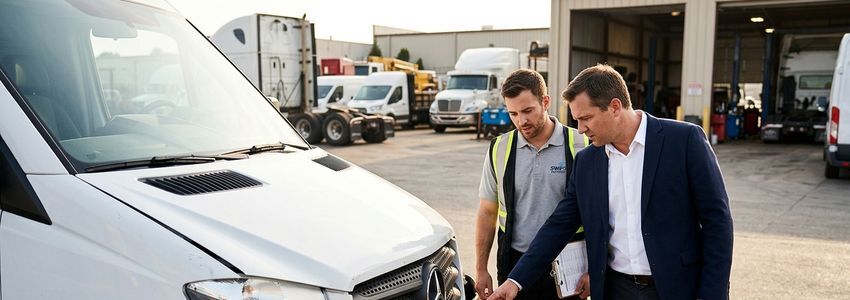
When a commercial vehicle in your fleet is totaled or sidelined by an accident, the clock starts ticking immediately. Deliveries stall, service calls get missed, and revenue that depends on that vehicle simply stops. Commercial fleet financing gives business owners a fast way to replace or repair a damaged vehicle without draining cash reserves or waiting months for an insurance settlement to clear. This guide walks through how fleet replacement financing works, who qualifies, and how to move from accident to back-on-the-road as quickly as possible.
In This Article
What Is Fleet Replacement Financing?
Fleet replacement financing is a business loan or equipment financing product specifically structured to help a company quickly repair, replace, or supplement a commercial vehicle that has been damaged, totaled, or taken out of service after an accident. Unlike a standard auto loan, this type of financing is built around a business's operating needs: speed of funding, flexible use of proceeds, and terms that match the vehicle's expected useful life.
The core problem this financing solves is timing. An insurance claim on a totaled commercial vehicle can take weeks or months to fully settle, especially if liability is disputed or a third party is involved. Meanwhile, a landscaping crew without a truck, a delivery company without a van, or a contractor without a work vehicle is losing money every single day. Fleet replacement financing bridges that gap by putting cash or a replacement asset in your hands well before the insurance check arrives.
This financing can take several forms depending on your situation: a lump-sum working capital loan to cover a down payment on a replacement vehicle, equipment financing to purchase the replacement outright, a business line of credit to bridge cash flow while repairs are completed, or a short-term loan secured against the anticipated insurance payout. The right structure depends on whether the vehicle needs replacing entirely or can be repaired, how much of the loss is covered by insurance, and how quickly your business needs the vehicle back in operation.
Key Stat: Commercial vehicles are involved in an estimated 570,000 accidents annually in the United States, and roughly 40% of all motor vehicle accidents are considered work-related, according to fleet safety industry data. For a small business, even one of those accidents can mean an extended period without a critical piece of equipment.
Key Benefits of Fleet Replacement Financing
Business owners who finance a vehicle replacement after an accident, rather than waiting on insurance alone, typically see several advantages:
- Speed: Funding can often be arranged in days, not the weeks or months a contested insurance claim may take.
- Continuity of operations: A replacement vehicle keeps routes running, jobs on schedule, and customer commitments intact.
- Preserved cash reserves: Financing spreads the cost over time instead of forcing a large one-time cash outlay while you wait for reimbursement.
- Flexible use of funds: Depending on the product, proceeds can cover a down payment, a full purchase, temporary rental costs, or repair bills not covered by insurance.
- Credit-building opportunity: Consistent, on-time payments on a business financing product can help build a stronger commercial credit profile for future needs.
- Ability to upgrade: Rather than replacing like-for-like, financing can make it affordable to upgrade to a newer, more reliable, or more fuel-efficient vehicle.
Vehicle Down After an Accident?
Get back on the road fast with flexible fleet replacement financing from the #1 rated business lender in the U.S. No obligation to apply.
Apply Now →How Fleet Replacement Financing Works
The process of financing a vehicle replacement after an accident generally follows a predictable path, whether you are working with equipment financing, a working capital loan, or a business line of credit.
- Step 1: Assess the damage and insurance timeline. Talk to your insurance adjuster to understand whether the vehicle will be repaired or declared a total loss, and get a realistic estimate for when a settlement check will arrive.
- Step 2: Determine the funding gap. Calculate the difference between what your insurance will cover and what you actually need to get a replacement vehicle operating, including taxes, registration, upfitting, and any deductible.
- Step 3: Choose the right financing structure. Depending on your credit profile, time in business, and how quickly you need funds, you might pursue equipment financing on a specific replacement vehicle, a working capital loan for flexible use, or a line of credit you can draw against as needed.
- Step 4: Submit an application. Most lenders, including Crestmont Capital, require basic business financials, time-in-business documentation, and information about the vehicle or intended purchase.
- Step 5: Receive a funding decision. Many alternative business lenders can return a decision within 24 to 48 hours, compared to weeks for a traditional bank loan.
- Step 6: Purchase or repair the vehicle. Once funded, proceeds are used to buy the replacement vehicle, cover a down payment, or pay for repairs not covered by insurance.
- Step 7: Repay over time, and apply any insurance settlement toward the balance. When your insurance claim eventually pays out, many business owners use that lump sum to pay down or pay off the financing early, reducing total interest cost.
By The Numbers
The Real Cost of a Fleet Vehicle Being Down
$448-$760
Estimated cost per vehicle, per day, of unplanned downtime
8-11 Days
Average unplanned downtime per vehicle, per year
~20%
Estimated annual accident rate for commercial fleets
24-48 Hrs
Typical funding decision time with alternative business lenders
Types of Financing to Consider After a Fleet Accident
Not every accident calls for the same financing solution. Here are the main categories worth understanding before you apply.
Equipment Financing for a Replacement Vehicle
Commercial fleet financing and equipment financing structure the loan around the vehicle itself, which is used as collateral. This typically means lower rates and longer terms because the lender has a tangible asset securing the loan. It is the most direct path if you already know which replacement vehicle you want to purchase, whether that is a single box truck or a larger fleet upgrade.
Unsecured Working Capital Loans
An unsecured working capital loan gives you a lump sum with no requirement to pledge the vehicle or other specific collateral. This is a strong option when you need flexibility, for example covering a rental vehicle while repairs are underway, paying an insurance deductible, or covering payroll during a slow week caused by reduced fleet capacity.
Business Line of Credit
A revolving line of credit lets you draw funds as costs arise rather than taking a single lump sum. This can be useful if the total cost of the accident is uncertain at the outset, such as when repair estimates are still being finalized or when multiple smaller expenses (towing, storage, temporary rentals) are trickling in.
Bridge Financing Against an Insurance Settlement
Some businesses use short-term bridge financing specifically designed to be repaid once an insurance settlement is received. This structure minimizes long-term debt while still solving the immediate cash flow gap.
Truck and Fleet-Specific Financing
For companies with larger fleets or heavy-duty vehicles, truck fleet financing programs are built specifically around commercial trucking assets, with terms that reflect the vehicle's expected resale value and useful life.
Who This Financing Is Best For
Fleet replacement financing tends to make the most sense for businesses that meet one or more of these profiles:
- Companies where a vehicle is a direct revenue-generating asset (delivery, courier, HVAC, plumbing, landscaping, construction, trucking)
- Businesses with at least six months of operating history and consistent revenue
- Owners who do not want to liquidate cash reserves or business savings to cover a gap while insurance processes a claim
- Fleets of any size, from a single owner-operator vehicle to a multi-truck commercial fleet
- Businesses facing a disputed liability claim where the insurance timeline is uncertain or extended
It is generally a poor fit for businesses that can comfortably self-fund the replacement from cash reserves without disrupting operations, or for situations where the insurance settlement is guaranteed to arrive within days and the funding gap is minimal.
Comparing Your Financing Options
The right choice depends on your credit profile, how fast you need funds, and how the vehicle will be used going forward. Here is a side-by-side comparison of the most common paths.
| Option | Best For | Typical Speed | Collateral |
|---|---|---|---|
| Equipment Financing | Buying a specific replacement vehicle | 2-5 business days | The vehicle itself |
| Unsecured Working Capital | Flexible, fast, no specific asset yet | 24-48 hours | None required |
| Business Line of Credit | Uncertain or rolling costs | Draw as needed after setup | Varies by lender |
| Waiting on Insurance Only | Minimal downtime, guaranteed fast payout | Weeks to months | Not applicable |
Interest rates and fees vary based on the lender, the collateral, your business credit profile, and how quickly you need the funds. Generally, secured products like equipment financing carry lower costs than unsecured or short-term bridge products, but unsecured options offer more flexibility and speed when time is the priority.
How Crestmont Capital Helps
Crestmont Capital, rated the #1 business lender in the country, works with business owners across every industry that relies on commercial vehicles, from trucking and delivery to construction and field service companies. When an accident takes a vehicle out of commission, our team can move quickly on commercial fleet financing or unsecured working capital to help get a replacement vehicle in place without waiting on a slow insurance process.
We also offer truck fleet financing for larger commercial vehicles and heavy-duty trucks, and general equipment financing if your accident involved a specialized work vehicle rather than a standard truck or van. If you have previously financed a fleet with us and want to understand how expansion or replacement financing works long-term, our guide on fleet management business loans and our commercial truck financing guide cover the fundamentals in more depth.
Our application process is built for speed: minimal paperwork, decisions often within 24 to 48 hours, and funding structures designed around how your business actually operates, not a rigid one-size-fits-all bank product.
Don't Let a Downed Vehicle Stall Your Business
Crestmont Capital can help you fund a replacement vehicle while your insurance claim is still being processed.
Get Started Today →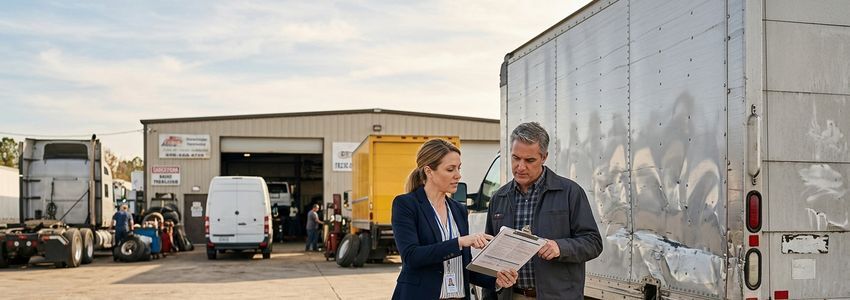
Working With Your Insurance Company While You Finance a Replacement
One of the most common questions business owners ask is whether financing a replacement vehicle will somehow interfere with their insurance claim. In most cases, it will not. Your insurance claim and your financing arrangement are two entirely separate transactions, and pursuing one does not require you to wait on the other.
That said, there are a few practical steps worth taking to keep both processes moving smoothly. First, get everything in writing from your adjuster: whether the vehicle is being repaired or totaled, the estimated payout amount, and a realistic timeline. This information helps you size your financing correctly so you are not over-borrowing or under-borrowing relative to what insurance will eventually cover.
Second, keep detailed records of every expense related to the accident, including towing, storage, temporary rentals, and any out-of-pocket repair costs. These records not only support your insurance claim but also help demonstrate to a lender exactly what the funding gap looks like, which can speed up underwriting.
Third, if liability is contested between insurance carriers, which can happen when a third party is involved, understand that resolution can take significantly longer than a straightforward single-party claim. This is precisely the scenario where fleet replacement financing delivers the most value, because it decouples your ability to operate from the pace of a legal or insurance dispute you may have little control over.
Finally, once your insurance settlement is issued, most financing products allow for early repayment without penalty, though it is worth confirming this with your lender before signing. Paying down the balance as soon as funds arrive minimizes the total interest cost of bridging the gap.
Common Mistakes to Avoid
Business owners navigating a vehicle accident for the first time often make avoidable mistakes that cost time and money. Being aware of these pitfalls can help you move through the process more efficiently.
- Waiting too long to explore financing options. Some owners assume they must wait for the insurance process to fully resolve before seeking outside financing, when in reality the two can run in parallel from day one.
- Underestimating the true cost of downtime. Lost revenue, missed contracts, and idle employee time often add up to far more than the direct repair or replacement cost, yet many owners only budget for the vehicle itself.
- Choosing the wrong financing structure. Taking on a long-term, heavily secured loan for what should be a short-term bridge need can leave you paying interest well after the insurance settlement has already arrived.
- Not documenting expenses thoroughly. Incomplete records slow down both the insurance claim and the loan underwriting process, and can result in leaving reimbursable costs unclaimed.
- Assuming credit challenges disqualify them entirely. Many business owners rule themselves out of financing prematurely without checking eligibility, when secured or asset-based options may still be available.
Real-World Scenarios
Scenario 1: The Solo Delivery Driver
A one-truck courier business loses its only vehicle in a collision with an uninsured driver. With no backup vehicle and a fully booked delivery schedule, the owner uses an unsecured working capital loan to put a down payment on a used cargo van within three days, avoiding weeks of lost contracts while the liability dispute with the other driver's insurer drags on.
Scenario 2: The Regional Trucking Company
A trucking company with an eight-truck fleet has one tractor totaled in an accident on the highway. Rather than waiting on the insurance settlement, the company uses truck fleet financing to purchase a replacement tractor immediately, keeping all delivery routes staffed, and applies the eventual insurance payout to pay down the loan balance early.
Scenario 3: The HVAC Service Company
An HVAC company's service van is rear-ended, and repairs are estimated at three weeks. The owner uses a short-term bridge loan to rent a replacement van and cover a technician's lost billable hours, then repays the loan once the insurance company issues payment for the repair.
Scenario 4: The Landscaping Business Facing a Liability Dispute
A landscaping company's flatbed truck is involved in an accident where liability is disputed between two insurance carriers, creating an open-ended timeline for resolution. The owner secures equipment financing to purchase a new flatbed outright rather than risk months of reduced crew capacity during peak season.
Frequently Asked Questions
What is fleet replacement financing?
Fleet replacement financing is a business loan or equipment financing product used to quickly repair, replace, or supplement a commercial vehicle that has been damaged or totaled, typically used to bridge the gap before an insurance settlement is paid.
How fast can I get funding after a commercial vehicle accident?
Many alternative business lenders, including Crestmont Capital, can return a funding decision within 24 to 48 hours, with funds often available shortly after approval, much faster than waiting for a contested insurance claim to settle.
Do I need good credit to qualify for fleet replacement financing?
Requirements vary by lender and product, but many alternative financing options are more flexible than traditional bank loans, especially when the financing is secured against the vehicle itself as collateral.
Should I wait for my insurance settlement instead of financing?
If your claim is uncontested and expected to settle within a few days, waiting may make sense. If liability is disputed, multiple parties are involved, or your business cannot absorb extended downtime, financing can prevent lost revenue that often exceeds the cost of the loan itself.
What can the financing be used for?
Depending on the product, funds can be used to purchase a replacement vehicle, cover a down payment, pay repair costs not covered by insurance, rent a temporary vehicle, or cover an insurance deductible.
Can I use the insurance settlement to pay off the financing early?
Yes. Many business owners use this financing as a bridge, then apply the eventual insurance payout toward the loan balance, reducing the total interest paid over the life of the financing.
What is the difference between equipment financing and a working capital loan for this situation?
Equipment financing is secured by the vehicle itself and generally offers lower rates and longer terms. A working capital loan is unsecured, more flexible in how funds are used, and often funds faster, but may carry a higher cost.
How much can I borrow to replace a commercial vehicle?
Loan amounts depend on the lender, your business revenue and credit profile, and the value of the replacement vehicle. Amounts can range from a few thousand dollars for a down payment to the full purchase price of a commercial vehicle or truck.
Does financing work if my business has more than one vehicle in the accident?
Yes. Fleet financing programs are built to scale, whether you need to replace a single vehicle or multiple trucks damaged in a single incident or a series of related accidents.
What documents do I need to apply?
Typical requirements include recent business bank statements, basic business information, time-in-business verification, and details about the vehicle or intended purchase. Some lenders may also ask for a copy of the insurance claim or repair estimate.
Can a new business qualify for fleet replacement financing?
Most lenders prefer at least six months to a year of operating history and consistent revenue, though specific requirements vary. Newer businesses may still qualify, particularly for equipment-secured financing.
Is a line of credit a good option for ongoing fleet accident risk?
For businesses operating larger fleets with ongoing accident risk, an established business line of credit can serve as a standing resource to draw from immediately when an incident occurs, rather than applying for new financing each time.
Will financing a replacement vehicle affect my insurance premiums?
Financing itself does not directly affect insurance premiums. However, the accident and claim history may impact your commercial auto premiums independent of how you choose to fund the replacement vehicle.
How long does the entire financing process take from application to funding?
With streamlined alternative lenders, the full process from application to funding can often be completed in as little as one to three business days, compared to several weeks with a traditional bank.
What happens if my insurance claim is denied or reduced?
If a claim is denied or the payout is lower than expected, having independent business financing in place means your ability to replace the vehicle is not solely dependent on the outcome of the insurance dispute.
Ready to Get Your Fleet Back on the Road?
Apply in minutes and find out what fleet replacement financing options you qualify for today.
Apply Now →Next Steps
Get a repair or total-loss estimate and an expected insurance timeline in writing.
Compare the expected insurance payout against the actual cost to get back on the road.
Submit basic business financials to get a fast funding decision.
Repay financing on schedule, and apply your insurance settlement toward the balance once it arrives.
Conclusion
A commercial vehicle accident does not have to mean weeks of lost revenue while you wait on an insurance company. Commercial fleet financing gives business owners a practical, fast path to repair or replace a damaged vehicle, keep operations running, and protect the customer relationships and revenue that depend on your fleet. Whether you need equipment financing for a specific replacement vehicle, an unsecured working capital loan for flexibility, or a bridge loan against an anticipated settlement, the right financing structure can turn a costly disruption into a manageable bump in the road.
According to Forbes reporting on small business access to capital, a lack of available financing remains one of the biggest obstacles standing between business owners and the ability to respond quickly to unexpected costs like an accident. Businesses that plan ahead with a financing relationship in place before an emergency happens are typically able to respond far faster than those starting the search from zero after the fact. The U.S. Census Bureau's Vehicle Inventory and Use Survey confirms that commercial vehicles represent a significant and growing share of the vehicles small businesses depend on daily, underscoring how disruptive even a single vehicle loss can be. For situations involving a broader declared disaster, the U.S. Small Business Administration also offers Economic Injury Disaster Loans, though most isolated vehicle accidents will not qualify for that specific program.
Disclaimer: The information provided in this article is for general educational purposes only and is not financial, legal, or tax advice. Funding terms, qualifications, and product availability may vary and are subject to change without notice. Crestmont Capital does not guarantee approval, rates, or specific outcomes. For personalized information about your business funding options, contact our team directly.