
 (800) 949-0401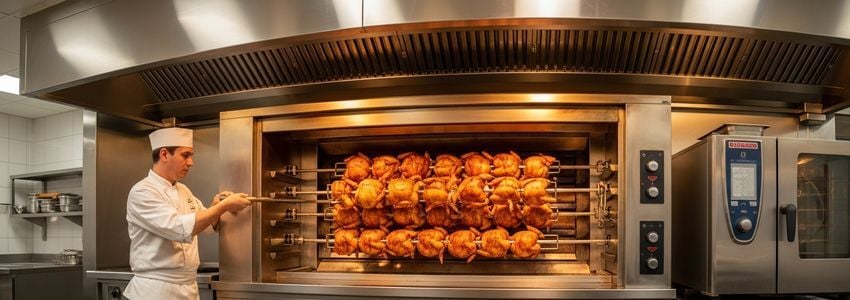
Commercial Rotisserie Oven Financing: The Complete Guide for Business Owners
For restaurant owners, grocery deli operators, and specialty food service businesses, a commercial rotisserie oven is more than a cooking appliance - it is a revenue-generating centerpiece. The sight of golden-brown, perfectly roasted chickens rotating on display drives impulse purchases, boosts average ticket sizes, and helps build brand recognition. But premium commercial rotisserie equipment comes with a price tag that can stretch from a few thousand dollars to well over $25,000 for top-tier models. That is where commercial rotisserie oven financing becomes essential. Rather than depleting working capital or delaying growth, the right financing solution lets you get the equipment you need today while spreading the cost over manageable monthly payments.
- What Is Commercial Rotisserie Oven Financing?
- How Much Does a Commercial Rotisserie Oven Cost?
- Financing Options for Commercial Rotisserie Ovens
- Qualifying Requirements and What Lenders Look For
- Key Benefits of Financing vs. Paying Cash
- Leasing vs. Loans: Which Is Right for Your Business?
- Tax Benefits of Equipment Financing
- How to Apply for Rotisserie Oven Financing
- Choosing the Right Lender
- Frequently Asked Questions
What Is Commercial Rotisserie Oven Financing?
Commercial rotisserie oven financing is a form of equipment financing designed specifically for food service businesses that want to acquire rotisserie cooking equipment without a large upfront cash outlay. Instead of purchasing the equipment outright, a lender provides the funds to cover the cost, and your business repays the loan in fixed monthly installments over an agreed-upon term - typically 12 to 84 months.
What makes equipment financing particularly attractive for rotisserie ovens is the structure of the loan itself. In most cases, the equipment serves as its own collateral. This means you do not need to pledge other business assets or personal property to secure the funding. The lender holds a lien on the oven until the loan is fully repaid, at which point you own the equipment free and clear.
This structure also makes approval more accessible than traditional unsecured small business loans. Lenders take on less risk when secured equipment backs the loan, so they are often willing to work with newer businesses or owners with less-than-perfect credit.
How Much Does a Commercial Rotisserie Oven Cost?
Before exploring financing options, it helps to understand the cost landscape for commercial rotisserie equipment. Prices vary significantly based on capacity, brand, features, and whether you are purchasing new or used equipment.
Entry-Level Countertop Units ($2,000 - $6,000)
Smaller countertop rotisserie ovens are ideal for delis, convenience stores, and small restaurants with moderate demand. These units typically hold 4 to 8 chickens and are often self-service display models. Brands like Henny Penny and BKI offer well-regarded options in this range.
Mid-Range Commercial Units ($6,000 - $15,000)
Mid-range rotisserie ovens offer greater capacity (8 to 24 chickens), improved visibility for merchandising, and more durable construction. These are the workhorses of grocery store deli departments and full-service restaurants. Popular brands include Rotisol, Alto-Shaam, and Hickory Industries.
High-Capacity and Premium Models ($15,000 - $35,000+)
Large floor-standing rotisserie ovens designed for high-volume operations - supermarkets, institutional kitchens, and specialty rotisserie restaurants - fall into the premium category. These units may hold 48+ chickens simultaneously and feature sophisticated controls, multiple compartments, and premium display glass.
Commercial Rotisserie Oven: Cost and Capacity at a Glance
Sources: Industry pricing data; SBA lending guidelines; lender disclosures
Financing Options for Commercial Rotisserie Ovens
Business owners have several financing pathways available when it comes to acquiring commercial rotisserie equipment. Each option has distinct advantages depending on your credit profile, cash flow, and business goals.
1. Equipment Loans (Term Loans)
A traditional equipment loan is the most straightforward approach. The lender advances the purchase price of the rotisserie oven, and you repay the principal plus interest in fixed monthly installments. At the end of the term, you own the equipment outright. This is the best option if you plan to use the oven for many years and want to build equity in the asset.
2. Equipment Leasing
Equipment leasing is essentially a long-term rental arrangement. You make monthly payments to use the equipment, and at the end of the lease term, you may have options to purchase the oven at fair market value, renew the lease, or upgrade to newer equipment. Leasing typically offers lower monthly payments than loans and is ideal for businesses that prioritize cash flow management or anticipate technology upgrades.
3. SBA 7(a) Loans
The SBA 7(a) loan program is the most popular government-backed lending program for small businesses. These loans can be used for equipment purchases and offer competitive interest rates and extended repayment terms. The trade-off is a longer approval process - typically several weeks to months - and more stringent documentation requirements.
4. Business Lines of Credit
A business line of credit gives you revolving access to funds up to a set limit. You can draw on it to purchase equipment, then repay and draw again as needed. This option offers flexibility but may have higher interest rates and lower limits than dedicated equipment loans.
5. Fast Business Loans
For operators who need equipment quickly, fast business loans through online lenders can deliver approval decisions in hours and funding in 24 to 48 hours. These are particularly valuable for businesses replacing broken equipment mid-season or capitalizing on a time-sensitive growth opportunity.
6. Bad Credit Equipment Financing
Having poor credit does not automatically disqualify you from financing a commercial rotisserie oven. Specialty lenders offer bad credit equipment financing options that look beyond credit scores to factors like revenue, cash flow, and time in business. While rates will be higher, these programs help businesses that might otherwise be shut out of traditional lending.
Ready to Finance Your Commercial Rotisserie Oven?
Get a fast quote with no obligation. Crestmont Capital helps food service businesses secure equipment funding fast - often within 24 to 48 hours.
Apply Now - Takes Less Than 5 MinutesQualifying Requirements and What Lenders Look For
Understanding what lenders evaluate helps you prepare a stronger application and set realistic expectations. While specific requirements vary by lender, most equipment financing programs assess the following factors:
Credit Score
Your personal and business credit scores are among the first things lenders review. Most traditional lenders prefer a minimum score of 650, while some online and specialty lenders will consider scores as low as 550 with compensating factors. A higher credit score generally translates to lower interest rates and better terms.
Time in Business
Established businesses are considered lower risk. Most lenders prefer at least 1 to 2 years in business, though startup financing programs exist for newer operations. The longer your track record, the more confident a lender can be in your ability to repay.
Annual Revenue
Lenders want to see that your business generates enough revenue to comfortably support the monthly loan payment. Many lenders look for a minimum annual revenue of $100,000 to $250,000, though requirements vary. According to CNBC, most small business equipment loans require demonstrable cash flow that covers the payment with room to spare.
Debt Service Coverage Ratio (DSCR)
Your DSCR compares your net operating income to your total debt obligations. A ratio above 1.25 is generally preferred, indicating you generate 25% more income than needed to cover your existing and proposed debt payments.
Equipment Details
Since the equipment serves as collateral, lenders want to know specifics: the make and model, whether it is new or used, the purchase price, and the expected useful life. Equipment with strong resale value and a long useful life is more favorable collateral.
Key Benefits of Financing vs. Paying Cash
Even if your business has the cash to purchase a commercial rotisserie oven outright, financing often makes more strategic sense. Here is why many savvy operators choose to finance even when they could pay cash:
Preserve Working Capital
Cash is the lifeblood of any food service operation. Spending $15,000 to $25,000 on a single equipment purchase can strain your ability to cover payroll, inventory, rent, or unexpected repairs. Financing lets you acquire the equipment while keeping your cash reserves intact for day-to-day operations.
Start Generating Revenue Immediately
A rotisserie oven starts producing revenue from day one. If the equipment generates more in sales than the monthly payment costs, you have effectively paid for itself while preserving capital for other uses. This is the core principle of productive debt in business finance.
Predictable Monthly Costs
Fixed-rate equipment loans give you a predictable monthly expense that is easy to budget around. Unlike variable operating costs, your loan payment stays the same throughout the term, simplifying financial planning.
Build Business Credit
Consistently making on-time payments on an equipment loan strengthens your business credit profile. This positions you for better rates and larger credit lines when you need financing again in the future - whether for additional restaurant equipment or business expansion.
Potential Tax Advantages
Financing equipment may offer tax benefits through Section 179 deductions and bonus depreciation rules. These provisions can allow you to deduct a significant portion of the equipment cost in the year of purchase, reducing your taxable income. More on this in the Tax Benefits section below.
Leasing vs. Loans: Which Is Right for Your Business?
Choosing between a lease and a loan for your commercial rotisserie oven is one of the most important financing decisions you will make. Both options have distinct advantages depending on your business priorities.
When to Choose an Equipment Loan
- You plan to use the oven for 5 to 10+ years
- You want to build ownership equity in the asset
- You want to take advantage of Section 179 tax deductions
- You have solid credit and qualify for competitive rates
- You do not anticipate needing to upgrade equipment frequently
When to Choose Equipment Leasing
- You prioritize lower monthly payments to manage cash flow
- You want flexibility to upgrade to newer models
- You are in a high-volume segment where technology changes rapidly
- You prefer to treat equipment costs as operating expenses
- You are a startup that needs to minimize upfront commitments
For a deeper dive into lease structures, visit our guide on commercial equipment leasing. You might also find our articles on commercial stove financing and pizza oven financing helpful for comparing similar equipment financing scenarios.

Reviewing financing options before committing to a rotisserie oven purchase can save thousands of dollars over the life of a loan.
Not Sure Whether to Lease or Buy?
Our equipment financing specialists can walk you through both options side by side and help you model monthly payments for your specific equipment. Get a personalized comparison with no obligation.
Talk to a Specialist TodayTax Benefits of Equipment Financing
One of the most compelling arguments for financing rather than leasing a commercial rotisserie oven is the potential for significant tax savings. The U.S. tax code includes provisions that can make equipment purchases highly advantageous from a tax perspective.
Section 179 Deduction
Under Section 179 of the Internal Revenue Code, businesses can deduct the full purchase price of qualifying equipment placed in service during the tax year, rather than depreciating the cost over several years. For 2024, the Section 179 deduction limit is $1,160,000. This means you could potentially deduct the entire cost of your commercial rotisserie oven in the first year, dramatically reducing your taxable income.
Importantly, Section 179 applies to financed equipment as well as outright purchases. You may be able to take the full deduction even if you only made a small down payment, essentially using the tax savings to help offset your loan payments.
Bonus Depreciation
Bonus depreciation allows businesses to immediately deduct a percentage of the cost of eligible property placed in service during the year. While the bonus depreciation percentage has been phasing down from 100% (set in the 2017 Tax Cuts and Jobs Act), it remains a meaningful deduction for many business equipment purchases. Check with your tax advisor for the current applicable rate.
Operating Expense Deductions for Leases
If you choose to lease your commercial rotisserie oven, your monthly lease payments may be fully deductible as a business operating expense. This can provide a consistent, predictable tax deduction throughout the lease term, though it does not offer the upfront deduction benefit of Section 179.
How to Apply for Rotisserie Oven Financing
Applying for commercial rotisserie oven financing is a straightforward process, especially when you work with an experienced lender. Here is what to expect from start to finish:
Step 1: Determine Your Equipment Needs
Before applying, know exactly what equipment you need. Get quotes from suppliers or distributors for the specific rotisserie oven models you are considering. Having a concrete purchase price makes the application process faster and helps lenders assess the loan-to-value ratio.
Step 2: Gather Your Documents
Most lenders will ask for:
- Completed loan application
- Government-issued ID (driver's license or passport)
- 3 to 6 months of business bank statements
- Most recent 1 to 2 years of business tax returns
- Equipment quote or invoice
- Business financial statements (for larger loans)
- Business license or registration documents
Step 3: Submit Your Application
With Crestmont Capital, you can submit your application online in minutes. Our streamlined process is designed to minimize paperwork and get you a decision quickly - often the same day for loans under $150,000.
Step 4: Review Your Offer
Once approved, review the loan terms carefully. Compare the annual percentage rate (APR), monthly payment amount, loan term, prepayment penalties, and any fees. Make sure the payment fits comfortably within your monthly operating budget.
Step 5: Receive Funding and Purchase Your Equipment
After signing the loan agreement, funds are typically disbursed directly to the equipment vendor within 24 to 48 hours. You can then complete your equipment purchase and get your rotisserie oven operational as quickly as possible.
Choosing the Right Lender for Your Rotisserie Oven Financing
Not all lenders are created equal, and choosing the right financing partner can make a significant difference in the total cost of your loan and the quality of your experience. Here are the key factors to evaluate when comparing lenders:
Speed of Funding
For restaurants and food service businesses, downtime is costly. Look for lenders who can provide approval decisions and fund your loan quickly. Online lenders and specialty equipment finance companies often outperform traditional banks significantly in this area.
Flexibility for Your Credit Profile
If your credit is not perfect, seek lenders who specialize in working with businesses like yours. Specialty lenders evaluate the full picture of your business health, not just a credit score. Forbes Advisor notes that alternative lenders have made equipment financing significantly more accessible for businesses that traditional banks would decline.
Transparency in Pricing
Be wary of lenders who are vague about rates, fees, or total loan costs. A reputable lender will provide a clear breakdown of APR, origination fees (if any), and total repayment amount before you sign anything.
Industry Experience
Lenders with experience in the food service industry understand the unique cash flow patterns and seasonal challenges of restaurants and food businesses. They are better equipped to structure loans that work with your business model rather than against it.
Customer Service
Equipment financing can feel complex. Look for a lender with responsive, knowledgeable specialists who can answer your questions and guide you through the process. Reading reviews and checking Better Business Bureau ratings can help you gauge a lender's reputation.
Get Pre-Qualified in Minutes
Crestmont Capital has helped thousands of restaurant owners and food service businesses get the equipment they need to grow. Check your rate with no impact to your credit score.
Start Your Application NowFrequently Asked Questions About Commercial Rotisserie Oven Financing
How much does a commercial rotisserie oven cost?
Commercial rotisserie ovens range from $2,000 for entry-level countertop units to $30,000 or more for large floor-standing models with high capacity. Most mid-range units suitable for restaurants cost between $5,000 and $15,000.
What is commercial rotisserie oven financing?
Commercial rotisserie oven financing is a type of equipment financing that helps restaurant owners, grocery stores, and food service businesses purchase rotisserie ovens without paying the full cost upfront. The oven itself typically serves as collateral, making approval easier.
What credit score do I need to finance a commercial rotisserie oven?
Most lenders prefer a credit score of 650 or higher for equipment financing. However, some lenders work with scores as low as 550, especially with strong business revenue and a solid down payment.
How long can I finance a commercial rotisserie oven?
Typical loan terms for commercial rotisserie oven financing range from 12 to 84 months (1 to 7 years). The term depends on the equipment cost, lender policies, and your financial profile.
Can I get financing with bad credit?
Yes, bad credit equipment financing is available through specialty lenders. You may face higher interest rates or need a larger down payment, but approval is possible with strong business revenue or collateral.
What is the interest rate for commercial rotisserie oven financing?
Interest rates for commercial rotisserie oven financing typically range from 6% to 30% APR depending on your credit score, business history, loan term, and lender. Businesses with strong credit profiles qualify for rates on the lower end.
Should I lease or buy a commercial rotisserie oven?
Leasing is better if you want lower monthly payments and plan to upgrade equipment frequently. Buying through a loan is better if you want to own the equipment long-term and build equity. Consider your cash flow and tax situation when deciding.
How fast can I get approved for rotisserie oven financing?
Many lenders offer same-day or next-day approvals for equipment financing under $150,000. Some online lenders can fund your account within 24 to 48 hours of approval.
What documents do I need to apply for equipment financing?
Typical requirements include a completed application, government-issued ID, 3-6 months of business bank statements, business tax returns, and an equipment quote or invoice. Some lenders may also request a business plan or financial statements.
Can a new restaurant finance a commercial rotisserie oven?
Yes, startup financing is available for new restaurants, though requirements may be stricter. Lenders often look at the owner's personal credit, industry experience, and may require a larger down payment or personal guarantee.
Are there tax benefits to financing a commercial rotisserie oven?
Yes. Under Section 179 of the IRS tax code, you may be able to deduct the full purchase price of equipment in the year it was placed in service. Bonus depreciation rules may also apply. Consult a tax professional for guidance specific to your situation.
What brands of commercial rotisserie ovens can I finance?
Most equipment financing is brand-agnostic. You can finance rotisserie ovens from brands like BKI, Henny Penny, Rotisol, Alto-Shaam, and many others through general equipment loans or manufacturer financing programs.
Is a down payment required for rotisserie oven financing?
Not always. Some lenders offer 100% financing with no down payment required, especially for creditworthy borrowers. Others may require 10% to 20% down. The requirement depends on the lender and your financial profile.
Can I finance used commercial rotisserie ovens?
Yes, many lenders finance used commercial equipment. The equipment's age and condition may affect approval and terms. Lenders generally prefer equipment less than 10 years old with documented maintenance history.
What is the difference between equipment financing and equipment leasing?
Equipment financing is a loan where you own the equipment and build equity while making payments. Equipment leasing means you rent the equipment for a set term and may have options to buy, upgrade, or return at the end. Leasing typically has lower monthly payments but you do not build ownership equity.
Next Steps: Securing Your Commercial Rotisserie Oven Financing
You now have a comprehensive understanding of your financing options, requirements, and next steps. Here is a simple action plan to move forward:
- Get equipment quotes from 2 to 3 rotisserie oven suppliers so you have a firm price to work with.
- Check your credit scores - both personal and business - and address any errors.
- Gather your documents: bank statements, tax returns, and business ID information.
- Apply online with Crestmont Capital for fast pre-qualification with no credit impact.
- Review your offers carefully, compare APR and total cost, and choose the best fit.
- Get funded and purchase your equipment - often within 24 to 48 hours of approval.
Whether you are opening your first restaurant or expanding an existing operation, Crestmont Capital is here to help you move fast and make smart financing decisions.








