
 (800) 949-0401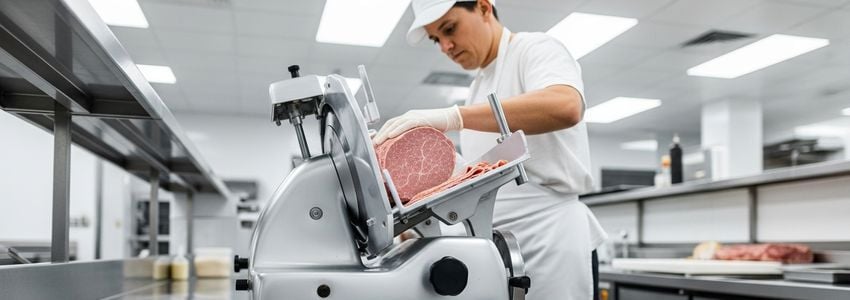
Commercial Meat Slicer Financing: The Complete Guide for Business Owners
For restaurants, delis, butcher shops, and grocery stores, a commercial meat slicer is not a luxury - it is a core piece of equipment that directly affects throughput, food safety, and customer satisfaction. Commercial meat slicer financing gives business owners the ability to acquire professional-grade slicing equipment without committing large amounts of capital upfront, preserving cash flow for daily operations and growth. This guide covers everything you need to know about financing options, qualification requirements, and how to choose the right path forward for your business.
In This Article
- What Is Commercial Meat Slicer Financing?
- Key Benefits of Financing Your Meat Slicer
- How Commercial Equipment Financing Works
- Types of Meat Slicers You Can Finance
- Who Qualifies for Meat Slicer Financing?
- Financing vs. Buying Outright
- How Crestmont Capital Helps
- Real-World Financing Scenarios
- How to Get Started
- Frequently Asked Questions
What Is Commercial Meat Slicer Financing?
Commercial meat slicer financing is a form of equipment financing that allows food service businesses to acquire professional slicing equipment through a structured payment plan rather than a lump-sum purchase. Instead of depleting working capital, you make fixed monthly payments over a set term - typically 12 to 72 months - while using the equipment from day one.
This type of financing is structured around the value of the equipment itself. The meat slicer often serves as collateral for the loan, which means lenders are generally more flexible on credit requirements compared to unsecured business loans. This makes it accessible to a broad range of businesses, from established delis to newly opened butcher shops.
There are two primary structures used in commercial equipment financing: equipment loans and equipment leases. With an equipment loan, you own the slicer outright at the end of the repayment term. With a lease, you pay for use of the equipment over time and may have the option to purchase at the end. Both approaches have distinct tax and cash flow implications that we will examine in detail later in this guide.
It is worth noting that commercial meat slicers range significantly in price. Entry-level commercial units start around $500, mid-range gravity-feed models run $1,000 to $3,000, and high-volume automatic slicers used in large delis or processing facilities can exceed $10,000 to $30,000. Financing makes high-end equipment accessible without waiting years to save the full purchase price.
Ready to Finance Your Commercial Meat Slicer?
Crestmont Capital offers flexible equipment financing with fast approvals and competitive rates - no heavy paperwork required.
Apply Now - Takes MinutesKey Benefits of Financing Your Meat Slicer
Business owners who choose to finance their commercial meat slicer gain several meaningful advantages over outright purchase, particularly when cash flow management is a priority.
Preserve Working Capital
Cash reserves are the lifeblood of any food service operation. Covering payroll, inventory, utilities, and unexpected repairs requires liquidity. Financing your meat slicer means you keep that capital available for daily needs rather than locking it into a single equipment purchase. According to the U.S. Small Business Administration, poor cash flow management is one of the leading reasons small businesses struggle in their early years.
Predictable Monthly Payments
Fixed monthly payments make budgeting straightforward. You know exactly what you owe each month for the life of the loan, which simplifies financial planning and prevents surprises. This predictability is especially valuable in the food service industry, where revenue can fluctuate seasonally.
Access to Higher-Quality Equipment
When you are not constrained by what you can pay for upfront, you can choose the equipment that best fits your operational needs. A deli that needs a high-throughput automatic slicer can finance a $15,000 unit and generate revenue with it immediately - rather than settling for a less capable $3,000 model because that is what cash on hand allows.
Potential Tax Advantages
Businesses that finance equipment may qualify for Section 179 deductions, allowing them to deduct the full cost of qualifying equipment in the year it is placed in service - even if they are still making payments on it. Additionally, lease payments are often fully deductible as a business expense. Always consult a qualified tax advisor for guidance specific to your situation.
Build Business Credit
Making consistent, on-time payments on an equipment loan or lease helps establish and strengthen your business credit profile. A stronger credit score opens doors to better financing terms on future equipment purchases, expansion loans, and lines of credit.
Upgrade Flexibility
Equipment leasing, in particular, gives businesses the flexibility to upgrade to newer models at the end of the lease term. In a fast-moving commercial kitchen environment, having access to the latest technology in slicing efficiency and food safety compliance can be a genuine competitive advantage.
Industry Insight
The U.S. food service equipment market is a multi-billion-dollar sector, with equipment financing playing a central role in how operators manage capital expenditure. Many of the country's most successful delis, grocery chains, and restaurant groups rely on financing to keep their equipment current without draining operational reserves.
How Commercial Equipment Financing Works
Understanding the mechanics of commercial meat slicer financing helps you make an informed decision and negotiate better terms. Here is a step-by-step breakdown of how the process typically works.

Step 1: Determine Your Equipment Needs
Before applying, identify the specific slicer model you need, the expected cost, and what vendors you plan to purchase from. Having clear specs helps lenders process your application faster and gives you a realistic payment estimate.
Step 2: Apply for Financing
Submit a financing application with your chosen lender. Most applications ask for basic business information, time in business, annual revenue, and the equipment you intend to purchase. Many lenders - including Crestmont Capital - offer streamlined online applications that take minutes to complete.
Step 3: Approval and Terms
Once your application is reviewed, the lender presents an approval decision along with proposed terms: loan amount, interest rate (or factor rate), monthly payment, and loan term. Terms vary based on your credit profile, business financials, and the equipment value.
Step 4: Equipment Purchase
Upon signing the financing agreement, the lender either pays the vendor directly or releases funds to you to purchase the equipment. In either case, you receive the slicer and begin using it immediately.
Step 5: Repayment
You repay the loan or lease in fixed monthly installments over the agreed term. At the end of the term, you own the equipment outright (loan) or exercise your purchase/upgrade option (lease).
Typical Financing Terms
- Loan amounts: $1,000 to $500,000+ (equipment financing can scale with your needs)
- Repayment terms: 12 to 72 months
- Interest rates: Starting around 5% to 8% for well-qualified applicants; higher rates apply for newer businesses or lower credit scores
- Down payment: Many programs require 0% to 10% down
- Approval timeline: Same-day to 3 business days for most applicants
Stats at a Glance: Equipment Financing in Food Service
$15K+
Avg. high-volume commercial slicer cost
80%
Of U.S. businesses use some form of financing to acquire equipment
24 hrs
Typical funding timeline with Crestmont Capital
Section 179
Potential full-year deduction on financed equipment
Types of Meat Slicers You Can Finance
Commercial meat slicers come in a wide range of configurations. Understanding the different types helps you identify which model fits your operational volume, and which financing amount you may need to plan for.
Manual Gravity-Feed Slicers
These are the most common entry-level commercial slicers. Gravity feeds the meat toward the blade as the operator manually pushes the carriage back and forth. They are reliable, easy to clean, and appropriate for low-to-medium volume operations like small delis or sandwich shops. Pricing typically ranges from $500 to $2,500.
Automatic Slicers
Automatic models eliminate the need for manual carriage operation, allowing a single employee to produce high volumes of uniformly sliced product with less effort. These units are essential for high-volume delis, large grocery chains, and food processing environments. Prices range from $2,500 to $10,000 or more.
Belt-Driven vs. Gear-Driven Slicers
Belt-driven slicers are quieter and better suited for light to moderate use. Gear-driven models offer more torque and durability for heavy daily use. For a butcher shop or food service operation running 8-plus hours a day, a gear-driven commercial slicer is typically the better long-term investment - and the higher price point makes financing especially practical.
Specialty and High-Capacity Slicers
Some operations require slicers designed for specific products: cheese slicers with different blade configurations, high-capacity units for large-scale food processing, or ergonomic models designed for extended-use environments. These specialty units can range from $5,000 to $30,000 or more, and are strong candidates for equipment financing given their cost.
Slicer Accessories and Bundles
Many lenders allow you to bundle the slicer with related accessories - sharpening tools, replacement blades, cleaning equipment, extended warranties - into a single financing package. This reduces complexity and can improve the overall value of your financing arrangement.
For businesses also considering other kitchen upgrades, Crestmont Capital can help you finance multiple pieces of equipment simultaneously. See our related guides on commercial dishwasher financing and commercial stove financing for more information on bundling options.
Who Qualifies for Meat Slicer Financing?
One of the most common misconceptions about equipment financing is that it is only available to large, established businesses with excellent credit. In reality, commercial meat slicer financing is accessible to a wide range of businesses - including newer operations and those with less-than-perfect credit histories.
Minimum Requirements (Vary by Lender)
- Time in business: Most lenders prefer 6 months to 1 year minimum, though some programs exist for startups
- Annual revenue: Typically $50,000 to $100,000+ annually, though smaller businesses may still qualify
- Credit score: Many programs accept scores starting at 550; prime rates generally require 680+
- Business type: Restaurants, delis, butcher shops, grocery stores, catering companies, food trucks, and other food service operations
What Lenders Evaluate
Beyond raw credit scores, equipment lenders look at the overall financial health and trajectory of your business. Factors considered include:
- Bank statement history (typically 3-6 months)
- Revenue trends - are sales growing or declining?
- Existing debt obligations and debt service coverage ratio
- Industry experience of the owner(s)
- The value and type of equipment being financed (collateral strength)
Bad Credit Options
If your personal or business credit is challenged, equipment financing is often still possible. Because the slicer itself serves as collateral, lenders face less risk than with unsecured lending - and many are willing to work with borrowers who have credit challenges. Crestmont Capital offers bad credit equipment financing programs specifically designed for businesses that have faced credit setbacks.
Note on Startups
New businesses with less than 6 months of operating history may need to provide additional documentation - such as a business plan, owner personal financial statements, or a larger down payment. Some lenders also offer startup equipment financing programs with different underwriting criteria. If you are just starting out, ask your lender what documentation helps support approval.
Financing vs. Buying Outright
When a business has access to capital, the question of whether to finance or buy outright becomes important. Here is a structured comparison of both approaches.
Buying Outright: Advantages
- No interest costs - total cost of ownership is lower in most cases
- Immediate, unencumbered ownership of the equipment
- No monthly payment obligations
- Simpler from an administrative standpoint
Buying Outright: Disadvantages
- Significant cash outlay at once - can deplete emergency reserves
- Opportunity cost: that capital could have been deployed for marketing, staffing, or other revenue-generating uses
- If the equipment becomes obsolete or needs replacement, you absorb the full loss
- No credit-building benefit
Financing: Advantages
- Preserve working capital for operations
- Predictable monthly payments
- Access to better equipment now rather than later
- Potential tax deductions (Section 179, bonus depreciation)
- Builds business credit history
- Many programs offer $0 or low down payment
Financing: Disadvantages
- Total cost is higher when interest is included
- Monthly payment obligation must be factored into cash flow
- Approval requirements must be met
Leasing: A Third Option
Equipment leasing is particularly attractive when you anticipate needing to upgrade equipment within 3-5 years. Lease payments are typically lower than loan payments for the same equipment, and at the end of the lease you can return the slicer, upgrade to a newer model, or purchase it at fair market or a predetermined value. For food service operators who want to always work with current equipment technology, leasing deserves serious consideration.
The right choice depends on your business's cash position, growth plans, tax situation, and how long you expect to use the equipment. A conversation with a financing specialist can help clarify which path makes the most sense for your specific circumstances.
How Crestmont Capital Helps
Crestmont Capital is a leading U.S. business lender specializing in equipment financing and leasing for food service operators, restaurants, delis, grocery stores, and other small-to-mid-size businesses. With a reputation for fast approvals and flexible programs, Crestmont has helped thousands of business owners acquire the equipment they need without disrupting their cash flow.
What Sets Crestmont Capital Apart
- Fast approvals: Many applicants receive decisions within hours. Funding can occur within 24 hours of approval for qualified borrowers.
- Flexible credit requirements: Crestmont works with a broad range of credit profiles, including businesses that have been turned down elsewhere.
- Simple application: The application process is streamlined - no mountains of paperwork or lengthy underwriting delays.
- Dedicated specialists: Real people review your application and can structure terms to fit your specific cash flow needs.
- Multiple financing structures: Choose from equipment loans, equipment leases, or sale-leaseback arrangements depending on your goals.
Equipment Financing Programs Available
Crestmont Capital offers a full suite of business financing options relevant to food service operators:
- Equipment financing - for purchasing your slicer and other kitchen equipment
- Equipment leasing - for flexible use with upgrade options
- Small business loans - for broader capital needs beyond equipment
- Business line of credit - for ongoing working capital flexibility
- Fast business loans - when speed to funding is critical
The Crestmont Application Process
Getting started with Crestmont Capital is designed to be fast and low-friction. In most cases, all that is needed to begin is basic business information, 3-6 months of bank statements, and details on the equipment you are seeking to finance. For smaller loan amounts, even less documentation may be required.
Get Your Equipment Financing Quote Today
Answer a few quick questions and get a personalized financing proposal for your commercial meat slicer - no obligation.
Start Your ApplicationReal-World Financing Scenarios
Understanding how other businesses have used commercial meat slicer financing can help you determine whether it is the right approach for your operation. The following scenarios illustrate common situations and how financing provided a practical solution.
Scenario 1: New Deli Opening on a Budget
A couple opening a neighborhood deli in the Midwest had $40,000 in startup capital to cover buildout, initial inventory, licensing, and working capital. A quality commercial gravity-feed slicer cost $2,200 - an amount that would be manageable to finance but painful to pay upfront given their tight launch budget. They financed the slicer over 24 months at a low monthly payment, preserving their cash reserves for inventory and the first few months of operations while the business found its footing. Within six months, the deli was profitable and the monthly payment had become a minimal line item in their budget.
Scenario 2: High-Volume Grocery Store Upgrade
A regional grocery chain with three locations needed to upgrade their slicing equipment across all stores. Each location required a $12,000 automatic slicer, for a total equipment need of $36,000. Rather than pulling cash from operations, the owner financed all three units through a single equipment loan with a 48-month term. The monthly payment was well within the stores' cash flow capacity, and the improved slicing speed and consistency immediately reduced labor costs - making the equipment largely self-funding from day one.
Scenario 3: Butcher Shop with Imperfect Credit
A butcher shop owner in the Southeast had a personal credit score in the mid-500s due to a medical debt that had gone to collections two years prior. He needed a $7,500 gear-driven commercial slicer to handle growing weekend demand. Traditional bank financing was not an option, but through Crestmont Capital's bad credit equipment financing program, he was approved with a slightly higher interest rate and a modest down payment. The slicer was delivered and installed within the week, and he used the increased throughput to capture more wholesale orders that more than covered the monthly payment.
Scenario 4: Restaurant Adding Charcuterie Service
An upscale farm-to-table restaurant decided to add a charcuterie board program to their menu. This required a specialty slicer capable of handling prosciutto, salami, and artisan deli meats with precision. The owner leased a $9,000 specialty slicer for 36 months, keeping monthly costs low and retaining the option to upgrade to a newer model at lease end. The charcuterie program became one of the restaurant's most profitable additions, with food cost margins that quickly justified the lease payment.
Scenario 5: Catering Company Scaling Up
A catering company that had been renting slicer equipment for large events decided it was more cost-effective to own their own unit. They financed a mid-range automatic slicer for $5,500 over 36 months. The monthly payment was significantly less than what they had been spending on rental fees, and owning the equipment gave them greater scheduling flexibility for back-to-back weekend events.
Scenario 6: Food Truck Expanding to Brick-and-Mortar
A successful food truck operator in the Pacific Northwest was transitioning to a brick-and-mortar sandwich shop. As part of their buildout, they needed a commercial slicer - their first piece of major kitchen equipment. Using Crestmont Capital's streamlined application process, they secured financing for a $3,200 slicer within 48 hours of applying. The fast funding timeline aligned with their buildout schedule, allowing them to be fully equipped when they opened their doors.
How to Get Started
Your Step-by-Step Path to Financing
- Identify the equipment you need. Research commercial meat slicer models, compare features and pricing, and select the unit that best fits your volume and operational requirements. Get a quote from your preferred vendor.
- Gather your basic business documents. Most lenders will ask for 3-6 months of business bank statements, basic business information (legal name, EIN, business address), and the equipment quote or invoice. Having these ready speeds up the process significantly.
- Submit your application. Apply online through Crestmont Capital's streamlined application - it typically takes less than 10 minutes to complete. There is no obligation and the initial inquiry typically does not affect your credit score.
- Review your financing options. Once approved, you will receive one or more financing proposals. Review the terms: monthly payment, interest rate, loan term, and any fees. Ask questions - a good lender will take the time to explain your options clearly.
- Sign and fund. After selecting your preferred terms and signing the agreement, funding is typically disbursed within 24 hours. In many cases, the lender pays the vendor directly on your behalf.
- Receive your equipment and get to work. Your slicer is delivered and installed. You begin making your regular monthly payments and - more importantly - generating revenue with your new equipment from day one.
If you have questions before applying, Crestmont Capital's team is available to walk you through the process and help you understand what terms you might qualify for. There is no pressure and no commitment required to ask questions.
Pro Tip: Timing Your Application
If you are planning a purchase near the end of a fiscal year, financing the equipment and placing it in service before December 31 may allow you to take advantage of Section 179 expensing for the full year - even if you only own the equipment for a few days. Speak with your accountant about whether this strategy applies to your situation. For more information on business financing fundamentals, visit SBA.gov.
Frequently Asked Questions
What is the minimum credit score required to finance a commercial meat slicer?
Most equipment financing lenders work with credit scores starting around 550. Prime rates and the best terms are generally available to borrowers with scores of 680 or higher. Crestmont Capital offers programs for a wide range of credit profiles, including business owners who have faced credit challenges. The equipment itself serves as collateral, which reduces lender risk and makes approval more accessible than unsecured financing.
How long does it take to get approved for meat slicer financing?
With Crestmont Capital, many applicants receive a decision within hours of submitting their application. Funding - meaning the actual disbursement of money to the vendor or your account - typically occurs within 24 hours of approval for well-qualified applicants. More complex situations or larger loan amounts may require additional review time, but the process is generally much faster than traditional bank lending.
Can I finance a used commercial meat slicer?
Yes, many lenders offer financing for used commercial equipment. The equipment will typically need to meet certain age and condition requirements - most lenders are comfortable with used equipment that is less than 5-7 years old and in good working condition. You may be asked to provide documentation of the purchase price and condition of the equipment. Financing terms for used equipment are generally similar to new equipment, though some lenders may apply a slight rate adjustment.
Is a down payment required for commercial meat slicer financing?
Many equipment financing programs are available with no down payment required, particularly for established businesses with solid credit. However, putting 10% to 20% down can help lower your monthly payment, reduce the total interest paid, and may improve your approval odds if your credit is less than perfect. For newer businesses or those with credit challenges, a down payment may be requested as part of the approval terms.
What documents do I need to apply for equipment financing?
For most equipment financing applications, you will need: your business legal name and EIN, basic contact and ownership information, 3-6 months of business bank statements, the equipment invoice or vendor quote, and sometimes your most recent business tax return. For smaller loan amounts (under $50,000), many lenders require minimal documentation. Larger financing amounts may require more detailed financial statements.
Can I finance accessories and installation along with the slicer?
Yes, in most cases you can bundle related accessories - replacement blades, sharpening equipment, cleaning supplies, extended warranties, and installation or delivery costs - into your equipment financing package. This is a practical approach that simplifies your financing and covers the full cost of getting the equipment operational. Confirm with your lender which items are eligible to be included in the financing amount.
What is the difference between equipment financing and equipment leasing for a meat slicer?
With equipment financing (a loan), you own the slicer at the end of the repayment term. With equipment leasing, you pay to use the equipment for a set period and at the end you typically have the option to purchase the slicer at fair market value, return it, or upgrade to a newer model. Lease payments are often lower than loan payments for the same equipment, and they may be fully deductible as a business operating expense. The best choice depends on your ownership preferences, cash flow needs, and how long you plan to use the equipment.
How much does it cost to finance a commercial meat slicer?
The total cost depends on the purchase price of the slicer, your interest rate, and the loan term. For example, a $5,000 slicer financed at 8% interest over 36 months would result in monthly payments of approximately $157 and a total interest cost of around $650. Higher loan amounts, longer terms, or higher interest rates will increase the total cost. Always ask your lender for a clear breakdown of total payments and total interest before signing any agreement.
Can a new business or startup qualify for meat slicer financing?
Yes, though options may be more limited than for established businesses. Some lenders offer startup equipment financing programs that consider factors like owner credit, industry experience, and business plan strength rather than focusing solely on business revenue history. A down payment or personal guarantee may be required. If you are opening a new deli, restaurant, or food service operation, reach out to Crestmont Capital to discuss what programs may be available for your situation.
Does financing a meat slicer help build business credit?
Yes. When you finance equipment through a lender that reports to business credit bureaus (such as Dun and Bradstreet, Experian Business, or Equifax Business), making consistent on-time payments will strengthen your business credit profile over time. A stronger business credit score can result in better terms on future financing, higher credit limits, and access to more financing products - making it a long-term strategic benefit beyond just the equipment itself.
Are there tax benefits to financing a commercial meat slicer?
Potentially, yes. Under IRS Section 179, businesses may be able to deduct the full cost of qualifying equipment in the year it is placed in service - even if they are still making payments on it. Bonus depreciation rules may also apply. Additionally, lease payments for equipment are generally deductible as business operating expenses. Tax rules change frequently and situations vary, so always consult with a qualified tax professional about how these provisions apply to your specific business.
Can I pay off my equipment loan early?
Many equipment financing agreements allow for early payoff, though some include prepayment penalties. Before signing, ask your lender specifically whether there are prepayment fees and how they are calculated. If you anticipate paying off the loan early, choose a lender that offers prepayment-friendly terms. Early payoff can reduce the total interest paid, which is a meaningful financial benefit if your business cash flow improves significantly.
What types of food service businesses typically finance meat slicers?
Commercial meat slicer financing is used by a wide range of food service businesses: delis and sandwich shops, butcher shops, grocery stores with deli departments, restaurants offering charcuterie or house-cured meats, catering companies, school and hospital cafeterias, food processing facilities, hotel food and beverage operations, and specialty food retailers. Essentially, any business that regularly slices meat, cheese, or other deli products in volume is a candidate for this type of financing.
What happens if my financed slicer breaks down or needs major repairs?
You remain responsible for loan payments regardless of the equipment's operational status, which is why purchasing an extended warranty or equipment insurance is strongly recommended. Some lenders offer equipment breakdown protection as part of their financing package. If you are leasing rather than purchasing, the leasing company may have different responsibilities for maintenance depending on the lease terms. Always review the maintenance and warranty terms before finalizing any financing or leasing agreement.
How do I choose the right lender for commercial meat slicer financing?
Look for a lender that specializes in small business and equipment financing - not just consumer lending. Key factors to evaluate include: interest rates and total cost of financing, application and approval speed, flexibility in credit requirements, quality of customer service and transparency of terms, whether they report to business credit bureaus, and whether they offer multiple financing structures (loans vs. leases). Crestmont Capital checks all of these boxes and has built a strong reputation among food service operators across the country.
Disclaimer: The information provided in this article is for general educational purposes only and is not financial, legal, or tax advice. Funding terms, qualifications, and product availability may vary and are subject to change without notice. Crestmont Capital does not guarantee approval, rates, or specific outcomes. For personalized information about your business funding options, contact our team directly.
Finance Your Commercial Meat Slicer with Crestmont Capital
Fast approvals. Flexible terms. Real support from a team that understands food service businesses.
Apply Now - Free, No Obligation







