
 (800) 949-0401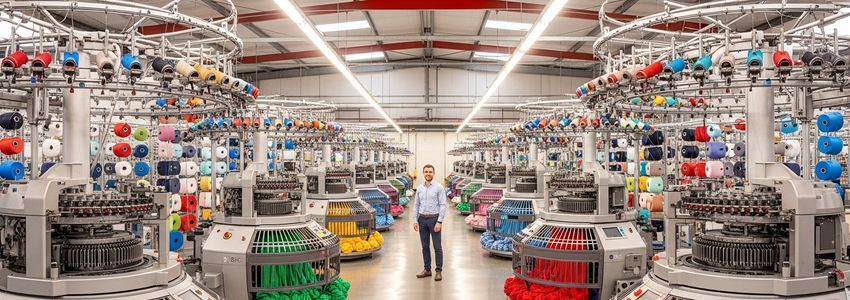
Commercial Knitting Machine Financing: The Complete Guide for Business Owners
The textile and apparel manufacturing industry is a cornerstone of modern commerce, driven by innovation, precision, and the constant demand for new products. At the heart of this industry lies a critical piece of equipment: the commercial knitting machine. From creating seamless garments and intricate fabrics to producing the textiles that form our daily lives, these machines are the engines of production. For business owners, acquiring the right knitting technology is not just an operational necessity; it is a strategic move that dictates production capacity, product quality, and competitive standing.
However, this level of technology comes with a significant price tag. Commercial knitting machines can range from tens of thousands to well over half a million dollars, representing a substantial capital expenditure that can be prohibitive for many businesses, from startups to established manufacturers looking to expand. Paying cash for such an asset can deplete vital working capital, leaving a company vulnerable to unexpected expenses or unable to invest in other growth areas like marketing or inventory. This is where a powerful financial tool becomes essential for success.
Commercial knitting machine financing is the strategic solution that allows textile businesses to acquire state-of-the-art equipment without the crippling upfront cost. It bridges the gap between ambition and reality, enabling companies to upgrade technology, scale production, and compete effectively in a fast-paced market. This comprehensive guide will walk you through every aspect of financing your knitting equipment, from understanding the different financing options and their costs to navigating the qualification process and leveraging this investment for maximum business growth. As the #1 business lender in the U.S., Crestmont Capital is here to provide the clarity and funding you need to thrive.
In This Article
- What Is Commercial Knitting Machine Financing?
- Key Benefits of Financing Your Knitting Equipment
- Types of Commercial Knitting Machine Financing
- How Commercial Knitting Machine Financing Works
- What Does Commercial Knitting Machine Financing Cost?
- Who Qualifies for Commercial Knitting Machine Financing?
- How Crestmont Capital Helps Knitting Businesses
- Real-World Scenarios
- Frequently Asked Questions
- How to Get Started
- Conclusion
What Is Commercial Knitting Machine Financing?
Commercial knitting machine financing is a category of business funding specifically designed to help companies purchase or lease knitting equipment. Instead of paying the full price of the machine upfront, a business can partner with a lender like Crestmont Capital. The lender pays the equipment supplier directly, and the business then makes regular, predictable payments to the lender over a predetermined period, known as the term. This arrangement allows businesses to acquire and use the machinery immediately while spreading the cost over time, making it a manageable operating expense rather than a massive capital drain.
This type of financing is a form of asset-based lending, meaning the knitting machine itself serves as collateral for the loan. This often makes it easier to qualify for than traditional bank loans, which may require other business or personal assets to secure the funding. It is a streamlined process tailored to the realities of acquiring expensive, revenue-generating equipment. The core function is to empower businesses to obtain the tools they need to operate and grow without disrupting their day-to-day cash flow.
Financing can cover a wide array of new and used knitting equipment, catering to the diverse needs of the textile industry. The specific machinery you can finance includes:
- Circular Knitting Machines: These are the workhorses of the industry, used to produce tubular fabrics for items like t-shirts, leggings, and seamless garments. They come in various diameters and gauges, with costs ranging from $20,000 for a basic model to over $150,000 for a high-speed, multi-feed jacquard machine.
- Flat Knitting Machines: Essential for producing shaped garments and panels, such as sweaters, collars, and cuffs. Computerized flat knitting machines offer incredible precision and design capabilities, with prices typically starting around $30,000 and reaching upwards of $250,000 for advanced multi-gauge systems from brands like Stoll or Shima Seiki.
- Warp Knitting Machines: Used for producing more stable, less elastic fabrics like lace, mesh, and industrial textiles. These are highly specialized and complex machines, often representing the highest capital investment, with costs frequently exceeding $100,000 and sometimes approaching $500,000 or more for high-performance tricot or raschel machines.
- Specialty Knitting Machines: This category includes equipment for specific niches, such as hosiery machines for socks and stockings, glove knitting machines, and machines for medical textiles or composite materials. The cost varies widely based on the application and technology.
The total cost of the equipment is a primary factor in any financing agreement. A small shop might need a single used flat knitting machine for $15,000, while a large-scale mill might be investing in a fleet of ten new circular machines for a total of $1 million. Commercial knitting machine financing is flexible enough to accommodate this entire spectrum, providing tailored solutions that match the scale of the investment and the financial capacity of the business.
Key Benefits of Financing Your Knitting Equipment
Choosing to finance your commercial knitting machines is more than just a way to afford them; it is a strategic financial decision that offers numerous advantages for your business. By leveraging financing, you can position your company for stability, growth, and a stronger competitive edge.
Preserve Working Capital
Cash flow is the lifeblood of any business. Tying up a significant portion of your liquid assets in a single equipment purchase can be risky. It leaves less cash available for critical operational needs like payroll, purchasing raw materials (yarn, dyes), marketing initiatives, and covering unexpected expenses. Financing allows you to keep your cash in the bank, preserving your working capital for these day-to-day necessities. This financial flexibility ensures your business can run smoothly and seize new opportunities as they arise, without being constrained by a recent large purchase.
Upgrade to Modern, Automated Machines
The textile industry is driven by technological advancement. Modern knitting machines are faster, more efficient, and more capable than ever before. They offer features like computer-aided design (CAD) integration, automated tension control, reduced material waste, and the ability to produce more complex patterns and structures. Financing makes this cutting-edge technology accessible. Instead of settling for older, less efficient used equipment, you can acquire the best machines on the market. This upgrade translates directly into higher quality products, faster production times, and lower operating costs, boosting your profitability and reputation.
Scale Production Capacity
Growth is the goal of nearly every business. To take on larger orders, serve more clients, or launch a new product line, you need the production capacity to meet demand. Financing is the most direct path to scaling your operations. Whether you need to add one more machine to your production line or outfit an entire new facility, financing provides the necessary capital. You can acquire the equipment needed to increase your output immediately, generating revenue from the new machines while you pay for them over time. This "pay-as-you-profit" model is a powerful engine for sustainable growth.
Compete with Larger Manufacturers
In the past, only large, heavily capitalized corporations could afford the most advanced manufacturing equipment. This created a significant barrier to entry for smaller businesses. Equipment financing levels the playing field. It gives small and mid-sized businesses access to the same high-performance knitting technology as their larger competitors. By using the latest machines, you can produce goods of equal or superior quality, often with greater agility and customer focus. This allows you to compete on value and innovation, not just price, and carve out a successful niche in the market.
Key Statistic
According to the U.S. Census Bureau, the value of shipments for U.S. textile mills was over $27 billion in the most recent economic census. Accessing modern equipment through financing is crucial for businesses to claim their share of this massive market.
Fixed Monthly Payments for Easy Budgeting
Financial predictability is a major asset for any business owner. Commercial knitting machine financing typically comes with fixed monthly payments over a set term. You know exactly how much you need to pay and for how long. This makes budgeting and financial forecasting much simpler and more accurate. There are no surprise costs or fluctuating payment amounts to worry about. This stability allows you to plan your finances with confidence, allocate resources effectively, and maintain healthy control over your company's cash flow.
Ready to Finance Your Knitting Equipment?
Get fast, flexible financing from the #1 business lender in the U.S. No obligation - apply in minutes.
Apply Now ->Types of Commercial Knitting Machine Financing
When you decide to finance a commercial knitting machine, you will encounter several different financial products. Each has its own structure, benefits, and ideal use case. Understanding these options is key to choosing the right one for your business's financial situation and long-term goals. The two most common methods are equipment loans and equipment leases, but other tools like working capital loans can also play a role.
Equipment Loans
An equipment loan is a straightforward financing option. A lender provides you with the full amount of capital needed to purchase the knitting machine, and you repay that amount, plus interest, in fixed monthly installments over a set term. From day one, you are the legal owner of the equipment. This is very similar to a traditional car loan or mortgage.
- Pros: You own the asset and build equity in it with every payment. Ownership allows you to take advantage of significant tax benefits, such as the Section 179 deduction, which may allow you to deduct the full purchase price of the equipment in the year it's put into service. There are no restrictions on usage or mileage, and once the loan is paid off, the machine is yours free and clear.
- Cons: Monthly payments may be slightly higher than lease payments because you are paying for the entire value of the machine. A down payment of 10-20% might be required, and you are fully responsible for all maintenance, repairs, and insurance.
- Best For: Businesses that plan to use the knitting machine for its entire useful life and want to build long-term assets on their balance sheet. It is ideal for companies with stable cash flow that can benefit from the tax advantages of ownership.
Equipment Leasing
An equipment lease is essentially a long-term rental agreement. You pay a monthly fee to use the knitting machine for a specific period (the lease term), typically 2 to 5 years. At the end of the term, you do not own the equipment. Instead, you usually have a few options: return the machine, renew the lease, or purchase the equipment at its fair market value or a pre-agreed price (often called a $1 buyout lease, which functions more like a loan).
- Pros: Leases often feature lower monthly payments compared to loans because you are only paying for the machine's depreciation during the lease term, not its full value. This can be easier on your monthly cash flow. Leases also make it simple to upgrade to the newest technology every few years, which is a major advantage in the rapidly evolving textile industry. In some cases, maintenance packages can be included in the lease agreement.
- Cons: You do not build equity in the equipment. Over the long run, if you decide to buy the machine at the end of the lease, the total cost can be higher than if you had taken out a loan from the start. Leases may also come with restrictions on usage or hours of operation.
- Best For: Businesses that want to keep their monthly payments as low as possible and prioritize having access to the latest technology. It's a great choice for companies that want to avoid the risks of equipment obsolescence.
Working Capital Loans
A working capital loan is a more general-purpose business loan designed to cover day-to-day operational expenses. While not specifically intended for equipment purchases, a business could use the funds from a working capital loan to buy a less expensive knitting machine or cover associated costs like shipping, installation, and initial yarn inventory. These are typically shorter-term loans with faster funding times but may have higher interest rates than dedicated equipment loans.
Lines of Credit
A business line of credit provides access to a pool of funds that you can draw from as needed, up to a certain limit. You only pay interest on the amount you use. This is less common for a single large equipment purchase but can be an excellent tool for ongoing needs, such as major repairs, purchasing machine attachments, or covering periodic maintenance for your fleet of knitting equipment.
| Feature | Equipment Loan | Equipment Lease |
|---|---|---|
| Ownership | You own the equipment from the start. | The lender owns the equipment; you pay to use it. |
| Upfront Cost | May require a down payment (10-20%). | Often requires only the first and last month's payment. |
| Monthly Payment | Generally higher, as you're paying off the full value. | Generally lower, as you're paying for depreciation. |
| Tax Benefits | Potential for Section 179 deduction and depreciation. | Lease payments can often be deducted as an operating expense. |
| End of Term | You own the equipment free and clear. | Options to return, renew, or purchase the equipment. |
| Customization | No restrictions on modifying the machine. | Modifications are typically not allowed. |
How Commercial Knitting Machine Financing Works
Navigating the financing process can seem daunting, but lenders like Crestmont Capital have streamlined it to be as fast and straightforward as possible. The goal is to get you the equipment you need with minimal hassle so you can focus on running your business. The journey from application to installation typically follows a clear, four-step path.
Step 1: Application and Consultation. The process begins when you submit a simple online application. This form usually asks for basic information about your business, such as its legal name, time in business, estimated annual revenue, and your personal credit score range. You will also provide details about the knitting machine you want to finance, including the make, model, cost, and the vendor you are purchasing from. After submitting the application, a financing specialist will contact you to discuss your needs in more detail, understand your business goals, and help identify the best financing structure for your situation.
Step 2: Documentation and Underwriting. Depending on the size of the loan and your business's financial profile, you may need to provide some documentation. For smaller amounts (typically under $250,000), a simple one-page application may be all that is required. For larger, more complex deals, the lender might ask for recent bank statements, business tax returns, and a profit and loss statement. This information is then passed to the underwriting team, which assesses your business's financial health, credit history, and ability to repay the loan. They analyze factors like cash flow, debt-to-income ratio, and industry experience.
Step 3: Approval and Term Review. Once the underwriting team approves your application, you will receive a formal financing offer. This document will outline all the key details of the agreement: the total amount financed, the interest rate or factor rate, the monthly payment, the term length, and any associated fees. It is crucial to review these terms carefully. Your financing specialist will walk you through the offer, answer any questions you have, and ensure you are comfortable with the terms before you proceed. This is your opportunity to understand the full financial commitment.
Step 4: Funding and Equipment Acquisition. After you accept the terms and sign the financing documents, the final step happens quickly. The lender will coordinate directly with your chosen equipment vendor. They will transfer the funds to the supplier to pay for the knitting machine in full. Once the vendor confirms receipt of payment, they will release the equipment for shipping and delivery to your facility. At this point, you can begin using your new machine to generate revenue, while your repayment schedule with the lender commences as agreed.
Quick Guide
How Commercial Knitting Machine Financing Works - At a Glance
Step 1: Apply Online
Complete a simple, secure online application in minutes. Provide basic business details and information about the knitting machine you want to purchase.
Step 2: Review Options
A dedicated financing specialist will contact you to discuss your application and present you with customized loan or lease options tailored to your business needs.
Step 3: Get Approved
Once you choose your preferred option, our underwriting team works quickly to finalize your approval, often within a few hours. You'll receive clear, transparent terms.
Step 4: Receive Equipment
We pay the equipment vendor directly. Your new knitting machine is shipped to you, and you can start production while making manageable monthly payments.
What Does Commercial Knitting Machine Financing Cost?
Understanding the costs associated with financing is essential for making an informed decision. The total cost is determined by several factors, including the interest rate, the loan term, any down payments, and associated fees. Transparency from your lender is key, and at Crestmont Capital, we ensure you understand every aspect of your financing agreement.
Interest Rates and Factor Rates: The primary cost of financing is the interest. For traditional equipment loans, this is expressed as an Annual Percentage Rate (APR). APRs for equipment financing can range from 6% for highly qualified businesses with excellent credit to 25% or higher for those with weaker credit profiles or newer businesses. For some short-term financing products or merchant cash advances, the cost may be expressed as a factor rate. A factor rate is a decimal figure (e.g., 1.15) that you multiply by the loan amount to determine the total repayment amount. For example, a $50,000 loan with a 1.15 factor rate would mean a total repayment of $57,500 ($50,000 x 1.15).
Loan Terms: The term is the length of time you have to repay the loan. For commercial knitting machine financing, terms typically range from one to seven years. A shorter term means higher monthly payments but less total interest paid over the life of the loan. A longer term results in lower, more manageable monthly payments but a higher total interest cost. The right term for your business depends on balancing your monthly cash flow needs with your desire to minimize the overall cost of financing.
Down Payments: While many financing programs, especially for strong businesses, offer 100% financing with no money down, a down payment can be beneficial. Providing a down payment of 10% to 20% of the equipment's cost reduces the total amount you need to finance. This leads to lower monthly payments and can also improve your chances of approval and help you secure a better interest rate, as it demonstrates a stronger commitment and reduces the lender's risk.
Fees: Be sure to ask your lender about any potential fees associated with the financing. Common fees can include an origination fee (a percentage of the loan amount to cover processing costs) or a documentation fee (a flat fee for preparing the loan documents). Reputable lenders will be upfront about all costs so there are no surprises. It is also important to understand any potential penalties for late payments or early repayment (prepayment penalties).
For more general information on equipment financing costs and structures, this guide from Forbes Advisor offers a helpful overview of the landscape.
Financing at a Glance: Key Figures
$25k - $250k
Typical cost range for a single commercial knitting machine.
2 - 7 Years
Common loan term lengths, offering flexibility for your budget.
24 Hours
Typical approval and funding time for qualified applicants.
100,000+
Businesses funded by Crestmont Capital nationwide.
Who Qualifies for Commercial Knitting Machine Financing?
Lenders evaluate several key factors to determine a business's eligibility for financing. While requirements can vary between lenders, most focus on a combination of credit history, business operational history, and revenue. The good news is that equipment financing is often more accessible than other types of business loans because the machine itself acts as collateral, reducing the lender's risk.
Credit Score
Your personal and business credit scores are important indicators of your financial responsibility. Generally, a personal credit score of 650 or higher will give you access to the most favorable rates and terms. However, many lenders, including Crestmont Capital, have programs designed for a wider range of credit profiles. Businesses with scores in the low 600s or even high 500s can often still qualify, although they may face higher interest rates or be asked for a larger down payment.
Time in Business
Most lenders prefer to work with established businesses that have a proven track record. The standard requirement is typically at least two years of operational history. This demonstrates stability and a history of managing revenues and expenses. That said, the demand for financing from new companies is high, and many lenders offer startup financing programs. These programs might have stricter requirements, such as a higher personal credit score or a detailed business plan, but they make it possible for new ventures to acquire essential equipment from day one.
Annual Revenue
Lenders need to see that your business generates enough revenue to comfortably afford the monthly financing payments. While there is no universal revenue threshold, many lenders look for a minimum annual revenue between $100,000 and $250,000. For businesses with lower revenues, a strong credit score or significant time in business can sometimes offset this. The key is to demonstrate consistent cash flow that can support the new debt obligation.
Options for Businesses with Bad Credit
A challenging credit history does not automatically disqualify you from obtaining commercial knitting machine financing. Because the loan is secured by the equipment, lenders are often more flexible. They will look at the complete picture of your business, including recent bank statements to verify cash flow, your experience in the textile industry, and the value of the machine you are purchasing. While you may not get the lowest interest rates, financing is still a very achievable goal. Working with a lender that specializes in solutions for all credit profiles is crucial.
Your Business Is More Than a Credit Score
Don't let a past financial challenge prevent you from growing your future. At Crestmont Capital, we review your business's overall health, including cash flow and industry experience. We are committed to finding financing solutions for business owners across the credit spectrum.
How Crestmont Capital Helps Knitting Businesses
Navigating the world of equipment financing can be complex, but you don't have to do it alone. At Crestmont Capital, we specialize in providing fast, flexible, and transparent funding solutions for businesses in the manufacturing sector. We understand the unique challenges and opportunities within the textile industry and have tailored our products to meet your specific needs. Our goal is to be more than just a lender; we strive to be a strategic partner in your growth.
Our core offering for textile companies is our dedicated Manufacturing Equipment Financing program. This program is built on a deep understanding of the value and revenue-generating potential of assets like commercial knitting machines. The primary product within this program is Equipment Financing, which allows you to purchase and own your machine, building valuable equity for your business while taking advantage of powerful tax incentives.
For businesses that prioritize lower monthly payments and the flexibility to upgrade technology frequently, our Equipment Leasing options are a perfect fit. Leasing keeps your upfront costs to a minimum and protects you from equipment obsolescence. This approach is consistent with how we support other specialized textile machinery acquisitions, such as commercial embroidery machine financing and heat press machine financing, where access to the latest technology is a key competitive advantage.
We also recognize that acquiring a machine is often part of a larger growth strategy. That's why we offer a range of versatile Small Business Loans that can be used to cover installation costs, facility upgrades, operator training, or the initial purchase of raw materials to get your new machine running at full capacity. Furthermore, we firmly believe that every business deserves an opportunity to succeed. Our robust Bad Credit Equipment Financing solutions are designed to help business owners who may have been turned down by traditional banks. We look at your complete business profile to find a path to approval.
While government-backed options like those from the Small Business Administration (SBA) exist, they often involve lengthy application processes and strict qualification criteria. Crestmont Capital offers a faster, more direct route to funding, with approvals in hours, not weeks, so you can acquire your knitting machine and start boosting your revenue without delay.
See Your Financing Options in 60 Seconds
Our simple application has no impact on your credit score. Find out what your business qualifies for today.
Get Pre-Approved Now ->Real-World Scenarios
To better understand how commercial knitting machine financing works in practice, let's explore a few detailed scenarios featuring different types of businesses and their unique needs.
Scenario 1: The Startup Fashion Brand
The Business: "Knit & Co." is a new, direct-to-consumer fashion brand founded by two designers specializing in high-quality, sustainable merino wool sweaters. They operate out of a small studio and have built a strong online following but have been outsourcing their production, which is expensive and limits their creative control.
The Need: To bring production in-house, improve profit margins, and offer custom designs, they need a computerized flat knitting machine. They have their eye on a slightly used Shima Seiki model costing $45,000. As a startup with less than one year in business, they have minimal business credit history and were denied by their local bank.
The Solution: Knit & Co. applies for financing with Crestmont Capital. Due to their status as a startup, the underwriters focus on the founders' strong personal credit scores (both above 720) and their detailed business plan, which shows clear revenue projections. Crestmont offers them an equipment financing agreement structured as a five-year loan. To mitigate the risk of a new business, the agreement includes a 15% down payment. This allows Knit & Co. to acquire the machine for an upfront cost of just $6,750, preserving their cash for yarn inventory and marketing. Their monthly payment is manageable, and they immediately gain control over their production quality and timeline.
Scenario 2: The Mid-Sized Apparel Manufacturer
The Business: "ActiveWear Pro" is an established manufacturer that has been in business for 12 years. They produce athletic apparel for several major retail brands and have a large facility with 20 older circular knitting machines.
The Need: One of their key clients has placed a massive order for a new line of seamless activewear, but their current machines lack the necessary technology. To meet the demand and secure the contract, they need to purchase four new, high-speed seamless knitting machines at a total cost of $320,000.
The Solution: ActiveWear Pro has a long history of profitability and strong business credit. They apply for an equipment loan with Crestmont Capital. Thanks to their excellent financial standing, they are approved for 100% financing within hours. They choose a seven-year term to keep the monthly payments low and align the cost with the long-term revenue from the new contract. Their accountant advises them to take advantage of the Section 179 tax deduction, allowing them to write off the entire $320,000 purchase in the current tax year, providing a significant tax saving. The financing enables them to secure the large contract, dramatically increase their production efficiency, and position themselves as a leader in seamless garment technology.
Scenario 3: The Contract Knitting Service Provider
The Business: "Fabric Futures" is a B2B company that provides specialized knitting services for industrial and technical textile clients. They are known for their expertise in creating innovative fabrics.
The Need: To stay ahead of the curve, they want to offer a new type of composite fabric made with carbon fiber, which requires a highly specialized and expensive warp knitting machine costing $225,000. The technology in this field evolves rapidly, and they are concerned about the machine becoming obsolete in a few years.
The Solution: Fabric Futures decides that an equipment lease is the best option to avoid the risk of obsolescence. They work with Crestmont Capital to structure a 36-month Fair Market Value (FMV) lease. This results in a significantly lower monthly payment compared to a loan, which helps their cash flow as they ramp up production of the new fabric. At the end of the three years, they will have the option to return the machine and lease a brand-new model with the latest technology, ensuring they always have a competitive edge. The lease payments are treated as an operating expense, simplifying their accounting. This flexible financing allows them to innovate without the long-term commitment of ownership.
Don't Let Capital Hold You Back. Finance Your Growth Today.
Whether you're a startup or an established manufacturer, we have a financing solution for you. Apply now.
Apply in Minutes ->Frequently Asked Questions
How to Get Started
Taking the next step toward acquiring your commercial knitting machine is simple and fast. At Crestmont Capital, we have designed our process to be efficient and transparent, getting you from application to funding with minimal effort on your part.
Apply Online in Minutes
Fill out our secure, one-page online application. It takes less than five minutes and has no impact on your credit score. Just provide some basic information about your business and the equipment you need.
Speak with a Specialist
A dedicated financing expert will contact you to review your application, discuss your goals, and present you with clear, customized financing options. We will answer all your questions and help you choose the best plan for your business.
Get Funded and Grow
Once you've signed the documents, we handle the rest. We pay your equipment vendor directly, and your new knitting machine is delivered to your facility. You can put it to work immediately, boosting your production and revenue.
Conclusion
In the competitive textile manufacturing landscape, having the right equipment is not a luxury-it is the foundation of your success. Commercial knitting machines are the engines that power production, quality, and innovation. While their high cost can seem like a significant hurdle, it doesn't have to be a barrier to your company's growth. Strategic financial planning is just as important as your production strategy, and utilizing the right tools can make all the difference.
Commercial knitting machine financing is the key that unlocks access to this essential technology. It is a powerful, flexible tool that allows you to preserve your precious working capital, scale your operations on your own timeline, and equip your business with the modern, efficient machinery needed to compete with industry leaders. By converting a massive capital expenditure into a predictable monthly payment, you can maintain financial health while simultaneously investing in the assets that generate revenue. Whether you are a startup bringing your first designs to life or an established mill expanding your capacity, financing provides a clear and attainable path forward. Partner with an expert lender like Crestmont Capital to secure the funding you need and knit your vision for success into a reality.
Disclaimer: The information provided in this article is for general educational purposes only and is not financial, legal, or tax advice. Funding terms, qualifications, and product availability may vary and are subject to change without notice. Crestmont Capital does not guarantee approval, rates, or specific outcomes. For personalized information about your business funding options, contact our team directly.








