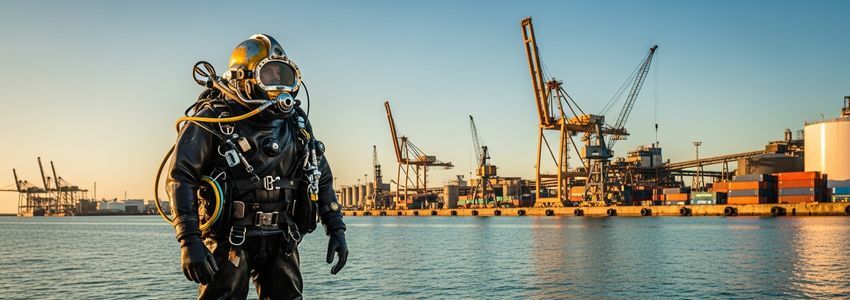
Commercial diving businesses operate in one of the most specialized and demanding sectors in the maritime industry, requiring expensive equipment, rigorous safety standards, and skilled personnel to complete underwater construction, inspection, and salvage projects. Whether you run an established commercial diving company or are looking to grow your operations, securing the right commercial diving business loans can mean the difference between landing the next major contract and watching an opportunity pass by. This guide breaks down every financing option available to commercial diving companies, how to qualify, and how to use capital strategically to grow your business.
In This Article
- What Are Commercial Diving Business Loans?
- The Commercial Diving Industry at a Glance
- Types of Financing for Commercial Diving Companies
- How Crestmont Capital Helps Commercial Divers Get Funded
- What Commercial Diving Businesses Use Financing For
- How to Qualify for a Commercial Diving Business Loan
- Financing Process Snapshot
- Tips to Strengthen Your Loan Application
- Frequently Asked Questions
What Are Commercial Diving Business Loans?
Commercial diving business loans are financing products specifically designed to help underwater contracting companies fund the capital needs of their operations. Unlike consumer loans, these business financing instruments account for the unique cash flow patterns, equipment requirements, and contract-driven revenue cycles common in the commercial diving sector.
Commercial diving is classified as a high-skilled trade that intersects with maritime construction, oil and gas, infrastructure maintenance, and public works. From bridge inspections to offshore pipeline repair, commercial diving companies serve industries that depend on reliable, timely underwater services. Financing helps bridge the gap between contract award and invoice payment, and enables businesses to invest in the equipment and personnel needed to scale.
Lenders that serve commercial diving businesses typically offer:
- Term loans for major equipment purchases or business expansion
- Equipment financing for diving systems, support vessels, and ROVs
- Business lines of credit for working capital and cash flow management
- SBA loans for longer-term, lower-cost capital
- Short-term loans for urgent operational needs
Understanding which financing tool fits your specific business need is the first step to using capital effectively. For a broader look at how small business financing works across industries, visit our small business loans resource page.
Ready to Grow Your Business?
Get fast, flexible financing from the #1 business lender in the U.S. Apply in minutes.
Apply Now →The Commercial Diving Industry at a Glance
The commercial diving industry is a niche but financially significant sector. According to industry research, the global underwater services market is valued at several billion dollars annually, with consistent demand driven by aging infrastructure, offshore energy projects, and coastal construction. In the United States, commercial diving businesses operate under strict federal regulations and must meet standards set by the Occupational Safety and Health Administration (OSHA) and the U.S. Small Business Administration.
Key characteristics of commercial diving businesses include:
High Startup and Operational Costs
Commercial diving requires significant capital investment. A complete surface-supplied air diving system can cost $20,000 to $100,000 or more. Mixed gas systems used in saturation diving may exceed $500,000. Support vessels, ROVs (Remotely Operated Vehicles), diving bells, and safety equipment add substantially to the capital requirement of running a professional operation.
Project-Based Revenue Cycles
Most commercial diving companies operate on project contracts rather than recurring monthly revenues. This creates natural cash flow gaps - a company may win a large municipal inspection contract in Q1, deploy crews and equipment, but not receive final payment until Q3 or Q4. Business financing helps companies bridge these gaps and maintain operational continuity between contracts.
Specialized Workforce Requirements
Commercial divers earn significantly above the median wage for trade workers. According to the Bureau of Labor Statistics, commercial divers earn a median annual wage above $65,000, with experienced saturation divers and offshore specialists earning considerably more. Payroll financing and working capital loans help companies manage personnel costs between contract milestones.
Regulatory and Certification Compliance Costs
Commercial diving companies must maintain OSHA-compliant dive plans, equipment certifications, and crew training records. Compliance costs - including equipment inspections, certifications from organizations like the Association of Diving Contractors International (ADCI), and safety training - represent a recurring operational expense that business financing can help absorb.
Market Sectors Served
Commercial diving companies serve multiple market verticals:
- Oil and gas: Offshore platform maintenance, pipeline inspection and repair, subsea construction
- Infrastructure: Bridge and dam inspection, port and harbor dredging, underwater structural repair
- Marine construction: Dock and pier installation, cofferdam construction, intake/outfall structure work
- Utility work: Underwater cable installation, water treatment facility inspection, dam maintenance
- Salvage and recovery: Vessel salvage, wreck removal, environmental remediation
- Scientific and government: USACE contract work, NOAA projects, environmental surveys
Types of Financing for Commercial Diving Companies
There is no single "best" loan for a commercial diving business. The optimal financing depends on your specific need, time horizon, creditworthiness, and revenue profile. Here is a detailed look at the primary options available.
Term Loans
A term loan provides a lump sum of capital that you repay over a fixed period with regular payments. For commercial diving businesses, term loans are commonly used for acquiring major equipment, expanding to a new geographic market, or funding a large contract mobilization. Terms typically range from 1 to 10 years, with rates varying based on credit profile and lender.
Term loans offer predictable repayment schedules, making them easier to incorporate into project-based financial planning. Explore long-term business loans if you need a multi-year financing solution for larger capital investments.
Equipment Financing
Equipment financing is purpose-built for purchasing or upgrading physical assets. The equipment itself often serves as collateral, which can make qualification easier even for businesses with shorter operating histories or modest credit scores. For commercial diving companies, equipment financing is ideal for:
- Surface-supplied diving systems and umbilical equipment
- Mixed gas and saturation diving systems
- Support vessels, work boats, and barges
- ROVs (Remotely Operated Vehicles) and AUVs
- Hyperbaric chambers for decompression treatment
- Underwater cameras, sonar, and survey equipment
- Dive computers, regulators, and personal protective equipment
Learn more about how equipment financing works and whether it is the right tool for your next major purchase.
Business Line of Credit
A business line of credit gives you access to revolving capital that you can draw on as needed and repay over time. Unlike a term loan, you only pay interest on what you use. For commercial diving companies, a line of credit is invaluable for managing cash flow between contract milestones, covering unexpected equipment repairs, paying crew during mobilization, and bridging gaps before a large payment clears.
A revolving line of credit is one of the most flexible financing tools available. See our guide to business lines of credit for a full breakdown of how this product works and what to expect.
SBA Loans
Small Business Administration loans are government-backed financing products that offer some of the lowest interest rates and longest repayment terms available to small businesses. The most common SBA products for commercial diving businesses include:
- SBA 7(a) loans: Up to $5 million for working capital, equipment, real estate, or refinancing
- SBA 504 loans: For major fixed asset purchases like vessels or real property
- SBA Express loans: Faster approval for up to $500,000
SBA loans are excellent for businesses with strong financials that can tolerate a longer approval timeline. Explore our comprehensive SBA loans guide to understand requirements and the application process.
Short-Term Business Loans
Short-term loans provide quick capital, typically repaid within 3 to 18 months. For commercial diving businesses facing urgent needs - a last-minute equipment failure, an unexpected mobilization cost, or an opportunity to bid on a contract that requires upfront investment - short-term financing can provide critical breathing room. However, these loans typically carry higher rates, so they should be used strategically rather than as a default financing solution.
Review the pros and cons of short-term business loans before making a decision.
Working Capital Loans
Working capital loans are designed specifically to fund day-to-day operations rather than long-term investments. For commercial diving businesses waiting on a $300,000 port authority payment while payroll, equipment maintenance, and insurance premiums come due, a working capital loan can fill the gap without disrupting operations. Learn how unsecured working capital loans can keep your business running smoothly between contracts.
Bad Credit Business Loans
Not every commercial diving business owner has a pristine credit history. Equipment failures, contract disputes, or economic downturns can affect credit scores. For business owners rebuilding credit or dealing with blemishes, there are still financing options available. See our guide on bad credit business loans to understand which lenders work with lower credit scores and what you can expect in terms of rates and terms.
How Crestmont Capital Helps Commercial Divers Get Funded
Crestmont Capital has built a reputation as one of the most flexible and responsive business lenders in the U.S., with particular strength in serving skilled trade businesses, maritime contractors, and specialty service companies. Here is what sets Crestmont apart for commercial diving business owners:
Industry Understanding
Many banks and generic online lenders are unfamiliar with how commercial diving businesses operate. They may misread the revenue profile, fail to account for project-based income cycles, or apply blanket underwriting criteria that penalize legitimate businesses. Crestmont's underwriting team understands specialty contractors and evaluates your business holistically - not just by a single financial metric.
Fast Decisions
Commercial diving opportunities move fast. A municipal contract bid may require a bond or equipment upgrade within days. Crestmont can provide same-day or next-day decisions on many financing requests, and funding can be deposited within 24 to 48 hours of approval. When speed matters, traditional banks simply cannot compete.
Flexible Qualification Standards
Crestmont works with businesses that have been operating for at least 3-6 months, with revenue as low as $5,000-$10,000 per month in some programs. Businesses with credit scores as low as 500-550 may qualify for certain products. This flexibility means more commercial diving companies can access capital when they need it.
Multiple Financing Options
Rather than offering a one-size-fits-all product, Crestmont works with a network of lenders to identify the best fit for your needs. Whether you need equipment financing, a line of credit, a term loan, or an SBA product, Crestmont can match you with the right solution at competitive terms.
Ready to Grow Your Business?
Get fast, flexible financing from the #1 business lender in the U.S. Apply in minutes.
Apply Now →
What Commercial Diving Businesses Use Financing For
The capital needs of commercial diving companies are diverse and often substantial. Below are the most common uses of business financing in this industry.
Equipment Acquisition and Upgrades
Diving equipment has a lifespan and requires regular replacement or upgrading to meet safety standards and remain competitive. A commercial diving company may need to replace an aging surface-supplied diving system, add a second diving spread to handle larger contracts, or invest in ROV technology to expand into survey and inspection work. Equipment financing makes these investments feasible without depleting working capital.
Vessel Purchase or Refurbishment
Commercial diving operations often require a dedicated support vessel - whether a small work boat for inland diving or a larger offshore support vessel for deep-water operations. Vessel acquisition is one of the most capital-intensive investments a commercial diving company makes. Marine equipment and vessel financing products are specifically designed for these purchases.
Payroll and Labor Costs
Commercial divers, dive supervisors, tender divers, and support crew earn premium wages. For a company mobilizing a 10-person dive team for a 60-day bridge inspection contract, the payroll obligation can easily exceed $200,000 before a single invoice is paid. Working capital loans and lines of credit allow businesses to fund payroll without waiting for contract milestones or final payment.
Insurance and Bonding
Commercial diving companies carry substantial insurance requirements: general liability, professional liability, inland marine, watercraft, and workers' compensation. For offshore work, additional marine liability and protection and indemnity (P&I) coverage may be required. Annual insurance premiums for a mid-size commercial diving operation can range from $50,000 to over $200,000. Business financing can help manage these large, lump-sum payments.
Contract Mobilization Costs
Winning a major contract is only the beginning. Mobilizing equipment, transporting crews to the work site, setting up decompression chambers, and purchasing project-specific supplies requires immediate capital outlay - often weeks before the first invoice can be issued. Short-term loans or lines of credit are commonly used to fund mobilization.
Training and Certification
The Association of Diving Contractors International (ADCI) sets safety and training standards for the commercial diving industry. Maintaining crew certifications, funding refresher training, and investing in new specializations (such as ROV operation or underwater welding) represents a recurring cost. According to Forbes, businesses that invest in workforce development consistently outperform peers who do not - and financing can make these investments possible without disrupting cash flow.
Safety Equipment and Compliance
OSHA's commercial diving regulations (29 CFR 1910.401-440) mandate specific equipment requirements for surface-supplied, SCUBA, and mixed gas diving operations. Non-compliance can result in work stoppages, fines, and loss of contracts. Financing safety equipment and compliance upgrades protects the business from regulatory risk while enabling continued operations.
Fleet Expansion and Geographic Growth
Many commercial diving businesses start as regional operators and expand into adjacent markets over time. Opening a second dive base, acquiring additional equipment spreads, or pursuing offshore certifications requires capital investment. Business term loans or SBA products are well-suited for strategic expansion initiatives.
Technology and Innovation
The commercial diving industry is evolving rapidly. ROVs, AUVs (Autonomous Underwater Vehicles), advanced sonar systems, and underwater inspection software are changing how contracts are executed and bid. Companies that invest in technology maintain a competitive advantage in the bidding process. Equipment financing and technology loans can fund these investments.
How to Qualify for a Commercial Diving Business Loan
Qualifying for a commercial diving business loan involves the same fundamentals as any business financing, with some industry-specific considerations. Here is what lenders typically evaluate:
Credit Score
Your personal credit score plays a significant role in loan approval, especially for smaller commercial diving businesses structured as sole proprietorships, partnerships, or LLCs. Most conventional lenders prefer a score above 640-680, while SBA lenders typically require 640+. Alternative lenders like Crestmont may work with scores as low as 500-550 for certain products. If your credit score needs improvement, review strategies in our guide on bad credit business loans.
Time in Business
Lenders typically require at least 6 to 12 months in business, with some SBA products requiring 2 years. Newer commercial diving startups may face more limited options but can still find financing through alternative lenders, equipment financing companies, or SBA microloan programs.
Annual Revenue
Most lenders want to see consistent revenue - typically $50,000 to $120,000 or more per year for conventional loans, and lower thresholds for alternative products. Commercial diving businesses can demonstrate revenue through tax returns, bank statements, and contract documentation. Lenders understand that project-based revenues fluctuate, so presenting a clear picture of contract pipeline and backlog can strengthen an application.
Cash Flow
Beyond raw revenue, lenders evaluate cash flow - specifically, whether the business generates enough operating cash to service a new debt obligation. A business generating $800,000 in annual revenue but running on thin margins may face scrutiny. Presenting clean, accurate financial statements and a clear cash flow projection demonstrates financial management competence.
Debt Service Coverage Ratio (DSCR)
Lenders often calculate the DSCR to assess whether your business can handle a new loan payment. A DSCR of 1.25x or higher is generally preferred, meaning your net operating income covers loan payments by 25% or more. For a $200,000 term loan with $3,500/month in payments, a business needs at least $4,375/month in operating income to meet this threshold.
Collateral
For larger loans, lenders may require collateral - assets that can be seized and liquidated in the event of default. For commercial diving businesses, collateral commonly includes:
- Diving equipment and support vessels
- Accounts receivable from pending contracts
- Business or personal real estate
- Other business assets
Equipment financing products often use the purchased equipment as the primary collateral, which simplifies the process for asset-heavy businesses.
Business and Tax Documentation
Most lenders require the following documentation:
- 2-3 years of business tax returns
- 3-6 months of business bank statements
- Profit and loss statement (P&L)
- Balance sheet
- Business licenses and certifications (including ADCI compliance documentation)
- Contract and backlog documentation
- Owners' personal tax returns and financial statements
Financing Process Snapshot: How to Get a Commercial Diving Business Loan
From Application to Funding: The 5-Step Process
Step 1: Assess Your Financing Need
Determine exactly what you need funding for - equipment, working capital, expansion, or mobilization. This determines the right product and loan size.
Step 2: Gather Your Documents
Prepare tax returns, bank statements, P&L statements, and documentation of contracts or backlog. Having clean financials speeds up the approval process significantly.
Step 3: Apply with Crestmont Capital
Submit your application online in minutes. Crestmont's team reviews your profile and identifies the best financing solution for your specific situation.
Step 4: Review and Accept Your Offer
Receive a financing offer with clear terms - loan amount, rate, repayment schedule, and any fees. Compare options and select the product that fits your cash flow and timeline.
Step 5: Receive Funds and Execute Your Plan
Funding is typically deposited within 24-48 hours of final approval. Deploy capital according to your plan and begin generating returns on your investment.
Industry Data: What Commercial Diving Businesses Are Financing
42%
Fund equipment purchases
31%
Use loans for working capital
18%
Fund contract mobilization
9%
Expand to new markets
Tips to Strengthen Your Commercial Diving Loan Application
Applying for a business loan is a process that rewards preparation. Here are practical tips to improve your approval odds and secure better terms.
Maintain Separate Business and Personal Finances
Many small commercial diving businesses - especially sole proprietorships - mix personal and business finances. This creates confusion for lenders trying to evaluate your business's standalone financial performance. Open a dedicated business checking account and run all business revenue and expenses through it. This one step can dramatically simplify your application and demonstrate financial discipline.
Keep Detailed Contract Documentation
Commercial diving businesses typically have irregular revenue - not a flat monthly number. Lenders who understand the industry will want to see your contract pipeline, backlog, and signed agreements to project future cash flow. Maintaining organized records of awarded contracts, pending bids, and historical project revenue can tell a compelling story about your business's strength that raw bank statements alone cannot.
Build Business Credit Proactively
Establishing a business credit profile through a DUNS number, business credit cards, and vendor trade lines helps separate your personal credit from your business credit over time. This can make qualifying for larger business loans easier and less dependent on your personal credit score.
Work with a Lender Who Understands Specialty Contractors
A generic online lender or local bank may not understand that a $50,000 cash balance after a major mobilization month is not a sign of financial weakness - it is the nature of commercial diving project economics. Working with a lender like Crestmont Capital, which specializes in business lending and understands trade contractor cash flow patterns, can result in a more favorable evaluation of your business.
Be Transparent About Industry Risks
Lenders appreciate honesty. If your business has faced a contract dispute, a difficult year due to an oil industry downturn, or a period of low revenue, be prepared to explain the context. Lenders who understand your industry will factor in sector-specific dynamics rather than judging you solely on historical numbers.
Show Repeat Client Relationships
Commercial diving businesses with recurring clients - municipal governments, port authorities, oil and gas operators, or utility companies - demonstrate more predictable revenue than those dependent on one-time projects. Highlighting long-term client relationships in your application can strengthen your case significantly.
For more strategies to improve your application, check out our recently published guide on leak detection business loans which shares many qualification principles applicable across specialty contractor industries. You may also find our aircraft maintenance business loans guide useful for understanding how specialty trade businesses approach financing decisions.
Comparing Loan Options: What Works Best for Each Need
Not every financing product is appropriate for every situation. Here is a practical comparison to help commercial diving businesses match their need to the right tool:
| Business Need | Best Financing Option | Why It Fits |
|---|---|---|
| Purchasing a new diving system | Equipment Financing | Equipment serves as collateral, lower rates |
| Covering payroll between contracts | Working Capital Loan / Line of Credit | Short-term, flexible access to capital |
| Mobilization for a large contract | Short-Term Loan or Line of Credit | Fast funding, repaid when contract invoices |
| Buying a support vessel | Term Loan or SBA 504 | Long-term, lower rates for major assets |
| Expanding to a new market | SBA 7(a) Loan or Term Loan | Larger amounts, favorable rates for growth |
| Managing seasonal cash flow | Business Line of Credit | Draw when needed, repay when contracts pay |
| Bad credit situation | Alternative / Bad Credit Business Loan | Flexible qualification, higher rates but accessible |
The Role of Fast Funding in Commercial Diving
One aspect of business financing that is especially critical for commercial diving companies is speed. A contractor who wins a port authority inspection contract may have only 10 to 15 days to mobilize equipment, assemble crew, and begin work. If equipment financing requires a 30-day approval process, the opportunity may be lost or the contractor may need to turn down the work entirely.
This is where working with a responsive lender makes a measurable difference. Crestmont Capital's fast business loans allow commercial diving businesses to access capital quickly - often within 24 to 48 hours - when time-sensitive opportunities arise. See how fast business loans compare to traditional financing options in terms of approval speed and total cost.
Commercial Diving Business Loan Amounts and Rates
Commercial diving businesses typically borrow across a wide range depending on their size, creditworthiness, and specific need:
- Equipment purchases: $20,000 to $500,000+
- Working capital: $10,000 to $250,000
- Term loans for expansion: $50,000 to $2,000,000+
- SBA loans: Up to $5,000,000
Interest rates vary by product and borrower profile:
- SBA 7(a) loans: Prime + 2.75% to 4.75% (currently approximately 10-13%)
- Conventional term loans: 7% to 25%+ depending on credit and term
- Equipment financing: 6% to 20%
- Lines of credit: 8% to 25%+
- Short-term loans / MCAs: Higher factor rates, equivalent APRs of 20% to 60%+
According to CNBC, small business lending has remained robust in recent years despite broader economic pressures, with specialty contractor businesses representing a growing segment of commercial loan volume.
Ready to Grow Your Business?
Get fast, flexible financing from the #1 business lender in the U.S. Apply in minutes.
Apply Now →Frequently Asked Questions
What types of loans are available for commercial diving businesses?
How much can a commercial diving company borrow?
Can I get a commercial diving business loan with bad credit?
How fast can I get funded?
What documents do I need to apply for a commercial diving business loan?
Can I use a business loan to purchase a dive support vessel?
Do commercial diving businesses qualify for SBA loans?
How do lenders evaluate project-based revenue for commercial diving businesses?
What credit score do I need for a commercial diving business loan?
Can I get financing for diving equipment if I am a startup?
Is a personal guarantee required for commercial diving business loans?
Can I use a business line of credit to cover mobilization costs?
How long does it take to get approved for a commercial diving business loan?
What happens if my business has been declined by a bank?
Are there special loan programs for commercial diving businesses in the oil and gas sector?
Next Steps: Get Your Commercial Diving Business Funded
- Identify your specific financing need - equipment, working capital, expansion, or mobilization
- Gather your financial documentation - tax returns, bank statements, P&L, and contract backlog
- Review your credit score and address any errors or issues before applying
- Compare financing options to find the right product for your timeline and cost tolerance
- Apply with Crestmont Capital - get a decision within 24 hours and funding in as little as 48 hours
Conclusion
Commercial diving businesses operate in a demanding, specialized industry where the right equipment, trained personnel, and financial stability are essential to winning and executing contracts. Whether you are looking to purchase new diving systems, fund a major contract mobilization, bridge a cash flow gap, or expand your operations to a new market, there is a financing solution designed for your specific situation.
Crestmont Capital understands the commercial diving industry and the unique financial challenges that come with operating a specialized maritime contractor business. With fast approvals, flexible qualification standards, and a full range of financing products, Crestmont is positioned to be your financial partner as you grow your commercial diving company. Apply today to explore what funding is available for your business.
Disclaimer: The information provided in this article is for general educational purposes only and is not financial, legal, or tax advice. Funding terms, qualifications, and product availability may vary and are subject to change without notice. Crestmont Capital does not guarantee approval, rates, or specific outcomes. For personalized information about your business funding options, contact our team directly.