
 (800) 949-0401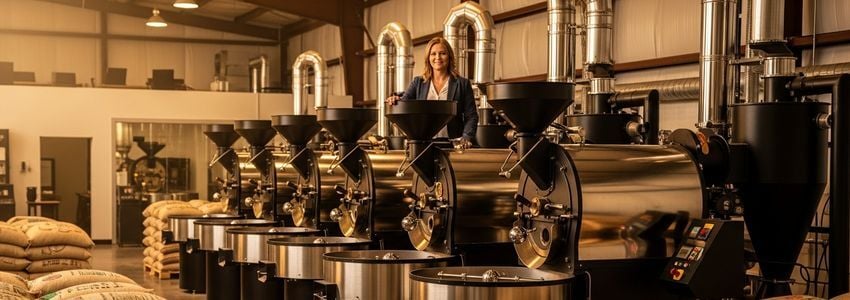
Coffee Brand Business Loans: The Complete Financing Guide
Building a coffee brand in today's market takes more than a great roast. From sourcing single-origin beans and investing in roasting equipment to scaling wholesale accounts and launching retail packaging, the capital demands at every stage are real and significant. Coffee brand business loans give entrepreneurs the financial runway to grow their business without giving up equity or waiting for revenue to accumulate.
This guide covers every major financing option available to coffee brand owners, how to qualify, what lenders look for, and how Crestmont Capital can help you get funded fast.
In This Article
- What Are Coffee Brand Business Loans?
- Why Coffee Brands Need Business Financing
- Types of Coffee Brand Business Loans
- How the Financing Process Works
- Coffee Brand Financing at a Glance
- How to Qualify
- How Crestmont Capital Helps Coffee Brands
- Real-World Scenarios
- Frequently Asked Questions
- How to Get Started
What Are Coffee Brand Business Loans?
Coffee brand business loans are financing products designed to fund the unique capital needs of coffee-focused businesses. These include specialty roasters, wholesale coffee distributors, CPG coffee brands, subscription box companies, coffee importers, and private-label coffee producers.
Unlike general-purpose small business loans, coffee brand financing accounts for the working capital cycles of a commodity-driven industry. Coffee businesses deal with seasonal demand swings, fluctuating green bean prices, long lead times on imported inventory, and heavy upfront equipment costs. A well-structured loan product addresses all of these challenges.
Whether you are roasting and selling direct-to-consumer, supplying grocery retail chains, or building a subscription club with a national following, access to capital at the right moment determines whether your brand accelerates or stalls.
Industry Context: According to the SBA, food and beverage businesses are among the most active borrowers in the small business lending market. Coffee brands specifically benefit from the growing U.S. specialty coffee segment, which continues to outpace overall beverage category growth.
Why Coffee Brands Need Business Financing
Coffee is a capital-intensive business at every tier. Understanding the most common reasons coffee brand owners seek financing helps you identify the right loan type for your specific situation.
Green Bean Purchasing and Inventory
Specialty-grade green coffee must often be purchased in full container loads or at minimum quantities that can range from 100 to 500 bags. At current market prices, a single container of specialty green coffee can cost $50,000 to $150,000 or more. Inventory financing allows brands to buy in volume when pricing is favorable and lock in supply before the season runs short.
Roasting Equipment and Expansion
Commercial roasters range from $20,000 for a small-batch machine to over $300,000 for a production-grade roaster with full ancillary systems. As a brand grows from a cottage operation to a commercial facility, equipment upgrades become a recurring capital need. Equipment financing allows brands to acquire or upgrade roasting equipment without depleting cash reserves.
Packaging, Branding, and Product Development
Creating retail-ready packaging for a new SKU or refreshing a brand identity requires a significant upfront investment. Minimum order quantities on custom-printed bags, labels, and boxes often require $10,000 to $50,000 in initial outlay before a single unit ships to a retailer.
Retail Placement and Broker Fees
Landing a major grocery chain requires slotting fees, demo budgets, and distributor margins that can be substantial. Brands entering retail for the first time often need $25,000 to $100,000 to successfully launch a placement without running out of cash before the first reorder.
Working Capital and Payroll
Coffee brands that sell on net-30 or net-60 payment terms to grocery chains, foodservice distributors, or B2B clients often experience cash flow gaps between delivering product and receiving payment. A business line of credit is the most effective tool for bridging these gaps without disrupting operations.
Ready to Scale Your Coffee Brand?
Get fast, flexible financing from the #1 business lender in the U.S. Apply in minutes with no obligation.
Apply NowTypes of Coffee Brand Business Loans
Coffee brand owners have access to multiple loan products, each suited to a different stage of business or capital need. Here is a breakdown of the most commonly used options.
Term Loans
A traditional term loan provides a lump sum of capital repaid over a fixed period, typically one to five years. Term loans are ideal for large one-time investments such as equipment purchases, facility buildouts, or funding a major retail launch. Interest rates vary based on credit profile, time in business, and loan amount, with terms typically ranging from $25,000 to $500,000 or more.
Business Line of Credit
A revolving line of credit gives coffee brands on-demand access to capital up to a pre-approved limit. You draw funds as needed, repay, and draw again. This flexibility makes a line of credit the preferred tool for managing inventory cycles, cash flow gaps, and unexpected expenses. Lines of credit from Crestmont typically range from $10,000 to $250,000.
SBA Loans
The SBA's 7(a) loan program provides government-backed financing up to $5 million for qualifying small businesses, including coffee brands. SBA loans offer competitive rates and longer repayment terms, making them well-suited for significant capital investments. However, the application process is more involved and takes longer than alternative financing.
Equipment Financing
Equipment loans and leases are used to fund specific tangible assets: roasters, grinders, packaging lines, conveyors, and lab equipment. The equipment itself typically serves as collateral, which makes qualification easier than unsecured lending. Loan amounts are based on the value of the equipment, and terms often extend to five to seven years.
Invoice Financing and Factoring
Coffee brands supplying grocery chains or foodservice distributors on payment terms can use invoice financing to convert outstanding receivables into immediate cash. The lender advances 80 to 95 percent of the invoice value, and the remainder (minus fees) is released when the customer pays. This is particularly effective for brands with strong wholesale accounts but slow-paying customers.
Inventory Financing
Inventory loans allow coffee brands to purchase green beans, packaging materials, or finished goods inventory using the inventory itself as collateral. These loans are structured around the purchase cycle of the business and are repaid as inventory is sold and converted to revenue.
Merchant Cash Advance
A merchant cash advance (MCA) provides a lump sum in exchange for a percentage of future credit card or daily revenue. While faster to obtain than traditional loans, MCAs carry higher effective costs and are best suited for short-term needs rather than long-term capital investments.
| Loan Type | Best For | Typical Amount | Speed |
|---|---|---|---|
| Term Loan | Equipment, expansion, retail launch | $25K - $500K+ | 1-5 days |
| Line of Credit | Cash flow, working capital | $10K - $250K | 24-48 hours |
| SBA 7(a) | Long-term growth | Up to $5M | 30-90 days |
| Equipment Financing | Roasters, packaging lines | $5K - $2M+ | 1-3 days |
| Invoice Financing | Wholesale receivables | 80-95% of invoice | 24-72 hours |
| Inventory Financing | Green bean purchases | $10K - $500K | 3-7 days |
How the Financing Process Works
Understanding the lending process from application to funding helps coffee brand owners plan ahead and move quickly when capital is needed.
Most alternative lenders, including Crestmont Capital, have streamlined the traditional loan process significantly. Here is what to expect when you apply for a coffee brand business loan.
Step 1: Application and Documentation
The application typically takes under 10 minutes online. You will provide basic business information, your estimated funding need, and authorize a soft credit pull. Most lenders then request three to six months of business bank statements and basic financial documents.
Step 2: Review and Underwriting
Lenders evaluate your application based on business revenue, cash flow consistency, credit profile, time in business, and the purpose of the loan. For coffee brands, a lender will typically review revenue trends, existing debt obligations, and the health of your primary sales channels.
Step 3: Offer and Terms
If approved, you receive a loan offer outlining the amount, interest rate or factor rate, repayment schedule, and any fees. Review the total cost of capital carefully before accepting, including any origination fees, prepayment penalties, or draw fees on a line of credit.
Step 4: Funding
Upon agreement, funds are typically wired directly to your business bank account. Alternative lenders like Crestmont Capital can often fund within 24 to 48 hours of approval, while bank and SBA loans take longer.
By the Numbers
Coffee Brand Business Loans - Key Statistics
$100B+
U.S. coffee industry annual revenue
66%
Americans who drink coffee daily
24 Hrs
Typical Crestmont Capital funding timeline
$500K
Maximum unsecured loan for qualified coffee brands

How to Qualify for Coffee Brand Business Loans
Lender requirements vary based on loan type and the institution providing the capital. Understanding typical qualification criteria helps you prepare before applying and increases your approval odds.
Credit Score
Most alternative lenders approve coffee brand business loans for borrowers with credit scores starting at 550 to 600. SBA loans and bank loans typically require 680 or higher. The stronger your credit score, the better your rate and terms. Checking and correcting any errors on your personal and business credit reports before applying is a smart first step.
Time in Business
Alternative lenders typically require at least six months to one year in business. Banks and SBA lenders prefer two or more years of operating history. Startup coffee brands that are pre-revenue may need to look at startup-specific financing or investor capital initially.
Annual Revenue
Most small business lenders require a minimum of $100,000 in annual revenue. Some alternative lenders may work with brands generating as little as $50,000 per year. Higher revenue generally unlocks larger loan amounts at better rates.
Cash Flow
Lenders analyze bank statements to verify that your business generates consistent cash flow. They want to see that your monthly deposits exceed your debt service requirements. A clean, organized business bank account is one of the simplest things you can do to improve your borrowing position.
Business Plan and Use of Funds
For larger loans, particularly SBA products, lenders may request a business plan that explains your brand, market opportunity, and how you intend to deploy the capital. Even for smaller alternative loans, being clear about your use of funds speeds up the underwriting process.
Pro Tip: Coffee brands with wholesale accounts, e-commerce subscriptions, or grocery placements often have stronger borrowing profiles than purely DTC brands, because recurring revenue and established retail relationships signal stability to lenders.
How Crestmont Capital Helps Coffee Brand Owners
Crestmont Capital is a direct business lender rated #1 in the country for small business financing. We work with coffee brands at every stage, from early-stage roasters seeking their first line of credit to established CPG brands pursuing seven-figure term loans for production expansion.
Our team understands the cyclical nature of coffee businesses, including the seasonality of demand, the volatility of commodity pricing, and the working capital dynamics of wholesale distribution. We structure financing around how your business actually operates, not a generic template.
Our small business loans for coffee brands include term loans, business lines of credit, equipment financing, and invoice financing. Applications take minutes, decisions are fast, and funding can arrive within 24 hours of approval.
We also work closely with brands that have had previous credit challenges. Our bad credit business loans provide options for owners who may not qualify at traditional banks but have a business with genuine revenue and growth potential.
If you operate a coffee shop or cafe in addition to your brand, our guide on coffee shop equipment financing covers the capital needs for your front-of-house operations. And if you are part of the broader beverage industry, the beverage company business loans guide explores financing across all beverage categories.
Financing Built for Coffee Brands
Fast decisions. Flexible terms. No obligation. Crestmont Capital funds coffee brands across the country every week.
Get Your QuoteReal-World Financing Scenarios for Coffee Brands
The following scenarios illustrate how different coffee brand businesses use loans to fuel specific growth milestones.
Scenario 1: Specialty Roaster Upgrading Equipment
A specialty roaster in Portland has been using a 5-kilogram drum roaster for three years and has outgrown its capacity. A new 25-kilogram machine costs $85,000 and would allow the brand to fulfill larger wholesale orders and launch a private-label program. The owner secures an equipment financing loan at a competitive rate, with the roaster serving as collateral. Monthly payments are structured to align with projected revenue growth from the new capacity, and the roaster is funded and installed within two weeks of application.
Scenario 2: Direct-to-Consumer Brand Scaling Inventory
An online coffee subscription brand with 4,000 active subscribers wants to lock in a year's supply of their flagship single-origin Ethiopian bean before the next harvest window closes. The cost of the required inventory is $120,000. The owner uses an inventory financing loan to purchase the full supply at harvest pricing, preserving cash flow while securing product availability for the next 12 months.
Scenario 3: CPG Brand Landing a Regional Grocery Chain
A packaged coffee brand has been offered shelf placement in 80 locations of a regional grocery chain. Slotting fees, initial inventory, and marketing support total approximately $75,000. The brand secures a short-term business loan to cover the retail launch costs, with repayment funded by the wholesale revenue that begins flowing within 60 days of the first delivery.
Scenario 4: Private-Label Coffee Producer Expanding Production
A contract roaster producing private-label coffee for three hotel brands and a regional airline wants to add a second roasting line and automated packaging equipment. The total project cost is $240,000. The owner uses a combination of equipment financing for the machinery and a term loan for the facility modifications, repaid over 48 months from the contracted revenue of their existing accounts.
Scenario 5: Wholesale Coffee Importer Bridging Cash Flow
A green coffee importer brings in specialty beans from Colombia and Ethiopia and sells to approximately 30 independent roasters on net-45 terms. Their balance sheet shows $200,000 in outstanding receivables at any given time, but they need cash to fund the next container purchase. Invoice financing converts 85 percent of their outstanding invoices into immediate capital, allowing them to purchase the next shipment without waiting for customers to pay.
Scenario 6: Coffee Brand Launching a New Product Line
An established canned cold brew brand is launching a new sparkling coffee line. The minimum run from their co-manufacturer requires $50,000 in upfront payment, with custom packaging and design adding another $15,000. A working capital loan covers the launch costs, and the brand deploys the product into their existing retail distribution network within 90 days.
Frequently Asked Questions
How to Get Started
Complete our quick application at offers.crestmontcapital.com/apply-now. No lengthy paperwork and no obligation to accept any offer.
A Crestmont Capital advisor will review your specific needs and match you with the right loan product for your coffee brand.
Upon approval, funds are wired directly to your business account, often within 24 hours. Put the capital to work and move your coffee brand forward.
Conclusion
Coffee brand business loans are a practical and powerful tool for roasters, CPG brands, importers, and wholesale producers at every stage of growth. Whether you need capital to buy green beans in volume, upgrade your roasting equipment, fund a retail launch, or bridge a cash flow gap from slow-paying wholesale accounts, the right financing product can transform what is possible for your brand.
The coffee industry is one of the most dynamic and resilient segments of the food and beverage market, as Forbes and other business outlets regularly report. Brands that access capital strategically, and at the right moment, gain a sustainable competitive advantage over those that wait for revenue to organically fund growth.
Crestmont Capital is ready to help your coffee brand secure the financing it needs to scale. Apply today and get a decision fast.
Start Your Coffee Brand Loan Application Today
Crestmont Capital has helped thousands of small business owners access the capital they need to grow. Apply now and get a decision fast.
Apply NowDisclaimer: The information provided in this article is for general educational purposes only and is not financial, legal, or tax advice. Funding terms, qualifications, and product availability may vary and are subject to change without notice. Crestmont Capital does not guarantee approval, rates, or specific outcomes. For personalized information about your business funding options, contact our team directly.








