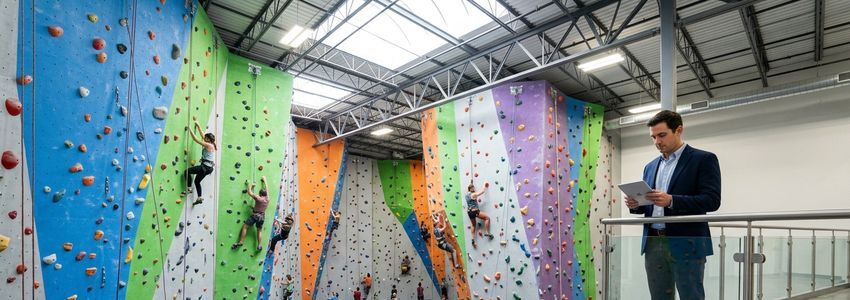
Climbing gym equipment financing gives gym owners and operators a way to install, upgrade, or expand climbing walls, auto belays, flooring, and training systems without tying up cash reserves. Whether you are opening a new bouldering facility, converting unused warehouse space into a full-height lead climbing gym, or simply replacing worn flooring and aging auto belay units, equipment financing spreads the cost of expensive gear over manageable monthly payments instead of requiring a six or seven figure cash outlay up front.
The indoor climbing industry has grown steadily even as operating costs have risen, and gym owners who can move quickly on equipment upgrades tend to outperform competitors who delay. This guide walks through exactly how climbing gym equipment financing works, what it costs, which equipment qualifies, and how to decide if it is the right fit for your facility.
In This Article
What Is Climbing Gym Equipment Financing?
Climbing gym equipment financing is a type of commercial equipment loan or lease designed specifically to cover the hard costs of outfitting an indoor climbing facility. Instead of paying cash for climbing walls, auto belay devices, flooring systems, and support equipment, a gym owner borrows the funds and repays them over a fixed term, usually two to seven years depending on the equipment's useful life.
Lenders who specialize in equipment financing treat the equipment itself as collateral, which means approval is often easier to secure than an unsecured loan and rates tend to be more competitive. This structure makes financing particularly attractive for climbing gyms, where a single wall system, flooring package, or set of auto belays can represent tens or even hundreds of thousands of dollars in upfront cost.
Financing can be used for a brand-new gym build-out, an expansion of an existing facility, or a mid-life equipment refresh such as replacing aging bouldering pads or adding new auto belay stations to increase member capacity.
Key Benefits
Gym owners who finance their equipment instead of paying cash generally see several advantages:
- Preserve working capital. Keep cash on hand for payroll, marketing, lease deposits, and the unexpected costs that come with running a physical facility.
- Faster time to open or expand. Financing lets you install walls, auto belays, and flooring now rather than waiting months to save enough cash.
- Predictable monthly payments. Fixed-rate financing makes budgeting straightforward, which matters in a business with seasonal membership swings.
- Potential tax advantages. Many gyms structure financing so that equipment depreciation and interest can be handled favorably; a tax professional can advise on specifics for your situation.
- Upgrade without disruption. Financing lets you phase in new equipment, such as adding auto belays to an existing bouldering area, without halting operations to save up cash first.
- Build business credit. On-time payments on equipment financing can help establish a stronger credit profile for your gym, making future financing easier to secure.
Ready to Equip Your Climbing Gym?
Get fast, flexible equipment financing from the #1 business lender in the U.S. No obligation, apply in minutes.
Apply Now →How Climbing Gym Equipment Financing Works
The process is similar to other commercial equipment financing, but a few details are specific to the climbing industry. Here is what to expect:
- Get a quote from your equipment vendor. Most lenders want an invoice or quote from the wall builder, auto belay manufacturer, or flooring installer showing the exact equipment and total cost.
- Submit a simple application. Lenders typically ask for basic business information, time in business, revenue, and in some cases recent bank statements. Many approvals for equipment under a certain threshold require no financial statements at all.
- Underwriting and approval. Because the equipment itself secures the loan, underwriting tends to move faster than unsecured financing. Many gym owners receive a decision within 24 to 48 hours.
- Funds go to the vendor. Once approved, the lender typically pays the equipment vendor or installer directly, and the equipment is delivered and installed on your timeline.
- Fixed monthly payments begin. Payments start after installation (or on a schedule agreed at signing) and remain fixed for the term of the agreement, usually structured over 24 to 84 months depending on equipment type and amount financed.
Terms, rates, and documentation requirements vary by lender and by the credit profile of the business, so it pays to compare offers before signing.
Types of Equipment You Can Finance
Climbing gym equipment financing is not limited to the walls themselves. Most lenders will finance any equipment that supports your facility's operation, including:
- Climbing wall structures including bouldering walls, top-rope and lead climbing walls, and adjustable training boards
- Auto belay devices for self-belay bouldering-to-rope conversions and reducing staffing needs
- Flooring and crash pad systems for bouldering areas, including foam pit replacements and impact-rated commercial flooring
- Climbing holds, volumes, and routesetting equipment needed to keep routes fresh and members engaged
- Harnesses, ropes, belay devices, and rental gear inventory for day-use and new-climber rentals
- Fitness and training equipment such as campus boards, hangboards, and strength training areas that complement the climbing floor
- HVAC and ventilation systems sized for large open gym spaces with chalk dust and high occupancy
- Point-of-sale, access control, and gym management software and hardware for memberships, waivers, and day-pass check-in
- Retail fixtures and buildout for pro shops selling climbing shoes, chalk, and apparel
Because climbing gyms combine athletic facility equipment with retail and software needs, many owners finance multiple equipment categories in a single package rather than seeking separate financing for each vendor.
By the Numbers
Climbing Gym Equipment Financing — Key Statistics
695+
Commercial climbing gyms operating in the U.S.
$3.6B
Global climbing gym market size in 2025
$80K-$200K+
Typical cost of a full-height lead and top-rope wall system
24-48 Hrs
Typical time to financing decision for qualified applicants
Who This Financing Is Best For
Climbing gym equipment financing tends to make the most sense for a few specific situations:
- New gym owners who have secured a lease and need to fund the wall build-out, auto belays, and flooring without draining their entire startup budget on hard costs.
- Existing gym operators expanding capacity by adding a second bouldering area, converting unused square footage, or opening a second location.
- Owners replacing aging equipment such as flooring that no longer meets impact standards, or auto belays that are past their recommended service life.
- Gyms adding new revenue streams like youth team training areas, fitness and yoga rooms, or expanded pro shop retail space.
- Franchise and multi-location operators who need consistent, repeatable financing across several builds.
Key Stat: According to industry tracking from Climbing Business Journal, North America saw a net increase of climbing gym locations in 2025 even as operators reported tighter margins, underscoring how important smart capital planning has become for new and expanding facilities.
Comparing Your Financing Options
Equipment financing is not the only way to fund a climbing gym build-out, but it is often the most efficient option when the primary need is tangible equipment. Here is how it stacks up against other common funding sources:
| Financing Option | Best For | Typical Term | Speed |
|---|---|---|---|
| Equipment Financing | Walls, auto belays, flooring, fixtures | 24-84 months | 24-48 hours |
| SBA Loan | Full build-out including real estate and working capital | 10-25 years | Several weeks to months |
| Equipment Leasing | Gyms that prefer lower monthly payments and future upgrade flexibility | 24-60 months | 24-72 hours |
| Working Capital Loan | Day-to-day operating costs, payroll, marketing | 6-24 months | 1-3 business days |
Many gym owners combine options: equipment financing for the walls and auto belays, paired with a working capital loan to cover opening marketing costs and the first few months of payroll before membership revenue ramps up.
How Crestmont Capital Helps
Crestmont Capital works with climbing gym owners across the country to structure equipment financing that fits the realities of the fitness and recreation business. Because climbing gyms combine athletic equipment, retail fixtures, and technology needs, having a lender who understands the full picture matters.
Crestmont also offers equipment leasing for owners who prefer lower monthly payments or want the flexibility to upgrade equipment at the end of the term, along with dedicated gym equipment financing and leasing programs built around fitness facilities of every type. For gyms adding strength training, cardio, or recovery equipment alongside their climbing areas, exercise equipment financing can cover that gear under the same application process.
Owners who need financing for the full picture, not just equipment, including working capital, marketing, or a second location build-out, can also explore fitness company business loans designed specifically for gyms, studios, and recreational facilities. If you are weighing options against the walls and auto belay costs covered in our rock climbing gym business loans guide or our deeper look at indoor climbing gym business loans, equipment financing is often the piece that gets the walls installed fastest.
Build Out Your Climbing Gym Faster
From walls to auto belays to flooring, get the equipment financing you need to open on schedule.
Get Started →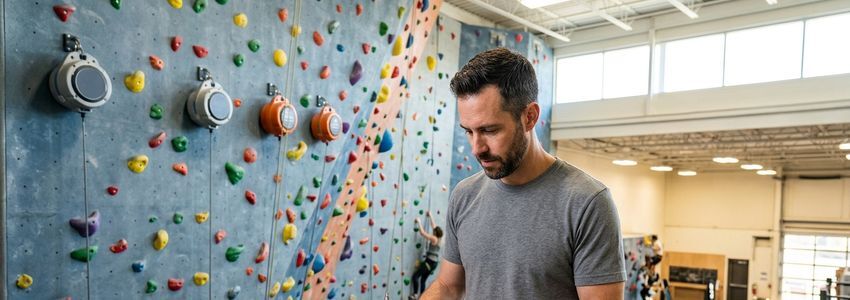
Real-World Scenarios
Seeing how equipment financing applies in practice can make the decision easier. Here are a few common situations climbing gym owners face:
Scenario 1: The new gym build-out. A first-time owner signs a lease on a 20,000 square foot warehouse and needs $350,000 for a combination of bouldering and top-rope walls, auto belays, and flooring. Rather than delay opening by a year to save cash, she finances the equipment directly through the wall builder's preferred lender, opening the facility within four months of signing the lease.
Scenario 2: Adding auto belays to an existing bouldering gym. A bouldering-only gym wants to add a top-rope and auto belay section to attract climbers who want rope climbing without needing a partner. The owner finances eight auto belay units and the associated wall extension, increasing member capacity without touching the gym's operating cash reserves.
Scenario 3: Replacing aging flooring. After eight years of heavy use, a gym's bouldering flooring no longer meets impact safety standards. Rather than close for weeks to fund the replacement out of pocket, the owner finances the new flooring system and schedules the installation over two slow weekdays.
Scenario 4: Second location expansion. A successful single-location gym decides to open a second facility across town. The owner uses equipment financing for the walls, auto belays, and flooring at the new site while using a separate working capital loan to cover staffing and marketing during the ramp-up period.
Pro Tip: Get your equipment vendor's quote itemized by category (walls, auto belays, flooring, fixtures) before applying. Lenders can often move faster when the breakdown is clear, and it helps you decide whether to finance everything together or in phases.
Frequently Asked Questions
Don't Let Equipment Costs Slow Your Gym Down
Talk to Crestmont Capital about financing walls, auto belays, flooring, and more. Fast decisions, flexible terms.
Apply Now →Next Steps
Collect pricing from your wall builder, auto belay supplier, and flooring installer.
Determine whether to finance walls, auto belays, flooring, and fixtures together or in phases.
Apply online with basic business details and your equipment quotes.
Once approved, funds go to your vendor and installation proceeds on your timeline.
Conclusion
Climbing gym equipment financing lets owners install, upgrade, and expand walls, auto belays, flooring, and support equipment without draining the cash needed to run day-to-day operations. With approval decisions often arriving within 24 to 48 hours and terms structured around the useful life of the equipment, financing has become a standard tool for both new gym build-outs and established facilities looking to grow. Whether you are opening your first location or adding capacity to an existing gym, working with a lender who understands the climbing and fitness industry can mean the difference between a build-out that takes months and one that takes years.
Disclaimer: The information provided in this article is for general educational purposes only and is not financial, legal, or tax advice. Funding terms, qualifications, and product availability may vary and are subject to change without notice. Crestmont Capital does not guarantee approval, rates, or specific outcomes. For personalized information about your business funding options, contact our team directly.