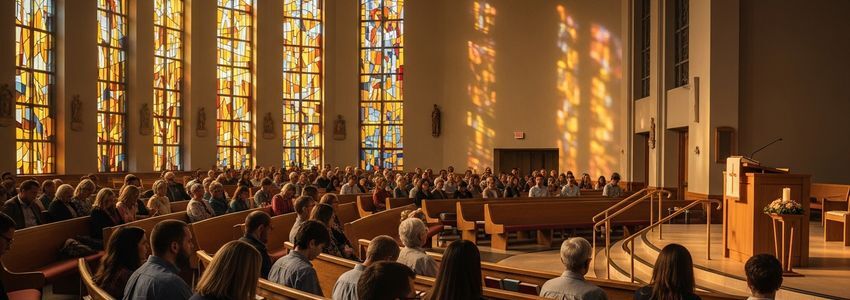
Churches and religious organizations are pillars of their communities - providing spiritual guidance, social services, food banks, counseling, and spaces for life's most important milestones. But running and growing a ministry requires capital, and that's where church loans come in. Whether you need to renovate aging facilities, purchase audio-visual equipment, expand seating capacity, or cover operating shortfalls, the right financing can make it possible without depleting your congregation's resources.
Church loans are commercial financing products designed to help religious organizations fund building projects, equipment purchases, facility expansions, and operational needs. Unlike standard business loans, church financing takes into account the nonprofit or religious nature of the borrower, the community it serves, and its unique revenue streams - primarily donations, tithes, and program income.
In This Article
What Are Church Loans?
Church loans are commercial financing products that help faith-based organizations - including churches, mosques, synagogues, temples, and other houses of worship - access capital for a wide range of purposes. These loans acknowledge that religious institutions operate differently from traditional for-profit businesses, yet still have legitimate financing needs that require reliable funding solutions.
Unlike personal loans or standard small business loans, church loans are structured around the organization's congregational revenue, property assets, and long-term mission. Lenders evaluate the church's financial health based on consistent giving trends, membership levels, existing debt obligations, and the quality of its financial management. A growing, well-managed congregation with stable donation income and clean financials can qualify for significant financing even without conventional business revenue.
Church financing can take many forms - from mortgage-style loans for real estate acquisitions to short-term working capital loans for seasonal budget gaps. Understanding which type fits your needs is the first step toward accessing the capital your ministry needs to thrive.
Quick Stat: According to the National Council of Nonprofits, there are approximately 380,000 religious congregations in the United States - and many are investing in capital improvements to better serve growing communities.
Types of Church Financing Available
Religious organizations can access several distinct categories of financing, each suited to different goals and timeframes. Choosing the right type depends on what you need the funds for, how quickly you need them, and your organization's financial profile.
Church Mortgage Loans
Church mortgage loans are long-term secured loans used to purchase, build, or refinance church properties. These are the most common type of church financing and typically feature loan amounts from $200,000 to $10 million or more, terms from 15 to 30 years, and competitive fixed or variable interest rates. The property itself serves as collateral. These are ideal for acquiring a new building, purchasing land for future development, or refinancing an existing mortgage at a better rate.
Church Construction Loans
When a church needs to build a new facility or make major structural improvements, construction loans provide funds in draws as construction progresses. These are typically short-term loans (12 to 36 months) that convert to permanent financing once construction is complete. They require detailed project plans, contractor agreements, and construction timelines. Churches using construction loans often transition them into permanent mortgage financing upon project completion.
Church Equipment Financing
Equipment financing helps churches acquire audio-visual systems, sound equipment, chairs and seating, commercial kitchen equipment, HVAC systems, lighting rigs, security systems, and musical instruments. These loans are typically secured by the equipment itself and offer terms of 3 to 7 years. Equipment financing is one of the most accessible forms of church lending, with lower qualification thresholds than real estate loans.
Church Working Capital Loans
Working capital loans help churches manage day-to-day operational needs - including payroll for pastoral and administrative staff, utilities, insurance, program expenses, and seasonal budget gaps. Most churches experience fluctuating donation income month-to-month, and working capital loans provide a bridge during slower periods. These are typically shorter-term loans (6 to 24 months) with faster approval timelines.
Church Lines of Credit
A business line of credit gives a church access to revolving credit up to a set limit, which can be drawn on as needed and repaid over time. This is ideal for ongoing operational flexibility - covering payroll during a low-donation month, funding a short-term project, or managing unexpected expenses. Interest is only charged on the amount drawn, making it a cost-efficient option for organizations with variable financial needs. Learn more about how a business line of credit works.
SBA Loans for Churches
While the SBA does not directly target churches, certain for-profit religious entities or faith-based organizations operating as small businesses may qualify for SBA loan programs. However, strictly nonprofit religious organizations typically do not qualify for standard SBA programs. Churches should consult with an experienced lender to determine eligibility. For comparison, see how SBA loans compare to alternative church financing options.
By the Numbers
Church Financing - Key Statistics
380K+
Religious congregations in the U.S.
$128B
Annual U.S. charitable giving to religion
60%
Of congregations that own their property
3-7 Yrs
Typical equipment loan term for churches
How Church Loans Work
Church loans follow a process similar to commercial lending, but lenders experienced with religious organizations understand how to evaluate faith-based finances. Here's how the process typically works from application to funding:
1. Assess Your Needs and Loan Type
Before applying, clearly define what you need. Are you purchasing a building, upgrading equipment, managing cash flow gaps, or funding a renovation project? The answer determines which loan type is most appropriate. Real estate needs call for mortgage-style financing; equipment needs call for equipment loans; operational gaps call for working capital loans or lines of credit.
2. Gather Financial Documentation
Lenders will evaluate your church's financial health through documents like audited financial statements, donation income history, a current budget and financial projections, a list of existing debts and obligations, organizational documents (articles of incorporation, 501(c)(3) determination letter if applicable), and governing body authorization for the loan. The more organized and transparent your financials, the stronger your application.
3. Submit Your Application
Once you've selected a lender experienced with church financing, submit your application along with supporting documentation. Online lenders and alternative finance companies like Crestmont Capital can often process applications much faster than traditional banks - sometimes delivering initial decisions within 24 to 48 hours.
4. Underwriting and Approval
During underwriting, the lender reviews your financial statements, verifies income, assesses the collateral (if applicable), and determines loan terms. For larger loans, an appraisal or environmental assessment of the property may be required. Lenders evaluate the church's debt service coverage ratio - essentially whether donation income is sufficient to cover loan payments.
5. Closing and Funding
Once approved, you'll review and sign loan documents, and funds will be disbursed to your organization. Equipment loans and working capital loans are typically funded within days. Real estate and construction loans involve a formal closing process that may take several weeks.
Ready to Explore Church Financing?
Get flexible funding options designed for religious organizations. Fast decisions, no obligation to apply.
Apply Now →
Key Benefits of Church Financing
Access to financing opens doors for religious organizations that can meaningfully expand their impact. Here are the most important advantages of church loans:
- Preserve Savings for Mission-Critical Work: Rather than depleting reserves to fund a capital project, a loan allows the church to keep its cash for ministry programs, staff, and emergency needs.
- Move at the Speed of Opportunity: The right building comes available. A key piece of equipment breaks down. A loan lets you act decisively instead of waiting for donations to accumulate.
- Spread Costs Over Time: A $500,000 renovation financed over 15 years translates to manageable monthly payments rather than a lump-sum burden on the congregation.
- Grow Congregation Capacity: Expanding seating, adding parking, upgrading audio-visual systems - these improvements attract new members and deepen the experience for existing ones.
- Stabilize Operations: Working capital loans smooth out seasonal fluctuations in giving, ensuring staff are paid and programs continue uninterrupted throughout the year.
- Leverage Existing Property: Churches that own their buildings can use that equity to secure lower-cost loans, much like a home equity line of credit.
Key Insight: According to Forbes, faith-based organizations collectively employ millions of Americans and contribute hundreds of billions in economic value annually. Financing helps these institutions maintain facilities and services that communities depend on.
Who Qualifies for Church Loans?
Qualification criteria vary significantly by lender and loan type. Here's a general framework for what most church lenders evaluate:
Organization Type
Churches, mosques, synagogues, temples, and other religious institutions are generally eligible. Some lenders also extend financing to parachurch organizations, faith-based nonprofits, schools operated by religious organizations, and community centers affiliated with congregations. Lenders typically require the organization to have been legally established - usually a nonprofit religious corporation under IRS 501(c)(3) status, though requirements vary.
Financial Stability
Lenders look for demonstrated, consistent income - typically two to three years of audited or reviewed financial statements showing stable or growing donation revenue. The debt service coverage ratio (DSCR) is crucial: most lenders want to see that total income exceeds total debt payments by at least 1.2x. A congregation collecting $500,000 annually, for instance, may comfortably support $150,000 to $200,000 in annual loan payments. Learn more about how DSCR affects your loan eligibility.
Congregation Size and Stability
Membership trends matter. A growing congregation signals financial health. Lenders may ask about average weekly attendance, tithing rates, and membership demographics. A church with a stable core of committed givers is viewed more favorably than one dependent on a few major donors.
Property and Collateral
For real estate loans, the property appraisal and loan-to-value ratio are critical. Most lenders will lend up to 70-80% of appraised value. For equipment loans, the equipment itself serves as collateral. For unsecured working capital loans, the emphasis shifts entirely to cash flow and income stability.
Organizational Governance
Lenders want to see a functional governance structure - a board of directors or deacon board with oversight of finances, clear procedures for authorizing major financial commitments, and documented internal controls. Organized governance signals that the church is professionally managed and that borrowed funds will be used responsibly.
How Churches Use Financing
The applications for church loans are broad. Here are the most common ways religious organizations put financing to work:
Building Acquisition
Perhaps the most significant milestone for a growing congregation is acquiring a permanent home. Church mortgage loans make it possible to purchase an existing building or vacant land for new construction, spreading the cost over decades and allowing the church to build equity over time.
Facility Renovations and Expansions
Many established churches face aging infrastructure - leaking roofs, outdated HVAC systems, inadequate restrooms, inaccessible facilities for persons with disabilities. Renovation loans fund these essential improvements without requiring the congregation to wait years while saving funds.
Audio-Visual and Technology Upgrades
Modern worship experiences increasingly rely on high-quality sound systems, projection systems, streaming equipment, and lighting. These investments significantly enhance the worship experience and extend the church's reach through live streaming and digital ministries. Equipment financing offers a practical path to upgrading systems without depleting reserves.
Parking and Accessibility Improvements
Adequate parking and ADA-compliant facilities are critical for churches trying to grow. Financing can cover the cost of expanding parking lots, installing elevators, adding accessible restrooms, and upgrading entrances to welcome all members of the community.
School or Childcare Facility Expansion
Many churches operate preschools, elementary schools, or after-school programs. Expanding these programs often requires adding classrooms, upgrading kitchen facilities, or acquiring additional buildings. Church loans can fund these educational ministries effectively.
Community Outreach Programs
Some churches use working capital financing to fund food pantry operations, homeless outreach, community health programs, and social services. While these programs generate little direct revenue, they are often fundable through bridge loans while the church pursues grants or major donor campaigns.
Serving Your Community Starts with the Right Funding
Crestmont Capital helps faith-based organizations access flexible capital quickly. Explore your options today.
Get Funded →How Crestmont Capital Helps Churches
Crestmont Capital is a nationally recognized business lender rated #1 in the U.S. for small business financing. While we work across all industries, we understand the unique financial needs of mission-driven organizations - including churches and religious institutions. Here's how we help:
Fast Access to Capital
Traditional banks often take weeks or months to approve church loans - during which time construction costs may increase, opportunities may close, or operational needs go unmet. Crestmont Capital can deliver funding decisions much faster, often within 24 to 48 hours, so your ministry can move forward without unnecessary delays.
Flexible Loan Structures
We offer a range of small business financing products that can be adapted to religious organizations, including term loans, equipment financing, working capital loans, and lines of credit. We work with you to find the right structure for your specific needs and budget.
Equipment Financing
If your church needs audio-visual systems, seating, commercial kitchen equipment, or other capital assets, our equipment financing solutions offer straightforward terms with the equipment serving as collateral. This means lower rates and easier qualification compared to unsecured options.
Working Capital Solutions
Managing seasonal giving fluctuations is one of the greatest financial challenges for churches. Our working capital loans provide the bridge your organization needs to pay staff, cover utilities, and maintain programs during slower months - without touching reserves set aside for ministry.
Experienced, Transparent Guidance
Our team of financing specialists takes the time to understand your organization's mission and financial situation. We provide clear explanations of terms, rates, and repayment obligations - with no hidden fees and no pressure to accept terms that don't work for your budget.
Related Reading: Learn more about microloans for small organizations and nonprofit business loans as additional options for faith-based organizations.
Real-World Scenarios: Churches Using Financing
Understanding how other churches have successfully used financing can help clarify whether it's the right path for your organization.
Scenario 1: The Growing Community Church
A nondenominational church in suburban Atlanta had outgrown its 400-seat sanctuary. With a membership of over 800 active families and strong, consistent tithing income of $2.3 million annually, the church qualified for a $1.8 million construction loan to build a new 1,200-seat worship center. The project was completed on schedule, and the congregation's growth more than offset the monthly loan payment. The church retained its reserve fund for mission work.
Scenario 2: The Equipment Upgrade
A Baptist church in Ohio wanted to upgrade its 20-year-old sound system and add streaming capability to reach homebound members and a growing online audience. The total cost of a new audio-visual system was $85,000 - too large for the budget but too important to delay. Equipment financing at 5.5% over 5 years provided monthly payments under $1,700, manageable within the church's $450,000 annual budget. Within six months of launching live streaming, online giving from remote members added $3,200 per month in new revenue.
Scenario 3: The Seasonal Cash Flow Solution
A Catholic parish in New England consistently saw donation income drop 30-40% in summer months as families traveled and attendance dipped. Staff payroll and utilities continued regardless. A $75,000 working capital line of credit allowed the parish to draw funds in July and August, keeping operations fully staffed, and repay the balance in full by December when year-end giving surged. The total interest cost was under $3,000 for the year - a small price for operational continuity.
Scenario 4: Property Acquisition for Mission Expansion
A multicultural church in Houston identified an adjacent commercial property perfect for a community center, food pantry, and classrooms. The asking price was $1.2 million. The church had $200,000 in reserves and needed $1 million in financing. With three years of audited financials showing $1.6 million in annual giving, the church qualified for a 20-year mortgage at a competitive rate. The community center now serves over 500 families weekly.
Scenario 5: Accessibility Renovation
A historic Methodist church in Pennsylvania built in the 1940s had no elevator and limited accessible restrooms - a barrier for elderly and disabled members. An ADA compliance loan of $180,000 funded the addition of a chairlift, two accessible restrooms, and automatic door openers throughout the facility. The project was funded through a combination of equipment financing and a small term loan, keeping monthly payments within the church's operating budget.
Scenario 6: School Expansion
A church-operated private school wanted to add a STEM lab and expand its 5th through 8th grade program. Equipment financing covered $120,000 in computers, science lab equipment, and educational technology. The school's tuition revenue - separate from congregational giving - provided a strong secondary income stream that made qualification straightforward.
Frequently Asked Questions
Can a church get a business loan?
Yes. Churches and religious organizations can access a range of commercial financing products, including equipment loans, working capital loans, lines of credit, and mortgage financing. While not all traditional banks specialize in church lending, alternative lenders and commercial finance companies offer flexible solutions designed for faith-based organizations.
Do churches qualify for SBA loans?
Most strictly nonprofit religious organizations do not qualify for standard SBA loan programs, which are designed for for-profit small businesses. However, faith-based entities that operate certain for-profit programs or businesses may have some eligibility. Consult with an experienced lender to explore SBA eligibility for your specific situation.
What collateral is required for church loans?
Collateral requirements depend on the loan type. Real estate loans are secured by the property itself. Equipment loans use the financed equipment as collateral. Working capital loans and lines of credit may be unsecured if the organization demonstrates strong cash flow and financial stability. Larger loans often require a pledge of the church's property or a personal guarantee from church leadership.
How much can a church borrow?
Loan amounts vary widely based on the type of loan, the church's income, and available collateral. Equipment loans typically range from $10,000 to $500,000. Working capital loans from $25,000 to $500,000. Church mortgage loans can range from $200,000 to $10 million or more for larger congregations with strong income. The primary factor is whether the organization's income can support the debt service.
What documents does a church need to apply for a loan?
Common documents include 2-3 years of financial statements (audited or reviewed), a current operating budget, bank statements, organizational documents (articles of incorporation, 501(c)(3) letter), board or deacon board resolution authorizing the loan, a description of the loan purpose, and information on existing debts. Equipment loans typically require fewer documents than real estate loans.
What interest rates do church loans carry?
Interest rates vary based on loan type, amount, term, and the organization's financial strength. Equipment loans typically range from 5% to 12% APR. Working capital loans may range from 8% to 24% depending on the lender and term length. Church mortgage loans often reflect commercial real estate rates, currently in the 6% to 9% range. The better your financials, the more competitive your rate.
How long does it take to get a church loan?
Approval timelines vary widely. Equipment loans and working capital loans through alternative lenders can be approved and funded in as little as 24 to 72 hours. Traditional bank financing for larger church loans may take 30 to 90 days. Church mortgage loans with appraisals and title work typically take 45 to 90 days. Crestmont Capital offers faster processing than most traditional options.
Can a small church qualify for financing?
Yes. Smaller congregations with modest but consistent giving income can qualify for smaller loans - particularly equipment financing and working capital loans. Annual income as low as $150,000 to $200,000 may support loans in the $25,000 to $100,000 range. The key is demonstrating stable, consistent income and responsible financial management.
Is a personal guarantee required for church loans?
Requirements vary by lender and loan type. Some lenders require personal guarantees from church leadership (pastor, board chair, or treasurer) for unsecured loans. Real estate loans are generally not guaranteed personally if the property provides sufficient collateral. Discussing personal guarantee requirements with your lender upfront ensures you understand the full scope of your obligation.
What is the debt service coverage ratio for church loans?
The debt service coverage ratio (DSCR) measures the organization's ability to cover loan payments from operating income. For church loans, lenders typically require a DSCR of at least 1.20 - meaning total annual income must be at least 20% greater than total annual debt obligations. A church with $600,000 in income and $200,000 in existing debt service would have a DSCR of 3.0, which is excellent.
Can churches get financing to buy or build a school?
Yes. Church-operated schools are common, and lenders can factor in both congregational income and tuition revenue when evaluating loan applications for school expansions or constructions. Equipment financing can also cover educational technology, classroom furniture, and lab equipment for church schools. A combined income picture often strengthens the application significantly.
What's the difference between a church loan and a church mortgage?
A church mortgage is specifically a real estate loan secured by the church's property - typically used to purchase or build a building. A church loan is a broader category that includes mortgages as well as equipment loans, working capital loans, lines of credit, and construction loans. Mortgages are longer-term (15-30 years), while other church loans may be much shorter (1-7 years).
Can mosques, synagogues, and temples get church loans?
Yes. Despite the common term "church loans," these financing products are available to all religious organizations regardless of faith tradition - including mosques, synagogues, temples, gurudwaras, and other houses of worship. The term "church loan" is commonly used in the lending industry to refer to loans for any religious organization. Lenders evaluate financial strength regardless of denomination.
How can a church improve its chances of getting approved?
Key steps to strengthen a church loan application include: maintaining audited financial statements, demonstrating 2+ years of consistent giving income, keeping existing debt levels manageable, establishing a formal governance structure with clear financial oversight, maintaining a dedicated operating reserve (3-6 months of expenses), and presenting a clear, detailed loan purpose with a repayment plan tied to projected income.
Are there grants available for churches instead of loans?
Grants do exist for religious organizations, particularly through private foundations, denominational bodies, historic preservation programs, and community development grants. However, grants are highly competitive, often restricted in purpose, and may take years to secure. For organizations that need capital now, a loan provides certainty and speed. Many churches pursue both strategies - using loans for immediate needs while applying for grants that could pay down the debt over time.
How to Get Started with Church Financing
Clarify the purpose of the loan, the amount needed, and your preferred repayment timeline. Is it equipment, working capital, or real estate? Knowing this upfront speeds the process considerably.
Gather 2-3 years of financial statements, current bank statements, your operating budget, and any existing debt schedules. Clean, organized financials signal a well-managed organization and improve approval odds.
Submit your application at offers.crestmontcapital.com/apply-now — the process takes just a few minutes and a Crestmont Capital advisor will follow up quickly to discuss your options.
Once approved, review the loan terms with your finance committee or board, sign the agreement, and receive your funds - often within days for equipment and working capital loans.
Conclusion
Church loans are a powerful tool for faith-based organizations that need capital to grow their facilities, upgrade their equipment, stabilize their operations, or expand their ministry. With the right financing partner, your congregation can move forward on its mission without waiting years to accumulate the funds needed for major investments. From equipment financing to working capital loans to commercial real estate, the options available to religious organizations today are broader and more accessible than ever.
Crestmont Capital is committed to helping mission-driven organizations find the funding they need quickly and transparently. Whether your church needs $25,000 for new seating or $2 million for a facility expansion, our team is ready to help you explore your options and find the right solution. Contact us today or start your application online - your ministry deserves a financing partner that understands your unique needs.
Disclaimer: The information provided in this article is for general educational purposes only and is not financial, legal, or tax advice. Funding terms, qualifications, and product availability may vary and are subject to change without notice. Crestmont Capital does not guarantee approval, rates, or specific outcomes. For personalized information about your business funding options, contact our team directly.