
The childcare industry represents a cornerstone of the American economy, providing essential services that empower working families. For entrepreneurs, a childcare franchise offers a proven business model in a high-demand sector, but launching one requires significant capital. Understanding the landscape of childcare franchise business loans is the critical first step toward turning your entrepreneurial vision into a thriving community asset. These specialized financing solutions are designed to cover the unique costs associated with opening a childcare center, from franchise fees and real estate to licensing and equipment.
In This Article
What Are Childcare Franchise Business Loans?
Childcare franchise business loans are a category of commercial financing specifically structured to meet the capital requirements of opening or expanding a franchised daycare or early education center. Unlike a generic business loan, these financial products are tailored to the predictable costs and operational model of a franchise system. Lenders who specialize in this area understand the components of a Franchise Disclosure Document (FDD) and can effectively evaluate the risks and potential returns associated with established brands like The Goddard School, Primrose Schools, or Kiddie Academy.
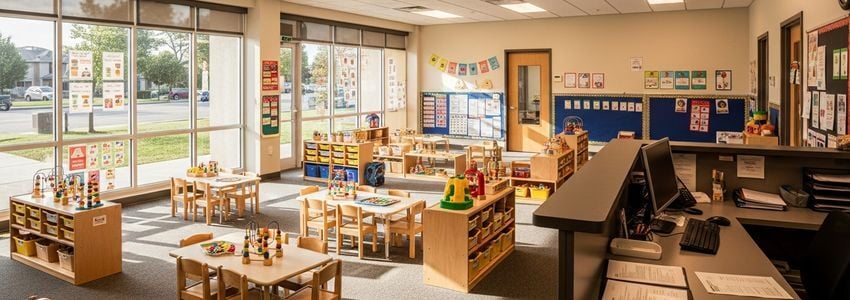
The funding from these loans can be used for a wide range of expenses that are essential to getting a childcare center off the ground. These costs often include the initial franchise fee, which grants you the right to use the brand's name and systems. It also covers real estate expenses, whether that involves purchasing a property, leasing a commercial space, or funding a complete ground-up construction project. Furthermore, the loan can finance the complete outfitting of the facility, including age-appropriate furniture, educational materials, playground equipment, kitchen appliances, and sophisticated security systems.
Securing a childcare franchise loan provides the necessary capital to not only open your doors but also to operate smoothly during the crucial initial months. This includes funding for staff recruitment and training, marketing and advertising to attract families, and maintaining sufficient working capital to cover payroll and other operating expenses before the business becomes profitable. In essence, it is a comprehensive financial tool that bridges the gap between your entrepreneurial ambition and the reality of launching a successful, fully compliant, and high-quality childcare facility.
Ready to Open or Expand Your Childcare Franchise?
Get fast, flexible financing from the #1 business lender in the U.S. No obligation - apply in minutes.
Apply NowKey Benefits of Childcare Franchise Financing
Opting for a dedicated franchise loan instead of more generic funding sources offers several distinct advantages for aspiring childcare center owners. These benefits stem from the lender's familiarity with the franchise model, which often translates into a smoother process and more favorable terms.
- Higher Approval Rates: Lenders view established franchises as lower-risk investments compared to independent startups. The franchisor provides a proven business plan, brand recognition, and ongoing support, which gives lenders greater confidence in the venture's potential for success. This risk mitigation often leads to higher approval rates for franchisees.
- Streamlined Application Process: Experienced franchise lenders are already familiar with the financials and operating procedures of major childcare brands. They understand the FDD and know what documents are required, which can significantly speed up the application and underwriting process. This efficiency is invaluable when you are working against a timeline to secure a location and begin construction.
- Access to More Capital: The total investment for a childcare franchise can be substantial, often exceeding several hundred thousand dollars. Specialized franchise loans are designed to cover this entire spectrum of costs, from the initial fee to working capital, ensuring you are not undercapitalized from the start.
- Favorable Terms and Rates: Because the risk is perceived as lower, lenders are often willing to offer more competitive interest rates and longer repayment terms on franchise loans. This results in lower monthly payments, which improves your cash flow during the critical first few years of operation.
- Preservation of Personal Capital: Financing your franchise allows you to keep your personal savings liquid for unexpected expenses or future investment opportunities. Instead of depleting your own funds, you leverage the lender's capital to build your business asset, using the business's future revenue to repay the debt.
- Builds Business Credit: Successfully managing and repaying a business loan establishes a strong credit history for your company. This is crucial for future financing needs, such as securing a line of credit for expansion or upgrading equipment down the road.
How Childcare Franchise Loans Work
Navigating the financing process for a childcare franchise is a structured journey. While specifics can vary by lender and loan type, the general path involves several key stages, each building upon the last. Understanding this process helps you prepare effectively and move from applicant to owner with confidence.
Step 1: Pre-Approval and Franchise Selection
Before you even formally apply for a loan, the journey begins with self-assessment and research. You need to review your personal financial health, including your credit score, assets, and liabilities. This is also the time to thoroughly vet different childcare franchises. Once you select a brand, you will go through their approval process. Upon approval, the franchisor will provide you with the Franchise Disclosure Document (FDD). This crucial document contains detailed information about the franchise system, including estimated initial investment costs (Item 7), which will form the basis of your loan request.
Step 2: Business Plan and Document Preparation
With the FDD in hand, you can create a comprehensive business plan. While the franchisor provides the model, your plan should be tailored to your specific location, including local market analysis, enrollment projections, and financial forecasts. Alongside the business plan, you will gather a standard set of documents required by lenders. This package typically includes personal and business tax returns for the last three years, personal financial statements, bank statements, and a detailed breakdown of how the loan funds will be used.
Industry Insight
According to the U.S. Census Bureau, families with children under 18 where both parents work full-time represent a massive and consistent demand for childcare services, making the industry highly resilient to economic fluctuations.
Step 3: Loan Application and Underwriting
This is the formal stage where you submit your complete application package to a lender like Crestmont Capital. The lender's underwriting team will then conduct a thorough review. They will analyze your creditworthiness, the financial strength of the chosen franchise brand, the viability of your business plan, and the value of any collateral being offered. For SBA-backed loans, this process may involve additional paperwork and scrutiny to meet government requirements. The underwriter's goal is to assess the overall risk and determine your ability to repay the loan.
Step 4: Approval, Closing, and Funding
If the underwriting team approves your application, you will receive a commitment letter outlining the terms of the loan, including the amount, interest rate, repayment schedule, and any covenants or conditions. You will carefully review and sign these documents at a formal closing. Once the closing is complete, the funds are disbursed according to the agreed-upon schedule. Funds may be paid directly to the franchisor for the franchise fee, to a contractor for the build-out, or into your business bank account for working capital.
Types of Financing for Childcare Franchise Owners
There is no one-size-fits-all loan for a childcare franchise. The best financing solution depends on your specific needs, financial profile, and the stage of your business. Most franchisees utilize a combination of funding types to cover all their bases. Here are the most common options available.
SBA Loans
Loans backed by the U.S. Small Business Administration (SBA) are often considered the gold standard for franchise financing. The SBA doesn't lend money directly; instead, it provides a guarantee to partner lenders, reducing their risk and encouraging them to offer favorable terms. The two most popular SBA programs for childcare franchises are:
- SBA 7(a) Loan: This is the most versatile SBA loan. It can be used for nearly any business purpose, including paying the franchise fee, purchasing real estate, financing construction, buying equipment, and securing working capital. They offer long repayment terms (up to 25 years for real estate) and competitive interest rates.
- SBA 504 Loan: This loan is specifically designed for purchasing major fixed assets, such as commercial real estate or long-term equipment. It involves two lenders: a traditional bank finances 50% of the project cost, a Certified Development Company (CDC) finances 40%, and you, the borrower, contribute a 10% down payment.
The SBA maintains a Franchise Directory, which lists brands whose agreements have been pre-vetted, potentially speeding up the SBA loan process.
Conventional Term Loans
A conventional term loan is a lump sum of capital provided by a bank or an alternative lender that you repay over a fixed period with regular, predictable payments. These loans are excellent for large, one-time investments like acquiring an existing childcare center or financing a major renovation. While they often require a strong credit history and a solid financial track record, they can offer competitive rates and a straightforward process for well-qualified applicants.
Equipment Financing
A childcare center is filled with specialized equipment: cribs, changing tables, playground structures, security cameras, kitchen appliances, and educational technology. Equipment financing is a loan or lease specifically for purchasing these items. The equipment itself serves as collateral for the loan, which can make this type of financing easier to obtain than other unsecured loans. It's an effective way to acquire necessary assets without tying up your working capital.
Business Line of Credit
Unlike a term loan that provides a one-time lump sum, a business line of credit gives you access to a revolving pool of funds up to a certain limit. You can draw from it as needed and only pay interest on the amount you use. This makes it an ideal tool for managing day-to-day cash flow, covering unexpected repairs, bridging payroll gaps during slow enrollment periods, or launching a new marketing campaign. It provides financial flexibility that is invaluable for any business owner.
Working Capital Loans
Working capital loans are short-term financing solutions designed to cover immediate operational expenses. While they typically come with higher interest rates and shorter repayment terms than SBA or term loans, they offer one key advantage: speed. These loans can often be funded in a matter of days, making them a useful option for seizing a time-sensitive opportunity or covering a critical, unforeseen expense to keep your operations running smoothly.
| Financing Type | Best For | Typical Term | Key Advantage |
|---|---|---|---|
| SBA 7(a) Loan | Overall startup costs, real estate, franchise fees, working capital | 10-25 years | Long terms, low rates, government-guaranteed |
| Conventional Term Loan | Large, one-time purchases like real estate or business acquisition | 5-10 years | Competitive rates for strong credit, straightforward process |
| Equipment Financing | Playground structures, kitchen appliances, furniture, security systems | 3-7 years | Easier to qualify for; the asset is the collateral |
| Business Line of Credit | Managing cash flow, payroll, supplies, unexpected expenses | Revolving | Flexible access to capital; only pay interest on what you use |
| Working Capital Loan | Short-term cash needs, bridging immediate financial gaps | 6-24 months | Very fast funding, often within a few business days |
By the Numbers
Childcare Franchise Industry - Key Statistics
$70B+
U.S. childcare industry annual market value
2.7M
Childcare workers employed in the U.S.
60%+
Of children under 5 in some form of childcare
$150K-$500K
Typical initial investment for childcare franchise
Who Qualifies for Childcare Franchise Loans
Lenders evaluate several key factors to determine an applicant's eligibility for a childcare franchise business loan. While requirements vary between loan products and institutions, a strong application generally demonstrates strength in three core areas: the borrower's financial history, the business's projected performance, and sufficient capital contribution. Understanding these criteria will help you position yourself as an ideal candidate for financing.
The most critical factor is your personal credit score. For prime financing options like SBA loans and conventional bank loans, lenders typically look for a FICO score of 680 or higher. A strong credit history demonstrates responsible debt management and reduces the lender's perceived risk. Additionally, lenders will require a cash injection or down payment, usually ranging from 10% to 30% of the total project cost. This shows you have a personal stake in the business's success. Your personal financial statement will be scrutinized to ensure you have adequate liquidity and a healthy debt-to-income ratio, even after making the down payment.
Beyond personal finances, lenders assess the business itself. Since you are buying into a franchise, the brand's reputation, financial stability, and track record of success are paramount. Lenders are more likely to fund a franchisee of a well-established, nationally recognized brand. Your business plan, complete with realistic financial projections, is also essential. While direct experience in childcare management is a significant plus, it is not always a mandatory requirement for a franchise, as the franchisor provides training and operational systems. However, any relevant management or business ownership experience will strengthen your application considerably.
Get Matched with the Right Childcare Franchise Financing
Our advisors specialize in franchise financing. Let us find the right product for your situation.
Apply NowHow Crestmont Capital Helps Childcare Franchise Owners
Navigating the world of commercial financing can be complex, but you do not have to do it alone. At Crestmont Capital, we specialize in helping entrepreneurs secure the funding they need to launch and grow their businesses. Our deep understanding of the franchise model, combined with our extensive network of lending partners, makes us an ideal partner for aspiring childcare franchise owners. We work closely with you to understand your unique situation and match you with the most suitable financial products, saving you time and improving your chances of approval.
We offer a comprehensive suite of small business loans tailored to the needs of franchisees. Our team has significant expertise in government-backed programs, and we can guide you through every step of the application for SBA loans, ensuring your package is complete and compelling. If you need to purchase specific assets, our equipment financing solutions can help you acquire everything from playground sets to security systems with favorable terms. For ongoing operational needs, a flexible business line of credit can provide the financial cushion necessary to manage cash flow effectively.
Our expertise is not limited to a single industry. We have helped entrepreneurs across various franchise sectors, from fitness centers to early education. This broad experience, detailed in resources like our guide to fitness franchise loans, gives us a unique perspective on what makes a franchise application successful. We also have specific knowledge of the childcare sector, as shown in our comprehensive article on daycare business loans. By partnering with Crestmont Capital, you gain an advisor who understands your industry, speaks the language of lenders, and is committed to finding the right capital to help you succeed.
Important Consideration
Licensing and compliance are major operational costs in the childcare industry. Ensure your business plan and loan request account for state and local licensing fees, background checks for staff, and any required facility modifications to meet safety regulations. Lenders will look for this level of detail.
Real-World Scenarios: Childcare Franchise Financing in Action
To better understand how these loans work in practice, let's explore three common scenarios faced by childcare franchise entrepreneurs.
Scenario 1: The First-Time Franchisee
The Entrepreneur: Sarah, a former elementary school principal with a passion for early childhood education, decides to open a Lightbridge Academy franchise. She has excellent credit and significant savings but not enough to cover the total project cost of $750,000.
The Challenge: Sarah needs to finance the $60,000 franchise fee, a $150,000 down payment on a suitable commercial property, $300,000 for construction and build-out, $150,000 for equipment and supplies, and an additional $90,000 for working capital.
The Solution: Sarah works with a financing advisor to secure an SBA 7(a) loan. The loan's versatility allows her to bundle most of the costs into a single financing package. With a 25-year term for the real estate portion and a 10-year term for the business portion, her monthly payments are manageable. The SBA guarantee makes the lender comfortable extending this level of capital to a first-time business owner. Sarah uses her savings for the required 15% down payment and launches her center fully funded.
Scenario 2: The Multi-Unit Operator
The Entrepreneur: Mark already owns two successful Primrose Schools. He identifies an opportunity to build a third location in a rapidly growing suburban area. He has a proven track record of profitability and a strong existing relationship with his bank.
The Challenge: Mark needs $1.2 million for the ground-up construction of the new school. He has the franchise fee and initial operating capital covered but needs financing for the building itself.
The Solution: Given his strong financial history and the specific need for real estate financing, Mark opts for a conventional commercial real estate loan from his bank. Because he is a known and trusted client, he secures a competitive fixed interest rate over a 15-year term. He also opens a separate business line of credit to manage pre-opening marketing expenses and initial payroll, giving him maximum flexibility as he expands his portfolio.
Scenario 3: The Acquisition Buyer
The Entrepreneur: Maria, a corporate manager looking for a career change, wants to buy an existing Kiddie Academy from a retiring owner. The business is profitable with stable enrollment and a well-trained staff. The purchase price is $900,000.
The Challenge: Maria needs to finance the acquisition of an existing business, which can sometimes be more complex than a startup loan.
The Solution: An SBA 7(a) loan is again the perfect tool, as it is commonly used for business acquisitions. The lender evaluates the historical cash flow of the existing center, which is strong and easily covers the projected loan payments. Maria is required to make a 10% down payment ($90,000). The loan is approved based on her good credit and the proven profitability of the target business. She takes over a turnkey operation with immediate revenue, making the loan repayment straightforward from day one.
Childcare Franchise Loans vs. Other Funding Options
While specialized business loans are the most common path, entrepreneurs have other options for funding their childcare franchise. It is important to understand the pros and cons of each.
Personal Savings or Home Equity
Description: Using your own cash, liquidating investments, or taking out a home equity line of credit (HELOC) to fund the business.
Pros: You retain full ownership and control of the business with no debt or monthly payments. The process is fast, with no applications or underwriting.
Cons: This is the riskiest option. It ties up all your personal capital in a single, illiquid asset. If the business fails, you could lose your life savings or even your home. It can also leave you with no financial cushion for personal emergencies.
Rollover for Business Startups (ROBS)
Description: A ROBS plan allows you to use funds from an eligible retirement account (like a 401(k) or traditional IRA) to invest in your business without paying early withdrawal penalties or taxes.
Pros: Provides debt-free capital for your business. Allows you to invest in yourself using your own pre-existing funds.
Cons: The process is complex and requires specialized administration to remain compliant with IRS and Department of Labor regulations. Similar to using personal savings, you are putting your retirement funds at risk. This strategy is best pursued with guidance from a qualified financial advisor.
Friends and Family Investors
Description: Raising capital from personal connections who believe in you and your business idea.
Pros: The terms may be more flexible and informal than a traditional loan. It can be a quick way to secure seed money.
Cons: This approach can strain personal relationships, especially if the business struggles. It is crucial to have a formal, written agreement that clearly outlines the terms of the investment (is it a loan or an equity stake?), the repayment schedule, and expectations for both parties to avoid future conflicts.
Frequently Asked Questions
1. What is the total cost to open a childcare franchise?
2. How much of a down payment do I need for a childcare franchise loan?
3. Can I get a childcare franchise loan with bad credit?
4. How long does the loan application process take?
5. What collateral is required for these loans?
6. Do I need direct experience in childcare to get a loan?
7. What is a Franchise Disclosure Document (FDD)?
8. Are there special loans for women or minority franchise owners?
9. Can I use a loan to buy an existing childcare franchise?
10. What are the typical interest rates for childcare franchise business loans?
11. How do lenders view the stability of the childcare industry?
12. Can I finance the opening of multiple franchise locations at once?
13. What key documents do I need to apply for a loan?
14. What is the main difference between an SBA loan and a conventional loan?
15. How much working capital should I request in my loan?
How to Get Started
Taking the first step toward financing your childcare franchise is a significant milestone. Follow this structured approach to begin the process with clarity and purpose.
- Conduct a Financial Self-Assessment
Before approaching any lender, get a clear picture of your financial standing. Check your credit score, calculate your net worth, and determine how much capital you can contribute as a down payment. This will help you understand which loan options are realistically available to you.
- Finalize Your Franchise Choice
Complete your due diligence and get formally approved by your chosen childcare franchisor. Obtain and carefully review the Franchise Disclosure Document (FDD), paying close attention to the estimated startup costs outlined in Item 7. This document is essential for your loan application.
- Prepare Your Application Package
Begin gathering all the necessary documentation. Write your business plan, create financial projections, and collect your personal and business financial records. Having a complete and organized package will demonstrate your professionalism and expedite the underwriting process.
- Speak with a Financing Expert
Connect with a financing advisor at Crestmont Capital. Our team can review your situation, explain your options in detail, and help you identify the best loan product for your childcare franchise. Let us help you navigate the process and secure the capital you need to succeed.
Launching a childcare franchise is a rewarding venture that serves a vital community need. While the financial investment is significant, the right financing strategy makes it achievable. By understanding your options, preparing thoroughly, and partnering with an experienced lender, you can confidently secure the childcare franchise business loans needed to build a successful and impactful business.
Ready to Fund Your Childcare Franchise?
Connect with Crestmont Capital today and take the first step toward childcare franchise ownership.
Apply NowDisclaimer: The information provided in this article is for general educational purposes only and is not financial, legal, or tax advice. Funding terms, qualifications, and product availability may vary and are subject to change without notice. Crestmont Capital does not guarantee approval, rates, or specific outcomes. For personalized information about your business funding options, contact our team directly.