
 (800) 949-0401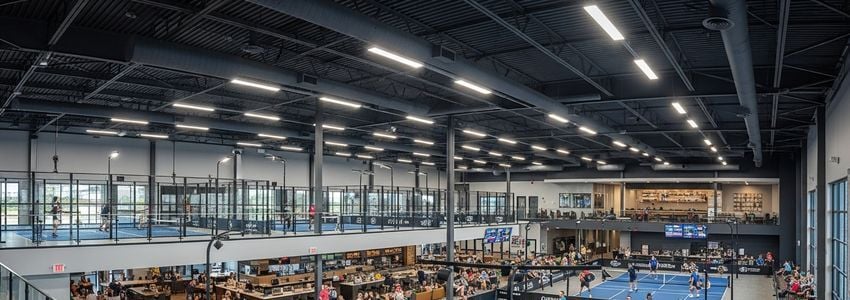
Chicken N Pickle Franchise Loan: The Complete Financing Guide for Chicken N Pickle Franchise Owners
The Chicken N Pickle franchise has carved out a distinctive niche in the competitive entertainment and dining industry. By combining chef-driven chicken dishes with pickleball courts, lawn games, and a lively bar atmosphere, Chicken N Pickle delivers an experience that draws families, corporate groups, and sports enthusiasts alike. For entrepreneurs seeking a franchise opportunity that goes beyond the traditional restaurant model, Chicken N Pickle presents a compelling proposition. But making the leap from interest to ownership requires one essential ingredient: capital.
Opening a Chicken N Pickle franchise is a significant financial undertaking. The all-in investment typically ranges from $4 million to $10 million or more, depending on location, land costs, and build-out requirements. Securing the right Chicken N Pickle franchise loan is not just a formality. It is the foundation upon which your entire ownership journey rests. This guide walks you through every aspect of franchise financing, from understanding total startup costs to navigating SBA loans, working with alternative lenders, and ultimately putting your business in a position to thrive from day one.
In This Article
- What Is Chicken N Pickle?
- Understanding Chicken N Pickle Franchise Costs
- Franchise Loan Types for Chicken N Pickle Owners
- SBA Loans for Chicken N Pickle Franchisees
- How the Franchise Loan Process Works
- Who Qualifies for a Chicken N Pickle Franchise Loan?
- How Crestmont Capital Helps Franchise Owners
- Real-World Financing Scenarios
- Frequently Asked Questions
- How to Get Started
What Is Chicken N Pickle?
Chicken N Pickle is an entertainment dining concept founded in 2016 in Kansas City, Missouri. The brand was built on a simple but powerful premise: combine high-quality food and beverages with active, social recreation in a single venue. At its core, each Chicken N Pickle location features indoor and outdoor pickleball courts, a scratch kitchen serving signature chicken dishes and seasonal menus, and a full bar program. Guests can move seamlessly between playing a match, enjoying a craft cocktail, and sharing a platter of Nashville hot chicken without leaving the property.
The franchise has expanded rapidly across the United States, with locations in major metropolitan markets from Texas and Kansas to Colorado, Indiana, and beyond. The brand appeals to a broad demographic, including young professionals, active retirees, and corporate event planners looking for team-building venues. This wide appeal helps insulate Chicken N Pickle from the volatility that affects single-concept restaurants.
The franchise model was formalized in 2021, allowing qualified investors to bring the Chicken N Pickle experience to their local communities. As a franchisee, you gain access to proven operating systems, brand recognition, vendor relationships, and ongoing corporate support. In exchange, you agree to build and operate a venue that meets the franchisor's specifications, which is precisely what drives the significant capital requirements associated with this brand.
Industry Insight: According to the International Franchise Association, the U.S. franchise industry supports over 8.7 million jobs and contributes more than $825 billion to the national economy annually. Entertainment-dining concepts represent one of the fastest-growing franchise segments heading into 2026.
Understanding Chicken N Pickle Franchise Costs
Before you can structure your financing, you need a clear picture of the total investment required to open a Chicken N Pickle franchise. Unlike quick-service restaurant franchises that might open for $300,000 to $500,000, Chicken N Pickle is a large-format venue with complex infrastructure needs. Prospective franchisees should budget for the following major cost categories.
The initial franchise fee is typically in the range of $75,000 to $100,000. This grants you the license to operate under the Chicken N Pickle brand and access the franchisor's proprietary systems. Beyond the franchise fee, the real financial weight comes from the venue build-out. A Chicken N Pickle location requires substantial square footage to accommodate multiple pickleball courts, a full kitchen, bar areas, and outdoor recreation spaces. Construction and tenant improvement costs can range from $2 million to $6 million depending on whether you are building from the ground up or converting an existing property.
Equipment is another significant line item. Commercial kitchen equipment, point-of-sale systems, audio-visual technology, court surfaces, and bar equipment represent an additional $500,000 to $1.5 million in investment. Working capital to cover pre-opening expenses, staff training, inventory purchases, and the first several months of operations typically adds another $300,000 to $700,000 to the total. When you combine all these elements, prospective franchisees should expect a total investment range of approximately $4 million to $10 million, with many locations falling in the $5 million to $8 million band.
By the Numbers
Chicken N Pickle Franchise - Key Investment Figures
$75K
Franchise fee starting point
$5-8M
Typical total investment range
20%
Typical equity injection required
10+ Yrs
Typical SBA loan repayment terms
Ready to Fund Your Chicken N Pickle Franchise?
Crestmont Capital specializes in large-scale franchise financing. Get a funding decision quickly with competitive terms tailored to your project.
Apply Now →Franchise Loan Types for Chicken N Pickle Owners
Given the scale of investment required for a Chicken N Pickle location, most franchisees pursue a combination of financing products rather than relying on a single loan. Understanding your options allows you to structure a financing package that minimizes upfront cash requirements while keeping monthly debt service manageable relative to projected revenues.
SBA 7(a) Loans
The SBA 7(a) loan program is the most commonly used financing vehicle for franchise businesses. Under this program, the Small Business Administration guarantees a portion of the loan issued by an approved lender, reducing the lender's risk and enabling them to offer longer repayment terms and lower down payments than conventional commercial loans. SBA 7(a) loans can fund up to $5 million per borrower, making them suitable for a portion of the Chicken N Pickle investment. Repayment terms for real estate and construction can extend up to 25 years, while equipment and working capital terms typically run 10 years. Interest rates are tied to the prime rate plus a spread, generally resulting in competitive variable rates.
SBA 504 Loans
For franchisees who own or plan to purchase the land or building for their Chicken N Pickle location, the SBA 504 program offers an attractive structure. A typical 504 deal involves a conventional lender providing 50 percent of the project cost, a Certified Development Company (CDC) providing 40 percent backed by an SBA debenture, and the borrower contributing 10 percent as equity. The 504 program features fixed interest rates on the CDC portion, which provides payment predictability over the 20 to 25 year term. This structure is particularly effective for large venue projects where real estate represents a major portion of the total investment.
Conventional Commercial Real Estate Loans
If you are building or purchasing a property specifically for your Chicken N Pickle venue, conventional commercial real estate financing may complement your SBA loan or stand alone as the primary financing mechanism. Commercial real estate loans typically require 20 to 35 percent down, offer terms of 5 to 25 years with amortizations up to 30 years, and carry rates tied to benchmark indexes like the prime rate or SOFR. Lenders evaluate the property's value, your personal financial strength, and the projected revenue of the business when underwriting these loans.
Equipment Financing
The commercial kitchen, bar equipment, point-of-sale systems, and court infrastructure required for a Chicken N Pickle location can be financed separately through equipment financing. Equipment loans use the financed equipment as collateral, which often results in faster approval and more flexible qualification standards compared to unsecured business loans. Terms typically range from 3 to 7 years, and because the equipment serves as security, lenders can sometimes work with borrowers who have limited operating history in the specific franchise.
Working Capital Loans
Even after construction is complete and doors are open, a Chicken N Pickle franchise requires ongoing working capital to manage payroll, inventory, marketing expenses, and seasonal fluctuations in revenue. A working capital loan provides the operational cushion needed to sustain the business through its ramp-up period without drawing down your personal reserves. These loans are typically shorter-term (6 to 36 months) and can often be arranged concurrently with your primary franchise financing.
Business Lines of Credit
A business line of credit gives franchise owners revolving access to funds that can be drawn and repaid as needed. This is particularly useful for managing the irregular cash flows inherent in an entertainment-dining business. During peak seasons or in advance of large corporate events, you can draw on the line to fund additional staffing or inventory. As revenues flow in, you repay the balance and restore your borrowing capacity. Lines of credit complement term financing by providing flexibility without the fixed repayment schedule of a traditional loan.
SBA Loans for Chicken N Pickle Franchisees
The SBA loan program deserves a closer look given its prominence in franchise financing at this investment level. The SBA maintains a Franchise Registry that lists brands whose franchise disclosure documents and agreements have been pre-reviewed by SBA staff. Lenders can confirm whether Chicken N Pickle is listed on the SBA's loan programs portal and proceed with reduced documentation requirements for pre-approved brands, which can accelerate the approval timeline.
One of the most important factors in SBA loan qualification for a franchise is the equity injection requirement. Most SBA lenders require borrowers to contribute at least 10 to 20 percent of the total project cost from their own resources. For a $6 million Chicken N Pickle project, this means you should plan to bring $600,000 to $1.2 million in liquid equity to the table. This equity can come from personal savings, retirement accounts (through a ROBS structure), gifts from family members, or equity in other real estate holdings.
SBA loans also require a personal guarantee from anyone who owns 20 percent or more of the business entity. Lenders will review your personal credit score, personal financial statements, and any prior business ownership experience. A minimum credit score of 680 to 700 is typically required for SBA approval, though some lenders set their overlays higher. Prior experience in the food and beverage or hospitality industry is viewed favorably by underwriters, though it is not always required for franchise applicants.
Pro Tip: Many SBA lenders require a business plan and financial projections as part of the application for a new franchise. Work with a financial advisor or your franchise development consultant to build projections based on comparable Chicken N Pickle locations and local market data. Strong projections materially improve your chances of approval.
How the Franchise Loan Process Works
Quick Guide
How Chicken N Pickle Franchise Financing Works - At a Glance
Complete the Chicken N Pickle franchisee application and receive your Franchise Disclosure Document (FDD).
Identify your target market, secure a site, and develop a project budget with contractor bids and architect estimates.
Submit your personal financial information, business plan, and franchise documents to lenders for preliminary review.
Lenders conduct full due diligence on your financials, the franchise brand, site, and projected cash flows. Approval is issued.
Loan documents are executed, funds are disbursed, and construction begins. Ongoing draws are released as milestones are met.
The timeline from initial lender contact to loan closing for a project of this scale typically runs 60 to 120 days. SBA loans in particular require thorough documentation and multiple rounds of review. Starting your financing conversations early in the franchisee application process is strongly recommended. Many experienced franchise developers begin speaking with lenders before they have even identified a specific site, so that the financing framework is in place when the right location becomes available.
Construction financing for a new Chicken N Pickle build may involve a separate construction-to-permanent loan structure, where a short-term construction loan funds the build phase and automatically converts to permanent financing upon completion. Alternatively, some lenders offer combined SBA 504 or 7(a) packages that include both the construction and permanent phases under a single loan commitment.
Who Qualifies for a Chicken N Pickle Franchise Loan?
Lenders evaluating a Chicken N Pickle franchise loan application are primarily assessing two things: your personal financial strength as a borrower, and the business viability of the franchise project. Because Chicken N Pickle is a younger franchise brand with a shorter track record than legacy quick-service chains, lenders may apply more rigorous analysis to both the brand's financial performance data and the local market opportunity.
From a personal financial standpoint, most lenders want to see a credit score of at least 680, though 700 or above improves your rate and terms significantly. Your personal net worth and liquidity are equally important. For a project in the $5 million to $8 million range, lenders want assurance that you have sufficient assets to weather early-stage challenges without defaulting. A personal net worth of $2 million or more and liquid assets sufficient to cover the required equity injection are common benchmarks.
Business experience matters. While direct restaurant or entertainment venue experience is not always mandatory for franchise applicants, lenders look favorably on backgrounds in hospitality, operations management, or multi-unit business ownership. If you lack this background, consider partnering with an operating partner who brings relevant experience, or investing in management talent who can demonstrate the operational capability needed to run a complex venue.
From the business perspective, lenders will request the Chicken N Pickle Franchise Disclosure Document, including Item 19 financial performance representations if available. They will also want a detailed business plan covering market analysis, competitive landscape, projected revenues and expenses, and assumptions behind your financial model. Sites located in high-traffic areas with strong demographic profiles are viewed more favorably than secondary or tertiary market locations.
If you have previously owned other businesses or franchise locations, bringing audited or reviewed financial statements from those operations can significantly strengthen your application. Demonstrated success in operating a profitable business is one of the most powerful signals a lender can receive.
How Crestmont Capital Helps Franchise Owners
At Crestmont Capital, we work with franchise investors at every stage of the financing journey. Whether you are in the early stages of evaluating the Chicken N Pickle franchise opportunity or you are ready to move forward with a specific site, our team can help you structure a financing solution that maximizes your capital efficiency and positions your business for long-term success.
We understand that large-format entertainment franchise projects require more than a simple term loan. Our approach involves analyzing your full financial picture, understanding the specific cost structure of your project, and identifying the combination of financing products that works best for your situation. This might include SBA 7(a) or 504 financing for the primary project cost, equipment financing for kitchen and operational equipment, and a working capital facility to support your opening and early months of operation.
Crestmont Capital is recognized as the number one business lender in the United States, and our track record with franchise financing speaks for itself. We have helped franchise owners across dozens of brands access the capital they need to open, grow, and acquire additional units. Our advisors are experienced in navigating the specific documentation requirements for franchise loans, including FDD review, site analysis, and financial projection modeling.
If you are also researching other entertainment-dining or food and beverage franchise opportunities, our recent guides to financing concepts like the Rock N Roll Sushi franchise loan and the Main Event franchise loan provide additional context on how financing structures vary across entertainment-oriented franchise categories. Understanding these differences helps you approach your Chicken N Pickle financing with realistic expectations and the right questions to ask.
Our SBA loan specialists are available to walk you through the specific requirements for SBA 7(a) and 504 programs as they apply to your project. We work with multiple SBA-preferred lenders and can help match your application to the lender most likely to approve your specific profile. For larger projects, we also have access to commercial financing solutions that extend beyond the SBA program caps.
Get Your Franchise Financing Quote Today
Our franchise lending specialists are standing by. Apply in minutes and receive a funding assessment with no obligation.
Apply Now →Real-World Financing Scenarios for Chicken N Pickle Franchisees
Understanding how financing works in the abstract is useful, but seeing how it applies to concrete situations helps franchisees plan more effectively. Below are several representative scenarios illustrating how different investor profiles approach Chicken N Pickle franchise financing.
Scenario 1: The First-Time Franchisee with Strong Liquid Assets
A prospective franchisee with a background in corporate management and no prior business ownership identifies a suburban market in Texas as a strong Chicken N Pickle opportunity. Total projected project cost is $6.2 million, including land, construction, equipment, and pre-opening working capital. With $1.5 million in liquid savings and a 740 credit score, this investor pursues an SBA 7(a) loan for $5 million and contributes the remaining $1.2 million as the equity injection. The lender approves the loan over 10 years at a variable rate tied to prime. Monthly debt service is covered by projected first-year revenues based on comparable location data provided by the franchisor.
Scenario 2: The Multi-Unit Operator Adding to a Portfolio
An experienced multi-unit operator who already runs three franchise concepts in the Midwest decides to add Chicken N Pickle to the portfolio. With three years of audited financials from existing operations showing consistent profitability, the application goes smoothly. Total project cost is $7.5 million for a ground-up build on owned land. The financing structure uses an SBA 504 loan covering $5 million (50 percent conventional, 40 percent CDC debenture) and a $2.5 million conventional commercial construction loan for the remaining costs. The borrower's existing real estate holdings provide additional collateral support, strengthening the overall credit package.
Scenario 3: The Investor Group Forming a Partnership
Three investors pool resources to open a Chicken N Pickle franchise in a growing Southeast market. Combined, they bring $2 million in liquid capital and $6 million in net worth. Their entity structure is a limited liability company with one managing member who has a background in restaurant operations. The group pursues an SBA 7(a) loan for $5 million and uses equipment financing through Crestmont Capital for an additional $1.2 million in kitchen and court equipment, reducing the amount required from the SBA loan and keeping total monthly payments manageable across both facilities.
Scenario 4: The Developer Leveraging Commercial Real Estate Equity
A commercial real estate developer with existing equity in a mixed-use property decides to develop a Chicken N Pickle location as the anchor tenant for a new entertainment district. The developer uses a construction-to-permanent loan backed by the real estate project, supplemented by a Crestmont Capital working capital line to fund pre-opening expenses. Because the loan is secured by substantial real estate collateral, the developer secures favorable rates and a longer amortization period that helps manage monthly payments during the revenue ramp-up period.
Scenario 5: The Refranchisee Acquiring an Existing Location
An experienced operator purchases an existing Chicken N Pickle location from a franchisee who is exiting the system. Because the location has a documented operating history with revenue and expense data, the underwriting is somewhat simpler than for a new build. The purchase price of $4.2 million is financed through an SBA 7(a) loan covering 80 percent of the purchase price, with the buyer contributing the remaining 20 percent from personal savings. The acquisition financing closes faster than a construction loan because there is no build-out risk involved.
Forbes Insight: A Forbes Advisor report on SBA franchise lending notes that borrowers who work with experienced franchise lending specialists consistently close faster and with fewer underwriting conditions than those who approach SBA lenders without professional guidance.
Comparing Financing Options: A Quick Reference
| Loan Type | Max Amount | Term | Best For |
|---|---|---|---|
| SBA 7(a) | $5 million | 10-25 years | Primary franchise financing |
| SBA 504 | No set cap (project-based) | 20-25 years | Real estate + major equipment |
| Equipment Financing | Up to $5 million | 3-7 years | Kitchen, AV, court equipment |
| Working Capital Loan | $50K - $2M | 6-36 months | Pre-opening and ramp-up costs |
| Business Line of Credit | $25K - $500K | Revolving | Ongoing operational flexibility |

Frequently Asked Questions
The Bottom Line on Chicken N Pickle Franchise Financing
The Chicken N Pickle franchise represents an exciting opportunity at the intersection of entertainment, dining, and the booming pickleball industry. But transforming that opportunity into a successful business requires a thoughtful approach to franchise financing. The scale of investment involved demands careful planning, a strong personal financial foundation, and the right lending partners who understand the nuances of large-format entertainment concepts.
Whether you pursue an SBA 7(a) loan, an SBA 504 structure, equipment financing, or a combination of products, the key is to start the financing process early, prepare thorough documentation, and work with advisors who have direct experience with franchise lending at this level. A Chicken N Pickle franchise loan structured correctly from the start can give you the capital foundation you need to build a thriving business, manage cash flow during the ramp-up phase, and position yourself for multi-unit growth down the road.
According to CNBC, pickleball participation in the United States has grown by more than 150 percent over the past five years, making entertainment concepts anchored around the sport well-positioned for continued demand growth. For franchise investors who move decisively and secure the right financing, the Chicken N Pickle opportunity has the potential to be both personally rewarding and financially significant.
How to Get Started
Complete our quick application at offers.crestmontcapital.com/apply-now - it takes just a few minutes and puts our lending team to work for you immediately.
A Crestmont Capital advisor will review your franchise project details, financial profile, and goals to identify the optimal mix of SBA and alternative financing products for your Chicken N Pickle investment.
Once approved, your financing closes and funds are disbursed. Construction begins, and Crestmont Capital remains available throughout your project to support any additional capital needs as your franchise comes to life.
Start Your Chicken N Pickle Franchise Journey Today
Apply now and connect with a franchise financing expert who can help you turn your Chicken N Pickle ownership goals into reality.
Apply Now →Disclaimer: The information provided in this article is for general educational purposes only and is not financial, legal, or tax advice. Funding terms, qualifications, and product availability may vary and are subject to change without notice. Crestmont Capital does not guarantee approval, rates, or specific outcomes. For personalized information about your business funding options, contact our team directly.








