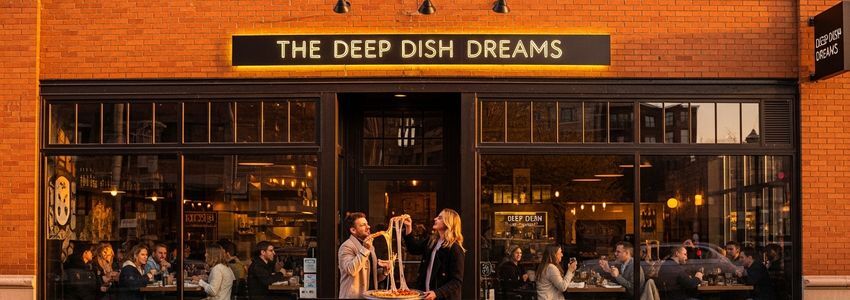
Chicago restaurant business loans are a lifeline for the thousands of food and beverage entrepreneurs who fuel the city's world-class dining scene. From Michelin-starred tasting menus in River North to neighborhood taquerias in Pilsen and deep-dish institutions in Lincoln Park, operating a restaurant in Chicago demands significant capital - and the flexibility to deploy it fast when opportunity strikes. Whether you are opening a first location, upgrading a commercial kitchen, managing seasonal cash flow, or recovering from an unexpected setback, the right financing can mean the difference between surviving and thriving in one of America's most competitive restaurant markets.
In This Article
What Are Chicago Restaurant Business Loans?
Chicago restaurant business loans are financing products designed specifically for food and beverage businesses operating in and around the Chicago metro area. These loans provide capital to fund the unique needs of restaurant operations - from purchasing commercial kitchen equipment to covering payroll gaps during the slow winter months, funding a remodel ahead of a busy season, or expanding to a second location in a new neighborhood.
Chicago's restaurant industry is one of the most dynamic in the country. According to the Illinois Restaurant Association, the state's food service industry generates over $23 billion in annual sales, with Chicago accounting for the majority of that output. The city hosts tens of thousands of licensed food service establishments ranging from quick-service counters to James Beard Award-winning fine dining rooms. Capital access is central to the survival and growth of these businesses, particularly given the notoriously thin margins and high startup costs of restaurant operations.
Restaurant loans differ from general business loans in that lenders must understand the unique financial patterns of food service businesses - irregular revenue seasonality, high perishable inventory costs, significant labor overhead, and equipment-intensive operations. The best lenders for Chicago restaurants are those who understand these dynamics and structure financing to align with how restaurants actually generate and spend money.
Whether you operate a beloved neighborhood pizza spot on the North Side or a trendy cocktail bar in Wicker Park, restaurant business loans give you the working capital to grow, adapt, and compete in one of America's most exciting food cities.
Types of Financing Available to Chicago Restaurants
Chicago restaurant owners have access to a range of financing options depending on their needs, time horizon, and financial profile. Here are the most commonly used products:
1. Small Business Loans
Small business loans for Chicago restaurants provide lump-sum funding with structured repayment over a defined term - typically 1 to 5 years. These loans work well for major one-time expenses such as opening a new location, purchasing large equipment, or funding a significant renovation project. Interest rates for well-qualified restaurant borrowers typically range from 7-15% depending on the lender and loan structure.
2. Business Line of Credit
A business line of credit is a revolving credit facility that restaurant owners can draw from as needed and repay to restore available credit. Lines of credit are ideal for managing the everyday cash flow demands of a restaurant - covering payroll during a slow week, purchasing inventory ahead of a busy weekend, or paying for unexpected repairs to critical equipment. Chicago restaurants with seasonal patterns particularly benefit from lines of credit that allow flexible borrowing matched to revenue cycles.
3. Equipment Financing
Commercial kitchen equipment represents one of the largest capital investments any restaurant makes. Equipment financing lets Chicago restaurateurs purchase ovens, refrigeration units, dishwashers, fryers, POS systems, and HVAC systems while preserving working capital. Equipment loans use the purchased equipment as collateral, making them easier to qualify for than unsecured loans. Terms typically range from 2 to 7 years, aligned with the expected useful life of the equipment.
4. Short-Term Business Loans
Short-term business loans (3 to 18 months) provide fast capital for Chicago restaurants facing time-sensitive needs - a special event requiring advance supplies, an opportunity to take over a prime lease, or bridging a gap between slow winter months and peak spring business. These loans have simplified applications and faster approval timelines than traditional bank loans, making them practical for restaurant operators who need to move quickly.
5. SBA Loans for Chicago Restaurants
SBA loans backed by the U.S. Small Business Administration offer some of the lowest rates and longest terms available to restaurant businesses. The SBA 7(a) program provides up to $5 million with repayment terms of up to 10 years for working capital and equipment. For Chicago restaurant owners looking to purchase real estate for their location, the SBA 504 program offers financing with terms up to 25 years. SBA loans require more documentation and take longer to process than alternative loans, but the interest savings over time can be substantial.
6. Merchant Cash Advance
A merchant cash advance (MCA) provides an upfront sum of capital in exchange for a percentage of future daily credit card sales. For Chicago restaurants with strong credit card volume, MCAs offer fast access to capital with repayment that automatically adjusts to sales volume - slowing when business is slow and accelerating when it picks up. MCAs carry higher costs than traditional loans but require less documentation and can fund within days.
7. Same-Day Business Loans
When a Chicago restaurant faces an emergency - a critical equipment failure during prime season, an unexpected vendor payment, or an urgent permit issue - same-day business loans can provide capital within hours of approval. These are the fastest funding option available, typically with higher rates to compensate for speed and simplified underwriting.
Chicago Restaurant Owner? Get Funded Today
Compare restaurant loan options from the #1 business lender in the U.S. Fast decisions, flexible terms, no surprise fees.
Apply NowHow to Qualify for Chicago Restaurant Business Loans
Qualifying for a restaurant business loan in Chicago requires meeting lender criteria that evaluate your creditworthiness, business performance, and ability to repay. Here is what most lenders examine:
Credit Score
Your personal credit score is an important factor for most lenders, particularly for newer restaurants or those without strong financial history. Traditional bank loans and SBA loans typically require scores of 650 or higher. Alternative lenders may approve Chicago restaurant owners with scores as low as 500-550, though rates will be higher. Bad credit business loans exist for restaurant owners working on rebuilding their credit profile.
Time in Business
Most lenders prefer restaurants with at least 6-12 months of operating history, though some startups can qualify through SBA programs or alternative lenders with strong personal credit and a solid business plan. The longer your track record, the more financing options you have available.
Monthly Revenue
Lenders typically require minimum monthly revenue thresholds to ensure you can service the debt. For working capital loans and lines of credit, many lenders want to see at least $10,000-$25,000 in monthly revenue. Higher loan amounts require proportionally higher revenue. Be prepared to provide bank statements showing consistent revenue flow.
Debt Service Coverage
Lenders calculate your Debt Service Coverage Ratio (DSCR) - your net operating income divided by your total debt payments. A DSCR of 1.25 or higher means you have 25% more income than your current debt obligations, which most lenders require. Restaurant owners should prepare income statements that accurately reflect net operating income before applying.
Collateral
Secured loans require collateral - restaurant equipment, real estate, or other business assets. Unsecured loans are available but typically come with higher rates. No credit check business loans may be available for restaurant owners with strong revenue but limited credit history.
Documentation
Typical documentation requirements include 3-6 months of business bank statements, your most recent business tax return, a government-issued ID, proof of business ownership, and sometimes a business plan or financial projections. Alternative lenders require less documentation than traditional banks.
What Chicago Restaurant Owners Use Loans For
Chicago restaurant business loans serve a wide range of operational and growth needs:
Commercial Kitchen Equipment
Chicago health code compliance requirements and the demands of high-volume service make commercial kitchen equipment essential - and expensive. A commercial range can cost $5,000-$30,000. Walk-in coolers run $5,000-$20,000. A full bar buildout can run six figures. Equipment financing helps spread these costs over the useful life of the equipment rather than depleting working capital.
Restaurant Renovations and Buildouts
Chicago's competitive dining scene rewards atmosphere and design. Renovations - from updating dining room aesthetics to redesigning a bar area to improving acoustics in a noisy open kitchen concept - require significant capital. Restaurant renovation loans provide funding for these improvements with repayment structured over 2-5 years as the upgraded space generates additional revenue.
Seasonal Cash Flow Management
Chicago's harsh winters create real cash flow challenges for restaurants. December through February can see revenue decline 20-40% compared to summer peaks for many establishments. Lines of credit and working capital loans help restaurants maintain operations, pay staff, and cover fixed costs like rent during slow periods without depleting emergency reserves.
New Location Expansion
Opening a second Chicago location is one of the most capital-intensive moves a successful restaurateur can make. Between security deposits, construction, equipment, initial inventory, and marketing, startup costs easily reach $300,000 to $750,000. Business expansion loans and SBA products are commonly used to fund Chicago restaurant expansions.
Inventory and Food Purchasing
Buying food and beverage inventory - particularly for high-end restaurants with premium ingredients or bars carrying extensive spirits inventories - requires working capital that can be tied up for days to weeks before it generates revenue. Revolving lines of credit smooth this cash conversion cycle for Chicago restaurants.
Payroll Financing
Labor is the largest expense for most restaurants, often representing 28-35% of total revenue. When a slow week, unexpected staffing cost, or delayed catering payment creates a payroll gap, fast-access working capital loans ensure staff are paid on time - protecting morale, retention, and compliance with Illinois labor law.
Marketing and Digital Presence
Chicago's competitive restaurant market rewards strong marketing. Investing in professional photography, social media management, loyalty program technology, and paid advertising can directly increase revenue. Business loans give Chicago restaurants the capital to invest in marketing as a growth driver rather than treating it as an afterthought.
Chicago's Restaurant Market: Key Facts for Lenders
Understanding the Chicago restaurant landscape helps restaurant owners frame loan applications in a context that makes sense to lenders. Chicago is one of the top-five restaurant markets in the United States by revenue, and the city's diverse culinary scene creates financing opportunities across every price point and cuisine type.
According to data from the U.S. Small Business Administration and the Illinois Restaurant Association:
- Illinois has more than 26,000 licensed food service establishments
- The Chicago metro area accounts for more than 60% of Illinois restaurant employment
- Chicago's food and beverage industry directly employs over 310,000 people
- Average Chicago restaurant startup costs range from $175,000 to $750,000 depending on format and size
- Chicago's restaurant industry survived a 30%+ revenue contraction during 2020-2021 and has largely recovered, demonstrating the market's resilience
Lenders who understand the Chicago market recognize that the city's diverse neighborhoods - from the Magnificent Mile to Bridgeport to Logan Square - represent genuinely different customer demographics, price points, and operational models. A South Side soul food institution operates very differently from a Streeterville hotel restaurant or a West Loop tasting menu concept. The best Chicago restaurant loan providers offer products flexible enough to serve all these formats.
How Crestmont Capital Helps Chicago Restaurant Owners
Crestmont Capital provides Chicago restaurant owners with access to a full range of financing products from a single application. Rather than spending weeks approaching multiple lenders, Chicago restaurateurs can submit one streamlined application and receive funding options matched to their specific situation within 24-72 hours.
Our approach to Chicago restaurant financing includes:
- No blanket minimum credit scores: We evaluate Chicago restaurant loan applications based on the full picture of your business - revenue trends, time in business, and growth potential - not just a credit score cutoff.
- Restaurant-specific underwriting: Our team understands the seasonality, margin structures, and cash flow patterns specific to Chicago food service businesses.
- Multiple product access: From working capital lines to equipment loans to SBA programs, we match Chicago restaurant owners with the most appropriate product for their specific need.
- Fast funding: Chicago restaurants often need capital on a short timeline. Our alternative lending options can fund within days of approval. Learn more about fast business loans for urgent needs.
- Transparent pricing: We clearly explain all costs and fees so Chicago restaurant owners can make informed decisions without surprises.
For Chicago restaurant owners who have been denied by traditional banks due to seasonal revenue patterns or industry-specific risk perceptions, Crestmont Capital provides alternative lending solutions that account for the realities of restaurant finance rather than applying retail business underwriting to a food service operation.
Compare Chicago Restaurant Loan Options
One application. Multiple lenders. Best rates for your Chicago restaurant. Decisions in 24-72 hours.
Get My Restaurant Loan OptionsChicago Restaurant Financing: Key Statistics
Chicago Restaurant Business Loan Data
Real-World Chicago Restaurant Financing Scenarios
The following scenarios illustrate how Chicago restaurant owners use business loans to solve real problems and seize real opportunities:
Scenario 1: Deep-Dish Institution Expands to Second Location
A Chicago pizza restaurant in Logan Square has operated successfully for 9 years, generating $1.8 million in annual revenue. The owner identifies a prime lease opportunity in Andersonville - a neighborhood with strong foot traffic and limited pizza competition. The buildout, equipment, initial inventory, and working capital reserve will cost $425,000. The owner uses an SBA 7(a) loan for $350,000 at 9.5% over 7 years, with a $75,000 personal contribution, to fund the expansion while maintaining a healthy operating reserve at the original location.
Scenario 2: West Loop Cocktail Bar Bridges Winter Cash Flow Gap
A trendy cocktail bar in the West Loop generates $95,000/month in the summer but drops to $55,000/month in January and February. Fixed costs - rent, core staff, insurance - total $68,000/month. The owner secures a $45,000 business line of credit ahead of the seasonal slowdown. She draws $13,000 in January and $15,000 in February to cover payroll shortfalls, then repays the full balance from strong March revenue, paying approximately $1,800 in interest for the 60-day use of funds - far less than the cost of staff turnover or vendor disputes from late payments.
Scenario 3: Bucktown Brunch Spot Replaces Failing HVAC
A popular Bucktown breakfast and brunch restaurant faces emergency HVAC failure in July. Replacing the commercial HVAC system will cost $38,000. The owner cannot afford to close during the busiest summer season and cannot fund the replacement from operating cash without decimating her working capital. She secures a same-day equipment loan for $38,000, funds the repair within 48 hours, and avoids a 2-week closure that would have cost an estimated $85,000 in lost revenue.
Scenario 4: Pilsen Taqueria Opens Catering Division
A family-owned taqueria in Pilsen has been approached by a local corporate catering coordinator for an ongoing contract worth $25,000/month. To fulfill the contract, the owners need to purchase a catering van ($32,000), commercial chafing equipment ($8,000), and initial supply inventory ($12,000). They secure a 3-year term loan for $52,000 and are cash-flow positive from the catering contract within 90 days - nearly tripling monthly revenue with minimal additional fixed overhead.
Scenario 5: River North Steakhouse Renovates Dining Room
A 12-year-old River North steakhouse has solid revenue but an outdated dining room that customer reviews increasingly cite as a negative. A comprehensive refresh - new seating, lighting, bar redesign, and acoustic panels - will cost $185,000. The owner takes a 3-year restaurant renovation loan at 11% interest. Post-renovation, average check size increases by $15 and reservation demand increases 22%, generating enough incremental revenue to repay the loan within 24 months while improving the restaurant's competitive position long-term.
Scenario 6: Wicker Park Bakery-Cafe Scales Online Orders
A Wicker Park artisan bakery and cafe has seen online order volume surge 340% over the past two years. To fulfill demand, the owner needs a second commercial oven ($22,000), additional refrigeration ($9,000), and a dedicated fulfillment prep area buildout ($18,000). She finances $49,000 in equipment and improvements through an equipment loan secured by the new assets. The increased production capacity allows her to grow online revenue from $11,000/month to $38,000/month within six months.
Frequently Asked Questions About Chicago Restaurant Business Loans
What types of loans are available to Chicago restaurant owners?
How much can I borrow for my Chicago restaurant?
What credit score do I need for a Chicago restaurant loan?
How long does it take to get approved for a restaurant loan in Chicago?
Can new Chicago restaurants qualify for business loans?
What documents do I need to apply for a Chicago restaurant loan?
What interest rates should I expect on a Chicago restaurant loan?
Can I get a restaurant loan if my Chicago restaurant has seasonal revenue?
What is the best loan for buying restaurant equipment in Chicago?
Can I use a restaurant loan to fund a Chicago food truck?
Does Crestmont Capital work with Chicago restaurants specifically?
Are there SBA loans specifically for Chicago restaurants?
What happens if my Chicago restaurant struggles to repay a loan?
How does a merchant cash advance work for a Chicago restaurant?
Are there grants or free funding programs for Chicago restaurants?
How to Get Started
Complete our quick application at offers.crestmontcapital.com/apply-now - takes 5-10 minutes
A Crestmont Capital advisor will review your Chicago restaurant's needs and match you with the right financing option at the best available terms.
Receive your funds and put them to work for your Chicago restaurant - equipment purchased, cash flow covered, expansion funded - often within days of approval.
Conclusion
Chicago's restaurant industry is one of the most vibrant - and most challenging - business environments in the United States. The city's dining culture rewards quality, creativity, and authenticity, but competing in the Chicago market demands capital: for equipment, for talent, for marketing, and for the flexibility to seize opportunities before competitors do.
Chicago restaurant business loans provide the financial foundation that allows great food businesses to operate, adapt, and grow. Whether you need a working capital line to manage a harsh winter season, equipment financing to replace a commercial kitchen appliance, or expansion funding to bring your concept to a new neighborhood, the right loan at the right time can be transformative.
For Chicago restaurant owners ready to explore their financing options, Crestmont Capital offers fast, flexible, and transparent business loan products matched to the specific needs of the food service industry. Apply online in minutes and receive funding decisions within 24-72 hours for most products.
Ready to Fund Your Chicago Restaurant?
Join thousands of restaurant owners who've trusted Crestmont Capital. Fast approvals. Flexible terms. Real results.
Apply Now - Free, No ObligationDisclaimer: The information provided in this article is for general educational purposes only and is not financial, legal, or tax advice. Funding terms, qualifications, and product availability may vary and are subject to change without notice. Crestmont Capital does not guarantee approval, rates, or specific outcomes. For personalized information about your business funding options, contact our team directly.