
 (800) 949-0401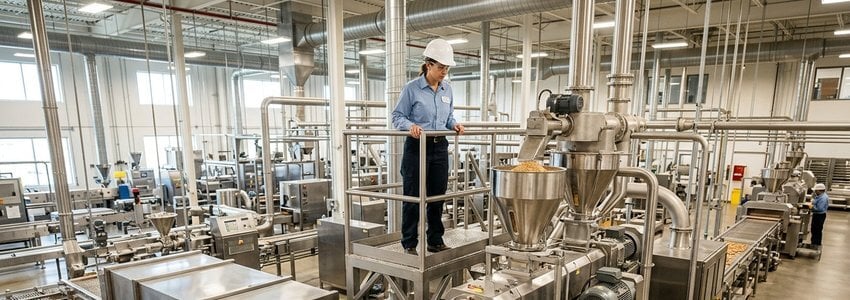
Cereal Manufacturing Equipment Financing: The Complete Guide for Business Owners
Breakfast cereal, granola, puffed grain snacks, and extruded whole-grain products are a multi-billion dollar segment of the U.S. food industry, and demand for private-label and specialty cereal products keeps climbing as health-conscious and gluten-free options expand on grocery shelves. For manufacturers, meeting that demand means investing in the right production equipment: extruders, mixers, dryers, coating drums, and high-speed packaging lines that can turn raw grain into a finished, shelf-stable product at commercial scale. cereal manufacturing equipment financing gives cereal producers, co-packers, and specialty food manufacturers a way to acquire this equipment without draining the cash reserves needed for ingredients, labor, and day-to-day operations. Whether you are launching your first commercial production line or upgrading an aging extruder to increase throughput, the right financing structure can make the difference between a stalled expansion and a scaled, profitable operation. This guide walks through every aspect of financing cereal manufacturing equipment: the types of loans and leases available, how much you can typically borrow, what lenders look for, and how to choose the financing structure that fits your production goals. We will also cover real-world scenarios, a full cost breakdown, and answers to the questions cereal manufacturers ask most often before applying.In This Article
- What Is Cereal Manufacturing Equipment Financing?
- Why Cereal Producers Need Equipment Financing
- Types of Financing for Cereal Manufacturing Equipment
- How Much Can You Borrow?
- How to Qualify
- Best Uses for Cereal Equipment Financing
- Understanding Costs and Interest Rates
- Cereal Manufacturing Industry At a Glance
- Financing Options Comparison Table
- Real-World Scenarios
- Next Steps to Secure Financing
- Frequently Asked Questions
- Conclusion
What Is Cereal Manufacturing Equipment Financing?
Cereal manufacturing equipment financing is a category of commercial lending designed to help food producers acquire the specialized machinery used to make breakfast cereal, granola, puffed grain snacks, and similar extruded or baked grain products. Rather than paying cash for a six or seven-figure production line, a manufacturer borrows the funds and repays them over time, often with the equipment itself serving as collateral for the loan. This financing typically covers the full range of equipment used in a cereal production facility, including twin-screw extruders, puffing guns, flaking mills, rotary dryers, coating and enrobing drums, cooling conveyors, and the packaging equipment that fills and seals the finished product. Because this machinery represents a significant capital investment, most manufacturers rely on financing rather than paying outright, preserving cash for ingredients, staffing, and marketing. Lenders that specialize in equipment financing, like Crestmont Capital, structure these loans around the expected useful life of the machinery, the manufacturer's revenue and credit profile, and the overall cost of the equipment package. This creates a predictable monthly payment that lets a business plan its cash flow around a known expense, rather than tying up a large lump sum in a single purchase.Why Cereal Producers Need Equipment Financing
Scaling a cereal or grain-based snack production business requires substantial upfront investment in specialized machinery, and financing is often the most practical way to make that investment without disrupting operations. Here are the primary reasons cereal manufacturers turn to equipment financing.1. High Upfront Equipment Costs
Commercial extrusion and processing equipment is expensive. A single twin-screw extruder can cost anywhere from $150,000 to over $1 million depending on capacity and configuration, and a full production line with drying, coating, and packaging can push total project costs well into seven figures. Financing spreads this cost over the equipment's useful life instead of requiring a large cash outlay upfront.2. Scaling Production to Meet Demand
When a cereal brand lands a new retail contract or expands into new markets, existing equipment often cannot keep pace. Financing allows a manufacturer to add a second production line, upgrade to a higher-capacity extruder, or automate packaging, all without waiting to accumulate enough retained earnings to pay cash.3. Preserving Working Capital
Even a well-funded manufacturer needs cash on hand for ingredient purchases, payroll, and marketing. Financing equipment instead of paying cash keeps that working capital available for the day-to-day expenses that keep production running smoothly.4. Upgrading Aging or Inefficient Machinery
Older extrusion and drying equipment can be less energy-efficient, prone to breakdowns, and limited in the product formats they can produce. Financing a modern replacement can improve throughput, reduce downtime, and open the door to new product lines such as gluten-free or high-protein cereals.5. Meeting Food Safety and Compliance Requirements
Regulatory requirements around food safety, sanitation, and traceability sometimes require equipment upgrades, such as stainless steel surfaces, improved metal detection, or updated packaging systems. Financing makes these compliance-driven investments manageable without a large one-time expense.Ready to Upgrade Your Production Line?
Get fast, flexible financing from the #1 business lender in the U.S. No obligation, apply in minutes.
Apply Now →Types of Financing for Cereal Manufacturing Equipment
There are several financing structures available to cereal and grain-based food manufacturers, each suited to different budgets, credit profiles, and growth plans.Equipment Financing (Term Loan Secured by Equipment)
This is the most direct option for acquiring extruders, dryers, mixers, and packaging equipment. The machinery itself serves as collateral, which often makes qualification easier than for an unsecured loan.- Features: Fixed monthly payments over a set term, typically aligned with the expected useful life of the equipment.
- Best For: Purchasing new or used extrusion lines, dryers, mixers, coating drums, or packaging machinery.
Equipment Leasing
Leasing offers lower monthly payments than a purchase loan, along with the flexibility to upgrade equipment at the end of the term.- Features: Terms typically range from 2 to 7 years, with options to purchase, renew, or return the equipment at the end.
- Best For: Manufacturers who want to preserve cash flow or who expect to upgrade to higher-capacity equipment as the business grows. Explore equipment leasing options for flexible terms.
SBA Loans
Backed by the U.S. Small Business Administration, SBA loans offer long repayment terms and competitive rates for qualified manufacturers.- SBA 7(a) Loans: Can fund equipment purchases, facility buildouts, and working capital in a single package, with amounts up to $5 million.
- Best For: Established manufacturers with strong financials planning a major facility expansion alongside equipment purchases.
Working Capital Loans
A working capital loan can complement equipment financing by covering the ingredients, labor, and installation costs that come with bringing new machinery online.- Features: Shorter repayment terms, typically under 24 months, with funding available quickly.
- Best For: Covering the operational ramp-up costs that accompany a new production line.
Business Line of Credit
A business line of credit provides flexible, revolving access to capital for ongoing needs.- Features: Draw funds as needed and only pay interest on the amount used.
- Best For: Covering maintenance, replacement parts, and unexpected repair costs on existing production equipment.
Commercial Financing for Larger Facility Projects
For manufacturers combining equipment purchases with facility construction or major renovation, commercial financing options can bundle these costs into a single financing package.How Much Can You Borrow?
Financing amounts for cereal manufacturing equipment range from a few thousand dollars for a small batch extruder to several million dollars for a fully integrated commercial production line. Lenders evaluate several factors to determine the amount you qualify for.Factors Influencing Loan Amount
- Equipment Cost and Type: The lender will typically finance up to the full invoice price of the equipment, and sometimes additional amounts for installation, shipping, or facility modifications.
- Annual Revenue: Consistent revenue demonstrates your ability to service the loan. Established manufacturers with $250,000 or more in annual revenue typically qualify for larger financing packages.
- Credit Score: Both personal and business credit history factor into the loan amount and rate offered. A score of 650 or higher generally opens access to better terms.
- Time in Business: Manufacturers with two or more years of operating history typically qualify for larger amounts and longer terms than startups.
- Down Payment: A larger down payment can increase the total amount a lender is willing to finance and may improve your rate.
- Collateral Value: Because the equipment itself secures the loan, its resale value and expected useful life directly affect how much a lender will finance.
Typical Financing Ranges
- Small Batch Equipment (extruders, mixers): $15,000 - $150,000
- Mid-Size Production Lines: $150,000 - $750,000
- Full Commercial Extrusion & Packaging Lines: $750,000 - $2,000,000+
- SBA-Backed Facility & Equipment Packages: $250,000 - $5,000,000
How to Qualify
Qualification requirements vary by lender and loan type, but most equipment financing programs evaluate a common set of criteria.1. Credit Score:
Most lenders look for a personal credit score of 600 or higher, with scores above 650 generally qualifying for better rates. Because the equipment secures the loan, requirements can be more flexible than for unsecured financing.
2. Time in Business:
Lenders generally prefer at least one to two years of operating history, though startups can often still qualify given the equipment serves as collateral, sometimes with a larger down payment or personal guarantee.
3. Annual Revenue:
Consistent revenue demonstrates your ability to make monthly payments. Requirements vary, but many lenders look for at least $100,000 to $250,000 in annual revenue for larger equipment packages.
4. Equipment Quote or Invoice:
Most lenders require a formal quote or invoice from the equipment seller detailing the make, model, and cost of the machinery being financed.
5. Financial Documents:
Be prepared to provide:
- 3-6 months of business bank statements
- Recent business and personal tax returns
- Profit and loss statement
- Driver's license and voided business check
Key Stat: According to the U.S. Census Bureau's Annual Survey of Manufactures, breakfast cereal manufacturing is classified under NAICS code 311230, and food manufacturing overall remains one of the largest manufacturing subsectors in the country by shipment value.
Best Uses for Cereal Equipment Financing
Strategic use of financed equipment can accelerate growth and improve margins. Here are the highest-impact ways cereal manufacturers deploy this capital.Extrusion and Puffing Equipment
Twin-screw and single-screw extruders form the core of most cereal production lines, shaping and cooking grain into flakes, puffs, or shapes. Upgrading to a higher-capacity or more versatile extruder can open new product lines, including gluten-free and high-protein cereal formats.Drying and Toasting Systems
Rotary dryers and toasting ovens remove moisture and develop flavor and texture in the finished cereal. Modern, energy-efficient drying equipment can reduce utility costs while improving consistency batch to batch.Coating and Enrobing Equipment
Sugar coating drums, vitamin spray systems, and enrobing equipment allow manufacturers to add flavor coatings, fortify products with vitamins and minerals, or create specialty variants for private-label customers.Packaging and Case Packing Automation
High-speed vertical form-fill-seal machines, box erectors, and case packers reduce labor costs and increase throughput at the final stage of production, a common bottleneck for growing cereal manufacturers.Strategic Insight
Extrusion lines and drying tunnels represent the single largest capital expense for most cereal producers. Financing this equipment instead of paying cash preserves working capital for ingredients, labor, and marketing during your growth phase.
Facility and Sanitation Upgrades
Financing can also cover stainless steel processing surfaces, improved metal detection systems, and other sanitation-focused upgrades required to meet retail customer or regulatory standards.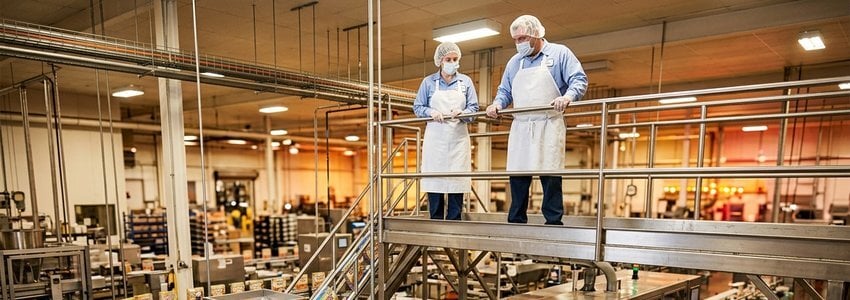
Understanding Costs and Interest Rates
Understanding the full cost of financing helps you accurately compare offers and choose the structure that fits your budget.Key Cost Components
Interest Rate:
The percentage charged on the borrowed principal. Rates can be fixed, providing predictable payments over the full term, or variable, tied to a benchmark rate that can fluctuate.
Annual Percentage Rate (APR):
APR reflects the interest rate plus any additional fees, giving a more complete picture of the loan's true cost. Always compare APR, not just the advertised interest rate, when evaluating offers.
Origination Fees:
A one-time fee to process the loan, usually calculated as a percentage of the financed amount and often deducted from the disbursed funds.
Other Potential Fees:
- Documentation or filing fees
- Prepayment penalties on some longer-term loans
- Late payment fees
- Appraisal fees for used or high-value equipment
Find the Right Financing for Your Facility
Our lending team can help you compare options and get pre-qualified today.
Get Pre-Qualified →Cereal Manufacturing Industry At a Glance
By the Numbers
Cereal & Grain-Based Food Manufacturing - Key Figures
33M+
Small businesses in the U.S., per the SBA
3-10 Yrs
Typical equipment financing term length
24-48 Hrs
Typical approval time with alternative lenders
311230
NAICS code for breakfast cereal manufacturing
Financing Options Comparison Table
Choosing the right financing structure depends on your production goals, credit profile, and how quickly you need the equipment installed. This table compares the most common options for cereal manufacturers.
| Financing Type | Typical Amount | Term | Best For |
|---|---|---|---|
| Equipment Financing | $25k - $2M+ | 3-10 years | Extruders, dryers, mixers, packaging lines |
| Equipment Leasing | $10k - $1M+ | 2-7 years | Lower monthly payments, flexibility to upgrade |
| SBA 7(a) Loan | $50k - $5M | Up to 25 years | Full facility buildout with major equipment purchase |
| Working Capital Loan | $5k - $500k | 3-24 months | Ingredients, labor, installation costs alongside new equipment |
| Business Line of Credit | $10k - $250k | Revolving | Ongoing maintenance, parts, and repair costs |
Real-World Scenarios
The following hypothetical scenarios illustrate how cereal manufacturing equipment financing is used in practice.Scenario 1: The Startup - "Golden Grain Foods"
Business: A small batch granola producer selling at farmers markets and a handful of local grocery stores wants to move production out of a shared commercial kitchen into its own facility.
Challenge: The company needs a commercial batch mixer, a rotary oven, and a semi-automated packaging line, totaling roughly $180,000, but has less than two years of operating history.
Solution: Golden Grain Foods applies for equipment financing with a 15 percent down payment and a personal guarantee from the owner.
Outcome: The company is approved for $153,000 in financing over a 5-year term. The new equipment triples batch capacity, allowing the business to sign its first regional grocery distribution contract within six months.
Scenario 2: The Scaler - "Heritage Cereal Co."
Business: A five-year-old cereal manufacturer with strong retail accounts is at maximum capacity on its single extrusion line and turning away new co-packing contracts.
Challenge: The company needs a second twin-screw extruder, an additional dryer, and expanded packaging capacity, totaling $850,000.
Solution: With three years of strong financials, Heritage Cereal Co. qualifies for an SBA 7(a) loan combined with a smaller equipment line for packaging automation.
Outcome: The expanded capacity allows the company to accept two new co-packing contracts, increasing monthly revenue enough to comfortably cover the new loan payments within the first year.
Scenario 3: The Tech Upgrade - "Pure Oats Milling"
Business: A gluten-free oat cereal producer is running an aging extruder that frequently breaks down, causing costly production delays.
Challenge: A modern, higher-throughput extruder costs $320,000, a large cash outlay the company would rather avoid.
Solution: Pure Oats Milling finances the new extruder through an equipment loan, using the machine itself as collateral, with a 7-year term.
Outcome: Downtime drops significantly, and the higher-capacity extruder increases daily output by 40 percent, generating enough additional revenue to comfortably cover the monthly payment.
Scenario 4: The Private Label Co-Packer - "Midwest Grain Partners"
Business: A contract manufacturer producing private-label cereal for several regional grocery chains has landed a large new client requiring a dedicated production line.
Challenge: The new contract requires $40,000 in ingredient purchases and packaging materials upfront, in addition to the equipment investment, creating a short-term cash flow gap.
Solution: Midwest Grain Partners combines equipment financing for the new production line with a business line of credit to cover the initial ingredient and packaging costs.
Outcome: The company fulfills the new contract on schedule, and the line of credit is repaid as the client's invoices are collected, leaving it available for future working capital needs.
Next Steps to Secure Financing
Ready to finance your next piece of cereal production equipment? Follow this structured approach to move through the process efficiently.Obtain a formal quote or invoice from your equipment vendor detailing the machinery's make, model, and total cost, including installation and shipping if applicable.
Pull together recent bank statements, tax returns, and a profit and loss statement so you can respond quickly to a lender's request.
Evaluate offers based on total cost, funding speed, and the lender's familiarity with food manufacturing equipment, not just the advertised rate.
Complete the lender's application, submit your documents, and review your offer carefully before signing, comparing APR, total repayment, and any fees.
Start Your Application Today
The process is fast, simple, and secure. See what your cereal manufacturing business qualifies for.
Apply Now →Frequently Asked Questions
Conclusion
The cereal and grain-based snack manufacturing industry continues to grow as consumers seek out specialty, private-label, and better-for-you breakfast options, and meeting that demand requires the right production equipment. From extrusion lines and drying systems to coating equipment and high-speed packaging, cereal manufacturing equipment financing gives manufacturers a practical way to fund these investments without depleting the working capital needed to run day-to-day operations. By understanding the financing options available, preparing your documentation in advance, and partnering with a lender who understands food manufacturing, you can secure the capital needed to scale production, improve efficiency, and take on new business without unnecessary financial strain. Explore your financing options today and take the next step toward a more productive, profitable cereal manufacturing operation.Disclaimer: The information provided in this article is for general educational purposes only and is not financial, legal, or tax advice. Funding terms, qualifications, and product availability may vary and are subject to change without notice. Crestmont Capital does not guarantee approval, rates, or specific outcomes. For personalized information about your business funding options, contact our team directly.








