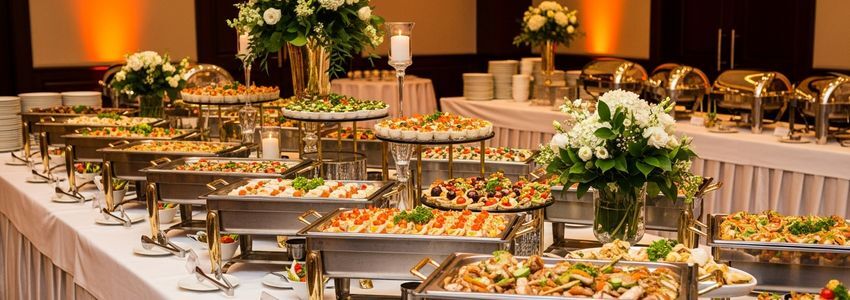
Running a catering company is a rewarding but capital-intensive venture. Whether you're expanding your fleet of delivery vehicles, investing in commercial kitchen equipment, hiring event staff, or managing the cash flow gap between large events, catering business loans can provide the financial foundation your company needs to grow. This complete guide covers everything catering business owners need to know about securing the right financing - from loan types and qualification requirements to how Crestmont Capital can help you get funded fast.
In This Article
- The Catering Industry and Why Financing Matters
- Types of Catering Business Loans
- What Catering Business Loans Are Used For
- How to Qualify for Catering Business Loans
- Catering Industry Financing Statistics
- Comparing Your Financing Options
- How Crestmont Capital Helps Catering Businesses
- Real-World Financing Scenarios
- Frequently Asked Questions
- How to Get Started
The Catering Industry and Why Financing Matters
The U.S. catering industry generates over $11 billion in revenue annually, according to industry data, with thousands of catering companies competing for corporate events, weddings, private parties, and institutional contracts. The market continues to grow as corporations invest more in employee experience and social events rebound post-pandemic.
Yet despite strong demand, catering businesses face a unique set of financial challenges. Events require significant upfront investment - you must purchase food, rent equipment, hire staff, and arrange transportation before you collect a single dollar from the client. For larger contracts, this cash flow gap can stretch to 30, 60, or even 90 days after the event. Without adequate working capital, even a profitable catering company can struggle to take on new business.
That is where catering business loans come in. The right financing allows you to bridge cash flow gaps, invest in growth, and compete for larger and more profitable contracts without depleting your reserves.
Key Stat: According to the U.S. Small Business Administration, access to capital is one of the top three barriers to growth for food service small businesses. Catering companies that secure financing grow revenue 2x faster than those relying solely on cash flow.
Catering businesses face several capital needs that traditional savings rarely cover. Purchasing commercial-grade refrigeration units, investing in serving equipment and chafers, building out a commissary kitchen, hiring experienced culinary staff, and marketing your services to corporate clients all require money upfront. A small business loan or flexible credit line can be the difference between staying small and scaling to seven figures.
Ready to Fund Your Catering Business?
Get fast, flexible financing from the #1 business lender in the U.S. No obligation - apply in minutes.
Apply Now ->Types of Catering Business Loans
There is no single loan product that is right for every catering company. Your best option depends on how long you have been in business, your annual revenue, credit profile, and what you plan to use the funds for. Here is a breakdown of the most common catering business loan types:
Term Loans
A business term loan provides a lump sum of capital that you repay over a fixed period - typically 1 to 5 years - with regular monthly payments. Term loans are ideal for large one-time investments like purchasing a commissary kitchen, buying a catering van, or renovating your commercial space. Interest rates are typically lower than short-term options, making them cost-effective for predictable expenses.
Business Line of Credit
A business line of credit works like a business credit card - you have access to a revolving pool of capital that you draw from as needed and repay. This is one of the most popular options for catering businesses because it handles unpredictable cash flow gaps perfectly. You might draw $15,000 to stock up for a large wedding, then repay it when the client pays the final invoice.
Equipment Financing
Catering companies are equipment-heavy businesses. Commercial ovens, warming trays, refrigeration units, chafers, serving equipment, and transportation vehicles all represent significant capital investment. Equipment financing allows you to spread the cost of these assets over time, preserving your working capital while still getting the tools you need. The equipment itself typically serves as collateral, making approval easier even for newer businesses.
Working Capital Loans
A working capital loan is specifically designed to cover day-to-day operational expenses - staff payroll, food inventory, supplies, and event costs. These loans are typically short-term and can be funded quickly, making them ideal for bridging the gap between expenses and client payments.
SBA Loans
Small Business Administration loans offer some of the most competitive rates and terms available to small businesses. SBA loans backed by the federal government come with lower interest rates and longer repayment terms than conventional loans. The tradeoff is a more rigorous application process and longer approval times - typically 30 to 90 days. SBA 7(a) loans can be used for almost any business purpose and go up to $5 million.
Invoice Financing
Many catering companies work with corporate clients who pay on net-30 or net-60 terms. Invoice financing lets you borrow against those outstanding invoices immediately, getting 70-90% of the invoice value upfront. When the client pays, you receive the remaining balance minus a small fee. This solution eliminates the waiting game and keeps your cash flow healthy.
Short-Term Business Loans
Short-term business loans provide quick access to capital with repayment terms of 3 to 18 months. They typically have higher interest rates than traditional term loans but are easier to qualify for and fund faster - sometimes within 24 to 48 hours. These are useful for covering seasonal gaps, restocking supplies before a busy event season, or handling unexpected expenses.
Bad Credit Business Loans
If your personal or business credit is less than perfect, you still have options. Bad credit business loans are specifically designed for business owners with credit scores below 600. Approval is based more heavily on revenue and cash flow than credit history. While rates may be higher, these loans can get your catering business funded when traditional lenders say no.
What Catering Business Loans Are Used For
Understanding how other catering businesses use financing can help you identify your own needs and choose the right loan type. Here are the most common uses of catering business loans:
- Commercial kitchen equipment: Ovens, refrigerators, freezers, food warmers, chafers, and specialty appliances can cost anywhere from $10,000 to $150,000 or more for a full commissary setup.
- Catering vehicles: Insulated delivery vans, refrigerated trucks, and mobile catering units are expensive but essential for serving off-site events. Vehicle financing often makes more sense than paying cash.
- Event supplies and inventory: Tables, chairs, linens, serving ware, and decorative items require significant capital investment upfront.
- Staffing costs: Hiring and training culinary staff, servers, event coordinators, and drivers is one of the biggest expenses for growing catering companies.
- Marketing and business development: Investing in a professional website, photography, food tastings for prospective clients, and catering expos can significantly increase your contract pipeline.
- Facility expansion: Moving to a larger commissary kitchen, adding cold storage, or opening a second location all require capital that most catering businesses cannot self-fund.
- Cash flow management: Covering the gap between event costs and client payment is one of the most common reasons catering companies seek financing.
- Technology investment: Modern catering management software, point-of-sale systems, and ordering platforms improve efficiency and client experience.
Key Stat: According to Forbes, food service businesses that invest in equipment upgrades using financing see an average 23% increase in operational capacity and a 17% reduction in food waste within 12 months.
How to Qualify for Catering Business Loans
Qualification requirements vary significantly depending on the lender and the type of loan. Here is what most lenders consider when evaluating catering business loan applications:
Time in Business
Most traditional lenders require at least 1 to 2 years in business. Online lenders and alternative financing companies often work with businesses that have been operating for as little as 6 months, though rates may be higher for newer businesses.
Annual Revenue
Lenders want to see consistent revenue that demonstrates your ability to repay the loan. Most lenders look for $100,000 or more in annual revenue, though some working capital products are available to businesses earning as little as $60,000 per year.
Credit Score
For traditional term loans and SBA loans, a personal credit score of 650 or higher is generally required. Alternative lenders may approve catering business loans with credit scores as low as 500 to 550, with rates adjusted accordingly. Building your business credit over time opens doors to better terms.
Cash Flow Consistency
Lenders review your bank statements to assess cash flow. For seasonal catering businesses, demonstrating consistent revenue across the past 12 months - even with seasonal peaks - is important. Having a healthy cash reserve also strengthens your application.
Collateral
Secured loans require collateral - equipment, vehicles, or real estate that the lender can claim if you default. Unsecured loans do not require collateral but may have higher rates. Equipment loans typically use the purchased equipment as collateral, making them easier to qualify for.
Business Documentation
Be prepared to provide bank statements (3 to 6 months), tax returns (1 to 2 years), a business license, catering contracts, and basic financial statements. The more organized your documentation, the faster your approval process will be.
By the Numbers
Catering Industry Financing - Key Statistics
$11B+
U.S. catering industry annual revenue
74%
of catering companies cite cash flow as top challenge
48 hrs
Average funding time with alternative lenders
$250K
Average SBA 7(a) loan amount for food service businesses
Catering Industry Financing Statistics
Understanding the broader financing landscape helps catering business owners make informed decisions. Here are key data points from industry research and government sources:
According to the U.S. Small Business Administration, food service and hospitality businesses receive approximately 8-12% of all SBA 7(a) loan approvals annually, with average loan amounts ranging from $150,000 to $400,000. The SBA's approval rate for catering and food service businesses has improved significantly in recent years as lenders recognize the sector's resilience.
A CNBC analysis of small business lending trends found that food service businesses - including catering companies - saw loan approval rates improve by nearly 15% between 2022 and 2024 as alternative lenders expanded their product offerings for the sector. The same analysis noted that catering companies applying with 2+ years of operating history and $150,000+ in annual revenue had approval rates exceeding 68% at alternative lenders.
Bloomberg's small business coverage has highlighted that catering businesses face particular challenges with seasonal cash flow - peak seasons around holidays and wedding season contrast sharply with slower winter months. Lenders who understand this seasonality are more likely to offer flexible repayment structures that align with business cycles.
The overall catering and food service sector shows strong fundamentals. According to U.S. Census Bureau data, there are over 50,000 catering establishments operating in the United States, employing hundreds of thousands of workers. The sector has shown consistent long-term growth, creating a stable lending environment for lenders willing to work with catering companies.
Comparing Your Financing Options
Not all catering business loans are created equal. The table below compares the most common options across key factors to help you make an informed choice:
| Loan Type | Best For | Typical Amount | Speed | Min. Credit Score |
|---|---|---|---|---|
| Term Loan | Equipment, expansion | $25K - $500K | 1-7 days | 600+ |
| Line of Credit | Cash flow management | $10K - $250K | 1-5 days | 580+ |
| Equipment Financing | Equipment purchases | Up to equipment value | 1-3 days | 550+ |
| SBA Loan | Major expansion, real estate | Up to $5M | 30-90 days | 650+ |
| Working Capital Loan | Operations, payroll | $5K - $150K | 24-48 hours | 500+ |
| Invoice Financing | Accounts receivable | 70-90% of invoice | 1-3 days | N/A (invoice based) |
When comparing options, it is important to look beyond the interest rate. Factor in origination fees, prepayment penalties, and total cost of capital over the loan term. A loan with a slightly higher rate but no fees may cost less than a low-rate loan with significant upfront charges.
For catering businesses that have experienced previous financial difficulties, it is worth knowing that there are dedicated bad credit business loan options available. Lenders who specialize in this space understand that past challenges do not define a business's future potential.
How Crestmont Capital Helps Catering Businesses
Crestmont Capital has been helping catering companies and food service businesses access the capital they need to grow. As the #1 business lender in the U.S., we understand the unique cash flow dynamics and capital needs of catering operations. Here is what sets us apart:
- Fast approvals: Many of our catering business loan applications are approved within 24 to 48 hours, and funding can be in your account the same day or next business day.
- Flexible loan amounts: We offer financing from $5,000 to $5 million, so whether you need a small working capital injection or major expansion capital, we have options.
- Multiple loan products: From equipment financing and lines of credit to term loans and fast business loans, we match you with the right product for your specific needs.
- Dedicated advisors: Our specialists understand food service businesses and can guide you through the application process with minimal documentation.
- Flexible credit requirements: We work with catering businesses across the credit spectrum, including those that have been declined by traditional banks.
We have helped catering companies fund fleet expansions, commission kitchen buildouts, seasonal staffing surges, and everything in between. Our approach is built on understanding your business - not just running a credit check.
You might also find value in reading our guides on food and beverage business loans and event planner business loans for related financing guidance.
Get Your Catering Business Funded Today
Apply in minutes and get a decision in as little as 24 hours. No obligation required.
Apply Now ->Real-World Catering Financing Scenarios
To make these concepts more concrete, here are six real-world scenarios where catering business loans make a significant difference:
Scenario 1: Landing a Major Corporate Contract
A mid-sized catering company in Chicago lands its first major corporate dining contract worth $400,000 per year. To fulfill the contract, the company needs $75,000 in new equipment and $30,000 for initial inventory and staffing. Rather than turning down the opportunity, they secure a term loan through Crestmont Capital. The contract revenue easily services the loan, and the company doubles its annual revenue within 12 months.
Scenario 2: Seasonal Cash Flow Gap
A wedding catering company in the Pacific Northwest does 70% of its revenue between May and October. Every January through March, cash flow drops dramatically while fixed costs like insurance, vehicle payments, and facility rent continue. A revolving business line of credit allows the owner to draw funds during slow periods and repay during peak season without disrupting operations.
Scenario 3: Equipment Breakdown Before a Big Event
Two weeks before a 500-person gala, a catering company's main commercial oven fails. The replacement cost is $18,000 - more than current cash reserves allow. An emergency business loan funded in 24 hours saves the event and protects the company's reputation with a high-profile client.
Scenario 4: Expanding to a Second Market
A successful catering operation in Dallas wants to expand to Houston. The expansion requires a new commissary kitchen lease, equipment, and a marketing budget. An SBA loan with a 10-year term at competitive rates provides the capital for a controlled expansion without straining the parent operation's cash flow.
Scenario 5: Winning a Catering Bid with Upfront Costs
A catering company wins a competitive bid for a music festival that requires $120,000 in food, supplies, and staffing upfront, with payment coming 45 days after the event. Invoice financing against the confirmed festival contract provides the capital needed without waiting nearly two months to get paid.
Scenario 6: Scaling Staff for a Busy Quarter
A corporate catering company secures three major holiday party contracts in Q4. To staff them properly, it needs to hire and train 15 additional servers and culinary staff. A working capital loan covers the payroll and training costs, enabling the company to deliver excellent service and build lasting client relationships.
Frequently Asked Questions
What credit score do I need to get a catering business loan?
Requirements vary by lender and loan type. Traditional bank loans and SBA loans typically require a personal credit score of 650 or higher. Alternative lenders like Crestmont Capital work with catering businesses with scores as low as 500-550, though lower scores may result in higher rates. Your revenue, cash flow, and time in business also play a significant role in approval decisions.
How long does it take to get a catering business loan?
Timeline depends on the loan type and lender. At Crestmont Capital, many catering business loans are approved within 24-48 hours and funded the same day or next business day. SBA loans take 30-90 days due to the extensive underwriting process. Traditional bank term loans typically take 1-3 weeks. If you need capital quickly, alternative lenders offer the fastest path to funding.
How much can a catering business borrow?
Loan amounts for catering businesses typically range from $5,000 for small working capital needs to $5 million or more for major expansion projects. The amount you can borrow depends on your annual revenue (most lenders cap loans at 10-15% of annual revenue for short-term products), credit score, time in business, and the type of loan. Stronger financials open access to larger amounts and better terms.
Can a new catering business get a loan?
Yes, though options are more limited for very new businesses. Lenders typically prefer at least 6 months of operating history. If you have been in business less than 6 months, equipment financing (using the equipment as collateral) and SBA microloans are often the most accessible options. A strong personal credit score and a solid business plan significantly improve your chances of approval as a newer catering business.
What documents do I need to apply for a catering business loan?
Typical documentation requirements include 3-6 months of business bank statements, 1-2 years of business tax returns, a valid business license and catering permits, basic financial statements (profit and loss), and a government-issued ID. Some lenders may also request existing client contracts or a business plan. Alternative lenders generally require less documentation than banks, which is why many catering businesses prefer them for faster access to capital.
Is equipment financing a good option for catering businesses?
Equipment financing is often an excellent choice for catering businesses because the equipment itself serves as collateral, making approval easier and rates more competitive. It preserves working capital for operational needs while still allowing you to acquire necessary equipment. You can typically finance up to 100% of the equipment cost with terms of 2-7 years. Commercial ovens, refrigeration units, serving equipment, and catering vehicles are all commonly financed through equipment loans.
How does invoice financing work for catering companies?
Invoice financing allows catering businesses to borrow against outstanding invoices from clients who pay on credit terms. You submit your unpaid invoices to the lender, who advances you 70-90% of the invoice value immediately. When your client pays the invoice, you receive the remaining balance minus a financing fee (typically 1-5% of the invoice value). This is particularly valuable for catering companies that work with corporate clients on net-30 or net-60 payment terms.
What interest rates should I expect on catering business loans?
Interest rates vary widely depending on loan type, lender, your credit profile, and current market conditions. SBA loans typically carry rates of 6-9% APR. Traditional bank term loans range from 7-15% APR. Alternative lenders and online lenders typically charge 15-35% APR for term loans and working capital products. Equipment financing rates typically fall between 6-20% APR. The strongest borrowers with high credit scores and strong revenue get the best rates. Your best strategy is to compare multiple offers before committing.
Can I get a catering business loan with bad credit?
Yes. Alternative lenders including Crestmont Capital specialize in working with catering businesses that have less-than-perfect credit. With a credit score in the 500-599 range, you may still qualify for working capital loans, equipment financing, or merchant cash advances. Lenders in this space place more emphasis on your cash flow and revenue than your credit score alone. Rates will be higher than those offered to excellent-credit borrowers, but funding is typically still achievable.
Are there SBA loans specifically for catering companies?
There are no SBA loans exclusively for catering companies, but catering businesses qualify for the SBA's general small business loan programs. The SBA 7(a) loan is the most versatile and can be used for almost any business purpose including equipment, working capital, and expansion. The SBA 504 loan is designed for major fixed asset purchases like real estate and large equipment. Both programs require strong credit and financials but offer some of the most competitive rates and terms available to small businesses.
How can I use a business line of credit for my catering company?
A business line of credit is extremely versatile for catering operations. Common uses include: covering food and supply costs before events when client deposits do not fully cover expenses, managing the gap between event completion and final payment, handling unexpected equipment repairs or replacements, funding payroll during slow seasons, and capitalizing on last-minute event opportunities that require quick spending. You only pay interest on what you draw, making it very cost-effective for businesses with variable needs.
What is the best loan for buying catering equipment?
Equipment financing is typically the best choice for purchasing catering equipment. The main advantages are that the equipment serves as its own collateral (reducing credit requirements), rates are generally competitive, and you can often finance 100% of the equipment cost. For very large purchases like a full commercial kitchen buildout, an SBA loan may offer better long-term terms. For smaller purchases or mixed needs, a term loan or line of credit may provide more flexibility.
How do I handle seasonal cash flow in my catering business?
Seasonal cash flow is one of the biggest challenges for catering businesses. Effective strategies include: securing a business line of credit before slow season hits (so you have access to capital when needed), building cash reserves during peak season to cover fixed costs during slow periods, diversifying your client base to include corporate and institutional clients who provide more year-round business, and considering revenue-based financing products that adjust repayment to your actual cash flow cycles. Proactive financial planning is far better than reactive scrambling.
Can I get a fast catering business loan for an emergency?
Yes. Emergency business loans and same-day funding are available through alternative lenders like Crestmont Capital. If you have a catering emergency - equipment failure before a major event, an unexpected staffing crisis, or a sudden supply cost spike - you can often get approved and funded within 24 hours. Having an established relationship with a lender before you need emergency funds is always the best approach, as this typically speeds up the process significantly.
How does applying for a catering business loan affect my credit?
Applying for a business loan typically involves a hard credit inquiry, which may temporarily reduce your personal credit score by a few points. Most business loan applications also check your business credit profile through Dun & Bradstreet or similar agencies. Once approved and funded, making consistent on-time payments actually helps build your business credit score over time, improving your ability to access larger loans at better rates in the future. Multiple applications within a short period can have a compounding negative effect, so it is best to focus on a specific loan type before applying broadly.
How to Get Started
Complete our quick application at offers.crestmontcapital.com/apply-now. We need basic information about your catering business and recent revenue - no lengthy paperwork required.
A Crestmont Capital advisor who understands food service businesses will review your needs, match you with the right loan product, and walk you through your options - no obligation required.
Once approved, receive your funds - often within 24-48 hours - and put them to work immediately. Whether it is new equipment, seasonal staffing, or expansion capital, your catering business gets what it needs to succeed.
Conclusion
Catering business loans are not just about covering expenses - they are strategic tools that allow catering companies to take on bigger contracts, invest in growth, manage seasonal cash flow, and build a more resilient business. Whether you need a revolving line of credit to handle the gap between event costs and client payment, equipment financing to upgrade your commercial kitchen, or a working capital loan to staff up for a busy season, the right financing can transform what your catering company is capable of achieving.
The key is finding a lender who understands your industry and can move at the speed your business requires. Crestmont Capital has helped hundreds of food service businesses access the capital they need to compete and grow. Our catering business loans come with fast approvals, flexible terms, and advisors who know what it takes to run a successful catering operation.
Ready to explore your catering business loan options? Apply today and discover how fast and simple getting the right financing can be.
Start Your Application Today
Join thousands of food service businesses that trust Crestmont Capital for their financing needs. Apply in minutes, get funded fast.
Apply Now ->Disclaimer: The information provided in this article is for general educational purposes only and is not financial, legal, or tax advice. Funding terms, qualifications, and product availability may vary and are subject to change without notice. Crestmont Capital does not guarantee approval, rates, or specific outcomes. For personalized information about your business funding options, contact our team directly.