Catering business financing statistics tell a clear story in 2026: demand for catered food is climbing, corporate budgets are holding firm, and the operators who secure the right capital are the ones capturing that growth. Whether you run a wedding catering company, a corporate lunch operation, or a mobile catering unit, understanding the numbers behind catering industry statistics and small business funding gives you a real edge when it is time to invest in equipment, staff, or expansion.
This guide compiles the most important catering industry statistics and financing data points for 2026, from market size and growth rates to loan approval percentages, average funding amounts, equipment costs, and profit margins. Every figure is grounded in credible sources such as the U.S. Census Bureau, the Small Business Administration, and current industry research, so you can benchmark your own catering business against the market and make smarter funding decisions.
In This Article
- Catering Industry Statistics: Market Overview for 2026
- Catering Business Financing Statistics: The Key Numbers
- What It Costs to Start and Run a Catering Business
- How Catering Business Financing Works
- Types of Financing Catering Businesses Use
- Who Benefits Most From Catering Business Financing
- How Crestmont Capital Helps Catering Businesses
- Real-World Catering Financing Scenarios
- Financing Trends Shaping Catering in 2026
- Frequently Asked Questions
- Next Steps
Catering Industry Statistics: Market Overview for 2026
The catering sector enters 2026 in a stronger position than much of the broader restaurant industry. While overall foodservice sales are growing modestly, catering continues to outperform because it sits at the intersection of corporate spending, events, and convenience. Industry forecasts place total U.S. restaurant and foodservice sales at roughly $1.55 trillion for 2026, and catering is one of the fastest-expanding slices of that pie, with annual growth estimates in the 5% to 6% range for the segment.
Several catering industry statistics stand out for business owners evaluating their next move:
- More than 120,000 catering businesses operate across the United States, ranging from home-based solo operators to multi-crew corporate caterers, according to industry market research counts.
- Corporate catering demand is resilient. Surveys of corporate food buyers heading into 2026 show that roughly 9 in 10 plan to maintain or increase their catering budgets, keeping weekday B2B volume dependable for operators who serve offices, hospitals, and campuses.
- Catering checks run far larger than standard tickets. Average catering order values frequently run several times higher than a typical dine-in or takeout ticket, which is why so many restaurant groups are building dedicated catering arms.
- The accommodation and food services sector remains one of the largest small business employer groups in the country. The U.S. Census Bureau's County Business Patterns program tracks hundreds of thousands of food service establishments employing millions of workers, and catering makes up a growing share of that activity.
Key Stat: Catering order values are routinely several times larger than standard restaurant tickets, which is why a single corporate account can be worth the equivalent of hundreds of individual transactions each month. That revenue concentration is exactly what makes reliable financing so valuable: it lets you staff and supply large orders without draining cash reserves.
What does this mean in practical terms? Catering is a scale business. Revenue arrives in large, scheduled chunks rather than a steady stream of small sales, and every growth step, whether it is a bigger kitchen, a second van, or a walk-in cooler, requires a lump-sum investment before the revenue shows up. That is precisely the gap catering business financing is designed to bridge.
Catering Business Financing Statistics: The Key Numbers
Catering business financing statistics in 2026 reflect a lending market that rewards preparation. Approval odds, rates, and funding speed vary dramatically by lender type, and knowing the landscape before you apply can be the difference between a fast yes and a string of rejections. Here is how the numbers break down across the most common funding sources.
Approval rates for small business loans remain tightest at large national banks, where recent industry lending indices put small business approval percentages in the low-to-mid teens. Community and regional banks approve a meaningfully higher share of applications, frequently near one in five, while alternative and online lenders consistently approve the highest percentage of applicants, often approving more than a quarter of the requests they receive. For catering companies with strong seasonal revenue but limited hard collateral, that spread matters.
| Funding Source | Typical Approval Likelihood | Typical Funding Speed | Common Use for Caterers |
|---|---|---|---|
| Large national banks | Lowest (low-to-mid teens percent) | Weeks to months | Large expansions, real estate |
| Community and regional banks | Moderate (roughly 1 in 5) | Several weeks | Equipment, vehicles, buildouts |
| SBA-guaranteed loans | Moderate, documentation-heavy | 30 to 90 days | Major purchases, refinancing |
| Alternative and online lenders | Highest (often 25% or more) | 24 to 72 hours | Working capital, equipment, payroll |
Average funding amounts tell an equally important story. SBA 7(a) loans, which the SBA's loan programs page outlines in detail, have averaged in the mid-hundreds of thousands of dollars in recent fiscal years, though most catering businesses borrow far less. Equipment financing for caterers typically falls in the $10,000 to $150,000 range, enough for a combi oven, a delivery van, or a full serving-line buildout. Working capital advances and short-term loans cluster even lower, commonly between $15,000 and $75,000, sized to cover seasonal inventory and payroll gaps.
On pricing, well-qualified catering borrowers with strong credit and multi-year operating history can see single-digit to low-double-digit annual rates on equipment and term loans, while newer or credit-challenged operators should expect higher pricing that reflects the added risk. The pattern across every dataset is consistent: the stronger your documentation, bank statements, and revenue consistency, the better your terms.
Ready to Fund Your Catering Company's Next Step?
Join thousands of food service businesses that have secured fast, flexible funding from the #1 business lender in the U.S.
Apply Now →What It Costs to Start and Run a Catering Business
Startup and operating costs are where catering business financing statistics get personal. The capital you need depends heavily on your service model, but current cost data paints a reliable picture for 2026.
A home-based catering operation launched under state cottage food or commissary arrangements can often get started for $10,000 to $50,000, covering licensing, initial equipment, marketing, and working inventory. A catering company built around a dedicated commercial kitchen is a different proposition entirely: leasing and outfitting a professional kitchen space, purchasing cooking and refrigeration equipment, and hiring a launch crew typically pushes startup costs into the $50,000 to $150,000 range, with full-service operations exceeding that when vehicles and event inventory are included.
Equipment is usually the single largest line item. Current market pricing for the core pieces of a catering operation looks like this:
- Commercial convection or combi ovens: $5,000 to $20,000 depending on capacity and features
- Walk-in coolers and freezers: $5,000 to $15,000 installed, with used equipment offering meaningful savings
- Catering vans and delivery vehicles: $30,000 to $60,000 for a reliable new or late-model vehicle, plus upfitting for food transport
- Hot boxes, chafing dishes, and transport racks: $3,000 to $10,000 for a professional event-ready inventory
- Prep tables, slicers, mixers, and smallwares: $5,000 to $15,000 for a working commercial kitchen
On the revenue side, catering business profit margins reward efficiency. Industry benchmarks generally place net profit margins for catering companies in the 7% to 15% range, with gross margins on food and beverage frequently reaching 60% or more before labor and overhead. The operators who hit the top of that range share one habit: they invest ahead of demand rather than scrambling after it, which is exactly what financing makes possible.
Pro Tip: Before you apply for funding, pull your last 12 months of bank statements and calculate your average monthly deposits. Catering lenders size offers primarily off deposit consistency, and knowing your number upfront keeps the process fast and realistic.
Catering business startup costs also include the less visible items that catch new owners off guard: liability insurance, health department permits, ServSafe or equivalent food handler certifications, event rental deposits, and the marketing spend required to land the first anchor accounts. Budgeting an extra 10% to 15% cushion above your equipment quote is standard practice among experienced operators.
How Catering Business Financing Works
Catering business financing follows a straightforward path once you understand what lenders are actually evaluating. Unlike consumer lending, business funding decisions hinge on revenue performance and time in business more than personal assets, which is good news for operators with strong bookings but thin credit files.
The process typically unfolds in five stages:
Step 1: Define the funding purpose. Lenders want to know exactly what the capital will do for the business, whether that is a $40,000 combi oven package, a $25,000 seasonal payroll bridge, or a $75,000 second delivery van. A specific purpose with a clear return on investment strengthens every application.
Step 2: Gather documentation. At minimum, expect to provide three to six months of business bank statements, basic business information, and ownership details. Larger requests may add tax returns, profit and loss statements, and equipment quotes. The U.S. Census Bureau's Annual Business Survey consistently shows that undercapitalization is a leading constraint on small business growth, and incomplete documentation is one of the most common reasons applications stall.
Step 3: Match the product to the need. Equipment purchases map naturally to equipment financing, where the asset itself secures the loan. Recurring cash flow gaps map to lines of credit or working capital products. Major expansions may justify SBA-guaranteed term loans. Choosing the right product keeps costs down and approval odds up.
Step 4: Apply and review offers. Online applications with a lender like Crestmont Capital take minutes, and decisions often arrive within one business day. Review the factor rate or APR, term length, and repayment frequency before accepting.
Step 5: Receive funds and deploy them. Alternative lenders commonly fund within 24 to 72 hours of approval. The capital lands in your business account, and equipment vendors can often be paid directly.
By the Numbers
Catering Business Financing - Key Statistics for 2026
120K+
Catering businesses operating in the United States
5-6%
Projected annual growth rate for the catering segment
7-15%
Typical net profit margin range for catering companies
24-72 hrs
Typical funding speed with an alternative lender
Types of Financing Catering Businesses Use
No single funding product fits every catering need, and the statistics on small business borrowing show that successful operators typically use more than one instrument over the life of their business. Here are the five financing types that dominate the catering space in 2026, and how each one earns its place.
Equipment financing is the workhorse of the catering industry. The equipment itself serves as collateral, which keeps rates competitive and approvals accessible even for younger businesses. Caterers use it for ovens, refrigeration, vehicles, and serving inventory, with terms typically running two to seven years. Crestmont Capital's restaurant and catering equipment financing programs are built specifically around this model.
Working capital loans solve the timing problem that defines catering cash flow. Deposits rarely cover the full cost of a busy season upfront, and an unsecured working capital loan bridges the gap between booking revenue and event-day expenses without requiring hard collateral.
Business lines of credit give established caterers a standing reserve they can draw against for inventory, staffing, or deposits on new kitchen space. You pay only on what you draw, which makes a business line of credit the most flexible tool for uneven seasonal revenue.
SBA loans offer the lowest rates and longest terms in the market, up to 25 years for some uses, in exchange for heavier documentation and slower timelines. They suit major purchases like a permanent kitchen facility or a fleet refresh rather than urgent needs.
Short-term business loans and revenue-based advances provide speed when timing matters most, such as locking in a commissary lease or covering payroll through a booked-solid wedding season. Pricing runs higher than bank products, but approvals measure in hours rather than weeks.
| Financing Type | Best For | Typical Amount | Speed to Funding |
|---|---|---|---|
| Equipment financing | Ovens, refrigeration, vehicles | $10,000 - $150,000 | 1 - 3 days |
| Working capital loan | Inventory, payroll, seasonal gaps | $15,000 - $75,000 | 24 - 72 hours |
| Business line of credit | Ongoing flexible access | $25,000 - $250,000 limit | 1 - 5 days |
| SBA loan | Facilities, major expansion | $50,000 - $5,000,000 | 30 - 90 days |
Who Benefits Most From Catering Business Financing
Catering business financing is not a niche product. The borrowing patterns visible across the industry show five operator profiles gaining the most from external capital in 2026.
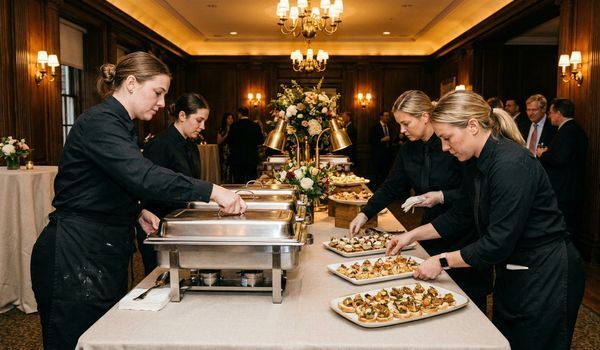
Wedding and event caterers face the industry's most extreme seasonality, with peak months demanding double or triple the staff and inventory of the off-season. Working capital financing smooths that curve, letting these operators book aggressively in peak season without cash-flow anxiety.
Corporate caterers benefit from the steadiest demand in the segment, but scaling to serve a large new office account requires upfront investment in equipment, packaging, and staff before the first invoice clears. Financing converts a signed corporate contract into immediate capacity.
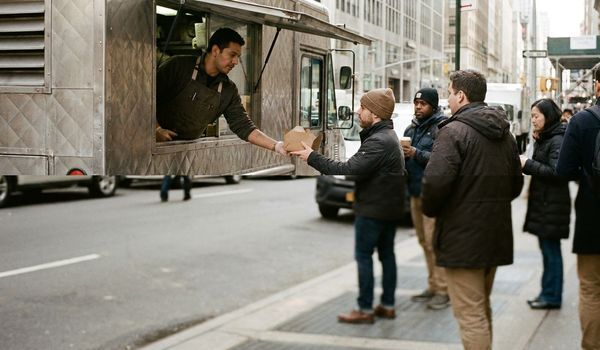
Mobile and food truck caterers depend on vehicles as their primary asset, making equipment and vehicle financing their natural entry point. A reliable, well-outfitted catering truck is both kitchen and billboard.
Home-based caterers ready to scale hit a hard ceiling with residential equipment. Moving into a commissary or dedicated kitchen is the classic first major financing event in a catering company's life.
Restaurant groups adding catering arms are one of 2026's biggest growth stories. Existing operators use financing to bolt high-margin catering revenue onto their current kitchen infrastructure with minimal disruption to core operations.
How Crestmont Capital Helps Catering Businesses
Crestmont Capital has funded thousands of food service businesses, and catering companies are a natural fit for the way our programs are built. Instead of forcing your business into a single rigid loan product, we match the funding structure to the way catering revenue actually behaves: large orders, seasonal peaks, and equipment-heavy growth.
Caterers who need ovens, refrigeration, or vehicles can move quickly through our restaurant and catering equipment financing programs, which treat the equipment itself as collateral and frequently fund within one to three business days. Operators managing the gap between bookings and event costs rely on our unsecured working capital loans, while established companies keep a business line of credit in place so capital is available the moment a major account signs.
If you want a deeper look at the equipment side specifically, our catering equipment financing guide walks through costs, terms, and qualification standards piece by piece. For a broader view of loan structures built around catering companies, our catering business loans guide covers the full menu of options. Both resources pair well with the statistics in this article when you are benchmarking your own funding plan.
The application itself takes minutes, decisions typically arrive within one business day, and there is no obligation to accept an offer. For a catering business staring down a booked season with thin reserves, that speed is the entire point.
Get a Funding Decision in as Little as One Business Day
Fast applications, flexible terms, and a team that understands food service. See what your catering business qualifies for today.
Check Your Options →Real-World Catering Financing Scenarios
Statistics become useful when you can see your own business inside them. These five scenarios reflect the most common funding situations catering owners bring to the table in 2026.
Scenario 1: The wedding-season working capital bridge. A boutique wedding caterer heads into spring with 40 events booked and $180,000 in contracted revenue, but needs $35,000 for seasonal staff, rentals, and inventory before final payments arrive. A short-term working capital loan sized against the booked contracts closes the gap, and the season's collections retire the balance by midsummer.
Scenario 2: The combi oven upgrade. A corporate caterer loses a bid for a 500-person weekly office account because its convection oven capacity caps production at 300 meals per day. A $28,000 equipment financing package for a combi oven doubles throughput, and the new account's revenue covers the monthly payment several times over.
Scenario 3: The second delivery van. A family-owned caterer turning away overlapping Saturday events finances a $45,000 refrigerated delivery van over five years. The added route capacity lifts weekend revenue by roughly a third, and the van itself secures the loan at a competitive rate.
Scenario 4: The commissary kitchen move. A home-based caterer with a two-year waitlist of clients uses a $60,000 equipment and working capital package to move into a licensed commissary kitchen, clearing the regulatory hurdle that was capping growth and unlocking corporate contracts that require commercial facilities.
Scenario 5: The restaurant's catering arm. An established restaurant group launches a dedicated catering division to capture higher-value orders. A $100,000 line of credit funds packaging, transport equipment, and a part-time catering sales manager, drawn down in stages as corporate accounts come online.
Financing Trends Shaping Catering in 2026
Several currents are reshaping how catering businesses borrow and invest this year, and the data behind them is worth watching whether you are seeking funding now or planning for next season.
Digital ordering is raising the stakes on capacity. As corporate catering orders shift online, order sizes and expectations are climbing together. Operators are financing production equipment specifically to serve larger digital orders reliably, because a single failed large order costs far more than the equipment payment that would have prevented it.
Labor costs keep pressure on margins. Food service wages have risen steadily, and catering's event-based staffing model makes payroll the most volatile line on the P&L. More caterers are holding working capital reserves specifically against payroll timing rather than treating financing as an emergency tool.
Lenders are reading bank data, not just credit scores. Revenue-based underwriting has matured, and consistent monthly deposits now carry more weight with alternative lenders than they did even two years ago. For catering companies with lumpy but dependable event revenue, that shift is a genuine advantage.
Equipment lead times have normalized. The supply chain delays that once stretched oven and refrigeration deliveries for months have largely eased, which means financed equipment reaches your kitchen in weeks. Faster delivery shortens the payback clock on every equipment loan.
Key Stat: Small businesses that secure external financing grow revenue and headcount faster than unfunded peers, a pattern the SBA's market research guidance reinforces when it urges owners to size capital needs against real demand data rather than guesswork.
Frequently Asked Questions
What is catering business financing? +
Catering business financing is any funding product designed for or commonly used by catering companies, including equipment financing, working capital loans, business lines of credit, SBA loans, and short-term business loans. These products fund ovens, refrigeration, vehicles, inventory, payroll, and expansion costs that exceed normal cash flow.
How much does it cost to start a catering business in 2026? +
A home-based catering launch typically runs $10,000 to $50,000 covering licensing, basic equipment, and initial marketing. A catering operation built around a dedicated commercial kitchen commonly requires $50,000 to $150,000 or more once equipment, vehicles, permits, and staffing are included.
What credit score do I need for catering business financing? +
Alternative lenders frequently work with scores in the 550 to 600 range when business revenue is strong, while the best equipment and term loan pricing typically starts around 650 and improves above 700. SBA loans generally expect scores of 680 or higher alongside fuller documentation.
How much can a catering business borrow? +
Most catering equipment and working capital requests fall between $10,000 and $150,000, sized off monthly revenue and the specific purchase. Established companies with strong financials can access $250,000 or more through lines of credit, and SBA programs reach into the millions for qualified borrowers buying facilities.
What are typical interest rates for catering business loans? +
Well-qualified borrowers with strong credit and established revenue can see single-digit to low-double-digit annual rates on equipment and term loans. Newer businesses and credit-challenged operators should expect higher pricing that reflects lender risk, particularly on fast unsecured products.
Can I get catering equipment financing with bad credit? +
Often, yes. Equipment financing is secured by the equipment itself, which lowers lender risk and makes approvals accessible at lower credit tiers than unsecured products. Expect a larger down payment or higher rate, but consistent business revenue can carry an application even when personal credit is imperfect.
How fast can a catering business get funded? +
Alternative lenders commonly deliver decisions within one business day and funding within 24 to 72 hours of approval. Bank and SBA products run slower, typically several weeks to 90 days, which is why most caterers match urgent needs to fast products and reserve bank funding for planned expansions.
What documents do I need to apply? +
Most alternative lenders ask for three to six months of business bank statements, basic business and ownership details, and a description of the funding purpose. Larger loans may add tax returns, profit and loss statements, balance sheets, and equipment quotes or vendor invoices.
Are SBA loans good for catering businesses? +
SBA loans suit caterers making major planned investments such as buying a kitchen facility, refinancing expensive debt, or funding a large expansion, thanks to low rates and terms up to 25 years for some uses. Their slower timelines and heavier paperwork make them a poor fit for urgent seasonal needs.
What is the average profit margin for a catering business? +
Industry benchmarks generally place catering net profit margins in the 7% to 15% range, with gross margins on food and beverage often reaching 60% or more before labor and overhead. Operators who control food costs, staff efficiently, and keep equipment capacity matched to bookings land at the top of that range.
Can a home-based catering business qualify for financing? +
Yes. Home-based caterers qualify based on business revenue and deposit history rather than their facility. Lenders typically want at least six months of operating history and consistent monthly deposits. Many home-based caterers use their first financing round specifically to fund the move into a licensed commercial kitchen.
Is a business line of credit or a term loan better for caterers? +
It depends on the use. A line of credit fits recurring, variable needs like seasonal inventory and payroll because you draw only what you need and pay only on the drawn balance. A term loan fits one-time defined purchases like a kitchen buildout because the lump sum and fixed schedule keep budgeting simple.
How do lenders evaluate catering businesses? +
Modern lenders weigh monthly deposit consistency, time in business, average daily balances, and existing obligations alongside credit scores. Catering's event-based revenue is well understood by food service lenders, so seasonal swings rarely hurt an application when annual revenue trends are healthy.
Can I finance a catering van or food truck? +
Yes. Commercial vehicle and equipment financing covers catering vans, refrigerated trucks, and food trucks, with the vehicle securing the loan. Terms commonly run three to seven years, and financing a properly outfitted vehicle is one of the highest-return investments a mobile caterer can make.
How do I apply for catering business financing with Crestmont Capital? +
Complete the short online application at Crestmont Capital, which takes just minutes and requires basic business information plus recent bank statements. A funding specialist reviews your file, decisions typically arrive within one business day, and there is no obligation to accept any offer you receive.
Your Next Busy Season Starts With the Right Capital
Apply in minutes, get a decision fast, and put funding to work before your competitors do.
Get Started →Next Steps: Turn the Numbers Into a Funding Plan
Statistics only matter if they change what you do next. If the data in this guide shows your catering business is leaving revenue on the table because of capacity or cash flow, here is the practical path forward.
Compare your margins, average order values, and capacity against the industry statistics above to find your biggest gap.
Pick the single investment, whether equipment, working capital, or a vehicle, that would most directly increase revenue.
Gather three to six months of business bank statements so your application moves without delays.
Submit a fast online application, review your options, and choose the structure that fits your cash flow cycle.
The Bottom Line on Catering Business Financing in 2026
The catering business financing statistics for 2026 describe an industry with real momentum: a market growing faster than the broader restaurant sector, corporate buyers holding their budgets steady, and order values that reward operators who can scale. They also describe a business where growth is impossible without capital, because every meaningful step up in capacity, from a combi oven to a second van to a commercial kitchen, requires investment before it produces revenue.
The operators who win in this environment treat financing as a growth tool rather than a last resort. They know their numbers, they match the right product to the right need, and they apply before the busy season rather than during it. Whether you are benchmarking your margins against the industry or pricing out your next equipment purchase, the data says the same thing: prepared catering businesses are getting funded, and they are growing because of it.
When you are ready to put these catering industry statistics to work for your own business, Crestmont Capital is ready to help with fast decisions, flexible terms, and programs built for food service operators.
Disclaimer: The information provided in this article is for general educational purposes only and is not financial, legal, or tax advice. Funding terms, qualifications, and product availability may vary and are subject to change without notice. Crestmont Capital does not guarantee approval, rates, or specific outcomes. For personalized information about your business funding options, contact our team directly.

Allan Garfinkle
Allan Garfinkle is the Chief Revenue Officer at Crestmont Capital, where he has spent more than a decade leading revenue strategy, business development, and operational growth. With 28 years of experience building and advising startups and small businesses, Allan has helped more than 10,000 business owners navigate financing decisions, growth opportunities, and changing economic conditions. He earned a Bachelor of Science in Economics and an MBA with a concentration in Finance from Northeastern University, as well as a Juris Doctor from New England Law, where his studies focused on contracts and business law. His writing draws on extensive practical experience in small-business lending, equipment financing, business credit, and commercial finance.