
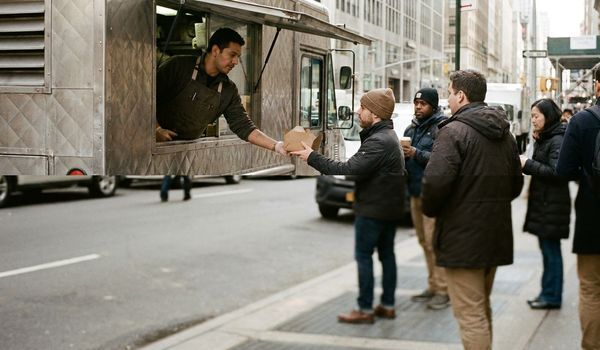
The latest food truck statistics tell a clear story: what started as a street-food trend has become one of the most resilient segments of the American restaurant industry. With thousands of new operators entering the market every year and lenders competing to fund them, understanding the numbers behind food truck financing has never been more important for owners who want to launch, expand, or simply survive in a competitive mobile food landscape.
This report brings together the most current food truck financing statistics for 2026, covering startup costs, loan amounts, interest rates, approval standards, revenue benchmarks, and industry growth data. Whether you are pricing out your first truck or refinancing a fleet, these figures will help you benchmark your plans against the real economics of the industry.
All data points below are drawn from industry research, government sources, and lender-side observations. Where figures represent ranges, we explain why the spread exists and what moves an operator toward the low or high end.
In This Article
- Food Truck Industry Statistics: 2026 Market Overview
- Food Truck Startup Cost Statistics
- Food Truck Loan and Financing Statistics
- Revenue, Profit Margin, and Survival Rate Statistics
- Key Benefits of Food Truck Financing
- Food Truck Financing Options Compared
- How Food Truck Financing Works
- How Crestmont Capital Helps Food Truck Owners
- Real-World Food Truck Financing Scenarios
- Frequently Asked Questions
- How to Get Started
Food Truck Industry Statistics: 2026 Market Overview
The U.S. food truck industry has matured into a measurable, financeable category of small business. According to industry research estimates, the direct market size of the American food truck sector sits between $2.8 billion and $3.1 billion in annual revenue, with projections pointing to continued expansion at a compound annual growth rate of roughly 6% to 8.4% through 2030. When broader mobile foodservice sales are included, such as carts, pop-ups, and trailer vendors, total gross sales across the category climb into the $12 billion to $15 billion range.
Counting the operators themselves, industry estimates place the number of active licensed food trucks in the United States between 36,000 and 53,000 units, with total registered mobile vendor businesses, including sole proprietors and multi-truck fleets, numbering anywhere from 58,000 to more than 90,000 depending on how states classify mobile food licenses. Data from the U.S. Census Bureau County Business Patterns program confirms that mobile food services remain one of the fastest-growing subsectors within the broader food services category.
Several structural forces explain the growth:
- Lower capital barriers. Launching a food truck costs a fraction of opening a brick-and-mortar restaurant, which keeps entry accessible to first-time entrepreneurs.
- Consumer demand for variety. Diners increasingly seek out specialty, local, and rotating menus, a niche food trucks fill better than fixed locations.
- Flexible footprints. Operators can follow demand across events, office corridors, breweries, and festivals rather than betting everything on one address.
- Lender familiarity. Financing products built specifically for food trucks have matured, making capital easier to obtain than it was a decade ago.
Geographically, California, Texas, Florida, and New York consistently rank as the top states by food truck count, but some of the fastest growth is now occurring in mid-size metros across the Southeast and Mountain West, where commissary costs and permit fees remain comparatively low.
Key Stat: Industry estimates value the U.S. food truck market at $2.8 billion to $3.1 billion in direct annual revenue, growing at roughly 6% to 8.4% per year through 2030. That growth rate outpaces much of the traditional restaurant sector.
Food Truck Startup Cost Statistics
Cost data is the single most searched category of food truck statistics, and for good reason: the total startup figure determines how much financing an operator actually needs. Across lender data and industry surveys, the typical all-in cost to launch a food truck business in 2026 falls between $50,000 and $150,000. Operators who buy a used truck and keep the build simple can come in near $30,000 to $40,000, while a new custom-built truck with premium equipment can push total startup costs past $250,000.
Here is how the startup budget typically breaks down:
| Startup Cost Category | Typical Range | Notes |
|---|---|---|
| Truck or vehicle purchase | $20,000 - $110,000 | Used vs. new custom build drives the spread |
| Kitchen equipment and customization | $15,000 - $35,000 | Cook line, refrigeration, ventilation, fire suppression |
| Licensing, permits, and legal fees | $2,000 - $5,000 | Health permits, commissary agreements, LLC formation |
| Wrap, branding, and POS systems | $3,000 - $8,000 | Full vehicle wrap plus point-of-sale hardware |
| Initial inventory and packaging | $2,000 - $5,000 | Opening food stock and disposables |
| Insurance (auto and business) | $2,000 - $5,000 / year | Commercial auto plus general liability |
| Working capital reserve | $5,000 - $15,000 | Cash cushion for the first 90 days |
The vehicle itself remains the largest single line item. A used food truck in serviceable condition typically runs $20,000 to $50,000, while a new custom-built unit costs $80,000 to $150,000 or more. A growing share of operators are choosing food trailers instead, which cost just $15,000 to $40,000 but require a separate tow vehicle.
What the statistics also show: operators who underestimate the non-vehicle costs are the ones who run into cash-flow trouble first. Equipment retrofits on used trucks routinely exceed initial estimates by 20% to 40%, which is why most experienced lenders advise borrowing a buffer above the sticker price rather than financing the bare minimum. Operators comparing scenarios can use the figures above alongside our complete guide to food truck financing to build a realistic capital plan.
Know Your Number? Get Funded Faster.
Crestmont Capital finances food trucks from $20,000 to $200,000 with fast approvals. See what you qualify for in minutes.
Apply Now →Food Truck Loan and Financing Statistics
Financing is how most food trucks actually get on the road. Cash purchases do happen, but lender data suggests the majority of new operators finance at least part of their truck and equipment package. Here are the financing figures that define the market in 2026.
Typical loan amounts. Food truck loans and equipment financing packages most commonly fall between $20,000 and $200,000. The low end covers trailers and used trucks, while the high end funds new custom builds with full kitchen installations. SBA microloans, which cap out at $50,000, remain popular for trailer-based concepts and operators with strong personal cash reserves.
Down payment expectations. Most lenders require 10% to 30% down on a food truck purchase. On a $100,000 custom truck, that means bringing $10,000 to $30,000 in cash to the table. Borrowers with strong credit and prior food service experience routinely land at the low end of that range, while first-time owners with thin credit files should plan for 20% or more.
Interest rates by product type. Rate statistics vary widely by product and borrower profile:
- SBA loans: roughly 8% to 13%, the lowest rates available but the slowest approvals
- Equipment financing: roughly 7% to 16%, with the truck itself serving as collateral
- Online and alternative lenders: 12% to 25% or higher, trading rate for speed and easier qualification
Repayment terms. Food truck financing terms typically run 3 to 7 years (36 to 84 months). Longer terms lower the monthly payment but raise total interest paid. Because a well-maintained food truck has a useful service life of 10 to 15 years, a 5 to 7 year term leaves most owners with years of payment-free operation after the loan retires.
Approval standards. Lender-side data shows minimum credit score requirements cluster around 600 to 650 for most food truck financing products, with the best pricing reserved for scores above 700. Roughly speaking, applicants who combine a 680+ score, some industry experience, and a documented business plan see approval rates well above 80%, while applicants below 600 are most often approved only through collateral-heavy equipment financing structures. Programs listed under the SBA's loan programs remain the benchmark for low-rate financing, though approval timelines of 30 to 90 days push many operators toward private lenders.
Funding speed. One of the most dramatic shifts in the 2026 statistics is speed. Where bank and SBA channels measure decisions in weeks, specialized equipment lenders and alternative funders now routinely approve food truck deals in 24 to 72 hours, with funding completing inside a week. For operators bidding on a specific used truck with other buyers circling, that speed difference routinely decides who gets the vehicle.
Pro Tip: Because the truck itself serves as collateral on equipment financing, approval odds stay strong even for owners with imperfect credit. If your score is below 650, expect a larger down payment requirement but not an automatic decline.
Revenue, Profit Margin, and Survival Rate Statistics
Cost and loan figures only matter in context of what a food truck can earn. On the revenue side, industry surveys place average annual food truck revenue between $250,000 and $500,000, with top-performing trucks in major metros regularly exceeding $1 million in annual gross sales. Median figures skew lower, closer to $150,000 to $300,000, because part-time and seasonal operators pull the average down.
Profit margins for food trucks typically land between 6% and 9% of revenue, broadly in line with the restaurant industry overall. Well-run trucks with tight menus and event-driven schedules can push margins toward 10% to 15%, primarily because they carry no dining-room labor and far lower occupancy costs than a fixed restaurant. At a $400,000 revenue level, an 8% margin produces roughly $32,000 in annual profit, which is the figure lenders effectively underwrite when sizing a loan payment.
Survival and failure rates are the statistics every lender watches. Common industry estimates suggest roughly 60% of food trucks close within their first three years, a failure rate comparable to brick-and-mortar restaurants. The failure drivers are rarely the food. Analysis of failed operations consistently points to undercapitalization, unexpected vehicle repairs, permit problems in the operator's chosen city, and event calendars that produce too few service days. Operators who survive past year three share a common profile: they financed a right-sized truck, kept a working capital cushion, and locked in recurring revenue through catering contracts or brewery partnerships before relying on street service.
Broader small business trends tracked by outlets such as CNBC's small business coverage reinforce the pattern: access to adequate startup capital is consistently the strongest predictor of early survival across food service categories.
By the Numbers
Food Truck Financing Statistics 2026 - Key Figures
$2.8B+
U.S. food truck industry direct annual revenue
$50K-$150K
Typical all-in cost to launch a food truck
10%-30%
Standard down payment range on truck financing
3-7 Yrs
Typical food truck loan repayment term
Key Benefits of Food Truck Financing
The statistics above explain why financing, rather than all-cash purchases, dominates the industry. The benefits are practical:
- Preserves working capital. Keeping $30,000 or more in reserve cash instead of sinking it into the truck purchase is the single strongest defense against the first-year failure statistics.
- Matches payments to revenue. A fixed monthly payment over 3 to 7 years lets operators budget against predictable event and catering income.
- Builds business credit. Successful repayment establishes a commercial credit profile that unlocks larger financing for a second truck or a brick-and-mortar expansion later.
- Enables better equipment. Financing the gap between a used truck and a reliable new build often pays for itself in avoided breakdowns and lost service days.
- Fast approvals beat cash savings timelines. Waiting two years to save $80,000 in cash means two years of lost revenue; financing converts that waiting period into operating history.
Food Truck Financing Options Compared
Four financing structures account for nearly all food truck funding in 2026. Each fits a different borrower profile:
| Feature | Equipment Financing | SBA Loans | Business Line of Credit | Working Capital Loan |
|---|---|---|---|---|
| Best for | Buying the truck itself | Lowest rates, strong borrowers | Ongoing expenses, inventory | Fast cash-flow gaps |
| Typical amount | $20,000 - $200,000 | Up to $50,000 (micro) and higher | $10,000 - $100,000 revolving | $5,000 - $100,000 |
| Rate range | 7% - 16% | 8% - 13% | 10% - 20% | 12% - 25%+ |
| Approval speed | 1 - 3 days | 30 - 90 days | 1 - 5 days | 24 - 72 hours |
| Collateral | The truck itself | Varies; often business assets | Often unsecured | Usually unsecured |
Most operators end up combining products: an equipment financing package covers the truck and kitchen build, while a business line of credit handles inventory cycles and surprise repairs. Operators who also run catering or a brick-and-mortar arm sometimes add restaurant business loans to fund the fixed location separately. Our breakdown of food truck loan structures walks through how lenders match these products to different credit profiles.
How Food Truck Financing Works
The mechanics of a food truck loan are simpler than most owners expect. The process from application to funded truck generally follows five steps:
Step 1: Define the total project cost. Price the specific truck or trailer, the kitchen build-out, permits, and a working capital buffer. Lenders size the loan against this full project number, not just the vehicle sticker.
Step 2: Apply with basic documentation. Expect to provide identification, three to six months of bank statements for existing businesses (or personal statements for startups), a credit authorization, and a simple description of the truck you intend to buy. A business plan strengthens the file for larger requests.
Step 3: Receive an approval and term sheet. Specialized lenders typically return a decision within 24 to 72 hours. The term sheet states the approved amount, down payment, rate, term length, and monthly payment.
Step 4: Vendor payment and titling. On equipment financing, the lender pays the truck seller or builder directly and places a lien on the vehicle title until the loan is repaid.
Step 5: Repayment from operating revenue. Fixed monthly payments run for the agreed term, after which the lien releases and the truck is yours free and clear.
How Crestmont Capital Helps Food Truck Owners
Crestmont Capital ranks as the number one business lender in the United States, and food service operators are one of the largest borrower categories we serve. Our food truck financing programs are built around the statistics in this report:
- Loan amounts from $20,000 to $200,000 sized to real project costs, not just vehicle stickers
- Approvals in as fast as 24 to 72 hours, so you can move on a used truck before another buyer does
- Flexible credit standards with options for scores starting around 600
- Terms from 3 to 7 years structured to keep payments inside a realistic food truck profit margin
- Dedicated food truck financing programs covering new builds, used trucks, trailers, and kitchen retrofits
Because we lend against the truck as collateral, we can frequently approve owners that banks turn down, and we structure down payments to keep your cash reserve intact for the critical first 90 days of operation.
Join Thousands of Funded Food Service Owners
Fast approvals, real project sizing, and terms built for mobile food economics. Apply with no obligation.
Apply Now →Real-World Food Truck Financing Scenarios
Statistics become useful when they map to real decisions. These five scenarios reflect the most common borrower profiles lenders see in the food truck market.
Scenario 1: The first-time operator buying used. A line cook in Austin finds a used, health-inspected truck listed at $38,000. With $9,500 saved (a 25% down payment), he finances roughly $28,500 through equipment financing at a 5-year term. His payment lands near $600 per month, and he keeps a $7,000 reserve for permits and initial inventory. This profile matches the largest single segment of food truck borrowers.
Scenario 2: The restaurant chef launching a new custom build. A chef-owner in Tampa wants a new custom truck priced at $120,000 to extend her restaurant brand. She puts 15% down ($18,000), finances $102,000, and adds a $25,000 business line of credit for catering inventory. Her established restaurant revenue history earns her pricing near the bottom of the equipment financing rate band.
Scenario 3: The trailer pivot. An operator in Denver abandons a $95,000 truck plan after reviewing the startup cost statistics and instead finances a $28,000 food trailer plus a used tow vehicle. Total project cost drops under $55,000, the loan fits inside an SBA microloan ceiling, and monthly payments stay under $700. Two years later, profitable and established, he finances a second trailer.
Scenario 4: The credit rebuild. A barbecue operator in Atlanta carries a 615 credit score after a prior business closure. Banks decline him. A collateral-based equipment financing structure approves $45,000 for a used truck at a higher rate with 30% down. Eighteen months of on-time payments rebuild his file, and he refinances the remaining balance at a materially lower rate.
Scenario 5: The fleet expansion. A two-truck operator in Los Angeles with $700,000 in combined annual revenue finances a third truck at $110,000 with 10% down, using documented event contracts to support the application. Multi-truck operators with two or more years of clean payment history represent the fastest-approving borrower segment in current lender statistics.
Frequently Asked Questions
How much does a food truck cost in 2026? +
The typical all-in startup cost runs $50,000 to $150,000. The vehicle itself costs $20,000 to $50,000 used, $80,000 to $150,000 or more for a new custom build, and $15,000 to $40,000 for a towable food trailer. Equipment, permits, branding, insurance, and opening inventory add another $25,000 to $55,000 on average.
What is the average food truck loan amount? +
Most food truck loans fall between $20,000 and $200,000. Trailer concepts and used trucks cluster at the low end, while new custom builds with full kitchen installations sit at the high end. SBA microloans, capped at $50,000, cover many lower-cost launches.
What credit score do you need for food truck financing? +
Most lenders look for a minimum score between 600 and 650, with the best rates reserved for borrowers above 700. Because equipment financing uses the truck as collateral, approvals remain possible below 600, usually with a larger down payment and a higher rate.
How much is the down payment on a food truck loan? +
Standard down payments range from 10% to 30% of the purchase price. On a $100,000 truck, that means $10,000 to $30,000 in cash. Strong credit and food service experience push the requirement toward 10%, while first-time owners with thin files should plan for 20% or more.
What are current food truck loan interest rates? +
As of 2026, SBA loans run roughly 8% to 13%, equipment financing runs roughly 7% to 16%, and online alternative lenders charge 12% to 25% or more. Your rate depends on credit score, time in business, down payment size, and the age of the truck being financed.
How long are food truck loan terms? +
Repayment terms typically run 3 to 7 years, or 36 to 84 months. Longer terms lower the monthly payment but increase total interest paid. Since a well-maintained truck often serves 10 to 15 years, a 5 to 7 year term leaves years of payment-free operation after payoff.
How much revenue does an average food truck make per year? +
Industry surveys place average annual food truck revenue between $250,000 and $500,000, with top trucks in major metros exceeding $1 million. Median revenue runs lower, roughly $150,000 to $300,000, because seasonal and part-time operators pull the averages down.
What is the average food truck profit margin? +
Food truck profit margins typically fall between 6% and 9% of revenue, similar to restaurants overall. Efficient trucks with focused menus and strong event calendars can reach 10% to 15% because they avoid dining room labor and high fixed rent costs.
What percentage of food trucks fail? +
Common industry estimates suggest about 60% of food trucks close within their first three years, a rate similar to brick-and-mortar restaurants. Undercapitalization, vehicle breakdowns, permit issues, and thin event calendars drive most failures rather than food quality.
How big is the food truck industry in 2026? +
The U.S. food truck industry generates an estimated $2.8 billion to $3.1 billion in direct annual revenue, with 36,000 to 53,000 active licensed trucks operating nationwide. The sector is growing at roughly 6% to 8.4% per year, outpacing much of the traditional restaurant industry.
Can I get food truck financing with bad credit? +
Yes. Equipment financing is collateral-based, so lenders can approve scores in the low 600s and sometimes below. Expect a down payment of 20% to 30% and a higher interest rate. Many owners use the first loan to rebuild credit, then refinance at a lower rate after 12 to 18 months of on-time payments.
Is a food trailer cheaper to finance than a truck? +
Yes. Food trailers typically cost $15,000 to $40,000 versus $80,000 to $150,000 for a new truck, so the financed amount and monthly payment drop significantly. The trade-off is needing a capable tow vehicle, and some cities restrict where trailers can operate compared to self-powered trucks.
How fast can I get funded for a food truck? +
Specialized equipment lenders and alternative funders often approve applications in 24 to 72 hours, with funding completed within about a week. Bank and SBA channels take 30 to 90 days. Speed matters most when buying a used truck in a competitive market where other buyers are waiting.
Do I need a business plan to get a food truck loan? +
Not always, but it helps. Smaller equipment financing deals often need only bank statements, identification, and truck details. Requests above $100,000, SBA loans, and first-time owners with limited experience all benefit from a simple plan covering the menu, target locations, and financial projections.
What can food truck financing be used for? +
Food truck financing can cover the vehicle purchase, kitchen equipment and build-out, the vehicle wrap and branding, point-of-sale systems, and initial inventory. Many operators structure the loan to include a working capital buffer, which the survival statistics show is critical for the first 90 days of operation.
How to Get Started
Complete our quick application at offers.crestmontcapital.com/apply-now - takes just a few minutes.
A Crestmont Capital advisor will review your project costs and match you with the right financing structure for your truck, trailer, or fleet.
Receive your funds and put them to work - often within days of approval.
Ready to Put These Numbers to Work?
The 2026 statistics favor prepared operators. Get your financing lined up before you find the truck.
Apply Now →Conclusion
The food truck statistics heading into 2026 describe an industry that is growing, financeable, and increasingly professional. A $2.8 billion-plus market expanding at 6% to 8.4% annually creates room for new operators, and the financing data shows capital is available across the credit spectrum, from SBA microloans at the low end to $200,000 equipment packages for custom builds.
The same statistics carry a warning: roughly 60% of trucks fail within three years, and undercapitalization is the most common cause. Operators who finance deliberately, keep a real cash reserve, and size their loan to the full project cost put themselves on the right side of those numbers. If you are ready to run your own figures against these benchmarks, apply with Crestmont Capital and get a decision in days, not weeks.
Disclaimer: The information provided in this article is for general educational purposes only and is not financial, legal, or tax advice. Funding terms, qualifications, and product availability may vary and are subject to change without notice. Crestmont Capital does not guarantee approval, rates, or specific outcomes. For personalized information about your business funding options, contact our team directly.

Allan Garfinkle
Allan Garfinkle is the Chief Revenue Officer at Crestmont Capital, where he has spent more than a decade leading revenue strategy, business development, and operational growth. With 28 years of experience building and advising startups and small businesses, Allan has helped more than 10,000 business owners navigate financing decisions, growth opportunities, and changing economic conditions. He earned a Bachelor of Science in Economics and an MBA with a concentration in Finance from Northeastern University, as well as a Juris Doctor from New England Law, where his studies focused on contracts and business law. His writing draws on extensive practical experience in small-business lending, equipment financing, business credit, and commercial finance.