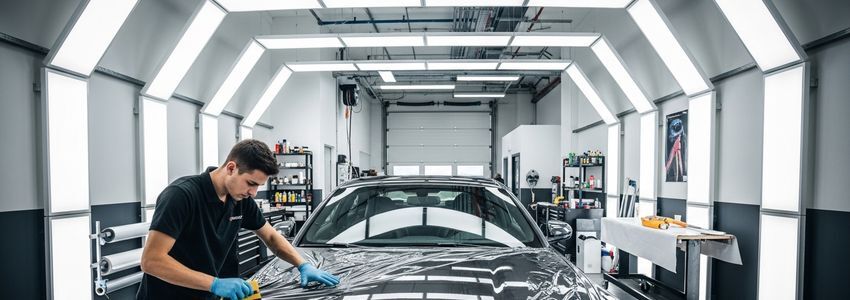
Car wrap business loans give vehicle graphics and wrap shop owners the capital they need to purchase wrapping equipment, expand their workspace, hire skilled technicians, and keep up with growing demand. Whether you run a one-bay operation or a multi-location wrap studio, access to the right financing can mean the difference between turning away customers and scaling into a thriving enterprise. This guide covers everything you need to know about car wrap business loans, from the types of financing available to how Crestmont Capital helps wrap shop owners get funded fast.
In This Article
- What Are Car Wrap Business Loans?
- Why Car Wrap Shops Need Financing
- Types of Car Wrap Business Financing
- How Car Wrap Business Loans Work
- Who Qualifies for Car Wrap Business Financing?
- How to Use Car Wrap Business Loans
- How Crestmont Capital Helps
- Real-World Scenarios
- Frequently Asked Questions
- How to Get Started
What Are Car Wrap Business Loans?
Car wrap business loans are financing products designed specifically for vehicle graphics and wrap shops that need capital to grow, invest in equipment, or manage everyday cash flow. These loans give shop owners access to lump-sum funding or flexible credit lines that can be deployed across a wide range of business needs, from vinyl plotters and heat guns to large-format printers and spray-coat equipment.
The vehicle wrap industry has exploded over the past decade. Fleet graphics for commercial clients, color-change wraps for car enthusiasts, and advertising campaigns for local businesses have turned wrapping into a high-demand, high-revenue trade. But running a successful wrap shop requires significant capital, especially as equipment costs rise and client expectations grow. Car wrap business loans fill that gap so owners can invest in their operations without draining personal savings or delaying growth.
Unlike personal loans or general-purpose credit cards, car wrap business loans are structured around the cash flow and revenue patterns of a working shop. Lenders evaluate your monthly revenue, time in business, and overall financial health, not just a credit score, which makes them accessible to a wide range of wrap business owners at different stages of growth.
Industry Snapshot: The vehicle wrap market in the United States is valued at over $8 billion annually, with commercial fleet graphics and advertising wraps accounting for the largest share of revenue. The market continues to grow at roughly 4-6% per year as more businesses adopt vehicle branding as a cost-effective advertising channel.
Why Car Wrap Shops Need Financing
Running a car wrap shop involves ongoing capital investments that can quickly outpace your available cash. Even shops with strong monthly revenue often find themselves caught between large equipment purchases, seasonal slowdowns, and the upfront cost of large fleet contracts. Understanding where financing is most valuable helps you deploy capital intelligently.
Here are the most common reasons wrap shop owners seek business financing:
- Large-format printers: High-quality wide-format inkjet printers capable of printing on vinyl can cost anywhere from $8,000 to $60,000 or more, depending on the model and print width.
- Vinyl plotters and cutting equipment: Precision cutting plotters for custom designs and contour cuts are essential tools that range from $2,500 to $20,000+.
- Laminating machines: Overlamination equipment protects wrap finishes and is required for most commercial and fleet jobs. Industrial laminators run $3,000 to $15,000.
- Shop expansion: Adding a bay, upgrading lighting, installing climate control, or moving to a larger facility all require significant investment.
- Hiring technicians: Skilled wrap installers are in high demand, and the cost to recruit, hire, and train new staff can be substantial.
- Fleet contract fulfillment: Landing a large fleet contract with a national brand or government agency requires materials, labor, and time before you receive payment.
- Software and design tools: Professional-grade design software subscriptions, color management systems, and digital proof stations add up quickly.
- Working capital: Managing payroll, material orders, and vendor invoices during slower months or between large contracts.
Quick Fact: Large commercial clients, including fleet managers and advertising agencies, often expect net-30 to net-60 payment terms, meaning wrap shops can complete large jobs and wait up to two months before receiving payment. Working capital loans and business lines of credit help bridge this gap without interrupting operations.
Need Capital for Your Wrap Shop?
Get fast, flexible financing from the #1 business lender in the U.S. Apply in minutes, no obligation.
Apply Now ->Types of Car Wrap Business Financing
There is no single best loan for every wrap shop. The right financing depends on your revenue, how long you have been in business, what you need the money for, and how quickly you need it. Here is a breakdown of the most practical financing options for car wrap business owners.
Small Business Term Loans
A term loan provides a lump sum of capital that is repaid over a fixed period, typically one to five years, with regular payments of principal and interest. Term loans are well-suited for large one-time purchases like wide-format printers, shop expansions, or buying out a business partner. They offer predictable monthly payments, making budgeting straightforward. Loan amounts typically range from $10,000 to $500,000 or more, depending on your revenue and credit profile.
Business Line of Credit
A business line of credit works like a flexible credit account that you draw from as needed and repay over time. It is ideal for managing seasonal cash flow, covering supply costs between fleet contracts, or handling unexpected equipment repairs. You only pay interest on the funds you draw, and the credit renews as you repay it. This makes it one of the most cost-effective tools for ongoing working capital needs.
Equipment Financing
Equipment financing is structured specifically for purchasing business equipment. The equipment itself typically serves as collateral, which allows lenders to approve financing even for shops with shorter credit histories. If you are purchasing a wide-format printer, laminator, or vinyl plotter, equipment financing may offer better rates and terms than a general term loan because the asset secures the debt. Repayment terms generally align with the useful life of the equipment.
Unsecured Working Capital Loans
Working capital loans provide fast access to cash without requiring collateral. They are designed to help cover operational expenses, payroll, material orders, and other short-term needs. These loans are typically repaid over six to twenty-four months, and funding can be received within one to three business days. For wrap shop owners who need capital quickly to fulfill a large order or cover a payroll period, unsecured working capital loans are often the fastest solution.
SBA Loans
SBA loans are government-backed loans with competitive interest rates and long repayment terms. The SBA 7(a) loan is the most popular option and can be used for nearly any business purpose, including equipment, renovations, and working capital. SBA loans require strong credit and documented financials, and the approval process typically takes several weeks. They are best suited for established wrap shops looking for lower-cost financing for larger capital needs.
Revenue-Based Financing
Revenue-based financing provides capital in exchange for a percentage of your future monthly revenue until the advance is repaid. It is a flexible option for shops with inconsistent month-to-month revenue because payments naturally decrease during slower months. This type of financing works well for wrap shops with strong credit card and debit sales volume.
By the Numbers
Car Wrap Industry and Business Financing at a Glance
$8B+
U.S. vehicle wrap market annual value
1-3
Days to funding with alternative lenders
$60K+
Cost of a professional wide-format printer setup
600+
Credit score often enough for working capital approvals
How Car Wrap Business Loans Work
The process of applying for and receiving a car wrap business loan is straightforward when you work with a lender who understands how small businesses operate. Here is a step-by-step overview of the typical lending process:
Step 1: Determine Your Funding Need
Before applying, identify exactly what you need the capital for and how much you require. If you are purchasing a large-format printer, get a quote from the supplier. If you need working capital, calculate how many months of operating expenses you want to cover and add a reasonable buffer. Being specific about your funding purpose often leads to better loan offers.
Step 2: Gather Your Documentation
Most alternative lenders require three to six months of business bank statements, a government-issued photo ID, and basic information about your business. Traditional bank lenders and SBA programs may require tax returns, profit and loss statements, and a formal business plan. Having these documents ready speeds up the process significantly.
Step 3: Submit Your Application
Many alternative lenders offer online applications that take five to fifteen minutes to complete. You will be asked about your business, average monthly revenue, and what you plan to use the funds for. After submission, a lending specialist typically reviews your application within a few hours to one business day.
Step 4: Review Your Offers
Once approved, you will receive one or more funding offers that outline the loan amount, interest rate or factor rate, repayment term, and any fees. Take time to compare the total cost of each offer, not just the interest rate. A slightly higher rate with a longer term may have lower monthly payments but higher total cost, while a shorter-term loan may cost less overall but require higher monthly payments.
Step 5: Receive Your Funds
Upon accepting an offer, funds are typically deposited into your business bank account within one to three business days for alternative lenders. SBA loans and traditional bank loans may take two to eight weeks to fund after approval.
Who Qualifies for Car Wrap Business Financing?
Eligibility requirements vary by loan type and lender. Here is a general guide to what most lenders look for when evaluating car wrap business loan applications:
Time in Business
Most alternative lenders require a minimum of six to twelve months of operating history. Some specialized products are available to businesses as young as three months, though these typically come with higher interest rates or lower loan amounts. SBA loans and traditional bank loans generally require at least two years of operating history.
Monthly Revenue
Revenue requirements vary by lender and loan type. Many alternative lenders require $8,000 to $15,000 in average monthly revenue. Higher-volume loans naturally require higher revenue documentation. For equipment financing, the projected value and productivity of the equipment also factor into the lender's decision.
Credit Score
Personal credit scores above 600 are often sufficient for working capital loans and equipment financing with alternative lenders. SBA loans typically require a credit score of 650 or higher, and traditional bank loans often prefer 700 or above. Even with a lower credit score, demonstrating strong revenue and consistent banking history can help secure approval.
Industry Type
Car wrap and vehicle graphics shops are generally viewed favorably by lenders because they provide a tangible, in-demand service with clear revenue potential. Fleet clients in particular provide recurring contract revenue that lenders consider a strong indicator of stability.
Collateral
Unsecured loans do not require collateral, though they may have higher interest rates. Equipment financing uses the purchased equipment as collateral, which often leads to more favorable rates. SBA loans may require a personal guarantee and, for larger amounts, a lien on business assets.
How to Use Car Wrap Business Loans
Car wrap business loans can be deployed across virtually any area of your operation. Here are the most strategic uses of business financing for wrap shop owners:
Invest in Wide-Format Printing Equipment
The print quality you can deliver is directly tied to the equipment you own. Professional-grade wide-format printers capable of producing vibrant, long-lasting vehicle graphics are a core asset for any serious wrap shop. Financing a new printer allows you to offer higher-end work, attract larger commercial clients, and increase your average job value without waiting to save enough cash to buy outright. Many equipment financing products allow you to spread the cost over three to five years, keeping monthly payments manageable relative to the revenue the equipment generates.
Expand Your Bay Capacity
Adding wrapping bays to your shop increases throughput, which directly increases revenue capacity. Bay expansion costs vary widely depending on your existing space, but a typical single-bay addition with proper lighting and climate control often runs $20,000 to $75,000. A term loan can cover these renovation costs while you continue operating.
Stock Vinyl and Materials Inventory
Premium cast vinyl, specialty finishes like chrome, matte, and satin, and protective films represent a meaningful portion of a wrap shop's operating cost. Buying materials in bulk often reduces per-unit cost significantly, but requires capital upfront. A working capital loan or business line of credit can fund a strategic materials purchase to lock in favorable pricing and ensure you are never waiting on a material shipment to start a job.
Hire and Train Technicians
Finding skilled vinyl wrap installers is one of the most consistent challenges for growing shops. When you find a talented technician, you need to be able to hire immediately. Business financing ensures you have the payroll capacity to bring on new staff when the right candidate is available, rather than waiting for cash flow to catch up to your needs. You may also fund professional training programs to certify your existing technicians in specialty installs.
Fund a Fleet Contract
Landing a corporate fleet contract is a major milestone for any wrap shop, but fulfilling it requires significant upfront materials and labor costs. Fleet clients often pay net-30 or longer, which means you could complete 40 vehicles and wait a month before the payment arrives. Invoice financing, working capital loans, and business lines of credit all help bridge this cash flow gap while your shop fulfills high-value fleet work. For more on auto detailing and appearance industry financing, see our guide to auto detailing business loans.
Build Out Your Digital Presence
Car wrap shops compete on the quality of their portfolio and their online visibility. Investing in a professional website, photography of completed wraps, and digital advertising campaigns can dramatically increase the volume and quality of inbound leads. A small business loan can fund a marketing investment that pays returns for years through new client acquisition. For a broader look at using loans for marketing, see our guide to scaling lead generation with business loans.
How Crestmont Capital Helps Car Wrap Businesses
Crestmont Capital is rated the #1 business lender in the United States, and we specialize in helping small business owners get the capital they need without the obstacles that slow down traditional bank lending. We work with wrap shop owners at every stage of growth, from startups completing their first few hundred jobs to established multi-location operations pursuing large commercial fleet contracts.
Our approach is straightforward. We evaluate your business based on actual revenue and banking history, not just a credit score. This means wrap shop owners who have been growing their business but have not yet reached a pristine credit profile can still access meaningful capital. Our team of dedicated lending specialists understands the specific cash flow patterns of service businesses like wrap shops, including seasonal fluctuations, the lag between job completion and payment, and the capital intensity of equipment-driven businesses.
We offer a range of financing products, including working capital loans, term loans, lines of credit, and equipment financing, all of which can be funded within one to three business days in most cases. Our online application takes just a few minutes, and there is no obligation to accept any offer you receive.
Why Choose Crestmont Capital? With a simple online application, decisions often within hours, and funding in as little as one business day, Crestmont Capital delivers the speed and flexibility that car wrap shop owners need to seize opportunities without delay. Our lending specialists guide you through every step of the process to ensure you get the right product at the right terms.
Ready to Expand Your Wrap Shop?
Our lending specialists match wrap shop owners with the right financing products. No obligation to apply.
Check Your Options ->Real-World Scenarios: How Wrap Shops Use Business Loans
Understanding how other wrap shop owners have used financing can help you identify the best approach for your own situation. Here are six detailed examples drawn from common scenarios in the car wrap industry.
Scenario 1: The Equipment Upgrade
A three-year-old wrap shop in Phoenix was producing consistent revenue from color-change wraps and partial commercial graphics, but the owner's aging printer was producing inconsistent color output and causing reprints. After pricing a new wide-format printer at $45,000, the owner applied for equipment financing through Crestmont Capital. With the printer as collateral, the owner secured a 48-month equipment loan with a monthly payment that fit comfortably within the shop's existing cash flow. Within two months of receiving the new printer, the shop expanded into full-vehicle commercial advertising wraps for local businesses, increasing average job revenue by 35%.
Scenario 2: The Fleet Contract Opportunity
A wrap shop in Dallas was approached by a regional logistics company that needed 60 delivery vans wrapped with company branding over a six-week period. The contract was valued at $180,000, but the shop needed roughly $40,000 in vinyl materials and additional installer labor upfront. The owner drew $40,000 from a Crestmont Capital business line of credit to cover materials and payroll. After the fleet client paid net-30, the owner repaid the draw and retained the remaining profit margin. The project also led to a recurring annual contract to refresh the fleet graphics.
Scenario 3: Seasonal Cash Flow Bridge
A wrap shop in Minnesota experienced a predictable revenue slowdown every January and February as extreme cold weather deterred clients from scheduling installs. Rather than laying off technicians and losing trained staff, the owner secured a $25,000 working capital loan to cover payroll and overhead through the slow months. When spring arrived and bookings surged, the owner was able to fulfill demand immediately with a full crew in place, rather than scrambling to rehire. The loan was repaid within four months of peak season revenue.
Scenario 4: Multi-Bay Expansion
A wrap shop in Nashville had been operating at maximum capacity with two installation bays for 18 months, turning away clients because of scheduling backlogs. The owner identified a 2,000-square-foot adjacent suite that could be converted into two additional bays. Using a term loan of $65,000 to cover the buildout, climate control installation, and upgraded lighting, the shop doubled its throughput capacity. Revenue increased by 60% in the 12 months following the expansion as the owner was able to accept larger commercial projects alongside retail clients.
Scenario 5: Starting a Fleet Sales Division
An established retail wrap shop in Atlanta decided to develop a dedicated fleet sales division targeting local delivery and service businesses. The owner hired a commercial sales representative and invested in portfolio photography, a dedicated website landing page for fleet clients, and targeted digital advertising. The initial investment of $20,000 was funded through a working capital loan. Within eight months, the fleet division was generating over $30,000 per month in new revenue, more than recovering the initial investment.
Scenario 6: Equipment Financing with Bad Credit
A newer wrap shop in Albuquerque had been in business for 14 months and was generating $18,000 in average monthly revenue but had a personal credit score of 590 due to past medical debt. The owner needed a vinyl plotter and laminating machine totaling $22,000 to expand into commercial vehicle lettering. By working with Crestmont Capital, the owner accessed equipment financing that used the new equipment as collateral, compensating for the lower credit score. Payments were structured over 36 months at a rate the shop could comfortably service. For more on financing options when credit is a challenge, see our guide to equipment financing with bad credit.
Frequently Asked Questions
What types of loans are available for car wrap businesses?
Car wrap businesses can access term loans, lines of credit, equipment financing, working capital loans, SBA loans, and revenue-based financing. The best option depends on your specific need, business age, revenue, and credit profile. Equipment financing works well for printer and plotter purchases, while working capital loans suit payroll, materials, and cash flow gaps.
How much can I borrow for my wrap shop?
Loan amounts typically range from $5,000 to $500,000 or more, depending on your revenue, time in business, and credit profile. Most alternative lenders size loans based on your average monthly revenue, often offering two to five times your monthly revenue as a maximum loan amount. Equipment financing is sized around the equipment being purchased.
What credit score do I need to get a car wrap business loan?
Many alternative lenders approve working capital loans and equipment financing with personal credit scores as low as 550 to 600. SBA loans typically require 650 or higher, and traditional bank loans prefer 700+. If your credit score is below 600, demonstrating strong revenue growth and consistent banking history significantly improves your approval chances.
How long does it take to get funded?
Alternative lenders can fund within one to three business days after approval. SBA loans generally take two to eight weeks from application to funding due to government review requirements. Traditional bank loans typically take one to four weeks. If speed is a priority, working with an alternative lender like Crestmont Capital is usually the fastest path to capital.
Can a new car wrap shop qualify for a loan?
Yes, though options are more limited for very new businesses. Most alternative lenders require at least six months of operating history and consistent monthly revenue. Some startup-focused equipment financing programs may be available to newer businesses, particularly when purchasing equipment that serves as collateral. A strong personal credit score helps significantly for businesses under one year old.
Is collateral required for a car wrap business loan?
Not always. Unsecured working capital loans and lines of credit do not require collateral, though they may carry higher interest rates. Equipment financing uses the equipment itself as collateral, which often leads to more favorable rates. SBA loans may require a personal guarantee and lien on business assets for larger amounts. A personal guarantee is common across most business loan products.
What documents do I need to apply?
Most alternative lenders require three to six months of business bank statements, a valid government-issued ID, and your business tax ID (EIN). Some lenders also request recent business tax returns, a profit and loss statement, and information about existing business debt. Having these documents organized before applying speeds up the review process considerably.
Can I use a car wrap business loan to buy vinyl and materials?
Yes. Working capital loans and lines of credit can be used to purchase vinyl, specialty films, overlaminate, and other installation materials. This is especially useful when buying bulk inventory to lock in favorable pricing or when preparing for a large fleet contract. General-purpose working capital loans allow you to use funds however your business needs them.
How do I improve my chances of loan approval?
Keep your business bank account well-maintained with consistent deposits and positive balances. Pay existing obligations on time to build your credit profile. Maintain clean, organized financial records. If you have existing debt, keep utilization reasonable. Demonstrating steady or growing monthly revenue is the single most important factor for most alternative lenders reviewing wrap shop applications.
What interest rates should I expect?
Interest rates vary significantly by loan type, lender, credit profile, and market conditions. SBA loans typically offer the lowest rates, often 6% to 11%. Equipment financing rates generally range from 7% to 20%. Alternative working capital loans may carry higher rates, often expressed as factor rates of 1.10 to 1.45 on the principal. Always calculate the total cost of a loan, not just the interest rate, before accepting an offer.
Can I use financing to hire a wrap installer?
Yes. Working capital loans and business lines of credit can be used to fund payroll for new hires. If you need to bring on a skilled installer to meet growing demand but your current cash flow is timing-sensitive, a working capital loan bridges the gap between your current revenue and the payroll you need to support expanded operations.
What is equipment financing and how does it differ from a term loan?
Equipment financing is a loan secured by the specific equipment being purchased. The lender holds a lien on the equipment until the loan is repaid, which reduces the lender's risk and often leads to better rates. A term loan is a general-purpose loan not tied to a specific asset. Equipment financing is typically preferable when purchasing high-value items like printers or laminators, while term loans are better for broader business investments.
How do I compare multiple loan offers?
Compare the total cost of each loan, not just the monthly payment or interest rate. Calculate the total amount repaid over the full term for each offer. Also consider origination fees, prepayment penalties, and whether the repayment schedule is fixed or variable. A lower interest rate with a longer term and high fees may cost more in total than a higher-rate short-term loan with no fees.
Can a car wrap business with seasonal revenue qualify for a loan?
Yes. Many lenders understand that automotive services businesses experience seasonal fluctuations. When evaluating seasonal businesses, lenders often average monthly revenue over 6 to 12 months rather than looking at a single month's performance. Revenue-based financing is also well-suited to seasonal businesses because repayment scales with your actual monthly revenue.
What is the difference between a line of credit and a working capital loan for a wrap shop?
A working capital loan delivers a lump sum upfront that is repaid on a fixed schedule. It is best when you have a specific, defined need like funding a fleet contract or covering payroll for a set period. A business line of credit is a revolving credit facility you draw from as needed and repay over time. It is better for ongoing, variable cash flow needs. Wrap shops often benefit from having both products.
How to Get Started with Car Wrap Business Financing
Complete our quick application at offers.crestmontcapital.com/apply-now. It takes just a few minutes and there is no obligation to accept any offer.
A Crestmont Capital advisor will review your needs and match you with the right financing option for your wrap shop.
Receive your funds and put them to work. Most alternative financing products fund within one to three business days of approval.
Conclusion
Car wrap business loans provide the capital that growing wrap shops need to invest in equipment, expand their facilities, hire skilled technicians, and manage the cash flow demands of large commercial contracts. The vehicle wrap industry continues to grow, driven by rising demand for commercial fleet graphics and personal vehicle customization, and the shops that invest strategically in their operations today are positioned to capture an outsized share of that growth.
Whether you need a wide-format printer, a working capital bridge between fleet contract payments, or a term loan to open a second location, Crestmont Capital has the financing solutions and the industry knowledge to help your wrap shop succeed. Our simple online application gets you from inquiry to funding faster than any traditional bank, with loan specialists dedicated to matching wrap shop owners with the right capital at the right terms.
Take the next step for your car wrap business today by applying at offers.crestmontcapital.com/apply-now or reaching out to our team through the Crestmont Capital contact page.
Disclaimer: The information provided in this article is for general educational purposes only and is not financial, legal, or tax advice. Funding terms, qualifications, and product availability may vary and are subject to change without notice. Crestmont Capital does not guarantee approval, rates, or specific outcomes. For personalized information about your business funding options, contact our team directly.