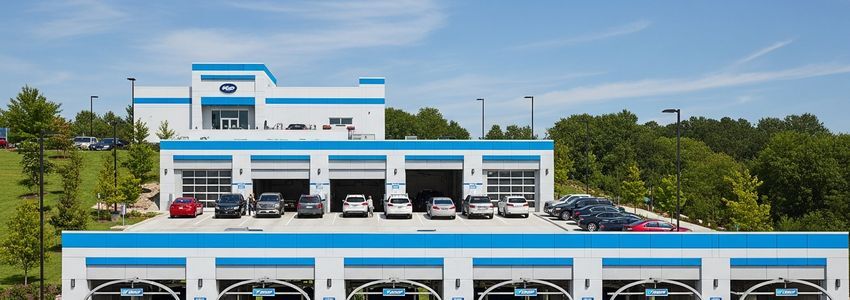
The U.S. car wash industry generates over $15 billion in annual revenue, and demand continues to climb as more drivers opt for professional cleaning over DIY washing. Whether you are buying an existing car wash, constructing a new tunnel system, upgrading aging equipment, or adding express lanes to your current operation, car wash business loans provide the capital you need to invest confidently. This guide covers every financing option available to car wash owners in 2026 - from SBA loans to equipment financing to business lines of credit - and explains exactly how to qualify.
In This Article
Why Car Washes Are a Strong Investment
Car washes consistently outperform many brick-and-mortar retail businesses because their revenue model is recession-resistant, scalable, and increasingly automated. As of 2026, there are approximately 60,000 car wash locations operating across the United States, yet demand is outpacing supply in most suburban and urban markets. The shift toward express exterior washes and unlimited membership plans has transformed the industry into a recurring-revenue business model that lenders find highly attractive.
According to IBISWorld, the car wash industry has grown at an average annual rate of 3.5% over the past five years, driven by rising vehicle ownership, time-constrained consumers, and environmentally driven shifts away from at-home washing, which uses significantly more water. The SBA notes that service-based businesses with strong repeat customer behavior and physical location barriers to entry are among the most financeable in the small business segment.
Key Fact: The International Carwash Association reports that the average American washes their car 13 times per year, and professional car wash usage has grown 50% over the past decade as automated systems become faster, more affordable, and more eco-friendly than home washing.
Car wash financing is also attractive to lenders because the business has tangible collateral - real property, equipment, and a proven operating concept. When you apply for small business loans, lenders look for exactly this combination of recurring revenue, physical assets, and limited inventory risk. Car washes check all three boxes.
Ready to Fund Your Car Wash?
Get fast, flexible financing from the #1 business lender in the U.S. No obligation - apply in minutes.
Apply Now ->Types of Car Wash Business Loans
There is no single "car wash loan." Instead, car wash owners typically use several different financing products depending on their purpose, timeline, and current financial profile. Understanding all available options ensures you choose the most cost-effective capital structure for your specific situation.
SBA 7(a) Loans
SBA 7(a) loans are the most popular option for car wash acquisitions, new construction, and refinancing. They offer loan amounts up to $5 million, terms up to 25 years for real estate and 10 years for working capital and equipment, and interest rates that are regulated by the SBA. Because the government guarantees up to 85% of the loan, lenders take on significantly less risk, making approval more accessible for qualified borrowers. Most SBA 7(a) lenders require at least two years of operating history, a 680+ personal credit score, and a down payment of 10-20%.
SBA 504 Loans
SBA 504 loans are specifically designed for major fixed-asset purchases - purchasing land, constructing a new car wash facility, or buying an existing car wash property. They feature two components: a conventional first mortgage (typically 50% of the project cost), an SBA-backed second mortgage (40%), and a down payment of 10%. Because 90% of project costs can be financed, SBA 504 loans are exceptionally capital-efficient for major car wash investments. Learn more about government-backed financing through Crestmont's SBA loan programs.
Equipment Financing
Car wash equipment - including tunnel conveyor systems, spray arches, dryers, water reclaim systems, point-of-sale kiosks, and vacuums - represents a major capital expense. Dedicated equipment financing allows you to purchase these systems with fixed monthly payments spread over 3-7 years, while the equipment itself serves as collateral. Because lenders have a secured asset to repossess if needed, equipment financing typically has faster approval timelines and more flexible credit requirements than unsecured loans.
Working Capital Loans
Working capital loans give car wash operators a cash cushion to cover seasonal slow periods, payroll gaps, marketing campaigns, or unexpected repairs. These shorter-term loans - typically $25,000 to $500,000 with 6-36 month terms - are unsecured or lightly secured, making them faster to obtain than SBA loans. Crestmont's unsecured working capital loans can fund in as little as 1-3 business days for qualified applicants.
Business Lines of Credit
A revolving business line of credit gives car wash owners on-demand access to capital without reapplying for a new loan. Draw funds when you need them - for a bulk chemical order, an emergency pump repair, or a marketing push during the spring season - and repay only what you borrow. Lines of credit are ideal for businesses with predictable annual revenue and cyclical cash flow patterns.
Conventional Commercial Real Estate Loans
If you own or are purchasing the real property where your car wash operates, a commercial real estate loan can provide long-term, low-rate financing secured by the land and buildings. Terms typically run 15-25 years with amortization periods up to 30 years. These loans generally require 20-30% down but offer competitive rates for qualified borrowers with strong business financials.
Merchant Cash Advances and Revenue-Based Financing
For car washes needing fast capital with less-than-perfect credit, revenue-based financing can provide $10,000 to $500,000 based on your average monthly revenue. These products advance cash against future sales, repaid through daily or weekly remittances. While more expensive than traditional loans, they offer speed (same-day or next-day funding in many cases) and flexibility that term loans cannot match.
Car Wash Capital Requirements by Business Type
The amount of capital you need depends significantly on the type of car wash you operate or intend to build. Here is a realistic breakdown of startup and acquisition costs across the major car wash formats:
| Car Wash Type | Startup/Build Cost | Acquisition Cost | Best Loan Type |
|---|---|---|---|
| Self-Serve Bay | $50,000 - $300,000 | $100,000 - $500,000 | Equipment Financing, SBA 7(a) |
| In-Bay Automatic | $250,000 - $600,000 | $400,000 - $1,500,000 | SBA 7(a), Equipment Financing |
| Exterior Tunnel | $1,000,000 - $3,000,000 | $1,500,000 - $5,000,000 | SBA 504, Conventional CRE |
| Full-Service Tunnel | $1,500,000 - $4,000,000 | $2,000,000 - $8,000,000 | SBA 504, Conventional CRE |
| Equipment Upgrade | $25,000 - $500,000+ | N/A | Equipment Financing, Line of Credit |
Pro Tip: Many experienced car wash operators use a combination of SBA financing (for the real estate and major construction) and equipment financing (for the tunnel system and accessories) to minimize cash down requirements while keeping monthly payments manageable.
Using SBA Loans to Buy or Build a Car Wash
SBA loans are the gold standard for major car wash investments. They offer the lowest down payment requirements, longest repayment terms, and most competitive interest rates available to small business owners outside of conventional bank financing. For car washes, two programs dominate: the SBA 7(a) loan and the SBA 504 loan.
The SBA 7(a) program allows borrowing up to $5 million for nearly any legitimate business purpose - acquisition, construction, working capital, or equipment. It is the most flexible SBA option and can be structured to cover multiple uses simultaneously. For example, you can use a single SBA 7(a) loan to purchase an existing car wash, renovate the facility, and fund 6 months of working capital, all within one loan package.
The SBA 504 program is best suited for major real estate investments - building a new tunnel wash facility or purchasing an existing property. Because 504 loans are structured through Certified Development Companies (CDCs), they require slightly more documentation and longer processing times than 7(a) loans. But for capital-intensive projects where minimizing your cash down payment is critical, the 504's 90% financing ratio is exceptionally powerful.
According to CNBC's Small Business coverage, SBA-backed lending has expanded significantly post-2023, with more lenders offering streamlined processing and improved turnaround times for established industries like car washes. Approval timelines for SBA 7(a) loans now average 45-90 days when working with preferred SBA lenders.
Equipment Financing for Car Washes
Car wash equipment is highly specialized and expensive. A single tunnel conveyor system can cost $500,000 to $1,500,000, and even an in-bay automatic system typically runs $150,000 to $400,000. For operators upgrading aging equipment, replacing failed components, or expanding their wash menu with new service additions, equipment financing is almost always the most cost-effective path.
Equipment loans are secured by the equipment itself - meaning lenders can repossess and resell the equipment if you default. This collateral structure allows lenders to approve borrowers who might not qualify for unsecured loans, and it typically results in lower interest rates than working capital loans or MCAs. Read our overview of how equipment financing works for a deeper breakdown.
Key equipment categories that car wash operators typically finance include:
- Tunnel conveyor systems - The core of any full-service or express exterior wash
- In-bay automatic systems - Rollover or gantry-style systems for lower-volume sites
- Water reclaim systems - Required in many states for environmental compliance
- High-pressure spray systems, dryers, and chemical injection systems
- Point-of-sale kiosks, license plate recognition cameras, and membership management systems
- Vacuum stations, mat cleaning stations, and detail bays
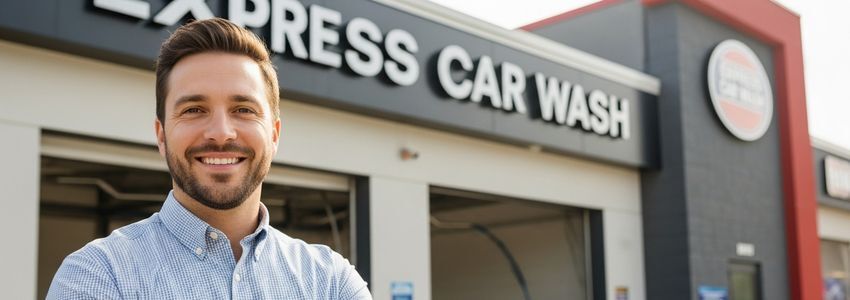
By the Numbers
Car Wash Industry - Key Statistics
$15B+
Annual U.S. car wash industry revenue
60,000
Car wash locations across the U.S.
3.5%
Average annual industry growth rate (5 years)
13x/yr
Average car washes per American annually
How Car Wash Financing Works - Step by Step
The financing process for a car wash follows a predictable path from application to funding. Understanding each stage helps you prepare effectively and avoid delays.
Step 1: Define Your Capital Need
Before approaching any lender, calculate your total project cost with precision. Include equipment, construction, real estate, working capital reserves, professional fees, permits, and a contingency buffer of 10-15%. Lenders are more confident in borrowers who have done thorough financial planning and can explain exactly how the funds will be deployed.
Step 2: Choose the Right Loan Product
Match your financing need to the correct loan product. Major acquisitions or new construction generally call for SBA 504 or SBA 7(a) loans. Equipment purchases use equipment financing. Short-term cash needs are best served by working capital loans or lines of credit. Using the wrong product - for example, funding a $2 million tunnel wash construction with a short-term working capital loan - will result in cash flow problems that undermine your business from day one.
Step 3: Gather Your Documentation
Car wash lenders typically require the following documents for a loan application: last 2-3 years of business tax returns (if existing business), last 2-3 years of personal tax returns, year-to-date profit and loss statement, current balance sheet, 3-6 months of business bank statements, business plan with financial projections (for startups or acquisitions), equipment quotes or purchase agreements, and proof of business licenses and insurance. Having these documents organized in advance dramatically speeds up underwriting.
Step 4: Submit Your Application and Underwriting
Once your application is submitted, the lender's underwriting team reviews your credit, revenue, collateral, and industry analysis. For SBA loans, this process includes a review by the SBA itself. For conventional or alternative loans, underwriting can be completed in as little as 24-72 hours.
Step 5: Close and Fund
After approval, your loan documents are prepared and signed at closing. Funds are disbursed either directly to you or, in the case of equipment purchases or acquisitions, to the vendor or seller. For SBA loans, expect closing to add 1-2 weeks to the total timeline. Alternative lenders can fund as quickly as the same business day for smaller loan amounts.
Need Capital for Your Car Wash?
Crestmont Capital specializes in financing for car wash operators at every stage - from equipment upgrades to full acquisitions. Talk to a specialist today.
Start Your Application ->How to Qualify for Car Wash Business Loans
Qualification requirements vary significantly by loan type, but most lenders evaluate the same core factors when reviewing a car wash loan application. Understanding what lenders look for allows you to address potential weaknesses before they become obstacles.
Credit Score
For SBA loans, most lenders require a minimum personal credit score of 660-680. Equipment financing lenders typically accept scores as low as 620 for established businesses. Alternative lenders and revenue-based financing products may accept scores of 550+, though at higher rates. If your credit is below ideal, consider spending 6-12 months improving your score before applying for SBA financing. Bad credit business loans are available for operators who need funding now and cannot wait.
Time in Business
SBA loans generally require at least 2 years of operating history. Equipment financing lenders often accept 1 year or less, especially when the equipment serves as strong collateral. Startups and first-time buyers should expect higher down payment requirements and more stringent underwriting but are not automatically disqualified.
Revenue and Cash Flow
Lenders analyze your Debt Service Coverage Ratio (DSCR) - the ratio of your business income to your total debt obligations. A DSCR of 1.25 or higher is generally required for SBA loans, meaning your business generates $1.25 in net income for every $1.00 in debt payments. Car washes with strong, documented revenue history are significantly easier to finance than those with irregular or undocumented income.
Down Payment
SBA 7(a) loans typically require 10-20% down. SBA 504 loans require 10%. Equipment financing often requires 0-10% down, especially for well-qualified borrowers. Having more than the minimum down payment signals commitment to lenders and can improve your rate and terms.
Collateral
Car washes are inherently well-collateralized businesses. The real property, equipment, and business goodwill all serve as collateral for lenders. For SBA loans, lenders are required to take a lien on all available business assets, and personal guarantees from owners with 20%+ equity are standard.
Expert Tip: Car wash operators who have detailed financial records, documented membership revenue, and a clear business plan consistently receive better loan terms. Lenders value predictability - and subscription-based unlimited wash memberships are among the most predictable revenue models in the service industry.
How Crestmont Capital Helps Car Wash Owners
Crestmont Capital works with car wash operators across all stages of business development - from first-time buyers financing their initial acquisition to multi-site operators expanding to new markets. As a direct lender rated #1 in the U.S., Crestmont offers faster decisions, fewer documentation requirements, and more flexible qualification criteria than traditional banks.
Our team understands the car wash industry's seasonal revenue patterns, high equipment costs, and acquisition dynamics. We structure financing to match your cash flow - avoiding the one-size-fits-all approach of banks that don't specialize in small business lending. Whether you need a government-backed SBA loan for a large acquisition or a quick working capital loan to cover an equipment repair before peak season, Crestmont has a solution.
We also offer access to financing even when credit is imperfect. Our bad credit business loan programs give operators with past financial challenges access to growth capital without having to wait years to rebuild their credit profile. Car wash financing from Crestmont typically funds in 1-5 business days for working capital products and 3-6 weeks for SBA-backed loans.
According to Forbes Advisor's small business lending coverage, one of the most common mistakes business owners make is waiting too long to apply for financing. Proactive borrowing - securing a line of credit or working capital loan before you urgently need it - gives car wash operators the flexibility to jump on acquisition opportunities, handle emergencies, and invest in growth without scrambling for cash under pressure.
Real-World Car Wash Financing Scenarios
Understanding how other car wash owners have used business financing can help clarify which options make the most sense for your situation.
Scenario 1: Buying an Existing Self-Serve Car Wash
A couple in suburban Ohio found a 4-bay self-serve car wash generating $120,000 annually, listed for $350,000 including the real property. They applied for an SBA 7(a) loan, put down $52,500 (15%), and financed $297,500 over 10 years. Their monthly payment was approximately $3,100, well below the $10,000/month net income the car wash generated. Within two years, they had renovated all four bays and expanded hours, growing annual revenue to $180,000.
Scenario 2: Equipment Upgrade for an Existing Tunnel Wash
A Texas car wash owner operating a 100-foot tunnel wash needed to replace aging dryer systems and install a new license plate recognition system for her unlimited membership program. Total equipment cost: $185,000. She financed through a dedicated equipment loan with a 5-year term, $0 down, and payments of $3,800/month. The membership system she installed added over $25,000/month in new recurring revenue within 90 days.
Scenario 3: Building a New Express Exterior Tunnel
An experienced car wash operator in the Southeast secured an SBA 504 loan to fund a new $2.2 million express exterior tunnel wash. The CDC financed $880,000 (40%), a conventional lender provided $1,100,000 (50%), and the owner contributed $220,000 (10%). The wash opened with 1,200 members on day one after an aggressive pre-opening campaign, and was cash flow positive within six months.
Scenario 4: Working Capital During Slow Season
A Michigan car wash owner experienced a 35% revenue decline during January and February due to road salt and harsh winter conditions. To cover payroll and chemical costs during the slow period, he drew $45,000 from his revolving business line of credit. He repaid it fully within 60 days as spring traffic recovered. The line of credit cost him approximately $900 in interest - far less than the alternative of making late payroll or cutting staff.
Scenario 5: Multi-Site Expansion
A Florida car wash company already operating two express exterior tunnels wanted to add a third location. They used a combination of a conventional commercial real estate loan (for the land and building) and equipment financing (for the $700,000 tunnel system). By separating the financing into two products, they optimized each loan for its asset type - getting 25-year amortization on the real estate and 7-year terms on the equipment.
Scenario 6: First-Time Car Wash Buyer with Limited History
A first-generation entrepreneur with no prior car wash experience found a motivated seller offering a distressed 3-bay self-serve wash at a favorable price of $180,000. With a 680 credit score and solid personal income, she qualified for SBA financing with a 20% down payment ($36,000). She completed a short franchise program to strengthen her business plan, which helped her SBA application demonstrate operational knowledge and a credible path to profitability.
See What Your Car Wash Qualifies For
Crestmont Capital works with car wash operators of all sizes. Get your quote in minutes with no obligation.
Check Your Options ->Frequently Asked Questions
What credit score do I need for a car wash business loan?
Most SBA lenders require a minimum personal credit score of 660-680. Equipment financing lenders may work with scores as low as 620 for established businesses. Alternative lenders can sometimes approve borrowers with scores below 600, though at higher interest rates. If your score needs improvement, focus on paying down revolving debt, disputing errors, and avoiding new credit inquiries for 6-12 months before applying.
How much can I borrow for a car wash?
Loan amounts vary by product and purpose. SBA 7(a) loans go up to $5 million. SBA 504 projects can exceed $10 million when structured with multiple CDC debentures. Equipment financing typically ranges from $25,000 to $5 million. Working capital loans range from $10,000 to $500,000 depending on your revenue. The amount you can borrow is ultimately determined by your revenue, cash flow, and the collateral value of the assets being financed.
Can I get a car wash loan with no money down?
For equipment purchases, 0% down financing is available for highly qualified borrowers when the equipment serves as strong collateral. For acquisitions and new construction, most lenders require some down payment - typically 10-20% for SBA loans. However, seller financing, equity from other assets, or gift funds from family members can sometimes reduce your cash contribution. Discussing your specific situation with a lender is the best way to determine your actual down payment requirement.
How long does it take to get a car wash business loan?
Funding timelines vary significantly by loan type. SBA loans typically take 45-90 days from application to funding. Conventional bank loans take 30-60 days. Equipment financing can be approved in 24-72 hours and funded within a week. Working capital loans from alternative lenders like Crestmont Capital can fund in 1-3 business days. Preparing your documentation in advance is the single most effective way to accelerate the timeline.
Is a car wash a good business to get a loan for?
Yes. Lenders view car washes favorably because they have tangible equipment collateral, recurring revenue streams (especially with membership plans), relatively low inventory requirements, and strong historical performance across economic cycles. Car washes are classified as a stable, service-based industry by most commercial lenders. SBA lenders in particular have a long track record of successfully financing car wash acquisitions and expansions.
What documents do I need to apply for a car wash loan?
Required documents typically include: 2-3 years of business tax returns, 2-3 years of personal tax returns, year-to-date profit and loss statement, current balance sheet, 3-6 months of business bank statements, business plan and financial projections (for acquisitions or startups), equipment quotes or purchase agreements, and proof of business licenses and insurance. SBA loans require additional forms including the SBA application (Form 1919) and personal financial statements.
What interest rates can I expect on a car wash loan?
Interest rates depend on loan type, credit score, and market conditions. SBA 7(a) loans currently range from approximately 10.5% to 14.5% variable. SBA 504 loans offer some of the lowest rates available - the CDC debenture portion is typically fixed below market rates. Equipment financing rates range from 6% to 25% depending on credit and equipment type. Working capital loans from alternative lenders typically carry higher rates, often 15-45% annualized, reflecting the faster funding and less stringent underwriting.
Can I get an SBA loan to buy a car wash franchise?
Yes. Car wash franchises are eligible for SBA 7(a) and SBA 504 loans, provided the franchisor is listed on the SBA Franchise Directory. Many major car wash brands are pre-approved, which simplifies the lender's review process. Franchise buyers benefit from the brand's existing operating model and financial disclosures (FDD), which make it easier for lenders to evaluate profitability potential. Franchise fees, initial inventory, and training costs are all eligible to be included in your SBA loan.
What is the Debt Service Coverage Ratio requirement for car wash loans?
SBA lenders typically require a minimum DSCR of 1.25, meaning your business generates $1.25 in net operating income for every $1.00 in annual debt payments. For acquisitions, lenders often evaluate the projected DSCR under your ownership based on the asking price, your proposed loan structure, and historical financial performance. Car washes with established recurring membership revenue often have strong DSCRs that make them highly financeable.
Can a startup car wash owner get financing?
Yes, though startup financing is more challenging. Lenders compensate for the lack of operating history by requiring higher down payments (typically 20-30%), stronger personal financial profiles, detailed business plans with financial projections, and sometimes industry experience demonstrated through employment or training. Buying an existing cash-flowing car wash is generally easier to finance than building a new one from scratch, since lenders can evaluate historical performance rather than projections.
How do I finance car wash equipment specifically?
Dedicated equipment financing is the most efficient way to fund car wash equipment purchases. You work directly with an equipment lender or through your equipment vendor, finance the purchase price of the equipment with fixed monthly payments, and own the equipment outright at the end of the loan term. The equipment serves as collateral, which simplifies underwriting. Many equipment vendors also offer manufacturer financing programs with promotional rates for new or repeat buyers.
Is car wash financing available with bad credit?
Yes. While SBA loans require 660+ personal credit scores, alternative lenders and equipment finance companies can work with scores as low as 550-600 depending on other factors like revenue, time in business, and collateral. Revenue-based financing products evaluate your average monthly revenue rather than relying primarily on credit scores. Bad credit typically means higher rates and shorter terms rather than outright denial, especially for car wash businesses with strong cash flow.
What is the best loan for upgrading car wash equipment?
For equipment upgrades, dedicated equipment financing is almost always the best option. It offers lower rates than unsecured loans (because the equipment is collateral), faster approval timelines than SBA loans, and flexible term lengths that match the useful life of the equipment. SBA 7(a) loans can also finance equipment as part of a larger project, but standalone equipment purchases are most efficiently financed through equipment-specific programs.
Do car wash loans require a personal guarantee?
Yes, in most cases. SBA loans require personal guarantees from all owners with 20% or more equity in the business. Conventional commercial loans typically require personal guarantees from the primary owner(s). Equipment financing and some working capital products may have more flexible guarantee requirements, especially for established businesses with strong credit. Some larger businesses may qualify for no-personal-guarantee financing, but this is uncommon for small car wash operations.
How do I choose between an SBA 7(a) and SBA 504 loan for my car wash?
Use SBA 7(a) when you need flexibility - combining real estate, equipment, and working capital into one loan, or when you need to move quickly. Use SBA 504 when you are making a major real estate investment (purchasing land and building a new wash, or buying an existing property) and want the lowest possible long-term fixed rate. The 504's two-loan structure is more complex, but its 10% down requirement and below-market fixed rates on the CDC debenture make it exceptionally cost-effective for capital-intensive projects. A Crestmont Capital specialist can help you evaluate which program is the better fit for your specific transaction.
How to Get Started
Complete our quick application at offers.crestmontcapital.com/apply-now - takes just a few minutes.
A Crestmont Capital advisor will review your project, your financial profile, and match you with the financing option that best fits your goals and timeline.
Receive your funds and put them to work - whether you're buying a car wash, upgrading equipment, or building working capital reserves for the busy season.
Conclusion
Car wash business loans give operators in this thriving industry the capital to compete, grow, and win in local markets. From SBA loans for major acquisitions to equipment financing for system upgrades to working capital lines for seasonal cash flow management, there is a financing solution for every stage of your car wash business journey. The key is choosing the right product for your specific need, preparing your application thoroughly, and working with a lender who understands the car wash industry.
Crestmont Capital has helped hundreds of small business owners access the funding they need to build, buy, and grow successful car wash operations. Our team of specialists understands the capital requirements, equipment costs, and financing structures that work best for this industry. Apply today and find out what your car wash qualifies for - fast decisions, flexible terms, and funding in days, not months.
Disclaimer: The information provided in this article is for general educational purposes only and is not financial, legal, or tax advice. Funding terms, qualifications, and product availability may vary and are subject to change without notice. Crestmont Capital does not guarantee approval, rates, or specific outcomes. For personalized information about your business funding options, contact our team directly.