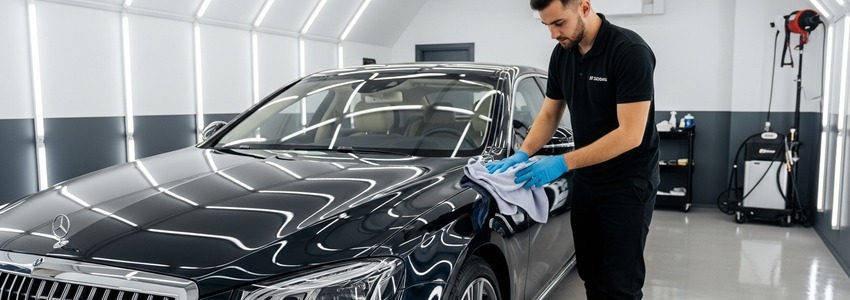
Running a car detailing business takes more than a pressure washer and a bottle of wax. Whether you operate a mobile unit, a fixed-location shop, or a fleet of detail vans, growth requires capital. From buying commercial-grade equipment to hiring certified technicians and expanding into new markets, the right financing can mean the difference between staying small and scaling fast. This guide breaks down every loan option available to car detailing business owners in 2026, so you can fund your next move with confidence.
- Why Financing Matters for Car Detailing Businesses
- Types of Loans for Car Detailing Businesses
- Equipment Financing for Detailing Tools and Gear
- SBA Loans for Auto Detailing Owners
- Working Capital and Line of Credit Options
- Getting Approved with Bad Credit
- How to Qualify for a Car Detailing Business Loan
- How Much Can You Borrow?
- Smart Ways to Use Loan Funds
- Car Detailing Financing at a Glance
- Tips for Getting Approved Faster
- Next Steps
- Frequently Asked Questions
Why Financing Matters for Car Detailing Businesses
The U.S. auto detailing industry generates over $14 billion in annual revenue, according to industry analysts, and demand continues to grow as consumers invest more in vehicle maintenance and appearance. Yet most detailing businesses are owner-operated with thin cash reserves. When a steam cleaner breaks down, a competitor opens nearby, or a fleet client signs on for weekly service, having access to capital quickly can define your trajectory.
Business loans give car detailing owners the purchasing power to act fast. Instead of waiting months to save up for a new ceramic coating system or a second mobile van, financing lets you deploy equipment now and generate revenue to cover the payments. The math often works in your favor: a $20,000 van that earns $5,000 per month pays for itself in four months at full capacity.
Financing is not just for big purchases, either. A line of credit can smooth out the seasonal gaps that hit many detailing businesses hard in winter. Payroll financing can keep your team employed during a slow stretch. Invoice financing can convert outstanding fleet invoices into same-day cash. The right financing tool depends on what challenge you are solving.
Types of Loans for Car Detailing Businesses
There is no single loan product that works for every detailing operation. Your best option depends on your credit profile, time in business, revenue level, and what you plan to do with the funds. Here is a breakdown of the main loan types available to auto detailing business owners.
Term Loans
A term loan delivers a lump sum of capital that you repay over a fixed period, typically 12 to 60 months, with regular payments. Term loans work well for large, one-time expenses like purchasing a second location, building out a new detail bay, or buying a fleet of mobile units. Online lenders can approve term loans in as little as 24 to 48 hours, making them far faster than traditional bank loans.
Business Lines of Credit
A business line of credit gives you access to a revolving pool of funds. You draw what you need, repay it, and draw again. This is ideal for managing seasonal cash flow, buying supplies in bulk when prices dip, or covering unexpected repairs on your equipment. Lines of credit typically range from $10,000 to $250,000 for established detailing businesses.
Equipment Financing
When you need a specific piece of equipment, equipment financing lets you borrow against the asset itself. The equipment serves as collateral, which often makes approval easier and rates lower. Detailing businesses use equipment financing for steam cleaners, ceramic coating systems, polishing machines, vacuum systems, and mobile detail vans.
SBA Loans
Loans backed by the Small Business Administration offer the lowest rates and longest terms in the market, but they take longer to process and require stronger documentation. The SBA 7(a) program is the most popular for detailing businesses seeking $50,000 to $500,000. The SBA Microloan program supports newer businesses needing under $50,000.
Merchant Cash Advances
A merchant cash advance (MCA) is not technically a loan. A lender purchases a percentage of your future sales at a discount. You repay through daily or weekly deductions from revenue. MCAs are accessible even with poor credit, but they carry the highest cost of capital. Use them only for short-term needs when other options are closed.
Invoice Financing
If your detailing business serves fleet clients, dealerships, or corporate accounts that pay on 30 to 60 day terms, invoice financing converts those receivables into immediate cash. You get 80 to 90 percent of the invoice value upfront and the remainder (minus fees) when the client pays.
Get pre-qualified in minutes. No hard credit pull required.
Apply Now →
Equipment Financing for Detailing Tools and Gear
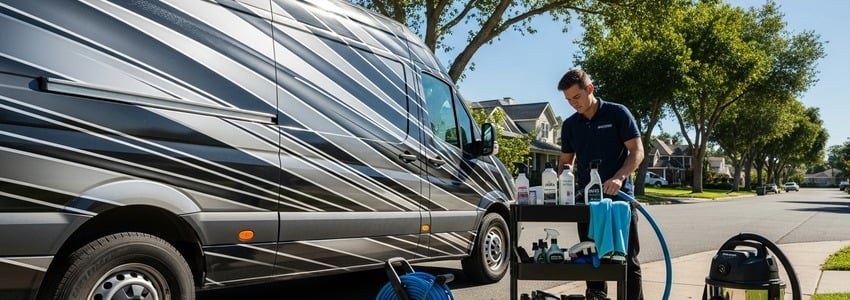
Equipment is the backbone of any car detailing operation. A well-equipped mobile unit can service six to eight vehicles per day. A full-service detail bay with the right tools can push that number even higher. The challenge is that quality equipment is expensive. A commercial-grade steam cleaner runs $3,000 to $8,000. A ceramic coating application system can exceed $15,000. A wrapped mobile detail van fully outfitted with water tank, generator, and tools can cost $60,000 or more.
Equipment financing is the most cost-effective way to acquire these assets. Because the equipment serves as collateral, lenders take on less risk, which translates to lower rates and more flexible approval criteria. Businesses with as little as six months in operation and $8,000 in monthly revenue can qualify.
Common Equipment Detailing Businesses Finance
- Mobile detail vans and trailers
- Pressure washers and steam cleaners
- Ceramic coating application systems
- Rotary and dual-action polishers
- Industrial vacuum systems
- Water reclaim and filtration systems
- Ozone generators for odor removal
- Spray booths and infrared curing lamps
- Point-of-sale and booking software systems
- Portable generators
Equipment Loan Terms
Repayment terms typically match the useful life of the equipment, ranging from 24 to 84 months. The lender finances 80 to 100 percent of the purchase price. At the end of the term, you own the equipment outright. Interest rates range from 6 to 24 percent APR depending on your credit profile and the lender. Some lenders offer a deferred payment option for the first 90 days, giving new equipment time to start generating revenue before you begin repayments.
SBA Loans for Auto Detailing Owners
The SBA loan program is considered the gold standard for small business financing. Rates are low (usually prime plus 2 to 3 percent), terms are long (up to 25 years for real estate, 10 years for working capital), and loan amounts can reach $5 million. For a detailing business looking to buy a building, acquire a competitor, or expand to multiple locations, SBA loans offer unbeatable terms.
The tradeoff is time and paperwork. SBA loans typically take 30 to 90 days to close. You will need two to three years of business tax returns, personal financial statements, a business plan, and a clear explanation of how you will use the funds. Personal credit scores below 650 may disqualify you from SBA programs.
SBA 7(a) Loan for Car Detailing
The SBA 7(a) is the most versatile program. Detailing businesses use it for:
- Purchasing real estate for a fixed-location shop
- Acquiring an existing detailing business
- Expanding to a second or third location
- Purchasing a fleet of mobile units
- Long-term working capital needs
SBA Microloan Program
The SBA Microloan program provides up to $50,000 through nonprofit intermediary lenders. It is ideal for startup or early-stage detailing businesses that need a smaller injection of capital for supplies, initial equipment, or marketing. Terms extend up to six years with rates between 8 and 13 percent.
SBA Express Loans
For faster approval (within 36 hours) on loans up to $500,000, the SBA Express program offers a streamlined application with a partial SBA guarantee. Not all lenders participate, but those that do can process these loans significantly faster than traditional 7(a) applications.
Working Capital and Line of Credit Options
Cash flow is the lifeblood of a detailing business. You might have three days of packed appointments but still not be able to make payroll because large fleet clients pay 45 days out. Working capital financing solves this gap without requiring you to sacrifice equity or delay growth.
A small business loan structured as a working capital facility gives you a cushion to operate with confidence. Most working capital loans are unsecured, meaning you do not need to put up collateral. Approval is based primarily on revenue consistency and time in business.
When to Use Working Capital Financing
- Seasonal slowdowns in winter months
- Covering payroll between fleet client payment cycles
- Stocking up on chemicals, wax, and supplies before peak season
- Launching a marketing campaign ahead of spring season
- Bridging the gap while waiting for a lease deposit refund or insurance payout
A revolving business line of credit is often the best product for these use cases because it is flexible. You only pay interest on what you draw, and as you repay, your available credit resets. For a detailing business with lumpy revenue, a line of credit acts like a financial safety net that costs nothing unless you use it.
Getting Approved with Bad Credit
A less-than-perfect credit score does not automatically disqualify you from financing. Many lenders focus more on your business revenue and cash flow than your personal FICO score. If your detailing business brings in consistent monthly revenue, there are options available even if your score is below 600.
Bad credit business loans typically come with higher rates and shorter terms, but they can provide the capital you need while you work on rebuilding your score. The key is to use the funds productively so the revenue generated exceeds the cost of the loan.
Factors That Offset Bad Credit
- Strong and consistent monthly revenue (above $10,000/month)
- Long time in business (2+ years)
- Positive cash flow trends
- Low existing debt obligations
- Collateral such as a vehicle, equipment, or real estate
Tips for Borrowing with Bad Credit
- Apply with a lender that does a soft credit pull for prequalification
- Offer collateral to reduce lender risk
- Bring a co-signer with strong personal credit
- Show 6 to 12 months of bank statements demonstrating cash inflows
- Start with a smaller loan amount and build a repayment track record
Crestmont Capital specializes in flexible financing for detailing businesses at every stage.
See Your Options →
How to Qualify for a Car Detailing Business Loan
Lenders evaluate several factors when reviewing a loan application from a car detailing business. Understanding what they look for helps you present the strongest possible application and maximize your approval odds.
Core Qualification Criteria
| Factor | Typical Requirement | Impact |
|---|---|---|
| Personal Credit Score | 550+ (600+ for best rates) | High |
| Time in Business | 6+ months (2+ years for SBA) | High |
| Monthly Revenue | $8,000+ per month | High |
| Annual Revenue | $100,000+ | Medium |
| Debt Service Coverage | 1.25x or higher | Medium |
| Industry Classification | Auto services (standard risk) | Low to Medium |
Documents You Will Need
Having your paperwork ready speeds up the approval process significantly. Most online lenders require:
- Government-issued photo ID
- Business formation documents (LLC articles, DBA filing)
- Three to six months of business bank statements
- Most recent business tax returns (one to two years)
- Voided business check
- Proof of business insurance
- Year-to-date profit and loss statement (for larger loans)
For SBA loans and term loans above $150,000, you may also need a business plan, personal financial statements, and documentation of collateral.
How Much Can You Borrow?
Loan amounts for car detailing businesses vary widely depending on your revenue, credit profile, and the type of financing you pursue. Here is a general guide to what you can expect:
- Startup detailing business (under 1 year): $5,000 to $50,000 through microloans, SBA Microloans, or business credit cards
- Established mobile detailing operation (1 to 3 years): $25,000 to $150,000 through term loans, equipment financing, or lines of credit
- Multi-unit or shop-based detailer (3+ years, $300K+ revenue): $100,000 to $500,000 through SBA 7(a), commercial term loans, or business expansion financing
- Fleet or franchise-level operation: $500,000 to $5 million through SBA, bank loans, or commercial real estate financing
As a general rule, most lenders cap loan amounts at 10 to 15 percent of your gross annual revenue. If your detailing business earns $200,000 per year, expect to qualify for $20,000 to $30,000 through most online lenders, and potentially more with SBA backing or collateral.
Smart Ways to Use Loan Funds
The best use of financing is any deployment that generates more revenue than the cost of the loan. For car detailing businesses, the clearest ROI-positive uses include expanding your mobile fleet, upgrading to premium service offerings, and scaling your marketing reach.
Adding a Second Mobile Unit
A single mobile detail van generates $60,000 to $120,000 in annual revenue at capacity. Adding a second unit doubles your earning potential. With a $60,000 equipment loan at 12 percent APR over 48 months, your monthly payment is roughly $1,580. If the new unit books just $5,000 per month in its first quarter, it more than covers its cost.
Launching Ceramic Coating Services
Ceramic coating jobs command $800 to $2,500 per vehicle and carry high margins. The equipment and training to offer this service can cost $15,000 to $25,000. Financing this upgrade typically pays back within three to five completed jobs.
Marketing and Customer Acquisition
Many detailing businesses underinvest in marketing. A targeted Google Ads campaign, a professional website redesign, and a local SEO push can generate 20 to 40 percent more bookings within 90 days. According to Forbes, small businesses that invest consistently in digital marketing grow revenue 2.8 times faster than those that do not.
Hiring and Training Technicians
Skilled detailers command $18 to $28 per hour. Hiring two additional technicians and covering their wages while building your client base is a classic use for a working capital loan. Payroll financing ensures you never miss a paycheck for your team even in slow months.
Securing a Commercial Lease or Buying Property
Transitioning from mobile-only to a brick-and-mortar shop significantly expands your service offerings and daily volume. Lease deposits, tenant improvements, and initial build-out costs can run $30,000 to $80,000. An SBA loan or commercial real estate loan is the right tool for this transition.
To see how other service businesses have leveraged financing for growth, check out our guide on Dog Kennel Business Loans for parallel strategies in the service industry.
Car Detailing Financing at a Glance
Auto Detailing Industry Financing Snapshot (2026)
Sources: IBISWorld, SBA, Crestmont Capital industry data. Figures are general estimates.
Tips for Getting Approved Faster
Speed matters in business. When you identify an opportunity, waiting weeks for approval can mean losing it. Here are proven strategies to shorten your loan approval timeline and improve your odds.
1. Separate Personal and Business Finances
If you are running business income through a personal checking account, open a dedicated business bank account immediately. Lenders want to see clean business cash flow, and commingled finances are a red flag that can delay or derail an application.
2. Build Business Credit Proactively
Register your business with Dun and Bradstreet to get a DUNS number. Open a business credit card and pay it in full monthly. Over 12 to 18 months, this builds a business credit profile that can unlock better rates and larger limits independent of your personal score. For more on building credit, see our guide on Juice Bar Business Loans which covers credit-building strategies for service businesses.
3. Keep Bank Statements Healthy
Lenders analyze your average daily balance and deposit consistency. Avoid overdrafts. Try to maintain a minimum balance of $5,000 to $10,000 in the 90 days before you apply. Regular, predictable deposits signal a stable business.
4. Apply During a Strong Revenue Period
If your detailing business does peak business in spring and summer, apply for financing in April or May when your bank statements show their strongest numbers. Lenders calculate an average, so strong months boost your qualifying revenue.
5. Use a Broker or Marketplace
Applying to multiple lenders individually can trigger multiple hard credit pulls and hurt your score. A lending marketplace or broker (like Crestmont Capital) shops your application across multiple lenders with a single soft pull, saving you time and protecting your credit.
6. Have a Clear Use of Funds
Lenders approve applications faster when the purpose is specific and justifiable. "I need $40,000 to purchase a second mobile detail van with full equipment buildout" is far stronger than "I need cash for my business." Specificity signals professionalism and reduces perceived risk.
For a deeper look at getting funding fast when opportunity strikes, explore our guide on fast business loans.
Next Steps
Your Action Plan to Secure Financing
- Define your funding goal — Know exactly what you need and what you will do with it
- Check your credit score — Pull your personal and business scores for free at annualcreditreport.com
- Gather your documents — Bank statements, tax returns, business license, ID
- Compare loan types — Match your need (equipment, working capital, expansion) to the right product
- Prequalify with Crestmont Capital — Get offers from multiple lenders with one soft credit pull
- Review terms carefully — Compare APR, not just rate; look at total repayment cost
- Accept and deploy — Put the capital to work generating revenue immediately
Frequently Asked Questions
What credit score do I need for a car detailing business loan?
How much can a car detailing business borrow?
Can a new car detailing business get a loan?
What is the fastest way to get a business loan for a detailing shop?
Can I use a business loan to buy a mobile detail van?
Are car detailing business loans secured or unsecured?
What is the difference between a business loan and a merchant cash advance for a detailing business?
Do I need to be an LLC to qualify for a car detailing business loan?
How long does it take to get approved for a car detailing business loan?
Can I get a business loan to open a car detailing franchise?
What happens if I miss a payment on my detailing business loan?
Is there a grant program specifically for car detailing businesses?
Can I refinance my existing car detailing business loan?
How do interest rates for car detailing loans compare to other industries?
What is the best loan type for expanding a car detailing business to multiple locations?