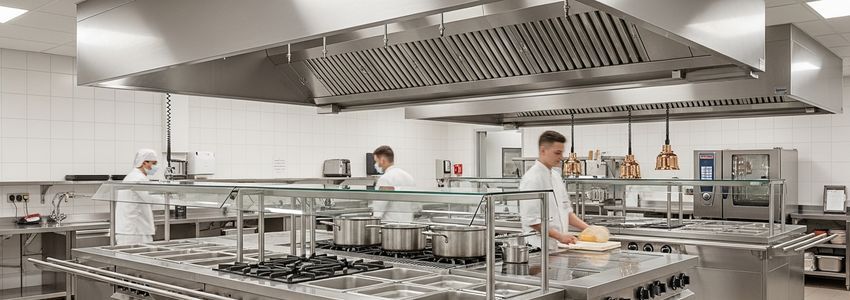
Cafeteria equipment financing is a vital financial tool that empowers food service businesses in schools, hospitals, corporate offices, and government facilities to acquire essential equipment without depleting their capital. Outfitting a modern cafeteria requires a significant investment, from industrial-grade ovens and refrigeration units to sophisticated serving lines and point-of-sale systems. Instead of facing a massive upfront cost that can strain budgets and limit operational flexibility, financing allows you to break down the expense into manageable monthly payments. This guide provides a comprehensive overview of how you can leverage strategic financing to build, upgrade, or expand your cafeteria operations efficiently and affordably.
In This Article
- What Is Cafeteria Equipment Financing?
- Types of Equipment You Can Finance
- Financing vs. Leasing: Which Is Right for Your Cafeteria?
- How Cafeteria Equipment Financing Works
- Who Qualifies for Cafeteria Equipment Financing?
- Key Benefits of Financing Cafeteria Equipment
- Types of Cafeteria Equipment Financing Available
- How Crestmont Capital Helps Cafeteria Operators
- Real-World Scenarios: Cafeteria Financing in Action
- Cafeteria Equipment Financing Compared to Other Options
- Tips to Improve Your Approval Odds
- How to Get Started with Cafeteria Equipment Financing
- Frequently Asked Questions
- Conclusion
What Is Cafeteria Equipment Financing?
Cafeteria equipment financing is a specific type of business loan or lease designed to help organizations purchase or rent the specialized equipment needed to run a food service operation. Unlike a generic business loan that provides a lump sum of cash for any purpose, this financing is tied directly to the acquisition of tangible assets like ovens, freezers, dishwashers, and serving stations. This structure often makes it easier to qualify for because the equipment itself serves as collateral for the loan, reducing the lender's risk. It's a strategic financial solution used by a wide range of institutions, from K-12 school districts and universities to large corporate campuses and healthcare facilities.
The process is straightforward and efficient. Once you identify the equipment you need, you apply with a lender like Crestmont Capital. Instead of you paying the equipment vendor directly, the lender pays the vendor on your behalf. You then enter into an agreement with the lender to repay the amount over a predetermined period, known as the term, through fixed monthly payments. This term can range from 24 to 84 months, depending on the cost and expected lifespan of the equipment. At the end of the financing term, you typically own the equipment outright, allowing you to continue using it for years to come without any further payments.
Businesses and institutions use cafeteria equipment financing primarily to manage cash flow and preserve working capital. The cost of a full kitchen and serving line build-out can easily run into the hundreds of thousands of dollars. Paying this amount in cash can cripple an organization's budget, preventing investment in other critical areas such as staffing, food inventory, marketing, or facility maintenance. By financing, you get immediate access to state-of-the-art equipment that can improve efficiency, safety, and customer satisfaction, all while spreading the cost over time in a predictable and manageable way. It's a powerful tool for growth, modernization, and maintaining a competitive edge.
Industry Insight: According to the U.S. Census Bureau, the Food Services and Drinking Places sector generates over $900 billion in annual sales, highlighting the immense scale and economic importance of operations that rely on high-quality commercial kitchen equipment.
Types of Equipment You Can Finance
Virtually any piece of equipment essential to running a modern cafeteria can be financed. Lenders who specialize in this sector understand the high cost and long-term value of these assets. Financing allows you to acquire the best tools for the job, not just the cheapest, leading to better food quality, faster service, and lower long-term maintenance costs. Here is a detailed look at the types of cafeteria equipment you can finance:
- Commercial Ovens and Ranges: The heart of any kitchen, these are high-cost, high-impact items. This category includes convection ovens for even baking, combination ovens that steam and roast, high-capacity conveyor ovens for pizza or sandwiches, and standard gas or electric ranges with multiple burners. Financing these allows you to get the capacity and features needed to handle peak meal service times without compromise.
- Commercial Fryers: Essential for many popular cafeteria items, commercial-grade fryers are built for high-volume use. You can finance single- or multi-vat fryers, pressure fryers for poultry, and automated frying systems that improve safety and consistency.
- Steamers and Combi Ovens: Critical for healthy cooking and holding large batches of food, commercial steamers and combi ovens are versatile and expensive. Financing makes these advanced cooking technologies accessible, allowing cafeterias in hospitals and schools to meet specific dietary requirements with precision.
- Refrigeration Units: Proper food storage is non-negotiable. This category covers everything from reach-in refrigerators and freezers to under-counter units and refrigerated prep tables. Financing ensures you have reliable, energy-efficient cooling to maintain food safety standards and reduce spoilage.
- Walk-In Coolers and Freezers: For any large-scale operation, walk-in units are indispensable for bulk food storage. The cost of a walk-in, including the unit and professional installation, can be substantial. Financing covers the entire project, making it possible to install the large-capacity storage needed for a week's worth of inventory.
- Serving Lines and Sneeze Guards: These are the customer-facing elements that define the flow and safety of your cafeteria. This includes hot and cold food wells, modular serving counters, and mandatory sneeze guards. Financing allows for a complete, modern, and hygienic serving line installation that enhances the customer experience.
- Warming Stations and Heat Lamps: To maintain food at safe and appetizing temperatures, warming stations, holding cabinets, and overhead heat lamps are crucial. Financing these pieces ensures food quality and safety from the moment it leaves the kitchen until it's served.
- Commercial Dishwashing Systems: A high-capacity dishwashing system is vital for sanitation and efficiency. You can finance everything from under-counter glass washers to large conveyor-style dish machines and the associated sorting tables and racks, ensuring you can keep up with demand during the busiest rushes.
- Point-of-Sale (POS) Systems: A modern cafeteria needs more than just a cash register. Advanced POS systems that integrate with inventory management, student or employee accounts, and sales reporting are complex and costly. Financing covers the hardware (terminals, printers, cash drawers) and often the software, streamlining your entire operation.
- Cafeteria Furniture: The dining experience is also shaped by the environment. Financing can extend to tables, chairs, booths, and other furniture, allowing you to create a comfortable and inviting space for patrons without a large one-time expense.
- Ventilation and Exhaust Hoods: Proper kitchen ventilation is a major expense and a critical safety requirement. Financing can cover the entire system, including the exhaust hoods, fire suppression systems, and makeup air units, ensuring a safe and comfortable working environment for your staff.
- Food Preparation Equipment: This broad category includes commercial mixers, slicers, food processors, dough sheeters, and stainless-steel prep tables. Financing these items allows you to fully equip your kitchen for efficient preparation of any menu item.
- Beverage Dispensers: From soda fountains and juice dispensers to commercial coffee brewers and iced tea machines, beverage stations are a key part of any cafeteria. Financing helps you acquire reliable, high-capacity dispensers to meet customer demand.
- Smallwares Package: While individually inexpensive, the total cost of smallwares - pots, pans, utensils, cutting boards, sheet pans, and storage containers - can add up to thousands of dollars for a new cafeteria. Many financing agreements can bundle the cost of a complete smallwares package with larger equipment.
Financing vs. Leasing: Which Is Right for Your Cafeteria?
When acquiring cafeteria equipment, you'll often encounter two primary options: financing (an equipment loan) and leasing. While both achieve the goal of getting you the equipment you need without paying cash, they function differently and offer distinct advantages. Understanding these differences is key to choosing the right strategy for your organization's financial goals and operational needs.
An equipment financing agreement is essentially a loan for the purpose of buying equipment. You borrow the full purchase price, and you are the owner of the equipment from day one. You make regular payments of principal and interest over a set term, and once the loan is fully paid off, you own the asset free and clear. This is ideal for long-lasting, core equipment like walk-in freezers or heavy-duty ranges that you plan to use for many years.
An equipment lease, on the other hand, is more like a long-term rental agreement. The leasing company (the lessor) purchases the equipment and allows you (the lessee) to use it in exchange for monthly payments. You don't own the equipment during the lease term. At the end of the term, you typically have several options: you can return the equipment, renew the lease, or purchase the equipment at its fair market value or a predetermined price. Leasing is often preferred for technology-driven equipment like POS systems that may become obsolete quickly.
Here’s a table comparing the key features of each option:
| Feature | Equipment Financing | Equipment Leasing |
|---|---|---|
| Ownership | You own the equipment from the start. The lender holds a lien until the loan is paid. | The leasing company owns the equipment. You are renting it for the lease term. |
| Upfront Cost | Often requires a down payment (typically 10-20% of the equipment cost). | Usually requires only the first and last month's payment upfront, resulting in a lower initial cash outlay. |
| Monthly Payments | Payments are typically higher as you are paying off the full value of the equipment to build equity. | Payments are often lower as you are only paying for the depreciation of the equipment during the lease term. |
| End of Term | You own the equipment free and clear. You can continue to use it, sell it, or trade it in. | You can return the equipment, renew the lease, or purchase it for a predetermined amount (e.g., $1 buyout) or its fair market value. |
| Best For | Long-lasting equipment you intend to use for many years (ovens, walk-ins, mixers). Building long-term assets for your business. | Equipment that becomes outdated quickly (POS systems, computers) or for businesses wanting lower monthly payments and flexibility. |
| Tax Treatment | You can typically deduct the interest paid on the loan and depreciate the asset's value over time (e.g., under Section 179). | Lease payments are often treated as an operating expense and can be fully deducted from taxable income. |
How Cafeteria Equipment Financing Works
The process of securing cafeteria equipment financing is designed to be fast and straightforward, allowing you to get the equipment you need with minimal disruption to your operations. Lenders like Crestmont Capital have streamlined the journey from application to funding into a few simple steps. The entire process can often be completed in just a few business days.
Apply Online
Submit a simple online application in minutes with basic business information.
Review Offers
Receive competitive financing offers tailored to your business needs and qualifications.
Select Equipment
Choose the equipment you need from any vendor or manufacturer of your choice.
Get Funded
Sign the financing documents, and the lender pays the equipment vendor directly.
Start Operating
Your new equipment is delivered, and you begin making your scheduled payments.
The first step is to complete a short application, which typically asks for basic information about your business, its owners, and the equipment you want to finance. You will also need to provide recent bank statements and an invoice or quote for the equipment from your chosen vendor. This allows the lender to quickly assess your business's financial health and cash flow. Unlike traditional bank loans that can take weeks or months and require extensive paperwork, this initial stage is often completed in under 24 hours.
Once your application is reviewed, a funding specialist will present you with one or more financing offers. These will detail the approved amount, the interest rate, the term length, and the monthly payment. After you select the offer that best suits your budget, you'll sign the financing agreement. The lender then works directly with your equipment supplier, paying them the full invoice amount. The vendor will then schedule the delivery and installation of your new equipment, and you can put it to use immediately. Your first payment to the lender is typically due 30 days after the funding is complete.
Ready to Finance Your Cafeteria Equipment?
Get the kitchen and serving line you need to succeed. Our simple application takes just minutes to complete.
Apply NowWho Qualifies for Cafeteria Equipment Financing?
One of the most significant advantages of specialized equipment financing is its accessibility. The qualification criteria are often more flexible than those for traditional bank loans because the equipment itself acts as collateral, securing the loan. This means that a wider range of businesses and organizations, including those with less-than-perfect credit or a shorter operating history, can often get approved. Lenders primarily focus on the business's ability to generate consistent revenue to cover the monthly payments.
While specific requirements vary by lender, most look for a few key indicators of a healthy, stable operation. Generally, you will have a strong chance of qualifying if your business meets the following criteria: a minimum time in business (often just 6 months to a year), a minimum monthly revenue (typically $10,000 or more), and a personal credit score for the owner (a score of 550+ is often acceptable, with better rates for scores of 650 and above). Having a dedicated business bank account is also essential as it allows lenders to easily verify your revenue and cash flow through your bank statements.
Even if your business doesn't meet all these criteria perfectly, you shouldn't be discouraged. Many lenders, including Crestmont Capital, specialize in working with businesses across the credit spectrum. If you have a lower credit score but can demonstrate strong and consistent monthly revenue, you may still qualify for financing. Lenders may offer alternative structures, such as requiring a slightly larger down payment or a shorter repayment term, to mitigate their risk. The key is to provide a clear picture of your business's financial situation and its potential for growth with the new equipment. Startups can also find financing options, though they may need to provide a strong business plan and personal financial statements.
Key Benefits of Financing Cafeteria Equipment
Choosing to finance your cafeteria equipment offers numerous strategic advantages that go far beyond simply avoiding a large cash payment. It's a financial strategy that can accelerate growth, improve stability, and enhance your operational capabilities.
- Preserve Working Capital: This is the most immediate and critical benefit. Instead of tying up tens or hundreds of thousands of dollars in equipment, you keep that cash free for other essential business needs. This capital can be used to hire more staff, purchase food inventory, invest in marketing, or cover unexpected expenses, providing crucial financial flexibility.
- Fixed, Predictable Payments: Equipment loans and leases come with a fixed monthly payment over a set term. This makes budgeting and financial forecasting simple and predictable. You know exactly how much you need to pay each month, eliminating the risk of fluctuating interest rates or surprise costs associated with other forms of financing like credit cards.
- Potential Tax Advantages: Financing and leasing equipment can offer significant tax benefits. With an equipment loan, you may be able to take advantage of Section 179 of the IRS tax code, which allows you to deduct the full purchase price of qualifying equipment in the year it's put into service. With a lease, your monthly payments are often considered an operating expense and can be fully deducted. (Always consult with a tax professional to understand the specific benefits for your business).
- Faster Access to Equipment: The application and funding process for equipment financing is significantly faster than traditional bank loans. You can often get approved and have the vendor paid within 24-48 hours. This speed means you can replace a broken-down freezer or upgrade your serving line immediately, minimizing downtime and lost revenue.
- Upgrade Technology Regularly: Leasing is particularly beneficial for keeping your cafeteria modern and efficient. For technology-heavy items like POS systems or advanced combi ovens, a lease allows you to use the equipment for a few years and then easily upgrade to the latest model at the end of the term, ensuring you always have the best tools available.
- Build Business Credit: Making consistent, on-time payments on an equipment financing agreement helps build a positive credit history for your business. A strong business credit profile makes it easier and cheaper to secure other forms of financing in the future, such as a line of credit or a commercial mortgage.
- Flexible Terms: Lenders offer a variety of term lengths, typically from 2 to 7 years. This flexibility allows you to choose a payment plan that aligns with your budget and the expected lifespan of the equipment. You can opt for a shorter term to pay off the equipment faster or a longer term to achieve a lower monthly payment.
- Full Ownership Option: With an equipment financing agreement, you are building equity in your assets. At the end of the term, you own the equipment outright. This durable equipment, like stainless steel tables and heavy-duty ranges, can continue to provide value for your operation for many years after the loan is paid off.
Cafeteria Equipment By The Numbers
$250K+
Average cost to fully equip a new medium-sized cafeteria kitchen and serving line.
70%+*
of U.S. companies use some form of financing to acquire equipment.
(*Source: Equipment Leasing and Finance Association)
24-84
Typical loan term length in months, offering flexibility to match your budget.
$50B+
Annual market size for commercial food service equipment in the U.S.
(Source: Bloomberg)
Types of Cafeteria Equipment Financing Available
Cafeteria operators have several distinct financing avenues to explore, each with its own structure, benefits, and ideal use case. Choosing the right one depends on your business's financial situation, goals, and the type of equipment you're acquiring.
Traditional Equipment Loans
An equipment loan is the most common form of financing. It functions like a car loan: a lender provides you with the capital to purchase the equipment, and you repay the loan plus interest over a fixed term. The equipment itself serves as the collateral, which is why these loans often have favorable rates and are easier to obtain than unsecured loans. Once the loan is paid in full, you own the equipment. This is the preferred method for acquiring long-lasting, core assets like commercial ovens, walk-in coolers, and heavy-duty mixers.
The primary advantage of a loan is ownership. You build equity with every payment, and the asset becomes part of your business's balance sheet. You can also take advantage of tax depreciation benefits like Section 179. The terms for equipment loans are flexible, typically ranging from two to seven years, allowing you to tailor the monthly payment to your budget. They are ideal for established businesses with good credit and a clear plan to use the equipment for its entire functional lifespan.
Equipment Leasing
An equipment lease is a long-term rental agreement. The leasing company purchases and owns the equipment, and you pay a monthly fee to use it. Leases often feature lower upfront costs (sometimes just the first and last month's payment) and smaller monthly payments compared to a loan, because you are only paying for the equipment's depreciation over the lease term, not its full value. This makes leasing an attractive option for businesses that need to conserve cash.
At the end of the lease term, you have several choices. You can return the equipment and walk away, renew the lease, or purchase the equipment. Some leases, known as $1 Buyout Leases, are structured so you can buy the equipment for a nominal fee at the end. Leases are particularly well-suited for technology that quickly becomes obsolete, such as POS systems or specialized combi ovens, as they allow you to easily upgrade to newer models every few years.
SBA Loans (7a and 504)
The U.S. Small Business Administration (SBA) offers loan programs that can be used for equipment purchases. These loans aren't made by the SBA itself but are partially guaranteed by the government, which reduces the risk for partner lenders and often results in lower interest rates and longer repayment terms. The two most common types are the SBA 7(a) loan, which is a versatile loan for various business purposes including equipment, and the SBA 504 loan, which is specifically for major fixed assets like real estate and large equipment.
While SBA loans offer excellent terms, the application process is typically longer and more document-intensive than a standard equipment loan. They often require a strong credit history, a detailed business plan, and several years of financial records. However, for a large-scale cafeteria renovation or a new build-out, the favorable rates and long terms (up to 25 years for some assets) can make the extra effort worthwhile.
Working Capital Loans
While not strictly equipment financing, working capital loans can be a flexible way to fund equipment purchases, especially for smaller items or when you need cash for multiple purposes. These are typically short-term, unsecured loans that provide a lump sum of cash you can use for anything from inventory and payroll to marketing or equipment. They are fast and easy to qualify for, often requiring only a few months of bank statements.
The trade-off for this speed and flexibility is that working capital loans usually have higher interest rates and shorter repayment terms (often 3-18 months) compared to collateralized equipment loans. They are best used for bridging short-term cash flow gaps or for purchasing less expensive equipment when you need funding immediately and don't want to go through a traditional equipment financing process.
Business Lines of Credit
A business line of credit is a revolving credit facility, similar to a credit card. You are approved for a certain credit limit and can draw funds as needed, up to that limit. You only pay interest on the amount you've drawn, not the total limit. Once you repay the borrowed amount, your available credit is replenished. This provides ongoing financial flexibility.
A line of credit is excellent for covering unexpected equipment repairs or replacements, or for purchasing multiple smaller pieces of equipment over time without having to apply for a new loan each time. While interest rates can be higher than a term loan, the flexibility to draw and repay funds on your own schedule is a major benefit for managing day-to-day operational cash flow and being prepared for emergencies.
Pro Tip: Work with a specialist lender that understands the food service industry. They can process your application faster because they are familiar with the value and lifespan of cafeteria equipment, leading to higher approval rates and more competitive offers.
How Crestmont Capital Helps Cafeteria Operators
Navigating the world of business financing can be complex, but Crestmont Capital makes it simple and efficient. As a top-rated national business lender, we specialize in providing tailored funding solutions for businesses of all sizes, including comprehensive equipment financing for the food service industry. We understand the unique challenges and opportunities faced by cafeteria operators in schools, hospitals, and corporate environments. Our mission is to provide you with the capital you need to acquire mission-critical equipment quickly and with terms that support your financial health and growth.
Our streamlined process sets us apart. We've replaced the lengthy paperwork and long wait times of traditional banks with a simple online application that takes just minutes to complete. In most cases, we can provide an approval decision within hours and have your chosen equipment vendor funded in as little as one business day. This speed is crucial when you're facing an emergency equipment failure or need to complete a renovation on a tight schedule. We offer a wide range of financing and leasing products, ensuring we can structure a plan that perfectly aligns with your budget and long-term goals, whether you're looking for restaurant equipment financing or a full commercial kitchen equipment financing package.
At Crestmont Capital, we believe that your financial past shouldn't prevent you from building a successful future. We proudly work with business owners across the entire credit spectrum. Our expert funding specialists look beyond just a credit score, taking a holistic view of your business's health, including its cash flow and revenue history. This allows us to find solutions for many applicants who may have been turned down by traditional banks. We are committed to being a reliable financial partner, providing the resources and expertise to help your cafeteria thrive.
Get Fast Cafeteria Equipment Financing
Don't let budget constraints hold you back. Fund your new kitchen equipment in as little as 24 hours.
See Your Options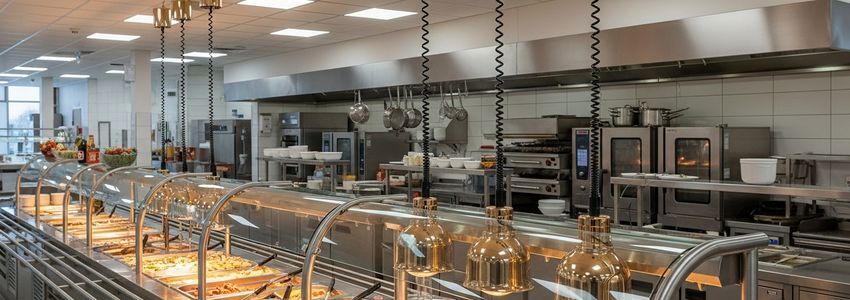
Real-World Scenarios: Cafeteria Financing in Action
To better understand the practical impact of cafeteria equipment financing, let's explore a few real-world scenarios where this financial tool provides the perfect solution.
a) School Cafeteria Upgrading Aging Kitchen Equipment
A public middle school's cafeteria was struggling with outdated and inefficient equipment. Their 25-year-old convection ovens cooked unevenly, and their aging walk-in cooler was failing to hold a consistent temperature, leading to food spoilage and safety concerns. The school district's capital budget was already allocated for the year, and they couldn't afford the $85,000 needed for new ovens, a walk-in unit, and a new commercial dishwasher.
The district's food service director worked with a financing company to secure an equipment financing agreement. Because the school district is a government entity with a stable financial history, they were approved quickly for the full amount with a favorable interest rate over a 60-month (5-year) term. The lender paid the equipment vendor directly, and the new equipment was installed over a school break, causing no disruption to meal service. The fixed monthly payments fit easily into their operational budget, and the new, energy-efficient equipment lowered their utility bills and eliminated food waste, creating savings that partially offset the financing cost.
b) Hospital Cafeteria Expanding Capacity for 500+ Daily Patients
A regional hospital was completing a new patient wing, which would increase its bed count by 100. This meant their cafeteria needed to scale up its operations to serve hundreds of additional patients, staff, and visitors each day. The expansion required a new, larger steam kettle for soups, a high-capacity combi oven for specialized dietary meals, and an extended refrigerated serving line to handle the increased volume. The total cost of the project was projected to be over $150,000.
Paying cash would have diverted funds from critical medical equipment purchases. Instead, the hospital's administration opted for an equipment lease for the new cafeteria assets. They chose a 7-year lease with a $1 buyout option, which functioned similarly to a loan but offered a slightly lower monthly payment. This allowed them to get all the necessary equipment installed before the new wing opened, ensuring seamless service. The lease structure also provided predictable expenses, which was essential for the hospital's complex departmental budgeting.
c) Corporate Office Cafeteria Modernizing with a New Serving Line
A large tech company wanted to renovate its corporate cafeteria to improve employee experience and compete with nearby restaurants. Their goal was to replace their traditional, linear serving line with a modern "food hall" concept featuring multiple stations: a salad bar, a grill station, a pizza station, and a coffee bar. This required a complete overhaul, including new induction warmers, refrigerated displays, stone-fired pizza oven, and a state-of-the-art POS system that allowed employees to pay with their company badges.
The total project cost was nearly $200,000. The company used a combination of cash for the construction and equipment financing for all the food service assets. By financing the equipment, they preserved capital for other employee wellness initiatives. The financing agreement covered equipment from five different vendors on a single contract, simplifying the procurement process. The new, efficient setup reduced wait times and increased employee satisfaction, turning the cafeteria from a simple necessity into a valuable corporate perk.
d) New Cafeteria Startup Needing a Full Equipment Package
An entrepreneur was launching a new cafeteria service to manage the food operations for a multi-tenant commercial office building. As a startup, the business had no operating history and limited initial capital. The owner needed to purchase an entire kitchen's worth of equipment, from ranges and refrigeration to dishwashing and serving counters, with a total price tag of $125,000. Traditional banks were unwilling to lend to a new business without significant collateral.
The owner turned to a specialized lender like Crestmont Capital that works with startups. While the interest rate was slightly higher to reflect the increased risk, the lender was able to approve the financing based on the owner's strong personal credit, solid business plan, and a 20% down payment. The financing allowed the business to become fully operational and start generating revenue immediately. The ability to acquire professional-grade equipment from the start was crucial for securing the contract with the building's management and building a reputation for quality.
Cafeteria Equipment Financing Compared to Other Options
While equipment financing is a powerful tool, it's important to understand how it stacks up against other common funding methods. The best choice depends on your specific circumstances, including your urgency, financial health, and long-term goals.
| Funding Method | Speed of Access | Interest/Cost | Preserves Cash Flow | Credit Requirements | Best Use Case |
|---|---|---|---|---|---|
| Equipment Financing | Very Fast (1-3 days) | Moderate | Excellent | Flexible (550+ score) | Purchasing specific, high-value equipment for long-term use. |
| Cash Purchase | Instant | None (opportunity cost) | Poor | Not Applicable | For highly profitable businesses with large cash reserves buying inexpensive items. |
| Business Credit Card | Instant (if you have one) | High (often variable) | Good | Good to Excellent | Small equipment purchases, repairs, or earning rewards points if paid off quickly. |
| SBA Loan | Slow (weeks to months) | Very Low | Excellent | Excellent (680+ score) | Large-scale projects, business acquisitions, or bundling equipment with real estate. |
Tips to Improve Your Approval Odds
While equipment financing is accessible, taking a few preparatory steps can significantly improve your chances of getting approved quickly and with the best possible terms. Here's how to put your best foot forward:
- Check Your Credit Report: Before you apply, obtain a copy of your personal and business credit reports. Review them for any errors or inaccuracies that could be dragging down your score. Disputing and correcting mistakes can provide a quick boost and make you a more attractive applicant.
- Prepare Your Bank Statements: Most lenders will require your three most recent business bank statements. Make sure these are readily available. Lenders use them to verify your revenue and assess your cash flow. A healthy average daily balance and consistent deposits demonstrate financial stability.
- Know the Exact Equipment You Need: Have a specific equipment list and a formal quote or invoice from your chosen vendor. This shows the lender you have a clear plan and allows them to make a quick decision. Vague requests for a general amount of funding are less likely to be approved.
- Compare Multiple Lenders: Don't just go with the first offer you receive. Working with a company like Crestmont Capital that has access to a network of lenders can help you compare different rates and terms to find the most competitive option for your situation.
- Work with an Industry Specialist: Choose a lender that has experience in the food service or restaurant industry. They understand the value of the assets you're purchasing and are more likely to offer favorable terms because they are comfortable with the collateral. They also understand the seasonal flows of your business.
- Consider a Smaller Amount First: If you are a newer business or have borderline credit, consider applying for a smaller amount to finance one or two key pieces of equipment. Successfully paying off a smaller loan can build your credit history and make it easier to get approved for larger amounts in the future.
- Highlight Your Revenue History and Growth: When you speak with a funding specialist, be prepared to discuss your business's story. Highlight your consistent revenue, recent growth, and how the new equipment will help you increase sales or improve efficiency. A strong narrative can often help overcome a lower credit score.
How to Get Started with Cafeteria Equipment Financing
Ready to upgrade your cafeteria? Getting started with Crestmont Capital is fast, simple, and transparent. Follow these three steps to get the funding you need.
Apply Online in Minutes
Complete our secure, one-page application with basic information about your business. There's no cost or obligation to see what you qualify for. Click here to apply now.
Speak with a Specialist
A dedicated funding advisor will contact you to review your application, understand your specific equipment needs, and walk you through your customized financing offers.
Get Funded
Once you select your best offer and sign the documents, we'll pay your equipment vendor directly. You get your new equipment and start growing your business.
Start Your Application Today
See how much you can qualify for in just a few hours. There's no impact on your credit score to apply.
Apply in 60 SecondsFrequently Asked Questions
What types of cafeteria equipment can be financed?
You can finance almost any piece of new or used equipment for your cafeteria. This includes major cooking appliances like ovens, ranges, and fryers; refrigeration units like walk-in coolers and freezers; serving equipment like steam tables and sneeze guards; sanitation systems like commercial dishwashers; and even POS systems and dining room furniture.
What credit score do I need for cafeteria equipment financing?
While a higher credit score (650+) will typically secure you better rates, many lenders, including Crestmont Capital, can work with business owners with scores as low as 550. Lenders place a strong emphasis on your business's cash flow and revenue history, so a lower score isn't always a deal-breaker.
How quickly can I get approved and funded?
The process is extremely fast. After submitting a simple online application, you can often receive an approval decision within a few hours. Funding can be completed in as little as 24 hours, meaning your equipment vendor gets paid and you can schedule delivery right away.
Can a new cafeteria business qualify for equipment financing?
Yes, startups can qualify. While it can be more challenging than for an established business, many lenders offer financing programs for new businesses. They will typically look for a strong business plan, good personal credit from the owner(s), and may require a larger down payment.
What is the difference between equipment financing and leasing?
The main difference is ownership. With financing, you borrow money to buy the equipment, and you own it from the start. With leasing, you are essentially renting the equipment for a set term. At the end of a lease, you can typically return it, renew the lease, or buy it. Financing builds equity, while leasing offers lower payments and easy upgrades.
What documents do I need to apply?
For most applications under $250,000, the process is very simple. You'll typically only need to complete a one-page application, provide your last 3 months of business bank statements, and submit an invoice for the equipment you wish to purchase.
Can I get cafeteria equipment financing with bad credit?
Yes, it is possible. Because the equipment itself serves as collateral, lenders are often more flexible on credit scores compared to unsecured loans. If you can demonstrate strong, consistent revenue and cash flow, many lenders will be able to find a financing solution for you, though the rates may be higher.
What are typical interest rates for cafeteria equipment loans?
Interest rates vary widely based on your credit score, time in business, and the financing term. Rates can range from as low as 6% for well-qualified businesses with excellent credit to over 20% for high-risk or bad credit applicants. The best way to know your rate is to submit an application.
Can I finance used cafeteria equipment?
Absolutely. Financing used equipment is a great way to save money. Most lenders will finance used equipment, though they may have certain restrictions on the age of the equipment or require an inspection. The repayment term for used equipment may also be shorter than for new.
What happens at the end of an equipment lease?
At the end of a lease term, you generally have a few options. Depending on your agreement, you can: 1) Purchase the equipment for its Fair Market Value (FMV). 2) Purchase it for a pre-determined price, such as a $1 buyout. 3) Renew the lease. 4) Return the equipment to the leasing company.
Can I add more equipment during my financing term?
Yes. Many businesses find they need additional equipment as they grow. You can typically apply for a new financing agreement for the additional items. If you have a good payment history on your existing loan, the approval process for new equipment is often even faster and easier.
Are SBA loans available for cafeteria equipment?
Yes, SBA loans like the 7(a) and 504 programs can be used to purchase equipment. They offer excellent long terms and low interest rates but have a much more intensive application process and stricter credit requirements than direct equipment financing.
How much can I finance for cafeteria equipment?
Financing amounts can range from as little as $5,000 for a single piece of equipment to over $1,000,000 for a complete kitchen build-out. The amount you qualify for will depend on your business's revenue, credit history, and the value of the equipment being purchased.
Are there prepayment penalties?
This depends on the lender and the specific loan agreement. Some equipment loans do not have prepayment penalties, allowing you to pay them off early and save on interest. Others may have them. It's an important question to ask your funding specialist when reviewing your offers.
Why should I choose Crestmont Capital for cafeteria equipment financing?
Crestmont Capital offers a fast, flexible, and transparent financing experience. We specialize in the food service industry, work with all credit profiles, and provide access to a wide network of lenders to ensure you get the most competitive terms. Our dedicated advisors guide you through every step, making the process of funding your cafeteria simple and stress-free.
Conclusion
Outfitting and maintaining a modern, efficient cafeteria is a capital-intensive endeavor. From cooking and refrigeration to serving and sanitation, every piece of equipment plays a critical role in your success. However, the high upfront cost of these assets should not be a barrier to growth or modernization. As we've explored, cafeteria equipment financing provides a powerful and flexible solution, allowing you to acquire the tools you need to thrive while preserving your precious working capital for day-to-day operations.
By breaking down a large investment into predictable monthly payments, you can manage your budget effectively, improve cash flow, and gain immediate access to the equipment that drives efficiency, safety, and customer satisfaction. Whether you are a school district on a tight budget, a hospital expanding its services, or a new business just starting, there is a financing option tailored to your needs. The key is to partner with a lender who understands your industry and is committed to your success. If you're ready to take the next step in building a better cafeteria, Crestmont Capital is here to help you secure the funding you need, quickly and easily.
Disclaimer: The information provided in this article is for general educational purposes only and is not financial, legal, or tax advice. Funding terms, qualifications, and product availability may vary and are subject to change without notice. Crestmont Capital does not guarantee approval, rates, or specific outcomes. For personalized information about your business funding options, contact our team directly.