
 (800) 949-0401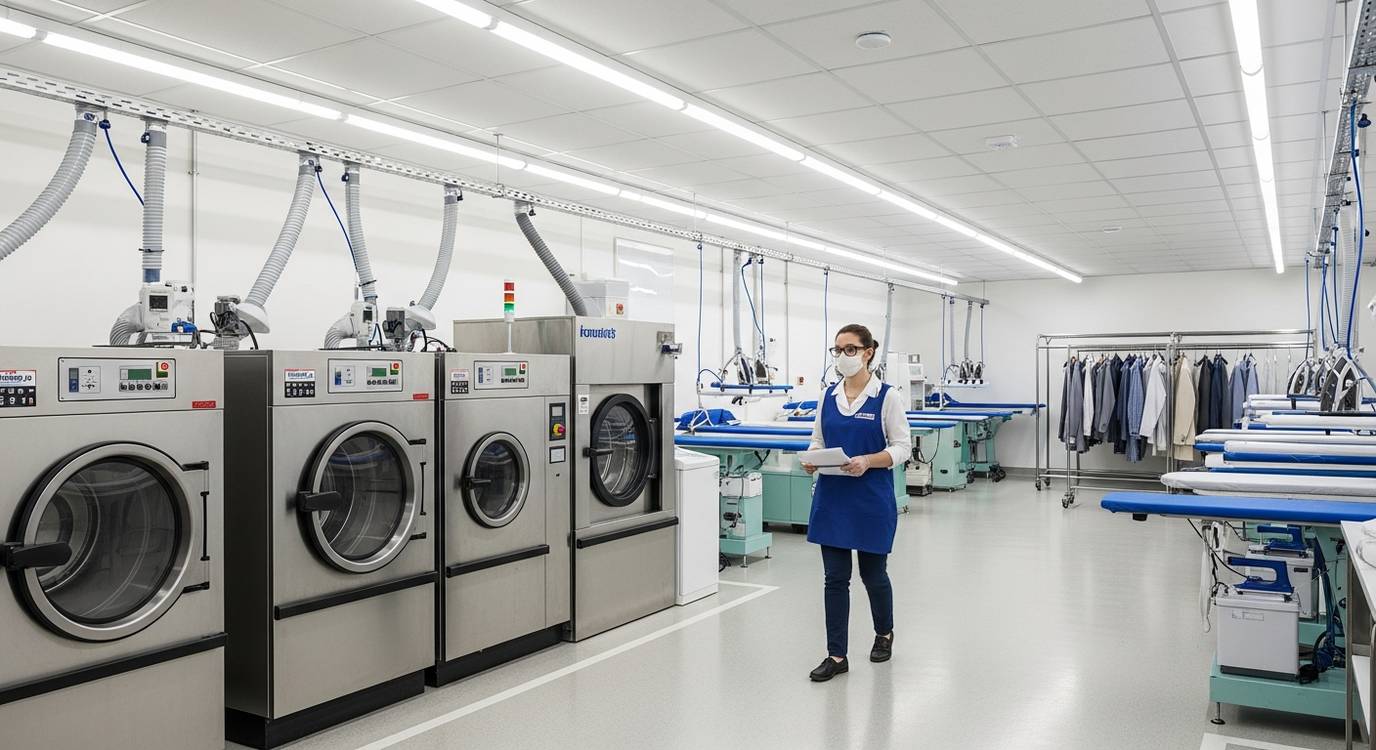
Dry Cleaning Business Loans: The Complete Financing Guide for Dry Cleaners
Dry cleaning business loans give dry cleaners and laundry service owners the capital they need to invest in equipment, modernize facilities, manage seasonal cash flow, expand to new locations, or cover the working capital needs of a growing operation. Dry cleaning is one of the most equipment-dependent small businesses in America - and the right financing can mean the difference between running aging machines that hurt quality and investing in modern equipment that delivers superior results and higher margins.
This guide covers everything dry cleaning business owners need to know about financing: the types available, how to qualify, what lenders evaluate, and how to use capital strategically to build a more profitable dry cleaning operation.
In This Article
- Why Dry Cleaning Businesses Need Financing
- Types of Dry Cleaning Business Loans
- Who Qualifies for Dry Cleaning Business Loans?
- Rates, Terms, and Costs
- Strategic Uses of Capital
- How to Apply for a Dry Cleaning Business Loan
- How Crestmont Capital Helps
- Real-World Scenarios
- Tips for Getting Approved
- Frequently Asked Questions
- How to Get Started
Why Dry Cleaning Businesses Need Financing
Dry cleaning is a capital-intensive service business. Commercial dry cleaning equipment - solvent machines, pressing equipment, boilers, and conveyor systems - is expensive to purchase and critical to service quality. Equipment failures, deferred upgrades, and aging infrastructure directly impact customer satisfaction and revenue. Beyond equipment, dry cleaning businesses face ongoing needs for working capital, marketing investment, and expansion financing.
The most common financing needs for dry cleaning businesses include:
- Equipment purchases and upgrades: Commercial dry cleaning machines using hydrocarbon or GreenEarth solvents cost $30,000 to $80,000+ per unit. Full plant equipment sets including pressing, conveyor systems, and finishing equipment can range from $150,000 to $500,000. Equipment financing is the most common tool for managing these costs.
- Environmental compliance upgrades: Transitioning from perchloroethylene (PERC) to modern, more environmentally compliant solvent systems requires significant capital investment. Environmental compliance financing helps dry cleaners make these mandated transitions without depleting working capital.
- Acquiring an existing dry cleaning plant: Buying an established dry cleaning business is one of the most common paths to ownership. Acquisition prices range from $50,000 to $500,000+ depending on revenue, equipment, and lease quality.
- Opening a new drop store: Dry cleaning chains and owner-operators often expand by opening satellite drop stores that collect garments and send them to a central processing plant. Each new drop store requires build-out, equipment, signage, and working capital for ramp-up.
- Working capital for operations: Dry cleaning businesses face recurring working capital needs - solvent and supply purchases, payroll, lease payments, and seasonal cash flow gaps during slow periods.
- Marketing and customer acquisition: Growing a dry cleaning customer base requires investment in local advertising, digital marketing, loyalty programs, and commercial account development.
Key Stat: According to IBISWorld, the U.S. dry cleaning and laundry services industry generates approximately $9 billion annually. The industry is characterized by stable, recession-resistant demand - even in economic downturns, professionals continue to need dry cleaning for business attire, uniforms, and special garments.
Types of Dry Cleaning Business Loans
Several financing products serve dry cleaning businesses effectively. The right choice depends on the purpose of the capital, your business stage, and your financial profile.
Equipment Financing
Equipment financing is the most commonly used product for dry cleaning capital needs. Whether purchasing a new dry cleaning machine, upgrading pressing equipment, or investing in a modern conveyor system, equipment financing allows dry cleaners to acquire the tools they need without depleting working capital. The equipment serves as collateral, making approval more accessible than unsecured products even for owners with average credit. Loans typically cover 80% to 100% of equipment cost with 3 to 7-year terms.
Working Capital Loans
Working capital loans provide fast, flexible capital for operational needs: solvent and supply purchases, payroll, marketing, lease payments, and seasonal cash flow management. These unsecured, short-to-medium-term loans are approved based on monthly revenue and banking history, with funding often available within 24 to 72 hours.
SBA Loans
SBA 7(a) loans offer the most competitive rates for dry cleaning acquisitions and major expansions. For buying an existing dry cleaning plant or funding a significant equipment overhaul, SBA loans provide competitive rates and long repayment terms - though the approval process takes 30 to 90 days and requires substantial documentation. For a complete overview: SBA Loans: Everything You Need to Know.
Business Lines of Credit
A business line of credit provides revolving access to capital for dry cleaning operations - draw when you need supplies or cover a slow week, repay as customer revenue comes in, draw again. Lines of credit are particularly useful for managing the recurring working capital needs of dry cleaning operations without taking on a fixed loan balance.
Commercial Real Estate Loans
Dry cleaners who want to own their plant rather than lease benefit from long-term cost stability and equity building. Commercial real estate financing provides the capital for building purchases, with SBA 504 loans offering below-market fixed rates and 10% down payments for eligible owner-occupants.
| Loan Type | Best For | Amount Range | Speed |
|---|---|---|---|
| Equipment Financing | Machines, presses, conveyors | $10K - $2M+ | 1-5 days |
| Working Capital | Supplies, payroll, marketing | $10K - $500K | 24-72 hours |
| SBA Loan | Acquisition, major expansion | Up to $5M | 30-90 days |
| Line of Credit | Ongoing cash flow flexibility | $25K - $500K | Days-weeks |
| Commercial RE Loan | Building purchase | $200K - $5M+ | 30-60 days |
Ready to Finance Your Dry Cleaning Business?
Get fast, flexible financing from the #1 rated business lender in the U.S. Apply in minutes.
Apply Now →Who Qualifies for Dry Cleaning Business Loans?
Time in Business
Most working capital lenders require a minimum of 6 months in business. Equipment financing is sometimes available for newer businesses with sufficient equipment collateral. SBA loans typically require at least 2 years of operating history. Dry cleaning businesses that have operated for at least 12 months with consistent revenue have the best access to a full range of financing products.
Monthly Revenue
Revenue is the primary qualification factor for working capital loans. Most lenders require at least $10,000 to $15,000 in average monthly gross revenue. A dry cleaning plant or drop store generating consistent customer traffic typically exceeds this threshold within the first year of established operation. Loan amounts are typically calculated at 100% to 150% of average monthly revenue.
Credit Score
Working capital lenders accept credit scores as low as 550 to 580. Equipment financing requires 575 to 620. SBA loans require 650 to 680 or higher. Dry cleaning business owners with average credit who have strong revenue and clean banking records consistently access working capital and equipment financing successfully.
Equipment Condition and Value
For equipment financing specifically, lenders evaluate the equipment being financed - its type, condition, manufacturer, age, and residual value. Commercial dry cleaning equipment from reputable manufacturers (Kreussler, Sankosha, Hoffman, Unipress) retains value well and represents strong collateral. Older or off-brand equipment may qualify for lower financing percentages or require stronger borrower profiles to offset the collateral risk.
Environmental Compliance
Dry cleaning businesses operating with PERC (perchloroethylene) equipment may face questions about environmental compliance in their markets. Lenders - particularly SBA lenders - will review whether the business has outstanding environmental liabilities or compliance requirements that could affect its ability to operate. Businesses that have already transitioned to modern solvent systems or have a documented compliance plan are better positioned for financing approval.

Rates, Terms, and Costs
Equipment Financing Rates
Equipment financing for dry cleaning equipment typically carries rates of 7% to 20% APR with 3 to 7-year repayment terms. Monthly payments on a $60,000 dry cleaning machine over 60 months at 10% APR would be approximately $1,275 per month - a predictable, manageable cost against the revenue a modern, efficient machine enables.
Working Capital Loan Pricing
Working capital loans are typically priced using factor rates from 1.10 to 1.45. A $20,000 loan at a 1.25 factor rate means $25,000 total repayment with daily or weekly ACH debits. Stronger borrowers with consistent revenue and clean banking records receive rates at the lower end of this range.
SBA Loan Rates
SBA 7(a) loans currently carry effective rates of approximately 10.5% to 13.5% APR with 10-year terms for equipment and working capital, and up to 25 years for real estate. For a dry cleaning acquisition financed at $300,000 over 10 years, monthly SBA payments would be approximately $3,960 at 12% - well within the cash flow capacity of a healthy dry cleaning operation.
Strategic Uses of Capital for Dry Cleaning Businesses
Modernizing to Green Solvents
Transitioning from PERC to modern solvents (GreenEarth, hydrocarbon, wet cleaning) is both an environmental compliance step and a business opportunity. Modern solvent systems qualify for premium pricing in many markets - customers actively seek out "eco-friendly" dry cleaners. Equipment financing for the transition investment typically pays back within 2 to 3 years through a combination of premium pricing, reduced regulatory risk, and lower solvent disposal costs.
Commercial Account Development
Commercial dry cleaning accounts - hotels, restaurants, healthcare facilities, uniform rental companies, and corporate clients - represent the highest-volume, most predictable revenue stream available to dry cleaning businesses. Developing commercial accounts requires investment in sales outreach, dedicated pickup/delivery capacity, and sometimes additional processing capacity. Capital deployed toward commercial account development often produces the strongest long-term revenue impact.
Adding Pickup and Delivery Services
Pickup and delivery dry cleaning services have grown significantly, driven by consumer demand for convenience. Adding this service requires a vehicle, route management software, and initial marketing investment. Capital invested in building a pickup/delivery operation expands the effective geographic service area without requiring additional storefronts.
Opening a New Drop Store
For dry cleaning operators with a central plant, each additional drop store generates revenue with minimal incremental processing cost. A well-located drop store with strong neighborhood traffic can add $10,000 to $25,000 per month in revenue. Build-out and initial working capital for a new drop store typically require $30,000 to $80,000 - an investment that pays back quickly against the recurring revenue a good location generates.
Pro Tip: Before taking on equipment financing for a dry cleaning machine replacement, calculate the total cost of continuing to operate aging equipment: repair frequency, downtime impact on customer retention, solvent efficiency, and energy consumption. Modern equipment consistently reduces operating costs by 15% to 30% per unit, which often makes the financing decision straightforward on a net cost basis.
How to Apply for a Dry Cleaning Business Loan
For Equipment Financing
Equipment applications require: a completed application, a quote or invoice for the equipment, and 3 to 6 months of business bank statements. Decisions are typically issued within 24 to 48 hours for amounts under $150,000. Having a specific equipment quote from a reputable dry cleaning equipment supplier accelerates the process significantly.
For Working Capital Loans
Working capital applications require: a brief online application, 3 to 6 months of business bank statements, and a government ID. Decisions are often issued within hours and funding within 24 to 72 hours. The most important step is having your bank statements ready when you apply.
For SBA Loans (Acquisition or Major Investment)
SBA applications require: personal and business tax returns (2-3 years), personal financial statement, seller's financials (for acquisitions), business plan for new locations, profit and loss statements, bank statements, and SBA-specific forms. Environmental compliance documentation may also be requested for dry cleaning businesses. Working with an SBA-experienced lender who understands dry cleaning operations produces the most efficient process.
How Crestmont Capital Helps Dry Cleaning Businesses
Crestmont Capital is a direct lender and one of the top-rated business financing companies in the United States. We work with dry cleaning businesses at every stage - from single-location operators investing in equipment upgrades to multi-location chains expanding their drop store networks.
Through Crestmont Capital's small business financing programs, dry cleaning business owners can access:
- Equipment financing for commercial dry cleaning machines, presses, conveyors, and plant infrastructure
- Working capital loans from $10,000 to $2,000,000+ for operations and expansion
- Business lines of credit for ongoing cash flow flexibility
- Fast approvals - often within hours for working capital, days for equipment
- Direct lender access - no brokers, no markups, transparent terms
Start your application at offers.crestmontcapital.com/apply-now - it takes less than 10 minutes and will not impact your credit score.
Get Your Dry Cleaning Business Financed Today
Crestmont Capital - Rated #1 in the U.S. Fast approvals, flexible terms, direct lender access.
Start Your Application →Real-World Scenarios
Scenario 1: Replacing a 20-Year-Old Dry Cleaning Machine
A dry cleaning plant in Ohio had been operating with a PERC machine purchased in 2004. Repair costs were escalating, solvent consumption was inefficient, and regulatory pressure around PERC was increasing. Equipment financing of $65,000 covered a new GreenEarth solvent machine. The new machine reduced solvent costs by 28%, virtually eliminated repair expenses, and qualified the business for a "green dry cleaner" marketing position that attracted new customers. The equipment loan was repaid in 42 months from the combined savings and revenue increase.
Scenario 2: Acquiring an Existing Dry Cleaning Business
A laundry services professional in Texas had managed other people's dry cleaning operations for 12 years. When a retiring owner offered to sell his two-location operation, the manager used an SBA 7(a) loan to fund the acquisition. Purchase price: $280,000. With $56,000 personal equity (20%), the SBA loan covered the remaining $224,000. The existing customer base and established revenue history made underwriting straightforward. The new owner took over operations seamlessly and was servicing debt comfortably from day one.
Scenario 3: Opening a New Drop Store
An established dry cleaning operator with a central processing plant identified a high-traffic retail strip mall location with no nearby dry cleaning competitor. Build-out and pre-opening costs totaled $52,000. A working capital loan funded the full project in 48 hours. The drop store reached break-even within 4 months and was generating $14,000 per month in revenue by month 6. The working capital loan was repaid within 9 months from the new location's cash flow.
Scenario 4: Adding Pickup and Delivery Service
A dry cleaning owner in a suburban market was seeing competitors gain ground with pickup/delivery offerings. She invested $28,000 in a cargo van, route management software, and a 3-month digital marketing campaign. Working capital financing covered the full investment. Within 6 months, the delivery route had 85 active customers generating $9,500 per month in additional revenue - customers who would not have otherwise walked into the storefront location.
Tips for Getting Approved
Have Equipment Quotes Ready
For equipment financing, having specific quotes from reputable dry cleaning equipment suppliers significantly accelerates the process. Lenders review equipment specifications and supplier reputation as part of equipment loan underwriting. A quote from an established equipment dealer adds credibility and helps underwriters complete their assessment faster.
Address Environmental Compliance Proactively
If your business operates with PERC equipment, be prepared to demonstrate compliance with local regulations. Lenders - particularly SBA lenders - will ask about environmental status. Having current compliance documentation or a documented transition plan to modern solvents removes a common barrier in the underwriting process.
Maintain Clean Banking Activity
Consistent customer payment deposits, positive average daily balances, and minimal NSFs are the clearest signals of business health a lender can see. Dry cleaning businesses that process payments through a dedicated business bank account and maintain regular deposit patterns have the most straightforward loan application experiences.
Work with a Direct Lender
Brokers add cost and delay. Apply directly at offers.crestmontcapital.com/apply-now for transparent, direct service with no markup on your rate.
Frequently Asked Questions About Dry Cleaning Business Loans
How to Get Started
Identify specifically what you need financing for - equipment, acquisition, new drop store, or working capital. Calculate the revenue impact before you borrow.
Pull 3 to 6 months of business bank statements. For equipment, get a quote from a reputable supplier. For acquisitions, request the seller's 3 years of financials.
Apply at offers.crestmontcapital.com/apply-now - takes under 10 minutes, no credit score impact.
Understand total repayment, payment schedule, term length, and all fees before signing. A reputable lender provides full transparency.
Use capital for the specific purpose you identified. Track equipment efficiency, new revenue from expansion, or cost reductions. This builds your lending history for future capital needs.
Conclusion
Dry cleaning business loans give dry cleaners the capital to invest in equipment that delivers superior quality, expand operations, manage cash flow professionally, and build the kind of business that serves customers for decades. The dry cleaning industry's stable, recurring demand model makes it one of the most financeable small business categories - and the right financing structure enables investments that compound in value over time.
Whether you need equipment financing to replace an aging machine, working capital to manage a slow season, or SBA financing to acquire an established operation, the right lender and product are available. Approach your application with clear documentation, a specific purpose, and a realistic understanding of the revenue impact your capital deployment will generate.
Crestmont Capital works with dry cleaning businesses and laundry service operators to deliver fast, transparent financing decisions. Start your application today at offers.crestmontcapital.com/apply-now.
Ready to Finance Your Dry Cleaning Business?
Apply now - fast decisions, flexible terms, no obligation, no credit score impact.
Apply Now →Disclaimer: The information provided in this article is for general educational purposes only and is not financial, legal, or tax advice. Funding terms, qualifications, and product availability may vary and are subject to change without notice. Crestmont Capital does not guarantee approval, rates, or specific outcomes. For personalized information about your business funding options, contact our team directly.








