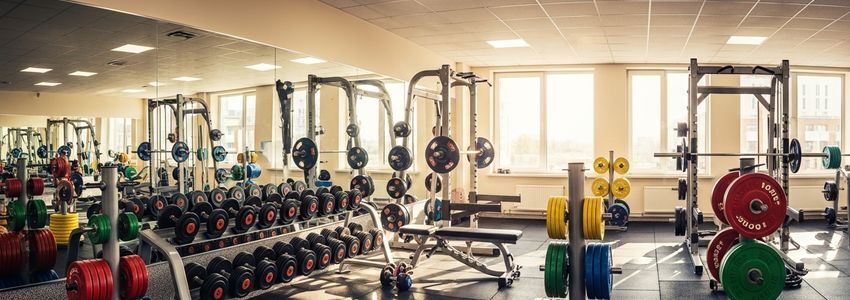
The clang of iron, the focused energy, the community built on shared goals of strength and discipline-this is the world you live and breathe. For passionate bodybuilders, powerlifters, and strength athletes, opening a gym isn't just a business venture; it's about creating a sanctuary, an "iron paradise" where others can pursue their physical peak. But transforming this vision into a reality requires more than just passion and expertise. It requires significant capital to secure a location, purchase tons of specialized equipment, and cover the initial operating costs. This is where bodybuilding gym business loans become the most critical tool in your arsenal.
Navigating the world of commercial finance can be as challenging as a new PR attempt. Many traditional lenders don't fully grasp the unique business model of a hardcore weightlifting center, often lumping it in with generic fitness clubs. This guide is designed to cut through the noise and provide a clear, comprehensive roadmap specifically for you-the aspiring or current owner of a bodybuilding gym. We will break down everything you need to know, from the different types of financing available to the specific qualifications lenders look for. We'll explore real-world scenarios, compare your options side-by-side, and give you a step-by-step plan to secure the funding you need to build your empire.
Whether you're planning to open your first facility from scratch, expand a successful existing gym, or upgrade your equipment to the latest and greatest, this guide will serve as your ultimate resource. We understand that your financial needs are different. You're not buying a few treadmills; you're investing in high-capacity power racks, competition-grade barbells, and plate-loaded machines that can withstand years of intense use. Understanding how to finance these specific assets is the key to building a sustainable and profitable business. Let's lift the heavy weight of financing together, so you can focus on what you do best: building a premier destination for strength.
In This Article
- What Are Bodybuilding Gym Business Loans?
- Why Bodybuilding Gyms Need Specialized Financing
- Types of Financing for Bodybuilding Gyms
- How Bodybuilding Gym Financing Works
- How Much Can Bodybuilding Gym Owners Borrow?
- Qualifications and Requirements
- How Crestmont Capital Helps Gym Owners
- Comparing Bodybuilding Gym Financing Options
- Real-World Scenarios for Gym Owners
- How to Get Started
- Frequently Asked Questions
What Are Bodybuilding Gym Business Loans?
A "bodybuilding gym business loan" isn't a single, specific product you'll find listed at a bank. Instead, it's an umbrella term for a variety of financial solutions specifically tailored to meet the high-capital demands of starting, running, and growing a strength-focused fitness facility. Unlike generic business loans, these funding options are structured with an understanding of a bodybuilding gym's unique assets, revenue streams, and operational challenges.
At its core, this type of financing provides the necessary capital to cover expenses that are unique to the weightlifting industry. This can range from securing a commercial lease on a warehouse space to purchasing tens of thousands of dollars in highly specialized, heavy-duty equipment. The primary purpose of these loans is to bridge the gap between your vision for a top-tier training facility and the financial reality of making it happen.
These loans can be used for a wide array of purposes, including:
- Startup Costs: Covering the initial expenses of launching a new gym, including lease deposits, business licenses, initial marketing, and the full build-out of the facility.
- Equipment Purchase: Financing the acquisition of new or used equipment, such as power racks, monolifts, specialty bars, dumbbell sets up to 200 lbs, leg presses, and plate-loaded machines. This is often the largest single expense for a new gym.
- Expansion or Renovation: Funding the expansion into an adjacent commercial space, adding more lifting platforms, renovating locker rooms, or upgrading your facility's infrastructure like HVAC and flooring.
- Working Capital: Providing a cash cushion to manage day-to-day operating expenses, such as payroll for trainers, rent, utilities, and inventory for supplements or apparel, especially during the crucial first few months of operation.
- Refinancing Debt: Consolidating existing high-interest debts from credit cards or other loans into a single, more manageable payment with a lower interest rate.
Lenders who specialize in this niche, like Crestmont Capital, recognize that the value of your business lies in its high-quality equipment and loyal member base. They understand that your revenue comes from memberships, personal training packages, supplement sales, and merchandise-not just casual drop-ins. This industry-specific knowledge allows them to offer more suitable and flexible financing products than a traditional lender who may not appreciate the intrinsic value and longevity of commercial-grade strength equipment.
Why Bodybuilding Gyms Need Specialized Financing
While all businesses require capital, bodybuilding and serious weightlifting centers have a set of financial requirements that set them apart from almost any other small business, including mainstream fitness clubs. The sheer cost and specialized nature of the assets involved necessitate a targeted approach to financing. Relying on personal savings or credit cards is often unfeasible and risky. Here’s a detailed look at why specialized financing is not just helpful-it's essential.
The Immense Cost of High-Quality Equipment
This is the single biggest financial hurdle for any aspiring gym owner. A true bodybuilding gym cannot be outfitted with residential-grade equipment. You need commercial-grade, heavy-duty steel that can withstand thousands of pounds being dropped, racked, and lifted daily for years. This level of quality comes at a significant price.
Consider a basic equipment list for a moderately sized facility:
- Power Racks & Squat Cages (4-6 units): A commercial-grade power rack can cost anywhere from $1,500 to $5,000 each. A set of six could easily run $15,000 to $30,000.
- Olympic Barbells & Plates: A collection of high-quality barbells (power bars, deadlift bars, trap bars) and thousands of pounds in bumper and iron plates can quickly exceed $20,000.
- Dumbbell Sets: A full commercial set of dumbbells, often going up to 150 lbs or even 200 lbs, can be one of the most expensive single purchases, costing between $15,000 and $40,000.
- Plate-Loaded Machines: Essential pieces like a 45-degree leg press, hack squat, T-bar row, and various chest and shoulder press machines typically cost $3,000 to $8,000 apiece. A dozen such machines add another $40,000 to $90,000.
- Benches & Flooring: Adjustable benches, flat benches, and most importantly, heavy-duty rubber flooring (at $4-$8 per square foot) for a 5,000 sq. ft. facility can add another $20,000 to $40,000.
A comprehensive equipment package for a new bodybuilding gym can easily total $100,000 to $250,000 or more. Specialized gym equipment financing is designed for these exact scenarios, allowing you to acquire all the necessary gear without depleting your entire cash reserve. It treats the equipment itself as collateral, making it one of the most accessible forms of capital for gym owners.
Extensive Facility Build-Out and Renovation Costs
Finding a "move-in ready" space for a hardcore gym is nearly impossible. Most commercial spaces require significant modification to be suitable and safe for heavy weightlifting.
- Structural Reinforcement: If your gym isn't on a ground-level concrete slab, you may need engineering assessments and structural reinforcements to support the immense weight of the equipment and dropped barbells.
- Specialized Flooring: As mentioned, thick, shock-absorbent rubber flooring is non-negotiable. It protects your subfloor, your equipment, and your members.
- HVAC and Ventilation: A room full of people exerting maximum effort generates a lot of heat and humidity. A standard commercial HVAC system often needs to be upgraded to handle the load, which can be a major expense.
- Layout and Construction: Building out locker rooms, showers, a reception area, office space, and perhaps a posing room or consultation area involves construction costs, plumbing, and electrical work.
These build-out costs can add another $50,000 to $150,000 to your startup budget, depending on the initial condition of the space. A term loan or SBA loan is often the ideal vehicle for financing these large, one-time construction expenses.
Critical Need for Working Capital
Even after the doors open, the expenses don't stop. It can take several months to build a sustainable membership base that generates consistent positive cash flow. During this initial period, you need a substantial working capital reserve to stay afloat.
Working capital covers:
- Rent or Mortgage Payments: Your largest recurring expense.
- Payroll: Paying your front-desk staff and personal trainers.
- Utilities: Electricity, water, internet.
- Insurance: Liability insurance for a weightlifting gym is crucial and can be costly.
- Marketing and Advertising: Pre-opening and grand opening campaigns are vital to attract your first wave of members.
- Inventory: Stocking supplements, drinks, and branded apparel if you plan to have a retail component.
A business line of credit is an excellent tool for managing these fluctuating costs, allowing you to draw funds as needed to cover expenses and repay them as revenue grows.
Ready to Build Your Iron Paradise?
Don't let capital hold you back. Get a free, no-obligation quote for your bodybuilding gym loan today.
Apply Now ->Types of Financing for Bodybuilding Gyms
There is no one-size-fits-all loan for a bodybuilding gym. The best financing option depends on your specific needs, your business's financial health, and your long-term goals. Understanding the different products available is the first step toward making an informed decision. Here are the most common and effective types of financing for gym owners.
Business Term Loans
A business term loan is what most people think of when they hear "business loan." You receive a lump sum of cash upfront and repay it, plus interest, over a predetermined period (the "term") with fixed monthly or weekly payments. Terms can range from one to ten years or more.
- Best For: Large, one-time investments where you know the exact cost upfront. This is ideal for a full facility build-out, purchasing an existing gym, or executing a major expansion project.
- Pros:
- Predictable Payments: The fixed payment schedule makes budgeting and financial planning straightforward.
- Lower Interest Rates: For qualified borrowers, term loans often have lower interest rates compared to more flexible options like lines of credit or MCAs.
- Large Amounts: You can often borrow significant amounts of capital, suitable for major projects.
- Cons:
- Stricter Qualifications: Lenders typically require a strong credit history, a few years in business, and solid revenue.
- Less Flexibility: You receive the full amount at once and start paying interest on it immediately, even if you don't need all the cash right away.
For established gyms looking to fund a significant upgrade, a term loan is often the most cost-effective solution. Explore Crestmont Capital's options for small business loans to see if this fits your needs.
SBA Loans
SBA loans are not issued by the Small Business Administration (SBA) itself, but rather by lenders like Crestmont Capital. The SBA guarantees a portion of the loan, which reduces the lender's risk. This allows lenders to offer highly favorable terms, including lower interest rates and longer repayment periods, to small businesses that might not otherwise qualify.
- Best For: Large-scale, well-planned projects such as starting a new gym from the ground up, purchasing commercial real estate for your facility, or acquiring a massive equipment package.
- Pros:
- Excellent Terms: SBA loans feature some of the lowest interest rates and longest repayment terms available (up to 10 years for working capital/equipment and 25 years for real estate).
- High Loan Amounts: The popular SBA 7(a) program offers loans up to $5 million.
- Versatility: Funds can be used for almost any legitimate business purpose.
- Cons:
- Lengthy Application Process: The approval process is notoriously slow and paperwork-intensive, often taking 30 to 90 days or more.
- Strict Eligibility: The SBA has rigorous requirements for credit score (typically 680+), business history, and financial documentation. A detailed business plan is mandatory.
If you have a strong business plan and good credit, the favorable terms of an SBA loan are hard to beat for a major gym project. You can find more information on program requirements directly from the official SBA website.
Equipment Financing
This is arguably the most relevant and powerful financing tool for a bodybuilding gym owner. Equipment financing is a loan or lease used exclusively for the purchase of new or used equipment. The equipment you are financing serves as its own collateral for the loan.
- Best For: Purchasing any and all gym equipment-from power racks and dumbbells to leg presses and cable crossovers. It's perfect for startups needing to outfit their entire facility and established gyms looking to upgrade specific pieces.
- Pros:
- Easier Qualification: Because the equipment itself secures the loan, lenders are less focused on other factors like time in business or credit score. This makes it very accessible for new gyms.
- Fast Funding: Approval and funding can happen in as little as 24-48 hours, allowing you to acquire equipment quickly.
- 100% Financing: You can often finance the full cost of the equipment, including taxes, shipping, and installation, preserving your cash for other needs.
- Tax Advantages: Section 179 of the IRS tax code may allow you to deduct the full purchase price of qualifying equipment in the year it's put into service.
- Cons:
- Restricted Use: The funds can only be used for the specific equipment being financed.
Business Line of Credit
A business line of credit provides access to a revolving pool of capital up to a certain limit. You can draw funds whenever you need them and only pay interest on the amount you've borrowed. As you repay the funds, your available credit is replenished, much like a credit card.
- Best For: Managing ongoing, unpredictable, or short-term expenses. It's the perfect safety net for handling cash flow gaps, emergency equipment repairs, seizing a sudden opportunity (like buying a competitor's used equipment at a discount), or funding a new marketing campaign.
- Pros:
- Ultimate Flexibility: Use the funds for nearly any business purpose, whenever you need them.
- Cost-Effective: You only pay interest on the funds you actually use, not the entire credit limit.
- Readily Available: Once approved, the funds are accessible on demand, providing peace of mind.
- Cons:
- Potentially Higher Rates: The convenience and flexibility can come with slightly higher interest rates compared to a traditional term loan.
- Discipline Required: It can be tempting to over-borrow if you're not disciplined with your spending.
Every gym should consider having a business line of credit in place, even if you don't need it immediately. It's a powerful tool for financial stability.
Merchant Cash Advance (MCA)
A Merchant Cash Advance is not technically a loan. It's an advance on your future sales. A lender provides you with a lump sum of cash in exchange for a percentage of your future credit and debit card sales until the advance is paid back, plus a fee. The repayment is typically done automatically as a daily or weekly deduction from your merchant account.
- Best For: Gyms that need cash extremely quickly (within 24 hours) for an urgent need or opportunity, and who may not qualify for other types of financing due to poor credit or a short time in business.
- Pros:
- Extremely Fast Funding: The primary benefit is speed; funds can be available in less than a day.
- High Approval Rates: Approval is based on your daily sales volume, not your credit score.
- Payments Flex with Sales: Because repayments are a percentage of sales, you pay back less during slow periods and more during busy ones.
- Cons:
- Very High Cost: MCAs are one of the most expensive forms of financing. The cost is expressed as a "factor rate" (e.g., 1.3), not an APR, which can be misleadingly high when annualized.
- Can Impact Cash Flow: Daily deductions can put a strain on your operating cash flow if not managed carefully.
An MCA should be considered a last resort or a tool for a very specific, high-return opportunity, and used with a clear understanding of its high cost.

How Bodybuilding Gym Financing Works
Securing financing for your bodybuilding gym might seem daunting, but reputable lenders like Crestmont Capital have streamlined the process to be as efficient as possible. While the specific steps can vary slightly depending on the loan type, the general journey from application to funding follows a clear path. Understanding this process helps you prepare effectively and speeds up your access to capital.
Step 1: Assess Your Needs and Prepare Your Plan
Before you even apply, you need to know exactly what you're financing. This is the most critical step. Create a detailed list of all your expected costs. If you're a startup, this means developing a comprehensive business plan. If you're an existing gym, this means getting quotes and creating a project budget.
- Create an Equipment List: Itemize every piece of equipment you need with brand names, models, and prices from vendors.
- Get Build-Out Quotes: Contact contractors for detailed quotes on flooring, construction, electrical, and plumbing work.
- Calculate Working Capital: Estimate your first 6-12 months of operating expenses (rent, payroll, utilities, marketing) to determine how much of a cash cushion you need.
Step 2: Gather Essential Documents
Having your paperwork in order before you apply will dramatically accelerate the process. While requirements vary, most applications will ask for:
- Business Bank Statements: Typically the most recent 3-6 months.
- Personal and Business Tax Returns: The last 1-2 years.
- Financial Statements: Profit & Loss (P&L) statement and a balance sheet, especially for existing businesses.
- Business Plan: Absolutely essential for startups. It should detail your market analysis, membership model, and financial projections.
- Equipment Quotes/Invoices: If you're applying for equipment financing.
- Business Registration and Licenses: Proof that your business is legally established.
Step 3: Submit Your Application
Modern lenders have moved away from cumbersome paper applications. At Crestmont Capital, you can complete a simple, secure online application in just a few minutes. This initial application typically involves basic information about you and your business and often results in a "soft" credit pull, which does not affect your credit score.
Step 4: Consult with a Funding Specialist
After your initial application is received, a dedicated funding specialist will contact you. This is not a generic call center operator; this is an expert who will discuss your gym's specific goals. They will review your submitted information, ask clarifying questions, and help you identify the best financing product(s) for your situation. This consultative approach ensures you're not just getting a loan, but the right loan.
Step 5: Underwriting and Approval
Once you and your specialist decide on a path forward, your complete application package is sent to the underwriting team. Underwriters are the financial analysts who perform the detailed risk assessment. They review your credit history, cash flow, business plan, and collateral to make a final decision. Thanks to technology and efficient processes, this decision can often be made within a few hours for products like equipment financing, or a few days for term loans.
Step 6: Review Offer and Receive Funding
If approved, you will receive a formal loan offer detailing the amount, term, interest rate, and any fees. It is crucial to review this document carefully and ask your specialist to clarify anything you don't understand. Once you accept the offer and sign the loan documents, the funding process is initiated. For many loan types, the funds can be wired directly to your business bank account within 24 hours. For equipment financing, the funds are often paid directly to the equipment vendor, simplifying the purchase for you.
Quick Guide
How Bodybuilding Gym Financing Works - At a Glance
Fill out our simple, secure online form with basic information about your gym. It's fast, free, and won't impact your credit score.
A dedicated funding expert will contact you to discuss your specific goals, from equipment needs to expansion plans, and identify the best options.
Our streamlined underwriting process allows for quick approvals, often within the same business day for many financing products.
Once you accept your offer, capital is deployed quickly so you can purchase equipment, start renovations, and grow your business without delay.
How Much Can Bodybuilding Gym Owners Borrow?
One of the first questions on every gym owner's mind is, "How much funding can I actually get?" The answer is highly variable, as the loan amount you can secure depends on a combination of your business's financial profile, the specific purpose of the loan, and the type of financing you choose. However, we can break down the typical ranges and the factors that influence them.
First, let's look at the typical costs you might be trying to cover:
- Small "Warehouse" Gym Startup: For a bare-bones, hardcore facility in a lower-cost area, you might need $50,000 to $100,000. This would cover essential equipment, first/last month's rent, and minimal build-out.
- Mid-Sized, Fully Equipped Gym Startup: For a more comprehensive 5,000-8,000 sq. ft. facility with a wide range of machines, amenities like locker rooms, and a solid working capital reserve, costs typically run from $150,000 to $400,000.
- Large-Scale Facility or Franchise: Opening a large, premium club or buying into a well-known strength franchise could easily require $500,000 to $1,000,000+, especially if it involves purchasing real estate.
- Equipment-Only Purchase: If you're an existing gym simply upgrading your gear, you could be looking at anywhere from $20,000 for a few key pieces to $150,000 for a complete overhaul.
The amount a lender is willing to offer is determined by their assessment of your ability to repay the loan. The key factors they evaluate are:
- Business Revenue and Cash Flow (for existing gyms): This is the most important factor for an established business. Lenders will analyze your bank statements and P&L to see if you have consistent, strong cash flow to support new debt payments. A common rule of thumb is that you can be approved for an amount equal to 1-2 times your monthly revenue.
- Credit Score (Personal and Business): Your personal credit score is crucial, especially for new businesses. A score above 650 opens up many options, while a score above 700 can qualify you for the best rates and terms, including SBA loans.
- Strength of Business Plan (for startups): For a new gym with no revenue history, the business plan is everything. Lenders need to see well-researched market analysis, realistic financial projections, a detailed budget, and a clear demonstration of your industry experience.
- Time in Business: The longer you've been in operation, the more data a lender has to assess your stability. While some products are available for startups, being in business for 2+ years significantly increases your borrowing power.
- Collateral: For secured loans, the value of the collateral plays a direct role. In equipment financing, you can typically borrow up to 100% of the equipment's value. For other loans, having business or personal assets to pledge can increase the amount you can borrow.
At Crestmont Capital, we offer a wide range of funding amounts to suit every need, from a $10,000 equipment loan to a multi-million dollar SBA loan for a new facility. The best way to determine how much you can borrow is to have a direct conversation with one of our funding specialists who can assess your unique situation.
Key Stat: According to a report from IBISWorld, the market size of the Gym, Health & Fitness Clubs industry in the U.S. reached $35.3 billion in 2023, demonstrating the sector's robust health and investment potential.
Calculate Your Gym's Potential.
See what financing you could qualify for. Our specialists can help you create a funding plan that matches your vision.
Apply Now ->Qualifications and Requirements
To successfully secure a bodybuilding gym business loan, you need to meet the lender's criteria. While the specific requirements can differ significantly between loan products (an MCA has far looser requirements than an SBA loan, for example), there are several core areas that all lenders will examine. Preparing for these ahead of time will make your application process smoother and increase your chances of approval.
Minimum Credit Score
Your personal credit score is a key indicator of your financial responsibility and is especially important for new businesses.
- 600+: This is often the minimum threshold for alternative financing options like some term loans and equipment financing.
- 650+: A score in this range will open up more options with better rates and terms.
- 680-700+: This is typically the target range for the most desirable financing, including traditional bank loans and SBA loans.
It's wise to check your credit report before applying to correct any errors and understand where you stand. While a lower score doesn't automatically mean a rejection, it may limit you to higher-cost financing options.
Time in Business
Lenders prefer to see a track record of success.
- Startups (0-6 months): Financing is still possible, but your options will be more limited. You will rely heavily on your personal credit score, a strong business plan, and potentially collateral. Equipment financing and certain SBA startup programs are your best bets.
- 6 months - 2 years: Once you have at least six months of revenue history, many more financing doors open, including short-term loans and lines of credit.
- 2+ years: With two or more years of business history and solid financials, you become eligible for the full spectrum of loan products, including the best rates from traditional lenders and the SBA.
Annual Revenue
For existing gyms, consistent revenue is proof that your business model works.
- Most lenders have a minimum annual revenue requirement, which can be as low as $100,000 - $150,000 per year (or about $8,000 - $12,000 per month).
- Strong, growing revenue will not only help you get approved but will also allow you to borrow a larger amount. Lenders will carefully analyze your last 3-6 months of bank statements to verify your cash flow.
A Rock-Solid Business Plan
For startups, this is the single most important document you will create. Your business plan is your opportunity to sell the lender on your vision and prove you've done your homework. It must include:
- Executive Summary: A concise overview of your entire plan.
- Company Description: Your mission, vision, and what makes your gym unique.
- Market Analysis: Detailed research on your target demographic (bodybuilders, powerlifters), local competition, and your unique selling proposition.
- Marketing and Sales Strategy: How you will attract and retain members. Will you focus on social media, local events, corporate partnerships?
- Management Team: Bios of the owners and key staff, highlighting your experience in fitness and business.
- Financial Projections: A detailed 3-5 year forecast of your revenues, expenses, and profitability. This must be backed by realistic assumptions about membership numbers and pricing.
- Funding Request: A precise breakdown of how much money you need and exactly how it will be spent.
Key Documentation
Be prepared to provide the following documents quickly to keep your application moving:
- Driver's License / Government ID
- Voided Business Check
- Business Bank Statements (3-6 months)
- Credit Card Processing Statements (if applicable)
- Personal and Business Tax Returns (1-2 years)
- Profit & Loss Statement and Balance Sheet
- Detailed Equipment Quote or Purchase Order
- Commercial Lease Agreement
- Business Licenses and Articles of Incorporation/Organization
How Crestmont Capital Helps Gym Owners
Choosing the right financing partner is just as important as choosing the right piece of equipment for your gym. You need a partner who understands your industry, moves at the speed of business, and is committed to your success. Crestmont Capital is not a traditional, slow-moving bank. We are a dedicated financial partner for ambitious business owners, with specific expertise in the fitness and wellness sector.
We Speak Your Language
Our funding specialists understand the difference between a monolift and a Smith machine. We know the value of brands like Rogue, EliteFTS, and Hammer Strength. This industry-specific knowledge means we can properly assess the value of your assets and the viability of your business model. We won't ask why you need to spend $30,000 on dumbbells-we get it. This expertise allows us to advocate on your behalf and find financing solutions that other, more generalized lenders might overlook.
A Full Spectrum of Funding Options
Your gym's needs are unique, and your financing should be too. We don't try to fit you into a one-size-fits-all box. Crestmont Capital offers a comprehensive suite of business funding products. Whether you need fast equipment financing to snag a deal on used machines, a flexible business line of credit for working capital, or a long-term SBA loan for a major expansion, we have the solution. Our goal is to analyze your situation and structure the optimal funding package for you.
Speed, Simplicity, and Service
We know that as a gym owner, your time is your most valuable asset. Our process is designed for maximum efficiency.
- Simple Online Application: Our application takes just a few minutes to complete and can be done from any device.
- Fast Decisions: We provide approvals in hours, not weeks. For many of our products, you can go from application to funding in as little as 24 hours.
- Dedicated Support: You will be assigned a dedicated funding specialist who will be your single point of contact throughout the entire process. They are there to answer your questions and guide you every step of the way.
Financing for Every Stage of Business
Whether you're just starting out or are a seasoned gym owner, we have solutions tailored for you. We have extensive experience helping first-time entrepreneurs navigate the complexities of startup funding. For new owners, we recommend reading our guide on first-time business loans to get a head start. For established gyms, we can provide the growth capital needed to scale, upgrade, or open a second location. Our high approval rates and extensive network of lending partners mean we can find a way to say "yes" even when traditional banks say "no."
Comparing Bodybuilding Gym Financing Options
With several types of financing available, it can be challenging to determine which one is the best fit for your immediate need. This table provides a quick, at-a-glance comparison of the most common options for bodybuilding gym owners to help you weigh the pros and cons based on your specific goals.
| Financing Type | Best For | Loan Amount | Speed |
|---|---|---|---|
| Business Term Loan | Large, one-time projects like a full gym build-out, major renovation, or business acquisition. | $25,000 - $500,000+ | 1 - 5 business days |
| SBA Loan | New gym startups, purchasing commercial real estate, or very large equipment packages for those with strong credit. | $50,000 - $5,000,000 | 30 - 90+ days |
| Equipment Financing | Purchasing any new or used gym equipment, from a single machine to a full gym package. Ideal for startups. | $5,000 - $1,000,000+ (up to 100% of equipment cost) | 24 - 72 hours |
| Business Line of Credit | Managing cash flow, unexpected repairs, marketing campaigns, or inventory purchases. An essential financial safety net. | $10,000 - $250,000 | 1 - 2 business days |
| Merchant Cash Advance (MCA) | Urgent, time-sensitive opportunities or emergencies when other financing isn't available due to credit or time constraints. | $5,000 - $500,000 | < 24 hours |
Real-World Scenarios for Gym Owners
Theory is helpful, but seeing how financing works in practice provides real clarity. Here are five distinct scenarios that bodybuilding and weightlifting gym owners commonly face, and the strategic financing solutions they could use to achieve their goals.
Scenario 1: The Startup - "Foundation Strength"
The Goal: Maria, a certified strength coach and competitive powerlifter, has a detailed business plan to open a 6,000 sq. ft. hardcore training facility. Her total startup costs are projected to be $250,000. This includes $150,000 for a comprehensive package of power racks, specialty bars, plates, and machines; $60,000 for facility build-out (flooring, locker rooms, reception); and $40,000 for initial working capital (rent, marketing, insurance).
The Solution: Maria uses a strategic combination of financing. For the largest portion, the equipment, she secures a $150,000 equipment financing agreement. This is ideal because it's easier for a startup to qualify for, and the equipment itself serves as collateral. For the build-out and working capital, she has strong personal credit and a stellar business plan, making her a great candidate for a $100,000 SBA 7(a) loan. The long repayment term on the SBA loan keeps her monthly payments manageable during the critical first year.
Scenario 2: The Expansion - "Goliath Gym"
The Goal: David's "Goliath Gym" has become so popular that it's constantly overcrowded during peak hours. The commercial unit next door, a former retail store, becomes available. He wants to lease it, knock down the wall, and add 4,000 sq. ft. dedicated to strongman equipment and more deadlift platforms. The project cost for construction, new flooring, and a few key pieces of strongman gear (yokes, stones) is estimated at $85,000.
The Solution: Since David's gym has been profitable for three years, he has strong financials. He needs the capital for a single, defined project. A $85,000 short-term business loan with a 3-year term is the perfect fit. The application is quick, funding is fast (under a week), and the predictable monthly payments can be easily absorbed by his gym's increased revenue potential from the expansion.
Scenario 3: The Equipment Upgrade - "Iron Legacy Fitness"
The Goal: "Iron Legacy Fitness" has been a community staple for over a decade, but some of its key plate-loaded machines are showing their age. The owner, Frank, wants to replace five major pieces and add a popular new belt squat machine to stay competitive. He gets a quote from his preferred vendor for a total of $45,000, including delivery and installation.
The Solution: Frank wants to preserve his cash reserves for any unexpected facility issues. He opts for $45,000 in equipment financing. He submits the vendor quote with his application and is approved in less than 24 hours. The lender pays the vendor directly, and the new equipment is delivered the following week. Frank's new monthly payment is low, and he plans to use the Section 179 tax deduction to write off the full cost of the equipment on his year-end taxes.
Scenario 4: The Cash Flow Crunch - "Peak Performance Center"
The Goal: It's the middle of summer, a typically slower season for gym memberships. The gym's main air conditioning unit unexpectedly fails, requiring a $12,000 replacement. On top of that, payroll is due next week. The owner, Jessica, needs to cover these expenses without draining her business bank account.
The Solution: Six months prior, Jessica had proactively been approved for a $50,000 business line of credit as a financial safety net. She simply logs into her portal and draws $18,000 to cover the AC unit and payroll. She only pays interest on the $18,000 she used. As memberships pick back up in the fall, her increased revenue allows her to quickly pay back the draw, restoring her full $50,000 credit line for any future needs.
Scenario 5: The Rebranding and Renovation - "The New Iron Age"
The Goal: A gym owner acquires a failing, outdated fitness center with a great location. The plan is to completely rebrand it as a modern, high-energy bodybuilding hub. This requires a multi-faceted approach: $70,000 for new equipment, $30,000 for aesthetic renovations (new paint, lighting, branding), and $20,000 for a large-scale marketing campaign to announce the "grand re-opening."
The Solution: The owner bundles the entire project cost of $120,000 into a single business term loan. This provides all the capital upfront, allowing them to coordinate the renovation, equipment delivery, and marketing launch simultaneously for a high-impact relaunch. The loan's five-year term provides a stable and predictable payment as the newly rebranded gym builds its member base.
How to Get Started
Ready to take the next step toward funding your dream gym? We've made the process straightforward and transparent. Follow these three simple steps to begin your journey with Crestmont Capital.
Complete our quick, secure application at offers.crestmontcapital.com/apply-now. It takes just a few minutes and will not impact your credit score.
To speed up the process, have your last 3-4 months of business bank statements ready. If you're seeking equipment financing, an official quote from your vendor will also be needed.
After you apply, a dedicated Crestmont Capital funding specialist will reach out to you. They will discuss your gym's specific needs, review your options, and guide you to the best possible funding solution.
Your Gym's Future Starts Now.
Take the first step towards building, expanding, or upgrading your facility. The application is fast, free, and won't affect your credit score.
Apply Now ->Frequently Asked Questions
Can I get a loan for a new bodybuilding gym with no revenue?
Yes, it is possible. Startup financing relies heavily on your personal credit score (ideally 680+), a comprehensive and convincing business plan with detailed financial projections, and your personal industry experience. The most common options for startups are SBA loans and equipment financing, as the equipment itself can serve as collateral.
What credit score do I need for a gym loan?
The required credit score varies by loan type. For SBA loans, you'll typically need a score of 680 or higher. For many alternative term loans and equipment financing, a score of 600-650 may be sufficient. Options like a Merchant Cash Advance are available for those with poor credit, but they come at a much higher cost.
How much do I need for a down payment?
This depends on the financing. Many equipment financing programs offer 100% financing, meaning no down payment is required. For larger projects like an SBA loan for a startup, a down payment (or equity injection) of 10-20% is typically required. Having a down payment always strengthens your application.
Can I finance used gym equipment?
Absolutely. Crestmont Capital and many other lenders offer equipment financing for both new and used equipment. Financing used equipment can be a smart way to stretch your budget, as long as you are purchasing from a reputable seller and the equipment is in good condition.
How quickly can I get funded?
Funding speed is a major advantage of working with a lender like Crestmont Capital. Equipment financing, lines of credit, and MCAs can often be funded in 24-48 hours. Term loans typically take 1-5 business days. SBA loans are the slowest, usually taking 30-90 days from application to funding.
Will applying for a loan affect my credit score?
Our initial application process uses a "soft" credit pull, which does not affect your credit score. This allows us to pre-qualify you and discuss your options. A "hard" credit pull, which may have a small, temporary impact on your score, is only performed later in the process once you decide to move forward with a specific loan offer.
What are typical interest rates for bodybuilding gym business loans?
Interest rates vary widely based on the loan type, your creditworthiness, and market conditions. SBA loans offer the lowest rates, often tied to the Prime Rate. Term loans and equipment financing can range from single-digit rates for top-tier borrowers to higher rates for riskier profiles. MCAs have factor rates, which translate to very high APRs.
Can I get financing if I have a previous bankruptcy?
It can be more challenging, but not impossible. Many alternative lenders are willing to work with business owners who have a past bankruptcy, provided it has been discharged for a certain period (e.g., 2-3 years) and you have re-established good credit and a strong business cash flow since then.
What documents are absolutely essential for my application?
For almost any application, you will need your government-issued ID, a voided business check, and your last 3-6 months of business bank statements. For startups, a detailed business plan is equally essential. Having these ready will significantly speed up the process.
Is it better to lease or finance gym equipment?
Financing means you are taking a loan to buy the equipment, and you own it at the end of the term. Leasing is essentially a long-term rental; you make payments to use the equipment and may have an option to buy it at the end. For heavy-duty strength equipment that has a very long useful life, financing to own is often the preferred and more cost-effective choice for gym owners.
Can I use a business loan to pay for marketing and staff?
Yes. Loans designated for "working capital," such as term loans, SBA loans, and lines of credit, can be used for these exact purposes. These non-asset expenses are critical for a gym's growth, and financing can provide the runway needed to hire top trainers and launch effective marketing campaigns.
Are there specific loans for female or veteran gym owners?
While there aren't many specific loan products, there are programs that offer advantages. The SBA, for example, has initiatives that support veteran and women-owned businesses, often by reducing or waiving certain guarantee fees on SBA loans, making them more affordable.
What's the biggest mistake gym owners make when seeking financing?
One of the biggest mistakes is not being prepared. This includes not having a detailed business plan, not knowing their credit score, and not having their financial documents organized. A second common mistake is underestimating their total costs and not requesting enough working capital to survive the first 6-12 months.
Can I refinance an existing gym equipment loan?
Yes, refinancing is often an option. If your business's financial health or your personal credit has improved since you took out the original loan, you may be able to refinance into a new loan with a lower interest rate or a more favorable payment term. This can help improve your monthly cash flow.
How does Crestmont Capital's process differ from a traditional bank?
The key differences are speed, flexibility, and expertise. Banks often have a slow, rigid, and paperwork-heavy process that can take months. Crestmont Capital uses a streamlined online application, provides decisions in hours, and offers a wider variety of loan products. Our specialists have deep knowledge of the gym industry, allowing for a more tailored and efficient funding experience.
Disclaimer: The information provided in this article is for general educational purposes only and is not financial, legal, or tax advice. Funding terms, qualifications, and product availability may vary and are subject to change without notice. Crestmont Capital does not guarantee approval, rates, or specific outcomes. For personalized information about your business funding options, contact our team directly.