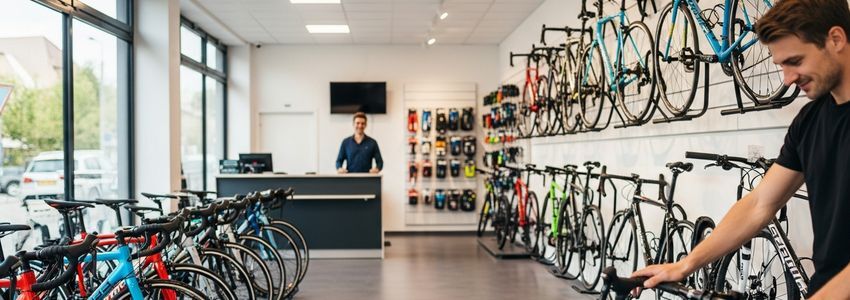
The bicycle industry is booming. From e-bikes and mountain bikes to kids' bikes and urban commuters, Americans are spending billions on cycling every year. But running a successful bicycle shop requires constant investment - in inventory, repairs equipment, staff, and storefronts. Whether you're launching your first shop or expanding an established location, bicycle shop business loans give you the capital to grow without draining your cash reserves.
Crestmont Capital works with independent bike shops, specialty cycling retailers, and multi-location cycling businesses across the country. In this guide, we break down every financing option available to bicycle shop owners, how to qualify, and how to get funded fast.
In This Article
- What Are Bicycle Shop Business Loans?
- Why Bike Shops Need Financing
- Types of Bicycle Shop Financing
- Bicycle Shop Financing: By the Numbers
- How to Qualify for a Bike Shop Loan
- How Crestmont Capital Helps Bike Shops
- Real-World Use Cases
- Comparing Your Options
- Tips for Getting Approved
- Frequently Asked Questions
- How to Get Started
What Are Bicycle Shop Business Loans?
Bicycle shop business loans are financing products specifically suited to the needs of cycling retailers and bike service businesses. They provide working capital, inventory funding, equipment purchases, and expansion capital tailored to the revenue cycles and operational needs of bike shops.
Like other retail businesses, bicycle shops face cyclical revenue - busiest in spring and summer, slower in fall and winter. This makes flexible financing especially valuable. Whether you need to bulk-order bikes ahead of the busy season, finance a new repair stand setup, or bridge a cash flow gap in the off-season, the right loan can keep your business on track year-round.
Bicycle shops can access several types of loans through lenders like Crestmont Capital. Unlike traditional banks that may be unfamiliar with the cycling industry's seasonal nature, alternative lenders and specialty business financing companies understand your business model and can offer faster approvals with more flexible terms.
Industry Insight: The U.S. bicycle market exceeded $9 billion in retail sales in 2023, with e-bikes alone growing at a 10%+ annual rate according to industry reports. Independent bicycle dealers are a key part of this market, and access to capital helps them compete against big-box retailers.
Why Bicycle Shop Owners Need Business Financing
Running a bicycle shop involves significant capital requirements that many business owners underestimate when first starting out. Understanding why financing is needed helps you choose the right product at the right time.
Inventory and Seasonal Purchasing
Bike shops must purchase inventory months before selling it. Manufacturers often require orders in the fall for spring delivery, meaning you need cash before your busy season even starts. A shop that can't pre-order sufficient inventory risks being out of stock during peak demand - a costly mistake that drives customers to competitors.
A inventory financing solution or working capital loan lets you place those orders without depleting your operating reserves. This is one of the most common reasons bicycle retailers seek financing.
Equipment and Shop Setup Costs
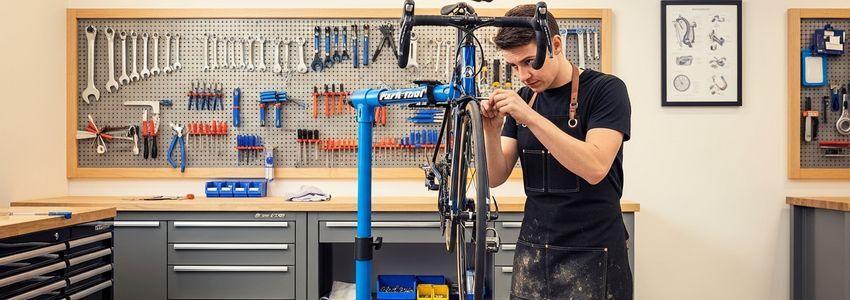
A well-equipped bike shop requires professional repair stands, wheel truing stands, torque wrenches, cable cutters, suspension tools, and diagnostic equipment. High-end service equipment from brands like Park Tool or Feedback Sports can cost thousands of dollars. Add to that POS systems, display fixtures, and security systems, and the upfront cost of equipping a shop becomes substantial.
Equipment financing allows you to spread the cost of these purchases over time rather than paying upfront, preserving your working capital for day-to-day operations.
Storefront Buildout and Expansion
Opening a new location or renovating an existing one requires substantial investment. Bike shops need adequate display space, service areas with proper lighting and airflow, secure storage for high-value inventory, and customer-friendly layouts. Renovations can easily run $50,000 to $200,000 depending on the size and location of the space.
E-Bike Market Expansion
The e-bike segment is growing faster than any other category in cycling retail. Stocking e-bikes means investing in higher-cost inventory (often $1,500 to $10,000 per unit), plus specialized charging equipment, technical training, and warranty management systems. Many shops are seeking financing specifically to expand their e-bike offerings and capture this fast-growing market segment.
Cash Flow Management
Revenue fluctuates dramatically by season. A shop doing $80,000 a month in June may do $15,000 in January. A business line of credit provides a buffer during slow months, allowing you to pay vendors, cover payroll, and maintain operations without dipping into reserves or taking on high-interest debt.
Ready to Finance Your Bicycle Shop?
Get fast, flexible financing for inventory, equipment, and growth. Apply online in minutes - no obligation.
Apply Now ->Types of Bicycle Shop Business Financing
Bicycle shop owners have access to a range of financing products. The right one depends on how you plan to use the funds, how quickly you need them, and what your financial profile looks like.
Working Capital Loans
Working capital loans provide general-purpose funds for day-to-day operations. Use them for payroll, vendor payments, utilities, marketing, and any other operating expense. These are short-term loans typically repaid over 6 to 24 months, with fixed daily or weekly payments that make budgeting straightforward.
Working capital loans from Crestmont Capital can range from $10,000 to $500,000+, with funding as fast as 24 to 48 hours after approval. This makes them ideal for urgent needs like a supplier requiring payment before delivering inventory.
Business Lines of Credit
A business line of credit gives you a revolving pool of funds you can draw from as needed and repay over time. Unlike a term loan that delivers a lump sum, a line of credit lets you draw only what you need, when you need it. Interest accrues only on the outstanding balance.
For bicycle shops with seasonal revenue swings, a line of credit is one of the most versatile tools available. Draw from it in January to cover slow-season expenses, repay it by August when summer revenue peaks, then draw again for fall inventory purchases. Learn more about how to use a working capital line of credit for your shop.
Equipment Financing
Equipment financing is specifically designed for purchasing tools, machinery, and physical assets. The equipment itself serves as collateral, which generally makes qualification easier and rates lower compared to unsecured loans. This is ideal for major service equipment purchases, e-bike charging stations, or even point-of-sale systems.
Terms typically range from 24 to 72 months. At the end of the loan, you own the equipment outright. Equipment financing preserves your working capital while still allowing you to acquire the tools your shop needs to operate at full capacity.
Inventory Financing
Inventory financing uses your inventory as collateral to secure a loan or line of credit. This is particularly useful for bicycle shops that need to purchase large quantities of bikes and accessories before peak season. Rather than depleting cash reserves to stock up, you finance the inventory and repay from the sales revenue it generates.
Inventory financing typically provides 50% to 80% of the appraised value of your inventory as a credit facility. It's one of the most efficient ways for retail businesses to manage seasonal purchasing cycles without cash constraints.
SBA Loans
SBA loans are government-backed loans that typically offer the best rates and longest terms available to small businesses. The most common is the SBA 7(a) loan, which can provide up to $5 million for working capital, equipment, real estate, and more. SBA loans require stronger qualifications - typically 2+ years in business, good credit, and profitability - and the application process is more involved.
However, if your bicycle shop qualifies, an SBA loan can provide low-cost, long-term capital that's hard to beat. Crestmont Capital can guide you through SBA loan options and help you understand whether you qualify.
Revenue-Based Financing
Revenue-based financing provides capital in exchange for a percentage of future revenue. Repayments flex with your income - higher repayments during busy months, lower during slow periods. This can be ideal for seasonal businesses like bike shops that want payments to match cash flow.
The cost is typically expressed as a factor rate rather than an APR, and you receive funding quickly (often within 24 hours). Read more about revenue-based financing to understand if it's right for your shop.
By the Numbers
Bicycle Shop Financing - Key Statistics
$9B+
U.S. bicycle market annual retail sales
10%+
Annual e-bike market growth rate
24 hrs
Typical funding time with Crestmont Capital
$500K+
Maximum working capital available
How to Qualify for Bicycle Shop Business Loans
Qualification requirements vary by lender and loan type, but most lenders will evaluate your business across similar criteria. Understanding what lenders look for helps you prepare a stronger application and increase your approval odds.
Time in Business
Most lenders require at least 6 months in business, though 1-2 years is preferred for better rates. Established shops with 3+ years of operating history will qualify for the widest range of products including SBA loans and traditional term loans. Newer shops may be limited to short-term working capital loans or revenue-based financing initially.
Monthly Revenue
Minimum monthly revenue requirements typically start at $10,000-$15,000 per month for most working capital loans. Higher revenue qualifies you for larger loan amounts. Lenders want to see consistent revenue, so providing 3-6 months of bank statements showing regular deposits strengthens your application.
Credit Score
Your personal credit score plays a role in most business loan decisions, especially for newer businesses that haven't established strong business credit. Most lenders look for scores of 550+ for short-term products, while SBA loans typically require 680+. Building your business credit profile separately from personal credit over time can help you access better terms.
Cash Flow
Lenders analyze cash flow statements to ensure your business generates enough income to repay the loan comfortably. They look for a debt service coverage ratio (DSCR) of 1.25 or higher - meaning your business generates $1.25 for every dollar of debt payment. If your bike shop has strong seasonal revenue, be prepared to explain the seasonal nature to lenders.
Industry and Business Type
Bicycle retail is generally considered a straightforward industry for lending purposes. Lenders understand the inventory-heavy, seasonal nature of bike shops. Unlike some higher-risk industries that face additional scrutiny, bicycle shops typically fall into standard retail/service categories with reasonable risk profiles.
Pro Tip: Gather your last 3-6 months of bank statements, your most recent tax return, and a basic profit/loss statement before applying. Having these ready speeds up the approval process significantly and shows lenders you're organized and prepared.
How Crestmont Capital Helps Bicycle Shop Owners
Crestmont Capital is a leading U.S. business lender with deep expertise in retail and service business financing. We've helped hundreds of specialty retailers - including bicycle shops - access the capital they need to grow, compete, and thrive.
Here's what sets us apart for bike shop owners:
- Fast approvals: Most applications receive a decision within 24-48 hours, with funding often the same day or next business day
- Flexible terms: We offer loan terms ranging from 3 months to 10 years depending on the product and your needs
- Seasonal awareness: We understand the cycling industry's seasonal revenue pattern and structure repayment accordingly
- Multiple products: From working capital to equipment financing to lines of credit, we match you with the right tool for your specific situation
- No industry penalties: Bicycle retail is a welcomed industry - no extra fees or restrictions apply to bike shops
- Dedicated advisors: You'll work with a real funding advisor who takes time to understand your business
Whether you're stocking up for spring, opening a second location, or investing in a fleet of e-bikes, Crestmont Capital has a small business financing solution that fits your timeline and budget.
Real-World Use Cases for Bicycle Shop Loans
Understanding how other bike shop owners use financing helps you identify the best opportunity for your own business. Here are six common scenarios where a loan makes sense.
Scenario 1: Pre-Season Inventory Purchase
A mountain bike shop in Colorado needs to place its spring inventory order in November. The owner needs $120,000 to order bikes, accessories, and apparel for delivery in February and March. Rather than depleting cash reserves, the owner secures a working capital loan repaid over 12 months. When bikes sell in April through July, the revenue easily covers the loan payments, and the shop is fully stocked during peak season.
Scenario 2: E-Bike Department Expansion
An established urban bike shop wants to add a dedicated e-bike section. This requires floor space renovations ($25,000), initial e-bike inventory ($75,000), charging stations ($8,000), and staff training ($2,000). Total cost: $110,000. The owner uses an equipment financing loan for the charging stations and a working capital loan for inventory and renovations, keeping monthly payments manageable while capturing the fast-growing e-bike market.
Scenario 3: Second Location Opening
A successful bicycle shop owner in Portland is ready to open a second location in a neighboring suburb. Costs include lease deposit, initial buildout, and opening inventory - totaling $200,000. A small business term loan provides the capital upfront, repaid over 36 months as the new location ramps up revenue. The owner avoids equity dilution by using debt financing instead of bringing in a partner.
Scenario 4: Off-Season Cash Flow Bridge
A New England bike shop experiences a 70% revenue drop from November to February. The owner uses a business line of credit to cover payroll, rent, and utility bills during the off-season. When spring arrives and revenue surges, the line is repaid in full. The credit line costs far less than alternative options and keeps the shop's best mechanics employed year-round, ready for peak season.
Scenario 5: Service Department Equipment Upgrade
An independent bike shop wants to build out a proper service department to increase high-margin repair revenue. New equipment includes a professional truing stand ($2,500), a suspension service setup ($4,000), electronic shifting diagnostic tools ($3,500), and three new repair stands ($1,800). Total: $11,800. Equipment financing spreads this over 36 months with a low monthly payment, while the increased service revenue more than covers the cost.
Scenario 6: Competitive Marketing Campaign
A bike shop facing competition from a new big-box retailer wants to run a local marketing campaign - social media ads, a cycling event sponsorship, and local radio spots totaling $15,000. A short-term working capital loan funds the campaign, and the resulting increase in new customers generates enough additional revenue to repay the loan within six months while protecting long-term market share.
Get Funded in as Little as 24 Hours
Crestmont Capital is the #1 rated business lender in the U.S. Apply now with no impact to your credit score.
Apply Now ->Comparing Bicycle Shop Financing Options
| Loan Type | Best For | Funding Speed | Typical Terms |
|---|---|---|---|
| Working Capital Loan | Inventory, payroll, operations | 24-48 hours | 3-24 months |
| Business Line of Credit | Seasonal cash flow gaps | 1-3 days | Revolving |
| Equipment Financing | Tools, POS, fixtures | 3-7 days | 24-72 months |
| Inventory Financing | Bulk seasonal ordering | 3-7 days | 3-12 months |
| SBA Loan | Expansion, real estate | 30-90 days | 10-25 years |
| Revenue-Based Financing | Flexible seasonal repayment | 24-48 hours | 3-18 months |
Tips for Getting Your Bicycle Shop Loan Approved
The application process is straightforward, but a few steps can meaningfully improve your chances and help you secure better terms.
Prepare Your Financial Documents in Advance
Most lenders need 3-6 months of bank statements, your most recent business tax return, and a basic profit and loss statement. Having these ready before you apply eliminates delays and shows you're organized. For larger loans, you may also need accounts receivable reports, inventory valuations, or a business plan.
Know How You'll Use the Funds
Lenders feel more confident when you can clearly articulate how you'll use the funds and how they'll generate revenue or improve operations. "I need capital to purchase spring inventory and expect to sell through it by July" is far more compelling than "I need cash for my business." A clear use of funds also helps the lender recommend the right product for your needs.
Understand Your Revenue and Cash Flow
Bike shops are inherently seasonal, so understand your numbers before applying. Know your monthly averages across high and low seasons, your gross profit margins on bikes vs. accessories vs. service, and your fixed overhead costs. This data helps you answer lender questions confidently and demonstrates financial literacy that lenders reward with better terms.
Build Business Credit Separately
Over time, establishing a separate business credit profile can significantly expand your financing options and reduce your cost of capital. Open trade lines with your suppliers, get a business credit card and pay it monthly, and register your business with Dun and Bradstreet to establish a PAYDEX score. For more information, read our guide on best practices for managing business credit.
Work with a Lender Who Knows Retail
Not every lender understands the bicycle industry or retail in general. Working with Crestmont Capital means you're dealing with advisors who understand inventory cycles, seasonal revenue patterns, and the real capital needs of specialty retailers. We won't penalize you for slow months in January when your shop does peak business in May.
Did You Know? The SBA reports that retail businesses with 2+ years of operating history and consistent monthly revenue above $20,000 qualify for a wide range of financing products. Most established bike shops easily meet these thresholds during their peak season, making seasonal planning discussions with your lender particularly valuable.
Frequently Asked Questions
Can I get a bicycle shop business loan with bad credit?
Yes, but your options will be more limited. Alternative lenders like Crestmont Capital consider your monthly revenue and cash flow alongside your credit score. If your bike shop generates consistent monthly revenue of $10,000 or more, you may qualify for working capital loans or revenue-based financing even with a credit score below 600. Improving your business credit profile over time will open access to better rates and terms.
How much can I borrow for my bicycle shop?
Loan amounts depend on your monthly revenue, credit profile, and time in business. Working capital loans typically range from $10,000 to $500,000. Equipment financing can cover the exact cost of the equipment you're purchasing. SBA loans can reach up to $5 million for qualifying businesses. Most bicycle shop owners access $25,000 to $250,000 depending on their size and revenue.
How fast can I get funded for my bike shop?
With Crestmont Capital, most bicycle shop owners receive funding within 24 to 48 business hours of approval. Some working capital products fund the same day. SBA loans take longer (30-90 days) due to government paperwork requirements. If you need fast capital for an inventory opportunity or urgent expense, a working capital loan or revenue-based financing is typically the fastest path.
Do I need collateral to get a bicycle shop loan?
Not always. Unsecured working capital loans and revenue-based financing do not require physical collateral - they're approved based on your revenue and credit profile. Equipment financing uses the equipment itself as collateral, which typically makes approval easier. SBA loans may require collateral for larger loan amounts. Many bike shop owners qualify for unsecured financing, especially for amounts under $100,000.
Can a new bicycle shop get a business loan?
Yes, though options are more limited for shops under 6 months old. Startup equipment financing is available for bicycle shops purchasing equipment with the loan. Microloans through the SBA (up to $50,000) are specifically designed for startups. After 6-12 months with consistent revenue, you'll qualify for the full range of working capital and inventory financing products.
What documents do I need to apply for a bicycle shop loan?
Most lenders require 3-6 months of business bank statements, a completed application, and basic business information (EIN, legal business name, years in business). For larger loans, you may also need your most recent business tax return, profit and loss statement, accounts receivable aging report, and a statement of purpose explaining how you'll use the funds.
Can I use a business loan to finance e-bikes?
Absolutely. Financing e-bikes for resale is one of the most common uses of bicycle shop business loans. You can use working capital loans, inventory financing, or even a business line of credit to purchase e-bike inventory. Given e-bikes' higher price points ($1,500 to $10,000+ per unit), having financing in place to order in quantity often means the difference between being fully stocked for demand or losing sales to better-capitalized competitors.
What is the interest rate on bicycle shop loans?
Interest rates vary widely based on loan type, credit profile, time in business, and the lender. SBA loans offer the lowest rates (prime plus 2.25% to 4.75% as of 2026). Equipment financing rates typically run 6%-20% APR. Working capital loans and lines of credit from alternative lenders range from 10% to 45%+ APR depending on risk profile. Revenue-based financing uses factor rates (typically 1.15 to 1.45x the borrowed amount) rather than APR. The best way to find your actual rate is to apply and compare offers.
How do I handle loan payments during my slow season?
This is one of the most important considerations for bicycle shop financing. Revenue-based financing naturally adjusts payments based on your revenue - you pay less during slow months automatically. A business line of credit only charges interest on what you've drawn, so you can pay it down aggressively in summer and draw minimally in winter. When applying for term loans, discuss seasonal considerations with your lender upfront to structure repayment appropriately.
Can I get multiple loans at the same time for my bicycle shop?
Yes, it's common for bicycle shop owners to have multiple financing products simultaneously - for example, an equipment loan for your service tools and a working capital line of credit for inventory and operations. Different products serve different purposes and don't necessarily conflict. However, be mindful of your total debt service - make sure the combined monthly payments are manageable given your revenue, including during slow months.
Is bicycle shop financing available in all 50 states?
Yes. Crestmont Capital offers business financing to bicycle shops across all 50 U.S. states. Whether you're in a major metro area like Denver or Portland where cycling culture is strong, or a smaller market where your shop serves the local community, we can help you access the capital you need. Our team can identify the best available options for your location.
How do bicycle shop loans compare to using personal savings?
Using business financing preserves your personal savings as an emergency reserve and doesn't put personal assets at risk. The cost of business financing (interest) is a business expense, while depleting personal savings has no tax benefit. Business loans also help you build a credit history that reduces future borrowing costs. When used for investments that generate returns above the loan's cost - like inventory that sells at healthy margins - business financing accelerates growth in ways that personal savings alone cannot.
Can I get financing to buy out a partner in my bicycle shop?
Yes. Partner buyout financing is available through working capital loans, SBA loans, or term loans. This is a common use case for established bicycle shops where one partner wants to exit or retire. The buyout amount is determined by the business valuation and partnership agreement. SBA loans can be particularly well-suited for buyouts given their longer terms and competitive rates.
What happens if my bicycle shop cannot repay the loan?
If you anticipate difficulty repaying your loan, contact your lender immediately. Most lenders, including Crestmont Capital, would rather work out a modified payment arrangement than face a default situation. Options may include temporary payment deferrals, restructuring the loan terms, or refinancing. Default consequences depend on the loan type. The best protection is borrowing within your means and having a clear repayment plan from the start.
How do I choose between a bicycle shop loan and a business credit card?
Business credit cards work well for small, recurring expenses under $10,000 that you can repay monthly. They often offer rewards on purchases. However, for larger capital needs like bulk inventory orders, equipment purchases, or expansion projects, a business loan or line of credit typically offers lower rates, higher limits, and longer repayment terms. Many bicycle shop owners use both - credit cards for daily expenses and a Crestmont Capital working capital loan or line of credit for larger, planned expenditures.
How to Get Started
Complete our quick application at offers.crestmontcapital.com/apply-now - takes just a few minutes and won't affect your credit score.
A Crestmont Capital business financing advisor will review your needs, answer your questions, and match you with the best loan product for your bicycle shop.
Receive your funds - often within 24 hours of approval - and put them to work on inventory, equipment, or whatever your shop needs most right now.
Conclusion
The bicycle industry is thriving, and well-capitalized bike shops are positioned to capture tremendous growth - especially in the e-bike segment. Whether you need working capital to survive the off-season, inventory financing to stock up for spring, or equipment loans to build out your service department, bicycle shop business loans provide the fuel your business needs to compete and win.
Crestmont Capital has helped hundreds of specialty retailers access fast, flexible financing tailored to their unique business needs. Our advisors understand the cycling retail industry, work around your seasonal revenue patterns, and move quickly so you don't miss opportunities.
Don't let capital constraints limit your bicycle shop's growth. Apply today and find out what you qualify for - with no obligation and no impact to your credit score.
Apply for Bicycle Shop Financing Today
Join thousands of small business owners who trust Crestmont Capital for fast, flexible business financing. No obligation - apply in minutes.
Apply Now ->Disclaimer: The information provided in this article is for general educational purposes only and is not financial, legal, or tax advice. Funding terms, qualifications, and product availability may vary and are subject to change without notice. Crestmont Capital does not guarantee approval, rates, or specific outcomes. For personalized information about your business funding options, contact our team directly.