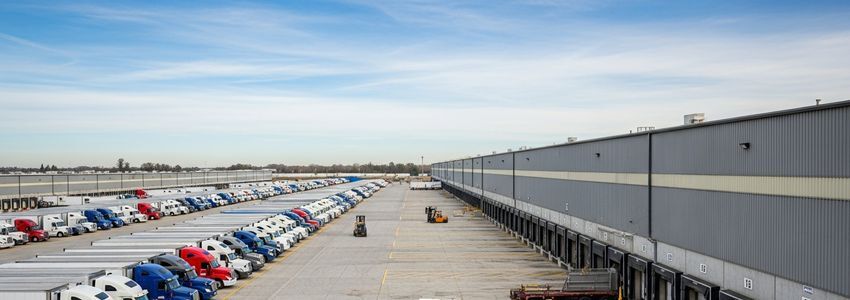
Logistics Business Loans: The Complete Financing Guide for Trucking, Freight, and Logistics Companies
Running a logistics company means managing constant cash flow pressure, expensive equipment, rising fuel costs, and clients who take 45 to 90 days to pay invoices. Whether you operate a trucking fleet, a freight brokerage, a warehousing operation, or a last-mile delivery service, access to capital is not optional - it is the engine that keeps your business moving. Logistics business loans exist specifically to bridge the gap between the work you do today and the money that arrives weeks or months later.
In This Article
- What Are Logistics Business Loans?
- Types of Logistics Business Loans
- Key Benefits of Logistics Financing
- How Logistics Financing Works
- Logistics Funding: By the Numbers
- Comparison: Logistics Loan Types at a Glance
- Who Qualifies for Logistics Business Loans?
- Real-World Scenarios
- How Crestmont Capital Helps
- How to Get Started
- Frequently Asked Questions
What Are Logistics Business Loans?
Logistics business loans are financing products designed to address the specific capital needs of companies in the transportation, freight, warehousing, and supply chain industries. Unlike generic small business loans, logistics-focused financing accounts for the operational realities of this sector: asset-intensive operations, highly variable revenue, large accounts receivable balances, and time-sensitive expenses that cannot wait for traditional bank approval timelines.
The U.S. logistics industry generates more than $2.3 trillion in annual revenue, according to the Council of Supply Chain Management Professionals. Yet despite this enormous scale, most logistics businesses - especially small and mid-size operators - face ongoing cash flow challenges. Shippers and freight brokers routinely pay invoices on 30 to 90-day terms. Meanwhile, fuel, driver payroll, insurance premiums, and equipment maintenance costs cannot wait.
Logistics business loans solve this fundamental mismatch between when money goes out and when it comes in. The right financing allows operators to take on new contracts, invest in equipment, hire additional drivers, and expand routes without being strangled by cash flow gaps.
Industry Insight: According to the American Trucking Associations, approximately 90% of U.S. trucking companies operate fleets of 10 or fewer trucks. These small operators are the backbone of domestic freight movement - and they are also the most vulnerable to cash flow disruptions.
Types of Logistics Business Loans
Logistics companies have access to a wide range of financing tools, each suited to different operational needs. Understanding the options allows you to match the right financing product to the specific challenge you are trying to solve.
Invoice Financing (Freight Factoring)
Invoice financing - also known as freight factoring in the trucking industry - is one of the most widely used financing tools in logistics. You sell your outstanding invoices to a lender at a small discount, typically 2 to 5 percent, and receive immediate cash. This eliminates the 30 to 90-day wait on shipper payments and gives you working capital today. Freight factoring is often non-recourse, meaning the lender assumes the credit risk if a shipper fails to pay.
Equipment Financing
Trucks, trailers, forklifts, warehouse racking systems, and refrigerated units represent the most significant capital expenditures in logistics. Equipment financing allows you to acquire the physical assets your operation needs without tying up working capital. The equipment itself typically serves as collateral, making approval more accessible even for companies with limited credit history. Repayment terms typically range from 36 to 84 months.
Commercial Truck Financing
Commercial truck financing is a specialized form of equipment financing designed specifically for semi-trucks, tractor-trailers, box trucks, flatbeds, and other commercial vehicles. Lenders familiar with the trucking industry understand the asset values and depreciation curves of commercial vehicles, making them better positioned to structure deals that work for your operation.
Working Capital Loans
Unsecured working capital loans provide a lump sum of cash that can be used for any operational purpose - fuel advances, payroll, insurance premiums, maintenance costs, or covering gaps during slow seasons. Unlike equipment loans, working capital financing does not require specific collateral. Approval is based primarily on your business revenue and cash flow history. Terms typically range from 6 to 24 months.
Business Line of Credit
A business line of credit functions like a revolving credit account. You draw funds as needed and repay them over time. Interest accrues only on the balance you actually use. For logistics companies with variable cash flow needs, a line of credit provides maximum flexibility - draw during lean periods, repay when shipper payments arrive, and have capital ready for the next opportunity without reapplying.
SBA Loans
Small Business Administration loans offer government-backed financing with competitive interest rates and longer repayment terms. SBA 7(a) loans can be used for working capital, equipment, real estate, and business acquisition. While the approval process takes longer than alternative lenders, SBA loans often offer the best terms for qualified logistics businesses.
Revenue-Based Financing
Revenue-based financing is repaid as a percentage of your monthly revenue rather than fixed monthly payments. This structure is well-suited to logistics companies with seasonal fluctuations or variable income. During strong months, repayments are higher; during slower periods, they naturally decrease. There is no fixed monthly obligation that strains cash flow during lean periods.
Key Benefits of Logistics Financing
Understanding the specific advantages of logistics business loans helps you make a more strategic case for financing when talking to lenders - and helps you explain the ROI to stakeholders within your business.
- Bridge the invoice payment gap - Stop waiting 30 to 90 days for shipper payments. Freight factoring and invoice financing convert outstanding receivables into immediate cash.
- Grow your fleet without depleting reserves - Equipment financing allows you to add trucks, trailers, or warehouse equipment while preserving your working capital for daily operations.
- Capture new contracts - Many lucrative contracts require proof of capacity: enough trucks, drivers, and infrastructure to handle the volume. Financing gives you the ability to scale before the revenue arrives.
- Manage seasonal fluctuations - Logistics demand spikes and dips with retail cycles, agriculture seasons, and economic trends. A line of credit or working capital loan smooths out those valleys.
- Fund maintenance and repairs - A broken truck is a truck that is not earning. Fast-access financing means you can keep your fleet operational instead of sidelining vehicles while waiting for cash.
- Hire and retain drivers - The driver shortage is a persistent challenge for logistics companies. Competitive pay, signing bonuses, and benefits require capital investment that financing makes possible.
Key Stat: The American Transportation Research Institute reports that fuel costs account for approximately 24% of total trucking operating costs. Fast-access financing allows logistics companies to lock in fuel rates, manage fuel advances, and stabilize this critical expense line.
How Logistics Financing Works
The application and approval process for logistics business loans varies by product type and lender, but most follow a similar general framework.
Step 1: Assess Your Financing Need
Before approaching any lender, identify the specific capital need you are trying to address. Are you covering a cash flow gap while waiting on invoices? Do you need to purchase equipment? Are you trying to fund an expansion? Different needs map to different products, and knowing what you need helps you select the right financing tool - and the right lender.
Step 2: Gather Your Financial Documentation
Most logistics lenders will ask for 3 to 6 months of bank statements, recent profit and loss statements, evidence of revenue (freight invoices, contracts), and basic business information such as years in operation and business licenses. Equipment loans may also require information about the specific assets being financed.
Step 3: Submit Your Application
Alternative lenders and specialty logistics finance companies typically process applications in 24 to 72 hours. Traditional banks and SBA lenders may take 2 to 8 weeks. Online lenders often provide same-day or next-day decisions for working capital and factoring products.
Step 4: Review Your Offer
Before accepting any financing offer, review the full cost of capital - not just the interest rate. Look at the annual percentage rate (APR), any origination fees, prepayment penalties, and factoring discount rates if applicable. Make sure the repayment structure matches your cash flow cycle.
Step 5: Receive Funds and Execute
Once approved, funds are typically disbursed within 1 to 3 business days for alternative lenders. Equipment financing may take slightly longer depending on the purchase process. Invoice factoring advances can sometimes arrive within 24 hours of submitting eligible invoices.
Logistics Funding: By the Numbers
By the Numbers
Logistics Business Loans - Key Statistics
$2.3T
U.S. logistics market annual revenue
90%
Trucking companies with 10 or fewer trucks
60 Days
Average freight invoice payment delay
24 Hrs
Typical alternative lender funding timeline
Need Working Capital for Your Logistics Business?
Crestmont Capital specializes in fast, flexible financing for trucking, freight, and logistics operators. No long waits, no generic bank products - just capital built for your industry.
Apply Now →Comparison: Logistics Loan Types at a Glance
| Loan Type | Best For | Typical Terms | Speed |
|---|---|---|---|
| Invoice Financing | Bridging shipper payment gaps | 2-5% discount rate | 24-48 hours |
| Equipment Financing | Trucks, trailers, forklifts | 36-84 months | 1-5 days |
| Working Capital Loan | Fuel, payroll, operations | 6-24 months | 1-3 days |
| Business Line of Credit | Ongoing flexible needs | Revolving, 12-24 months | 2-5 days |
| SBA Loan | Long-term capital, expansion | 10-25 years | 4-8 weeks |
| Revenue-Based Financing | Variable revenue businesses | % of monthly revenue | 1-3 days |
Who Qualifies for Logistics Business Loans?
Qualification requirements vary by lender and product type, but here are the general benchmarks most logistics financing providers use when evaluating applications.
For Invoice Financing and Freight Factoring
Factoring companies primarily underwrite the creditworthiness of your customers (the shippers or freight brokers) rather than your own business. This makes invoice financing accessible even to newer carriers and owner-operators. Typical requirements include a valid MC number or DOT authority, a minimum volume of eligible invoices, and customers with established payment histories. Some factoring companies work with carriers who have been in business for as little as 90 days.
For Equipment Financing
Equipment lenders typically want to see at least 1 year in business, though some specialty lenders work with startups. Credit score requirements vary - some lenders work with scores as low as 550, while the best rates require scores above 680. Down payments of 10 to 20 percent are common, though some lenders offer 100% financing on newer equipment.
For Working Capital Loans and Lines of Credit
Alternative lenders evaluating working capital applications typically look at 3 to 6 months of bank statements, minimum monthly revenue requirements (often $10,000 to $25,000), and time in business of at least 6 to 12 months. Credit scores matter but are not the only factor - consistent revenue and positive bank balances carry significant weight.
For SBA Loans
SBA loans have the most rigorous qualification standards. Borrowers generally need 2 or more years in business, credit scores above 650, profitable operations, and the ability to demonstrate ability to repay. However, SBA programs for transportation businesses include provisions that recognize the industry's unique cash flow dynamics.
Good to Know: If your personal or business credit is below typical lender thresholds, do not assume you do not qualify. Lenders like Crestmont Capital evaluate the full picture - revenue trends, contract pipeline, equipment value, and business history - not just a credit score.
Real-World Scenarios: How Logistics Companies Use Financing
Understanding how other logistics operators have used business loans to solve real problems can help you identify where financing might have the greatest impact in your own operation.
Scenario 1: The Owner-Operator Fuel Crunch
Marcus operates a single semi-truck on owner-operator authority. A major shipper offered him a dedicated lane contract - excellent money, but requiring 45-day payment terms. With fuel costing $1,200 per week and insurance and maintenance adding another $800 monthly, Marcus could not float the gap between services rendered and payment received. He obtained a freight factoring arrangement that advanced 95% of invoice value within 24 hours of delivery confirmation. The factoring fee of 3% was more than offset by the revenue from the new contract. Within 8 months, Marcus had enough cash flow stability to add a second truck.
Scenario 2: The Regional Carrier Fleet Expansion
Valley Express, a 12-truck regional carrier based in the Midwest, won a new retail distribution contract requiring an additional 4 trucks to service properly. The company had strong revenue but needed to acquire the equipment quickly before a competitor could step in. Through commercial truck financing, Valley Express acquired four 2022 semi-trucks with a 15% down payment and 60-month repayment terms. The monthly revenue from the new contract was 3x the loan payments, producing immediate positive ROI.
Scenario 3: The Warehouse Operator Equipment Upgrade
Meridian Distribution managed a 200,000 square foot warehouse serving three major e-commerce clients. Outdated forklifts and pallet jacks were creating efficiency bottlenecks - and one client threatened to reduce its volume if order accuracy did not improve. Meridian used equipment financing to acquire six new electric forklifts and a warehouse management system. Within 60 days, order accuracy improved from 94% to 99.2%, preventing the client loss and actually triggering a volume increase worth $180,000 in additional annual revenue.
Scenario 4: The Freight Broker Cash Flow Gap
National Routes LLC brokered freight between shippers and carriers. As a broker, the company paid carriers within 7 days of delivery but collected from shippers on 45-day terms - creating a perpetual 38-day funding gap. A business line of credit of $250,000 gave National Routes the liquidity to pay carriers on time, maintain relationships with its best carrier network, and grow its brokered volume without constantly straining cash reserves.
Scenario 5: The Last-Mile Delivery Startup
Rapid City Delivery launched during a regional e-commerce surge, targeting local retail businesses needing same-day delivery. With contracts in hand but no vehicles, the founder applied for a startup equipment loan. Using a combination of 20% down payment and equipment financing for the remaining 80%, the company acquired 6 cargo vans and began operations within 3 weeks of approval. Year-one revenue exceeded $320,000 - and year two plans call for doubling the fleet.
How Crestmont Capital Helps Logistics Businesses
Crestmont Capital is a U.S. business lender with deep experience in logistics, transportation, and fleet financing. Unlike traditional banks that apply one-size-fits-all underwriting to every application, Crestmont evaluates logistics businesses the way logistics businesses actually work - looking at revenue trends, contract value, fleet assets, and operational history alongside standard credit metrics.
Our logistics financing solutions include working capital loans, equipment financing, invoice financing, commercial lines of credit, and fleet vehicle financing. Whether you operate one truck or manage a regional distribution network, we structure financing around your actual cash flow cycle - not an arbitrary bank schedule.
We have helped logistics companies across the United States:
- Finance fleet expansions with fast equipment loan approvals
- Bridge invoice payment gaps with same-week working capital
- Secure warehouse equipment for growing distribution operations
- Cover seasonal fuel and payroll shortfalls without disrupting service
- Capture contract opportunities that required immediate proof of capacity
You can also explore our in-depth guides on trucking company loans for fleet expansion and financing options for delivery and courier services for more industry-specific guidance.
Ready to Grow Your Logistics Business?
Apply in minutes and get a decision fast. Crestmont Capital has helped thousands of trucking, freight, and logistics companies access the capital they need to grow.
Apply Now →
How to Get Started
Complete our quick application at offers.crestmontcapital.com/apply-now - it takes just a few minutes and requires no commitment.
A Crestmont Capital advisor who understands the logistics industry will review your needs, evaluate your application, and recommend the right financing structure for your situation.
Receive your funds quickly - often within days of approval - and put that capital to work immediately. Cover cash flow gaps, acquire equipment, hire drivers, and take on the contracts that grow your business.
Don\'t Let Cash Flow Hold Back Your Logistics Business
From invoice factoring to equipment loans to working capital lines, Crestmont Capital has the logistics financing solution you need. Apply today with no obligation.
Apply Now →Frequently Asked Questions
What are logistics business loans?
Logistics business loans are financing products designed specifically for companies in the transportation, freight, warehousing, and supply chain sectors. They include invoice financing, equipment loans, working capital loans, lines of credit, and revenue-based financing - all structured to address the cash flow patterns and capital needs common to logistics operations.
How does freight factoring work?
Freight factoring involves selling your outstanding invoices to a factoring company at a small discount - typically 2% to 5% of invoice value. In return, you receive an advance of 90% to 97% of the invoice value within 24 to 48 hours. When the shipper pays the invoice, the factoring company remits the remaining balance minus their fee. This eliminates the 30 to 90-day wait on shipper payments.
Can owner-operators qualify for logistics business loans?
Yes. Owner-operators can qualify for multiple types of logistics financing. Freight factoring is particularly accessible because approval is based on your customers' creditworthiness rather than yours. Equipment financing and working capital loans are also available to owner-operators, typically requiring 6 to 12 months in business and consistent revenue history. Some lenders also offer startup programs for new authority carriers.
What credit score is needed for logistics business loans?
Credit score requirements vary significantly by lender and product type. For freight factoring, credit score is largely irrelevant since underwriting focuses on your customers. For equipment financing, many specialty lenders work with credit scores as low as 550. Working capital loans and lines of credit typically require 600 or above for favorable terms, though some lenders approve applications with lower scores based on strong revenue performance.
How fast can I get logistics financing approved?
Alternative lenders and specialty logistics finance companies typically provide same-day or next-day decisions. Funds are often disbursed within 1 to 3 business days. Freight factoring advances can sometimes arrive within 24 hours of invoice submission. Traditional banks and SBA lenders take significantly longer - typically 2 to 8 weeks from application to funding.
What documents are required to apply for logistics financing?
Most logistics lenders request 3 to 6 months of business bank statements, a valid DOT or MC number if applicable, basic business identification (EIN, operating licenses), and recent revenue documentation such as freight invoices or contracts. Equipment loans may also require information about the specific assets being financed. Working capital and factoring applications are often lighter on documentation than traditional bank loans.
Can I get logistics financing with bad credit?
Yes, options exist for logistics businesses with poor or limited credit history. Freight factoring is the most accessible since it relies on your customers' credit, not yours. Some equipment lenders specialize in below-average credit scenarios and use the equipment itself as primary collateral. Revenue-based financing and merchant cash advances may also be available. The trade-off is typically higher rates - improving your credit profile will unlock better terms over time.
What is the difference between recourse and non-recourse freight factoring?
With recourse factoring, you remain responsible for buying back unpaid invoices if your customer defaults. This carries lower fees (typically 1% to 3%) but leaves you exposed to bad debt risk. Non-recourse factoring transfers the credit risk to the factoring company - if your customer doesn't pay, the factoring company absorbs the loss. Non-recourse factoring typically costs 2% to 5% and is the safer option for carriers working with diverse or less established shippers.
How much financing can a logistics company qualify for?
Funding amounts depend heavily on your business size, revenue, and the type of financing. Invoice financing and factoring can scale with your invoice volume - larger shippers mean larger advances. Equipment loans are sized to the value of the assets being financed. Working capital loans for logistics companies typically range from $25,000 to $2 million depending on revenue. Lines of credit may range from $50,000 to $500,000 for mid-size logistics operators.
Can I use logistics financing to hire additional drivers?
Absolutely. Working capital loans and lines of credit can be used for any operational expense, including driver recruitment, signing bonuses, training, and payroll coverage during ramp-up periods. The driver shortage is one of the most significant constraints on logistics growth - financing your way past this bottleneck is a legitimate and common use of working capital funding.
Is logistics financing available for warehouse businesses?
Yes. Warehouse operators can access equipment financing for forklifts, racking systems, conveyor equipment, and pallet jacks. Working capital loans cover payroll, lease expenses, and operational costs. Invoice financing works well for warehouses billing clients on net-30 or net-60 terms. Real estate financing may also be available for warehouse acquisition or renovation.
What interest rates do logistics business loans carry?
Interest rates vary significantly by product and borrower profile. Equipment loans from specialty lenders typically range from 5% to 18% APR depending on credit quality. Working capital loans from alternative lenders may range from 15% to 40% APR for shorter terms. SBA loans typically offer the most favorable rates, often between 6% and 10% APR, but require the longest approval timeline. Freight factoring fees of 2% to 5% per invoice are generally separate from traditional APR structures.
Can a logistics startup qualify for business financing?
Startups have more limited options but are not shut out entirely. Freight factoring is one of the most startup-friendly financing options since it evaluates customer creditworthiness rather than business history. Some equipment lenders offer startup programs requiring higher down payments in exchange for looser experience requirements. SBA microloans are also available to newer businesses. Building a financing track record from day one makes it progressively easier to access better terms as your operation matures.
How does a business line of credit benefit logistics companies?
A business line of credit provides revolving access to capital that you draw only as needed. For logistics companies, this means having a financial cushion available for unexpected expenses like emergency repairs, fuel price spikes, or temporary driver shortage costs - without paying interest on funds you haven't used. You repay the drawn balance over time, and your available credit replenishes as you pay it down. This makes a line of credit one of the most cost-effective ongoing financial tools for logistics operators.
What is the best financing option for buying a new semi-truck?
Commercial truck financing or equipment financing is typically the most cost-effective way to purchase a new semi-truck. These products use the vehicle as collateral, which keeps rates lower than unsecured alternatives. Down payment requirements typically range from 10% to 20%, with repayment terms of 36 to 84 months. Some lenders offer balloon payment structures that reduce monthly payments during the productive life of the vehicle. Working with a lender who specializes in commercial vehicles will generally produce better terms than a general business lender.
Disclaimer: The information provided in this article is for general educational purposes only and is not financial, legal, or tax advice. Funding terms, qualifications, and product availability may vary and are subject to change without notice. Crestmont Capital does not guarantee approval, rates, or specific outcomes. For personalized information about your business funding options, contact our team directly.