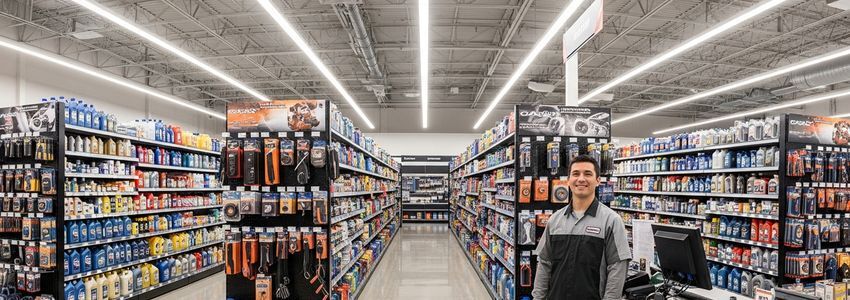
Running an auto parts store is a capital-intensive business. Between stocking thousands of SKUs, managing seasonal demand spikes, upgrading diagnostic equipment, and competing with national chains, independent auto parts retailers face constant cash flow pressures. Auto parts store business loans give owners the working capital and financing flexibility needed to stock shelves, expand inventory, hire staff, and invest in growth — without depleting reserves or waiting on slow receivables.
This guide covers every major financing option available to auto parts store owners in 2026, how to qualify, what lenders look for, and how Crestmont Capital can help you access the capital you need fast.
In This Article
What Are Auto Parts Store Business Loans?
Auto parts store business loans are financing products specifically designed to meet the capital needs of retailers selling automotive components, accessories, tools, and maintenance supplies. These loans can fund inventory purchases, equipment upgrades, location expansions, technology investments, and day-to-day operational expenses.
Unlike general-purpose small business loans, the best financing solutions for auto parts retailers account for the unique dynamics of the industry: high inventory costs, thin margins on commodity parts, strong competition from big-box retailers like AutoZone and O'Reilly, and seasonality driven by driving patterns and weather events.
The auto parts retail market in the United States generates over $80 billion in annual revenue, with more than 40,000 independent and franchise-based stores competing for a share. Financing is not optional for most operators — it is essential infrastructure for maintaining competitive inventory depth, expanding service capabilities, and surviving slow seasons.
Industry Insight: According to the Automotive Aftermarket Industry Association (AAIA), the U.S. automotive aftermarket — including parts, accessories, and service — is projected to exceed $550 billion by 2026. Independent auto parts stores that leverage financing effectively are better positioned to capture a growing share of this market.
Types of Financing Available to Auto Parts Store Owners
There is no single financing product that fits every auto parts store's needs. The right loan depends on how much capital you need, how quickly you need it, your credit profile, and how you plan to use the funds. Here are the major financing categories available to auto parts retailers.
Working Capital Loans
Working capital loans provide short-to-medium-term funding for operational expenses — payroll, vendor payments, marketing campaigns, and bridge financing during slow periods. These loans are typically unsecured, meaning no collateral is required, and can be funded within 24 to 72 hours of approval.
For an auto parts store, working capital loans are ideal for covering supplier invoices during high-demand seasons like winter (when demand for batteries, antifreeze, and wiper blades spikes), while waiting on customer receivables from fleet accounts or repair shops to clear.
Business Lines of Credit
A business line of credit gives auto parts store owners revolving access to capital they can draw on as needed and repay over time. This is one of the most flexible financing tools available — you only pay interest on what you draw, not the full credit limit.
Lines of credit are ideal for auto parts stores because inventory needs fluctuate constantly. Rather than taking on a lump-sum loan, a line of credit lets you buy inventory when deals arise, fund marketing campaigns, or cover an unexpected equipment repair — and then repay as sales revenue comes in. Crestmont Capital's business line of credit options are designed exactly for this kind of revolving capital need.
Inventory Financing
Inventory financing is a specialized loan product where the inventory itself serves as collateral. Lenders advance a percentage of the cost of inventory — typically 50 to 80 percent — and you repay the loan as you sell the goods.
For an auto parts store, this is particularly valuable when stocking up for high-demand seasons, acquiring a new product line, or purchasing liquidation inventory from a supplier. Inventory financing lets you grow your product selection without tying up operating cash.
Equipment Financing
Auto parts stores increasingly rely on diagnostic equipment, point-of-sale systems, lifts, and delivery vehicles to remain competitive. Equipment financing allows you to purchase these assets with a structured term loan, using the equipment itself as collateral.
This option is attractive because approval is often tied more to the value of the equipment than your credit score, and interest rates tend to be lower than unsecured loans. Crestmont Capital's capital equipment financing covers everything from diagnostic systems to delivery vehicles to shelving and racking systems.
SBA Loans
SBA 7(a) and SBA 504 loans are government-backed products offering the lowest interest rates and longest repayment terms available. However, they come with more documentation requirements and longer approval timelines — often 45 to 90 days.
SBA loans are best suited for major capital investments: purchasing real estate for a flagship location, acquiring a competing store, or making a large-scale renovation. If you have strong financials and do not need capital urgently, an SBA loan can be the most cost-effective long-term solution. Learn more about SBA loan options through Crestmont Capital.
Merchant Cash Advances
A merchant cash advance (MCA) provides a lump-sum payment in exchange for a percentage of future daily sales. MCAs are fast — often funded within 24 hours — and have minimal documentation requirements. However, the effective cost is higher than traditional loans.
Auto parts stores with strong daily credit card transaction volume and a need for emergency capital may find MCAs useful for short-term needs. They are best used sparingly and when faster, cheaper alternatives are not available.
Term Loans
Traditional term loans provide a fixed lump sum with scheduled monthly repayments over one to five years. They are suitable for significant investments — store renovations, new locations, or major inventory buildup — where you want predictable, fixed payments.
By the Numbers
Auto Parts Retail — Key Market Statistics
$80B+
U.S. auto parts retail annual revenue
40K+
Auto parts stores operating in the U.S.
$550B
Total aftermarket size by 2026
72 Hrs
Typical funding time with Crestmont Capital
Ready to Stock More Inventory and Grow Your Auto Parts Business?
Get fast, flexible financing from the #1 business lender in the U.S. Apply in minutes — no obligation.
Apply Now →How Auto Parts Store Business Financing Works
Understanding how lenders evaluate auto parts store financing applications helps you prepare a stronger application and set realistic expectations about timing, loan amounts, and rates.
Step 1: Define Your Capital Needs
Before approaching any lender, be specific about how much you need and what you will use it for. Lenders want to see a clear purpose — "I need $75,000 to purchase seasonal inventory ahead of the winter tire change season" is more compelling than "I need working capital." Clear purpose signals business planning and reduces lender risk.
Step 2: Gather Your Financial Documentation
Most lenders require the following: three to twelve months of business bank statements, the most recent two years of business and personal tax returns, a profit and loss statement, a balance sheet, and proof of business ownership (Articles of Incorporation or LLC documents). Some lenders also request vendor invoices or purchase orders to verify inventory use of funds.
Step 3: Apply with a Lender
Online lenders like Crestmont Capital process applications faster than banks, with approvals often within 24 hours and funding in 24 to 72 hours. Traditional banks may take two to six weeks. SBA loans can take 45 to 90 days. Choose your lender based on how quickly you need the funds and what rate you can qualify for.
Step 4: Review Terms and Accept the Offer
Once approved, review the loan agreement carefully. Pay attention to the annual percentage rate (APR), repayment schedule, prepayment penalties, and any origination fees. Compare total cost of capital across multiple offers before accepting.
Step 5: Receive Funding and Deploy Capital
Funds are deposited directly into your business bank account. You can then use them to purchase inventory, pay suppliers, upgrade equipment, hire staff, or fund marketing campaigns. Track your spending against the purpose stated in your application to ensure you maximize the loan's impact on revenue.
Quick Guide
How Auto Parts Store Financing Works - At a Glance
Identify how much you need and what you will use it for: inventory, equipment, expansion, or operations.
Bank statements, tax returns, P&L, and balance sheet are typical requirements.
Online lenders process applications in 24 hours with funding in 24-72 hours.
Compare APR, fees, and repayment schedule before signing.
Key Benefits of Financing for Auto Parts Store Owners
Business financing is not simply about survival — it is a growth tool. Here is how the right loan can give your auto parts store a competitive edge.
Maintain Optimal Inventory Depth
The single greatest competitive advantage an independent auto parts store can have over large chains is deeper local inventory. If you consistently have the parts customers need — especially hard-to-find items — you win their loyalty. Financing lets you stock a broader selection without committing all your operating cash to shelving.
This is especially important for stores serving commercial clients: repair shops, fleet operators, and dealerships expect same-day or next-day delivery on most parts. Gaps in your inventory mean lost sales and damaged relationships.
Survive and Capitalize on Seasonal Demand
Demand for auto parts is seasonal. Winter drives demand for batteries, oil, antifreeze, wiper blades, and cold-weather tires. Summer increases demand for coolant, A/C components, and brake parts. Pre-season inventory financing lets you stock up before peak demand hits, rather than scrambling for capital when it is already too late.
Pro Tip: Apply for a business line of credit during a slow period when your financials look strong — not during a cash crunch. Having pre-approved access to capital before you need it is far more effective than seeking emergency financing at the last minute.
Invest in Technology and Equipment
Modern auto parts stores that offer diagnostic services, tire installation, or battery testing need specialized equipment. Equipment financing allows you to acquire these revenue-generating assets without paying cash upfront, preserving liquidity for day-to-day operations.
Additionally, upgrading your point-of-sale system, inventory management software, and online ordering capabilities can dramatically improve efficiency and customer experience — investments that pay for themselves within months.
Expand to Multiple Locations
Once your flagship location is profitable, opening additional stores is one of the most effective ways to scale revenue. Expansion capital from Crestmont Capital's unsecured working capital loans or SBA loan programs can fund leasehold improvements, initial inventory, signage, and staffing for a new location while your existing store continues operating normally.
Compete with National Chains
AutoZone, O'Reilly, Advance Auto Parts, and NAPA combined control a significant share of the retail auto parts market. Independent stores compete by offering personalized service, specialized knowledge, and deeper local inventory in niche categories. Financing enables you to invest in training, staffing, and product selection — the differentiators that national chains cannot replicate at scale.
How to Qualify for Auto Parts Store Business Loans

Lender requirements vary depending on the loan type and amount, but the following factors consistently influence approval decisions and loan terms for auto parts store owners.
Time in Business
Most lenders require a minimum of six months to one year in business. Some SBA lenders and traditional banks prefer two-plus years. If you have been operating for less than a year, you may qualify for startup-focused financing products or merchant cash advances, which have less stringent time-in-business requirements.
Annual Revenue
Revenue requirements typically start at $100,000 to $150,000 in annual gross revenue for most online lenders. SBA loans and traditional bank loans may require higher minimums, often $250,000 or more. Auto parts stores with strong commercial accounts (repair shops, fleet operators) and consistent B2B revenue tend to qualify for larger loan amounts.
Credit Score
Your personal credit score plays a major role in loan approvals, especially for unsecured products. Most online lenders approve auto parts store loans with personal scores of 550 to 600 or above. Traditional banks typically require 680 or higher. SBA lenders generally look for 650 minimum. Having a strong business credit score (PAYDEX score through Dun & Bradstreet) can supplement your personal credit profile.
Cash Flow and Bank Statements
Lenders analyze bank statements to verify revenue consistency and assess your ability to repay. They look for positive average daily balances, minimal overdrafts, and no patterns of irregular income. Stores with predictable monthly revenue from commercial accounts are particularly attractive to lenders.
Debt Service Coverage Ratio
The DSCR compares your net operating income to your total debt obligations. Most lenders want to see a DSCR of at least 1.25, meaning your business generates at least 25 percent more income than it needs to cover existing debt payments. If you already have outstanding loans, improve your DSCR before applying for additional capital.
Not Sure If You Qualify?
Apply in minutes and let our team assess your options. No commitment required — we will tell you exactly what you qualify for.
Check My Options →Loan Amounts, Rates, and Terms to Expect
Loan amounts for auto parts store financing can range from $10,000 for small working capital needs up to $5 million or more for commercial real estate or multi-location expansion via SBA or conventional lending. The table below provides a reference guide for what to expect across loan types.
| Loan Type | Amount Range | Typical APR | Term Length | Funding Speed |
|---|---|---|---|---|
| Working Capital Loan | $10K - $500K | 15% - 35% | 3 - 24 months | 24 - 72 hours |
| Business Line of Credit | $10K - $250K | 10% - 30% | Revolving | 24 - 72 hours |
| Inventory Financing | $25K - $1M | 12% - 28% | 3 - 18 months | 3 - 7 days |
| Equipment Financing | $10K - $5M | 8% - 20% | 24 - 84 months | 3 - 10 days |
| SBA 7(a) Loan | $50K - $5M | Prime + 2.25% - 4.75% | 10 - 25 years | 45 - 90 days |
| Merchant Cash Advance | $5K - $250K | 40% - 150% effective | 3 - 18 months | 24 hours |
How Crestmont Capital Helps Auto Parts Store Owners
Crestmont Capital is rated the #1 business lender in the country, with a proven track record of helping retailers, service businesses, and specialty stores access fast, flexible capital. Our team understands the auto parts retail business — the inventory cycles, the commercial account dynamics, and the competitive pressures that make access to timely capital so critical.
Here is what sets Crestmont Capital apart for auto parts store financing:
- Speed: Many auto parts store loans are funded within 24 to 72 hours of application approval — fast enough to take advantage of a supplier discount or bridge a cash flow gap before month-end payroll.
- Flexible products: From working capital loans and lines of credit to inventory financing and equipment loans, we match you with the product that best fits your business model and capital needs.
- Accessible qualification: We work with auto parts stores at all stages of growth, including those with credit challenges, limited collateral, or shorter operating histories.
- No prepayment penalties on many products: Pay off your loan early without fees, reducing your total interest cost.
- Dedicated advisors: You work with a real financing specialist who understands retail and can structure the right deal for your specific situation.
Our platform integrates with your existing bank statements and accounting data to make the application process as simple as possible. Most auto parts store owners can complete an application in under 10 minutes. Explore your options through our small business financing hub.
We have helped auto parts stores across the country fund seasonal inventory purchases, upgrade diagnostic equipment, open second locations, and refinance high-cost merchant cash advances into lower-rate term loans. If you are looking for a lender who understands your business, apply now and get a decision in hours, not weeks.
Real-World Financing Scenarios for Auto Parts Stores
The following scenarios illustrate how different auto parts store owners have used business financing to solve real problems and capture growth opportunities.
Scenario 1: Pre-Season Inventory Build-Up
A family-owned auto parts store in the Midwest needed $120,000 to purchase a full seasonal inventory of batteries, antifreeze, and winter tires before the first hard freeze. Their bank required 45 days for approval and demanded two years of audited financials — a process that would have missed the season entirely.
Through Crestmont Capital's inventory financing program, the store was approved for $115,000 in five business days. They purchased inventory at a bulk rate, capturing an additional 8 percent margin on seasonal products, and repaid the loan in full by January using winter sales revenue.
Scenario 2: Fleet Account Receivables Gap
An auto parts retailer in the Southwest had secured contracts with three large fleet operators — an ambulance service, a school bus company, and a municipal agency. Combined, these accounts represented $40,000 per month in revenue, but payment terms were Net-30 to Net-60 days. Meanwhile, the store's supplier invoices were due within 10 days.
A $75,000 business line of credit from Crestmont Capital bridged the gap. The owner drew on the line to pay suppliers, then repaid as fleet invoices cleared. The line has now been renewed three times as the business has grown.
Scenario 3: Diagnostic Equipment Upgrade
A store in the Southeast wanted to differentiate by offering free OBD-II diagnostic services, professional tire balancing, and battery testing. The equipment package cost $38,000. Rather than deplete operating reserves, the owner used equipment financing to spread the cost over 36 months at a fixed monthly payment of $1,180.
Within six months, the diagnostic service had generated enough upsell revenue in related parts to more than cover the financing cost.
Scenario 4: Second Location Opening
After five years of profitability at their flagship store, a California auto parts retailer identified a secondary market 12 miles away with limited competition. Opening a second location required $200,000 for leasehold improvements, signage, initial inventory, and working capital to cover the ramp-up period.
An SBA 7(a) loan through Crestmont Capital provided $200,000 at prime-plus-2.75 percent over a 10-year term, keeping monthly payments low enough to sustain the new location through its first year before it achieved profitability.
Scenario 5: Refinancing a High-Cost MCA
An auto parts store owner in Texas had used three merchant cash advances over 18 months to manage cash flow, accumulating $95,000 in outstanding balances at effective rates above 60 percent APR. The daily repayment drafts were strangling cash flow.
Crestmont Capital structured a $105,000 term loan to pay off all three MCAs and provide $10,000 in operating capital. The single monthly payment at 22 percent APR reduced the owner's daily financing burden by 68 percent, immediately freeing up cash for inventory.
Scenario 6: Acquiring a Competitor
When a nearby independent auto parts store announced it was closing, a savvy operator saw an opportunity to acquire their customer list, remaining inventory ($85,000 at cost), and established supplier relationships. An acquisition loan of $100,000 funded the purchase, which added an estimated $400,000 in annualized revenue within the first year. To learn more about financing options for acquisitions, see our guide on how to structure acquisition financing.
Key Insight: The most successful auto parts store financing applications have one thing in common — a clear, specific use of funds tied directly to a revenue outcome. Whether it is inventory to capture seasonal demand or equipment to drive upsell, lenders and business owners both win when capital has a defined purpose.
Frequently Asked Questions
What credit score do I need to qualify for an auto parts store business loan?
Most online lenders will approve auto parts store loans with personal credit scores of 550 or above. Traditional banks typically require 680 or higher. If your credit score is below 600, you may still qualify for a merchant cash advance, invoice financing, or inventory financing — products where collateral or revenue volume matters more than credit history. Building business credit alongside personal credit improves your long-term financing access and costs.
How much can an auto parts store owner borrow?
Loan amounts range from $10,000 for small working capital needs up to several million dollars for SBA loans, commercial real estate, or acquisition financing. The amount you qualify for is primarily determined by your annual revenue, time in business, credit score, and existing debt obligations. As a general rule, lenders are often willing to lend one to three times your average monthly revenue for unsecured products.
How fast can I get funding for my auto parts store?
Through Crestmont Capital, most auto parts store owners receive a funding decision within 24 hours and funds deposited within 24 to 72 hours of final approval. This is significantly faster than traditional banks, which typically take two to six weeks. If you need same-day capital, merchant cash advances can be funded in as little as four hours with minimal documentation requirements.
Can I get a loan specifically for inventory purchases?
Yes. Inventory financing is a specialized loan product designed exactly for this purpose. Lenders advance 50 to 80 percent of the cost of your inventory, using the inventory itself as collateral. This allows you to stock more product without using all your operating cash. Crestmont Capital offers inventory financing for auto parts retailers, with approval decisions typically within three to five business days.
What documents do I need to apply for an auto parts store loan?
Typical requirements include three to six months of business bank statements, the most recent year or two of business and personal tax returns, a profit and loss statement, a balance sheet, and proof of business ownership. Some lenders also request supplier invoices or purchase orders if the loan is intended for inventory financing. Crestmont Capital's online application minimizes document requirements and can pre-qualify you based on bank statements alone.
Is a personal guarantee required for auto parts store loans?
Most business loans — whether from online lenders, banks, or SBA-approved lenders — require a personal guarantee from business owners with 20 percent or more ownership stake. Some lenders offer no-personal-guarantee products, but these typically require stronger business credit profiles and larger loan amounts. If a personal guarantee is a concern, discuss options with your Crestmont Capital advisor.
Can a startup auto parts store get financing?
Startups with less than six months in operation face more limited financing options. SBA Microloan programs, equipment financing (where the asset serves as collateral), and microloans from Community Development Financial Institutions (CDFIs) are the most accessible paths. After six months of operation with documented revenue, most mainstream lenders and online platforms will begin considering your application for working capital loans and lines of credit.
How does inventory financing differ from a working capital loan?
Inventory financing is secured by the inventory itself and is specifically designated for purchasing stock. A working capital loan is typically unsecured and can be used for any operational purpose — inventory, payroll, marketing, rent, or utilities. If you need to buy a specific, identifiable batch of inventory, inventory financing may offer better rates due to the collateral. If you need flexible operational capital, a working capital loan or line of credit provides more versatility.
What are the best loan options for buying diagnostic equipment?
Equipment financing is the most cost-effective option for purchasing diagnostic systems, tire machines, lifts, or any other durable equipment. The equipment serves as collateral, which typically results in lower interest rates than unsecured loans. Term lengths of 24 to 84 months spread the cost over the useful life of the equipment, keeping monthly payments manageable. Crestmont Capital's capital equipment financing program is specifically designed for business equipment purchases of all sizes.
How do auto parts store loans affect my business credit?
Taking out a business loan and making on-time payments is one of the most effective ways to build business credit. Lenders that report to commercial credit bureaus (Dun & Bradstreet, Experian Business, Equifax Business) will add positive payment history to your business credit file, improving your PAYDEX score over time. Stronger business credit leads to better terms and higher loan amounts on future applications.
Can I refinance an existing MCA or high-interest loan?
Yes. Refinancing a merchant cash advance or high-interest short-term loan into a lower-rate term loan is one of the most impactful financing moves an auto parts store owner can make. The key is timing: you need enough revenue and credit history to qualify for a traditional term loan before your MCA balance becomes unmanageable. Crestmont Capital specializes in helping business owners consolidate and refinance expensive debt into structured, predictable repayment plans.
What is the minimum revenue required to qualify?
Most online lenders have minimum annual revenue requirements between $100,000 and $150,000. Traditional banks and SBA lenders typically require $250,000 or more. If your revenue is below $100,000, explore microloans through the SBA's Microloan program or Community Development Financial Institutions (CDFIs), which often work with smaller operations and emerging businesses.
How can I improve my chances of loan approval?
Several steps improve approval odds: maintain a clean bank account with no overdrafts, reduce existing debt before applying, build business credit by opening vendor trade lines that report to commercial bureaus, prepare accurate financial statements, and apply with a specific use of funds. Also apply during a period of strong revenue — lenders see your most recent bank statements as the most current reflection of your business health.
Do I need collateral for an auto parts store loan?
Not necessarily. Working capital loans and lines of credit through Crestmont Capital are often unsecured, meaning no specific collateral is pledged. Equipment financing and inventory financing are secured by the assets financed. SBA loans may require business assets and sometimes real estate as collateral depending on the loan size. The stronger your financials, the less likely a lender is to require collateral on smaller loan amounts.
How do I choose the right lender for my auto parts store?
Evaluate lenders on four key dimensions: speed of funding, total cost of capital (APR, fees, prepayment penalties), product flexibility, and service quality. A lender who funds in 48 hours at 22 percent APR may be far more valuable to you than a bank that offers 12 percent but takes six weeks and requires extensive collateral. Crestmont Capital combines speed, flexibility, and personalized service — making it a top choice for auto parts store owners across the U.S.
How to Get Started
Complete our quick application at offers.crestmontcapital.com/apply-now - takes just a few minutes.
A Crestmont Capital advisor will review your auto parts store's financials and match you with the right financing option.
Receive your funds and put them to work — often within 24 to 72 hours of approval. Stock inventory, upgrade equipment, and grow.
Ready to Fund Your Auto Parts Store?
Join thousands of business owners who trust Crestmont Capital for fast, flexible financing. Apply in minutes.
Apply Now →Conclusion
Auto parts store business loans are an essential tool for retailers who want to compete effectively, grow their inventory, upgrade equipment, and weather seasonal cash flow gaps. Whether you need a working capital loan to bridge a slow period, inventory financing to stock up before winter, equipment financing for diagnostic tools, or an SBA loan for major expansion, the right financing product can transform your store's competitive position.
Crestmont Capital has the expertise, speed, and product range to help auto parts store owners at every stage of growth. Our advisors understand the unique dynamics of automotive retail and can structure a loan that aligns with your revenue cycles and growth goals. Do not let cash flow constraints limit your ability to stock the parts your customers need or make the investments that set you apart from national competitors.
Apply today through our small business financing platform and get a decision within hours. Your auto parts store deserves the capital it needs to grow.
Disclaimer: The information provided in this article is for general educational purposes only and is not financial, legal, or tax advice. Funding terms, qualifications, and product availability may vary and are subject to change without notice. Crestmont Capital does not guarantee approval, rates, or specific outcomes. For personalized information about your business funding options, contact our team directly.