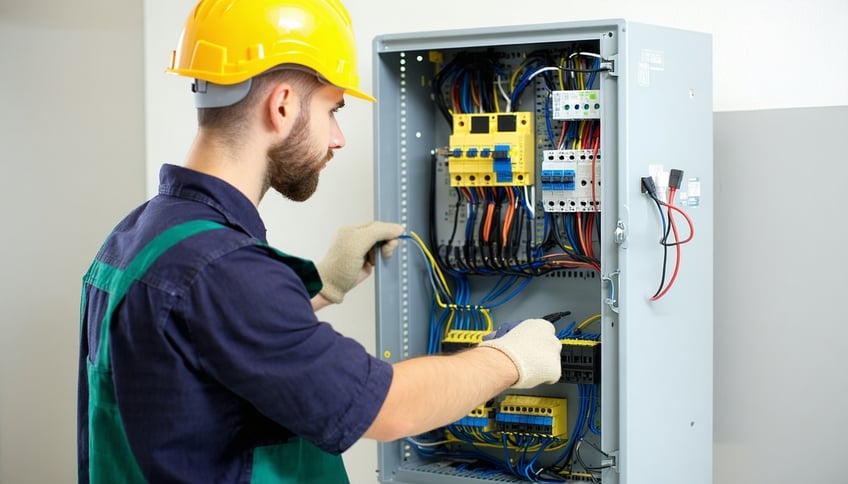
Electrical Contracting Financing: Growing Your Service Business

Electrical Contracting Financing: Growing Your Service Business

Electrical Contracting Financing: Growing Your Service Business

Electricians power homes, businesses, and infrastructure. But building a thriving electrical contracting business requires more than technical skills—it takes vehicles, specialized equipment, certified staff, and reliable cash flow. Whether you’re bidding on larger jobs or scaling your crew, electrical contracting financing can give you the capital you need to grow without sacrificing stability.

In this guide, we’ll break down the best loans for electricians, what you can use them for, and how to strategically fund your expansion.


Why Electricians Use Financing

From bidding on commercial jobs to handling residential service calls, electrical contractors face high upfront costs. Business loans can help you:

  • Purchase or lease work vans and tools

  • Hire licensed journeymen or apprentices

  • Buy bulk materials (conduit, wiring, fixtures)

  • Invest in safety training and compliance

  • Upgrade dispatch and scheduling software

  • Bridge cash flow gaps between jobs and invoice payments

Financing allows you to take on more work, improve efficiency, and reduce the stress of managing expenses week to week.


What Can You Finance as an Electrical Contractor?

Expense Category Estimated Cost Range
Service trucks and vehicles $25,000 – $70,000 each
Tools and diagnostic gear $5,000 – $30,000+
Inventory and bulk materials $10,000 – $100,000+
Software and CRM systems $2,000 – $15,000
Payroll and contractor wages Varies by crew size
Certifications and training $500 – $5,000 per employee

Top Loan Options for Electricians and Contractors

Equipment Financing

Best for: Purchasing power tools, lifts, circuit testers, or other high-cost equipment.

Equipment financing spreads out the cost of your tools, with the equipment itself acting as collateral.

Pros:

  • Fast approvals

  • Low impact on cash reserves
    Cons:

  • Restricted to equipment purchases

  • May require down payment


Commercial Vehicle Loans

Best for: Purchasing or upgrading your work truck or service van fleet.

These loans help electricians maintain a professional, branded presence and transport tools and supplies efficiently.

Pros:

  • Structured for commercial use

  • May be tax deductible
    Cons:

  • Must maintain full coverage insurance

  • Vehicle acts as collateral


Business Line of Credit

Best for: Covering short-term costs or materials between customer payments.

With a revolving credit line, you can pay vendors, buy materials, or handle emergencies without reapplying for funding.

Pros:

  • Flexible and reusable

  • Only pay interest on what you use
    Cons:

  • Requires good credit to qualify

  • Interest rates can vary


SBA 7(a) Loans

Best for: Large expansions, long-term investments, or starting a new division.

SBA loans offer low-interest, government-backed funding up to $5 million with long repayment terms.

Pros:

  • Competitive rates

  • Long terms (up to 25 years)
    Cons:

  • Lengthy application process

  • Requires strong business documentation
    🔗 Explore SBA Loan Programs


Term Loans

Best for: Financing one-time investments, like hiring a project manager or launching a marketing campaign.

Term loans deliver a lump sum upfront and are paid back in fixed monthly installments.

Pros:

  • Predictable payments

  • Useful for growth initiatives
    Cons:

  • May require personal guarantees

  • Higher interest than SBA options


Quick Guide: How to Finance Your Electrical Business in 7 Steps

  1. Identify what you need funding for (vehicles, staff, materials)

  2. Estimate project ROI or cost savings

  3. Review your business and personal credit scores

  4. Gather financial statements, licenses, and job pipeline

  5. Compare lenders and interest rates

  6. Apply with a strong business plan

  7. Use funds strategically to boost capacity and revenue


Smart Ways Electricians Use Financing to Grow

  • Expand your service area by adding more vans and licensed crews

  • Take on commercial jobs that require higher upfront investment

  • Invest in marketing to increase residential service calls

  • Digitize scheduling and dispatch with software like Housecall Pro or ServiceTitan

  • Build inventory in advance to handle emergency and weekend work


Avoid These Common Financing Mistakes

❌ Using short-term loans for long-term projects
❌ Borrowing without a clear repayment plan
❌ Ignoring equipment depreciation and ROI
❌ Overlooking loan fees, origination charges, or prepayment penalties
❌ Delaying upgrades that could increase service capacity


Helpful Resources for Electrical Contractors


Conclusion: Power Your Business Growth with Smart Financing

Whether you're wiring a new build or responding to an emergency call, your ability to scale as an electrical contractor depends on reliable equipment, skilled labor, and solid cash flow. The right financing can help you go after bigger contracts, invest in your team, and run a more profitable operation.

Make your business more powerful—back it with the right capital.
Funding HVAC Businesses: Loans for Equipment and Fleet Vehicles

Funding HVAC Businesses: Loans for Equipment and Fleet Vehicles

Funding HVAC Businesses: Loans for Equipment and Fleet Vehicles

HVAC businesses are in high demand year-round—handling everything from emergency repairs to full system installations. But running a successful HVAC company requires more than just skilled technicians. You need reliable vehicles, high-performance tools, and up-to-date technology to stay competitive and profitable.

Business Loans for Construction Companies: Buying Equipment and Materials

Business Loans for Construction Companies: Buying Equipment and Materials

Business Loans for Construction Companies: Buying Equipment and Materials

Construction companies power infrastructure, housing, and commercial development across the country. But between bidding on contracts and managing payroll, contractors often face a major challenge: funding the equipment and materials needed to complete jobs on time and under budget.

Urgent Care Financing: Growth and Expansion Options

Urgent Care Financing: Growth and Expansion Options

Urgent Care Financing: Growth and Expansion Options

Urgent care centers are a fast-growing part of the healthcare ecosystem—offering accessible, on-demand medical services without the long wait times of hospitals. But expanding an urgent care facility or launching a new one requires significant capital. From medical equipment to real estate, staffing, and technology, the costs can add up fast.

Loans for Optometry Practices: Expanding Patient Care

Loans for Optometry Practices: Expanding Patient Care

Loans for Optometry Practices: Expanding Patient Care

As the demand for eye care services grows, optometry practices must evolve to keep up—with advanced diagnostic tools, modern office spaces, and patient-focused technology. Whether you're opening a new practice, upgrading your equipment, or expanding your services, loans for optometry practices offer accessible ways to invest in your business and elevate patient care.

Financing Medical Laboratories: Equipment and Technology Investments

Financing Medical Laboratories: Equipment and Technology Investments

Financing Medical Laboratories: Equipment and Technology Investments

Medical laboratories are the backbone of modern diagnostics, playing a crucial role in disease detection, health monitoring, and patient outcomes. But as demand for speed, precision, and innovation grows, labs must continuously invest in new technologies and equipment—often at a high cost. Fortunately, financing options for medical laboratories can help ease the financial burden of growth and modernization.

Funding Rehabilitation and Physical Therapy Centers

Funding Rehabilitation and Physical Therapy Centers

Funding Rehabilitation and Physical Therapy Centers

Rehabilitation and physical therapy centers play a crucial role in helping patients recover from injuries, surgeries, or chronic conditions. But behind the scenes, running a successful clinic requires far more than clinical expertise—it requires strategic investments in equipment, staffing, technology, and facility upgrades. That’s where funding for rehabilitation and physical therapy centers becomes essential.

Loans for Senior Care and Assisted Living Facilities

Loans for Senior Care and Assisted Living Facilities

Loans for Senior Care and Assisted Living Facilities

As the population ages, the demand for high-quality senior living continues to rise. Whether you operate a residential care home, assisted living facility, or memory care unit, growth comes with significant financial demands. Fortunately, loans for senior care and assisted living facilities offer strategic ways to finance real estate, renovations, staff expansion, and more.

Financing Imaging Centers: Equipment and Expansion

Financing Imaging Centers: Equipment and Expansion

Financing Imaging Centers: Equipment and Expansion

Medical imaging is at the core of modern diagnostics. Whether you're operating an MRI facility, CT scan center, or full-service diagnostic lab, staying competitive means investing in cutting-edge equipment and a seamless patient experience. But these upgrades come at a high cost. Fortunately, financing options for imaging centers can help clinics expand services, upgrade machinery, and improve profitability—without straining cash flow.

Funding Solutions for Chiropractic Clinics

Funding Solutions for Chiropractic Clinics

Funding Solutions for Chiropractic Clinics

Running a chiropractic clinic is a deeply rewarding way to help people live healthier, pain-free lives. But like any small business, success depends on more than skill—it requires smart financial planning. From state-of-the-art adjustment tables to expanding service offerings or opening new locations, having access to capital is critical. Fortunately, there are tailored funding solutions for chiropractic clinics that make it possible to grow without disrupting your cash flow.

Loans for Dental Equipment: Financing Your Dental Practice

Loans for Dental Equipment: Financing Your Dental Practice

Loans for Dental Equipment: Financing Your Dental Practice

Modern dentistry is driven by precision, efficiency, and patient comfort—and none of that is possible without the right tools. From 3D imaging systems to ergonomic dental chairs, high-quality equipment is a cornerstone of any successful dental practice. But it comes with a price. Fortunately, loans for dental equipment can help you acquire cutting-edge tools without compromising your cash flow.

Whether you’re starting a new practice or upgrading your current setup, this guide will walk you through the best dental equipment financing options, what to consider before applying, and how to make your investment pay off.


Why Dentists Use Loans to Finance Equipment

Dental equipment is a significant investment. Many dentists choose financing because it allows them to:

  • Preserve working capital while making large purchases

  • Upgrade to the latest dental technology without paying upfront

  • Spread payments over time to improve cash flow management

  • Increase patient satisfaction with better tools and comfort

  • Stay competitive with more efficient and accurate procedures

From X-ray machines to CAD/CAM systems, loans help you invest in your practice’s future—without draining today’s resources.


Common Dental Equipment You Can Finance

Equipment Type Average Cost Range
Digital X-ray machine $10,000 – $25,000
Dental chairs and delivery systems $5,000 – $15,000 each
Intraoral scanners $15,000 – $30,000
CAD/CAM milling machines $50,000 – $120,000
Autoclaves and sterilization units $3,000 – $8,000
Panoramic imaging systems $20,000 – $50,000
Practice management software $3,000 – $10,000
When scaling or replacing outdated equipment, total investment can easily exceed $100,000 —making financing a smart strategy.

Top Dental Equipment Financing Options

1. Equipment Financing

This is the most direct and common form of financing for dental tools.

  • Borrow up to 100% of the equipment’s cost

  • The equipment serves as collateral

  • Terms: 2–7 years

  • Fixed interest rates and predictable monthly payments

  • May include maintenance, installation, or training fees

Best for: Dentists purchasing high-ticket machines or outfitting new operatories.


2. SBA 7(a) Loan

The Small Business Administration backs loans for dentists looking to fund larger purchases—including equipment.

  • Up to $5 million in funding

  • Terms: Up to 10 years for equipment purchases

  • Lower interest rates than conventional loans

  • Requires strong credit and thorough documentation

  • Visit SBA.gov

Best for: Established practices planning long-term, multi-purpose investments.


3. Term Loans from Banks or Online Lenders

Traditional and online lenders offer lump-sum business loans for equipment or other practice needs.

  • Loan amounts: $25,000 – $500,000+

  • Fixed repayment terms

  • Collateral may be required

  • Fast access with online lenders

Best for: Mid-sized purchases with a defined ROI.


4. Leasing Dental Equipment

Leasing lets you use equipment without purchasing it outright.

  • Lower upfront cost

  • Option to buy equipment at lease-end

  • Great for rapidly evolving tech like 3D printers or laser tools

  • May include service and upgrades

Best for: Practices that want flexibility or plan to upgrade frequently.


5. Vendor Financing Programs

Many dental equipment manufacturers offer in-house or partnered financing.

  • Streamlined application process

  • May offer promotional 0% interest for the first year

  • Bundled with service, installation, or warranties

Best for: Convenience and fast setup when purchasing from major vendors.


7-Step Checklist for Financing Dental Equipment

  1. List the equipment you need and estimate total costs

  2. Calculate ROI (how it will increase revenue or efficiency)

  3. Compare financing options and rates from multiple lenders

  4. Prepare financial documents (revenue reports, tax returns, licenses)

  5. Check your credit (personal and/or business)

  6. Choose the loan that offers best value and terms

  7. Use funds to purchase and install equipment—track ROI


Smart Ways to Maximize Equipment ROI

  • Offer new procedures (e.g., same-day crowns or digital impressions)

  • Speed up patient visits with efficient diagnostic tools

  • Improve patient experience with comfort upgrades

  • Market your new capabilities to attract more patients

  • Bundle equipment upgrades with training and workflow improvements


Real-World Example: A Practice That Doubled Efficiency

A small dental clinic in Denver used a $75,000 equipment loan to purchase an intraoral scanner and a chairside milling machine. As a result, the practice began offering same-day crowns, eliminating lab wait times and increasing crown procedures by 45% in six months—paying off the equipment investment in under a year.


Mistakes to Avoid When Financing Dental Equipment

  • Focusing only on price: Consider long-term maintenance, training, and support

  • Underestimating ROI: Make sure new tools generate more revenue or save significant time

  • Overborrowing: Only finance what you truly need and can comfortably repay

  • Ignoring tax incentives: Section 179 deductions may allow you to deduct equipment costs in the same year of purchase


Helpful Resources for Dental Professionals


Conclusion: Equip Your Practice for Long-Term Success

Dental equipment is more than a business expense—it’s an investment in patient care, clinical accuracy, and practice efficiency. Whether you're replacing outdated tools or upgrading to the latest technology, the right financing makes it easier to take the next step without slowing down your business.

With the right loan, you can build a more modern, productive, and profitable dental practice—starting today.