
 (800) 949-0401
Audio Visual Production Business Loans: The Complete Financing Guide for AV Production Business Owners
The audio visual production industry is booming. From corporate events and live concerts to broadcast studios and virtual reality experiences, AV companies are in higher demand than ever before. But running a professional AV production business requires serious capital - high-end cameras, mixing consoles, rigging equipment, LED walls, and skilled technicians do not come cheap.
Whether you are looking to purchase new equipment, hire additional crew, expand your fleet of production vehicles, or secure a larger facility, audio visual production business loans can give you the financial runway you need to grow. This comprehensive guide breaks down every financing option available to AV business owners, what lenders look for, and how to get funded fast.
Ready to Finance Your AV Production Business?
Get pre-qualified in minutes with no impact to your credit score. Funding available in as little as 24 hours.
Apply Now - It's FreeIn This Article
- The AV Production Industry: Size, Growth, and Financing Needs
- Types of Loans for Audio Visual Production Companies
- Equipment Financing for AV Businesses
- How Much Can an AV Business Borrow?
- Qualification Requirements for AV Business Loans
- AV Business Loans With Bad Credit
- SBA Loans for AV Production Companies
- How to Apply for an AV Production Business Loan
- What Can You Use AV Business Loan Funds For?
- AV Industry Statistics and Market Data
- Tips to Improve Your Approval Odds
- Frequently Asked Questions
The AV Production Industry: Size, Growth, and Financing Needs
The global audio visual industry represents a multi-billion dollar market with strong year-over-year growth projections. According to data from the U.S. Small Business Administration, technology-intensive creative services businesses like AV production are among the fastest-growing segments for small business lending. In the United States alone, thousands of AV production companies range from one-person freelance operations to full-service event production houses with dozens of employees and equipment inventories worth millions of dollars.
The AV production industry encompasses a wide range of business types:
- Corporate AV companies - serving business meetings, conferences, and product launches
- Live event production companies - managing concerts, festivals, and touring productions
- Broadcast and studio production - supporting TV, streaming, and film productions
- Worship and house of worship AV - churches and religious organizations
- Educational AV services - universities, school districts, and training facilities
- AV integration companies - installing permanent AV systems in offices and venues
- Rental and staging companies - providing equipment and crew on a project-by-project basis
Regardless of the niche, every AV production business faces the same core challenge: the equipment required to deliver professional-grade results is extraordinarily expensive. A single professional camera body can cost $15,000 to $60,000. A mid-tier mixing console for live sound runs $10,000 to $50,000. LED video walls can cost $50,000 to $500,000 or more depending on resolution and size. Add in rigging systems, lighting rigs, cable management, power distribution, transport vehicles, and crew, and it becomes clear why access to capital is not just helpful - it is essential.
💡 Key Insight: AV Companies Face Unique Capital Challenges
AV production businesses often have uneven cash flow due to project-based revenue cycles. A company might book 80% of its annual revenue in Q4 holiday season events, leaving Q1 and Q2 lean. Business financing helps bridge those seasonal gaps and fund equipment upgrades ahead of peak booking seasons.
Types of Loans for Audio Visual Production Companies
When it comes to financing your AV production business, you have several strong options. The right choice depends on your specific needs, credit profile, how quickly you need the funds, and how you plan to use the money. Here is a breakdown of the most common financing vehicles available to AV companies:
1. Small Business Loans (Term Loans)
A small business term loan is a lump-sum of capital repaid over a fixed period with regular (usually daily, weekly, or monthly) payments. Term loans are ideal for AV companies that need a substantial amount of capital for a specific purpose - like purchasing a new production truck, funding a studio buildout, or acquiring a competing company.
Key features of term loans for AV businesses:
- Loan amounts typically range from $10,000 to $2,000,000+
- Terms from 3 months to 10 years depending on lender and purpose
- Fixed or variable interest rates
- Predictable monthly payments for budgeting
- Can be secured (with collateral) or unsecured
2. Business Line of Credit
A business line of credit gives you revolving access to funds up to a set limit. You draw what you need, repay it, and the credit replenishes. This is an excellent tool for AV companies managing the unpredictable cash flow that comes with project-based work.
Lines of credit are ideal for:
- Covering payroll during slow months or between projects
- Purchasing supplies and consumables for specific events
- Bridging the gap between invoicing clients and receiving payment
- Handling emergency equipment repairs
3. Equipment Financing
Given that equipment is the backbone of every AV production business, equipment financing is often the most natural fit. This type of loan uses the equipment itself as collateral, which generally means easier approval and lower interest rates compared to unsecured loans.
4. SBA Loans
SBA loans backed by the U.S. Small Business Administration offer some of the most competitive interest rates and longest repayment terms available to small business owners. While the application process is more involved, the trade-off is worth it for established AV companies with strong financials.
5. Fast Business Loans / MCA
When timing is critical - like when a client calls with a large event opportunity next month and you need equipment now - fast business loans and merchant cash advances can provide funding in as little as 24-48 hours. These are short-term, higher-cost options best used strategically.
6. Invoice Factoring
If your AV business does a lot of work for corporate clients on net-30 or net-60 payment terms, invoice factoring lets you sell those receivables to a factoring company for immediate cash (typically 70-90% of the invoice face value). This is not technically a loan, but it serves the same cash flow function.
AV PRODUCTION BUSINESS FINANCING AT A GLANCE
For informational purposes only. Actual terms vary by lender and applicant profile.
Equipment Financing for AV Businesses
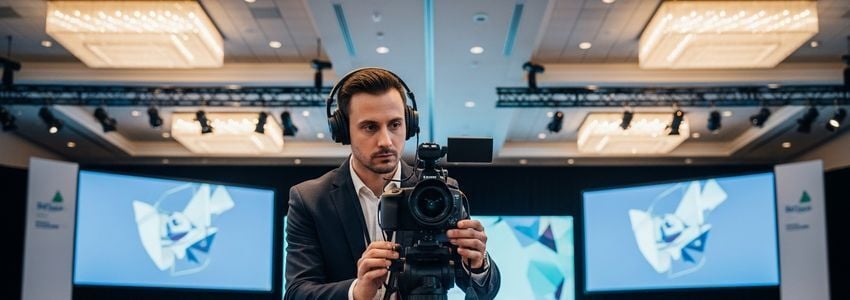
Professional AV technicians deliver seamless audio visual experiences for corporate clients nationwide.
Equipment financing deserves special attention because it is purpose-built for capital-intensive businesses like AV production. When you finance equipment, the lender typically covers 80-100% of the equipment purchase price, and the equipment itself serves as collateral for the loan. This structure benefits AV companies in several important ways:
Why Equipment Financing Works So Well for AV Companies
Lower approval barriers: Because the equipment secures the loan, lenders take on less risk. This means AV companies with shorter operating histories or lower credit scores can often get approved for equipment loans when they might not qualify for unsecured financing.
Tax advantages: Equipment purchases may qualify for Section 179 deductions or bonus depreciation under current IRS rules. Consult your accountant for specifics on how these provisions apply to your situation.
Preserve working capital: Rather than depleting your cash reserves to buy a $75,000 camera package outright, you can finance it and keep your operating cash available for payroll, marketing, and day-to-day business needs.
Match payment to revenue: Many equipment loans can be structured with seasonal payment options, so you pay more during busy event seasons and less during slower months.
What AV Equipment Can Be Financed?
Virtually any business-use AV equipment qualifies for equipment financing, including:
- Professional cameras and lens packages (broadcast, cinema, and live event cameras)
- Video switchers, scalers, and signal processors
- Audio mixing consoles - both front-of-house and monitor consoles
- Line array speaker systems and subwoofers
- LED video walls and display systems
- Lighting consoles and intelligent lighting fixtures
- Rigging systems, truss, and ground support structures
- Power distribution systems and cable management
- Production vehicles and cargo trucks
- Studio furniture, control room buildouts
- Editing suites and post-production workstations
- Drones and aerial photography equipment
- Projection systems and projectors
- Wireless microphone systems and RF coordination equipment
- Intercom systems and production communication gear
How Much Can an AV Business Borrow?
The amount you can borrow depends on multiple factors: your business revenue, time in business, credit score, existing debt obligations, the type of loan, and the lender. Here is a general framework:
Revenue-Based Loan Sizing
Many alternative lenders will approve AV companies for loans up to 10-15% of their annual gross revenue. For example:
- $300,000 annual revenue - may qualify for $30,000 to $45,000 in financing
- $750,000 annual revenue - may qualify for $75,000 to $112,500
- $1,500,000 annual revenue - may qualify for $150,000 to $225,000
- $3,000,000+ annual revenue - may qualify for $300,000 to $500,000+
With equipment financing specifically, you can often borrow up to 100% of the equipment's appraised value, which may allow you to secure substantially higher loan amounts tied to specific assets.
SBA Loan Maximums
SBA 7(a) loans can go up to $5,000,000 for qualifying businesses. SBA 504 loans, which are designed for fixed asset purchases (like major equipment or real estate), also reach up to $5,000,000 and are particularly well-suited for AV companies investing in large-scale production infrastructure.
✅ Pro Tip: Start Small to Build Credit History
If your AV business is newer or has limited credit history, consider starting with a smaller equipment financing deal ($25,000 - $75,000) to establish a payment track record. On-time payments on a business loan build your business credit profile significantly, making your next financing round easier and more affordable.
Qualification Requirements for AV Business Loans
Lender requirements vary widely - from strict traditional bank standards to more flexible alternative lender criteria. Here is what most lenders will evaluate when reviewing your AV company's loan application:
Standard Requirements
| Factor | Bank/SBA | Alternative Lender |
|---|---|---|
| Min. Time in Business | 2+ years | 6 months |
| Min. Credit Score | 680+ | 580+ |
| Min. Annual Revenue | $250,000+ | $100,000+ |
| Collateral Required? | Often yes | Sometimes |
| Time to Funding | 30-90 days | 1-5 days |
| Business Tax Returns Required? | Yes (2-3 years) | Varies |
Documents Typically Required
When applying for an audio visual production business loan, have these documents ready:
- Business and personal tax returns (last 2-3 years)
- Business bank statements (last 3-6 months)
- Profit and loss statements
- Balance sheet
- Business formation documents (LLC operating agreement, articles of incorporation)
- Equipment invoices or quotes (for equipment financing)
- Business plan (for SBA loans and larger amounts)
- List of existing debt obligations
- Voided business check
AV Business Loans With Bad Credit
Having less-than-perfect credit does not automatically disqualify your AV company from financing. Several pathways exist for AV business owners with credit challenges. According to Forbes, alternative lenders have dramatically expanded access to capital for business owners who would have been turned away by banks just a decade ago.
Options for AV companies with bad credit include:
- Bad credit business loans - Alternative lenders specialize in working with businesses that have credit scores in the 500-600 range
- Equipment financing with collateral - The equipment itself secures the loan, reducing lender risk and improving approval odds
- Merchant cash advance - Based on future revenue rather than credit score; repaid via a percentage of daily card sales
- Invoice factoring - Sells your accounts receivable for immediate cash without a credit check
- Co-signer or guarantor - Having a creditworthy partner co-sign can unlock better rates and terms
Keep in mind: while these options are accessible, they typically come with higher interest rates to compensate for increased lender risk. As you establish a positive payment history, refinancing at better rates becomes possible.
SBA Loans for AV Production Companies
The U.S. Small Business Administration offers several loan programs that can be excellent fits for established AV production businesses:
SBA 7(a) Loans
The SBA 7(a) program is the SBA's flagship loan program and the most versatile option. AV companies can use 7(a) proceeds for virtually any business purpose including equipment purchases, working capital, facility improvements, and even business acquisitions.
- Maximum loan amount: $5,000,000
- Interest rates: Prime + 2.25% to Prime + 4.75%
- Repayment terms: Up to 10 years (up to 25 years for real estate)
- Down payment: Typically 10-20%
- Approval timeline: 30-90 days
SBA 504 Loans
The SBA 504 program is specifically designed for major fixed asset purchases. If your AV company is looking to purchase a production facility, build out a broadcast studio, or acquire a significant capital equipment package, the 504 program offers below-market fixed interest rates over 10 or 20-year terms.
SBA Express Loans
The SBA Express program provides faster approval (within 36 hours) for loans up to $500,000. While rates are slightly higher than standard 7(a) loans, Express loans are an excellent middle ground for AV companies that need meaningful capital without the extended wait of a traditional SBA application.
Not Sure Which Loan Is Right for Your AV Business?
Our funding specialists work with AV production companies every day. Get a free consultation and personalized loan recommendation - no obligation.
Get My Free ConsultationHow to Apply for an AV Production Business Loan
Applying for a business loan as an AV production company is more straightforward than many business owners expect - particularly with alternative lenders. Here is the step-by-step process:
Step 1: Define Your Funding Need
Be specific about what you need the money for. Lenders respond better to clear, purposeful requests. "I need $120,000 to purchase a new camera package and LED wall for a corporate event contract I have secured" is far more compelling than a vague request for working capital.
Step 2: Assess Your Business Financial Profile
Review your own credit score (both personal and business), annual revenue, and existing debt obligations before applying. This helps you target the right lenders and loan products and set realistic expectations on terms.
Step 3: Gather Your Documentation
Organize your business bank statements, tax returns, P&L statements, and any equipment invoices or quotes. Having documents ready accelerates the approval process significantly.
Step 4: Submit Your Application
With alternative lenders like Crestmont Capital, the application takes just a few minutes online. You will answer basic questions about your business revenue, time in business, and the loan purpose. Pre-qualification typically has no impact on your credit score.
Step 5: Review Offers and Choose
You may receive multiple offers with different rate and term structures. Compare them carefully, looking at total cost of capital - not just the interest rate - to understand the true cost of each option.
Step 6: Receive Funding
Once you accept an offer and submit final documentation, funds can be deposited in your business bank account in as little as 24-48 hours with alternative lenders, or within 30-90 days with banks and SBA programs.
What Can You Use AV Business Loan Funds For?
Business loan funds are generally flexible, but here are the most common ways AV production companies invest borrowed capital:
Equipment Purchases and Upgrades
The most common use. Technology cycles in the AV industry are fast - what was cutting-edge three years ago may now be outdated. Staying competitive means continuously upgrading to 4K and 8K video systems, newer audio platforms, more energy-efficient LED fixtures, and the latest signal processing hardware. Financing equipment upgrades allows AV companies to maintain technical relevance without depleting reserves.
Fleet Expansion
Production vehicles are critical to every AV operation. A single well-equipped production truck can enable your company to take on larger, more profitable events. New vans and trucks cost $40,000 to $150,000+, making vehicle financing a logical choice for growing companies.
Studio or Office Buildout
Upgrading your facility - whether it's a production studio, equipment warehouse, or client-facing showroom - can directly impact your ability to win higher-value contracts. Lenders often view facility investments favorably because they represent tangible asset creation.
Hiring and Payroll Support
Taking on a major new client or contract often requires hiring additional technicians, project managers, or sales staff before revenue arrives. Working capital loans and lines of credit bridge this gap.
Marketing and Sales Investment
Professional demo reels, a redesigned website, attendance at industry trade shows like InfoComm or LDI, and digital advertising all require upfront investment. Loan capital can fund aggressive growth campaigns when the underlying business model supports the debt.
Inventory and Consumables
For large events, AV companies often purchase significant quantities of cable, tape, gaffer supplies, lamps, and other consumables. Short-term lines of credit are ideal for these purchases, allowing repayment once client invoices are collected.
Business Acquisition
Acquiring a complementary AV company - whether for its client roster, equipment, team, or geographic reach - is one of the fastest ways to scale. SBA loans are particularly well-suited for business acquisitions.
AV Industry Statistics and Market Data
Understanding the broader market context helps both business owners and lenders appreciate the health and trajectory of the AV production sector. Here is key data from authoritative sources:
- The global professional AV market is projected to grow at a compound annual growth rate (CAGR) of approximately 8-10% through 2028, driven by demand for live events, hybrid work infrastructure, and experiential entertainment.
- According to the U.S. Census Bureau, sound recording and AV production industries employ hundreds of thousands of workers across the country, with particularly dense concentrations in major metropolitan markets.
- Corporate event spending in the United States exceeds $300 billion annually, with AV services representing a significant portion of every event budget.
- The live events industry recovered strongly post-2022, with many AV companies reporting their highest-ever revenue years in 2023 and 2024, according to industry reports covered by CNBC.
- Hybrid event technology - solutions that blend in-person and virtual audiences - has created entirely new revenue streams for forward-thinking AV production companies.
- The average AV technician in the United States earns $45,000 to $75,000 per year, with senior operators and system designers earning $80,000 to $120,000+ in major markets.
📈 Industry Trend Alert: The Hybrid Event Revolution
AV companies that have invested in streaming infrastructure, broadcast-quality internet connectivity solutions, and virtual event platforms are commanding premium rates from clients navigating the hybrid event landscape. Equipment financing for streaming encoders, multi-camera switching systems, and fiber network gear represents a high-ROI investment category for AV operators in today's market.
Tips to Improve Your Approval Odds
Before applying for an audio visual production business loan, taking a few strategic steps can meaningfully improve your chances of approval and help you qualify for better rates:
Separate Business and Personal Finances
Many small AV business owners blur the line between personal and business expenses. Lenders want to see clean business bank statements with consistent revenue deposits. Open a dedicated business checking account if you have not already done so and run all business transactions through it.
Build Your Business Credit Profile
Business credit scores (Dun & Bradstreet Paydex, Experian Business, Equifax Business) are tracked separately from personal credit. Register your business with D&B (get a DUNS number), open a business credit card, and pay suppliers on time to build your business credit history.
Document Your Revenue Streams
AV production companies often have diverse revenue sources - rental income, technical services, installation contracts, maintenance agreements, etc. Make sure your bank statements and accounting records clearly capture all revenue streams. Lenders like seeing diversification because it reduces reliance on any single client or event type.
Show Long-Term Contracts
If your AV company has recurring service agreements, venue partnerships, or multi-year corporate contracts, these are powerful proof of future revenue stability. Include contract summaries or letters of intent in your application package.
Reduce Existing Debt Load
Lenders look at your debt service coverage ratio (DSCR) - essentially whether your business income covers your existing debt payments with enough cushion to support new debt. Paying down revolving credit lines or smaller equipment loans before applying for a major loan improves this ratio.
Apply With a Clear Purpose
Lenders are more confident when borrowers have a specific plan for the money. "Purchase a broadcast camera package for a new corporate client contract worth $180,000" is a stronger application narrative than "general business purposes."
Frequently Asked Questions About AV Production Business Loans
What credit score do I need to get an audio visual business loan?
Most alternative lenders work with AV business owners who have credit scores of 580 or above. Traditional banks and SBA lenders typically prefer scores of 680 or higher. However, equipment financing programs may be accessible with lower scores because the equipment itself serves as collateral, reducing lender risk.
How fast can I get funding for my AV company?
With alternative lenders like Crestmont Capital, many AV companies receive funding in 24-48 hours after application approval. SBA loans typically take 30-90 days. Equipment financing can often be completed in 3-5 business days once equipment invoices are submitted.
Can I get a loan to buy AV equipment if my business is less than a year old?
Yes, some lenders work with businesses as young as 6 months old - particularly for equipment financing where the asset serves as collateral. However, options are more limited and rates are generally higher for very new businesses. Having strong personal credit and relevant industry experience can help offset the lack of business history.
What is the difference between equipment financing and equipment leasing for AV gear?
With equipment financing (a loan), you own the equipment at the end of the loan term. With leasing, you are essentially renting the equipment for a period, then you can buy it, return it, or upgrade to newer equipment. Financing typically makes more sense for AV gear you plan to use for many years, while leasing can be smart for technology that becomes obsolete quickly.
Do AV companies need collateral to get a business loan?
It depends on the loan type and lender. Equipment financing uses the equipment as collateral. Many alternative lenders offer unsecured business loans up to $250,000 or more based primarily on revenue. Traditional bank loans and SBA loans typically require collateral - often the business assets or a personal guarantee from the business owner.
Can I use a business loan to hire AV technicians and staff?
Yes. Working capital loans and business lines of credit can be used for payroll, hiring, and staffing expenses. This is a legitimate and common use of business financing - many AV companies borrow capital to staff up for peak seasons or when landing a major new client contract requires additional certified technicians.
What is the best loan for seasonal AV production businesses?
A business line of credit is typically the best tool for seasonal AV businesses. It gives you access to funds during slow periods (to cover overhead and prepare for the busy season) and you only pay interest on what you draw. Some lenders also offer term loans with seasonal payment structures that reduce payments during your slow months.
How do I build business credit for my AV company?
Start by forming a proper legal entity (LLC or corporation), obtaining an EIN, and opening a business bank account. Register with Dun & Bradstreet to get a DUNS number. Open a business credit card and pay it in full monthly. Pay all vendors and suppliers on time. As you complete equipment loans and other financing, each on-time payment improves your business credit scores.
Can a sole proprietor AV freelancer get a business loan?
Yes, sole proprietors can qualify for business financing. However, as a sole proprietor, your personal credit and personal finances are heavily weighted in the approval decision because there is no legal separation between you and the business. Many lenders prefer working with formally structured businesses (LLCs or corporations), which also provides you with personal liability protection.
What interest rates should AV business owners expect on loans?
Interest rates vary significantly by loan type, credit profile, and lender. SBA loans typically range from 6-12% APR. Bank term loans run 7-15% APR for qualified borrowers. Alternative lender rates range from 10-40% APR for unsecured products, with equipment financing often in the 8-20% APR range. Merchant cash advances have factor rates that translate to very high effective APRs and should only be used short-term.
Is it better to lease or finance AV production equipment?
For core production equipment you use daily (cameras, consoles, touring speaker systems), financing and owning is usually better because the asset retains working value and you build equity. For rapidly evolving technology (like software-defined video systems, streaming encoders, or LED processing equipment) that may become obsolete quickly, leasing can be smarter since it allows periodic upgrades without the hassle of reselling outdated gear.
Can I get a loan to buy a competitor AV company?
Yes. Business acquisition financing is a legitimate and growing use case for AV company loans. SBA 7(a) loans are particularly well-suited for acquisitions, covering up to $5,000,000 and typically requiring 10-20% down from the buyer. The acquired business's cash flow history is a key factor in determining loan approval and terms for acquisition financing.
How does invoice factoring work for AV production companies?
Invoice factoring allows AV companies to sell unpaid client invoices (typically for 70-90% of face value) to a factoring company in exchange for immediate cash. The factoring company then collects payment from your client and sends you the remainder minus fees. This is particularly useful for AV companies that work with large corporate or government clients on extended payment terms.
What documentation does Crestmont Capital require for an AV business loan?
Crestmont Capital typically requires 3-6 months of business bank statements, basic business information (legal name, EIN, time in business), and the intended use of funds. For larger loan amounts, additional documentation like tax returns, profit and loss statements, and equipment invoices may be required. The application itself takes just minutes and does not impact your credit score for pre-qualification.
Can I refinance existing AV equipment debt to lower my payments?
Yes, refinancing existing equipment loans is possible, especially if your credit profile has improved since the original financing or if interest rates have moved favorably. Refinancing can lower your monthly payments, extend your repayment term, or both. It is worth shopping new lenders when you have 12+ months of positive payment history established on the existing loan.
Next Steps: Getting Your AV Production Business Funded
You have the knowledge - now here is how to turn it into capital for your audio visual production business. Follow these steps to move from research to funded:
Write down exactly what you need - the specific equipment, expansion, or working capital purpose and the dollar amount. Having a clear purpose strengthens your application.
Pull your last 6 months of bank statements, review your credit score, and total your annual revenue. These three numbers define your starting loan range.
Apply for pre-qualification with Crestmont Capital. The process takes minutes, has no impact on your credit score, and you can see what you qualify for before committing to anything.
Compare loan offers on total cost of capital (not just monthly payment). Factor in fees, prepayment penalties, and how the repayment structure fits your cash flow cycle.
Once funded, deploy capital against your highest-ROI use. Equipment that generates billable revenue should take priority. Track results so you can demonstrate financial discipline on your next financing round.
Apply for Your AV Production Business Loan Today
Join thousands of business owners who have used Crestmont Capital to grow. Fast approvals, competitive rates, and funding specialists who understand your industry.
Start My ApplicationDisclaimer: This article is provided for general educational purposes only and does not constitute financial, legal, or tax advice. Loan terms, rates, and eligibility requirements vary by lender and individual applicant circumstances. Crestmont Capital is not responsible for actions taken based on information in this article. Always consult with a qualified financial advisor, accountant, or legal professional before making financing decisions for your business.








