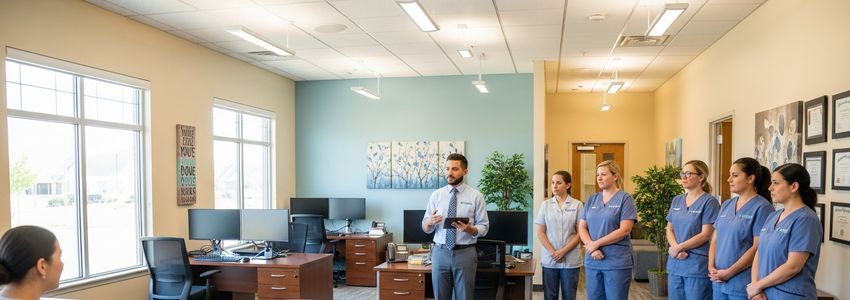
Amada Senior Care has earned a reputation as one of the fastest-growing senior home care franchise systems in the United States, built on a mission of compassionate, client-centered service. If you are considering investing in an Amada Senior Care franchise, understanding the full scope of the financial commitment and the financing options available to you is the critical first step. This guide provides a comprehensive roadmap to help you navigate the Amada Senior Care franchise cost, explore the best loan products for your situation, and position your new business for long-term success.
In This Article
- What Is Amada Senior Care?
- Amada Senior Care Franchise Cost Breakdown
- Financing Options for Amada Senior Care Franchise Owners
- SBA Loans for Senior Care Franchises
- How Crestmont Capital Helps Amada Franchise Owners
- How to Qualify for an Amada Franchise Loan
- The Senior Care Industry: Market Outlook and Demand
- Step-by-Step Guide to Securing Your Franchise Loan
- Frequently Asked Questions
- Next Steps
- Conclusion
What Is Amada Senior Care?
Founded in 2007 by Chad Fotheringham, Amada Senior Care is a nationally recognized franchisor that provides a full spectrum of senior home care and assisted living placement services. Unlike traditional home care agencies that focus solely on non-medical support, Amada differentiates itself with a dual service model that combines in-home caregiving with senior housing advisory services. This two-pronged approach gives franchisees a wider revenue base and allows them to serve clients across the entire spectrum of senior care needs, from those who simply need help with daily tasks at home to those requiring a transition into assisted living or memory care communities.
The in-home care services provided by Amada caregivers include companionship, personal care, medication reminders, meal preparation, light housekeeping, and transportation to appointments. On the advisory side, Amada Senior Living Advisors work as consultants to help families navigate the complex and often emotionally overwhelming process of finding the right senior housing solution. Amada advisors develop deep relationships with residential care facilities in their territory, enabling them to match clients with appropriate communities while often receiving placement fees from those facilities. This advisory component adds a largely variable-cost revenue stream that can be highly profitable.
Amada Senior Care has consistently appeared on Entrepreneur Magazine's Franchise 500 list and other industry rankings, reflecting its strong unit economics, franchisee satisfaction, and brand reputation. The company is headquartered in Aliso Viejo, California, and operates hundreds of franchise territories across the United States. Amada's franchise model is built on the belief that quality care, genuine compassion, and business acumen are not mutually exclusive, and it has built a system designed to help franchisees succeed in both areas simultaneously.
For aspiring entrepreneurs, Amada represents a compelling franchise opportunity in a sector experiencing massive, secular demand growth. The aging of the Baby Boomer generation and longer life expectancies are driving unprecedented need for senior care services, and the franchise model provides the training, operational support, and brand recognition to capture a share of that growing market. Understanding how to finance an Amada Senior Care franchise is the foundation of turning that opportunity into a thriving business.
Amada Senior Care Franchise Cost Breakdown
Before approaching any lender, you need a thorough understanding of the total capital required to open and operate an Amada Senior Care franchise. The total initial investment for an Amada Senior Care franchise typically ranges from approximately $88,000 to $148,000, making it a comparatively low-cost franchise investment compared to many brick-and-mortar concepts. However, the actual capital requirements are more nuanced than the headline figures suggest, and proper financial planning requires a comprehensive accounting of all costs.
The initial franchise fee for an Amada Senior Care franchise is $49,500. This fee grants you the exclusive rights to operate an Amada franchise within a defined territory, access to the company's proprietary operational systems, training programs, marketing materials, and ongoing corporate support. It also provides immediate access to Amada's established brand reputation, which is a meaningful asset in the relationship-driven senior care industry. For qualified veterans, Amada offers a discount on the initial franchise fee as part of the company's commitment to supporting those who have served.
Beyond the franchise fee, a significant portion of your startup capital will be allocated to working capital. Because the senior care business model is service-based rather than product-based, the startup does not require a physical retail location or expensive equipment. However, you will need to fund the ramp-up period while you build a client base and hire and train caregivers. Amada recommends having sufficient working capital to sustain operations for the first three to six months before consistent revenue is generated. This working capital requirement is often the most significant component of the total initial investment.
Additional startup costs include office expenses such as a small office lease (many Amada owners start from a home office), computers and office equipment, insurance premiums, initial marketing and advertising expenditures, professional fees for legal and accounting services, and the cost of obtaining necessary state licenses for operating a home care agency. State licensing requirements vary significantly and can include application fees, background check costs, and compliance expenditures. Some states have more rigorous requirements than others, and understanding the licensing landscape in your specific market is an important part of your financial planning.
Ongoing financial obligations include a royalty fee of 4% of gross revenues paid to Amada corporate, along with a marketing and technology fee of 2% of gross revenues. These fees fund Amada's national marketing campaigns, technology platform development, and continuous improvement of the support infrastructure available to franchisees. While these represent a recurring cost, they also fund the brand-building and operational support that differentiates the Amada franchise model from independent operators.
Ready to Finance Your Amada Senior Care Franchise?
Get fast, flexible financing from the #1 business lender in the U.S.
Apply Now →Financing Options for Amada Senior Care Franchise Owners
Prospective Amada Senior Care franchise owners have access to a diverse range of financing options to fund their initial investment and working capital needs. The right financing solution will depend on your personal financial profile, prior business experience, the amount you need to borrow, and how quickly you need access to funds. Understanding the full spectrum of options empowers you to make strategic decisions that support both your immediate funding needs and your long-term financial health.
Small Business Administration loans represent the most widely used and often the most advantageous financing vehicle for franchise investments. An SBA 7(a) loan can be used to fund the franchise fee, working capital, office setup costs, and other eligible business expenses. The government guarantee provided by the SBA reduces the risk for participating lenders, which typically results in lower interest rates, longer repayment terms, and lower down payment requirements than conventional loans. For a business like an Amada franchise that may not have physical assets to pledge as collateral, the SBA's willingness to guarantee a portion of the loan is particularly valuable. Learn more about SBA loans for small businesses from Crestmont Capital.
A small business loan from a conventional bank or alternative lender is another primary financing option. These term loans provide a lump sum of capital that is repaid over a defined period with fixed or variable interest payments. Conventional bank loans may offer competitive interest rates for borrowers with excellent credit and financial histories, though they typically require more rigorous qualification standards and may require collateral. Alternative lenders, which operate primarily online, often provide faster application and funding timelines and may have more flexible credit requirements, though their interest rates tend to be higher than those offered by banks and SBA-approved lenders.
A business line of credit is an excellent complement to a term loan for managing the day-to-day working capital needs of a growing home care franchise. Unlike a term loan that provides a one-time disbursement, a line of credit gives you access to a revolving pool of funds that you can draw from and repay as needed. This flexibility is ideal for managing the timing differences between when you pay caregiver wages and when you collect client payments or receive insurance reimbursements. A business line of credit can serve as a financial cushion during the ramp-up phase and beyond, providing the liquidity needed to manage payroll and expenses even when revenue is irregular.
For Amada franchisees who need to purchase office equipment, computers, vehicles for client transportation, or other capital assets, equipment financing is a targeted solution. Equipment loans use the purchased asset as collateral, which can make them easier to qualify for than unsecured loans and helps preserve your working capital for operational needs. Additionally, some franchisees explore short-term business loans or fast business loans to bridge initial cash flow gaps while their client base and revenue streams are developing.
SBA Loans for Senior Care Franchises
SBA loans are widely regarded as the gold standard of small business financing for good reason, and they are particularly well-suited for senior care franchise investments. The U.S. Small Business Administration partners with approved lenders to provide government-guaranteed loans that make capital more accessible to small businesses that might not otherwise qualify for traditional financing. For Amada Senior Care franchise owners, SBA loans offer several distinct advantages that make them worth pursuing as a primary financing option.
The SBA 7(a) loan program is the most flexible and widely used SBA loan product for franchise financing. With loan amounts available up to $5 million, an SBA 7(a) loan can comfortably cover the full initial investment for an Amada franchise, including the franchise fee, working capital, and additional startup costs. Interest rates on SBA 7(a) loans are regulated and tied to the Prime Rate with a limited lender markup, keeping rates competitive and predictable. Repayment terms extend up to 10 years for working capital and equipment and up to 25 years for real estate, resulting in manageable monthly payments that support positive cash flow during the business's growth phase.
One of the most significant advantages of the SBA 7(a) loan for new franchise owners is the relatively low down payment requirement. While conventional lenders may require 20% to 30% down, SBA loans often require a down payment of 10% to 15% of the total project cost for qualified borrowers. This lower equity injection requirement preserves your personal cash reserves, which is important during the early stages of building an Amada franchise client base. According to the SBA's official guidance, these loans are specifically designed to support small businesses like franchise operations that need accessible capital to launch and grow.
An additional benefit of SBA financing is the Franchise Registry maintained by the SBA, which lists franchise systems that have been pre-reviewed for SBA eligibility. When a franchise is listed on the Franchise Registry, the lender does not need to independently review the franchise agreement, which can significantly reduce the time required to obtain approval and funding. Amada Senior Care's established franchise system and documentation may qualify for streamlined review, so it is worth confirming the current registry status with your lender when applying. The SBA's business funding guide is a helpful resource for understanding the general parameters of SBA loan eligibility and the application process.
The SBA 504 loan program is an alternative worth considering for Amada franchisees who plan to purchase commercial real estate for their office or invest in significant long-term fixed assets. The 504 program provides long-term, fixed-rate financing for major capital expenditures through a partnership between a conventional lender and a Certified Development Company (CDC). While working capital is not eligible for 504 financing, the long-term fixed rates can be advantageous for major asset purchases. Most Amada franchisees, however, will find the 7(a) program a better fit for their startup and working capital needs.
Senior Care Industry Overview
Why Amada Senior Care Is a Sound Investment
$440B
Projected U.S. Home Care Market by 2027
4.8M
Americans Turning 65 Each Year Through 2030
90%
Of Seniors Prefer to Age in Their Own Homes
$88K
Minimum Investment for Amada Franchise
How Crestmont Capital Helps Amada Franchise Owners
Crestmont Capital specializes in providing tailored financing solutions for franchise owners across the United States, including those investing in the senior care and home care sectors. Our team understands that navigating the lending landscape can be complex and time-consuming, particularly for first-time franchise owners who are simultaneously learning a new business model and managing the demands of a startup. We simplify the process by acting as your financing partner throughout the entire journey, from initial consultation and loan structuring to approval and funding.
Our extensive lender network gives Amada franchise applicants access to multiple financing products and terms that would be difficult to source independently. Rather than approaching individual banks or SBA lenders one by one, working with Crestmont Capital allows you to leverage our established relationships with SBA-approved lenders, regional banks, and alternative financing providers. We match your financial profile and funding needs with the lenders most likely to approve your application at competitive terms, saving you both time and effort during a critical period.
Crestmont Capital's team has experience securing financing for franchise owners in service-based businesses similar to Amada Senior Care. We understand how lenders evaluate home care franchise applications, what documentation strengthens a loan package, and how to structure your financial narrative in a way that resonates with underwriters. Whether you are looking for an SBA 7(a) loan, a conventional business term loan, a business line of credit, or a combination of these products, we can help you identify and pursue the right financing mix for your Amada franchise investment.
We have successfully helped franchise owners in high-growth sectors similar to Amada secure the capital they need to launch and scale. For example, our experience with health and wellness franchise financing parallels the due diligence and documentation requirements of senior care franchise applications. We also understand that many Amada franchise owners may be career-changers coming from healthcare, social work, or management backgrounds who have not previously applied for business financing. Our team provides hands-on guidance for first-time business borrowers, helping you prepare your loan application and understand what to expect at each stage of the process. We have also worked with owners of comparable franchise concepts in adjacent care sectors, like an Home Instead Senior Care franchise, giving us direct insight into the business model lenders are evaluating.
Ready to Finance Your Amada Senior Care Franchise?
Get fast, flexible financing from the #1 business lender in the U.S.
Apply Now →How to Qualify for an Amada Franchise Loan
Securing a loan to fund your Amada Senior Care franchise investment requires demonstrating to lenders that you are a creditworthy borrower with a viable business plan and the personal financial resources to support the investment. Lenders evaluate a range of factors when reviewing franchise loan applications, and understanding these criteria in advance allows you to prepare the strongest possible application. The qualification requirements for an Amada franchise loan are similar to those for other service franchise investments, with a few nuances specific to the senior care sector.
Personal credit score is one of the most significant factors lenders consider. For SBA loans, most lenders require a minimum personal credit score of 650 to 680, though borrowers with scores above 720 are in a much stronger position to secure favorable terms and rates. Your credit score reflects your history of managing debt obligations and serves as a proxy for how you will manage business debt. Prior to applying, review your personal credit reports from all three major bureaus (Equifax, Experian, and TransUnion) to verify accuracy and address any errors or outstanding issues that may be negatively impacting your score.
Lenders will also evaluate your personal financial strength through a review of your net worth and liquid assets. Amada Senior Care requires prospective franchisees to demonstrate a minimum net worth and liquid capital requirement to qualify for a franchise agreement. Lenders typically want to see that you have a meaningful personal financial stake in the business and sufficient reserves to handle unforeseen challenges. For SBA loans, the equity injection (down payment) requirement is typically 10% to 15% of the total loan amount, while some conventional lenders may require 20% or more.
A well-prepared business plan is essential to a successful loan application. Your business plan should include detailed financial projections for the first three to five years of operations, including revenue forecasts, expense budgets, projected profit and loss statements, and cash flow analyses. Lenders use your financial projections to assess whether the business generates sufficient cash flow to service the debt. Because Amada is a service-based business without hard assets like real estate or equipment, the quality of your projections and the strength of your business plan carry even more weight than they might for a brick-and-mortar investment. The plan should reflect a realistic and well-researched understanding of the senior care market in your target territory, as well as your strategy for acquiring clients and building a caregiver team.
Your professional background and relevant experience are also factors that lenders evaluate, particularly for a service-based business like senior care. Experience in healthcare, social work, business management, or sales is viewed favorably by underwriters. If you do not have direct industry experience, demonstrating a strong track record in related fields and articulating a clear plan for leveraging Amada's training and support can help address any concerns. Lenders may also consider the overall strength of the Amada Senior Care franchise system, including its track record, franchisee satisfaction, and financial performance representations, as part of their assessment.
The Senior Care Industry: Market Outlook and Demand
One of the most compelling aspects of investing in an Amada Senior Care franchise is the extraordinary demographic tailwind driving demand for senior care services. The United States is in the midst of a historic aging trend that is transforming the healthcare and care services landscape. According to data from the U.S. Census Bureau, the population of Americans aged 65 and older is projected to reach more than 73 million by 2030, nearly double the number in 2010. This massive demographic shift is creating unprecedented and sustained demand for the types of services that Amada Senior Care provides.
The home care industry is one of the fastest-growing segments of the broader healthcare market, driven by the strong preference among seniors to age in place rather than transition to institutional care settings. A survey by AARP found that approximately 90% of seniors prefer to remain in their own homes as they age, and many are willing to invest significantly in in-home care services to make that possible. This preference for aging in place, combined with growing family caregiver burnout and the increasing sophistication of in-home care services, is driving robust and recurring demand for providers like Amada Senior Care.
The financial performance of senior care businesses reflects this strong underlying demand. According to industry research published by sources such as CNBC, home care businesses have demonstrated consistent revenue growth even during economic downturns, largely because senior care needs are non-discretionary for many families. The recession-resistant nature of home care demand is an important characteristic for lenders evaluating the risk profile of an Amada franchise loan application, as it suggests the business is less susceptible to the economic cyclicality that affects many consumer-facing industries.
The senior care industry is also characterized by favorable reimbursement dynamics. While private pay remains a significant source of revenue for Amada franchises, veterans benefits, long-term care insurance, and other funding sources provide additional revenue streams that reduce dependence on any single payer. Amada's expertise in navigating veterans benefits claims in particular has been a key differentiator, allowing franchisees to serve veterans in need while accessing a well-funded and stable revenue source. According to reporting from Bloomberg, the home care market is expected to continue its strong growth trajectory through the next decade, driven by demographics and the expansion of reimbursable care options.
For prospective Amada franchise owners, this market environment means that the demand for your services will be robust and growing from day one. Unlike franchise concepts in discretionary consumer categories where market development can be a challenge, senior care services address a fundamental human need that only increases with the aging population. Lenders familiar with the senior care market understand this dynamic and typically view well-positioned senior care franchises favorably relative to other service business investments.

Step-by-Step Guide to Securing Your Franchise Loan
The process of securing financing for your Amada Senior Care franchise investment is manageable when broken into clearly defined steps. Each stage builds on the previous one, and thorough preparation at each step significantly increases your probability of a fast and successful outcome. The typical timeline from initial application to funding can range from two to eight weeks, depending on the type of loan and the completeness of your application package.
Step 1 - Assess Your Financial Position: Begin by obtaining copies of your personal credit reports from all three major credit bureaus and reviewing them carefully for accuracy. Calculate your net worth by tallying your assets and subtracting your liabilities, and determine how much liquid capital you have available for the equity injection. This self-assessment will help you understand what loan products you are likely to qualify for and how much external financing you will need.
Step 2 - Develop Your Business Plan: Prepare a comprehensive business plan that includes an executive summary, detailed market analysis for your territory, a caregiver recruitment and retention strategy, a marketing and sales plan, and detailed five-year financial projections. Your financial projections should be realistic, supported by market research and Amada's financial performance representations, and should clearly demonstrate the business's ability to generate sufficient cash flow to service the debt.
Step 3 - Gather Your Documentation: Compile the documentation that lenders will require, including personal tax returns for the past three years, bank statements for the past three to six months, a current personal financial statement, a copy of your executed Amada franchise agreement or letter of intent, documentation of any relevant professional experience, and your completed business plan. Having these materials organized and ready to submit will accelerate the review process.
Step 4 - Work with a Financing Specialist: Partnering with an experienced franchise financing specialist like Crestmont Capital allows you to benefit from industry expertise and lender relationships that simplify and accelerate the funding process. Your financing specialist can help you identify the loan products best suited to your situation, prepare your application package, and advocate on your behalf with lenders. A short-term business loan or a combination of products may be recommended depending on your specific needs and timeline.
Step 5 - Submit Your Application and Await Underwriting: Once your application is submitted to one or more lenders, the underwriting team will review your documentation, conduct a credit analysis, and assess the overall risk profile of the loan request. During this period, be responsive to any requests for additional information or clarification, as prompt responses prevent unnecessary delays. SBA loans typically take longer to underwrite than conventional loans due to the additional government documentation requirements.
Step 6 - Review and Accept Loan Terms: Upon approval, carefully review the term sheet or commitment letter from the lender. Pay close attention to the interest rate, repayment term, monthly payment amount, any prepayment penalties, and any covenants or conditions attached to the loan. If any terms are unclear or unfavorable, discuss them with your financing specialist before accepting. Once you accept the loan terms, the closing process begins, leading to the disbursement of funds to your account.
Step 7 - Use Funds Strategically: Once funded, implement a disciplined capital allocation strategy. Pay the franchise fee and cover your required startup costs first, then preserve your working capital reserve by managing expenses carefully during the ramp-up phase. Track your financial performance against your projections monthly and adjust your strategy as needed to ensure you are on track to generate the cash flow required to service your loan obligations comfortably.
Frequently Asked Questions
What is the total investment for an Amada Senior Care franchise?
The total initial investment for an Amada Senior Care franchise ranges from approximately $88,000 to $148,000, which includes the $49,500 initial franchise fee, working capital, office setup costs, marketing expenditures, and other startup expenses. Actual costs may vary based on location, state licensing requirements, and individual business circumstances.
Can I get an SBA loan to finance an Amada Senior Care franchise?
Yes. SBA 7(a) loans are commonly used to finance senior care franchise investments, including Amada Senior Care. SBA loans can cover the franchise fee, working capital, and other eligible startup costs. They offer favorable terms including lower down payment requirements and longer repayment periods compared to conventional bank loans.
What credit score do I need to qualify for an Amada franchise loan?
Most SBA lenders and conventional lenders require a minimum personal credit score of 650 to 680 to qualify for a franchise loan. Borrowers with scores above 720 are likely to qualify for better interest rates and more favorable terms. A strong credit score demonstrates financial responsibility and reduces the perceived risk for lenders.
How much working capital do I need to open an Amada Senior Care franchise?
Amada Senior Care recommends sufficient working capital to sustain operations for three to six months prior to consistent revenue generation. This working capital fund covers caregiver payroll, marketing costs, office expenses, and insurance during the ramp-up phase. The appropriate amount varies by territory and market conditions, but generally ranges from $30,000 to $80,000 or more.
What is the Amada Senior Care franchise royalty fee?
Amada Senior Care charges a royalty fee of 4% of gross revenues paid to the franchisor on an ongoing basis. Additionally, franchisees pay a marketing and technology fee of 2% of gross revenues. These fees fund national brand marketing, technology platform development, and the ongoing support infrastructure that benefits all franchisees.
How long does it take to get approved for an Amada franchise loan?
The approval timeline varies by loan type and lender. Conventional bank loans and alternative lender approvals can take as little as one to three weeks for qualified borrowers with complete documentation. SBA loan approvals typically take three to six weeks or longer due to additional documentation requirements and the government guarantee review process. Having all required documents ready at the time of application significantly reduces the timeline.
Does Amada Senior Care offer any direct financing assistance to franchisees?
Amada Senior Care does not provide direct financing to franchisees, but the company does have relationships with preferred lenders who are familiar with the Amada business model and have experience evaluating senior care franchise loan applications. Franchisees are also free to work with independent lenders or financing brokers like Crestmont Capital to find the best funding solution for their situation.
What documents do I need to apply for an Amada franchise loan?
A typical franchise loan application package includes personal tax returns for the past three years, personal bank statements for the past three to six months, a current personal financial statement, a copy of your executed Amada franchise agreement or letter of intent, a detailed business plan with financial projections, and documentation of relevant professional experience. Your lender may request additional documents during the underwriting process.
Can I use a business line of credit to fund working capital for my Amada franchise?
Yes. A business line of credit is an excellent tool for managing ongoing working capital needs in a home care franchise. It provides flexible access to funds that you can draw on as needed to cover payroll, marketing, and other operational expenses, and repay as revenue is collected. Many Amada franchise owners use a combination of a term loan for startup costs and a line of credit for ongoing working capital management.
Is Amada Senior Care a good franchise investment?
Amada Senior Care operates in a sector with exceptional demographic tailwinds, as the aging Baby Boomer population is driving unprecedented demand for senior care services. The franchise offers a differentiated dual service model, strong corporate support, and has demonstrated consistent growth on Entrepreneur Magazine's Franchise 500 rankings. As with any franchise investment, thorough due diligence - including reviewing the Franchise Disclosure Document and speaking with existing franchisees - is recommended before committing.
What is the minimum liquid capital required for an Amada Senior Care franchise?
Amada Senior Care requires prospective franchisees to demonstrate a minimum amount of liquid capital, which refers to cash or easily liquidated assets, before entering into a franchise agreement. Specific requirements are outlined in the Franchise Disclosure Document and should be confirmed directly with the Amada Senior Care franchise development team, as they may be updated periodically.
How does Amada Senior Care generate revenue?
Amada Senior Care franchises generate revenue through two primary channels. The first is in-home caregiving services, which are billed to clients on an hourly basis and paid through private pay, long-term care insurance, veterans benefits, and other sources. The second is senior housing placement advisory services, where Amada receives a placement fee from residential care communities when a client is referred to and placed in their facility. The dual revenue model provides income diversification and multiple paths to growth.
What types of insurance does an Amada Senior Care franchise need?
Amada Senior Care franchise owners typically need general liability insurance, professional liability (also known as errors and omissions) insurance, workers' compensation insurance for caregiving employees, and commercial auto insurance if the business operates vehicles. Specific insurance requirements are detailed in the Amada Franchise Disclosure Document and may be influenced by state regulations and the size of the franchise operation. Insurance premiums represent an important cost item in your financial projections.
Can I operate an Amada franchise as a semi-absentee owner?
Some Amada Senior Care franchise owners operate their businesses in a more executive or semi-absentee capacity by hiring a qualified Care Manager or General Manager to oversee daily operations. However, this typically requires that the franchise has reached a sufficient scale to support the additional overhead of management staff. In the early stages, most Amada franchise owners are actively involved in business development, caregiver recruitment, and client relations to establish the business and build momentum.
Are there any loans for veterans looking to open an Amada franchise?
Yes. Veteran franchise owners have access to several additional financing resources, including the SBA Veterans Advantage program, which provides fee reductions on SBA loans for qualifying veteran business owners. Amada Senior Care also offers a discount on the initial franchise fee for qualified veterans. Additionally, the U.S. Small Business Administration maintains resources specifically for veteran entrepreneurs at SBA.gov, and many state-level economic development agencies offer veteran-specific loan programs and grants.
How does Crestmont Capital help Amada Senior Care franchise owners get funded?
Crestmont Capital assists Amada franchise applicants by leveraging our network of SBA-approved lenders and alternative financing partners to match applicants with the loan products best suited to their financial profile and funding needs. We help prepare and organize loan application documentation, guide applicants through the underwriting process, and advocate on their behalf to secure competitive terms and a timely approval. Our team has experience with senior care and service-based franchise financing, allowing us to present applications effectively to lenders familiar with this type of investment.
Next Steps to Funding Your Amada Senior Care Franchise
Ready to Finance Your Amada Senior Care Franchise?
Get fast, flexible financing from the #1 business lender in the U.S.
Apply Now →Conclusion
Investing in an Amada Senior Care franchise represents a meaningful opportunity to build a profitable business in one of the most defensible and growing sectors of the American economy. The combination of an aging population, strong preference for in-home care, and Amada's differentiated dual service model creates a compelling foundation for long-term business success. Understanding the full scope of the Amada Senior Care franchise cost, exploring the financing options available to you, and working with an experienced lending partner are the critical steps to turning your entrepreneurial vision into a funded reality.
The financial requirements for an Amada Senior Care franchise, while meaningful, are also accessible compared to many franchise concepts, particularly when financed through the right combination of SBA loans, conventional lending, and lines of credit. A well-prepared loan application that includes a comprehensive business plan, accurate financial projections, and a clear narrative about your qualifications and market opportunity will significantly strengthen your case with lenders. As with any business investment, thorough due diligence, sound financial planning, and a commitment to executing the Amada system with excellence will be the drivers of your franchise's financial performance and ultimate success.
Crestmont Capital is here to guide you through every step of the financing process, from initial consultation to funded loan. Our team understands the nuances of senior care franchise financing and has the lender relationships and expertise to match you with the right capital solution for your Amada Senior Care investment. Take the next step today and contact our team to discuss your financing needs and explore what funding options are available to you.
Disclaimer: The information provided in this article is for general educational purposes only and is not financial, legal, or tax advice. Funding terms, qualifications, and product availability may vary and are subject to change without notice. Crestmont Capital does not guarantee approval, rates, or specific outcomes. For personalized information about your business funding options, contact our team directly.