
 (800) 949-0401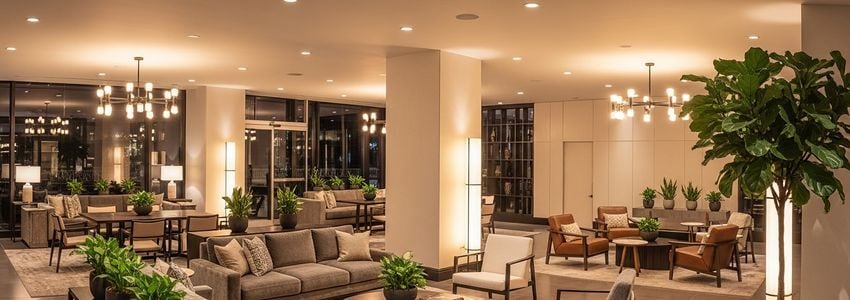
Aloft Hotels Franchise Loan: The Complete Financing Guide for Aloft Hotels Franchise Owners
Aloft Hotels by Marriott represents one of the most compelling franchise opportunities in the select-service hotel segment, combining Marriott International's global distribution power with a lifestyle-driven brand built for the modern traveler. But launching or acquiring an Aloft Hotels property requires substantial capital, and understanding your financing options is the critical first step. This complete guide covers everything franchise investors need to know about Aloft Hotels franchise loans, costs, qualification requirements, and the lending products best suited for this brand.
In This Article
What Is Aloft Hotels?
Aloft Hotels was launched in 2008 by Starwood Hotels and Resorts as a design-forward, select-service brand targeting the next generation of business and leisure travelers. When Marriott International acquired Starwood in 2016 in a landmark $13.6 billion deal, Aloft became part of the world's largest hotel company, gaining access to the Marriott Bonvoy loyalty program, one of the most powerful travel rewards ecosystems on the planet with over 200 million enrolled members. Today, Aloft operates more than 300 properties across 50 countries, with robust pipeline growth across North America, Europe, and Asia-Pacific.
The brand positions itself as an "urban-inspired" lifestyle hotel concept that appeals to tech-savvy millennials and Gen Z travelers who want more than a standard hotel room. Signature elements include the WXYZ bar, an open-concept social lounge that anchors each property's lobby experience, loft-style guest rooms with soaring nine-foot ceilings, keyless mobile entry, and strong Wi-Fi infrastructure built for remote workers. This differentiated product consistently commands RevPAR premiums of 10 to 15 percent over comparable limited-service competitors in its markets, making it an attractive investment for experienced hospitality investors looking for a brand with genuine pricing power. The combination of Marriott's distribution, Bonvoy's demand generation, and Aloft's lifestyle positioning creates a compelling franchise opportunity in an increasingly competitive hotel landscape.
Franchise Costs and Investment
Understanding the full scope of Aloft Hotels franchise costs is essential before approaching any lender. The total investment varies considerably depending on whether you are pursuing new construction, converting an existing property, or acquiring an operating hotel. New-build Aloft properties in primary and secondary markets typically require a total project investment ranging from $15 million to $40 million or more, with construction costs running approximately $130,000 to $175,000 per key. The initial franchise fee is approximately $75,000, a relatively modest entry point given the scale of the overall investment. Ongoing royalty fees are typically 5 percent of gross rooms revenue, with a marketing and program fee of approximately 2 percent. These fees fund Marriott's centralized reservation systems, Bonvoy loyalty program operations, and national marketing initiatives.
Beyond the franchise fee and royalties, investors must account for land acquisition (typically $2 million to $8 million in most markets), furniture, fixtures, and equipment (FF&E) costs of $8,000 to $15,000 per key, pre-opening expenses including staffing and training ($300,000 to $600,000), and a working capital reserve of at least $500,000 to $1.2 million to cover the ramp-up period before the hotel reaches stabilized occupancy. Marriott's Franchise Disclosure Document requires franchisees to demonstrate minimum liquid capital of $2 million or more and a net worth of at least $5 million, though lenders will often apply their own more stringent financial requirements depending on project size and market. Understanding the full capital stack from day one allows franchisees to approach lenders with a complete and credible project plan.
Ready to Finance Your Aloft Hotels Franchise?
Get fast, flexible hotel franchise financing from the #1 business lender in the U.S. No obligation - apply in minutes.
Apply Now ->Financing Options for Aloft Hotels Franchise Owners
Aloft Hotels franchise financing almost always involves layering multiple loan products to cover the full project cost. No single loan type covers every component of a large-scale hospitality investment, so successful franchisees build a capital stack that combines primary debt with subordinate financing and equity as appropriate. The most relevant financing options for Aloft investors include SBA 7(a) loans, SBA 504 loans, conventional commercial real estate loans, construction-to-permanent financing, equipment financing for FF&E, working capital loans, and bridge loans for acquisitions requiring speed to close.
SBA 7(a) Loans: The SBA 7(a) loan program is the most flexible government-backed option for hotel franchise financing. It supports up to $5 million in guaranteed funding with loan terms up to 25 years for real estate components and 10 years for working capital. The government guarantee reduces lender risk, enabling borrowers to access more favorable rates and lower down payments than conventional commercial loans. For Aloft projects, the 7(a) works well for property conversions, smaller acquisitions, FF&E financing, and working capital as part of a larger project stack. Interest rates typically run at Prime plus 2.25 to 2.75 percent, with down payment requirements of 10 to 20 percent. According to the U.S. Small Business Administration, hotel projects consistently rank among the top industries utilizing SBA lending programs, reflecting strong lender confidence in established franchise brands.
SBA 504 Loans: The SBA 504 program is purpose-built for fixed assets including commercial real estate and major equipment. It operates through a three-party structure: a conventional lender funds 50 percent of the project, a Certified Development Company (CDC) provides 40 percent through SBA-backed debentures, and the borrower contributes just 10 percent equity. For owner-occupied Aloft properties with total project costs exceeding $5 million, the 504 offers fixed interest rates that are typically 100 to 150 basis points below comparable conventional commercial rates, potentially saving hundreds of thousands of dollars in interest over a 20-year term.
Commercial Real Estate and Construction Loans: New-build Aloft projects require construction-to-permanent financing that funds the build phase with interest-only draws, then converts to long-term permanent debt upon stabilization. Loan-to-cost ratios typically range from 60 to 75 percent. Commercial real estate financing from hospitality-specialized lenders who understand brand performance metrics, RevPAR trends, and STR data can underwrite deals with greater speed and accuracy than generalist banks. As Forbes has reported, branded hotel financing continues to attract institutional lenders who value the predictable revenue structures and brand support inherent in franchise agreements with major hospitality groups.
Equipment Financing: Equipment financing provides a dedicated funding source for FF&E, including hotel furniture, commercial kitchen equipment, technology systems, and lobby fixtures. Structuring FF&E as a separate equipment loan often allows shorter repayment terms of 5 to 7 years, aligned with the useful life of the assets, while preserving the primary real estate loan capacity for the property itself.
Bridge Loans: When an existing Aloft property comes to market and deal speed matters, bridge financing allows qualified buyers to close in as few as 10 to 21 days before arranging permanent debt. Bridge loans carry higher interest rates (typically 8 to 12 percent) on short terms of 12 to 24 months, but preserve competitive position in fast-moving transactions.
Working Capital Loans: Working capital loans and business lines of credit address the ramp-up period between opening and stabilized occupancy, covering payroll, inventory, and operating expenses while the hotel builds its revenue base. Planning for working capital financing upfront prevents cash flow crises in the critical first 18 months of operation.
How Crestmont Capital Helps Aloft Hotels Franchise Owners
Crestmont Capital was founded in 2015 with a focused mission: to help American business owners and entrepreneurs access the capital they need to grow. Since then, we've earned the distinction of being rated the number one business lender in the United States, funding hundreds of millions of dollars in loans across a wide range of industries, including hospitality. Our team has deep experience structuring hotel franchise financing, and we understand the unique complexity of Aloft Hotels projects, from Marriott's franchise approval requirements to the layered capital stacks that large-scale hotel investments demand. We don't offer a one-size-fits-all solution. Instead, we work with each franchisee to identify the right loan products, right-size the capital structure, and navigate the application and underwriting process from pre-qualification through closing.
Whether you are pursuing your first Aloft Hotels franchise or adding a property to an existing portfolio, Crestmont Capital offers access to SBA loan programs, commercial financing, equipment financing, working capital solutions, and long-term lending options designed for hospitality investors. Our lending advisors can provide a preliminary assessment within days, outline the loan products available for your specific project, and connect you with lenders who specialize in branded hotel finance. We also assist with documentation preparation, which is one of the most time-consuming and error-prone parts of the SBA and commercial loan process for first-time hotel investors. As CNBC has covered, access to specialty hospitality lenders who understand the nuances of franchise agreements and brand performance metrics is increasingly critical for investors competing in today's hotel acquisition market. Crestmont Capital provides exactly that access. For additional context on how Marriott franchise financing works across the portfolio, see our related guide on Hampton Inn franchise loans.
Franchise Requirements and Qualifications
Qualifying for an Aloft Hotels franchise involves satisfying two parallel sets of requirements: Marriott International's franchisee approval criteria and the underwriting standards set by your chosen lender. Meeting one without the other is insufficient. Marriott requires prospective Aloft franchisees to demonstrate prior hospitality industry experience or engage a qualified third-party hotel management company with a track record operating Marriott-branded properties. Candidates must submit a detailed site and market analysis, obtain architectural and design approval from Marriott's development team, and commit to adhering to Aloft brand standards throughout the 20-year franchise term. Insurance coverage must meet Marriott's specifications, and all properties must pass pre-opening inspections before welcoming guests. Site approval is not automatic and can take several months, which is why many experienced franchisees begin the Marriott development process in parallel with their financing application rather than sequentially.
On the lender side, the core qualification criteria for Aloft franchise loans include a personal credit score of at least 680 for SBA programs (700 or higher is preferred for conventional commercial loans), liquid assets sufficient to cover the equity contribution plus a 6 to 12 month operating reserve, and a personal net worth that meets or exceeds the total loan amount for most conventional lenders. Debt Service Coverage Ratio (DSCR) requirements for stabilized hotel acquisitions typically range from 1.25x to 1.40x. For new-build projects, lenders underwrite against pro forma projections supported by a credible third-party hotel market feasibility study, which must demonstrate demand generators, competitive set RevPAR benchmarks, and realistic occupancy ramp-up assumptions. Documentation requirements typically include three years of personal and business tax returns, a current personal financial statement, the Franchise Disclosure Document (FDD) and signed franchise agreement, a detailed construction budget and timeline (for new builds), a hotel market feasibility study or appraisal, and a management agreement if you are using a third-party operator.
By the Numbers
Aloft Hotels Franchise - Key Statistics
$75K
Initial Franchise Fee
$10M+
Minimum Investment
5%
Royalty Fee (Gross Room Revenue)
300+
Properties Worldwide
Ready to Finance Your Aloft Hotels Franchise?
Get fast, flexible hotel franchise financing from the #1 business lender in the U.S. No obligation - apply in minutes.
Apply Now ->Real-World Financing Scenarios
To illustrate how Aloft Hotels franchise financing works in practice, consider three realistic scenarios that represent common investor profiles.
Scenario 1: Experienced Hotelier Converting an Existing Property. A seasoned hotel owner with two limited-service properties in the Southeast identifies an independent 130-room hotel in a growing suburban market that can be converted to the Aloft flag. The property requires $4.5 million in renovation and FF&E investment to meet brand standards. With a strong personal credit score of 730, $2.5 million in liquid assets, and a net worth exceeding $8 million, this investor qualifies comfortably for an SBA 7(a) loan. The final capital stack combines a $5 million SBA 7(a) loan covering the acquisition and renovation with a separate equipment financing line for FF&E, totaling $2.8 million in total SBA-related debt. The existing property's cash flow supports the debt service, and Marriott's brand conversion support accelerates the ramp-up to stabilized performance.
Scenario 2: New Investor Building from the Ground Up. A first-time hotel investor with a commercial real estate background secures a land parcel in a high-demand suburban corridor. The project: a new-build 120-room Aloft Hotel with an estimated all-in cost of $22 million. Because the investor lacks prior hotel operations experience, they contract with a national hotel management company specializing in Marriott brands. The capital stack includes a conventional construction-to-permanent loan from a hospitality-specialized lender covering 65 percent of project costs ($14.3 million), an SBA 504 component for the real estate portion, and $7.7 million in equity contributed by the investor and a passive equity partner. Underwriting is anchored by a hotel market feasibility study demonstrating strong demand from a nearby corporate campus and medical center. The management company agreement addressed the lender's concern about first-time hotel ownership. Construction closes and the hotel opens 22 months later to strong advance bookings through Marriott Bonvoy.
Scenario 3: Multi-Property Investor Expanding the Portfolio. An established hospitality investor with six branded hotels already in portfolio, including two Marriott-affiliated properties, identifies an operating Aloft in a Pacific Northwest market being sold by a family ownership group. The $18 million acquisition requires fast execution to compete against institutional buyers. The investor uses bridge financing to close the deal in 14 days, then refinances into a conventional commercial mortgage with a 10-year term and 25-year amortization within 90 days. The existing hotel's trailing 12-month revenue supports a DSCR well above the lender's 1.30x threshold, and the investor's demonstrated Marriott brand performance history accelerates the underwriting timeline significantly. The total financing process from bridge close to permanent placement takes four months.

Frequently Asked Questions
How much does an Aloft Hotels franchise cost?
The total investment for an Aloft Hotels franchise ranges from approximately $10 million to $40 million or more depending on whether you are converting an existing property, acquiring an operating hotel, or building from the ground up. The initial franchise fee is approximately $75,000. New construction projects in primary markets typically run $18 million to $35 million for a 120-room property when land, construction, FF&E, and pre-opening costs are included. Conversion projects are generally less capital-intensive.
What financing options are available for Aloft Hotels franchise owners?
Aloft Hotels franchise owners have access to SBA 7(a) loans (up to $5 million, ideal for conversions and acquisitions), SBA 504 loans (for owner-occupied real estate with fixed rates), conventional commercial real estate and construction loans, equipment financing for FF&E, working capital loans, and bridge financing for fast-closing acquisitions. Most large Aloft projects use a combination of these products to cover the full capital stack.
Can I get an SBA loan for an Aloft Hotels franchise?
Yes. SBA 7(a) and SBA 504 loans are widely used for hotel franchise financing, including Aloft Hotels properties. The SBA 7(a) provides up to $5 million in government-guaranteed funding with terms up to 25 years for real estate. The SBA 504 is well-suited for larger owner-occupied projects and offers below-market fixed interest rates. Qualified borrowers can sometimes combine both SBA programs to maximize government-backed terms across a larger share of project costs.
What are the net worth requirements for an Aloft Hotels franchise?
Marriott's Franchise Disclosure Document specifies minimum net worth requirements for Aloft Hotels franchisees, generally in the range of $5 million or higher. Beyond Marriott's requirements, lenders typically require personal net worth at or above total loan exposure. For a $15 million project, expect lenders to require demonstrated net worth of $5 million to $8 million including real estate, investment portfolios, and business equity.
How long does it take to get approved for hotel franchise financing?
SBA loans for hotel projects typically take 90 to 120 days from application to funding due to documentation requirements and SBA review. Conventional commercial loans can close in 60 to 90 days. Bridge financing can close in as few as 10 to 21 days. Beginning the pre-qualification process early and having complete documentation ready significantly reduces approval timelines.
What is the royalty fee for Aloft Hotels?
The royalty fee for Aloft Hotels is approximately 5 percent of gross rooms revenue. In addition, franchisees pay a marketing and program fee of approximately 2 percent of gross rooms revenue. These fees fund Marriott's centralized reservation platform, the Marriott Bonvoy loyalty program, national marketing campaigns, and ongoing brand support systems.
Does Marriott offer in-house financing for Aloft Hotels franchises?
Marriott International does not typically offer direct franchise financing to Aloft franchisees. Franchisees are responsible for securing their own financing through SBA lenders, commercial banks, hospitality finance companies, or private capital sources. However, Marriott does provide development support, brand standards documentation, and design assistance that helps streamline the lender's due diligence process.
What credit score do I need to finance an Aloft Hotels franchise?
Most lenders require a minimum personal credit score of 680 for SBA hotel financing. Conventional commercial lenders typically prefer 700 or higher. A stronger credit score improves your interest rate, negotiating position, and the speed of approval. Business credit history is also evaluated but generally carries less weight than personal credit for owner-operators.
Can I use equipment financing for hotel furniture and fixtures?
Yes. Equipment financing is an excellent tool for funding hotel FF&E including guest room furniture, commercial kitchen equipment, fitness center equipment, technology systems, and lobby fixtures. Structuring FF&E as a dedicated equipment loan allows shorter repayment terms aligned with asset useful life, preserving the primary real estate loan capacity. Some SBA lenders will also include FF&E within a 7(a) loan structure.
What is the difference between SBA 7(a) and SBA 504 for hotel financing?
The SBA 7(a) is the most flexible program, supporting up to $5 million across a broader range of uses including working capital, FF&E, and real estate, with variable or fixed interest rates. The SBA 504 is designed specifically for fixed assets like commercial real estate and major equipment, operates through a three-party structure (conventional lender, CDC, and borrower), and offers below-market fixed rates for terms up to 25 years. For large hotel projects, the 504 often provides the best long-term rate on the real estate component, while a 7(a) can supplement other project costs.
How much can I borrow for an Aloft Hotels franchise?
SBA 7(a) loans cap at $5 million per loan, though SBA 504 loans through CDCs can support larger amounts for real estate. Conventional commercial hotel loans typically cover 60 to 75 percent of total project cost, with no fixed ceiling, meaning larger deals can access substantially more capital. A $20 million Aloft project might carry $13 million to $15 million in primary debt with the balance covered by equity and subordinate financing.
Are Aloft Hotels profitable?
Aloft Hotels has demonstrated strong performance relative to its select-service peers, consistently achieving above-average RevPAR driven by its design-forward positioning and Marriott Bonvoy demand generation. Profitability depends heavily on market selection, capital structure, and operational execution. Properties in high-demand urban and suburban markets with experienced management teams have achieved strong returns. As with any hotel investment, EBITDA margins are typically 20 to 35 percent of revenue at stabilized occupancy.
What documents do I need to apply for hotel franchise financing?
Lenders typically require three years of personal and business tax returns, a current personal financial statement (within 90 days), the Franchise Disclosure Document and signed franchise agreement, a detailed construction budget and project timeline for new builds, a hotel market feasibility study or commercial appraisal, a management agreement if using a third-party operator, entity formation documents, and a business plan with financial projections covering at least five years of operations.
Can I finance an Aloft Hotels conversion project?
Yes. Converting an existing hotel property to the Aloft flag is one of the most common entry strategies for experienced operators. Conversion financing typically involves acquisition financing (if purchasing the property), a renovation loan or construction line covering brand-standard upgrades, and FF&E financing. SBA 7(a) loans are particularly well-suited for conversion projects because of their flexibility across multiple use categories within a single loan structure.
Why choose Crestmont Capital for Aloft Hotels franchise financing?
Crestmont Capital is the number one rated business lender in the United States, with a proven track record funding hotel franchise projects since 2015. Our team understands the specific requirements of Marriott-branded hotel financing, from SBA program eligibility to the complexity of layered capital stacks for large hospitality projects. We provide fast pre-qualification, access to specialized hospitality lenders, and expert guidance through every stage of the loan process from application to closing.
How to Get Started
Your Step-by-Step Path to Aloft Hotels Franchise Financing
- Assess your financial position. Review your credit score, liquid assets, and net worth against the qualification thresholds outlined in this guide. Identify any gaps and develop a plan to address them before applying.
- Engage Marriott's development team. Begin the franchise inquiry process early. Site approval and brand qualification take time, and running this process in parallel with financing saves months on your overall timeline.
- Commission a hotel market feasibility study. A credible, third-party study from a recognized hospitality consultant is required by lenders and will form the foundation of your financial projections and underwriting narrative.
- Identify and engage a hotel management company if you lack prior hospitality operations experience. A strong management agreement from a company with Marriott brand experience directly addresses one of the top underwriting risk factors for first-time hotel investors.
- Contact Crestmont Capital for pre-qualification. Our lending advisors can provide a preliminary assessment within days, outline the loan programs available for your project, and help you build the right capital stack before you commit to a development timeline.
- Assemble your advisory team. A commercial real estate attorney with hotel transaction experience, a CPA familiar with hospitality investing, and a hospitality management consultant are essential advisors throughout the financing and development process.
Start Your Hotel Franchise Journey
Get fast, flexible hotel franchise financing from the #1 business lender in the U.S. No obligation - apply in minutes.
Apply Now ->Conclusion
The Aloft Hotels franchise represents a genuine opportunity for experienced hospitality investors and ambitious first-time hotel owners willing to meet the brand's high standards and financial requirements. Backed by Marriott International's global distribution network and the Marriott Bonvoy loyalty platform, Aloft offers franchisees a differentiated product that commands above-market RevPAR in an increasingly competitive select-service landscape. The aloft hotels franchise cost is substantial, typically ranging from $10 million to $40 million depending on project type, but a well-structured capital stack combining SBA loans, commercial real estate financing, equipment financing, and working capital solutions can make the investment accessible for qualified investors with the right financial profile and market opportunity.
Crestmont Capital has the expertise, lender relationships, and track record to help you navigate the complex financing process from first inquiry to funded deal. Whether you are converting an existing property, building from the ground up, or acquiring an operating Aloft, our team will work with you to identify the right loan products, prepare a compelling application, and access the capital you need to move forward. Contact Crestmont Capital today to start your pre-qualification and take the first step toward owning an Aloft Hotels franchise.
Disclaimer: The information provided in this article is for general educational purposes only and is not financial, legal, or tax advice. Funding terms, qualifications, and product availability may vary and are subject to change without notice. Crestmont Capital does not guarantee approval, rates, or specific outcomes. For personalized information about your business funding options, contact our team directly.








