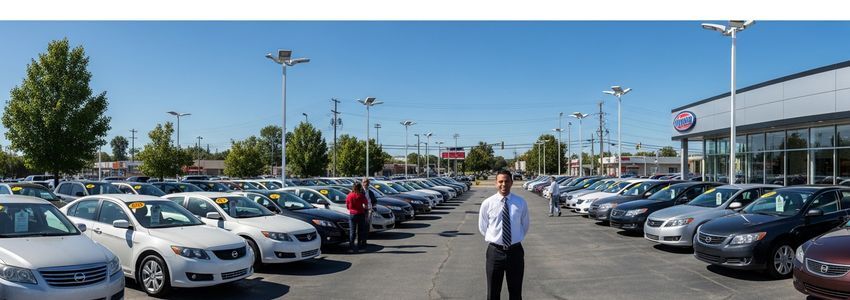
Running a used car dealership or independent car lot is capital intensive. You need to keep inventory stocked, cover payroll, upgrade equipment, fund marketing campaigns, and manage the inevitable gaps between vehicle purchases and sales. Automotive business loans give dealership owners and car lot operators the financial flexibility to do all of that without depleting personal reserves or slowing down growth. Whether you are looking for floor plan financing to stock vehicles, an equipment loan to upgrade your service bay, or a working capital line to bridge cash flow gaps, understanding your options is the first step toward smarter financing.
In This Article
- What Are Automotive Business Loans?
- Key Benefits for Auto Dealers
- How Automotive Business Financing Works
- Types of Automotive Business Loans
- Floor Plan Financing Explained
- Who Qualifies for Auto Dealer Loans
- Loan Type Comparison
- How Crestmont Capital Helps
- Real-World Scenarios
- Frequently Asked Questions
- How to Get Started
- Conclusion
What Are Automotive Business Loans?
Automotive business loans are commercial financing products designed specifically for businesses in the automotive industry. This includes used car dealerships, independent car lots, franchise dealerships, auto body shops, service centers, fleet operators, and vehicle rental companies. Unlike personal auto loans, which fund a consumer vehicle purchase, automotive business loans fund the business itself: inventory acquisition, working capital, equipment, expansion, and day-to-day operations.
The auto dealer financing landscape includes several distinct products. Floor plan financing, also called dealership floor plan financing, provides a revolving credit line that dealerships draw against each time they acquire a vehicle for their lot. Other products include traditional term loans, business lines of credit, equipment financing, and fast business loans that provide emergency capital when a revenue gap opens up unexpectedly.
According to data from the U.S. Census Bureau, there are more than 127,000 automobile dealers operating in the United States, generating over $1.2 trillion in annual revenue. The industry is heavily reliant on financing, both for end consumers and for the dealers themselves. Understanding how to leverage the right loan products can be the difference between a stagnant lot and a thriving dealership.
Industry Insight: According to Forbes, over 65% of independent auto dealers rely on third-party financing to maintain sufficient inventory levels. Access to the right automotive business loans directly determines how many vehicles a dealer can carry at any given time.
Key Benefits of Automotive Business Loans for Auto Dealers
Auto dealers and car lot owners face a unique set of financial challenges that general small business financing does not always address adequately. Automotive business loans are structured to match the specific cash flow patterns and capital requirements of dealership operations. Here is why they matter:
- Inventory flexibility: Floor plan lines of credit let dealers stock more vehicles without tying up operating capital in a single large purchase.
- Cash flow bridging: Vehicle sales are cyclical. A working capital loan or line of credit covers expenses during slower months so the business keeps running.
- Equipment upgrades: Service bays, lifts, diagnostic equipment, and detailing stations require ongoing investment. Equipment loans spread the cost over time.
- Marketing and advertising: Reaching buyers online and offline requires a real budget. A business line of credit gives you the flexibility to fund campaigns as needed.
- Expansion capital: Opening a second location, acquiring a competing lot, or upgrading your facility requires significant upfront capital that most dealers do not have sitting idle.
- Preserving personal assets: Business loans keep the dealer's personal finances separate from the dealership's capital needs, reducing personal financial risk.
- Building business credit: Responsibly using automotive business loans builds commercial credit history, improving future borrowing terms.
The benefits extend beyond simple access to cash. The right financing structure helps dealerships scale sustainably, invest in customer experience, and weather market downturns without sacrificing inventory or staff.
How Automotive Business Financing Works
Securing an automotive business loan follows a process similar to other commercial loans, with some industry-specific nuances. Here is a step-by-step overview of how the process typically works for dealers and car lot owners:
Step 1: Assess Your Financing Need
Before applying, identify exactly what you need funding for. Inventory replenishment through floor plan financing has different product requirements than an equipment purchase or working capital bridge. Knowing your need guides you toward the right product.
Step 2: Review Your Financials
Lenders will look at your business credit score, personal credit history, time in business, annual revenue, and existing debt obligations. Gather 3-6 months of bank statements, your most recent tax returns, and a current profit-and-loss statement before applying.
Step 3: Choose the Right Lender
Traditional banks offer lower rates but stricter qualifications and longer timelines. Alternative lenders like Crestmont Capital offer faster approvals, more flexible criteria, and products tailored to the auto dealer environment. SBA.gov also has resources for identifying SBA-backed options.
Step 4: Submit Your Application
Complete the application with your business and financial details. Many alternative lenders can process applications in 24-48 hours, compared to weeks or months for traditional bank loans.
Step 5: Review and Accept the Offer
Once approved, review the terms carefully. Look at the interest rate or factor rate, repayment schedule, any prepayment penalties, and collateral requirements before signing.
Step 6: Receive Funds and Deploy Capital
After acceptance, funds are typically disbursed within one to three business days. Put the capital to work in the area that drives the most return for your dealership.
Quick Guide
How Automotive Business Financing Works - At a Glance
Inventory, equipment, working capital, or expansion - know what you need before applying.
Gather bank statements, tax returns, and P&L statements to support your application.
Alternative lenders often approve in 24-48 hours with minimal paperwork requirements.
Funds arrive in 1-3 business days. Deploy capital for maximum dealer ROI.
Types of Automotive Business Loans
The auto dealer financing ecosystem includes several distinct loan types, each suited to different business needs. Understanding the differences helps you pick the right tool for each financial challenge your dealership faces.
1. Floor Plan Financing
Floor plan financing is a revolving line of credit specifically designed for vehicle inventory. The lender advances funds to purchase each vehicle, and as the dealer sells each vehicle, the advance is repaid. This product is the cornerstone of most dealership financing strategies. It allows dealers to carry more inventory than their cash position would otherwise support.
2. Working Capital Loans
Working capital loans provide a lump sum to cover day-to-day operating expenses: payroll, utilities, insurance, supplies, and other overhead costs. These are especially valuable during seasonal slow periods or after an unusually large inventory purchase has temporarily strained cash flow.
3. Business Lines of Credit
A business line of credit is a flexible revolving credit facility. You draw funds as needed, repay them, and draw again. This is ideal for dealerships with fluctuating monthly expenses or unpredictable inventory purchasing opportunities.
4. Equipment Financing
Service bays, vehicle lifts, diagnostic computers, detail equipment, and office technology all require significant investment. Equipment financing loans spread the cost of these assets over a defined term, making it easier to upgrade technology without a large cash outlay.
5. Commercial Vehicle Financing
Dealers who operate shuttles, transport vehicles, tow trucks, or delivery vehicles may need commercial vehicle financing to acquire or replace fleet assets. These loans use the vehicle as collateral, often resulting in competitive rates.
6. Short-Term Business Loans
Short-term business loans provide a lump sum with repayment structured over 3-18 months. These work well for specific one-time needs like a bulk inventory purchase, facility renovation, or emergency operating expense.
7. Small Business Loans
General-purpose small business loans can fund virtually any dealership need. With amounts ranging from $25,000 to several million dollars and repayment terms of 1-10 years, these loans offer flexibility for dealers who want a single, predictable payment structure.
Need Capital for Your Dealership?
Crestmont Capital offers fast, flexible automotive business loans for dealers and car lot owners. No obligation - apply in minutes.
Apply Now and Get Funded FastFloor Plan Financing: The Engine of Dealership Growth
Floor plan financing deserves its own deeper discussion because it is the most distinctive and commonly used financing product in the auto dealer world. Unlike most small business loans, floor plan financing is not a lump-sum disbursement. It functions more like an inventory-specific line of credit where the vehicles themselves serve as collateral.
Here is how dealership floor plan financing works in practice. A dealer with a $500,000 floor plan line can purchase vehicles up to that total value. When Vehicle A is purchased for $15,000, the lender pays the wholesale source directly. The dealer takes possession of the vehicle, lists it, and sells it. When the vehicle sells for $18,000, the dealer repays the $15,000 floor plan advance and keeps the $3,000 margin. Then the floor plan credit is available again for the next vehicle purchase.
Floor plan interest accrues daily on each vehicle's outstanding advance. This means that fast-turning inventory costs far less in interest than slow-moving vehicles. Dealers who manage turn time effectively can dramatically reduce their overall floor plan cost. According to CNBC, fast-turning used vehicle lots with 30-45 day average sales cycles pay substantially less floor plan interest than lots with 90+ day turn times.
Key features of floor plan financing include revolving availability, per-vehicle collateral, curtailment schedules that require partial paydown if a vehicle remains unsold beyond a defined period, and audit requirements where the lender periodically verifies that vehicles are physically present on the lot.
Pro Tip: Managing your vehicle turn time is the most effective way to reduce floor plan financing costs. A vehicle that sells in 30 days generates roughly one-third the interest cost of a vehicle that sits for 90 days. Price aggressively to move inventory fast and reinvest your floor plan credit in fresh units.
Who Qualifies for Automotive Business Loans?
Qualification criteria vary by lender and product, but here are the general benchmarks most automotive business lenders use when evaluating dealer applications:
Time in Business: Most lenders require at least 6-12 months of operating history. Some floor plan lenders prefer 2+ years. Newer dealers may find alternative lenders more accessible than traditional banks.
Annual Revenue: Minimum revenue thresholds typically range from $100,000 to $250,000 annually for working capital products and higher for larger floor plan lines. Your revenue demonstrates the dealership's ability to service the debt.
Credit Score: Personal credit scores of 600+ are generally considered for alternative lender products. Traditional banks often require 680+. Some lenders focus more on business performance than personal credit, making them accessible to dealers who have had personal credit challenges.
Inventory and Collateral: For floor plan financing, the vehicles themselves serve as collateral. For equipment loans, the equipment is the collateral. Unsecured working capital products may require a personal guarantee but no physical collateral.
Dealer License: Legitimate auto dealer financing requires a current dealer license in good standing. Lenders verify licensure as part of their underwriting process.
Business Bank Account: Having a dedicated business checking account demonstrates separation of personal and business finances, which lenders view favorably. It is also required for receiving funds.
Crestmont Capital works with dealers across the credit spectrum. If your profile is strong in revenue and business performance but your credit score is lower than ideal, we evaluate the full picture rather than a single data point.
Automotive Business Loan Comparison
Choosing the right loan type depends on your specific need. The table below compares the most common automotive business loan products to help you identify the best fit for your situation.
| Loan Type | Best For | Loan Amounts | Term Length | Speed to Fund |
|---|---|---|---|---|
| Floor Plan Financing | Vehicle inventory | $50K - $5M+ | Revolving | 2-4 weeks |
| Working Capital Loan | Operating expenses, payroll | $10K - $500K | 3-24 months | 1-3 days |
| Business Line of Credit | Flexible ongoing needs | $10K - $250K | Revolving | 1-5 days |
| Equipment Financing | Service bays, lifts, tools | $5K - $1M | 1-7 years | 2-5 days |
| Short-Term Business Loan | One-time capital needs | $5K - $500K | 3-18 months | 1-2 days |
| SBA Loan | Long-term expansion | $50K - $5M | 5-25 years | 30-90 days |
| Commercial Vehicle Loan | Transport, shuttle fleets | $15K - $500K | 2-7 years | 3-7 days |
By the Numbers
Automotive Business Loans - Key Statistics
127K+
Auto dealers operating in the U.S.
65%
Of independent dealers use floor plan financing
$1.2T
Annual auto dealer industry revenue (U.S. Census)
24hrs
Typical approval time with Crestmont Capital

How Crestmont Capital Helps Auto Dealers and Car Lot Owners
Crestmont Capital is rated the number one business lender in the United States, and our financing solutions are specifically designed for business owners who need fast, flexible access to capital. For auto dealers and car lot operators, we offer a range of products that address the full spectrum of dealership financing needs.
Our team understands the automotive industry's unique cash flow rhythms. We know that inventory turns are the lifeblood of a used car lot. We know that seasonal slow periods can strain even a healthy dealership. And we know that growth opportunities in this industry often require fast action. That is why we designed our application and approval process to deliver decisions in as little as 24 hours.
What Sets Crestmont Apart:
- No obligation application with no impact on your credit score at the inquiry stage
- Flexible qualification criteria that evaluate overall business health, not just credit scores
- Dedicated lending advisors who understand the automotive business environment
- Multiple loan products available through a single application
- Funding in as little as one business day after approval
- Loan amounts from $10,000 to several million dollars
Whether you need working capital to cover payroll during a slow quarter, equipment financing for a new alignment rack, or a fast business loan to capitalize on a bulk inventory opportunity, Crestmont Capital has a product designed for your dealership.
Our clients in the transportation and automotive space have also benefited from our experience with related industries. If you are looking to expand into fleet services or add commercial vehicle transportation to your business model, explore our insights on commercial vehicle loans for small business owners and business vehicle financing and leasing options.
Ready to Grow Your Dealership?
Join thousands of business owners who trust Crestmont Capital for fast, flexible financing. Apply today - no obligation, no pressure.
Get Your Free Quote TodayReal-World Scenarios: How Auto Dealers Use Business Loans
Understanding how other dealerships have used financing can help you identify opportunities in your own operation. Here are six real-world scenarios that illustrate the practical application of automotive business loans.
Scenario 1: Independent Used Car Lot Expands Inventory
A 5-year-old independent used car lot in the Southeast was turning about 40 vehicles per month with a 50-unit lot. The owner identified a wholesale auction opportunity to purchase 30 additional clean-title vehicles at below-market prices, but lacked the $210,000 cash to execute. He secured a working capital loan from Crestmont Capital within 48 hours, acquired the inventory, and sold all 30 units within 45 days - generating a net margin significantly above his usual monthly average. The loan cost him roughly $4,200 in fees, while the incremental profit exceeded $38,000.
Scenario 2: Dealership Upgrades Service Department
A franchise dealership in the Midwest had an aging service bay with outdated lifts and diagnostic equipment. This was causing service delays, reducing throughput, and frustrating customers. The service manager estimated the lost revenue from reduced bay capacity at $12,000 per month. The dealer secured a $95,000 equipment financing loan to install three new vehicle lifts and a modern diagnostic system. The upgrade paid for itself in less than eight months through increased service revenue and improved customer retention.
Scenario 3: Seasonal Cash Flow Bridge
A Florida used car dealer experienced predictable revenue dips every July and August as tourism declined and locals postponed major purchases. During these months, the dealership still carried $85,000 in monthly overhead: payroll, rent, insurance, and utilities. Rather than drawing down personal savings or putting off payments to vendors, the dealer established a $150,000 business line of credit with Crestmont Capital. During slow months, she drew $50,000-$70,000 and repaid it as October sales picked up. This preserved her personal finances while maintaining business relationships with employees and vendors.
Scenario 4: New Location Acquisition
A dealer running a profitable single-location used car lot identified a second location for sale in a neighboring town. The asking price for the existing inventory and lot lease was $380,000. The dealer had $100,000 in available cash but needed $280,000 more to execute the deal. He secured a combination of a small business loan and a floor plan line of credit through Crestmont Capital. Within 90 days of opening the second location, it was generating positive cash flow. Within 18 months, it was producing $45,000 per month in gross profit.
Scenario 5: Auto Body Shop Expansion
An auto body shop owner (related industry) was turning away body work because she lacked the spray booth capacity and frame-straightening equipment needed to accept larger collision jobs. A $175,000 equipment loan funded the installation of a downdraft spray booth and a frame machine. Monthly revenue increased from $85,000 to $140,000 within six months of the upgrade, with the loan fully paid down within two years. For similar strategies in related fields, our article on equipment financing for transportation routes explores similar capital deployment strategies.
Scenario 6: Dealership Weathers Economic Slowdown
During a period of rising interest rates in late 2023, a used car dealer saw customer financing approvals decline as buyers struggled to qualify for purchase loans. Vehicle sales slowed by 30% for four months, but fixed costs remained constant. Rather than laying off staff or depleting cash reserves, the dealer drew on a pre-existing business line of credit to maintain operations. When the market stabilized and sales recovered, the business emerged intact with its team in place and inventory fully stocked - ready to capitalize on the rebound.
Frequently Asked Questions
What are automotive business loans used for?
Automotive business loans are used to fund vehicle inventory (floor plan financing), cover operational expenses, purchase or lease equipment for service departments, finance new locations, bridge seasonal cash flow gaps, fund marketing campaigns, and support general business growth. The specific use depends on the loan type selected.
What is floor plan financing and how does it work?
Floor plan financing is a revolving line of credit that allows dealerships to purchase vehicles for their lot. The lender pays the vehicle source directly. Each vehicle advance accrues daily interest. When the dealer sells the vehicle, they repay the advance. The credit then becomes available for the next vehicle purchase. Floor plan lines can range from $50,000 to several million dollars depending on the dealership's size and credit profile.
How do I qualify for auto dealer loans?
Typical qualification criteria include at least 6-12 months in business, annual revenue of $100,000 or more, a personal credit score of 580+ (with better terms above 650), a valid dealer license in good standing, a business bank account, and documented monthly cash flow. Alternative lenders like Crestmont Capital evaluate the full picture, making them more accessible for dealers with non-traditional credit profiles.
How fast can I get funded with an automotive business loan?
Funding speed depends on the lender and loan type. Alternative lenders like Crestmont Capital can typically approve applications in 24-48 hours and fund within 1-3 business days. Traditional banks and SBA loans take significantly longer, often 30-90 days. Floor plan financing has longer setup times due to dealer license verification and physical lot audits, typically 2-4 weeks from application to first draw.
Can I get an automotive business loan with bad credit?
Yes, it is possible to obtain automotive business loans with less-than-perfect credit. Alternative lenders place more weight on business performance metrics like monthly revenue, bank deposits, and cash flow consistency than on personal credit scores alone. A dealer generating $300,000+ in monthly sales with a 560 credit score may qualify for products that a bank would decline outright. Expect higher rates and shorter terms with lower credit scores.
What is the difference between floor plan financing and a business line of credit?
Floor plan financing is vehicle-specific - each draw corresponds to a specific unit on the dealer's lot, and that vehicle serves as collateral. A business line of credit is general-purpose, with no vehicle collateral requirement. Floor plan lines are typically larger and carry lower rates because the collateral is clear. Business lines of credit are more flexible and accessible for dealers who need general operating capital rather than inventory-specific financing.
Do I need collateral to get an auto dealer loan?
It depends on the product. Floor plan financing uses vehicles as collateral. Equipment loans use the financed equipment as collateral. Commercial vehicle loans use the vehicles. Working capital loans and business lines of credit are often unsecured, meaning no physical collateral is required, though a personal guarantee is typically requested. Unsecured products tend to carry slightly higher rates to compensate for the lender's increased risk.
What documents do I need to apply for automotive business financing?
Standard documentation includes 3-6 months of business bank statements, your most recent 1-2 years of business tax returns, a current profit-and-loss statement, your dealer license, a valid government-issued ID, and basic business information (legal entity name, EIN, business address). Some lenders may request a business plan or inventory schedule for larger loan amounts.
How much can I borrow for my car dealership?
Loan amounts depend heavily on your dealership's annual revenue, credit profile, time in business, and the specific product. Working capital loans typically range from $10,000 to $500,000. Floor plan lines can reach $5 million or more for established dealers with strong inventory turn records. Equipment loans typically range from $5,000 to $1 million. The best approach is to apply and let the lender assess your specific situation to determine the maximum available amount.
What interest rates can I expect on automotive business loans?
Interest rates vary significantly based on product, creditworthiness, time in business, and lender type. SBA loans typically carry rates from 6-12%. Traditional bank term loans range from 5-15%. Alternative lender working capital products can range from 15-50% APR equivalent, depending on risk profile. Floor plan rates are often tied to prime rate plus a margin, currently in the 8-15% range for established dealers. Always compare the total cost of capital, not just the stated rate.
Can a new dealership get floor plan financing?
New dealerships can access floor plan financing, though it is more challenging than for established dealers. Most floor plan lenders prefer at least 12 months of operating history and a demonstrated sales track record. New dealers with strong personal credit and adequate capital reserves may qualify for smaller floor plan lines to get started. As the business builds its financial history, larger lines become accessible. Alternative working capital products are often more accessible for new dealers than traditional floor plan lines.
Are SBA loans a good option for auto dealers?
SBA loans can be excellent for established dealerships seeking long-term financing for real estate acquisition, major facility renovations, or large equipment purchases. According to SBA.gov, their loans offer some of the most competitive terms available to small businesses. However, the lengthy application and approval process (often 60-90 days) makes SBA loans poorly suited for time-sensitive inventory purchases or urgent working capital needs. Use SBA loans for long-term growth investments, not short-term operating needs.
How does dealership floor plan financing affect my credit?
Floor plan financing facilities are typically reported to commercial credit bureaus like Dun & Bradstreet and Experian Business. Responsible management, including making timely curtailment payments and maintaining clean pay-off history, builds positive business credit. Late payments or defaulting on floor plan obligations can significantly damage your business credit profile and your ability to access future financing. Managing your floor plan line responsibly is one of the most effective ways to build commercial credit history.
Can I use a business loan to open a second car lot?
Yes, business expansion loans are specifically designed for this purpose. A dealer can use a term loan or working capital loan to cover the initial inventory, lease deposit, facility improvements, staffing, and marketing costs associated with opening a second location. Lenders will evaluate the profitability of your existing location as evidence of your ability to replicate success. Bloomberg research on dealership expansion suggests that second locations with proper financing have significantly higher success rates than those launched on thin capital.
What is the best automotive business loan for a small used car dealer?
For a small used car dealer, the best starting point is typically a combination of products: a modest floor plan line for inventory acquisition and a business line of credit for operational flexibility. A floor plan line of $100,000-$300,000 allows a small dealer to carry 15-25 vehicles at any given time. A $50,000-$100,000 line of credit covers cash flow gaps and unexpected expenses. As the business grows and demonstrates consistent sales performance, both facilities can be increased to support expansion.
How to Get Started
Visit offers.crestmontcapital.com/apply-now and complete our quick application in minutes. No obligation, no hard pull at the inquiry stage.
A Crestmont Capital advisor who understands the auto dealer business will review your application, discuss your financing options, and recommend the best product for your situation.
We provide transparent terms with no hidden fees. Review your loan offer carefully, ask questions, and accept only when you are confident the terms work for your dealership.
Funds arrive in as little as one business day. Buy inventory, upgrade equipment, fund operations, or execute your growth plan without delay.
Your Dealership Deserves Better Financing
Stop letting capital constraints limit your inventory, your team, or your growth. Crestmont Capital is here to help you move faster, stock more, and earn more.
Apply for Automotive Business Loans NowConclusion
Automotive business loans are not just financial products - they are strategic tools that determine how fast a dealership can grow, how much inventory it can carry, and how well it can weather the inevitable challenges of the auto industry. From floor plan financing that keeps vehicle lots fully stocked to working capital loans that bridge seasonal gaps, the right financing structure unlocks potential that would otherwise remain dormant.
The most successful auto dealers and car lot owners in the country treat capital access as a competitive advantage. They secure their floor plan lines before they need them, maintain business lines of credit for unexpected opportunities, and use equipment financing to continuously improve their service capabilities. They do not wait until they are in a cash crisis to seek funding - they build their financing relationships proactively and deploy capital strategically.
Crestmont Capital exists to give independent dealers and franchise operators alike the same financing advantages that larger organizations take for granted. With fast approvals, flexible qualification criteria, and products designed for the automotive industry's unique rhythms, we are ready to help your dealership reach its next level. If you are ready to explore your automotive business loan options, the first step is simply applying - and that takes less than five minutes.
Disclaimer: The information provided in this article is for general educational purposes only and is not financial, legal, or tax advice. Funding terms, qualifications, and product availability may vary and are subject to change without notice. Crestmont Capital does not guarantee approval, rates, or specific outcomes. For personalized information about your business funding options, contact our team directly.