(800) 949-0401 Apply Now
Tire shop business loans give independent tire retailers, multi-location tire chains, mobile tire services, and truck/fleet tire dealers the capital to purchase inventory, upgrade equipment, manage seasonal cash flow, and expand operations. Whether you need to stock up on inventory before the spring or fall tire-change rush, finance a new tire mounting machine and wheel balancer, cover payroll during slower months, or open a second location, Crestmont Capital provides tire shop financing from $25,000 to $500,000 — with approvals as fast as 24 hours.
The tire industry occupies a durable and essential place in the American economy. Tire replacement is not optional — worn or damaged tires are a safety and legal issue, and no vehicle on the road can go indefinitely without tire service. Unlike many retail categories that can be disrupted by e-commerce or shifting consumer behavior, tire installation and maintenance requires a physical service provider. Tires must be mounted, balanced, and installed by trained technicians with specialized equipment. That physical service requirement is the foundation of the independent tire shop's competitive moat and its appeal as a business loan candidate.
According to the Tire Industry Association (TIA), the U.S. tire market generates over $40 billion in annual retail sales, with replacement tire demand driven primarily by the approximately 290 million registered vehicles on American roads. Vehicle miles traveled (VMT) — the primary driver of tire wear — has trended upward for most of the past two decades and recovered strongly following the COVID-19 VMT dip. Every mile driven is a mile closer to a tire shop visit.
Despite the durability of tire shop revenue, tire businesses face real capital challenges. High inventory carrying costs — a tire shop must maintain hundreds of SKUs across passenger, light truck, performance, SUV, and specialty categories — demand ongoing capital that banks often fail to provide. Equipment purchases (tire mounting machines, wheel balancers, nitrogen inflation systems, wheel alignment equipment, TPMS tools) represent significant upfront investments. Seasonal peaks in spring (winter-to-all-season changeovers) and fall (all-season-to-winter changeovers) require inventory buildup capital weeks before the revenue arrives. These challenges create persistent financing gaps that Crestmont Capital is uniquely positioned to fill.
This guide covers the complete landscape of tire shop business loans — from the specific financial challenges facing tire retailers to every loan type available, qualification requirements, rates, real funding scenarios, and step-by-step application guidance. Whether you are an established independent tire dealer looking to grow or a newer shop managing cash flow, this resource will help you understand your financing options and find the right capital for your business.
Running a profitable tire shop requires managing a set of financial dynamics that are distinct from most other retail or service businesses. Understanding these challenges is the first step toward finding the right financing solution.
Inventory is the lifeblood of a tire shop — and one of its greatest capital burdens. To serve customers effectively, an independent tire retailer must carry hundreds of tire SKUs spanning multiple brands, rim sizes (14-inch through 22-inch+ for consumer vehicles), load ratings, speed ratings, and tread patterns for passenger cars, light trucks, SUVs, performance vehicles, and specialty applications. A well-stocked mid-size tire shop may carry $80,000–$200,000 in tire inventory at any given time.
Unlike grocery stores or electronics retailers that turn inventory in days or weeks, tire shops carry certain slow-moving SKUs (specialty sizes, winter tires outside of winter markets) for weeks or months before they sell. The capital tied up in that unsold inventory is capital that cannot be used for payroll, equipment maintenance, or marketing. When a customer needs an uncommon size and you don't have it in stock, you lose the sale to a competitor who does. This tension between stocking depth and working capital efficiency is the defining financial challenge of the tire retail business — and it's why inventory financing is one of the most valuable loan products for tire shop owners.
Modern tire service requires a significant investment in specialized equipment. A fully equipped tire service bay requires: a tire mounting machine (changer), a wheel balancer, a nitrogen inflation system, TPMS (tire pressure monitoring system) programming tools, a wheel alignment machine, lifts, and various hand tools and accessories. These systems are not optional — they define the speed, accuracy, and service quality that determine customer satisfaction and repeat business.
Entry-level tire changers and balancers cost $5,000–$15,000 apiece. Professional-grade equipment from leading brands like Hunter, Snap-on, or Giuliano costs $8,000–$25,000 per machine. A full wheel alignment system — essential for any shop performing alignment services and capturing the associated revenue — costs $15,000–$50,000 depending on configuration and whether it includes a four-wheel computerized alignment rack. A single-bay equipment package for a new tire service bay can total $35,000–$100,000. Multi-bay shops and expanding operations face corresponding multiples of these costs.
Tire demand in the U.S. is heavily influenced by seasonal driving patterns. The two most significant demand peaks are the spring changeover season (March–May), when drivers in northern and transitional-climate markets switch from winter/snow tires to all-season or summer performance tires, and the fall changeover season (October–November), when the reverse changeover occurs. During these peak periods, a well-positioned tire shop may do 2–3x its off-peak volume, and the inventory required to serve that demand must be purchased and stocked weeks before the revenue arrives.
The cash flow gap between inventory purchase and peak revenue collection can be $40,000–$100,000 for an established shop, and managing that gap with a business bank account alone is difficult. Shops that cannot finance their pre-season inventory buildup miss the peak season — either running out of popular sizes at the height of demand or turning away customers to competitors with deeper stock. Seasonal working capital financing closes this gap and ensures tire shops are positioned to capture maximum revenue during their most profitable months.
Wheel alignment is one of the highest-margin service categories in the tire business. A four-wheel computerized alignment service takes 45–90 minutes and generates $80–$150 in revenue with relatively low parts cost — the value is primarily in the skilled technician's time and the precision of the alignment system. For tire shops without alignment capability, every tire installation that leads to alignment wear is a referral to a competitor. Investing in a quality alignment system not only captures that alignment revenue but also differentiates the shop as a full-service tire and automotive destination.
However, a quality four-wheel alignment rack — such as the Hunter Hawkeye Elite or equivalent — represents a significant capital investment: $15,000–$50,000 installed, depending on specifications. Add the pit, lift, or surface rack infrastructure, and total alignment capability investment can reach $25,000–$65,000 for a well-equipped single-bay setup. For many independent tire shop owners, this investment is out of reach without equipment financing — leaving alignment revenue on the table for competitors who made the investment.
Tire shops typically purchase inventory from multiple distributors — national brands like Michelin, Bridgestone, Goodyear, Continental, and Pirelli, as well as value brands and private-label lines. Distributors offer varying payment terms: net-30, net-60, or floorplan arrangements for larger dealers. Managing these supplier payment timelines — ensuring invoices are paid within terms to maintain preferred-customer status and pricing — requires careful cash flow management. A working capital loan or business line of credit provides the liquidity to pay suppliers on time while waiting for retail revenue to collect.
Fast approvals. Equipment financing, inventory loans, and working capital for tire shops. $25K to $500K available.
Apply Now →Crestmont Capital offers multiple financing programs designed to address the specific capital needs of tire shop owners. Here are the primary tire shop financing options:
Equipment financing is purpose-built for the machinery and tools that make a tire shop function. From tire mounting machines and wheel balancers to alignment racks and nitrogen systems, equipment financing spreads the cost of major equipment investments over 24–72 months, preserving cash flow while giving you full use of the equipment from day one. The equipment itself typically serves as collateral, making approval more accessible and rates more competitive than unsecured alternatives. Multiple equipment items — changer, balancer, alignment rack, TPMS tools — can often be bundled into a single financing package. Equipment financing amounts from $10,000 to $500,000 are available for tire shop equipment.
Inventory financing provides the capital to purchase tire inventory without depleting working capital reserves. This is especially valuable for pre-season inventory buildups before spring and fall changeover peaks, for new shops establishing their initial SKU library, and for existing shops expanding into new tire categories (commercial, performance, run-flat). Inventory loans are sized to your inventory purchase volume — typically $25,000–$250,000 — and are repaid as the inventory sells. This matching of loan repayment to inventory turns is what makes inventory financing structurally appropriate for the tire business.
Working capital loans provide fast, flexible capital for operational needs: payroll, utilities, marketing, supplier payments, and bridging the gap between seasonal peaks. Working capital loans from Crestmont Capital fund within 24–48 hours with minimal documentation. For tire shop owners who need capital quickly — to pay a large supplier invoice, cover a slow-month payroll, or seize a bulk-purchase discount from a distributor — a working capital loan provides the liquidity without the multi-week bank application process. Amounts from $25,000 to $500,000 are available.
A business line of credit gives tire shop owners on-demand access to capital that revolves: draw what you need, repay as revenue comes in, and draw again. A line of credit is the most flexible working capital tool for managing the seasonal ups and downs of the tire business. Draw on the line in October to stock winter tires; repay through November-December as changeover revenue comes in. Draw again in February to prepare for spring season. Lines of credit from $25,000 to $500,000 are available for established tire shops. Unlike a term loan with a fixed draw and repayment schedule, a line of credit adapts to your cash flow needs in real time.
SBA 7(a) loans provide tire shop owners access to government-backed financing at competitive rates and long repayment terms. SBA loans are particularly well-suited for larger investments — purchasing a building, acquiring an established tire shop, or financing a significant equipment package with a long useful life. The SBA's official loan programs page details eligibility requirements; SBA 7(a) loans offer up to $5 million with terms up to 10 years for equipment/working capital and up to 25 years for commercial real estate. For tire shop owners with strong credit and 2+ years in business, SBA financing offers the lowest long-term cost of capital available in the market. See our small business loans page for more information on SBA-backed options.
| Loan Type | Amount Range | Best For | Rate Range | Term |
|---|---|---|---|---|
| Equipment Financing | $10K–$500K | Tire changers, balancers, alignment racks | 6–18% | 24–72 months |
| Inventory Financing | $25K–$250K | Pre-season stock, new SKUs, bulk buys | 8–22% | 6–24 months |
| Working Capital Loan | $25K–$500K | Payroll, supplier bills, cash flow gaps | 8–25% | 6–24 months |
| Business Line of Credit | $25K–$500K | Seasonal draws, flexible ongoing needs | 7–22% | Revolving |
| SBA 7(a) Loan | Up to $5M | Acquisition, building purchase, large expansion | Prime + 2.75–4.75% | Up to 10–25 years |
| Fast Business Loan | $25K–$500K | Urgent needs, 24-hr funding | 10–30% | 3–18 months |
Crestmont Capital evaluates tire shop business loan applications based on business financial metrics, credit history, time in business, and the specific loan type requested. Here's what lenders typically look for:
| Requirement | Equipment Financing | Working Capital / LOC | Inventory Financing | SBA Loan |
|---|---|---|---|---|
| Time in Business | 6+ months | 6+ months | 6+ months | 2+ years preferred |
| Annual Revenue | $150K+ | $100K+ | $150K+ | $300K+ |
| Personal Credit Score | 620+ | 600+ | 620+ | 650+ preferred |
| Monthly Bank Deposits | $12,500+ | $8,000+ | $12,500+ | $25,000+ |
| Business Bank Account | Required | Required | Required | Required |
| Collateral | Equipment (self-collateralizing) | Often unsecured | Inventory + business assets | Business assets + PG |
| Profitability | Helpful but not required | Helpful but not required | Helpful but not required | Required (documented) |
| Loan Program | Interest Rate Range | Typical Term | Funding Speed |
|---|---|---|---|
| Equipment Financing | 6–18% APR | 24–72 months | 3–7 days |
| Inventory Financing | 8–22% APR | 6–24 months | 5–10 days |
| Working Capital Loan | 8–25% APR | 6–24 months | 24–48 hours |
| Business Line of Credit | 7–22% APR | Revolving / 12 mo renewal | 3–7 days |
| SBA 7(a) Loan | Prime + 2.75–4.75% | Up to 10–25 years | 30–90 days |
| Fast Business Loan | 10–30% APR | 3–18 months | 24 hours |
Rates vary based on creditworthiness, loan amount, term length, and collateral. Contact Crestmont Capital for a personalized tire shop loan quote. All rates are subject to credit approval.
Complete Crestmont Capital's secure online application. Provide basic information about your tire shop — business name, annual revenue estimate, time in business, loan amount needed, and intended use of funds. No hard credit pull at the inquiry stage. The initial application takes approximately 5 minutes and can be completed from your phone or computer between service appointments.
Your Crestmont Capital advisor will guide you through document collection based on the loan type and amount. For working capital and inventory loans: typically 3–6 months of business bank statements. For equipment financing: a vendor quote for the equipment being financed. For SBA loans: 3 years of business tax returns, current P&L, balance sheet, and business plan. We provide a clear checklist — no guesswork on your end.
Our underwriting team reviews your application, revenue patterns, and business profile. Working capital and equipment loans are typically approved in 24–48 hours. SBA loans take 30–90 days. You receive a clear term sheet with all terms, rates, fees, and repayment schedule disclosed upfront — no surprises.
Review your loan offer with your advisor. Ask questions about the rate, term, prepayment, or any aspect of the offer. Accept when you're satisfied. Crestmont Capital's advisors work for you — our goal is the best terms available for your tire shop, not the fastest close at your expense.
Working capital and fast business loans deposit directly to your business bank account within 24–48 hours of final approval. Equipment financing funds upon vendor confirmation. SBA loans fund at closing. Your capital is deployed — now buy that inventory, order the new alignment rack, or prepare for your busiest season.
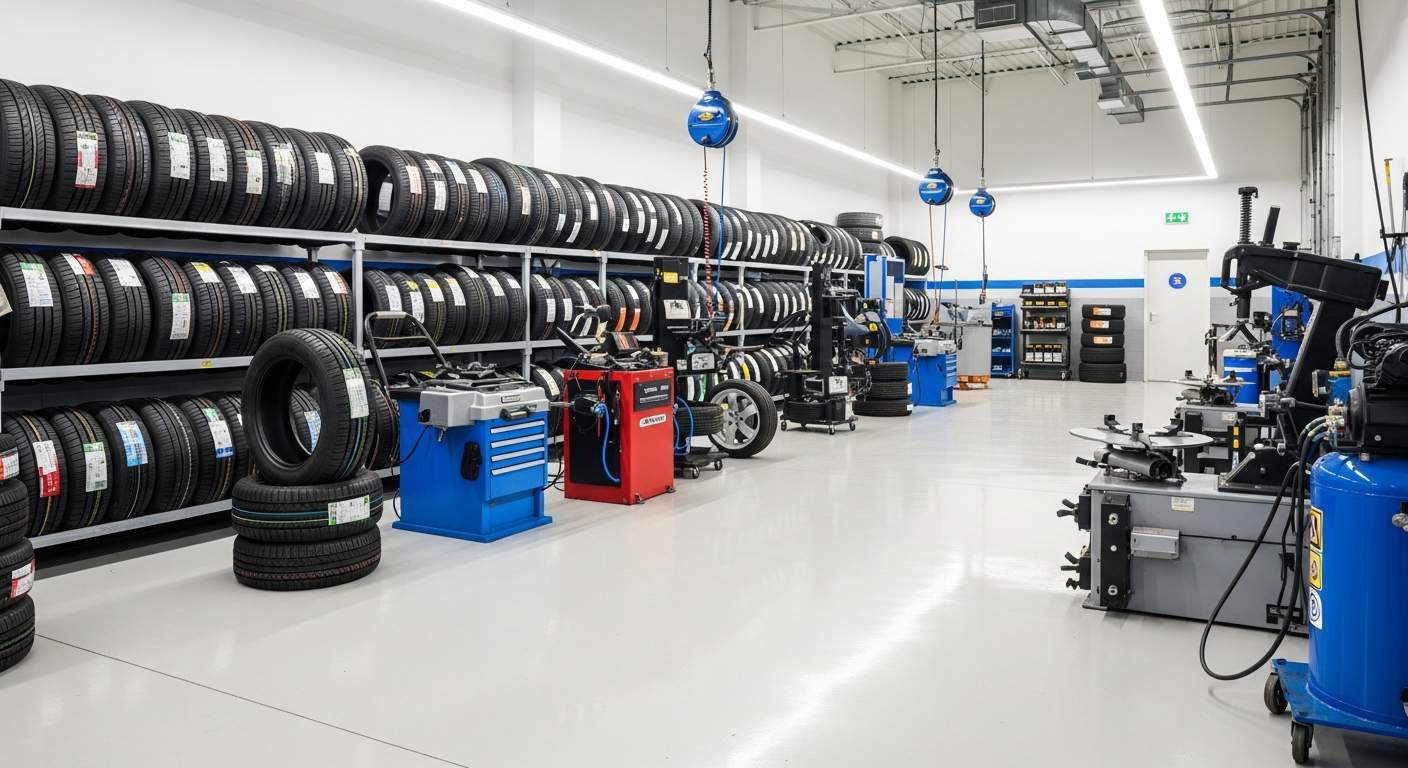
Tire businesses come in several distinct formats, each with different capital needs, revenue profiles, and financing strategies. Here's how Crestmont Capital structures financing for each tire shop type:
| Shop Type | Primary Financing Need | Typical Loan Size | Best Loan Products |
|---|---|---|---|
| Independent Tire Shop | Inventory buildup, equipment upgrades, working capital for seasonal gaps | $25K–$150K | Inventory financing, working capital, equipment financing |
| Multi-Location Tire Chain | New location buildout, fleet inventory, centralized equipment purchasing | $100K–$500K | Equipment financing, SBA loan, business line of credit |
| Mobile Tire Service | Service van/truck, portable mounting equipment, TPMS tools, inventory van stock | $25K–$100K | Equipment financing, fast business loan |
| Truck & Fleet Tire | Commercial tire inventory (heavy-duty sizes), hydraulic mounting equipment, service trucks | $50K–$350K | Inventory financing, equipment financing, working capital |
| Wholesale Tire Distributor | Large-scale inventory purchasing, warehouse expansion, delivery fleet | $100K–$500K | Inventory financing, business line of credit, SBA loan |
Sources: Tire Industry Association (tireindustry.org), SBA.gov, Forbes, CNBC, Crestmont Capital Research
These examples reflect the types of tire shop financing transactions Crestmont Capital structures for clients across the country.
An independent tire shop with $520,000 in annual revenue had been operating with aging, slow tire changers and a wheel balancer that required frequent recalibration — adding 15–20 minutes per service and frustrating technicians. The owner identified a Hunter TCX56 tire changer ($18,500), a Hunter GSP9700 Road Force Elite balancer ($22,000), a nitrogen inflation system ($4,500), and a full TPMS tool kit ($8,000) as the equipment needed to modernize the shop. The total package was $65,000. Crestmont Capital structured equipment financing over 60 months at a rate that translated to approximately $1,280/month. The new equipment increased throughput by an estimated 30%, allowing the shop to service more vehicles per day without adding staff — generating an additional $4,500–$6,500/month in revenue. The loan paid for itself in under three months of the new equipment's revenue gain.
A tire shop in the upper Midwest — serving a market where fall tire changeover is one of the highest-volume retail weeks of the year — needed to pre-purchase $85,000 in winter tire inventory by early September to have product on hand for the October–November rush. The shop's bank account, depleted by slower summer months, did not have the cash reserves to make the purchase. Crestmont Capital approved an inventory financing loan of $85,000 in 4 business days. The shop stocked its winter inventory in mid-September, serviced over 600 vehicles during the October–November changeover season, and repaid the inventory loan in full by December 1 from changeover revenue — retaining the remaining seasonal profit as working capital heading into the slower winter months.
A successful two-bay tire shop with $1.1 million in annual revenue identified a lease opportunity in an adjacent commercial corridor — a former quick-lube location with a three-bay garage already configured for automotive service. The owner needed capital to: complete the facility build-out and signage ($55,000), purchase new tire changers, balancers, and an alignment rack for all three bays ($95,000), stock initial tire inventory for the new location ($50,000), and maintain working capital reserves during the 4–6 month revenue ramp-up period ($20,000). Crestmont Capital structured a combination of equipment financing ($95,000 over 60 months) and a small business term loan ($125,000 over 36 months) totaling $220,000. The second location reached breakeven in month 5 and generated positive cash flow from month 6 onward.
A tire shop owner in the Southeast — where winter changeover demand is lower than northern markets — experienced a consistent January–February revenue dip (approximately $28,000–$32,000/month vs. peak months of $75,000–$90,000). The shop's lease, payroll, and supplier obligations ran approximately $38,000/month in fixed and semi-fixed costs, creating a cash flow shortfall during the two slowest months. Rather than missing supplier payments and risking pricing penalties, the owner secured a $45,000 working capital loan from Crestmont Capital in 24 hours, covered both slow months without missing a single payment, and repaid the full loan from March–April spring season revenue. The credit relationship with Crestmont Capital positioned the shop to access a line of credit for the following year's seasonal management.
| Lender Type | Loan Amount | Speed | Tire Industry Knowledge | Credit Flexibility |
|---|---|---|---|---|
| Crestmont Capital | $25K–$500K | 24 hrs–30 days | High — understands inventory & seasonal needs | Flexible (600+ FICO) |
| Traditional Banks | $100K–$5M | 30–90 days | Low (generic commercial underwriting) | Rigid (720+ FICO preferred) |
| SBA Lenders (via Crestmont) | Up to $5M | 30–90 days | Program-dependent | Moderate (650+ FICO) |
| Online Fintech Lenders | $5K–$250K | Same day–3 days | Low (automated revenue-based) | High flexibility, high rates |
| Equipment Vendors (lease) | Equipment value only | 3–7 days | Equipment-focused only | Equipment-collateral based |
| Tire Distributor Floorplan | Inventory value | Varies | Inventory-specific | Relationship-based |
Crestmont Capital is rated the #1 small business lender in the United States, and we bring that expertise to tire shop owners across every market and business size. Here's what sets us apart for tire shop business loans and tire shop financing:
Equipment loans, inventory financing, working capital, and lines of credit for tire shops. Apply in 5 minutes. No obligation. No hard credit pull.
Get Your Loan Quote →Tire shop business loans can be used for virtually any legitimate business purpose related to your tire shop operations. Common uses include: purchasing tire inventory (pre-season stocking, new tire categories, bulk purchases), financing equipment (tire changers, wheel balancers, alignment racks, nitrogen systems, TPMS tools, lifts), covering payroll and overhead during slower seasonal months, paying supplier invoices within terms, building out a new location or expanding existing facilities, purchasing a service truck or mobile tire van, funding a marketing campaign to attract fleet accounts, or any other tire shop business need. The specific loan product — equipment financing, inventory loan, working capital, or line of credit — should match the use of funds and desired repayment timeline.
Crestmont Capital provides tire shop business loans from $25,000 to $500,000. The specific amount available depends on your shop's annual revenue, time in business, personal credit history, and the loan program. Equipment financing is typically sized to the equipment cost. Working capital loans generally scale to 50–100% of average monthly revenue. Inventory financing is sized to the inventory purchase value. SBA loans can exceed $500,000 for qualified businesses with strong financial profiles. Contact Crestmont Capital for a personalized loan amount assessment based on your tire shop's specific revenue and business profile.
Working capital loans and fast business loans from Crestmont Capital fund within 24–48 hours of final approval — making them the fastest option for urgent tire shop capital needs. Equipment financing funds within 3–7 business days, pending vendor confirmation. Business lines of credit are typically established within 3–7 days and available to draw immediately upon activation. SBA loans require 30–90 days for full processing and closing. For tire shop owners who need capital quickly — before a seasonal peak, to take advantage of a bulk pricing discount, or after an equipment failure — Crestmont Capital's fast loan programs provide same-business-day to next-business-day funding.
Virtually all tire shop equipment qualifies for equipment financing through Crestmont Capital. This includes: tire mounting machines/changers ($5,000–$25,000), wheel balancers ($5,000–$22,000), wheel alignment racks and systems ($15,000–$50,000), nitrogen inflation systems ($2,000–$8,000), TPMS programming tools ($500–$5,000), vehicle lifts and hoists ($3,000–$15,000), tire storage racking systems ($2,000–$10,000), commercial truck tire equipment (hydraulic mounting machines, bead breakers for heavy-duty tires), and service vehicles (vans or trucks for mobile tire service). Multiple equipment items can often be bundled into a single financing package for one consolidated monthly payment.
Yes. Pre-season inventory financing is one of the most common tire shop loan products at Crestmont Capital. Inventory loans provide capital specifically to purchase tire stock before the spring or fall changeover seasons, ensuring you have the product available to capture peak-season demand without depleting your working capital reserves. Inventory loans are sized to the inventory purchase value ($25,000–$250,000+) and repaid as the inventory sells through peak-season revenue. Applying 4–6 weeks before your seasonal peak ensures funds arrive with enough lead time for inventory ordering and stocking.
Most tire shop business loans through Crestmont Capital require a minimum personal credit score of 600. SBA loans prefer 650+. Higher scores (680–720+) qualify for the most competitive rates and terms. Crestmont Capital works with a broad lender network that evaluates the full picture of your business — strong shop revenue and consistent bank statement deposits can offset a lower personal credit score in many underwriting scenarios. If your personal credit is below 650, prioritize lenders who focus on bank statement revenue analysis rather than credit-score-first underwriting.
A business line of credit is a revolving credit facility: you are approved for a maximum credit limit (e.g., $75,000), and you draw from it as needed. You only pay interest on the amount drawn, not the full limit. As you repay the drawn balance, those funds become available to draw again. For tire shops, a line of credit is ideal for managing seasonal cash flow: draw in the fall to purchase winter inventory or bridge slow-month payroll, repay from peak-season revenue, and draw again for the next cycle. Lines of credit from $25,000 to $500,000 are available for established tire shops. They typically renew annually subject to continued creditworthiness.
It depends on the loan product. Equipment financing uses the equipment itself as collateral — the tire changer, balancer, or alignment rack you're financing secures the loan, which typically eliminates the need for additional collateral and makes approval more accessible. Working capital loans are often unsecured, relying on your business revenue and creditworthiness rather than specific assets. Inventory loans may use the inventory as collateral. SBA loans typically require a personal guarantee and a general lien on business assets. For the majority of tire shop loan products available through Crestmont Capital's network, additional real estate or personal asset collateral is not required.
Yes, though options are more limited for businesses under 6 months old. Tire shops with at least 6 months of operating history and documented bank statement revenue have access to working capital loans, equipment financing, and inventory financing through Crestmont Capital's lender network. Newer shops (under 6 months) may have limited options outside of SBA startup loans, personal credit products, or equipment vendors offering direct financing programs. Strong personal credit (680+), a clear business plan, and demonstrated early revenue significantly improve approval odds for newer tire shops. Contact Crestmont Capital to discuss your specific situation and available options.
Document requirements vary by loan type and amount. For working capital and inventory loans (under $150,000): typically 3–6 months of business bank statements, a government-issued ID, and basic business information. For equipment financing: a vendor quote for the equipment being purchased. For larger amounts ($150,000+) and SBA loans: 3 years of business tax returns, current profit and loss statement, balance sheet, and (for SBA) a business plan. Your Crestmont Capital advisor will provide a specific document checklist for your loan type — the process is designed to be straightforward and not require an accountant's help for most tire shop applications.
Yes. Multi-location expansion is a common use of tire shop business loans. Crestmont Capital finances second and additional location buildouts covering equipment for all new bays (tire changers, balancers, alignment racks, lifts), initial inventory stocking for the new location, facility improvements (signage, flooring, customer waiting area), lease deposits, and working capital during the revenue ramp-up period. The existing location's revenue history and profitability typically qualify you for the expansion financing needed. SBA 7(a) loans are an excellent vehicle for expansion financing with long terms that keep monthly payments manageable while the new location grows revenue.
Prepayment terms vary by product and lender. Many working capital loans and equipment financing programs have no prepayment penalty or only a modest fee in the first 6–12 months. SBA 7(a) loans carry a prepayment fee of 1%–5% if repaid within the first 3 years. Business lines of credit typically have no prepayment penalty — you simply stop drawing and repay the outstanding balance. Crestmont Capital's advisors disclose all prepayment terms clearly before you sign. If early payoff or seasonal repayment is important to your cash flow strategy, your advisor can identify products with the most favorable prepayment terms.
Yes. While the best rates and terms require a 650+ personal credit score, tire shops with lower credit scores — down to 550 in some cases — can access working capital and equipment financing through Crestmont Capital's network of alternative lenders. These lenders evaluate your tire shop's actual revenue from bank statements rather than relying primarily on credit score. A tire shop depositing $40,000–$80,000/month consistently has a strong case for a working capital loan even with a credit score below 620. Higher loan amounts and better rates become available as your credit score improves. Contact Crestmont Capital to discuss what's available at your current credit profile.