
Smoke Shop Business Loans: Financing for Smoke Shops, Vape Stores & Tobacco Retailers
Smoke shop business loans provide independent tobacco retailers, vape store owners, CBD shops, hookah lounges, and specialty tobacco boutiques with the capital to stock high-margin inventory, navigate regulatory compliance costs, manage cash flow during seasonal peaks like 4/20 and the holiday season, fund new product launches, and grow their businesses. Whether you operate a single-location smoke shop, a multi-brand vape store, a CBD and hemp retail outlet, or a hookah lounge, Crestmont Capital provides smoke shop financing from $10,000 to $500,000 — with approvals as fast as 24 hours and flexible repayment structures built for specialty retail.
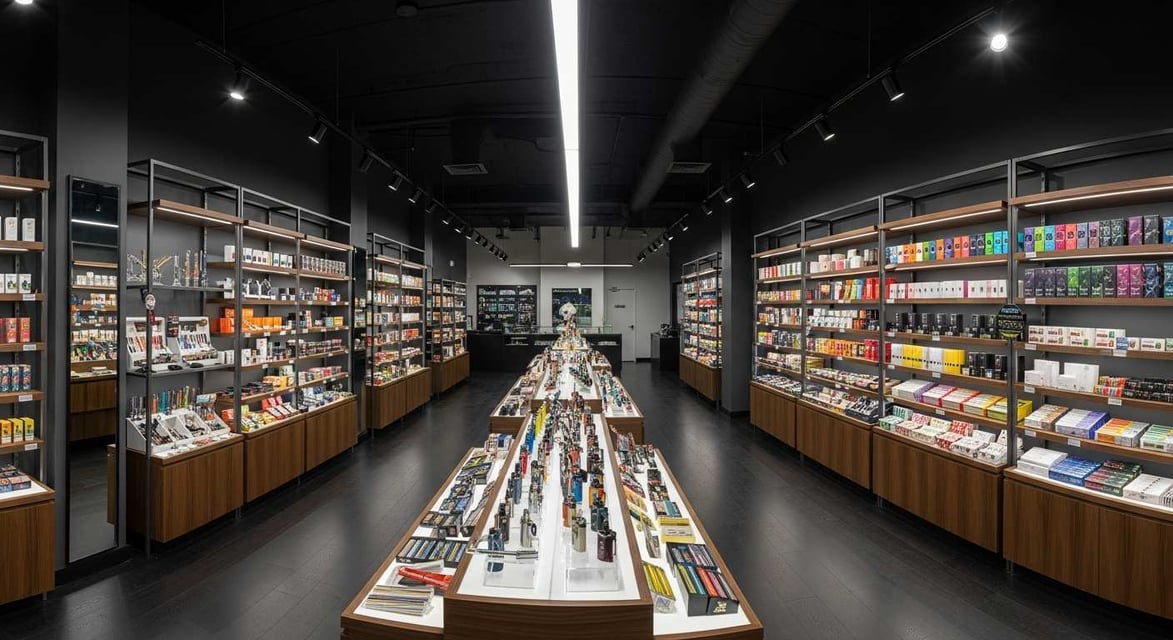
The smoke shop industry sits at the intersection of high-margin specialty retail and heavy regulatory oversight — a combination that makes financing simultaneously critical and difficult to obtain through traditional banking channels. Smoke shops and vape retailers carry products with strong consumer demand and healthy gross margins (typically 40–70% on accessories and vape products), yet they face an evolving regulatory landscape, age-verification requirements, restricted payment processing, and inventory carrying costs that tie up significant working capital. Add the explosive growth of new product categories — disposable vapes, CBD/hemp products, cannabis accessories, hookah products, and premium tobacco — and you have an industry where staying competitive requires frequent, capital-intensive inventory refreshes to meet shifting consumer demand.
According to the U.S. Small Business Administration, specialty retail businesses consistently rank among the top industries seeking working capital and inventory financing. The Tobacco Merchants Association (TMA) tracks the evolving regulatory and market landscape for tobacco and smoke shop retailers in the United States. Forbes and CNBC have reported on both the resilience of specialty tobacco retail and the growing complexity of the regulatory environment shaping the industry's future.
- Smoke Shop Industry Challenges & Why Financing Matters
- Seasonal Peaks — 4/20, Holidays & New Product Launches
- Types of Smoke Shop Business Loans
- Qualification Requirements
- Rates & Terms
- How to Apply — 5 Steps
- Financing by Smoke Shop Type
- Industry Infographic
- Real Financing Scenarios
- Lender Comparison
- 6 Tips for Getting Approved
- Why Crestmont Capital
- Frequently Asked Questions
Smoke Shop Industry Challenges & Why Financing Matters
Running a successful smoke shop requires navigating a unique set of business challenges that most general retailers — and most traditional lenders — do not fully understand. These challenges make access to flexible, industry-knowledgeable financing not just helpful but essential for growth and sustainability.
High-Margin but Capital-Intensive Inventory
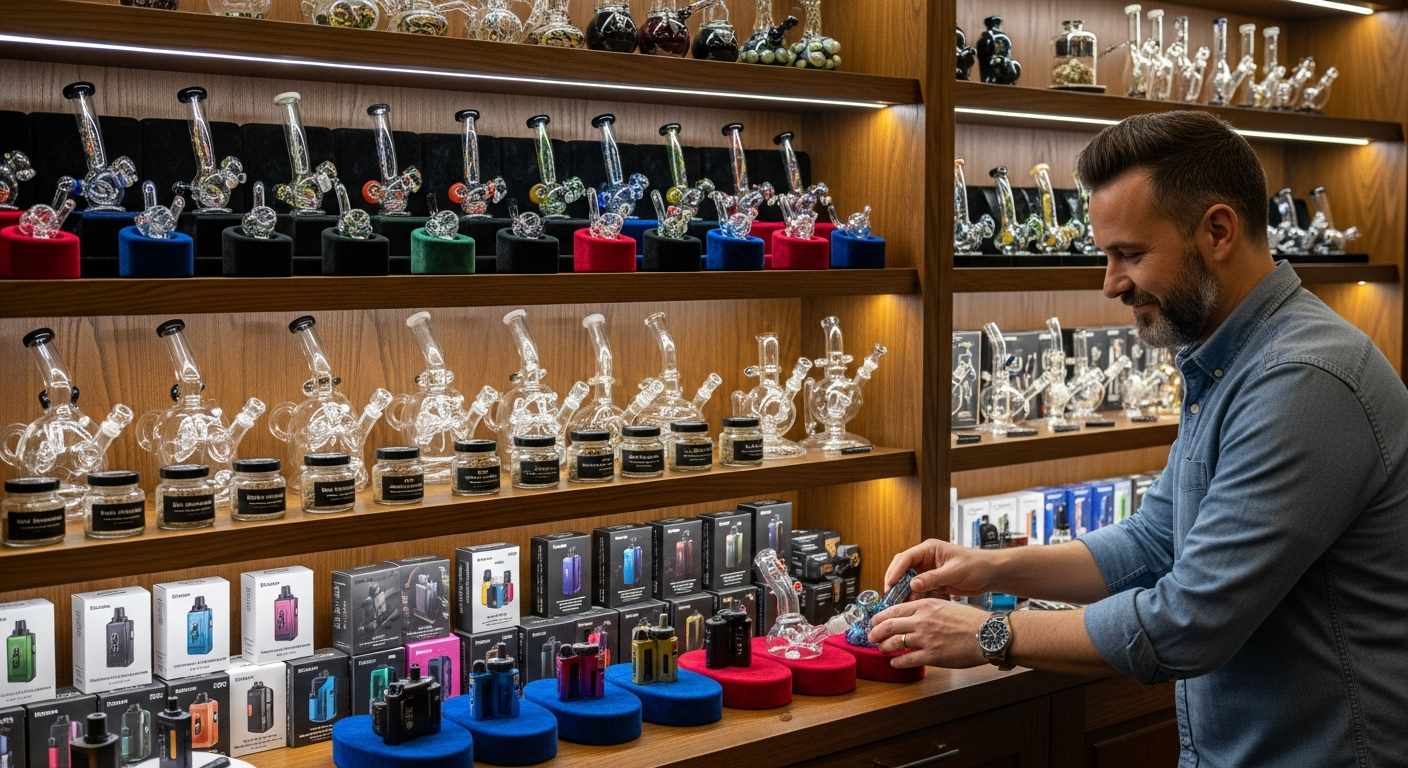
Smoke shops are among the highest-margin specialty retailers in America. Glass pipes, vape devices, premium rolling papers, hookahs, and accessories routinely carry gross margins of 50–70%. CBD and hemp products often achieve 60–80% gross margins. Even traditional tobacco products, while lower-margin, generate consistent volume with predictable reorder cycles. The challenge: maintaining a competitive product selection across all these categories requires substantial upfront inventory investment. A well-stocked smoke shop needs depth across hundreds of SKUs — multiple brands of vape devices (pod systems, mod kits, disposables), a comprehensive selection of accessories (grinders, rolling trays, cases, cleaners), glass pieces at multiple price tiers, and increasingly a robust CBD/hemp and alternative wellness section. The capital required to stock and replenish this inventory is ongoing, heavy, and cannot wait for end-of-month cash flow cycles.
Unlike clothing or food retail, smoke shop inventory is often sourced from multiple specialty distributors and import wholesalers — each with their own minimum order requirements, payment terms, and logistics timelines. A shop owner managing 20+ supplier relationships, each with $500–$5,000 minimum orders, quickly accumulates a six-figure inventory management challenge that demands reliable access to revolving capital.
Regulatory Compliance Costs
The regulatory environment for smoke shops has intensified significantly since the FDA's 2016 deeming rule extended its authority to cover e-cigarettes, hookah tobacco, cigars, and pipe tobacco. Subsequent Premarket Tobacco Product Application (PMTA) requirements have reshaped which vape products can legally be sold at retail. State and local regulations add additional layers: age verification requirements, flavor bans in various jurisdictions, marketing restrictions, and in some states, licensing requirements specific to tobacco and vape retailers. The Tobacco Merchants Association regularly publishes updates on the evolving regulatory landscape affecting smoke shop owners across all 50 states.
These compliance requirements translate directly into business costs: legal fees for monitoring regulatory changes and advising on compliance, potential product write-offs when a vape product is removed from the market following regulatory action, the cost of age-verification technology, and in some jurisdictions, annual permit or licensing fees. Smoke shop owners who underestimate ongoing compliance costs find themselves caught in cash flow squeezes when regulatory changes require product line adjustments.
Working Capital for New Product Launches
The smoke shop industry is one of the fastest-evolving retail categories in America. New product formats emerge frequently — disposable vapes went from a niche segment to a dominant product category within two years. Delta-8 THC products, THCA hemp flower, nicotine pouches, and heated tobacco devices are all examples of new categories that appeared quickly and required significant inventory investment by retailers who wanted to capture early-mover market share. Being the first smoke shop in a market to carry a hot new product drives customer acquisition and loyalty — but requires capital available on short notice to secure initial inventory before the product is widely available.
A business line of credit is the ideal tool for new product launch capital: draw when a hot new product arrives from a distributor, repay as it sells through, and redraw for the next opportunity. This revolving structure matches the continuous new-product cycle of a well-run smoke shop far better than one-time term loans.
Restricted Payment Processing and Banking Challenges
Many traditional payment processors and banks impose restrictions or outright refuse service to smoke shops, tobacco retailers, vape stores, and CBD/hemp retailers — treating them as high-risk merchant categories. This creates real operational challenges: higher payment processing fees (2.5–4%+ vs. 1.5–2.5% for standard retail), difficulty maintaining merchant accounts as processors exit the category, and in some cases banks declining to open or maintain business checking accounts. These challenges also affect access to traditional business financing, as banks that won't maintain a business checking account for a smoke shop certainly won't approve a business loan. Crestmont Capital understands these challenges and works with smoke shop owners to identify financing solutions that work within their operational reality.
Seasonal Peaks — 4/20, Holidays & New Product Launches
Smoke shop revenue follows a distinctive seasonal pattern driven by cannabis culture events, traditional retail holidays, and the timing of major new product launches from manufacturers. Understanding these peaks — and the inventory capital requirements they generate — is essential for a well-run smoke shop.
4/20 — The Annual Peak Event (Mid-April)
April 20th (4/20) is the single most significant sales event of the year for most smoke shops. The weeks leading up to 4/20 drive surging demand for glass pieces, rolling papers, grinders, cleaning supplies, accessories, and related products. Smoke shops that properly prepare for 4/20 — stocking deep inventory of their fastest-moving accessories, introducing seasonal or limited-edition products, and marketing aggressively to the 4/20 consumer base — can generate 2–4 weeks of normal sales revenue in the 3–5 days surrounding the holiday. Preparing for 4/20 requires an inventory investment build-up starting in late February or early March — often $30,000–$80,000 in incremental inventory spend 4–6 weeks before the event. Inventory financing timed to the 4/20 cycle is one of the most impactful investments a smoke shop owner can make.
Holiday Season (November–December)
The Thanksgiving through Christmas and New Year's holiday season is the second-largest revenue period for smoke shops. Premium glass pieces, gift sets (rolling paper collections, grinder kits, pipe accessories, premium lighters), hookahs and hookah gift packages, and vape starter kits all sell strongly as gift purchases. Many smoke shops see 25–35% of their annual revenue generated in the November–December window. To be fully stocked with gift-oriented merchandise and holiday-themed limited editions, pre-season inventory investment of $40,000–$90,000 is typical for a well-run mid-size shop — requiring a capital deployment in October, well before holiday revenue arrives. A business line of credit pre-funded for the holiday cycle provides the flexibility to invest in inventory without straining the shop's operating cash reserves.
New Year / New Starts (January)
Interestingly, smoke shops often see a second surge in early January driven by consumers starting the new year with new habits or new products. Nicotine pouches and alternative tobacco products see above-average demand from smokers attempting to switch delivery methods. CBD and wellness products spike as consumers embrace healthier lifestyle intentions. Vape starter kits sell well to cigarette smokers trying to switch. This January surge is more modest than 4/20 or the holiday season, but it is a recurring and predictable revenue opportunity that rewards shops prepared with the right product selection.
Summer Outdoor Season (May–August)
The summer months bring elevated demand for portable products: one-hitters, pocket-sized pipes, travel-ready vape devices, disposable vapes for outdoor events, and outdoor hookah setups. Smoke shops in tourist areas or near colleges experience particularly strong summer traffic. For shops in these locations, summer inventory investments need to be made in April–May to capture peak summer demand, creating a capital need that bridges the period between 4/20 inventory replenishment and the pre-holiday build-up.
New Product Launch Windows
Beyond seasonal events, major new product launches from leading vape and accessory brands create demand spikes that reward well-stocked retailers. When a popular vape manufacturer releases a new device, or a cannabis accessory brand drops a limited-edition collaboration, the shops that have inventory on the first day of availability capture significantly more sales than those that order reactively. Access to fast business loans or a pre-existing line of credit allows smoke shop owners to secure new product inventory proactively rather than waiting for cash flow to allow restocking.
Get a Smoke Shop Loan Quote
Inventory financing, equipment loans, and working capital for smoke shops and vape stores. $10K to $500K. Fast approvals.
Apply Now →Types of Smoke Shop Business Loans
Crestmont Capital offers multiple financing programs designed to address the specific capital needs of smoke shops, vape stores, CBD retailers, and tobacco specialty shops. Here are the primary smoke shop loan options available:
1. Inventory Financing for Smoke Shops
Inventory financing is purpose-built for businesses that generate revenue by selling physical products — making it an ideal fit for smoke shops with high inventory turnover across hundreds of SKUs. Inventory loans provide a lump sum or revolving credit line used to purchase product from distributors and wholesale suppliers. As product sells, proceeds repay the loan, and the cycle repeats. Inventory financing for smoke shops typically ranges from $10,000 to $250,000 depending on store revenue and inventory mix. This is the most direct solution to the working capital lock-up that smoke shop owners experience when maintaining a competitive, full-coverage product selection across tobacco, vape, CBD, and accessories categories.
2. Working Capital Loans for Smoke Shops
Working capital loans provide fast, flexible capital for operational needs — rent, utilities, staff payroll, insurance, compliance costs, marketing, and operating expenses during slower revenue periods. Unsecured working capital loans fund within 24–48 hours and are approved based on business revenue and bank account history, with no inventory required as collateral. Amounts from $10,000 to $200,000 are available for established smoke shop retailers. Working capital loans are a strong option for shops that need immediate liquidity for a specific need — a regulatory compliance update, an emergency marketing push, or a strategic hire.
3. Equipment Financing for Smoke Shops
Equipment financing covers the specialized fixtures and technology that a smoke shop requires to operate efficiently and compliantly. Display cases and locked showcase cabinetry (essential for high-value glass and vape devices), digital age-verification systems, point-of-sale technology with age-gate compliance features, security camera systems, humidified storage for premium cigars and tobacco, and display lighting systems all qualify for equipment financing. Equipment loans allow shop owners to acquire essential fixtures while spreading costs over 24–60 months, preserving working capital for inventory purchases — where it drives the most immediate revenue impact.
4. Business Line of Credit
A business line of credit is the most versatile smoke shop financing tool available. Unlike a one-time term loan, a line of credit gives revolving access to a set credit limit — draw what you need when you need it, pay interest only on the outstanding balance, and repay to restore available credit. For smoke shops, a line of credit is ideal for managing the 4/20 inventory cycle, the holiday season build-up, and opportunistic purchases when a distributor offers a limited-time deal on a hot new product. Lines of credit from $25,000 to $250,000 are available for established smoke retailers.
5. Fast Business Loans for Smoke Shops
Fast business loans are designed for smoke shop owners who need capital quickly — a distributor offering a one-time deal on a new product, a sudden equipment failure, a marketing opportunity tied to a cultural moment, or an urgent cash flow gap. Fast loans fund within 24 hours with minimal documentation. While rates are higher than SBA or long-term loans, the speed makes them invaluable for time-sensitive capital needs. Amounts from $10,000 to $150,000 are available with same-day to next-day funding.
6. Short-Term Business Loans
Short-term business loans are ideal for smoke shop owners who need capital for a specific, defined purpose with a clear repayment timeline. A 6–18 month term loan can fund a seasonal inventory build-up, cover bridge financing between a store's slow and peak seasons, or finance a targeted marketing campaign. Short-term loans are simpler and faster to obtain than long-term bank loans or SBA financing, with repayment tied to near-term revenue expectations.
7. Bad Credit Business Loans for Smoke Shops
Bad credit business loans are available for smoke shop owners whose personal credit score has been impacted by past financial challenges. Crestmont Capital evaluates the complete business picture — revenue trends, bank deposit history, time in business, and business cash flow — rather than relying solely on a credit score. Smoke shop owners with credit scores as low as 550 have obtained financing through programs that prioritize business performance metrics over personal credit history.
Smoke Shop Loan Comparison
| Loan Type | Amount Range | Best For | Rate Range | Term |
|---|---|---|---|---|
| Inventory Financing | $10K–$250K | 4/20 & holiday inventory build-up | 10–24% | 6–24 months |
| Working Capital Loan | $10K–$200K | Operations, compliance, payroll | 10–28% | 6–18 months |
| Equipment Financing | $5K–$100K | Display cases, POS, security | 8–18% | 24–60 months |
| Business Line of Credit | $25K–$250K | Revolving seasonal capital | 10–24% | Revolving |
| Fast Business Loan | $10K–$150K | Emergency capital, new products | 12–35% | 3–18 months |
| Short-Term Loan | $10K–$150K | Seasonal bridge financing | 12–30% | 3–18 months |
| Bad Credit Loan | $10K–$100K | Owners with 550–620 FICO | 18–40% | 3–18 months |
Smoke Shop Business Loan Qualification Requirements
Crestmont Capital evaluates smoke shop loan applications based on business revenue, cash flow, time in operation, credit history, and overall business profile. Here's what lenders typically look for:
| Requirement | Working Capital / Line of Credit | Equipment Financing | Fast / Short-Term Loans |
|---|---|---|---|
| Time in Business | 6+ months | 12+ months | 3+ months |
| Annual Revenue | $75K+ | $100K+ | $60K+ |
| Credit Score (Personal) | 575+ | 575+ | 550+ |
| Monthly Bank Deposits | $6,000+ | $8,000+ | $7,500+ |
| Business Bank Account | Required | Required | Required |
| Active Business License | Required | Required | Required |
| Collateral | Not required (unsecured) | Equipment (self-collateralizing) | Not required |
| Industry Type | All smoke shop types | All smoke shop types | All smoke shop types |
Smoke Shop Business Loan Rates & Terms
| Loan Program | Interest Rate Range | Typical Term | Funding Speed |
|---|---|---|---|
| Inventory Financing | 10–24% APR | 6–24 months | 3–7 days |
| Working Capital (Unsecured) | 10–28% APR | 6–18 months | 24–48 hours |
| Equipment Financing | 8–18% APR | 24–60 months | 3–7 days |
| Business Line of Credit | 10–24% APR | Revolving / 12 mo renewal | 3–7 days |
| Fast Business Loan | 12–35% APR | 3–18 months | 24 hours |
| Short-Term Business Loan | 12–30% APR | 3–18 months | 24–72 hours |
| Bad Credit Business Loan | 18–40% APR | 3–18 months | 24–72 hours |
Rates vary based on creditworthiness, loan amount, term, annual revenue, and business history. Smoke shops classified as high-risk may see rates toward the higher end of ranges. Contact Crestmont Capital for a personalized smoke shop loan quote.
How to Get a Smoke Shop Business Loan — 5 Steps
Apply Online in Minutes
Complete Crestmont Capital's quick online application at offers.crestmontcapital.com. Provide basic business information — your store name, annual revenue estimate, time in business, and the amount you need. No lengthy forms, no commitment required to apply. Smoke shops, vape stores, CBD retailers, and tobacco specialty shops are all welcome to apply.
Submit Supporting Documents
Your dedicated advisor will request documents based on the loan type and amount. For working capital and fast loans: typically 3–6 months of business bank statements and basic business information. For equipment financing and larger loans: 12 months of bank statements, business license, and intended use of funds. We guide you through every document with clear instructions — no surprises about what's needed.
Underwriting & Approval
Our underwriting team evaluates your smoke shop's revenue, cash flow, bank deposit history, credit profile, and business age. We understand the high-risk classification some processors apply to smoke shops and evaluate your business on actual performance metrics. Working capital and fast loans are approved within 24–48 hours. You'll receive a clear term sheet showing amount, rate, term, and all fees — no hidden costs.
Review & Accept Your Offer
Review your loan offer with no obligation. Ask your advisor any questions about terms, repayment structure, or fees. Compare options if multiple programs are available. Accept when you're fully comfortable with the terms. Crestmont Capital maintains full transparency — you'll always know exactly what you're committing to before signing anything.
Receive Funds & Execute Your Plan
Working capital and fast business loans fund directly to your business bank account within 24–48 hours of approval. Equipment financing funds upon vendor confirmation. Use your capital for the approved purpose — inventory, equipment, marketing, operating costs, or new product launches — and build your smoke shop with the financial flexibility to compete and grow.
Smoke Shop Financing by Store Type
Different types of smoke shops have different capital needs, product mixes, and regulatory considerations. Here's how Crestmont Capital's financing programs apply to each major smoke shop category:
| Shop Type | Primary Capital Needs | Recommended Loan Type | Typical Loan Range |
|---|---|---|---|
| General Smoke Shop | Broad accessory inventory, glass pieces, rolling products, lighters, cleaning supplies | Inventory financing, working capital, line of credit | $15K–$150K |
| Vape / E-Cigarette Store | Vape devices (pod systems, mods, disposables), e-liquid inventory, coils and replacement parts, display cases | Inventory financing, equipment financing, line of credit | $20K–$200K |
| CBD / Hemp Retailer | CBD tinctures, topicals, edibles, hemp flower, wellness products; fast-moving inventory refresh | Working capital, inventory financing, fast loans | $10K–$100K |
| Tobacco Specialty Shop | Premium cigars (humidor inventory), pipe tobacco, luxury lighters, humidified display cases | Equipment financing (humidors), inventory financing, working capital | $25K–$250K |
| Hookah Lounge | Hookah equipment, shisha tobacco, lounge furniture, ventilation systems, seasonal inventory build-up | Equipment financing, working capital, inventory financing | $30K–$300K |
🚬 U.S. Smoke Shop Industry at a Glance
Sources: TMA, SBA.gov, Forbes, CNBC, Crestmont Capital Research
Real Smoke Shop Financing Scenarios
Scenario 1: 4/20 Inventory Build-Up — $65,000
Independent Smoke Shop, Urban Market
A smoke shop generating $480,000 in annual revenue wanted to aggressively prepare for 4/20 — their single biggest sales event of the year. The owner projected that the 4/20 week alone could generate $55,000–$70,000 in sales if the shop was fully stocked with in-demand glass pieces, premium rolling papers, grinders, accessories, and cleaning supplies. With only $18,000 in available cash after covering February operating costs, they needed $65,000 in inventory capital to build the right product depth 6 weeks before the event. They applied for an inventory financing loan of $65,000 through Crestmont Capital, received approval in 2 business days, placed orders with four distributors, and stocked the shop in full by late March. The 4/20 week generated $72,000 in sales — their best week in 6 years of operation — and the inventory loan was fully repaid within 45 days of the event.
Scenario 2: Store Renovation — $120,000
Established Smoke Shop, 8 Years in Business
An 8-year-old smoke shop in a competitive college-town market had not renovated since opening. Newer smoke shops and vape stores with modern display cases, backlit showcases, and curated shopping environments were drawing younger customers. The owner decided to invest in a full renovation: new custom display cases with LED lighting ($35,000), updated signage and branding ($12,000), new point-of-sale system with age-verification integration ($8,000), security camera system ($6,000), fresh paint and flooring ($14,000), expanded CBD/hemp product section buildout ($18,000), and working capital for 60 days of slightly reduced revenue during construction ($27,000) — total $120,000. They secured a small business loan of $120,000 over 36 months through Crestmont Capital. The renovation attracted new customers from nearby college demographics, average transaction size increased 28%, and annual revenue grew from $420,000 to $560,000 in the 12 months following the renovation.
Scenario 3: Opening a Second Location — $250,000
Successful Single-Location Shop Expanding to Second Market
After 7 years of profitable operation, a smoke shop owner identified an underserved market in a nearby city with a large college population and no nearby specialty smoke retailer. Opening the second location required: leasehold improvements and buildout ($45,000), display cases and fixtures ($28,000), initial inventory across all categories ($95,000), point-of-sale and security systems ($14,000), signage and branding ($8,000), staff recruiting and training costs ($12,000), and working capital for the first 3 months of ramp-up operations ($48,000) — total capital need of $250,000. The owner applied for financing through Crestmont Capital, leveraging 7 years of profitable history, strong annual revenue of $620,000, and a solid personal credit profile. The second location opened on schedule and reached breakeven operations in its 8th month, driven by strong 4/20 performance and a successful holiday season in its first year.
Scenario 4: Working Capital Bridge — $45,000
Mid-Size Smoke Shop, Post-Holiday Cash Flow Gap
A smoke shop with $380,000 in annual revenue experienced a sharp cash flow gap in February: the January post-holiday slowdown arrived simultaneously with a large insurance premium renewal ($8,200), quarterly rent payment ($12,600), and a distributor invoice from a large pre-holiday inventory order that came due 60 days after purchase ($18,500). The total cash need of $39,300 exceeded their available bank balance by approximately $25,000 — and they still needed to fund February's normal inventory replenishment. They applied for a short-term business loan of $45,000 through Crestmont Capital, received same-day approval, and covered all outstanding obligations while maintaining normal inventory levels. The loan was repaid in 6 months from normal operating cash flow, well before the next 4/20 inventory cycle began.
Smoke Shop Lender Comparison
| Lender Type | Loan Amount | Speed | Industry Knowledge | Credit Flexibility |
|---|---|---|---|---|
| Crestmont Capital | $10K–$500K | 24 hrs–7 days | High — smoke shop/specialty retail | Flexible (550+ FICO) |
| Traditional Banks | $100K–$5M | 30–90 days | Low (may flag tobacco/vape) | Rigid (700+ FICO) |
| Online Lenders / Fintech | $5K–$250K | Same day–3 days | Low (automated, may restrict) | Revenue-based |
| Merchant Cash Advance | $5K–$200K | 24–48 hours | None | Very flexible |
| SBA Lenders | Up to $5M | 30–90 days | Program-dependent | Moderate |
| Credit Cards | $2K–$50K | Instant | None | Personal credit-based |
6 Tips for Getting Your Smoke Shop Loan Approved
Why Smoke Shop Owners Choose Crestmont Capital
Crestmont Capital is rated the #1 small business lender in the United States. We bring deep expertise in specialty retail financing directly to smoke shop owners, vape retailers, CBD shops, and tobacco businesses. Here's what sets us apart for smoke shop business loans:
- No Industry Restrictions on Tobacco or Smoke Shops: Unlike many traditional banks and some online lenders, Crestmont Capital actively serves smoke shops, vape stores, CBD/hemp retailers, hookah lounges, and tobacco specialty stores. No internal policy flags, no automatic high-risk downgrades based solely on industry category — just straightforward business lending evaluated on your financial performance.
- Seasonal Business Expertise: Our advisors understand the smoke shop revenue cycle — the 4/20 peak, the holiday season, the slow post-holiday months, and the new product launch dynamics. We evaluate your business over the full annual revenue cycle, not a single month's bank statement.
- Fast Approvals and Funding: Working capital loans and fast business loans are approved within 24–48 hours and funded the same day or next business day. When your 4/20 inventory window is closing, you need capital fast — not in 3 weeks.
- Flexible Credit Standards: We accept applications with personal credit scores as low as 550. We look at the complete business picture — revenue, cash flow, bank history, business tenure, and use of funds — not just a credit score.
- Multiple Programs, One Advisor: From inventory financing to lines of credit, fast loans, short-term loans, and bad credit options, we match each smoke shop with the right program for their specific need, credit profile, and timeline.
- Transparent Terms: No hidden fees. No bait-and-switch rate changes. Every term sheet clearly shows your rate, payment, term, and all costs before you commit to anything.
- Dedicated Business Advisors: Every smoke shop client gets a dedicated financing advisor from first inquiry through funding — and for future needs as your business grows.
- Repeat Borrower Benefits: Smoke shop owners who return to Crestmont Capital for subsequent loans benefit from faster underwriting (we already know your business), potentially improved terms based on repayment history, and higher credit limits as your revenue grows.
Related Smoke Shop Financing Resources
- Inventory Financing — Revolving and term financing for smoke shop product inventory purchases
- Small Business Loans — General purpose financing for smoke shops and tobacco retailers
- Fast Business Loans — 24-hour approvals for urgent smoke shop capital needs
- Business Line of Credit — Revolving capital for 4/20, holiday season, and new product launches
- Short-Term Business Loans — Bridge financing for seasonal smoke shop cash flow gaps
- Bad Credit Business Loans — Options for smoke shop owners with challenged credit profiles
Frequently Asked Questions: Smoke Shop Business Loans
What are smoke shop business loans used for?
Smoke shop business loans are used for a wide range of capital needs, including: purchasing or expanding product inventory (glass pieces, vape devices, accessories, rolling products, CBD/hemp, tobacco), funding 4/20 and holiday season inventory build-ups, buying or upgrading display cases, POS systems, and security equipment, covering operating costs during slow months, financing store renovations and display upgrades, launching new product categories (such as adding CBD/hemp or transitioning to include vape), marketing campaigns, and opening additional store locations. The right loan type depends on your specific capital need and timeline.
How much can a smoke shop borrow?
Crestmont Capital provides smoke shop business loans from $10,000 to $500,000. The specific amount available depends on your store's annual revenue, time in business, monthly bank deposits, credit history, and the loan program. Working capital loans and lines of credit typically scale to 50–100% of average monthly revenue. Equipment financing is sized to the specific purchase. Larger expansion loans scale with documented business performance. Contact Crestmont Capital for a personalized loan amount estimate based on your smoke shop's financials.
Can smoke shops get business loans?
Yes — though the path to financing can be more complicated than for other retail categories. Many traditional banks and some lenders classify smoke shops, tobacco retailers, and vape stores as high-risk and restrict financing based on industry category alone. Crestmont Capital has no such restrictions. We actively provide business loans to smoke shops, vape stores, CBD/hemp retailers, hookah lounges, and tobacco specialty stores. We evaluate applications based on business revenue, bank history, time in operation, and credit profile — not industry stereotypes. If a bank has declined your application due to your industry, Crestmont Capital may be the right next step.
What is the best loan for a smoke shop's 4/20 inventory?
An inventory financing loan or business line of credit is the most effective tool for pre-4/20 inventory investment. Apply 60–90 days before 4/20 — ideally in January or early February. Draw the needed amount in February–March to purchase 4/20 inventory from distributors. As 4/20 sales revenue arrives in April, use a portion to repay the loan or revolving balance. Crestmont Capital advisors can help structure a pre-4/20 inventory financing facility sized to your specific product mix and distributor payment terms. For shops that have done this before and know their exact inventory need, a fast business loan can fund even faster — within 24 hours of approval.
Can a smoke shop get a loan with bad credit?
Yes. Crestmont Capital's bad credit business loans program accepts applications with personal credit scores as low as 550. While better credit results in lower rates and larger loan amounts, we evaluate the complete business picture — monthly revenue, bank deposit history, time in operation, and business cash flow — alongside credit score. Smoke shop owners with challenging personal credit histories but strong, consistent business revenue have successfully obtained financing through Crestmont Capital. Apply and speak with an advisor to understand your specific options.
What equipment can I finance for my smoke shop?
Equipment financing for smoke shops covers: custom display cases and locked showcases for glass and vape devices ($5,000–$30,000), point-of-sale systems with age-verification ($3,000–$10,000), security camera systems ($2,000–$8,000), humidified display cabinets for premium cigars and pipe tobacco ($3,000–$15,000), LED display lighting systems ($2,000–$8,000), air filtration and ventilation for hookah lounges ($5,000–$25,000), and signage systems. Multiple equipment items can often be combined into a single equipment financing loan. Contact your Crestmont Capital advisor to confirm specific equipment eligibility and get a bundled equipment financing quote.
How fast can I get a smoke shop business loan?
Working capital loans and fast business loans from Crestmont Capital fund within 24–48 hours of approval. Equipment financing typically funds within 3–7 business days. Business lines of credit are established within 3–7 business days. If you need capital immediately — for a time-sensitive distributor deal, an emergency equipment repair, or a last-minute 4/20 inventory opportunity — Crestmont Capital's fast business loans program provides the most accelerated path to funding.
What documents do I need to apply for a smoke shop loan?
For most working capital and fast loans, you'll need: 3–6 months of business bank statements, a government-issued ID, your business EIN, and your active business license. For larger loan amounts and equipment financing, we may also request 12 months of bank statements, a current business financial summary, and a description of intended use of funds. Your Crestmont Capital advisor will provide a precise, personalized document checklist based on your loan type, amount, and business profile — and guide you through gathering each item.
Are vape stores and CBD shops eligible for smoke shop loans?
Yes. Crestmont Capital provides financing for all smoke shop and tobacco-adjacent retail categories, including dedicated vape and e-cigarette stores, CBD and hemp retailers, tobacco specialty shops, hookah lounges, and combination smoke/vape/CBD stores. Each category has slightly different inventory profiles, compliance considerations, and capital needs — and Crestmont Capital's advisors understand these differences. A vape store's primary capital need may be device and e-liquid inventory; a CBD shop may need rapid inventory refresh capital for fast-moving wellness products. We tailor the financing structure to the specific business type.
How does seasonal revenue affect my smoke shop loan application?
Seasonal revenue is expected and completely normal in smoke shop retail. Crestmont Capital's underwriters evaluate annual revenue patterns — not individual monthly snapshots. A February bank statement showing $28,000 in revenue looks different in isolation versus the context of an April showing $85,000. When you apply, briefly explain your seasonal pattern and when your peak revenue events occur (4/20, holidays). Providing 12 months of bank statements is the single most effective step for demonstrating your complete annual revenue picture to lenders.
What is the minimum time in business to qualify for a smoke shop loan?
Crestmont Capital's fast business loans and short-term loans are available for smoke shops as young as 3 months in operation. Working capital loans and lines of credit typically require 6+ months of operating history. Equipment financing generally requires 12+ months in business. Newer shops with less operating history may qualify for smaller initial loan amounts, with the ability to access larger facilities as their business track record grows. Speak with a Crestmont Capital advisor if your smoke shop is less than 6 months old — there are often paths to financing even for very early-stage retailers.
Can I use a business loan to open a second smoke shop?
Yes. Expanding to a second smoke shop location is one of the most common uses of larger smoke shop business loans. Typical second-location capital needs include leasehold improvements and buildout ($30,000–$60,000), display cases and fixtures ($20,000–$40,000), initial inventory across all categories ($60,000–$120,000), POS and security systems ($8,000–$15,000), signage and branding ($5,000–$12,000), staff recruiting and training ($8,000–$15,000), and working capital for the ramp-up period ($25,000–$50,000). Total second-location capital needs typically range from $150,000 to $300,000. Established smoke shop owners with proven single-location profitability and a documented plan for the second location are well-positioned to obtain expansion financing through Crestmont Capital.
Does Crestmont Capital lend to hookah lounges?
Yes. Hookah lounges are eligible for all of Crestmont Capital's smoke shop financing programs. Hookah lounge capital needs often include a combination of equipment financing (hookah sets and accessories, commercial furniture, ventilation systems, POS), inventory financing (shisha tobacco, accessories, food and beverage if applicable), and working capital for staffing, marketing, and operating costs during establishment. Hookah lounges with strong revenue and consistent operating history are welcome to apply. Contact a Crestmont Capital advisor to discuss the specific capital structure best suited for your hookah lounge's needs.
Apply for a Smoke Shop Business Loan Today
Inventory financing, equipment loans, working capital, and fast loans for smoke shops, vape stores, and tobacco retailers. Apply online in minutes. No obligation. Funding as fast as 24 hours.