
Pest Control Business Loans: Financing for Pest Control Companies
Pest control business loans give exterminators, pest management professionals, and pest control company owners the capital they need to expand their fleet, stock chemical inventory, hire technicians, purchase equipment, manage seasonal cash flow, and acquire franchise territories. Whether you run a one-truck residential operation or a multi-state commercial pest management company, Crestmont Capital offers pest control company financing from $10,000 to $500,000 — with approvals as fast as 24 hours and repayment structures designed for the seasonal rhythms of the pest control industry.
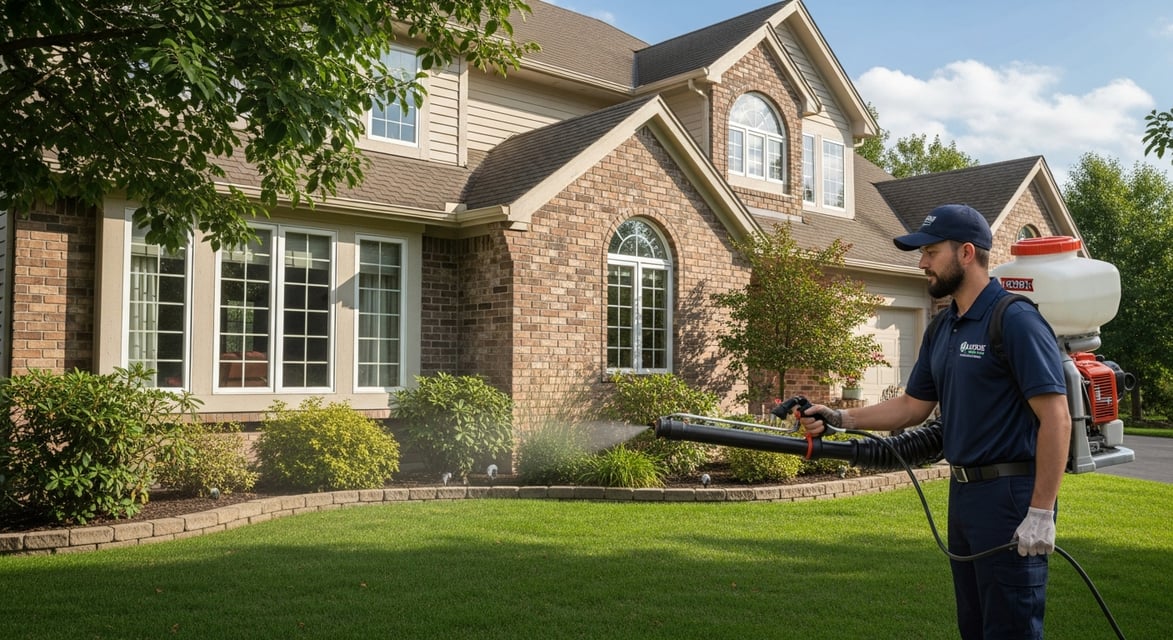
The pest control industry is one of the most resilient service sectors in the American small business economy. Pests don't take economic recessions off. Termites don't care about interest rates. Bed bugs don't respect downturns. According to the National Pest Management Association (NPMA), the U.S. pest control industry generates approximately $22 billion in annual revenue and has posted consistent growth for more than two decades. With climate change extending pest seasons and increasing pest pressure in previously unaffected regions, demand for professional pest management services is expected to grow for the foreseeable future.
Yet despite strong fundamentals and consistent demand, pest control business owners face capital challenges that are distinct to their industry. Spring and summer bring surges in new customer calls and service demand — but chemical inventory, vehicle maintenance, and technician hiring must be funded weeks or months before that revenue arrives. Recurring monthly pest control contracts create predictable revenue streams that are ideal for loan repayment, but lenders unfamiliar with the industry sometimes struggle to value those contracts appropriately.
Crestmont Capital understands pest control. We understand the difference between general pest, termite, bed bug, mosquito, and rodent operations. We understand why a multi-route pest control company with 400 recurring monthly accounts is an extremely strong loan candidate — even if their balance sheet looks thin. This comprehensive guide covers every dimension of pest control business financing: the unique financial challenges of the industry, loan types available, qualification requirements, real funding scenarios, and strategies to secure the best possible terms.
- Unique Financial Challenges of Pest Control Businesses
- Types of Pest Control Business Loans
- Qualification Requirements
- Rates & Terms
- 5-Step Application Process
- Financing by Business Type
- Industry Infographic
- Real Funding Scenarios
- Lender Comparison
- 6 Tips to Secure Better Financing
- Why Crestmont Capital
- Frequently Asked Questions
Unique Financial Challenges of Pest Control Businesses
Pest control companies operate within a set of financial dynamics that differ meaningfully from most other service businesses. Understanding these challenges is essential to structuring the right financing — and to explaining your business clearly to a lender.
1. Seasonal Demand Creates Cash Flow Gaps
The pest control industry experiences pronounced seasonal demand patterns, with the heaviest call volume concentrated in spring and summer. Ants, mosquitoes, termites, and general insects are most active from March through August in most U.S. regions. This means that by February, pest control companies need to be fully stocked with chemicals, have all their vehicles serviced and ready, and have their technician rosters staffed up — all before the revenue surge arrives. A business that earns 60%–70% of its annual revenue between April and September cannot simply wait for summer to fund its spring preparation. Working capital financing bridges that gap, allowing pest control owners to invest in readiness before the season begins and repay when revenue is strongest.
According to reporting by Forbes, seasonal service businesses consistently rank among the most active users of business lines of credit and short-term business loans precisely because of these predictable but intense cash flow cycles.
2. Chemical and Equipment Inventory Is Expensive
Professional-grade pesticides, termiticides, rodenticides, herbicides, and fumigants represent a significant upfront capital requirement. A well-stocked pest control company might maintain $15,000–$60,000 in chemical inventory at any given time, depending on the size of the operation and the breadth of services offered. In addition to chemicals, equipment costs are substantial: professional spray rigs can cost $8,000–$25,000, fumigation equipment runs $5,000–$40,000, and termite treatment systems (like Sentricon bait systems) require significant per-location investment. Equipment financing spreads these costs over manageable monthly payments rather than requiring cash outlay upfront.
3. Service Vehicles Are the Backbone of the Business
A pest control company without reliable vehicles is not a pest control company. Every technician on the road represents a combination of rolling inventory, mobile office, and revenue-generating unit. Service vehicles — typically branded vans or pickup trucks equipped with spray systems, chemical storage, and equipment — cost $30,000–$75,000 each new, or $15,000–$40,000 used. A growing pest control company adding a second or third route needs additional vehicles before it can generate the revenue that vehicle will produce. Fleet financing allows pest control owners to expand capacity ahead of demand rather than after it — which is the only way to capture growth.
4. Recurring Monthly Contracts Create Predictable Revenue
One of the strongest financial characteristics of a well-run pest control company is its base of recurring monthly contracts. Customers who sign up for ongoing general pest control, termite protection, or mosquito programs pay every month — often on auto-billing. A pest control company with 400 recurring monthly accounts at an average of $75/month has $30,000 in guaranteed monthly revenue before a single new customer is acquired. This recurring revenue stream is highly lender-favorable: it demonstrates the ability to service debt consistently, even in slower months. When presenting your business for financing, your recurring contract base is one of your strongest assets.
Ready to Grow Your Pest Control Business?
Get approved for $10,000–$500,000 in as little as 24 hours. No obligation. No hidden fees.
Apply Now — Free & FastTypes of Pest Control Business Loans
There is no single "pest control business loan." The best financing product depends on what you need the capital for, how quickly you need it, and your current business profile. Here are the primary loan types available to pest control companies:
Equipment Financing
Equipment financing is purpose-built for purchasing specific business assets — spray rigs, trucks, fumigation equipment, bait systems, pressure washers, and chemical storage units. The equipment itself typically serves as collateral, which keeps rates lower and approval requirements more accessible than unsecured loans. Terms run 12–72 months, and you own the equipment outright at payoff. This is the go-to financing tool for pest control companies investing in new service capabilities or replacing aging equipment.
Small Business Loans
A traditional small business loan provides a lump sum of capital repaid over a fixed term with regular payments. These are ideal for larger investments like facility improvements, franchise acquisitions, hiring, or multi-purpose capital needs. Small business loans from Crestmont Capital are available with terms from 3 months to 5 years and can be secured or unsecured depending on loan size and borrower profile.
Fast Business Loans
When a service vehicle breaks down, a key chemical supplier has a limited-time bulk pricing opportunity, or a sudden surge in business demands immediate staffing, fast business loans deliver capital in hours rather than weeks. Crestmont Capital's fast business loan products are designed for pest control owners who can't wait for a traditional underwriting timeline.
Short-Term Business Loans
Short-term business loans (typically 3–18 months) are ideal for seasonal capital needs: funding spring chemical inventory purchases, covering payroll during the ramp-up before peak season, or managing cash flow during the slower winter months. Repayment is structured to align with the seasonal nature of pest control revenue — borrow in winter, repay through summer when revenue is strongest.
Business Line of Credit
A revolving business line of credit is one of the most flexible tools available to pest control companies. Draw funds when needed, repay on your schedule (subject to minimums), and the credit becomes available again. This is perfect for managing chemical restocking throughout the year, covering unexpected repairs, or smoothing out the valleys between seasonal peaks. A pest control company with a $75,000 line of credit has a permanent financial cushion that supports growth without triggering a new loan application for every capital need.
Bad Credit Business Loans
Credit challenges don't disqualify pest control businesses from financing. Revenue-based financing and merchant cash advances evaluate your monthly bank deposits more than your credit score. If your pest control company is generating consistent revenue, financing options exist even with credit scores in the 500–599 range. Crestmont Capital's bad credit business loan products are designed for business owners who've faced financial setbacks but are running healthy, growing operations today.
Qualification Requirements for Pest Control Business Loans
Lender requirements vary by product type. The table below summarizes typical qualification benchmarks for pest control business financing:
| Loan Type | Min. Credit Score | Min. Time in Business | Min. Monthly Revenue | Collateral Required |
|---|---|---|---|---|
| Equipment Financing | 600 | 6 months | $8,000 | Equipment (self-secured) |
| Small Business Loan | 620 | 12 months | $10,000 | Varies by amount |
| Fast Business Loan | 580 | 6 months | $8,000 | None (unsecured) |
| Short-Term Loan | 580 | 6 months | $8,000 | None (unsecured) |
| Business Line of Credit | 620 | 12 months | $10,000 | None or blanket lien |
| Bad Credit / MCA | 500+ | 3 months | $6,000 | None (revenue-based) |
| SBA 7(a) Loan | 650+ | 24 months | $15,000 | Yes (for loans over $25K) |
Pest Control Business Loan Rates & Terms
Interest rates on pest control business loans vary based on loan type, loan amount, term length, credit score, and overall business health. The table below provides typical rate ranges you should expect when shopping for financing:
| Loan Product | Typical APR / Rate | Term Range | Loan Amount | Best For |
|---|---|---|---|---|
| Equipment Financing | 6%–24% APR | 12–72 months | $5K–$500K | Trucks, spray equipment, tools |
| Small Business Loan | 8%–30% APR | 6–60 months | $10K–$500K | Expansion, hiring, multi-use capital |
| Fast Business Loan | 12%–40% APR | 3–18 months | $5K–$250K | Emergency capital, quick opportunities |
| Short-Term Loan | 10%–35% APR | 3–18 months | $5K–$250K | Seasonal prep, inventory, payroll |
| Business Line of Credit | 8%–28% APR | Revolving | $10K–$250K | Ongoing capital needs, flexibility |
| MCA / Revenue-Based | 1.15–1.45 factor rate | 3–12 months | $5K–$200K | Fast cash, lower credit borrowers |
| SBA 7(a) | Prime + 2.75%–4.75% | Up to 10 years | Up to $5M | Long-term, low-rate financing |
According to CNBC, small business lending rates have remained elevated since 2022 amid the Federal Reserve's rate cycle, making it more important than ever to shop multiple lenders and understand total cost of capital — not just the interest rate. Crestmont Capital offers transparent pricing with no prepayment penalties on most products.
5-Step Application Process for Pest Control Business Loans
Applying for a pest control business loan with Crestmont Capital is straightforward. Here's exactly what to expect:
Complete the Online Application (5 minutes)
Provide basic business information: business name, EIN, time in business, estimated monthly revenue, and loan amount requested. No hard credit pull at this stage — only a soft inquiry that won't affect your score.
Submit Supporting Documents
For most pest control loans under $150,000, you'll need 3–6 months of business bank statements and a government-issued ID. Larger amounts may require your most recent business tax return and a summary of recurring contracts.
Receive Your Approval Decision (24–48 hours)
Our underwriting team reviews your application with an understanding of pest control business economics — including seasonal revenue patterns and recurring contract value. Most applicants receive a decision within one business day.
Review Your Offer & Select Terms
You'll receive one or more loan offers with clearly stated rates, terms, payment amounts, and total cost. There's no pressure to accept immediately — take time to review and ask questions.
Receive Funding
Once you sign your agreement, funds are deposited directly into your business bank account — typically within 1–3 business days. Equipment financing may involve direct payment to the vendor.
Pest Control Financing by Business Type
Not all pest control businesses have the same financing needs. The table below summarizes common business types within pest control and the financing solutions that best match each:
| Business Type | Typical Financing Needs | Best Products | Typical Loan Range |
|---|---|---|---|
| General Pest Control (Residential) | Vehicles, chemicals, marketing, seasonal working capital | Equipment financing, short-term loans, LOC | $10K–$150K |
| Termite Treatment Specialist | Bait systems, drill equipment, treatment materials, vehicles | Equipment financing, small business loans | $25K–$250K |
| Commercial Pest Management | Multi-vehicle fleet, compliance tools, insurance, hiring | Equipment financing, SBA loans, LOC | $50K–$500K |
| Mosquito & Tick Control | Spray equipment, misting systems, seasonal chemical inventory | Equipment financing, short-term loans | $15K–$100K |
| Fumigation Company | Fumigation tents, gas monitoring equipment, vehicles, licensing | Equipment financing, small business loans | $30K–$300K |
| Pest Control Franchise | Operating history and documented revenue are required. Product-specific eligibility requirements apply. | SBA loans, small business loans, equipment financing | $75K–$500K |
| Wildlife & Nuisance Animal Control | Trapping equipment, vehicles, removal gear, PPE | Equipment financing, small business loans | $10K–$75K |
| Bed Bug Treatment Specialist | Heat treatment equipment, detection dogs, chemical inventory | Equipment financing, fast business loans | $20K–$150K |
Pest Control Industry: Key Financial Stats
📊 Pest Control Industry at a Glance
Sources: NPMA (pestworld.org), IBISWorld, U.S. Bureau of Labor Statistics
Real Pest Control Business Financing Scenarios
These are representative scenarios based on the types of pest control businesses Crestmont Capital works with. Names and identifying details are illustrative.
🚚 Scenario 1: Two-Truck Fleet Expansion — $110,000
A residential pest control company in Florida had grown its recurring monthly customer base to 520 accounts and was losing business because its single truck was consistently overbooked through peak season. The owner needed two additional vehicles to staff two new routes. He applied for $110,000 in equipment financing — enough to purchase two used cargo vans, have them wrapped with company branding, and outfit each with spray rigs and chemical storage. The vehicles themselves served as collateral. With monthly revenue of $42,000, he was approved within 36 hours at a 60-month term. The two new routes added approximately $18,000/month in revenue within 90 days of launch, easily covering the monthly payment of $2,400.
🧪 Scenario 2: Chemical & Equipment Inventory Purchase — $45,000
A general pest control operator in Texas had the opportunity to purchase a full season's worth of termiticides and general pesticides at a 22% bulk discount from a regional distributor offering a limited-time deal. The problem: she needed $45,000 within a week to take advantage of the pricing. She applied for a short-term business loan and was approved within 24 hours. The bulk purchase saved approximately $9,900 compared to buying the same inventory at standard pricing throughout the season — more than offsetting the cost of the loan. The loan was repaid within six months as peak-season revenue flowed in.
🏢 Scenario 3: Pest Control Franchise Acquisition — $185,000
Crestmont serves established, revenue-generating businesses. Applications are reviewed using operating history, documented revenue, business bank activity, credit profile, and repayment capacity. Available products and terms depend on eligibility and underwriting.
💵 Scenario 4: Working Capital for Off-Season — $55,000
A mosquito and tick control specialist in New England generated 75% of her annual revenue between May and September. By October, incoming revenue dropped sharply while fixed costs — lease payments, insurance, employee salaries, and vehicle costs — continued. Rather than laying off her two full-time technicians (and losing them to competitors before spring), she applied for a $55,000 working capital loan to cover fixed costs through the winter months and fund the chemical pre-buy needed for the following spring. The loan was structured with a 10-month term timed to repay during the following year's peak season. She retained both technicians, launched the spring season fully staffed, and grew revenue 18% year-over-year.
Pest Control Business Loan: Lender Comparison
Not all lenders are the same. Understanding your options helps you secure the best terms for your pest control business:
| Lender Type | Speed | Rates | Flexibility | Best For | Downside |
|---|---|---|---|---|---|
| Crestmont Capital | 24–48 hrs | Competitive | High | Speed + industry knowledge | Not for long-term SBA |
| Traditional Bank | 2–8 weeks | Low | Low | Established businesses, low-cost capital | Slow, rigid, lots of docs |
| SBA Lender | 3–12 weeks | Very Low | Medium | Large, long-term financing | Slow, extensive paperwork |
| Online Lender (generic) | 1–3 days | Higher | Medium | Speed over cost | No industry expertise |
| Equipment Vendor Financing | 1–5 days | Variable | Low | Specific equipment purchase | Limited to one vendor |
| MCA Provider | Same day | Very High | Low | Emergency capital only | Expensive, daily repayment |
| Credit Union | 1–3 weeks | Low-Medium | Medium | Members with established history | Must be a member |
The U.S. Small Business Administration (SBA) offers loan guarantee programs through approved lenders that can provide pest control companies with long-term, low-cost capital — but the timeline and documentation requirements are significantly more demanding than alternative lending. For pest control owners who need capital quickly or don't meet traditional bank criteria, Crestmont Capital is the faster, more flexible path.
6 Tips to Secure Better Pest Control Business Financing
Why Pest Control Businesses Choose Crestmont Capital
Crestmont Capital has earned a reputation as one of the top small business loan providers in the United States by combining speed, transparency, and genuine industry knowledge. Here's why pest control business owners consistently choose us:
- Industry Understanding: We know pest control. We understand seasonal revenue cycles, recurring contract economics, equipment costs, and franchise dynamics. Your loan application is evaluated by people who understand your business — not just your numbers.
- Fast Approvals: Most pest control business loans are approved within 24–48 hours. We don't make you wait weeks for decisions on routine financing.
- Flexible Products: From equipment financing to lines of credit to fast business loans, we offer the full spectrum of business financing products under one roof.
- All Business Sizes: Whether you're a solo operator with one truck or a multi-location pest control company with 50+ technicians, we have products designed for your scale.
- Bad Credit Options: We don't automatically disqualify business owners with credit challenges. Our bad credit business loan products evaluate your revenue strength, not just your credit score.
- Transparent Pricing: No hidden fees. No prepayment penalties on most products. Clear, itemized cost disclosures before you sign anything.
- U.S.-Based Team: Our lending advisors are based in the United States and available by phone, email, and chat during business hours. You'll work with a real person who knows your file.
Frequently Asked Questions About Pest Control Business Loans
How much can a pest control company borrow?
What credit score is needed for pest control business loans?
Can I get a loan for pest control equipment and chemicals?
How fast can I get approved for a pest control business loan?
Do seasonal pest control businesses qualify for loans?
What documents are needed to apply?
Can I finance a pest control service vehicle?
Is a business line of credit good for pest control companies?
What interest rates do pest control business loans carry?
Can I get a loan to buy a pest control franchise?
Are SBA loans available for pest control businesses?
What if my pest control business has bad credit?
How does a merchant cash advance work for pest control businesses?
What operating history is needed to qualify?
Additional Resources for Pest Control Business Owners
- National Pest Management Association (NPMA) — Industry statistics, regulatory updates, and pest control business resources
- SBA.gov — Business Licenses & Permits — Guide to pest control licensing requirements by state
- Forbes Advisor: Small Business Loans Guide — Comprehensive overview of business lending options
- CNBC Small Business — News and financing trends for small business owners
- Equipment Financing — Finance pest control equipment, spray rigs, and vehicles
- Business Line of Credit — Revolving credit for ongoing capital needs
- Short-Term Business Loans — Seasonal capital and inventory financing
Get Your Pest Control Business Loan Today
Apply in 5 minutes. Approval in 24 hours. Capital in your account within days.