(800) 949-0401 Apply Now
Running a gas station is one of the most capital-intensive businesses in America. On the surface, the numbers look enormous — a busy station might sell 100,000 gallons of fuel per month. But with fuel margins as thin as 2 to 5 cents per gallon, that volume barely covers operating costs. The real profitability engine is the attached convenience store, which can generate 60–70% of total station profits from only 30–40% of total revenue, according to the National Association of Convenience Stores (NACS).
This unique business model creates financing challenges that most traditional lenders simply don't understand. You're not just running a retail shop — you're managing a fuel supply chain, maintaining underground storage tanks (USTs) that cost $50,000–$300,000 each to replace, operating regulated fuel dispensing equipment, and keeping your convenience store fully stocked to capture that essential non-fuel margin. Every piece of equipment, every compliance upgrade, and every inventory purchase requires capital — often on short notice.
The U.S. Environmental Protection Agency (EPA) mandates ongoing UST compliance upgrades for environmental protection, and deadlines don't wait for a lender's 90-day approval window. Fuel dispenser EMV (chip card) compliance upgrades can run $15,000–$50,000 per dispenser. Canopy replacements run $80,000–$200,000. A full c-store renovation can exceed $200,000. And if you're looking to acquire a property outright, you're typically looking at $500,000 to $3 million depending on location and market.
At Crestmont Capital, we've been providing gas station business loans and fuel station financing since 2015. We understand the full picture — fuel margins, c-store revenue, compliance timelines, and the real cash-flow dynamics of this industry. Whether you need working capital to cover your fuel inventory float, equipment financing for new dispensers, or a long-term loan to acquire a property, we have the right product for your station.
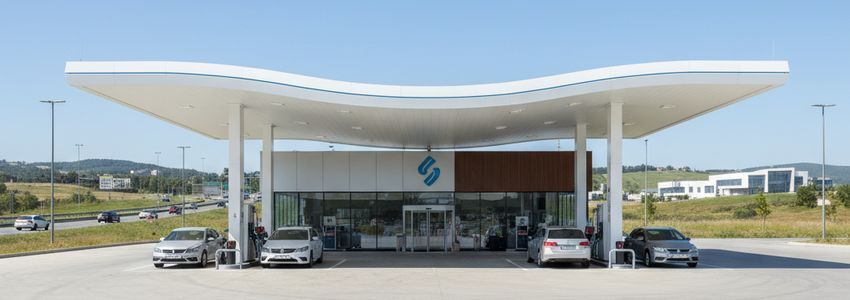
Gas stations operate at the intersection of retail, real estate, environmental compliance, and supply chain logistics. This makes them one of the most complex small businesses to finance — and one of the most underserved by conventional bank lending. Understanding why requires a look at the core structural challenges facing station owners today.
The days of fat fuel margins are long gone. Today, gas station operators typically earn just 2–5 cents per gallon of fuel sold after accounting for credit card processing fees, supply fluctuations, and local competition. A high-volume station selling 80,000 gallons monthly might net only $1,600–$4,000 from fuel. This is why the convenience store isn't optional — it's the financial lifeline of the entire operation. According to NACS data, in-store sales at c-stores average over $6,000 per day at high-traffic locations, with gross margins of 30% or more on items like food service, tobacco, and packaged beverages.
Every gas station has underground storage tanks that hold thousands of gallons of gasoline and diesel. The EPA requires regular testing, upgrades, and eventual replacement of these tanks to prevent fuel leaks that contaminate groundwater. A single UST replacement can cost $50,000–$300,000 per tank, and most stations have 2–4 tanks on-site. These aren't optional upgrades — they're federal mandates with firm deadlines. Stations that fall out of compliance risk fines, operating restrictions, and even forced closure.
The fuel industry has been racing to implement EMV (Europay, Mastercard, Visa) chip card technology at the pump. Stations that haven't upgraded face liability for fraudulent transactions — a significant ongoing financial risk. Each new fuel dispenser with EMV capability costs $15,000–$50,000, and a 12-pump station could need $180,000–$600,000 in dispenser upgrades. Add in canopy replacements ($80,000–$200,000), LED lighting, and updated POS/payment systems ($10,000–$30,000), and the capital requirements are substantial.
Unlike most retailers, gas station owners must pre-purchase their fuel inventory — often days before it arrives and well before they collect payment from customers. A mid-size station might need $100,000–$500,000 in working capital just to maintain its fuel inventory float. Seasonal demand swings, supply disruptions, and rapid price fluctuations can create sudden cash flow crises that require quick access to capital to keep the pumps running.
Banks often struggle to evaluate gas station financials. They see thin revenue margins and environmental liability exposure and decline — even when the business is highly profitable once c-store revenue and real estate value are factored in. Crestmont Capital specializes in understanding the complete financial picture of a gas station operation, qualifying applicants based on total business performance rather than fuel margins alone.
Crestmont Capital offers multiple financing products designed to address the full range of capital needs for gas station operators. From quick-turnaround working capital loans to long-term property acquisition financing, we have the right solution for your situation.
Equipment financing is one of the most cost-effective ways to fund major capital expenditures at your station. Through our equipment financing program, you can borrow against the value of the equipment itself — fuel dispensers, underground storage tanks, canopy structures, compressor systems for car washes, and more. Loan amounts range from $10,000 to $5 million, with terms up to 84 months. Because the equipment serves as collateral, approval rates are generally higher and interest rates are often lower than unsecured loans. This is the go-to solution for EMV dispenser upgrades, UST replacement, canopy replacement, and new POS system installations.
Fuel inventory is a cash-flow timing challenge that catches many station owners off guard. You need to pay your fuel supplier before customers pay at the pump — and the gap can be enormous. Our small business working capital loans provide fast access to $50,000–$2 million in unsecured capital to cover your fuel inventory float, payroll, supplier payments, and day-to-day operating expenses. Approval can happen within 24 hours, and funds can be in your account the next business day — critical when your fuel supplier won't release a delivery without payment.
For larger capital needs — property acquisition, franchise conversion, or major renovation projects — SBA loans offer the most favorable long-term terms available. The SBA 7(a) program allows up to $5 million with terms up to 25 years for real estate, making monthly payments very manageable. SBA 504 loans are ideal for owner-occupied real estate purchases. While SBA loans take longer to close (typically 30–90 days), they offer the lowest long-term cost of capital for major investments. Crestmont Capital has deep experience navigating the SBA process for gas station operators.
A business line of credit gives you ongoing, revolving access to capital that you draw on when needed and repay as cash flow allows. This is ideal for gas station operators who face irregular cash flow from fuel price swings, seasonal demand changes, or unexpected repairs. Lines range from $10,000 to $500,000. Unlike a term loan, you only pay interest on what you actually draw — making it a cost-efficient way to manage working capital gaps without committing to a fixed monthly payment on unused funds.
For c-store renovations, car wash additions, or other major improvements that don't fit the SBA timeline, our long-term business loans offer fixed payments over 2–10 year terms with loan amounts up to $5 million. These loans provide the capital needed for transformational projects — converting a basic fuel stop into a full-service convenience destination with premium food service, a car wash, EV charging stations, or a QSR franchise — without the complexity and extended timeline of an SBA process.
Pump failures, UST leaks, and equipment breakdowns don't follow a schedule. When a critical system fails and your station is at risk of shutting down, you need capital fast. Our fast business loans can deliver emergency funding within 24–48 hours. With minimal documentation requirements and approvals based on business performance rather than just credit score, these loans are designed for exactly the kind of urgent situations that gas station operators face regularly.
Owning the real estate under your gas station is the ultimate business investment — it converts your operation from a leasehold to a true asset-building enterprise. Property acquisition financing for gas stations typically ranges from $500,000 to $3 million depending on location, site size, and market. Crestmont Capital works with commercial real estate lenders who understand gas station properties, including the environmental assessments and Phase I/Phase II reports that are standard in fuel property transactions.
Crestmont Capital evaluates gas station loan applications based on the complete picture of your business — not just your credit score or fuel margins. Here are the general qualification criteria by loan type:
| Loan Type | Min. Time in Business | Min. Credit Score | Min. Annual Revenue | Collateral Required? |
|---|---|---|---|---|
| Working Capital Loan | 6 months | 550+ | $150,000 | No |
| Equipment Financing | 6 months | 580+ | $100,000 | Equipment (self-collateralized) |
| Business Line of Credit | 12 months | 600+ | $200,000 | No (unsecured options) |
| Long-Term Business Loan | 2 years | 620+ | $300,000 | Sometimes |
| SBA 7(a) Loan | 2 years | 650+ | $400,000 | Yes (for larger amounts) |
| Commercial Real Estate | 2 years | 660+ | $500,000 | Yes (property) |
| Fast Emergency Loan | 6 months | 500+ | $100,000 | No |
From UST replacements to property acquisitions — Crestmont Capital has the right loan for your station. Apply in minutes with no commitment.
Apply Now — Free & No ObligationRates and terms for gas station financing vary based on loan type, credit profile, business age, and the strength of your financials. Below are typical ranges as of 2025. Actual offers will depend on your specific situation.
| Loan Product | Typical Rate | Term Length | Loan Amount | Funding Speed |
|---|---|---|---|---|
| Working Capital Loan | 9%–35% APR | 3–24 months | $50K–$2M | 1–3 business days |
| Equipment Financing | 7%–25% APR | 12–84 months | $10K–$5M | 2–5 business days |
| Business Line of Credit | Prime + 1%–8% | Revolving | $10K–$500K | 3–7 business days |
| Long-Term Business Loan | 8%–24% APR | 2–10 years | $100K–$5M | 5–10 business days |
| SBA 7(a) Loan | Prime + 2.75%–4.75% | Up to 25 years (RE) | Up to $5M | 30–90 days |
| Commercial Real Estate | 6.5%–10% APR | 15–25 years | $500K–$3M+ | 30–60 days |
| Fast Emergency Loan | 15%–45% APR | 3–18 months | $25K–$500K | Same day–48 hrs |
Crestmont Capital has streamlined the application process to be as fast and straightforward as possible — because we know station owners don't have time to waste on paperwork.
Not all gas stations are the same. The right financing product depends heavily on your station type, ownership structure, and revenue mix. Here's how we approach financing for different station configurations:
| Station Type | Primary Financing Need | Best Loan Product | Typical Loan Range |
|---|---|---|---|
| Independent (Unbranded) Station | Equipment upgrades, working capital | Equipment Financing + Working Capital | $50K–$500K |
| Branded Franchise (BP, Shell, Chevron) | Image program compliance, renovation | Long-Term Loan or SBA | $150K–$1.5M |
| Station + Convenience Store | C-store renovation, inventory | Working Capital + Equipment Financing | $75K–$750K |
| Station + Car Wash | Car wash equipment, expansion | Equipment Financing + Term Loan | $100K–$2M |
| Multi-Site Operator | Portfolio expansion, acquisitions | SBA + Commercial Real Estate | $1M–$5M+ |
| Station Acquisition (Purchase) | Down payment, full acquisition | SBA 7(a) or Commercial Real Estate | $500K–$3M |
| UST Compliance Emergency | Immediate compliance funding | Fast Loan or Equipment Financing | $75K–$500K |
| Franchise Conversion (Brand Switch) | Rebranding, equipment updates | Long-Term Loan | $100K–$800K |
Major Capital Expenditures for Gas Station Operators
Sources: EPA, NACS, industry operator surveys. Ranges reflect U.S. market variation.
Whether it's UST compliance, dispenser upgrades, or a full station acquisition — Crestmont Capital moves fast. Get a decision in 24 hours.
Start Your ApplicationTo illustrate how different financing products work in practice, here are four realistic scenarios based on common situations faced by gas station operators across the United States.
A family-owned gas station in the Southeast received notice from their state environmental agency that two of their three underground storage tanks had failed their annual integrity test. The EPA's UST regulations required immediate remediation — replacement or lining of the failing tanks. The estimated cost: $90,000 per tank, totaling $180,000.
The station owner had strong business cash flow but limited liquid assets. A bank loan was out — the environmental liability flag on the property made conventional lenders nervous, and the 90-day bank approval timeline would have meant regulatory penalties and potential operating restrictions before funding arrived.
Solution: Crestmont Capital provided a $180,000 equipment financing loan with the new UST systems as collateral. Approval came in 48 hours; the environmental contractor was engaged within a week. Monthly payments of approximately $3,200 over 7 years fit comfortably within the station's cash flow. The station remained compliant and operational.
A convenience store and fuel station in the Midwest had six dispensers — none of them EMV-compliant. Under the payment network liability shift, the station was now responsible for fraudulent transactions made at the pump. After two months of chargeback losses, the owner decided it was time to upgrade.
New dispensers with EMV capability were quoted at approximately $14,000 per unit installed, for a total of $84,000–$85,000 for all six. The owner didn't want to drain working capital needed for c-store inventory during the holiday season.
Solution: A $85,000 equipment financing loan from Crestmont Capital funded all six dispensers at once. The equipment served as collateral, lowering the rate to 9.5% APR over 5 years — about $1,780/month. The owner reported that fraud-related chargebacks dropped to near zero within 60 days of installation, effectively paying for the loan from savings alone.
A high-traffic branded station in Texas had a small, outdated 800-square-foot convenience store that was leaving serious money on the table. With over 1,200 daily fuel customers, the owner wanted to expand and renovate the c-store, add a full coffee and food service program, and install modern cooler doors and shelving. The construction and equipment bid came in at $220,000.
The owner had 8 years of profitable operation, solid credit, and strong financial statements — but their bank was reluctant to lend against a business whose financial statements showed thin overall margins (because the bank wasn't properly accounting for total fuel+store economics).
Solution: Crestmont Capital approved a $220,000 long-term business loan at 11.5% APR over 7 years. Monthly payments of approximately $3,800 were easily covered by the projected increase in c-store revenue. Within 18 months of opening the renovated store, in-store revenue increased by 47%, more than tripling the debt service coverage.
An experienced multi-site operator in California had been leasing a high-volume corner station for 11 years. When the property owner decided to sell, the operator had the right of first refusal. The asking price was $1.2 million for the land and improvements, excluding the fuel equipment (owned separately). This was an opportunity to lock in the location permanently and eliminate the lease payment entirely.
The operator needed $1.2 million in financing with a structure that would make the monthly payment lower than the current lease cost, creating immediate positive cash flow improvement.
Solution: Crestmont Capital structured an SBA 7(a) real estate loan for $1,080,000 (90% LTV) at 7.25% APR over 25 years. Monthly payment: approximately $7,700 — nearly $2,000 per month less than the existing lease. The operator used the savings to begin pre-funding a second acquisition the following year.
Gas station owners have several financing options beyond specialty lenders like Crestmont Capital. Here's how they compare across the most important dimensions for fuel station operators:
| Factor | Crestmont Capital | Traditional Bank | SBA Direct (Slow Process) | Merchant Cash Advance |
|---|---|---|---|---|
| Approval Speed | 24–48 hours | 2–8 weeks | 30–90 days | Same day |
| Gas Station Industry Knowledge | Specialized | Generic | Generic | None |
| Loan Amounts | $50K–$5M | $100K–$5M | Up to $5M | $5K–$500K |
| Credit Score Flexibility | High (500+) | Low (680+) | Medium (650+) | Very High (any) |
| Environmental Liability Tolerance | Experienced with it | Often declines | Case by case | Irrelevant |
| Typical Rate | 7%–35% APR | 6%–18% APR | Prime +2.75–4.75% | Factor: 1.2–1.5x |
| Personal Guarantee Required | Often, not always | Always | Usually | Sometimes |
| Understands C-Store Revenue Mix | Yes | Rarely | Somewhat | No |
Not sure which loan is right for your station? Our gas station financing specialists will review your situation and recommend the best product — no sales pressure, no obligation.
Talk to a Specialist TodayEven with flexible underwriting, there are concrete steps you can take to maximize your chances of approval and secure the best possible rate on your gas station financing.
The #1 mistake gas station owners make when applying for loans is submitting financial statements that only show the fuel revenue line. Your bank statements, tax returns, and income statements should clearly reflect fuel sales, convenience store revenue, car wash income, ATM fees, lottery commissions, and any other revenue streams. Lenders who don't see the full picture will undervalue your business. Work with your accountant to ensure your financials present a complete view of your operation before you apply.
Lenders — especially for working capital loans — rely heavily on bank statement analysis to assess actual cash flow. Gas stations that run large volumes through their accounts (even with thin margins) often look financially strong on bank statements. Ensure your business account is in good standing, avoid overdrafts in the 3 months prior to application, and if possible, consolidate deposits into one primary account to show the strongest possible monthly cash flow picture.
Outstanding EPA notices, UST violations, or unresolved environmental assessments can complicate or kill a loan application — especially for real estate-secured loans. Before applying for any substantial financing, get a current environmental status report for your property. If there are issues, be upfront about them — and ideally, be applying for the loan to fund the remediation. Lenders like Crestmont Capital are experienced with compliance financing and can navigate these situations. Hiding environmental issues will derail the process later anyway.
Lenders want to know exactly what the money will be used for. A vague request for "working capital" is less compelling than a specific statement: "We are replacing two underground storage tanks at a cost of $185,000 — Tank 1 was installed in 1989 and has failed its annual integrity test; Tank 2 is being proactively replaced per state environmental agency recommendations." Specific, documented uses of funds build lender confidence and often result in faster approvals.
Gas stations that have consistently maintained and upgraded their equipment represent lower risk to lenders than stations running on outdated dispensers and aging infrastructure. If you have a history of equipment investments — even if financed — it demonstrates that you operate your business proactively. Gather any past equipment purchase records, maintenance logs, and vendor invoices to support your loan file.
This tip may seem self-serving, but it's genuinely the most important: choose a lender with real gas station financing experience. A lender unfamiliar with the industry will either decline you based on fuel margins alone or take weeks trying to understand your business model. Crestmont Capital has underwritten hundreds of gas station loans since 2015. Our team knows what UST compliance costs, how c-store revenue affects your debt service capacity, and how to structure a loan that works for your specific station type. That industry knowledge translates directly into better terms and faster approvals for you.
Since 2015, Crestmont Capital has been one of the leading specialty lenders for gas station and convenience store operators across the United States. Here's what sets us apart from banks, credit unions, and generic online lenders:
We don't treat a gas station like a restaurant or a retail shop. Our loan advisors and underwriters understand fuel pricing dynamics, UST compliance timelines, c-store revenue economics, branded franchise requirements, and environmental liability exposure. When you talk to us, you don't have to explain your business from scratch — we already know the model.
Equipment failures, compliance deadlines, and inventory crunches don't wait for a bank's 30-day review cycle. Crestmont Capital delivers decisions in as little as 24 hours and funds in 1–3 business days for working capital products. For time-sensitive situations — like a fuel dispenser failure or an imminent EPA compliance deadline — our speed can mean the difference between a manageable disruption and a catastrophic one.
We evaluate gas station loan applications based on total business performance — revenue, cash flow, operational history, and collateral — not just your FICO score. We've approved financing for station operators with credit scores as low as 500 when their business fundamentals were solid. We also have experience with the messy realities of gas station ownership: seasonal cash flow, environmental flags on properties, and complex ownership structures between spouse co-owners and family partnerships.
Whether you need a $50,000 emergency working capital loan today and a $1.2 million property acquisition loan next year, Crestmont Capital can serve you throughout your business lifecycle. Building a relationship with a lender who knows your history pays dividends in faster approvals and better terms on future loans. Many of our gas station clients return to us multiple times as their operations grow.
We believe in clear, simple loan offers. Your term sheet will show your rate, term, monthly payment, origination fee, and total repayment amount — with no surprises. As Forbes Advisor and other financial publications consistently note, transparency in loan terms is one of the key differentiators between reputable business lenders and predatory ones. At Crestmont Capital, we're committed to making sure you fully understand what you're signing before you sign it.
You won't get bounced between departments or lost in an automated portal. Every gas station loan applicant at Crestmont Capital is assigned a dedicated loan advisor who handles your application from submission to funding. They'll call you if they need additional information, explain your offer in plain language, and be available to answer questions throughout the process.
From $50,000 working capital loans to $5M property acquisitions — Crestmont Capital has been funding gas station operators since 2015. Get a decision in 24 hours with no obligation.
Apply Now — It Takes 5 MinutesDisclaimer: The information on this page is provided for general informational purposes only and does not constitute financial, legal, or professional advice. Loan products, rates, terms, and qualification requirements are subject to change and vary based on individual circumstances. All loan applications are subject to underwriting approval. Not all applicants will qualify. Crestmont Capital is not a bank; loan products may be funded by third-party lenders. Environmental and legal matters referenced herein are general in nature; consult a licensed environmental professional or attorney for guidance specific to your property or situation. This content does not constitute tax advice. Always consult a qualified tax professional regarding the tax implications of business financing.