
Food Truck Financing: Loans for Food Trucks & Mobile Food Businesses
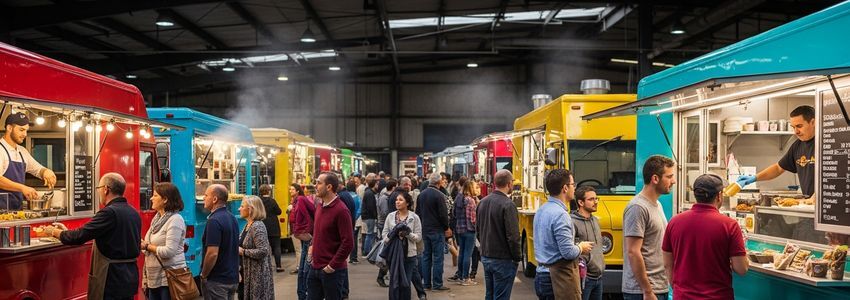
The food truck industry is one of the fastest-growing segments of the American restaurant sector — and for good reason. According to IBISWorld, the U.S. food truck market generates over $2.7 billion in annual revenue and has grown at a compound annual rate exceeding 7% over the past five years. From gourmet tacos to craft burgers and fusion BBQ, mobile food businesses have transformed city streets, corporate campuses, festivals, and private events into thriving revenue opportunities.
Crestmont serves established, revenue-generating businesses. Applications are reviewed using operating history, documented revenue, business bank activity, credit profile, and repayment capacity. Available products and terms depend on eligibility and underwriting.
That's where Crestmont Capital comes in. Since 2015, we've helped food truck owners across the United States secure food truck financing from $20,000 to $250,000 — with fast approvals, flexible terms, and funding built specifically for the realities of mobile food businesses. Whether you're buying your first truck, upgrading to a custom build, expanding your fleet, or financing a commissary kitchen buildout, Crestmont Capital has a food truck loan that fits your needs.
This guide covers everything you need to know about food truck financing: what it costs, who qualifies, what types of loans are available, how to compare options, and how to get approved quickly. Let's get rolling.
Why Food Truck Financing Is Different
Food trucks aren't restaurants, and they aren't traditional vehicles — they exist in a unique middle ground that makes conventional financing complicated. Most banks and auto lenders don't know how to categorize a $120,000 custom-built truck with a commercial kitchen inside. Is it a vehicle? Commercial equipment? A restaurant? The answer affects how lenders assess collateral, calculate depreciation, and determine loan eligibility.
Food truck financing is also different because the revenue model is seasonal and event-driven. A food truck doing $30,000 in sales during July street festivals might slow down significantly in January. Traditional lenders who focus on consistent monthly revenue often penalize food truck operators for this seasonality — even when annual revenues are strong.
There's also the issue of new vs. used truck valuation. A lender financing a $150,000 custom food truck needs to understand that the truck's value lies partly in its specialized kitchen build-out — not just the underlying vehicle. Used trucks depreciate differently than standard commercial vehicles, and custom builds often hold value better if maintained.
Then there's the matter of commissary kitchens. Many municipalities require food trucks to operate from a licensed commissary kitchen — a commercial kitchen facility used for prep work and storage. Commissary buildouts can cost $30,000 to $100,000, and financing them requires lenders who understand food service regulations.
Crestmont Capital specializes in mobile food business financing precisely because we understand these nuances. Our lending specialists have worked with hundreds of food truck operators across the country and know how to structure loans that make sense for your business model — not just your credit score.
Types of Food Truck Financing
Not all food truck loans are the same. Depending on what you're financing, how established your business is, and how quickly you need funds, different loan products will serve you better. Here are the main types of food truck financing available through Crestmont Capital:
1. Equipment Financing for Food Trucks
Equipment financing is one of the most common and effective ways to fund a food truck purchase. With equipment financing, the truck itself serves as collateral for the loan, which typically means lower interest rates and higher approval odds compared to unsecured loans.
This type of financing works well for:
- Purchasing a new custom-built food truck ($75K–$175K)
- Buying a used food truck ($20K–$80K)
- Financing a food trailer ($15K–$60K)
- Upgrading commercial kitchen equipment inside your truck ($15K–$40K)
- Installing generator upgrades ($5K–$15K)
Terms typically range from 24 to 84 months, with fixed monthly payments that make budgeting predictable. Down payments are often 10–20% of the equipment value, though some applicants qualify for 100% financing.
2. SBA Loans for Food Trucks
SBA loans offer some of the lowest interest rates available for food truck financing — typically prime rate plus 2.25–4.75% — with repayment terms up to 10 years for equipment and 25 years for real estate (such as a commissary kitchen buildout on owned property). The SBA 7(a) loan is the most common option for food truck operators and can fund up to $5 million.
The tradeoff is time. SBA loan approval can take 30 to 90 days, and the application process requires extensive documentation including business plans, tax returns (2–3 years), financial statements, and collateral documentation. SBA loans are best for established food truck businesses with strong credit (680+) who aren't in a hurry.
3. Small Business Loans
Small business loans from alternative lenders like Crestmont Capital offer faster approvals (often 24–72 hours) with less paperwork than traditional bank or SBA loans. These term loans can be used for any business purpose — truck purchase, commissary buildout, marketing, staffing, or working capital.
Small business loans are particularly useful for:
- First-time food truck operators who don't yet qualify for SBA loans
- Established truck owners who need capital quickly for seasonal opportunities
- Businesses with imperfect credit (580+ FICO scores often considered)
- Operators expanding to a second truck or adding catering capabilities
4. Working Capital Loans for Mobile Food Businesses
Food trucks face unique cash flow challenges — festival season requires upfront inventory investment, summer peaks demand extra staffing, and slow winter months can create gaps in cash flow. Working capital loans are short-term financing solutions (typically 3–24 months) designed to bridge these gaps.
A working capital loan might fund your catering deposit for a summer festival lineup, cover payroll during a slow January, or pre-purchase the ingredients and supplies needed for a major corporate event. These loans are typically unsecured (no collateral required) and fund in as little as 24 hours through Crestmont Capital.
5. Fast Business Loans
Fast business loans are designed for food truck operators who need capital immediately. Maybe a truck broke down and you need emergency repairs to keep your business rolling. Maybe you spotted a used truck at auction for $35,000 and have 48 hours to act. Maybe your commissary lease is up and you need to move quickly.
Crestmont Capital's fast business loans can fund in as little as 24 hours, with minimal documentation requirements. While rates are slightly higher than longer-term options, the speed and flexibility often make them the right choice for time-sensitive opportunities.
6. Bad Credit Food Truck Loans
Many food truck entrepreneurs have less-than-perfect credit — especially in the early stages of business ownership. Bad credit business loans from Crestmont Capital consider the full picture of your business health, not just your FICO score.
We look at:
- Monthly revenue and bank deposits
- Time in business (6+ months preferred)
- Industry experience and business plan
- Available collateral (the truck itself, equipment, etc.)
Food truck owners with credit scores as low as 550 may still qualify for certain loan products. Our lending specialists work with you to find the best available option for your situation.
7. Short-Term Business Loans
Short-term business loans (typically 3–18 months) are ideal for food truck operators who need a quick capital injection and can repay quickly from strong seasonal revenues. If your business does $50,000+ per month during summer festivals but slows in winter, a short-term loan taken in spring can fund your peak-season preparation and be repaid by fall.
Who Qualifies for Food Truck Financing?
Qualification requirements vary by loan type, but here are general guidelines for Crestmont Capital's food truck financing programs:
| Requirement | Minimum Standard | Preferred |
|---|---|---|
| Credit Score | 550+ (some programs) | 640+ for best rates |
| Time in Business | 6 months (working capital) | 2+ years (equipment loans) |
| Monthly Revenue | $8,000+ | $17,500+ |
| Business Type | Food truck, trailer, cart | Any mobile food operation |
| Annual Revenue | $100,000+ | $150,000+ |
| Bank Statements | 3 months required | 6 months preferred |
| Business License | Required | Health permit also helpful |
| Collateral | Not always required | Truck/equipment strengthens application |
Crestmont serves established, revenue-generating businesses. Applications are reviewed using operating history, documented revenue, business bank activity, credit profile, and repayment capacity. Available products and terms depend on eligibility and underwriting.
Ready to Get Your Food Truck Financed?
Apply in minutes. Decisions in as little as 24 hours. Funding up to $250,000 for food trucks, trailers, commissary kitchens, and more.
Apply for Food Truck Financing Now →Rates, Fees, and Terms for Food Truck Financing
Interest rates and fees vary by loan type, lender, creditworthiness, and loan amount. Here's a general overview of what food truck operators can expect from Crestmont Capital's financing programs:
| Loan Type | Typical Rate | Term Length | Funding Speed | Best For |
|---|---|---|---|---|
| Equipment Financing | 6%–24% APR | 24–84 months | 2–5 business days | Truck purchase, equipment |
| SBA 7(a) Loan | Prime + 2.25%–4.75% | Up to 10 years | 30–90 days | Large purchases, low rates |
| Small Business Loan | 8%–35% APR | 12–60 months | 24–72 hours | General business needs |
| Working Capital Loan | 10%–45% APR | 3–24 months | 24 hours | Cash flow, inventory |
| Fast Business Loan | 12%–50% APR | 3–18 months | 24 hours | Emergency, time-sensitive |
| Bad Credit Loan | 20%–65% factor rate | 3–18 months | 24–48 hours | Challenged credit profiles |
Common fees to be aware of include origination fees (1%–5% of loan amount), prepayment penalties (which Crestmont Capital minimizes where possible), and documentation fees. Always ask for a full fee disclosure before signing any loan agreement.
How Food Truck Financing Works: Step by Step
Start by filling out Crestmont Capital's simple online application at offers.crestmontcapital.com/apply-now. You'll provide basic information about your business, estimated loan amount, and intended use of funds. No hard credit pull at this stage — just a soft inquiry.
Depending on the loan type, you'll typically need to provide 3–6 months of business bank statements, a government-issued ID, proof of business ownership (articles of incorporation or business license), and possibly your most recent tax returns. For equipment loans, a truck appraisal or purchase agreement may also be needed.
Our lending team reviews your application and documents and presents you with a loan offer — including rate, term, monthly payment, and any fees. You're under no obligation to accept, and you can ask questions or negotiate terms with your dedicated lending specialist.
Once you accept your offer, you'll complete the final paperwork electronically. Our team handles the heavy lifting — no branch visits required. For equipment loans, we may coordinate directly with the truck dealer or seller.
Funds are typically deposited directly into your business bank account within 1–3 business days of final approval. For equipment financing, payment may go directly to the seller. You're now ready to purchase your truck, build out your commissary, or fund your next growth phase.
Food Truck Financing by Business Type
Every mobile food business has different financing needs. Here's how Crestmont Capital approaches financing for various types of mobile food operators:
| Business Type | Common Financing Needs | Recommended Loan Type | Typical Range |
|---|---|---|---|
| Solo Food Truck (First Truck) | Established businesses with documented revenue | Equipment Financing + Working Capital | $25K–$90K |
| Custom Build Operation | New custom truck, specialized equipment | Equipment Financing or SBA Loan | $75K–$175K |
| Food Trailer Business | Trailer purchase, hitch vehicle | Equipment Financing | $15K–$65K |
| Catering Company (Mobile) | Second truck, event capital, staffing | Small Business Loan or Working Capital | $30K–$150K |
| Food Truck Fleet (2+ Trucks) | Fleet expansion, driver staffing, commissary | SBA Loan or Multi-Equipment Financing | $100K–$250K |
| Commissary Kitchen | Buildout, equipment, permits | Small Business Loan or SBA | $30K–$100K |
| Festival/Event Operator | Seasonal working capital, inventory | Short-Term Business Loan | $10K–$50K |
| Health Department Compliance | Equipment upgrades, inspection-required fixes | Working Capital or Fast Loan | $5K–$30K |
The True Cost of Starting a Food Truck Business
Crestmont serves established, revenue-generating businesses. Applications are reviewed using operating history, documented revenue, business bank activity, credit profile, and repayment capacity. Available products and terms depend on eligibility and underwriting.
Figures are estimates. Actual costs vary by location, vendor, and specifications.
Understanding these costs helps you plan your financing strategy. Most food truck operators don't finance everything at once — they prioritize the truck and essential equipment first, then use working capital loans to fund operations as revenue builds. Crestmont Capital's lending specialists can help you sequence your financing to minimize costs and maximize cash flow.
Get the Capital to Launch or Grow Your Food Truck Business
From $20,000 to $250,000 — Crestmont Capital funds food trucks, trailers, commissary kitchens, and mobile food operations of all sizes. Fast approvals, flexible terms, dedicated support.
Start Your Application Today →Real-World Food Truck Financing Scenarios
Numbers tell the story best. Here are four real-world scenarios that illustrate how Crestmont Capital's food truck financing works in practice:
Scenario 1: First-Time Food Truck Owner — Used Truck Purchase ($85,000)
Maria had spent eight years working in restaurant kitchens and was finally ready to launch her own business — a Latin fusion food truck in Austin, Texas. She found a 2019 food truck fully equipped with a commercial flat-top grill, fryer, and refrigeration for $72,000, plus needed $13,000 for permits, initial inventory, wrap design, and a POS system.
Total financing need: $85,000
Maria applied for equipment financing through Crestmont Capital. With a 680 FICO score, 3 years of personal tax returns showing W-2 income, and a detailed business plan, she was approved for a 60-month equipment loan at a competitive rate. Her monthly payment fit comfortably within her projected revenue, and she was funded within 4 business days — in time to hit the spring festival circuit.
Result: Maria's truck generated $28,000 in its first month operating during Austin's festival season, covering her loan payment nearly 6x over.
Scenario 2: Custom Build Financing — New Truck ($140,000)
James had been operating a used food truck for three years and built a loyal following for his craft BBQ concept. He wanted to upgrade to a custom-built truck with a full smoker setup, professional wrap, generator system, and expanded serving window — totaling $140,000 from a specialty food truck manufacturer in Houston.
Total financing need: $140,000
With three years of business tax returns showing $210,000 in annual revenue, a 720 FICO score, and the custom truck serving as collateral, James qualified for a 72-month equipment loan. The longer term kept monthly payments manageable while the new truck's increased capacity allowed him to serve more customers per event — nearly doubling his daily revenue potential.
Result: James's new custom truck increased his per-event revenue by 80%, and he was able to book premium corporate catering contracts that his older truck couldn't have handled.
Scenario 3: Second Truck Expansion — Fleet Growth ($95,000)
The Chen family operated a highly successful dumpling truck in Seattle that regularly sold out within 3 hours of opening. With a waiting list of corporate clients and festival bookings they couldn't fulfill with one truck, they needed a second vehicle to capture the opportunity.
Total financing need: $95,000 (used truck + commissary expansion + staffing capital)
Crestmont Capital structured a combination of equipment financing ($65,000 for the second truck) and a working capital loan ($30,000 for commissary expansion and staffing). The working capital loan had a 12-month term timed to align with the summer festival season, when revenue would be highest. Approval took 48 hours — fast enough to move on the truck they'd found before another buyer did.
Result: Two trucks running simultaneously generated $85,000 in monthly revenue during peak summer months — a 190% increase from single-truck operations.
Scenario 4: Commissary Kitchen Buildout ($55,000)
Aisha had been operating a successful Mediterranean food truck in Chicago for four years but was tired of renting commissary space from a shared kitchen facility. She found an affordable commercial space in a food-friendly zone and wanted to build out her own licensed commissary kitchen — reducing monthly operating costs while giving her full control over prep and storage.
Total financing need: $55,000 (construction, equipment, permits, and health department compliance)
Aisha applied for a small business loan through Crestmont Capital. With four years of business history, consistent revenue of $18,000+ per month, and strong credit, she received approval within 24 hours. The 36-month term meant her monthly payment was offset by the elimination of shared kitchen rental fees — making the loan nearly cost-neutral from day one.
Result: Aisha's private commissary kitchen reduced her operating costs by $2,200/month and gave her the capacity to launch a weekend catering operation, adding $12,000+ in monthly revenue.
How Food Truck Financing Compares: Crestmont Capital vs. Other Options
Understanding your financing options helps you make the best decision for your business. Here's how Crestmont Capital stacks up against common alternatives:
| Lender Type | Speed | Credit Required | Rates | Flexibility | Food Truck Expertise |
|---|---|---|---|---|---|
| Crestmont Capital | 24–72 hours | 550+ | Competitive | High | ✅ Specialized |
| Traditional Bank | 2–6 weeks | 680+ | Low | Low | ❌ Limited |
| SBA Loan (via bank) | 30–90 days | 680+ | Very Low | Low | ⚠️ General |
| Credit Union | 1–3 weeks | 620+ | Low-Medium | Medium | ❌ Limited |
| Online Marketplace | 48–72 hours | 560+ | Higher | Medium | ⚠️ Variable |
| Truck Dealer Financing | Same day | 620+ | Higher | Low | ⚠️ Truck only |
| Personal Credit Card | Immediate | 650+ | Very High | High | ❌ Not ideal |
Traditional banks often decline food truck loans because they don't understand how to value the collateral, aren't familiar with the mobile food business model, or require 2+ years of business history that new operators don't have. SBA loans are excellent when time isn't a factor — but waiting 60–90 days for approval isn't realistic when you've found the perfect truck or need to cover a seasonal cash flow gap.
Crestmont Capital sits in the sweet spot: faster than banks, more food-truck-savvy than generic online lenders, and with rates that reflect the quality of your business — not just your credit score.
Compare Your Food Truck Financing Options Today
Get a personalized quote from Crestmont Capital with no obligation. Our specialists will review your situation and recommend the best loan structure for your food truck business.
Get My Free Quote →6 Tips for Getting Approved for Food Truck Financing
Whether you're applying for your first food truck loan or expanding an established fleet, these tips will strengthen your application and improve your odds of approval at favorable rates:
Tip 1: Organize Your Financial Documentation Before You Apply
Lenders want to see a clear picture of your business's financial health. Gather your last 3–6 months of business bank statements, your most recent 1–2 years of business tax returns (if available), a current profit & loss statement, and your business license and any food service permits. Having these ready speeds up approval significantly and signals professionalism to the lending team.
Tip 2: Know Your Numbers — Especially Your Monthly Revenue
For food truck operators, consistent documented revenue is one of the most powerful factors in loan approval. If your business has strong deposits — even if your credit is imperfect — that revenue story can overcome credit challenges. Make sure your business income is deposited into a dedicated business bank account (not personal), so the revenue trail is clean and verifiable.
Tip 3: Be Specific About How You'll Use the Funds
Lenders respond well to specificity. "I want to buy a 2020 Ford food truck listed at $65,000 from XYZ dealer to operate at downtown events" is far more compelling than "I need money for my food truck business." The more specific your use case, the easier it is for underwriters to assess risk and match you with the right loan product.
Tip 4: Show Your Seasonal Revenue Strategy
One of the biggest concerns lenders have about food truck businesses is seasonality. Address this proactively. Show them your bookings calendar, festival contracts, or corporate catering agreements. Demonstrate that you have a plan for slower months — whether that's catering private events, partnering with local businesses, or operating at indoor markets. Lenders who understand your full-year revenue strategy are more likely to approve larger amounts at better rates.
Tip 5: Improve Your Credit Score Before Applying If Possible
Even a modest improvement in your credit score can meaningfully reduce your interest rate. If you have time before you need financing, focus on paying down credit card balances below 30% utilization, disputing any errors on your credit report, and avoiding new credit inquiries. A jump from 580 to 640 can reduce your rate by several percentage points — saving thousands over the life of a $75,000 loan.
Tip 6: Apply for the Right Amount — Not the Maximum
It's tempting to apply for as much as you can get, but requesting an amount that aligns with a specific, documented need is more persuasive than reaching for the maximum. Lenders look at your debt service coverage ratio — your ability to repay the loan from business income. Applying for a realistic amount that your revenue can comfortably support leads to faster approvals and better terms.
Why Choose Crestmont Capital for Food Truck Financing
Since 2015, Crestmont Capital has built a reputation as one of the most trusted business lenders in the United States — with particular expertise in mobile food businesses, equipment financing, and alternative lending for entrepreneurs who don't fit the traditional bank mold. Here's what sets us apart:
🚚 Deep Food Industry Expertise
Our lending specialists understand the unique economics of food truck businesses: seasonal revenue cycles, the true collateral value of specialized truck builds, commissary kitchen requirements, health permit timelines, and the difference between a truck that's worth $80,000 and one that's worth $40,000 — even when they're the same year and model. We speak your industry's language.
⚡ Speed When It Matters
Food truck opportunities don't wait. When a seller lists a great used truck, they often have multiple interested buyers within days. When a summer festival slot opens, the deadline is real. Crestmont Capital's fast approvals — often within 24 hours — mean you can move when opportunities arise. According to Forbes, speed of funding is one of the top priorities for small business owners, and we deliver.
💪 Flexible Qualification Standards
Traditional banks say no to food trucks far too often — because of credit scores, business age, or their own unfamiliarity with the industry. Crestmont Capital says yes more often, to more operators, because we look at the complete picture: your revenue, your business model, your market, and your experience. We've funded food truck operators with credit scores in the 550s and businesses less than a year old — because the numbers told a story worth believing in.
🤝 Dedicated Lending Specialists
You're not a ticket number at Crestmont Capital. You get a real lending specialist who reviews your application personally, asks smart questions, and works to find the best structure for your specific situation. If the first loan type isn't the right fit, they'll tell you — and recommend what is.
📋 Transparent Terms, No Surprises
Hidden fees and surprise rate adjustments are the enemy of small business owners. Crestmont Capital provides clear, upfront disclosure of all rates, fees, and terms before you sign anything. Our goal is a long-term lending relationship — not a one-time transaction — so we treat your trust seriously.
🌟 Proven Track Record
Hundreds of food truck operators across the United States have used Crestmont Capital to launch, expand, and scale their mobile food businesses. Our reviews reflect the results: food trucks bought, commissary kitchens built, fleets doubled, and dreams realized. We've been doing this since 2015, and we're just getting started.
Frequently Asked Questions About Food Truck Financing
How much can I borrow for a food truck?
Can I get a food truck loan with bad credit?
How fast can I get approved for food truck financing?
Can I finance a used food truck?
What documents do I need to apply for a food truck loan?
Can I finance a commissary kitchen buildout?
What operating history is needed to qualify?
What's the difference between a food truck loan and equipment financing?
Can I get financing for a second food truck?
Do I need to put money down for a food truck loan?
How does seasonal revenue affect my food truck loan approval?
Can I refinance an existing food truck loan?
What operating history is needed to qualify?
Your Food Truck Business Starts Here
Crestmont Capital has helped food truck entrepreneurs across the United States secure the financing they need to launch, grow, and scale their mobile food businesses. From first trucks to full fleets, commissary kitchens to catering operations — we've got the capital and the expertise to help you succeed.