
Farm Equipment Loans & Financing: Fund Tractors, Combines & Agricultural Equipment
American farmers operate some of the most capital-intensive businesses in the world. A single modern combine harvester can cost $300,000 to $700,000. A high-clearance row crop tractor runs $120,000 to $350,000. Precision planting and irrigation systems can push total equipment values well past $1 million for a mid-sized operation. Yet unlike most business owners who can predict monthly revenue, farmers contend with seasonal income cycles — cash flows in at harvest, expenses accumulate all year.
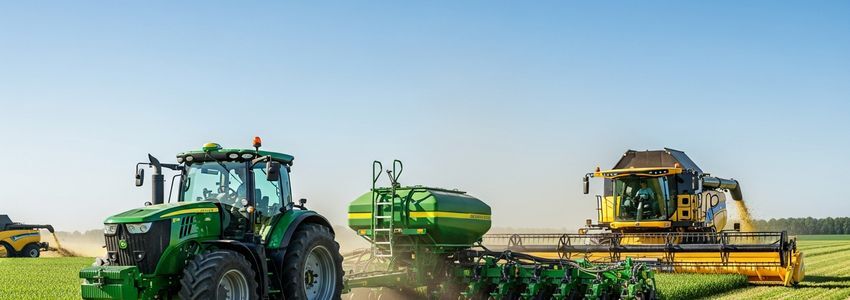
That's exactly why farm equipment financing is structured differently from standard commercial loans. Lenders who specialize in agricultural equipment understand that income arrives in predictable seasonal waves, that equipment holds strong residual value as collateral, and that agricultural businesses have unique documentation requirements like Schedule F tax returns. Since 2015, Crestmont Capital has helped farmers, ranchers, and agribusiness owners across the U.S. access the capital they need to buy, upgrade, or refinance the equipment that keeps their operations running.
Whether you're a beginning farmer purchasing your first tractor, an established grain operation replacing an aging combine before harvest season, or a dairy producer financing milking equipment to expand capacity, this guide covers everything you need to know about farm equipment loans — from how they work, who qualifies, what rates to expect, and how to get approved fast.
According to the USDA, agricultural operations consistently rank among the highest capital-intensive small businesses in America, with total farm sector debt estimated at over $500 billion. Private lenders like Crestmont Capital fill critical gaps that traditional bank lending and government programs like USDA FSA cannot always serve quickly or flexibly.
Why Farm Equipment Financing Is Different
Farm equipment financing is a specialized subset of equipment financing that accounts for the unique realities of agricultural business. Here's what sets it apart from standard commercial equipment loans:
Asset-Backed Structure
The equipment itself serves as collateral. A $400,000 combine harvester or a $200,000 tractor holds significant market value — which means lenders can extend larger amounts at more favorable rates than unsecured business loans. The asset-backed nature of farm equipment financing reduces lender risk and benefits borrowers through lower interest rates and longer terms. This is fundamentally different from a small business loan, which may require personal guarantees and additional collateral.
Seasonal Repayment Structures
Traditional bank loans require equal monthly payments. But a corn farmer's cash flow peaks after the fall harvest — not spread evenly across 12 months. Lenders who understand agriculture offer seasonal or annual payment structures that align with your income cycle. This means lower or deferred payments during planting and growing seasons, with balloon or larger payments timed to post-harvest cash flow. The USDA FSA notes that seasonal cash flow alignment is one of the most important factors in sustainable farm financing.
Schedule F Income Documentation
Banks typically want W-2s and consistent monthly income. Farmers file Schedule F (Profit or Loss from Farming) with their tax returns — a form that can show income volatility, depreciation-driven paper losses, and irregular revenue that standard underwriters misread as weakness. Specialized agricultural lenders understand how to interpret Schedule F correctly, including non-cash deductions, soil and water conservation expenses, and breeding livestock income.
New vs. Used Equipment Considerations
Farm equipment financing applies equally to new and used equipment. A used 5-year-old tractor might cost $60,000 vs. $180,000 new — and many agricultural lenders will finance used equipment up to 10–15 years old if it's in good working condition. Used farm equipment financing typically carries slightly higher rates due to residual value uncertainty, but it's widely available through private lenders. The SBA's loan programs can also be leveraged for used equipment when certain conditions are met.
Beginning Farmer Programs
Federal programs through the USDA FSA Beginning Farmer and Rancher program offer loans up to $600,000 for first-time agricultural operators. Private lenders like Crestmont Capital often complement these programs — providing faster approvals and larger loan amounts for operations that have outgrown government loan caps or need capital faster than federal timelines allow.
Equipment as Ongoing Collateral
Unlike a real estate loan where the property is a one-time collateral event, farm equipment can serve as collateral for multiple financing rounds. As you pay down a tractor loan and build equity, that equity can be leveraged in a sale-leaseback or used to collateralize additional financing for planting equipment, irrigation systems, or grain storage — creating a compounding capital strategy for growing operations.
Types of Farm Equipment Financing
Not all farm equipment loans are created equal. The right financing structure depends on your operation size, cash flow cycle, tax situation, and whether you want to own or effectively lease the equipment. Here are the six primary options available to agricultural operators:
Equipment Loans (Installment Financing)
The most common form of farm equipment financing. You borrow a lump sum to purchase equipment, repay it over 3–10 years with interest, and own the equipment outright at the end of the term. The equipment serves as collateral, keeping rates low. This is ideal for long-lived assets like tractors, combines, and grain bins where you plan to operate the equipment for 10+ years. Loan amounts typically range from $25,000 to $5 million depending on equipment value and creditworthiness. Monthly or seasonal payments apply.
Equipment Leasing (True Lease / Operating Lease)
Leasing lets you use equipment without owning it. Payments are typically lower than loan payments, and at the end of the lease term you can return the equipment, purchase it at fair market value, or upgrade to newer models. This is popular for technology-heavy equipment like GPS-guided planters and precision sprayers that become outdated quickly. Lease payments may be treated as operating expenses — consult your tax advisor for the implications specific to your situation.
Sale-Leaseback Financing
If you already own farm equipment free and clear (or with significant equity), a sale-leaseback lets you sell the equipment to a financing company and immediately lease it back — converting your equipment equity into working capital while retaining full use of the machinery. This is a powerful strategy for freeing up cash for seed, fertilizer, land rent, or operating expenses without disrupting farm operations. Crestmont Capital structures sale-leaseback arrangements for equipment values starting at $50,000.
USDA FSA Loans
The USDA Farm Service Agency offers direct and guaranteed loans for farm equipment. Direct loans come from USDA itself; guaranteed loans are made by private lenders with USDA backing up to 95% of the loan. FSA loans offer below-market interest rates and flexible terms — but approval timelines can run 60–120 days, and loan caps apply. For farmers who need capital in 24–72 hours, private lenders remain the faster option.
SBA Equipment Loans
The SBA 7(a) and SBA 504 loan programs can be used to finance farm equipment as part of a broader business investment. SBA loans offer long terms (up to 10 years for equipment) and competitive rates. SBA loans through Crestmont Capital are ideal for larger operations seeking $500,000+ for major equipment investments alongside land or facilities. Approval timelines are longer than private loans but terms are favorable for well-qualified borrowers.
Working Capital Lines of Credit
For lower-cost equipment, repairs, parts, and operating inputs alongside equipment purchases, a business line of credit provides revolving access to capital. Draw what you need, when you need it, and repay as cash flow allows. Lines of credit are not ideal for major equipment purchases but pair well with equipment loans for operations that need flexible capital access throughout the growing season.
Who Qualifies for Farm Equipment Financing?
Crestmont Capital works with a wide range of agricultural operators — from small family farms to large agribusiness enterprises. Here are the general qualification guidelines:
| Requirement | Standard Threshold | Notes |
|---|---|---|
| Time in Business | 1+ year preferred | Beginning farmers may qualify with strong business plan + USDA program support |
| Annual Revenue | $100,000+ | Gross farm revenue from Schedule F; seasonal income patterns accepted |
| Credit Score | 600+ FICO | Lower scores considered with strong collateral; see bad credit options |
| Down Payment | 10–20% typical | 0% down possible for very strong credit profiles or new equipment |
| Equipment Age | New or up to 15 years | Older equipment considered case-by-case; condition matters |
| Business Type | Sole prop, LLC, partnership, S-corp, C-corp | Farms, ranches, dairy, poultry, aquaculture, specialty crop operations |
| Documentation | 2 years tax returns + bank statements | Schedule F accepted; personal financial statements for large loans |
| Loan Amount | $10,000–$5,000,000 | Larger amounts available for established operations with strong collateral |
Ready to Finance Your Farm Equipment?
Apply in minutes. Decisions in as little as 24 hours. No obligation to accept.
Apply Now — Free & FastFarm Equipment Financing Rates, Fees, and Terms
Interest rates and terms for farm equipment loans vary based on credit profile, loan amount, equipment type, and loan structure. Here's what to expect in today's market:
| Factor | Range / Details |
|---|---|
| Interest Rates | 6.5%–18% APR (excellent credit qualifies for lower end; challenged credit higher) |
| Loan Terms | 12 months to 10 years; longer terms available for large loans |
| Origination Fees | 1%–3% of loan amount (often rolled into financing) |
| Down Payment | 0–20% (equipment collateral may reduce or eliminate down payment requirement) |
| Prepayment Penalties | Varies by lender; many Crestmont Capital products have none or low penalties |
| Seasonal Payment Option | Available — align payments to harvest income; contact for details |
| New vs. Used Equipment | New: typically 0.5%–2% lower rates; used: slightly higher due to residual value risk |
| Approval Timeline | As fast as 24 hours for amounts under $150K; 3–5 days for larger deals |
| Funding Timeline | Same day to 3 business days after approval |
For larger equipment investments, long-term business loans with 7–10 year terms help keep monthly payments manageable while preserving operating cash flow through the growing season.
How Farm Equipment Financing Works: Step by Step
Getting financed for farm equipment through Crestmont Capital is a straightforward process designed for busy agricultural operators — not a 90-day bureaucratic exercise. Here's how it works:
Complete our secure online application at offers.crestmontcapital.com/apply-now. Provide basic information about your farm operation, the equipment you want to finance (make, model, year, purchase price), and your revenue. No hard credit pull at this stage.
Upload your last 2 years of tax returns (including Schedule F), 3–6 months of bank statements, and a copy of the equipment invoice or dealer quote. For larger loans, a personal financial statement may be required. Our team helps you identify exactly what's needed to avoid delays.
Our agricultural lending specialists review your application — understanding Schedule F income, seasonal cash flow, and equipment collateral value. Most decisions are made within 24–48 hours. We present loan options with clear terms: loan amount, rate, monthly payment, and total cost of financing.
Once you select the option that fits your operation, review and sign the loan documents electronically. There's no obligation until you sign. Our team walks you through each term so there are no surprises.
Funds are disbursed directly to the equipment seller (dealer, auction house, or private seller) within 1–3 business days of signing. Your equipment is secured and you're ready for the season. Ongoing, you make payments per the agreed schedule — seasonal payment customers receive a customized payment calendar aligned to harvest income.
Farm Equipment by Type: What We Finance
Crestmont Capital finances virtually every category of agricultural equipment — new and used. Here's a breakdown of major equipment types, typical purchase prices, and financing considerations:
| Equipment Type | Typical Price Range | Financing Notes |
|---|---|---|
| Utility Tractors (under 100 HP) | $25,000–$80,000 | Ideal for smaller farms, livestock ops, orchards; strong used market |
| Row Crop Tractors (100–400+ HP) | $120,000–$350,000 | Backbone of grain operations; excellent collateral value; 7–10 yr terms available |
| Combine Harvesters | $300,000–$700,000 | Highest-value single equipment purchase; seasonal payments strongly recommended |
| Planters & Seeders | $50,000–$200,000 | Precision planting tech increases value; GPS-ready models finance well |
| Sprayers (Self-Propelled / Pull-Type) | $80,000–$300,000 | High-clearance sprayers; strong resale; used models commonly financed |
| Irrigation Systems | $30,000–$200,000+ | Center pivots, drip systems, pump stations; may require real estate collateral for large systems |
| Grain Storage (Bins, Dryers, Augers) | $20,000–$100,000+ | On-farm storage increases marketing flexibility; often financed with working capital loans |
| Livestock Equipment | $15,000–$300,000+ | Milking systems, confinement equipment, feeding systems; dairy & hog operations |
| Harvest & Post-Harvest Equipment | $10,000–$150,000 | Header attachments, grain carts, wagons, conveyors; often bundled with primary equipment loans |
| Specialty Crop Equipment | $20,000–$500,000 | Vegetable harvesters, orchard equipment, vineyard machinery; terms vary by crop cycle |
Farm Equipment Cost at a Glance
Average Equipment Cost vs. Typical Loan Term
Ranges reflect new and late-model used equipment. Actual pricing varies by brand, configuration, and market conditions.
Finance Any Agricultural Equipment — New or Used
From tractors to center pivots to grain bins — Crestmont Capital finances it all. $10K to $5M. Decisions in 24 hours.
Get Your Farm Equipment LoanReal-World Farm Equipment Financing Scenarios
Abstract numbers don't tell the full story. Here are four realistic scenarios showing how farmers use Crestmont Capital to get the equipment they need:
Scenario 1: Corn Farmer Replacing a 15-Year-Old Combine — $380,000
A 1,200-acre corn and soybean operation in Illinois has been limping through harvest with an aging combine that required $28,000 in repairs over the past two seasons. The operator needs a new John Deere S780 combine at $380,000 before the October harvest. A traditional bank turned him down due to a significant depreciation-driven loss showing on last year's Schedule F — despite the farm generating $890,000 in gross revenue.
Crestmont Capital looked beyond the paper loss, understood the depreciation picture, and approved a $380,000 combine loan with a 7-year term, seasonal payment structure (lower payments January–August, larger payments October–December aligned to grain sales), and an annual rate of 8.2%. The farmer took delivery in September and completed harvest on time — projected to save $40,000 in repair and downtime costs over the first three years alone.
Scenario 2: Beginning Farmer's First Tractor — $85,000
A 28-year-old beginning farmer in Nebraska purchased 320 acres of crop ground and needed a reliable row crop tractor. With only 18 months of farming history and a 640 FICO score, she was turned down by two local banks. Her USDA FSA beginning farmer application would take 90+ days — too long to be ready for spring planting.
Crestmont Capital approved a $68,000 loan (80% of the $85,000 purchase price) on a used Case IH Magnum tractor, 5-year term at 11.4% APR. She put $17,000 down and received funding in 4 business days — in time to prepare fields for planting season. The loan was structured with lower winter payments and higher payments in the fall, aligned to her cash marketing plan.
Scenario 3: Dairy Farmer Upgrading Milking Equipment — $180,000
A dairy operation in Wisconsin with 350 head of Holstein cows needed to replace its aging milking parlor system with a modern robotic milking setup. The $180,000 investment would reduce labor costs by $36,000 annually and improve milk yield per cow. The farm showed strong revenue but significant long-term debt from a prior facility expansion.
Crestmont Capital structured a 6-year equipment loan at $180,000 at 9.1% APR, using the milking equipment itself as primary collateral. Monthly payments of approximately $3,200 were offset within 12 months by the $3,000/month in labor savings — making the loan essentially self-funding. The farmer accessed capital through Crestmont rather than drawing on his existing line of credit, preserving that liquidity for operating inputs.
Scenario 4: Upgrading to a 48-Row Planter — $65,000 Used
A 700-acre row crop farmer in Indiana wanted to upgrade from a 24-row to a 48-row precision planter with variable rate seeding capability. A used John Deere DB80 at a local dealer was priced at $65,000. With a strong 720 credit score, the farmer qualified quickly but wanted to preserve cash for spring inputs.
Crestmont Capital approved a $58,500 loan (90% LTV) in 36 hours with a 4-year term at 7.3% APR. Monthly payments were $1,410 — easily covered by projected yield improvements and time savings from planting twice the acres in the same number of days. The farmer also used the dealer's competing financing quote to negotiate a $3,000 reduction in the equipment price.
How Farm Equipment Financing Options Compare
Not sure which path is right for your operation? Here's a side-by-side comparison of the main financing options available to farmers:
| Option | Approval Speed | Loan Amounts | Rates | Best For |
|---|---|---|---|---|
| Crestmont Capital (Private) | 24–72 hours | $10K–$5M | 6.5%–18% APR | Most farm equipment, fast funding, Schedule F borrowers |
| Local/Community Bank | 2–6 weeks | $25K–$2M | 6%–12% APR | Established operators with strong bank relationship |
| USDA FSA Direct Loan | 60–120 days | Up to $600K | Below market (fixed) | Beginning farmers, low-income operations, rural targeted areas |
| USDA FSA Guaranteed Loan | 30–90 days | Up to $2.037M | Negotiated with lender | Operations needing larger amounts with government backing |
| SBA 7(a) Loan | 30–90 days | Up to $5M | Variable, prime + spread | Larger agribusinesses, multi-equipment investments |
| Dealer/OEM Financing | Same day | Varies | Often 2–5% above market | Convenience, promotional 0% offers (read terms carefully) |
| Equipment Leasing | 24–72 hours | $10K–$2M | Effective 7%–20% | Technology equipment, operators who want to upgrade frequently |
Compare Your Options with a Crestmont Capital Specialist
Our agricultural lending team helps you find the right structure — whether it's a direct equipment loan, seasonal payment plan, or sale-leaseback arrangement.
Speak with a Farm Lending SpecialistTips for Getting Your Farm Equipment Loan Approved
The agricultural lending market has specific requirements that differ from standard business lending. These six tips will significantly improve your approval odds and help you secure better rates:
1. Organize Your Schedule F Documentation in Advance
Lenders who don't understand agricultural accounting may misread Schedule F losses driven by depreciation, Section 179 deductions, or prepaid expenses. Before applying, prepare a brief written explanation of any significant income fluctuations. Better yet, work with a lender who specializes in agricultural finance and understands these patterns — like Crestmont Capital's farm lending team.
2. Get a Formal Equipment Appraisal or Invoice
For used equipment, an independent appraisal or NADA/KBB valuation strengthens your loan application by confirming collateral value. For new equipment, a formal dealer invoice shows the exact purchase price. Stronger collateral documentation = better loan terms and higher approval rates.
3. Demonstrate Seasonal Cash Flow — Don't Just Show Annual Numbers
Provide 6–12 months of bank statements that show your income pattern across seasons. Lenders need to see that post-harvest income covers annual debt obligations — not just that average monthly deposits look sufficient. Clear seasonal cash flow documentation supports seasonal payment structure requests and strengthens your application.
4. Consider a Co-Signer for Beginning Farmer Applications
If you're a newer operator with limited credit history, a co-signer with established business credit can dramatically improve your approval odds and lower your rate. A family member who is an established farmer, or a landowner who rents you ground, may be willing to co-sign — especially if they have a financial interest in your operation's success.
5. Check and Improve Your Credit Before Applying
Even small credit score improvements can move you into a lower rate tier. Pay down credit card balances to under 30% utilization, dispute any errors on your credit report, and avoid opening new credit accounts in the 60–90 days before your equipment loan application. A 680 vs. 620 credit score on a $200,000 tractor loan can mean $8,000–$15,000 in interest savings over the loan term.
6. Apply Before You Need the Equipment Urgently
The worst time to apply for farm equipment financing is the week before planting or harvest when you're desperate. Pre-approval lines up financing before you need it — so when the right equipment appears at auction or a dealer, you can move immediately. Crestmont Capital offers pre-approval letters good for 30–60 days at no cost and no obligation. It's one of the smartest moves agricultural borrowers can make before the season starts.
Why Farmers Choose Crestmont Capital for Equipment Financing
Since 2015, Crestmont Capital has helped thousands of small and mid-sized businesses — including agricultural operations across the United States — access the capital they need to grow. Here's what makes us the right partner for your farm equipment financing needs:
Our clients have been featured in discussions about agricultural finance in outlets including Forbes and CNBC, highlighting the growing role of private lenders in bridging the agricultural capital gap left by traditional banks. As AP News has reported, equipment investment is critical to farm productivity — and access to capital is the key enabler.
Frequently Asked Questions: Farm Equipment Financing
What credit score do I need to qualify for a farm equipment loan?
Can I finance used farm equipment?
How do seasonal payment structures work?
What documentation do I need to apply?
Can beginning farmers with no credit history get approved?
What is a sale-leaseback and is it right for my farm?
How does farm equipment financing differ from a regular business loan?
Should I use USDA FSA financing or a private lender?
What happens if I can't make payments during a drought year?
Can I finance grain bins, irrigation systems, and storage facilities?
How does Schedule F income affect my loan application?
What's the maximum loan amount available for farm equipment?
Are there farm equipment financing options for livestock operations?
Get Your Farm Equipment Financed Today
Tractors, combines, planters, irrigation — whatever your operation needs, Crestmont Capital delivers fast, flexible financing built for agriculture. Apply in 10 minutes. Decisions in 24 hours. Fund in days — not months.