
Business Financing for Dialysis Centers
Dialysis centers provide life-sustaining treatment for millions of Americans with end-stage renal disease (ESRD), but operating one requires significant capital investment in medical equipment, facility buildout, staffing, and regulatory compliance. Crestmont Capital offers specialized financing solutions for dialysis center operators -- from independent outpatient clinics to multi-location nephrology practices.
Why Dialysis Centers Need Business Financing
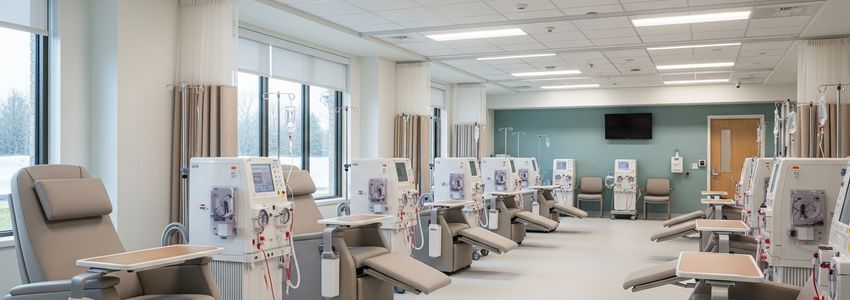
Dialysis is one of the most equipment-intensive branches of outpatient medicine. A single hemodialysis machine costs $15,000 to $30,000. A new dialysis center needs 10 to 20 stations to be operationally viable, representing $150,000 to $600,000 in equipment alone -- before factoring in the water purification systems, reverse osmosis units, and monitoring equipment that are essential for safe dialysis treatment.
Facility buildout for a new outpatient dialysis center typically costs $400,000 to $1.2 million depending on location, size, and the specific plumbing and electrical infrastructure required for dialysis operations. Annual operating costs for a 15-station center include $500,000 to $900,000 in clinical staffing, $80,000 to $150,000 in supplies, and significant regulatory compliance overhead.
The dialysis market is also growing rapidly. According to the U.S. Census Bureau, the prevalence of chronic kidney disease (CKD) affecting approximately 37 million Americans means that demand for dialysis services will continue rising for decades. Independent dialysis centers that can secure financing to expand capacity are well-positioned to capture this growing patient population.
Crestmont Capital provides medical equipment financing, working capital loans, SBA loans, and lines of credit for dialysis center operators at all stages of development.
Types of Financing Available to Dialysis Centers
Medical Equipment Financing
Dialysis machines, water purification systems, patient monitoring equipment, and laboratory analyzers can all be financed through Crestmont Capital's equipment financing program. Amounts up to $500,000 per transaction with terms up to 84 months. The equipment itself serves as collateral, making approval accessible even for newer facilities. Rates start at 5.99% APR.
Working Capital Loans for Operations
Managing the revenue cycle for a dialysis center is complex. Medicare reimbursements arrive 30 to 45 days after treatment. Private insurance claims may take 60 to 90 days. Meanwhile, payroll, supply costs, and facility expenses are due immediately. A working capital loan of $25,000 to $500,000 bridges these cash flow timing gaps so you never miss a payroll or fall behind on supplies.
SBA Loans for Facility Buildout
For dialysis centers looking to open a new location or significantly expand an existing one, SBA 7(a) and 504 loans up to $5 million provide the longest terms and lowest rates available. The SBA 504 program specifically supports commercial real estate and major equipment purchases, making it ideal for dialysis facility construction and equipment.
Business Line of Credit
A revolving line of credit up to $250,000 gives dialysis center managers the flexibility to handle unexpected supply shortages, emergency equipment repairs, or staffing fluctuations without disrupting patient care. Draw and repay as needed.
Fast Business Loans
When a dialysis machine fails unexpectedly or a critical supply chain disruption requires an emergency purchase, fast business loans up to $150,000 are available with same-day funding for qualified applicants. Patient care cannot wait -- and neither can your financing.
Fund Your Dialysis Center's Growth
Fast, flexible financing built for healthcare operators. Apply in 5 minutes.
Get My Free QuoteWho Qualifies for Dialysis Center Financing?
| Requirement | Standard Loan | Fast Funding | SBA Loan |
|---|---|---|---|
| Time in Business | 6+ months | 3+ months | 2+ years |
| Monthly Revenue | $15,000+ | $8,000+ | $30,000+ |
| Credit Score | 580+ | 500+ | 650+ |
| Funding Speed | 1-3 days | Same day | 30-90 days |
| Loan Amount | $10K-$500K | $5K-$150K | Up to $5M |
| Collateral Required | Usually no | No | Yes |
How the Funding Process Works
Step 2 -- Underwriting Review (Hours, Not Weeks): Our team reviews your application and 3 months of bank statements. Most dialysis center applications receive decisions within 24 hours.
Step 3 -- Review Your Loan Offers: Receive multiple funding offers with clear terms, rates, and repayment schedules. Your dedicated advisor walks you through every option.
Step 4 -- Funds in Your Account: Accept your offer, sign your agreement, and receive funds in 1 to 3 business days. Same-day funding available for urgent needs.
Real-World Dialysis Center Financing Scenarios
Scenario 1: Expanding Station Capacity to Reduce Wait Times
An independently owned dialysis center in Memphis with 12 stations had a 6-week waitlist for new patients. Adding 6 stations required 6 new dialysis machines ($108,000), expanded water treatment capacity ($45,000), and construction work ($62,000). Total investment: $215,000. With Crestmont Capital equipment financing and a small business loan combination approved in 48 hours, the center expanded capacity, eliminated the waitlist within 90 days, and added $38,000 per month in incremental revenue.
Scenario 2: Managing the Revenue Cycle Gap
A 20-station dialysis center in Atlanta generating $280,000 per month in revenue consistently faced a 45-day gap between treatment delivery and Medicare/Medicaid reimbursement. With $180,000 in monthly payroll and supply costs due within 30 days, cash flow was perpetually strained. A $200,000 revolving line of credit from Crestmont Capital stabilized their cash position, allowing the practice manager to focus on patient care rather than cash crisis management.
Scenario 3: Opening a Second Location
A nephrologist in Phoenix owned a successful 15-station dialysis center and identified a medically underserved zip code 8 miles away as an ideal location for a second facility. Facility build-out: $750,000. Equipment for 18 stations: $380,000. Working capital for the first 6 months of operations: $180,000. Crestmont Capital facilitated a $1.31 million SBA 7(a) loan at 7.8% APR over 10 years, with monthly payments of $15,700. The second facility reached profitability in 8 months.
Scenario 4: Emergency Equipment Replacement
A dialysis center's central water purification system failed on a Tuesday morning, rendering all 14 stations inoperable. Patient appointments had to be rerouted to a neighboring facility while emergency repairs were made. The repair and temporary rental of backup equipment cost $48,000. A fast business loan from Crestmont Capital was approved within 3 hours and funded by end of business that day, allowing all operations to resume within 72 hours.
How Financing Options Compare
| Product | Best For | Amount Range | Term | Speed |
|---|---|---|---|---|
| Equipment Financing | Dialysis machines/systems | $10K - $500K | 2-7 years | 1-3 days |
| Working Capital Loan | Revenue cycle gaps | $5K - $500K | 3-18 months | 24 hours |
| Line of Credit | Ongoing supply costs | $10K - $250K | Revolving | 1-2 days |
| SBA 7(a) Loan | New facility buildout | $50K - $5M | 5-25 years | 30-90 days |
| Fast Business Loan | Emergency equipment | $5K - $150K | 3-12 months | Same day |
Dialysis Center Capital Requirements at a Glance
Dialysis Market Growth and Independent Operator Opportunity
End-stage renal disease affects over 560,000 Americans currently on dialysis, a number that grows by approximately 25,000 new patients per year. According to Bloomberg, the global dialysis market is projected to reach $115 billion by 2030, driven by rising diabetes and hypertension rates -- the two leading causes of kidney failure.
Independent dialysis centers face meaningful competition from large corporate chains, but they consistently outperform in patient satisfaction due to their ability to provide more personalized care. Independent operators who invest in modern equipment, comfortable patient environments, and transportation assistance (many dialysis patients require 3 visits per week) build loyal patient populations with extremely low attrition.
Home dialysis represents the fastest-growing segment, with peritoneal dialysis and home hemodialysis growing 8 to 12% annually as patients seek treatment options that fit their lifestyles. Dialysis centers that invest in home dialysis training programs and equipment can capture this high-growth segment without building additional facility space. Crestmont Capital finances home dialysis equipment, patient training kits, and the nursing staff costs associated with home therapy programs.
Why Choose Crestmont Capital for Dialysis Center Financing
Healthcare businesses require lenders who understand the unique dynamics of medical billing, CMS reimbursement cycles, regulatory compliance costs, and the mission-critical nature of medical equipment. Crestmont Capital has financed dozens of dialysis and nephrology practices and understands what makes healthcare operators different from typical small businesses.
- Healthcare-Fluent Underwriting: We understand Medicare/Medicaid revenue cycles and evaluate your business accordingly.
- Large Loan Amounts: Medical equipment and facility buildout require large investments. We fund up to $5 million.
- Fast Decisions: Patient care depends on operational continuity. We move fast when you need capital urgently.
- All Credit Types Welcome: Bad credit options available for operators with challenging credit histories.
- SBA Expertise: Our SBA team navigates the complex healthcare lender requirements to get your loan approved.
According to CNBC, independent healthcare providers who access capital strategically to modernize equipment and expand capacity consistently report 15 to 25% higher profit margins than those constrained by aging equipment and limited capacity.
Frequently Asked Questions
What types of dialysis businesses qualify for financing?
Can I finance a new dialysis center buildout?
How does Medicare reimbursement timing affect loan eligibility?
Can I finance a used dialysis machine?
What are typical interest rates for dialysis center equipment loans?
How much can a dialysis center borrow?
Are there loans specifically for home dialysis programs?
Can I use a business loan to hire nephrology-trained nurses?
Does Crestmont Capital work with dialysis centers in rural areas?
What is the minimum credit score to qualify?
How fast can a dialysis center get funded?
Are CON (Certificate of Need) costs financeable?
Regulatory Compliance: A Major Cost Center for Dialysis Operators
Dialysis centers operate under one of the most heavily regulated compliance frameworks in all of outpatient medicine. Understanding these cost drivers helps operators plan their financing needs accurately:
- Medicare Conditions for Coverage (CfC) Compliance: Dialysis facilities must comply with CMS's Conditions for Coverage, which govern everything from patient assessment protocols to infection control practices. Annual compliance auditing and staff training typically costs $15,000 to $40,000.
- Water quality testing: Dialysis water must meet strict AAMI/ANSI standards. Regular microbiological and chemical testing, plus annual comprehensive testing, costs $8,000 to $20,000 per facility per year.
- State licensing and inspection fees: Healthcare facility licensing varies by state but typically involves annual fees of $2,000 to $10,000 plus periodic inspections.
- Electronic health records (EHR) systems: HIPAA-compliant EHR systems designed for dialysis (such as Medscape or specialized nephrology platforms) cost $15,000 to $50,000 for implementation and $2,000 to $5,000 per month in licensing fees.
- Hazardous waste disposal: Medical waste management for a dialysis center costs $3,000 to $8,000 per year.
- Annual biomedical equipment calibration and service contracts: Service contracts for dialysis machines typically cost $1,500 to $3,500 per machine per year. A 15-machine center spends $22,500 to $52,500 per year on maintenance contracts alone.
These compliance and maintenance costs are non-negotiable for patient safety and regulatory standing. Dialysis centers that fall behind on maintenance or compliance face penalties, survey failures, and potential loss of Medicare certification -- effectively a death sentence for the business. Having a line of credit available ensures these critical costs are always funded.
Staffing: The Largest Ongoing Cost for Dialysis Centers
Clinical staffing is typically the largest single expense for a dialysis center, representing 50 to 65% of total operating costs. Key staffing components include:
- Registered Nurses (RN) with dialysis certification: $38 to $55 per hour depending on experience and location. A 15-station center requires 3 to 5 RNs per shift, 3 shifts per day, 6 days per week.
- Patient Care Technicians (PCT) for dialysis: $18 to $26 per hour. Centers typically run a 1:3 or 1:4 PCT-to-patient ratio during treatment shifts.
- Social worker: CMS requires each dialysis facility to have a social worker on staff. Salary ranges from $48,000 to $72,000 annually.
- Dietitian/nutritionist: Required by CMS for patient nutritional management. Cost: $50,000 to $75,000 annually.
- Medical Director (nephrologist): Medical director contracts typically run $40,000 to $100,000 per year for oversight responsibilities.
Annual staffing costs for a mid-size dialysis center can easily exceed $1.2 million. Working capital loans and lines of credit play a critical role in ensuring consistent payroll funding, particularly during the 30 to 45 day period between patient treatment and Medicare reimbursement receipt.
Dialysis Center Revenue Model: What Lenders Need to Know
A dialysis center's revenue is primarily driven by the Medicare ESRD bundle payment, which as of 2024 is set at $265 per treatment. A patient receiving 3 treatments per week at 52 weeks generates approximately $41,340 in annual Medicare revenue per patient. A 15-station center running 6 days per week at 85% capacity generates approximately 2,200 treatments per month, translating to $583,000 in monthly gross revenue.
Net revenue after contractual adjustments typically runs 75 to 85% of gross billed charges. After operating expenses, well-run independent dialysis centers achieve EBITDA margins of 15 to 25% -- healthy margins that support robust loan repayment. Crestmont Capital's underwriting team is trained to evaluate dialysis center financials accurately, recognizing the difference between billed revenue and collected revenue in your loan assessment.
Expand Your Dialysis Center with Confidence
From a single machine to a full new facility -- Crestmont Capital has the financing to make it happen.