
Daycare Business Loans: Financing for Child Care Centers & Preschools
Child care businesses face a distinct set of financial challenges: high fixed costs for facilities and staff, enrollment-driven revenue that fluctuates seasonally, licensing and compliance costs that arrive before a single child enrolls, and equipment needs ranging from commercial kitchens to outdoor playgrounds. Traditional banks often struggle to evaluate child care businesses because their income is tied to headcount capacity rather than product margins. Crestmont Capital provides daycare business loans structured around the operational reality of child care — fast approvals, flexible terms, and capital available before your next enrollment cycle or compliance deadline.
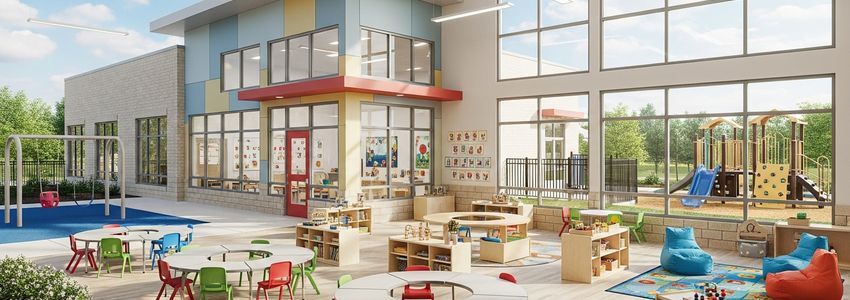
Why Child Care Businesses Need Specialized Financing
Child care businesses operate on fundamentally different economics than most small businesses. Revenue is capacity-constrained — a 40-child center at $1,200/month tuition generates $48,000/month at full enrollment, but that number drops sharply during summer when school-age programs close and families take vacations. Fixed costs — staff, lease, insurance, utilities — continue regardless of enrollment levels.
This creates predictable seasonal cash flow compression that standard bank underwriting often misreads as instability. Additionally, child care businesses face upfront compliance and licensing costs before they can legally operate at capacity, creating a capital gap between facility readiness and revenue realization.
Key financing challenges for child care operators:
- Licensing and compliance costs arrive before revenue: State licensing fees, fire safety inspections, playground safety upgrades, and health department compliance all require upfront capital.
- Facility costs are high and fixed: Leasehold improvements for a childcare-compliant space typically cost $50K-$200K — before a single child enrolls.
- Seasonal enrollment dips create cash flow gaps: Summer months and school breaks reduce headcount while fixed costs remain constant.
- CCDF subsidy payment timing: Child Care and Development Fund government subsidies for low-income families can lag 30-60 days, creating receivables gaps even when enrollment is full.
- Staff costs are the largest expense: Hiring, retaining, and training qualified childcare workers requires capital that often arrives before the enrollment revenue that justifies the hire.
According to Child Care Aware of America, the child care industry faces significant financial fragility — most centers operate on thin margins. Access to flexible working capital is often the difference between a center that thrives and one that closes. Crestmont Capital's child care financing programs are built around these operational realities. See also: small business loans and SBA loans for additional options.
Types of Daycare Business Loans We Offer
Daycare Working Capital Loans
Working capital loans cover the operational costs of running a child care center: payroll, supplies, curriculum materials, utilities, and insurance premiums. These short-term loans (3-18 months) bridge the gap between enrollment seasonality and fixed cost obligations, ensuring staff are paid and operations continue through enrollment dips.
Best for: Centers with summer enrollment gaps, new centers building enrollment to capacity, and established centers covering CCDF subsidy timing gaps.
Child Care Facility Renovation Loans
Renovation and leasehold improvement loans fund the physical transformation of commercial space into a licensed, compliant child care facility. This includes classroom buildout, bathroom modifications for child use, kitchen upgrades, security system installation, fencing, and playground installation. These are typically term loans of 3-7 years matched to the improvement's useful life.
Best for: Centers opening new locations, expanding capacity in existing space, or completing required safety upgrades to maintain licensing.
Equipment Financing for Daycares
Equipment financing covers the specialized equipment child care businesses require: commercial kitchen appliances ($20K-$80K), classroom furniture and learning systems ($10K-$30K), security and monitoring systems ($5K-$15K), playground equipment ($10K-$50K), and transportation vans ($40K-$80K). Equipment loans use the purchased asset as collateral, enabling better rates than unsecured products.
Best for: Centers purchasing major equipment items, replacing aging equipment, or adding transportation capability.
SBA Loans for Child Care Businesses
SBA 7(a) loans provide the best rates and longest terms available for child care businesses — particularly for facility acquisition, major renovation, or practice acquisition. Child care is one of the sectors the SBA specifically supports as a community-essential service. Terms up to 10 years for working capital and equipment; up to 25 years for real estate. See our SBA loans page for qualification details.
Best for: Established centers with 2+ years of operating history seeking larger amounts at the best available rates.
Daycare Expansion Loans
Expansion loans fund the opening of additional locations, the conversion of adjacent space to add capacity, or the acquisition of an existing child care business. These are longer-term loans (5-10 years) sized to the expansion investment's projected revenue contribution. See our long-term business loans page for term structures.
Best for: Profitable single-location operators ready to scale to multiple sites, or owners acquiring a competitor's center.
Child Care Business Lines of Credit
A revolving business line of credit provides ongoing access to working capital — draw for summer payroll shortfall, repay when fall enrollment rebuilds, draw again as needed. Lines of credit are the most flexible product for managing seasonal cash flow variation and are best established during periods of strong enrollment (not during a cash crunch).
Best for: Established centers with predictable seasonal patterns seeking flexible ongoing capital access.
Fast Working Capital for Urgent Needs
When a compliance deadline, unexpected repair, or staff emergency requires capital in 24-72 hours, fast working capital loans deliver. Revenue-based underwriting evaluates monthly deposits and cash flow rather than extensive documentation. Approved same day, funded within 24-72 hours.
Best for: Emergency repairs, compliance deadlines, unexpected payroll gaps.
Who Qualifies?
| Requirement | Typical Threshold | Notes |
|---|---|---|
| Personal Credit Score | 620+ preferred | Working capital products available at 580+ |
| Time in Operation | 1+ year | Established businesses with documented revenue |
| Annual Revenue | $120,000+ | Based on enrollment capacity and tuition rates |
| Licensed Operation | Active state license required | Unlicensed operations cannot qualify |
| Business Bank Account | Active, 6+ months | CCDF/subsidy deposits acceptable as income documentation |
| Enrollment Capacity | Documented capacity and current enrollment | Helps lenders understand revenue ceiling and growth potential |
Check Your Daycare Financing Options
Crestmont Capital understands child care business economics. Apply in minutes — no hard credit pull.
Apply Now →Rates, Fees, and Terms
| Loan Type | Typical Rate | Term | Best Use |
|---|---|---|---|
| Working Capital Loan | 15%–40% APR | 6–18 months | Payroll, supplies, seasonal gaps |
| Equipment Financing | 8%–22% APR | 3–7 years | Kitchen, playground, vans, furniture |
| Facility Renovation | 8%–20% APR | 3–7 years | Build-out, compliance upgrades |
| SBA 7(a) Loan | Prime + 2.75–4.75% | Up to 10 years | Best rates, larger amounts |
| Business Line of Credit | 12%–35% APR | Revolving | Ongoing seasonal cash flow |
| Fast Working Capital | 25%–55% APR | 3–12 months | Urgent needs, 24–72 hr funding |
How It Works: Step by Step
Child Care Financing by Business Type
| Business Type | Common Financing Needs | Best Products |
|---|---|---|
| Home Daycare (Family) | Equipment, compliance upgrades, small working capital | Equipment financing, small working capital loan |
| Child Care Center (20-60 children) | Facility renovation, equipment, seasonal working capital | Term loan, equipment financing, line of credit |
| Preschool / Pre-K | Curriculum materials, outdoor play area, build-out | Equipment financing, renovation loan |
| After-School Program | Transportation vans, supplies, staffing | Equipment financing, working capital |
| Montessori School | Specialized materials, renovation, expansion | Term loan, SBA loan, equipment financing |
| Franchise Childcare (Primrose, KLA, etc.) | Franchise fees, build-out, equipment package | SBA loan, long-term term loan |
| Multi-Site Operator | Expansion capital, acquisition, consolidation | SBA loan, long-term loan, line of credit |
Child Care Industry: Key Numbers
Get Your Daycare Financing Options
No obligation. No hard credit pull. Apply today with Crestmont Capital.
Check My Options →Real-World Scenarios
Expanding Capacity from 30 to 60 Children
A suburban child care center operates at 30-child capacity with a waiting list of 25 families. Adjacent space in the same building is available to lease. Renovation to bring the new space to childcare compliance: $145,000. Equipment (furniture, playground addition, kitchen expansion): $35,000. Total: $180,000. A 7-year term loan at 9.5% = $2,970/month. The 30 additional enrolled children at $1,100/month = $33,000/month in new revenue. Monthly revenue-to-payment multiple: 11x from the expansion alone.
Opening a Second Location
A profitable single-location Montessori preschool with 45 children wants to open a second site. Lease security deposit and first month: $18,000. Leasehold improvements: $120,000. Equipment and curriculum materials: $40,000. Initial staffing before enrollment revenue: $25,000. Total capital need: $203,000. SBA 7(a) loan at 8.25% over 10 years = $2,490/month. Second location at full enrollment (40 children at $1,400/month): $56,000/month revenue. Payback from revenue alone: under 6 months.
The Summer Payroll Bridge
A 50-child child care center loses 20% of enrolled children during July and August as families take vacations. Revenue drops from $55,000/month to $44,000/month while payroll remains $38,000/month. A $22,000 working capital line of credit at 18% APR drawn across June-August = approximately $990 in interest. Fall enrollment restores to full capacity in September, repaying the line automatically. Total cost of bridging: under $1,000. Alternative (laying off staff): loss of 3 qualified teachers, months of recruiting, and reputation damage.
Compliance Safety Upgrade
A 7-year-old child care center receives a state inspection notice requiring: new fencing ($8,500), fire suppression system upgrade ($14,000), bathroom fixture replacement ($6,200), and security camera system ($4,800). Total: $33,500 required within 90 days to maintain license. A fast equipment/renovation loan at 1.22 factor = $7,370 total cost. License maintained. Center continues operating. The alternative — losing the license and closing while renovating — would cost 4-6 months of $52,000/month revenue.
How It Compares to Other Financing Options
| Product | Approval Speed | Rate | Best For |
|---|---|---|---|
| Daycare Working Capital Loan | 2–5 days | 15%–40% APR | Seasonal gaps, payroll, supplies |
| SBA 7(a) Loan | 4–8 weeks | Prime + 2.75–4.75% | Expansion, renovation, best rates |
| Equipment Financing | 3–7 days | 8%–22% APR | Playground, kitchen, vans |
| Business Line of Credit | 5–10 days | 12%–35% APR | Ongoing seasonal cash flow |
| Fast Working Capital | 24–72 hours | 25%–55% APR | Emergency compliance, urgent payroll |
| Traditional Bank Loan | 4–8 weeks | 7%–15% APR | Strong credit, long history |
Apply for Daycare Financing Today
Join child care operators across the U.S. who chose Crestmont Capital.
Apply Today →Tips for Getting Approved
- Have your state license current and ready to provide: An active, unexpired state childcare license is non-negotiable for lenders. If your license is due for renewal, renew it before applying — lenders will not fund a business with a lapsed license.
- Document enrollment capacity and current occupancy: Lenders evaluate child care businesses on enrollment-based revenue. Know your licensed capacity, current enrollment, and average monthly tuition. A center at 85% of a 40-child capacity at $1,100/month = $37,400/month is a fundable story.
- Explain seasonal patterns proactively: Summer enrollment dips are expected in child care. Show your 12-month enrollment trend and explain the July-August pattern rather than letting the lender discover and misinterpret it in your bank statements.
- Separate CCDF/subsidy income from private tuition: Government subsidy income is acceptable as revenue documentation but needs to be clearly labeled. Bank statements showing mixed private and subsidy deposits without explanation can confuse underwriters. A simple one-page revenue summary helps.
- Apply before the capital need is urgent: Apply for a line of credit in March (strong enrollment) not in July (enrollment dip). Apply for expansion financing when your current location is profitable, not when you're running thin. Lenders fund strength, not desperation.
- Get contractor estimates before applying for renovation loans: A detailed contractor estimate for the renovation project shows exactly how capital will be deployed and demonstrates planning competence. "I need $150,000 for renovation" is weaker than a signed contractor estimate for $147,500 covering specific line items.
Why Choose Crestmont Capital
Crestmont Capital understands that child care businesses are community-essential, economically vital, and fundamentally different from retail or service businesses in how their finances work. We evaluate daycare and child care applications with that understanding — not with a generic business loan template that penalizes seasonal revenue patterns.
- Child care financial literacy: We understand enrollment-based revenue, CCDF subsidy timing, and seasonal patterns.
- Full product access: Working capital, equipment, renovation, SBA, and lines of credit — all structures a child care business might need.
- Fast approvals: Compliance deadlines and enrollment seasons don't wait for 6-week bank timelines.
- Transparent cost disclosure: APR, monthly payment, and total cost disclosed before you sign.
Related: equipment financing, SBA loans, first-time business loans, long-term business loans.
Frequently Asked Questions
Can a home daycare get a business loan?
Yes. Home-based family daycares qualify for equipment financing (playground equipment, kitchen appliances, learning materials) and small working capital loans. Most products require a business bank account and active state license. Revenue from a home daycare is documented through bank deposits and tax returns.
What credit score do I need for a daycare business loan?
620+ for most conventional products. SBA loans prefer 680+. Fast working capital and revenue-based products work at 580+. Strong enrollment-based revenue history can partially offset lower credit scores for child care businesses.
What operating history is needed to qualify?
How do I document CCDF subsidy income for a loan application?
CCDF and other government subsidy income is documented through your business bank statements (where deposits appear) and annual tax returns. If possible, provide a summary showing the split between private tuition and subsidy income. Most lenders accept both types of child care revenue as qualifying income.
Can I finance playground equipment?
Yes. Playground equipment ($10K-$50K typically) qualifies for equipment financing. The equipment serves as partial collateral. Terms typically 3-5 years. Some playground equipment suppliers offer direct financing programs as well — compare rates against third-party lenders.
How do I qualify for an SBA loan for my daycare?
SBA 7(a) loans for child care businesses typically require 2+ years of operating history, 680+ personal credit, active state licensing, 2 years of business tax returns showing profitable operations, and all available collateral pledged. Child care is a sector the SBA specifically supports as community-essential. Timelines: 4-8 weeks for approval and closing.
What can I use daycare business loan funds for?
Any legitimate business purpose: facility renovation, playground equipment, commercial kitchen equipment, security systems, transportation vans, payroll during enrollment dips, curriculum materials, compliance upgrades, marketing, hiring, or expansion. Most lenders don't restrict specific uses after funding.
How much can I borrow for a daycare business?
Loan amounts range from $10,000 to $1,000,000+ depending on the product and your business profile. Working capital loans are typically sized to 1-3 months of operating expenses. Equipment and renovation loans are sized to the specific project cost. SBA loans go up to $5 million for qualified businesses.
Can I get a loan to buy an existing daycare business?
Yes. Business acquisition loans are available for purchasing an existing child care center. SBA 7(a) loans are the most common product for this purpose — they fund up to $5M at favorable rates for qualified buyers. The acquired business's historical revenue serves as the primary repayment source.
Does my daycare need to be profitable to get a loan?
Not necessarily. Working capital and fast loans evaluate current cash flow and revenue. Lenders look for consistent monthly deposits and evidence of operational stability. A center growing toward profitability with strong enrollment trends may qualify for working capital products even before reaching profitability. SBA loans typically require demonstrated profitability.
How long does daycare loan approval take?
Fast working capital: 24-72 hours. Equipment financing: 3-7 days. Conventional term loans: 5-10 days. SBA loans: 4-8 weeks. For compliance deadlines or time-sensitive situations, fast working capital is the right product. For expansion and facility projects, plan for longer timelines.
What's the difference between a daycare loan and a childcare grant?
Loans must be repaid; grants do not. Childcare grants (through CCDF, state programs, and foundations) are non-repayable but highly competitive and often restricted to specific uses. Business loans provide more capital, faster, with fewer restrictions. Many daycare operators use both: grants for eligible items (curriculum, training) and loans for capital investments (equipment, renovation).
Invest in Your Daycare’s Next Chapter
Fast decisions. Child care expertise. Apply now with Crestmont Capital.